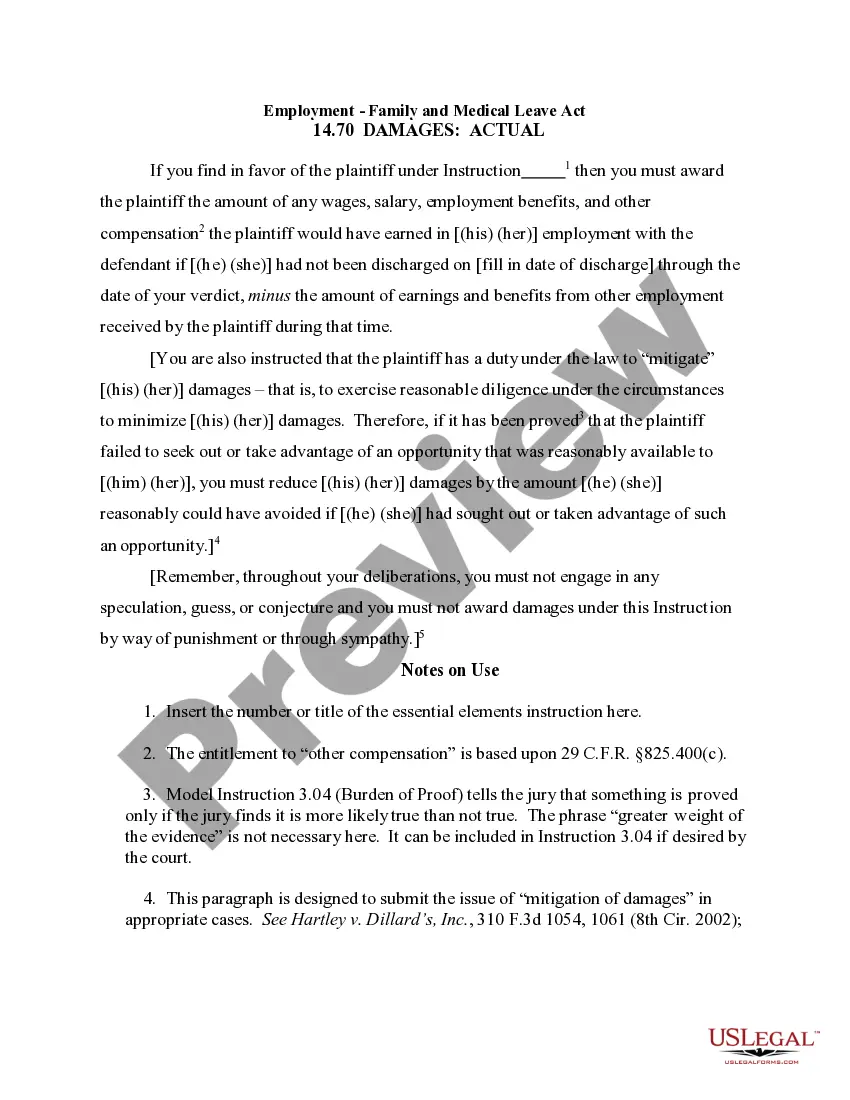
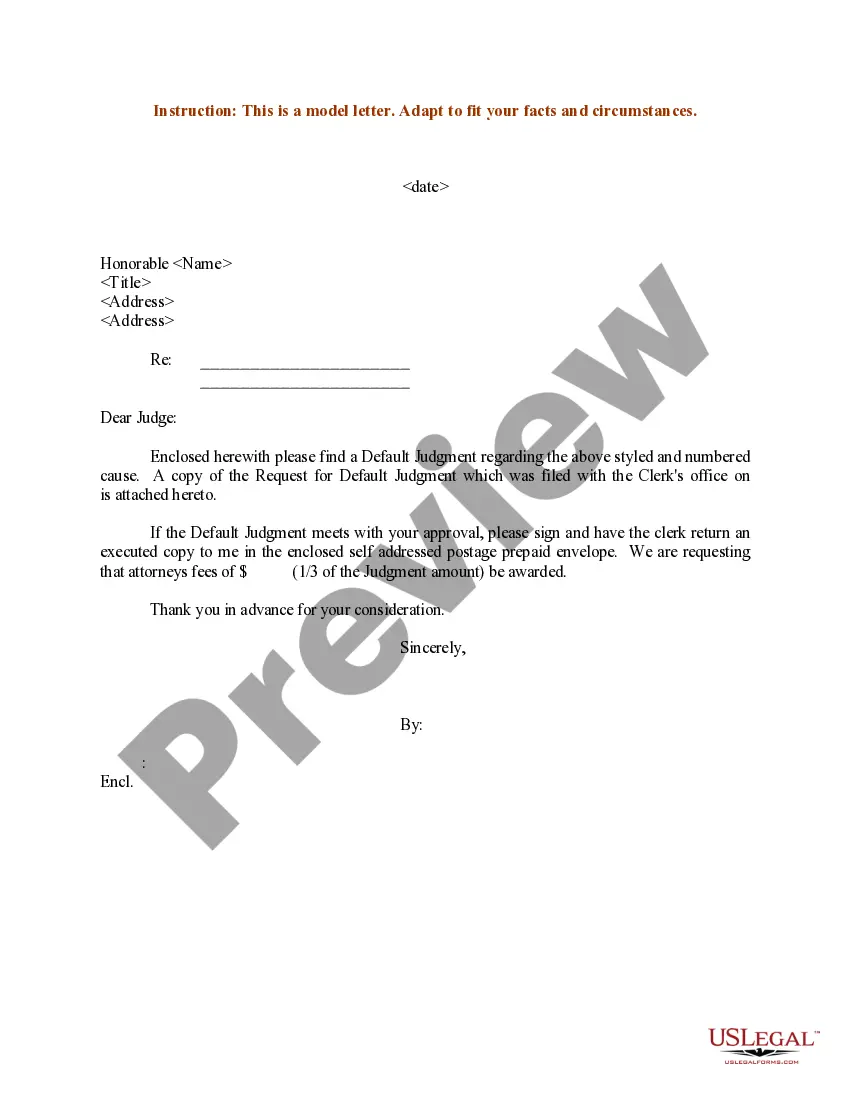
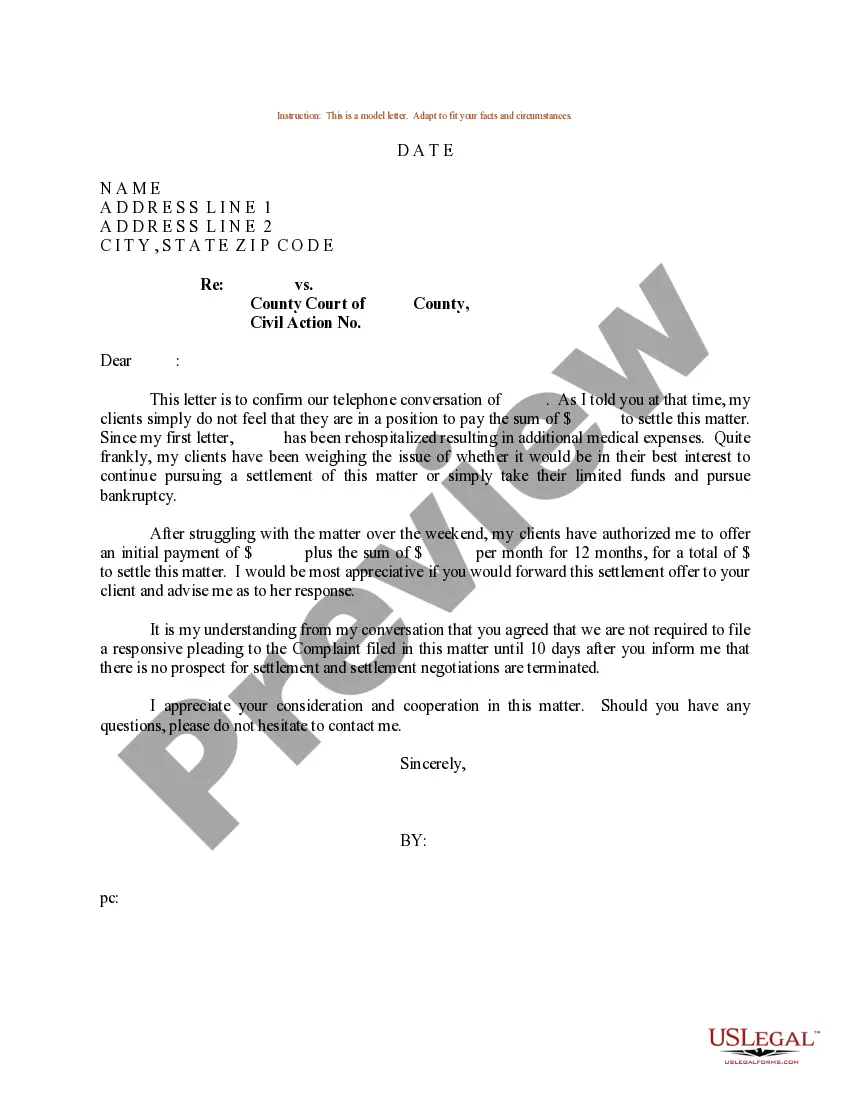
Hawaii Sample Letter to Judge submitting Default Judgment
Description
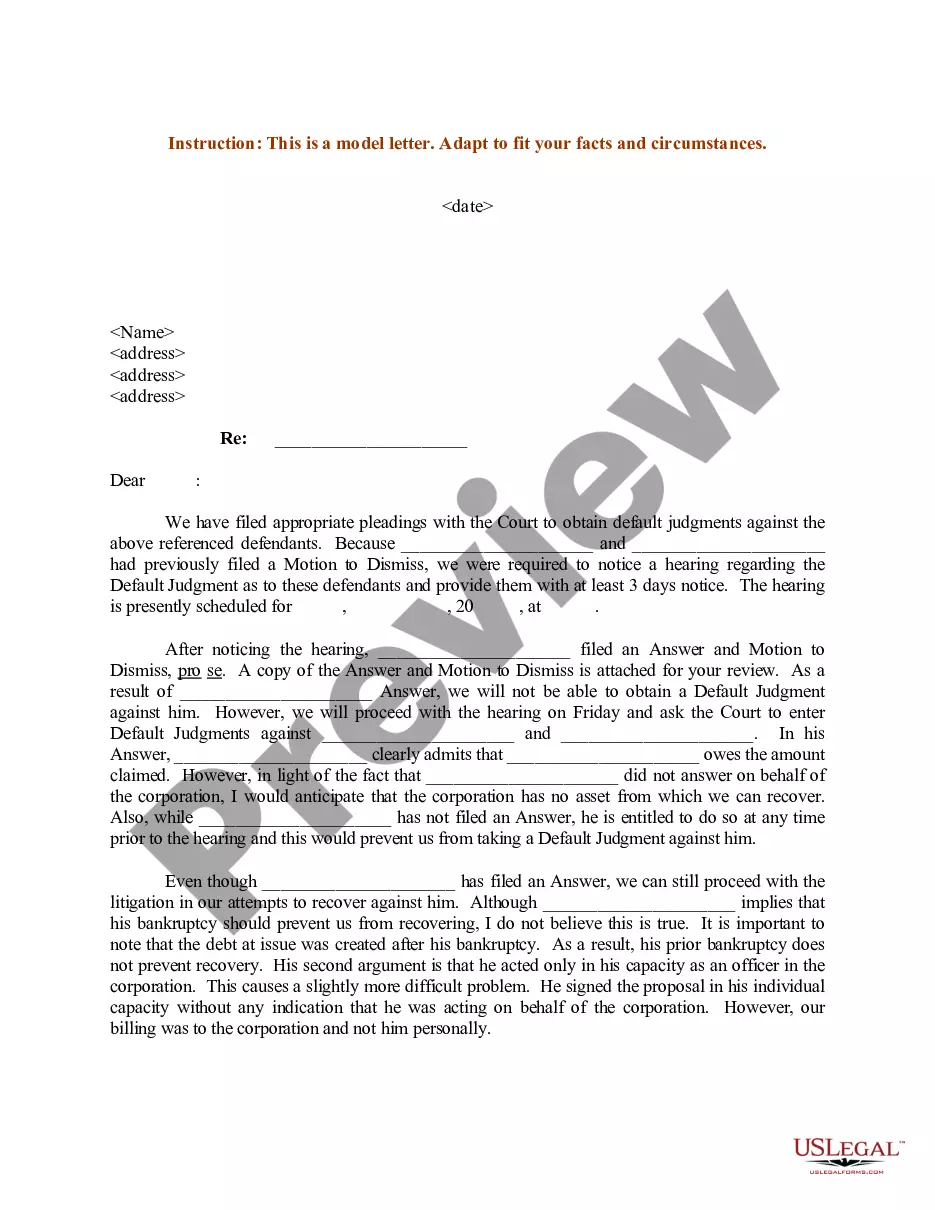
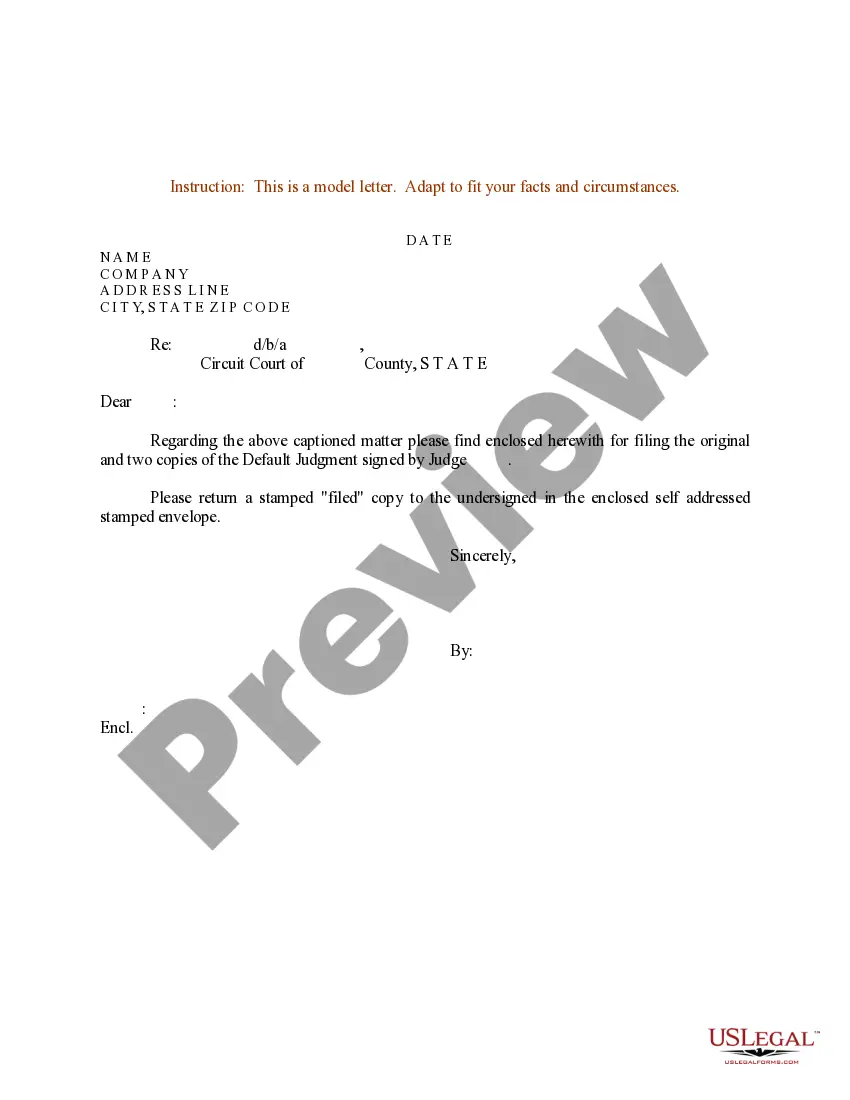
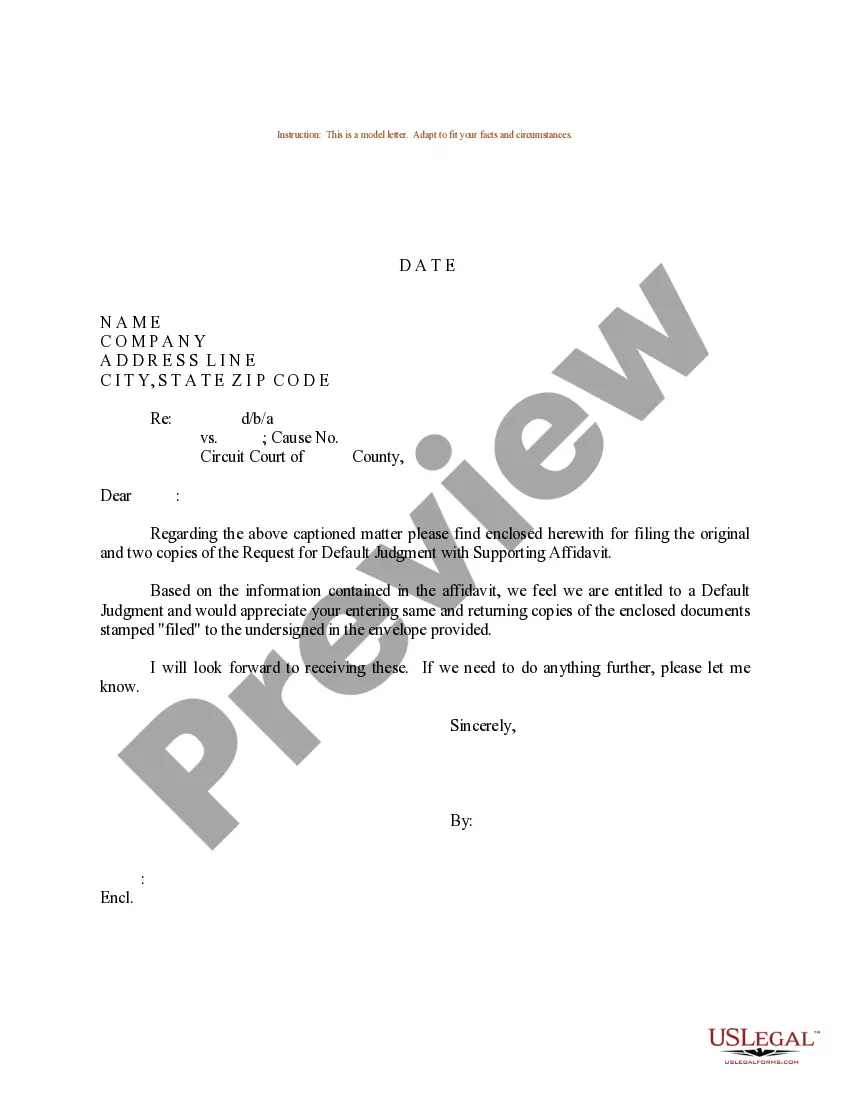
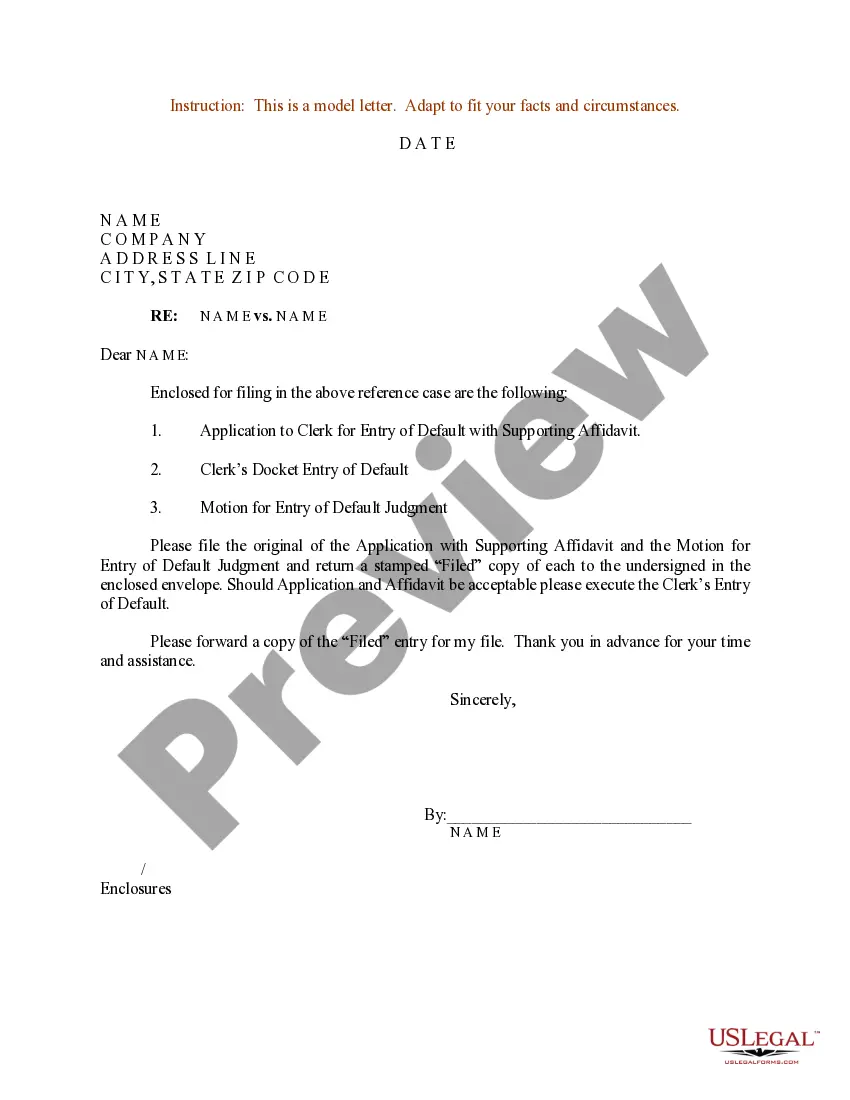
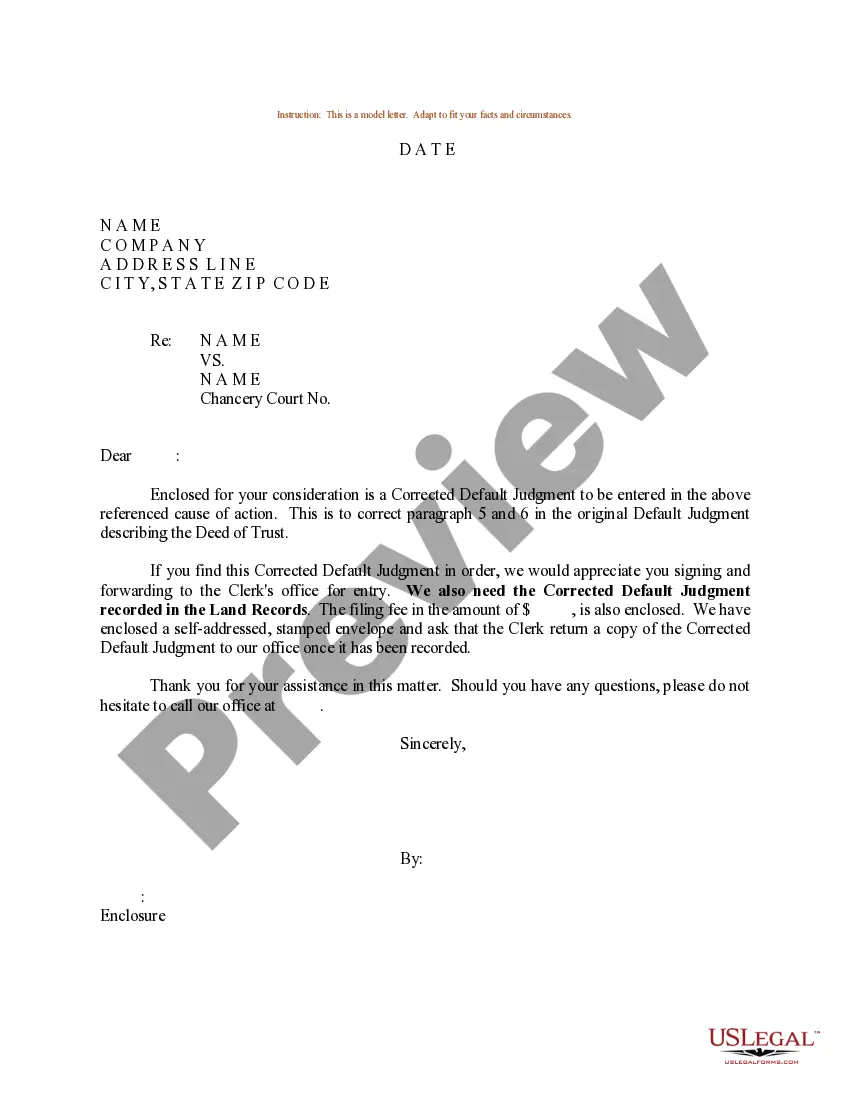


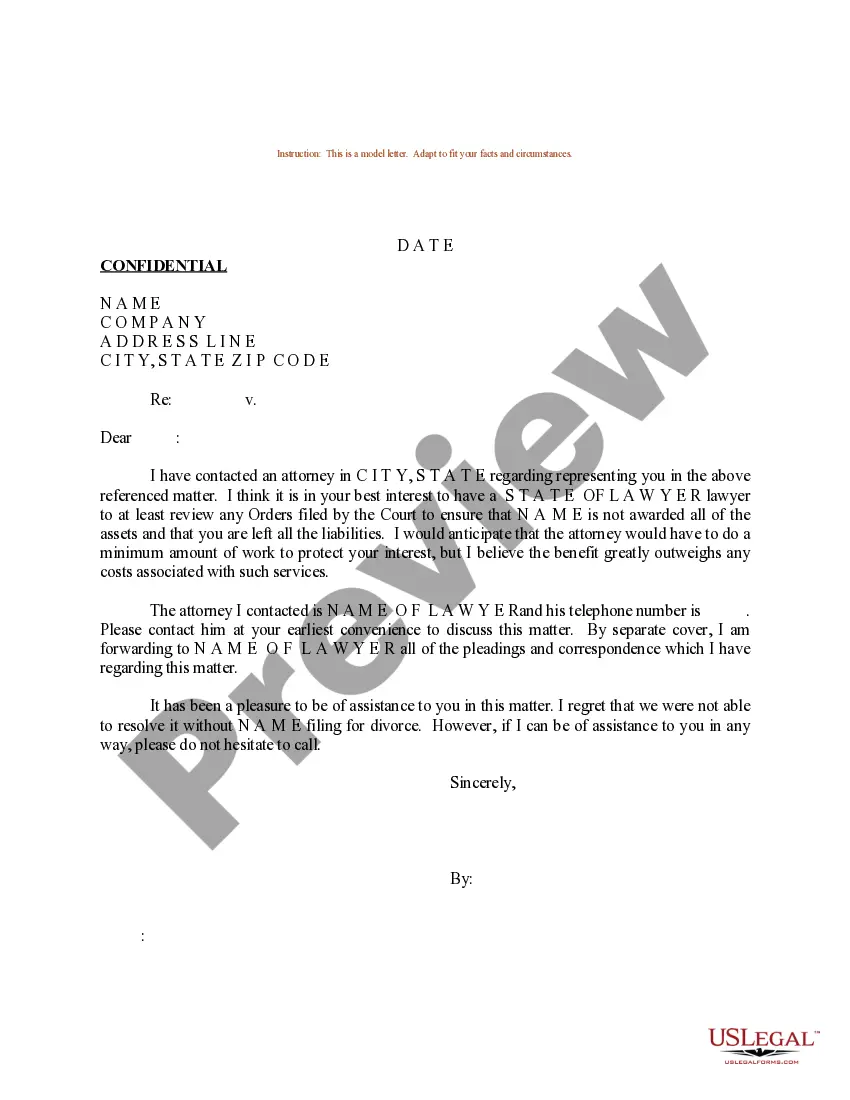

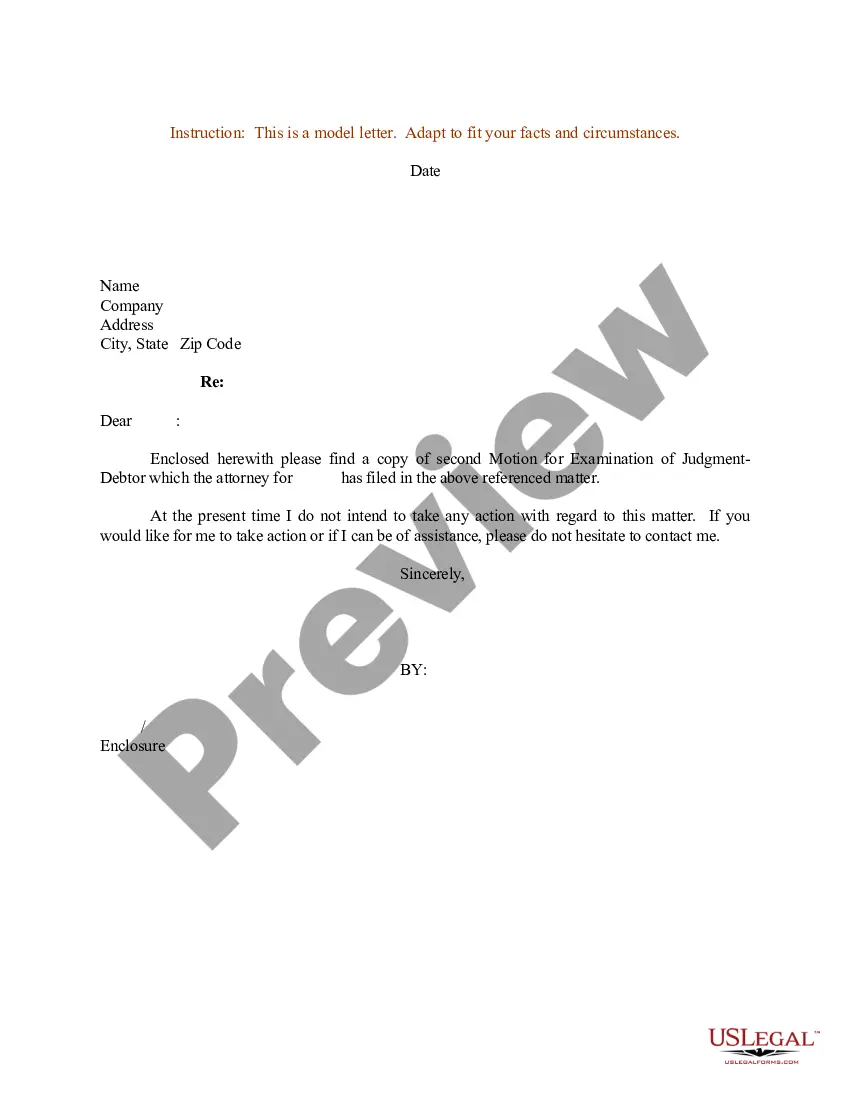
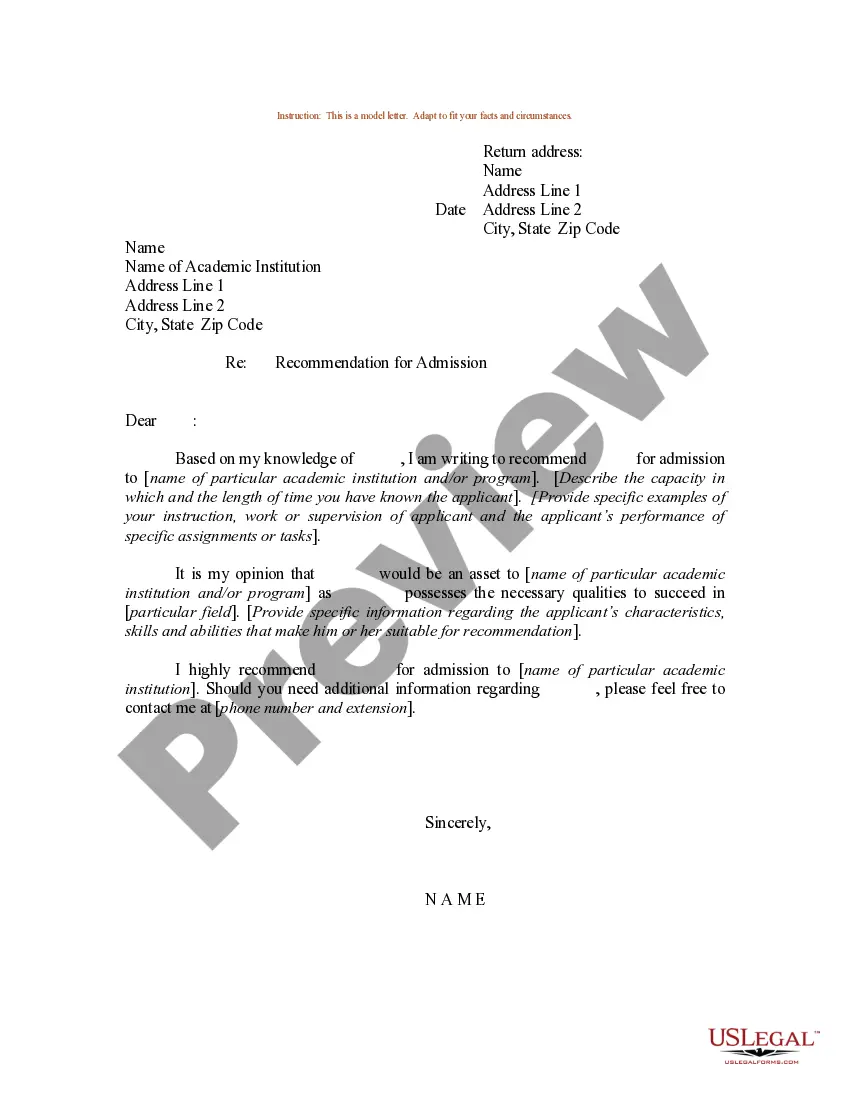
How to fill out Sample Letter To Judge Submitting Default Judgment?
US Legal Forms - one of the largest collections of legal documents in the United States - provides a range of legal form templates that you can download or print. By using the website, you can access thousands of forms for business and personal purposes, organized by categories, states, or keywords. You can find the most recent versions of forms such as the Hawaii Sample Letter to Judge submitting Default Judgment in moments.
If you already hold a monthly subscription, Log In and retrieve the Hawaii Sample Letter to Judge submitting Default Judgment from the US Legal Forms library. The Download option will be visible on every form you view. You can access all previously downloaded forms from the My documents section of your account.
If you're using US Legal Forms for the first time, here are some straightforward tips to help you get started: Ensure you have selected the correct form for the region/state. Click the Review option to examine the form’s details. Read the form description to confirm that you've chosen the right document. If the form does not meet your needs, utilize the Search field at the top of the screen to find one that does. Once satisfied with the form, confirm your selection by clicking on the Purchase now button. Then, select the pricing plan you prefer and provide your credentials to register for an account. Process the transaction. Use your Visa or Mastercard or PayPal account to complete the transaction. Choose the format and download the form to your device. Make modifications. Complete, edit, print, and sign the downloaded Hawaii Sample Letter to Judge submitting Default Judgment. Every template you add to your account has no expiration date and is yours permanently. Therefore, if you wish to download or print another copy, simply go to the My documents section and click on the form you need.
- Access the Hawaii Sample Letter to Judge submitting Default Judgment with US Legal Forms, the most extensive library of legal document templates.
- Utilize thousands of professional and state-specific templates that cater to your business or personal needs and requirements.
Form popularity
FAQ
Rule 55 - Default (a) Entry. When a party against whom a judgment for affirmative relief is sought has failed to plead or otherwise defend as provided by these rules and that fact is made to appear by affidavit or otherwise, the clerk shall enter the party's default. (b) Judgment.
If it has been 30 days or less, you can get rid of ("vacate") a default judgment by filing a motion. This is a written request to the judge asking them to throw out the judgment. You will have to send a copy of the motion to the other party in the case, and then show up in court for a hearing.
Rule 15 - Default Judgment and Stopper (a) Entry of Judgment. A default judgment may be entered when the defendant fails to answer or respond to the notice of infraction within twenty-one (21) calendar days from the date the notice of infraction was issued, or fails to appear at any scheduled hearing.
Rule 7 - Form of Motions (a) Form. All motions, except when made during a hearing or trial, shall be in writing, shall state the grounds therefor, shall set forth the relief or order sought, and if involving a question of law shall be accompanied by a memorandum in support of the motion.
Rule 11 - Signing of Pleadings, Motions, and Other Papers; Representations to the Court; Sanctions (a) Signature. Every pleading, written motion, and other paper shall be signed by at least one attorney of record in the attorney's individual name, or, if the party is unrepresented, shall be signed by the party.
A very important fact you should keep in mind is that California courts do impose a timeline for seeking entry of a default judgment. Specifically, a request for entry of default must be filed within 10 days following a defendant's failure to timely file and serve a responsive pleading.
A party may obtain discovery of the existence and contents of any insurance agreement under which any person carrying on an insurance business may be liable to satisfy part or all of a judgment which may be entered in the action or to indemnify or reimburse for payments made to satisfy the judgment.
A diligent effort to effect service shall be made in all actions. An action or claim may be dismissed sua sponte with written notice to the parties if no service is made within 6 months after the action or claim has been filed.