Hawaii Discovery Interrogatories for Divorce Proceeding for either Plaintiff or Defendant - Another Form
What is this form?
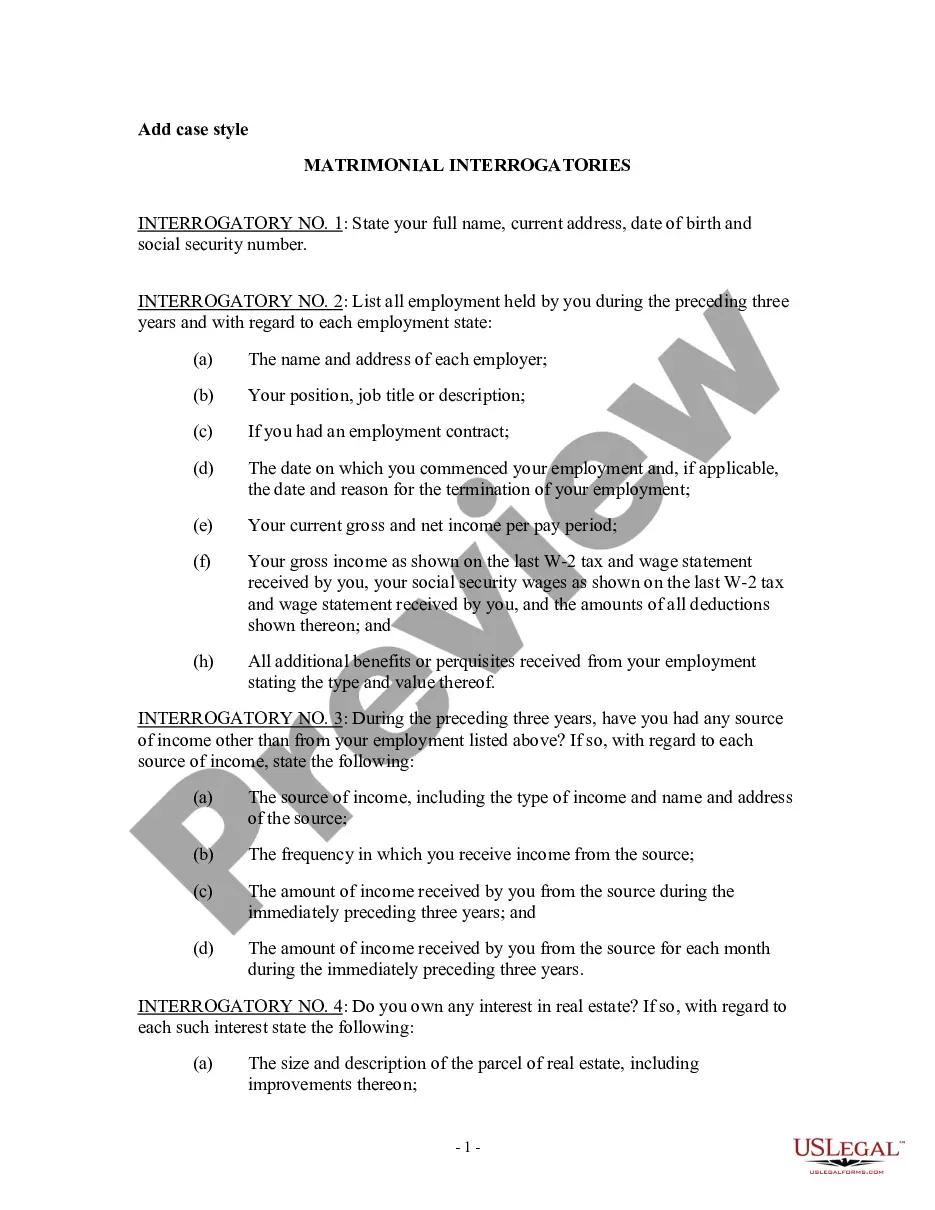
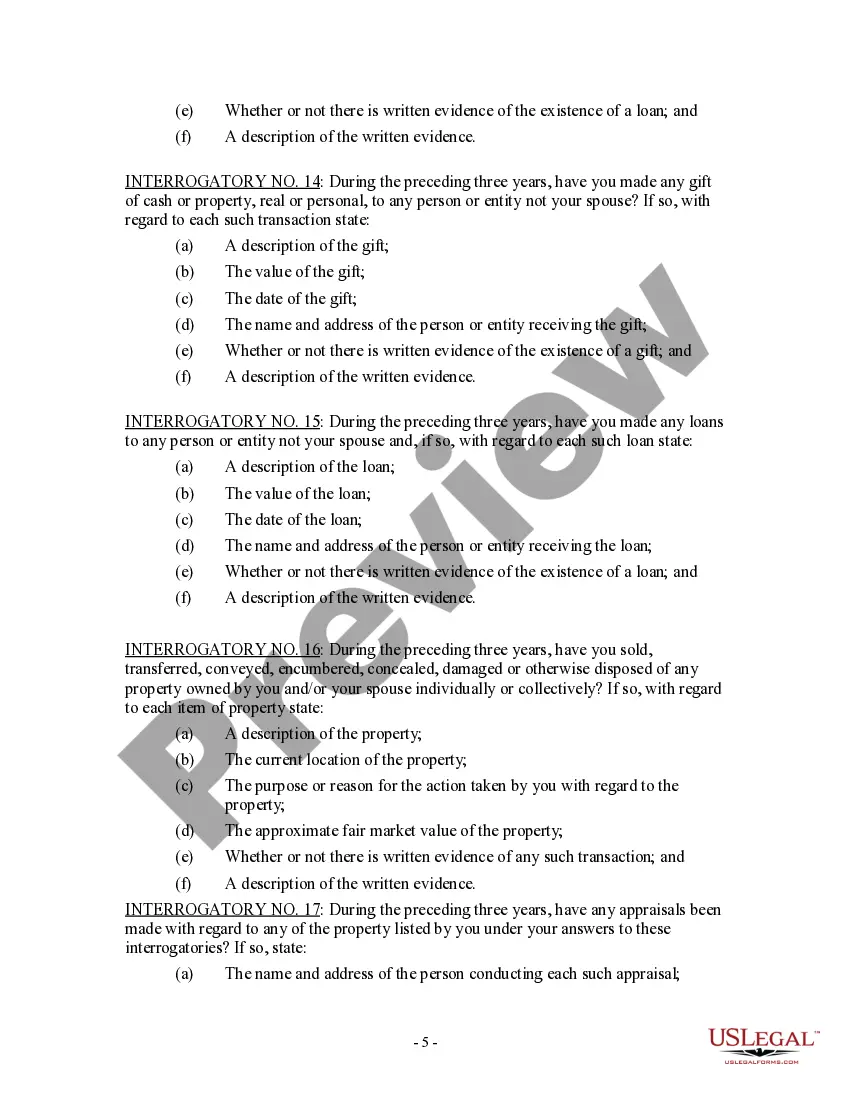
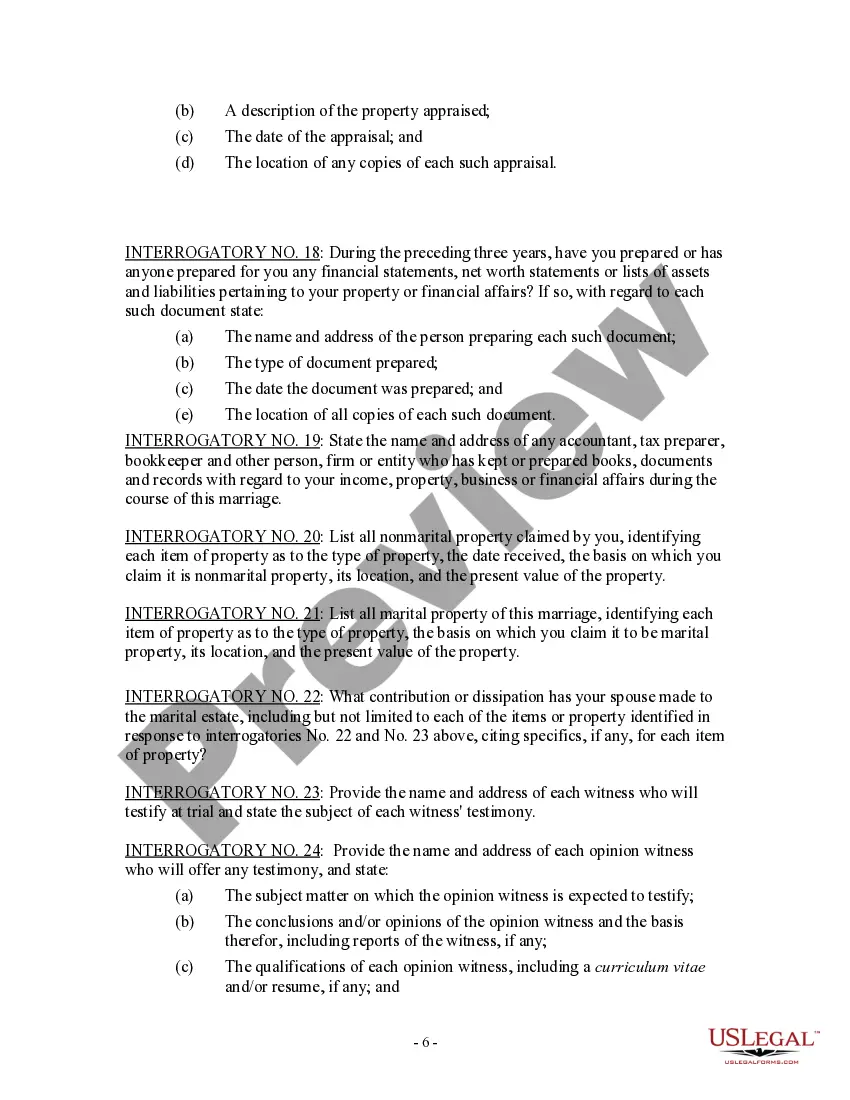
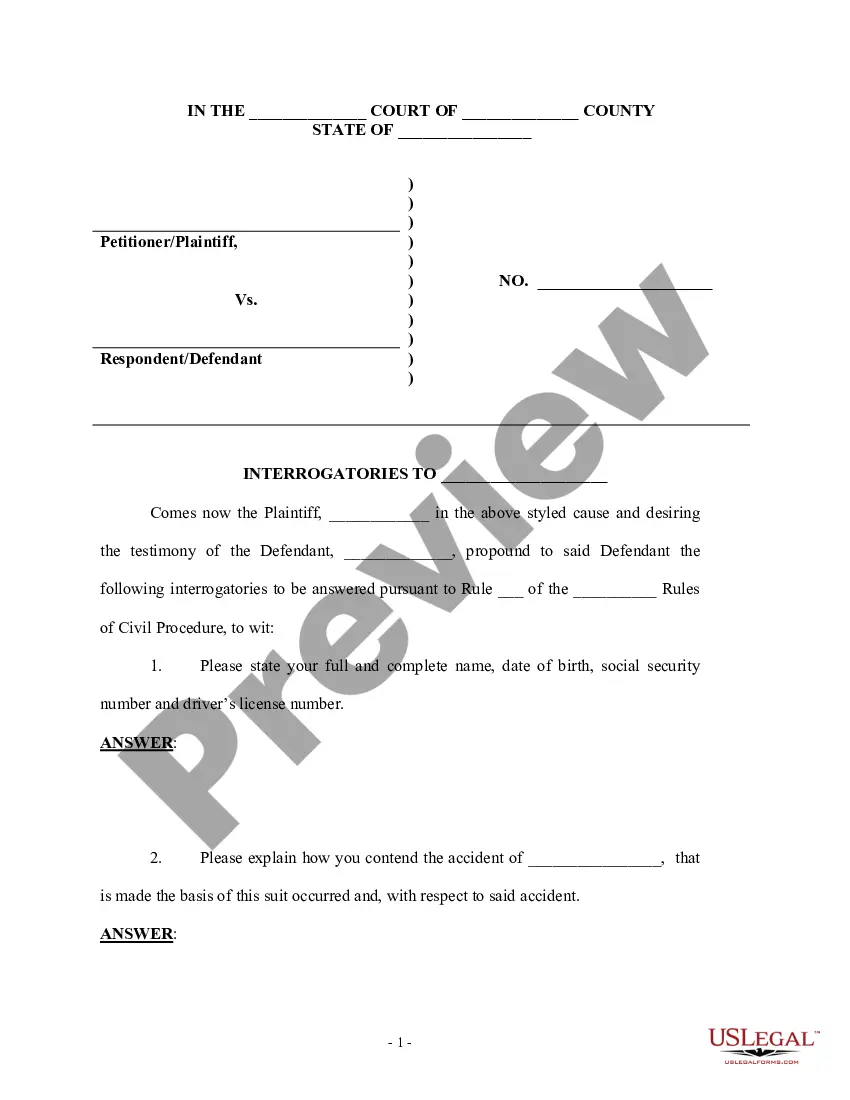
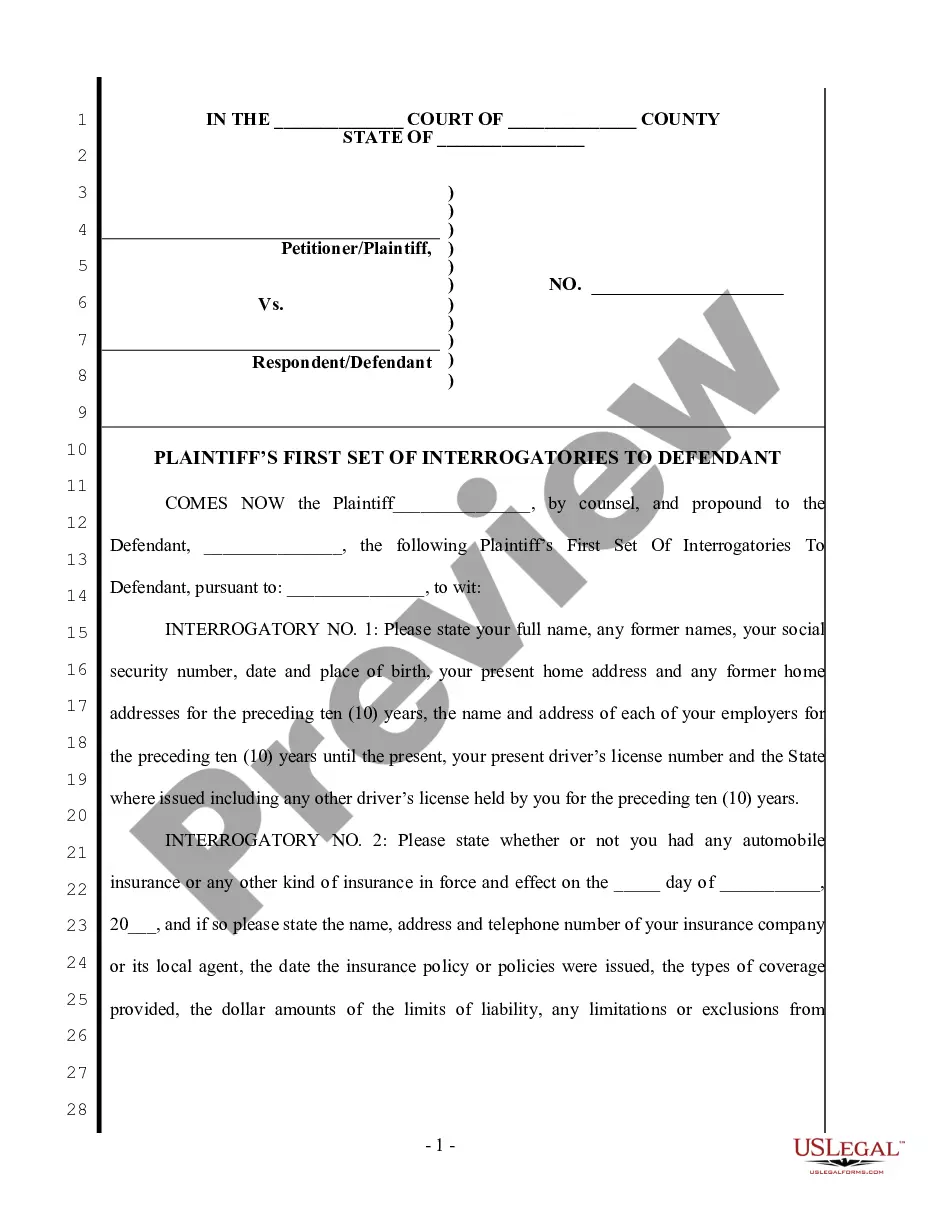
The Discovery Interrogatories for Divorce Proceeding is a formal written set of questions used by either the plaintiff or defendant during a divorce case. This document helps parties gather crucial information regarding finances, property, and other relevant matters to be disclosed during the divorce process. Unlike general interrogatories, this form specifically pertains to marital disputes and is tailored for use in divorce proceedings.
Form components explained
- General information about the responding party, including name and address.
- Employment history and income details over the preceding three years.
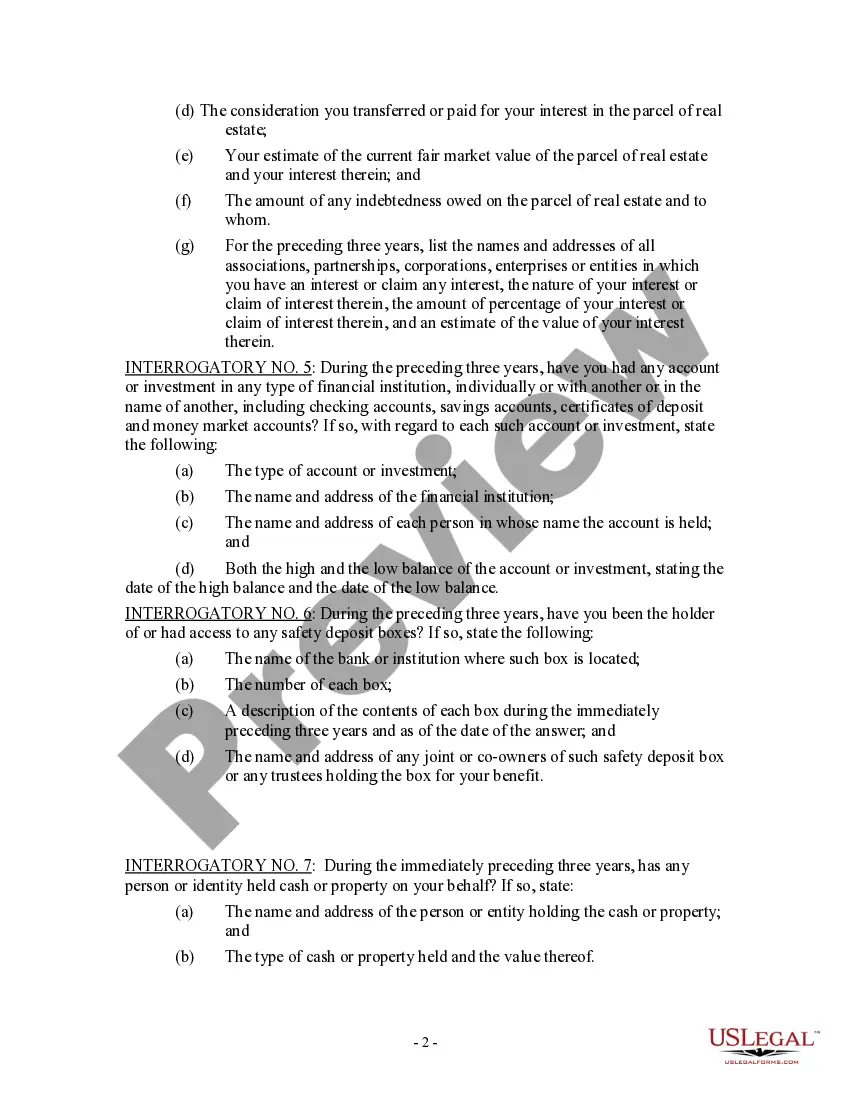
- Real estate ownership information and other financial interests.
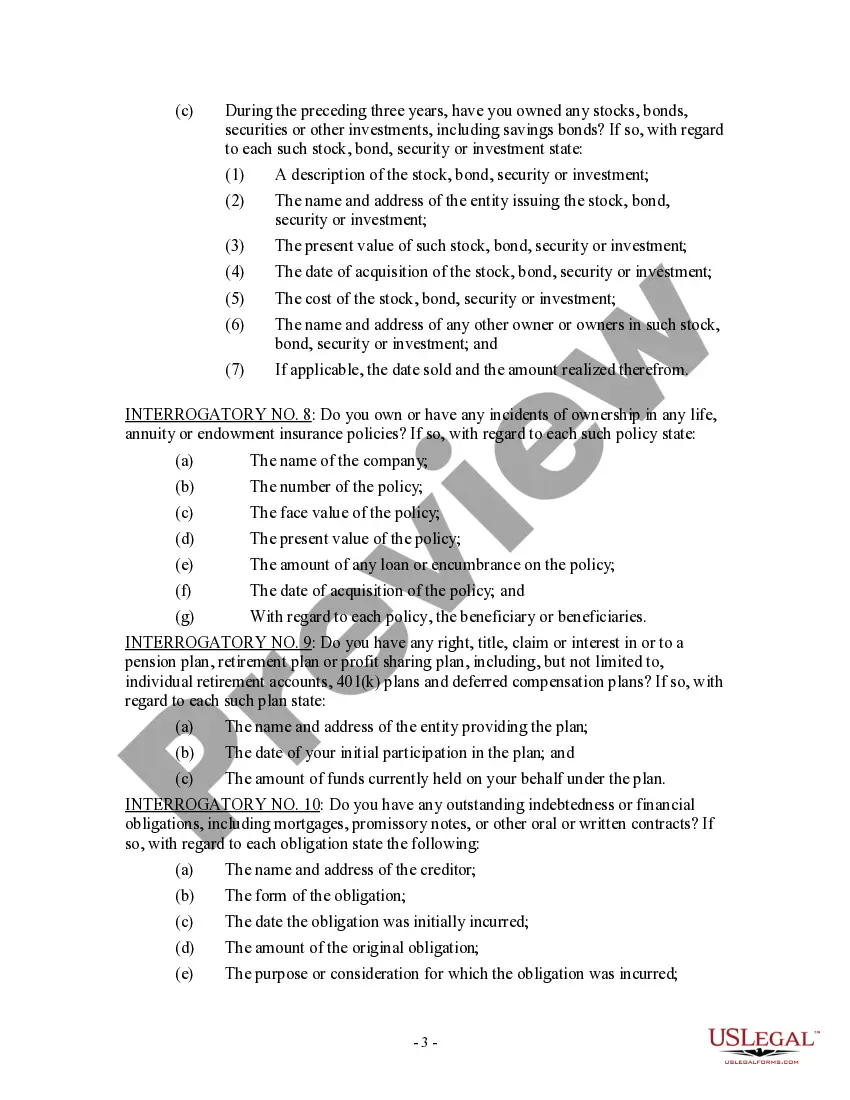
- Disclosure of any accounts, investments, and safety deposit boxes held.
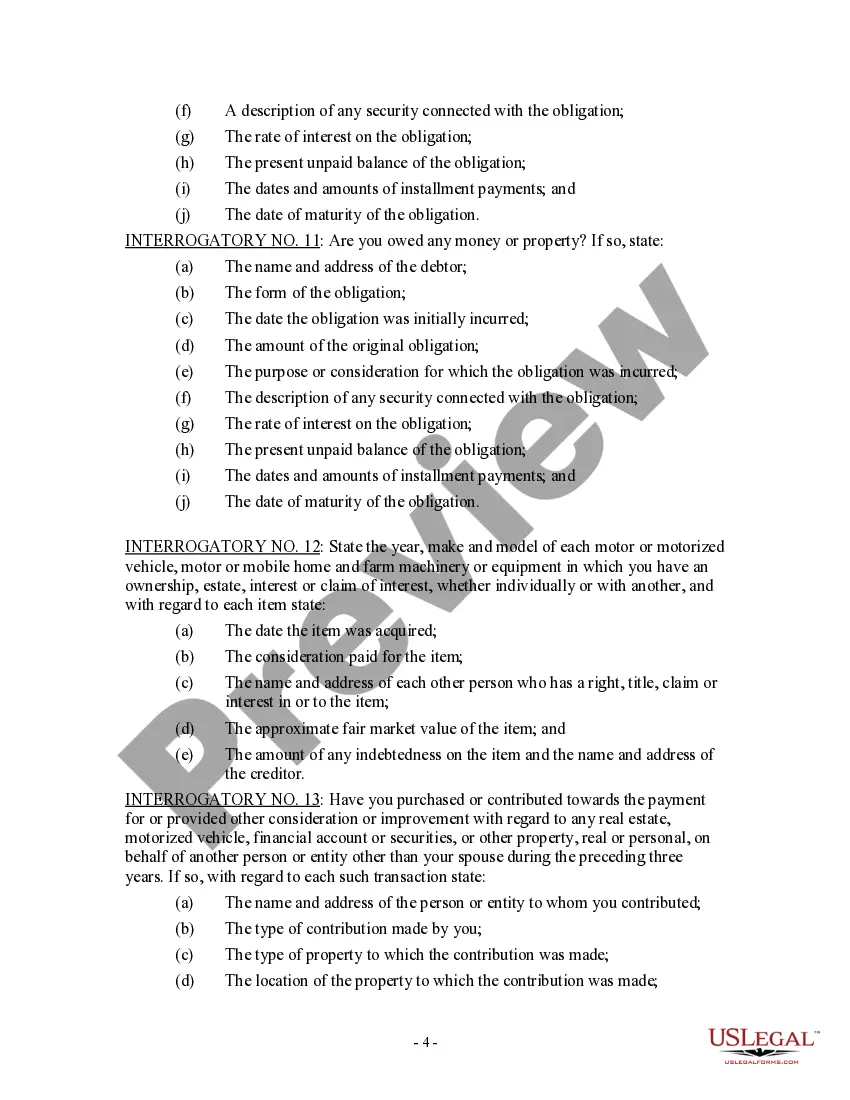
- Details about debts, financial obligations, and claims for money owed.
- Lists of both marital and nonmarital property.
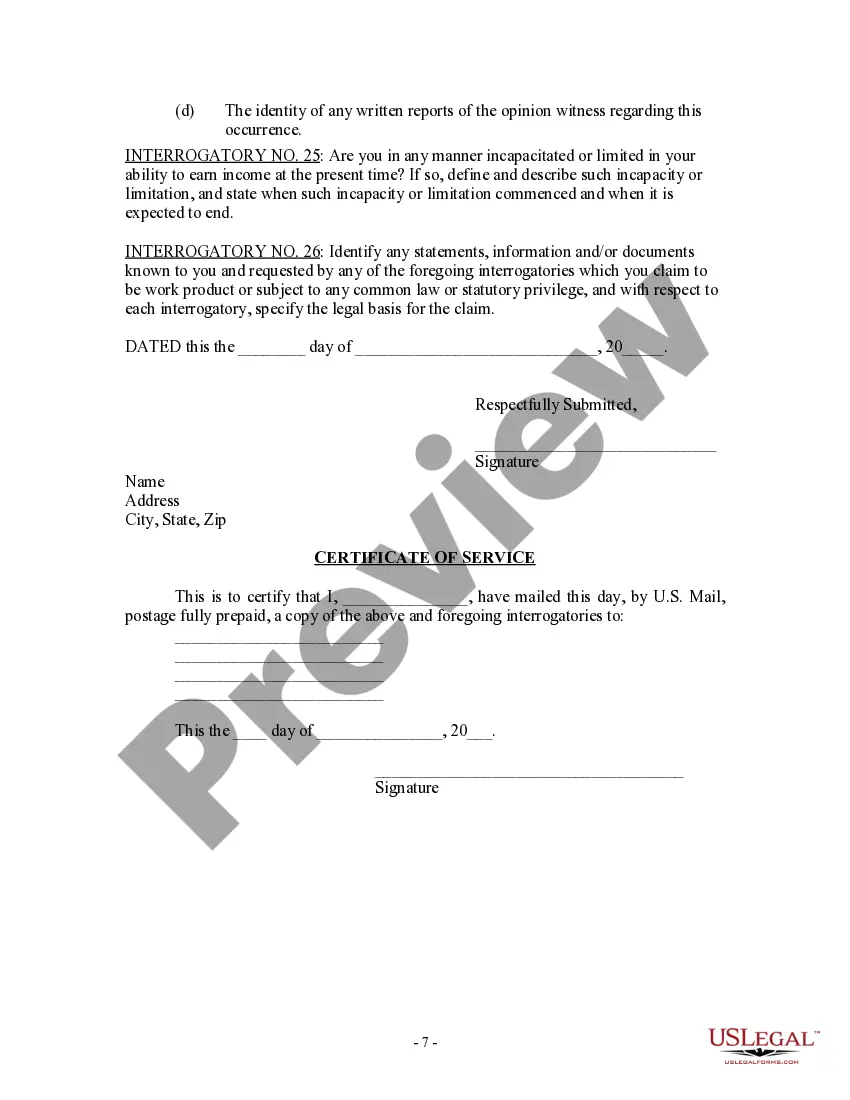
- Information regarding potential witnesses and their expected testimony.
When this form is needed
This form is essential during a divorce proceeding when either party needs to request detailed information from the other regarding their financial situation. It aids in uncovering assets, debts, and income sources that may affect property division, alimony, or child support determinations. Use this form as part of the discovery process to ensure transparency and fairness in financial disclosures.
Who should use this form
- Individuals who are filing for divorce and need to gather information from their spouse.
- Defendants in a divorce proceeding who are required to respond to inquiries about their financial affairs.
- Legal professionals assisting clients through divorce cases.
Completing this form step by step
- Clearly identify the full name and address of the party answering the interrogatories.
- Provide accurate employment history and income details as requested in the form.
- Specify ownership particulars of real estate, accounts, and investments held.
- Disclose any outstanding debts and financial obligations, as well as money owed to you.
- List all relevant witnesses and summarize their anticipated testimony.
Is notarization required?
This form does not typically require notarization unless specified by local law. It's essential to check your jurisdiction's regulations to ensure compliance.
Get your form ready online
Our built-in tools help you complete, sign, share, and store your documents in one place.
Make edits, fill in missing information, and update formatting in US Legal Forms—just like you would in MS Word.
Download a copy, print it, send it by email, or mail it via USPS—whatever works best for your next step.
Sign and collect signatures with our SignNow integration. Send to multiple recipients, set reminders, and more. Go Premium to unlock E-Sign.
If this form requires notarization, complete it online through a secure video call—no need to meet a notary in person or wait for an appointment.
We protect your documents and personal data by following strict security and privacy standards.

Make edits, fill in missing information, and update formatting in US Legal Forms—just like you would in MS Word.

Download a copy, print it, send it by email, or mail it via USPS—whatever works best for your next step.

Sign and collect signatures with our SignNow integration. Send to multiple recipients, set reminders, and more. Go Premium to unlock E-Sign.

If this form requires notarization, complete it online through a secure video call—no need to meet a notary in person or wait for an appointment.

We protect your documents and personal data by following strict security and privacy standards.
Avoid these common issues
- Failing to provide complete and honest answers to interrogatories.
- Neglecting to disclose relevant assets or financial interests.
- Inaccurate reporting of income or employment history.
- Missing deadlines for submitting answers to the interrogatories.
Why use this form online
- Convenience of accessing and completing the form from anywhere.
- Editing capabilities allow you to easily make changes before filing.
- Reliable legal language drafted by licensed attorneys to ensure compliance.
Legal use & context
- This interrogatory form is legally binding and can be used in court proceedings.
- Completed forms can help support claims during divorce negotiations or litigation.
- Failure to respond or provide accurate information may result in legal penalties.
Quick recap
- The Discovery Interrogatories form is critical for understanding financial matters in a divorce.
- Proper completion is essential for transparency and legal compliance.
- Be aware of state-specific rules regarding the use of interrogatories in divorce cases.
Looking for another form?


Form popularity
FAQ
To answer interrogatories for divorce, start by understanding what the questions are asking. Provide clear, truthful responses that address each interrogatory directly. Utilizing resources such as the US Legal Forms platform can help ensure that your responses are well-structured and compliant with legal standards.
Filling out an interrogatories form involves carefully reading the instructions and questions provided on the form. Ensure you respond to each interrogatory clearly and substantively. If you're finding it challenging, the US Legal Forms platform can help simplify the process and provide you with the necessary templates and guidance.
The best way to answer interrogatories is to maintain honesty and clarity throughout your responses. Provide supporting documentation when available, and ensure that your answers are relevant to the questions asked. Remember, preparing with tools from the US Legal Forms platform will help streamline the process and enhance the accuracy of your answers.
Examples of discovery questions for divorce may include inquiries about assets, liabilities, income, and other relevant personal information. Such questions are designed to uncover crucial facts that can influence the outcome of your divorce proceedings. By preparing adequately, you can ensure that your responses to Hawaii Discovery Interrogatories for Divorce Proceeding for either Plaintiff or Defendant - Another Form are both effective and comprehensive.
Answering a plaintiff's interrogatories involves reviewing each question meticulously and providing accurate responses based on your knowledge and documentation. Focus on clarity and directness in your answers, ensuring all provided details are relevant to the case. If you seek additional guidance, consider using the resources from the US Legal Forms platform.
To answer interrogatories in a divorce case, carefully read each question and take your time to gather all necessary information. Provide complete and truthful responses, as these answers help shape the court's understanding of your situation. If you need assistance, the US Legal Forms platform offers resources for crafting your answers effectively.
When responding to Hawaii Discovery Interrogatories for Divorce Proceeding for either Plaintiff or Defendant - Another Form, you should follow a clear and organized format. List each interrogatory number followed by your answer. Be concise, yet thorough, in your explanations, and ensure that your responses directly address the questions posed.
Rule 59 in court refers to the process for filing a motion for a new trial or for altering or amending a judgment. This rule allows litigants to request reconsideration of the court's decision if they believe there were significant errors during the trial. Ensuring you understand your options under Rule 59 can significantly impact the outcome of your case. Additionally, utilizing resources like Hawaii Discovery Interrogatories for Divorce Proceeding for either Plaintiff or Defendant - Another Form can enhance your strategy for post-judgment requests.
Rule 35 in Hawaii relates to mental and physical examinations of parties in legal proceedings. This rule permits a court to order such examinations when relevant to the case, which can aid in assessing claims made by either party. Snapshots of health and mental state can provide important context during a divorce. By understanding Rule 35, you will better navigate the nuances of your divorce and utilize Hawaii Discovery Interrogatories for Divorce Proceeding for either Plaintiff or Defendant - Another Form effectively.
Rule 94 of the Hawaii Family Court Rules pertains to the use of interrogatories in family court cases. This rule allows parties in a divorce proceeding to submit written questions to each other, which must be answered honestly and thoroughly. Employing this rule helps clarify issues and gather information that may be vital for your case. Understanding Rule 94 can be invaluable when considering Hawaii Discovery Interrogatories for Divorce Proceeding for either Plaintiff or Defendant - Another Form.