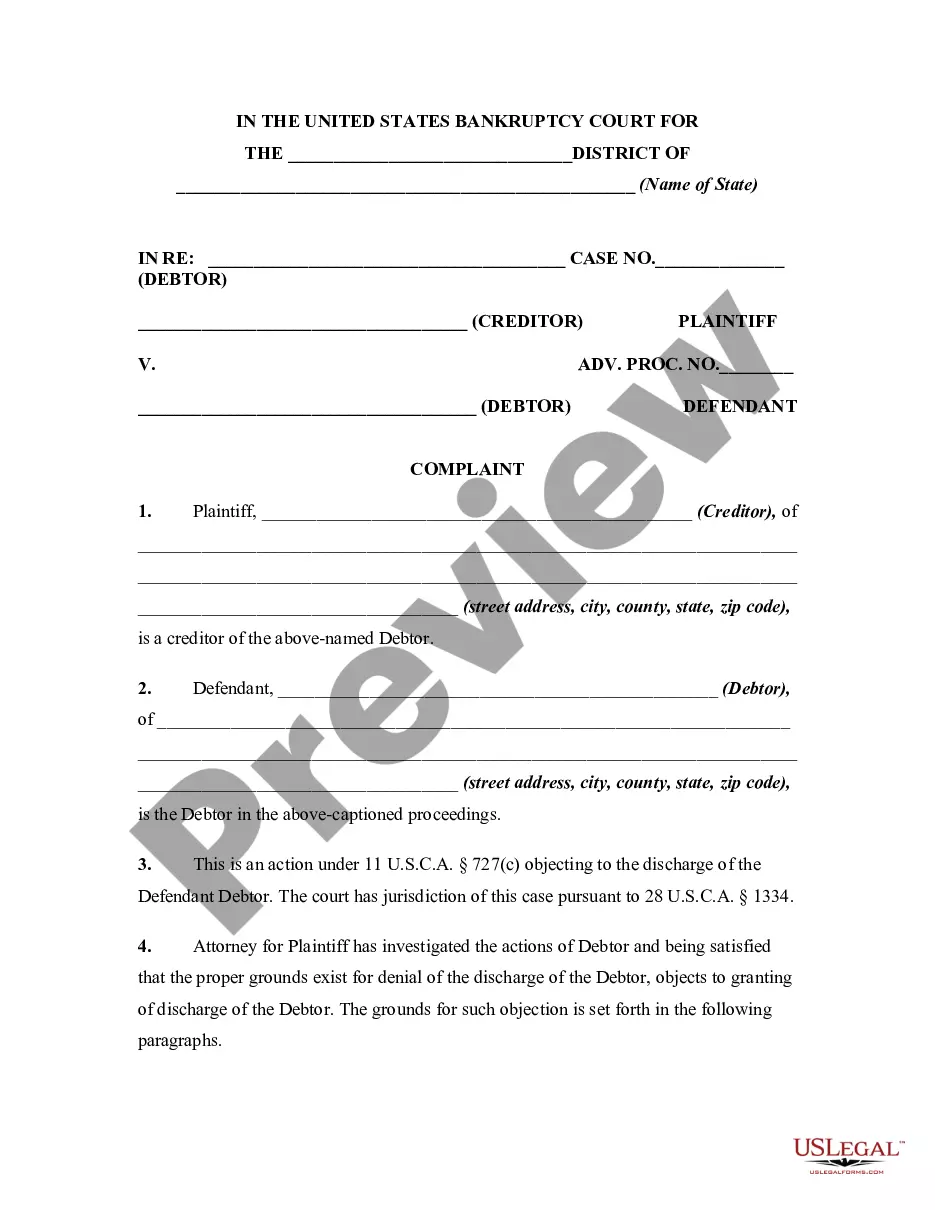
The decree of the bankruptcy court which terminates the bankruptcy proceedings is generally a discharge that releases the debtor from most debts. A bankruptcy court may refuse to grant a discharge under certain conditions.
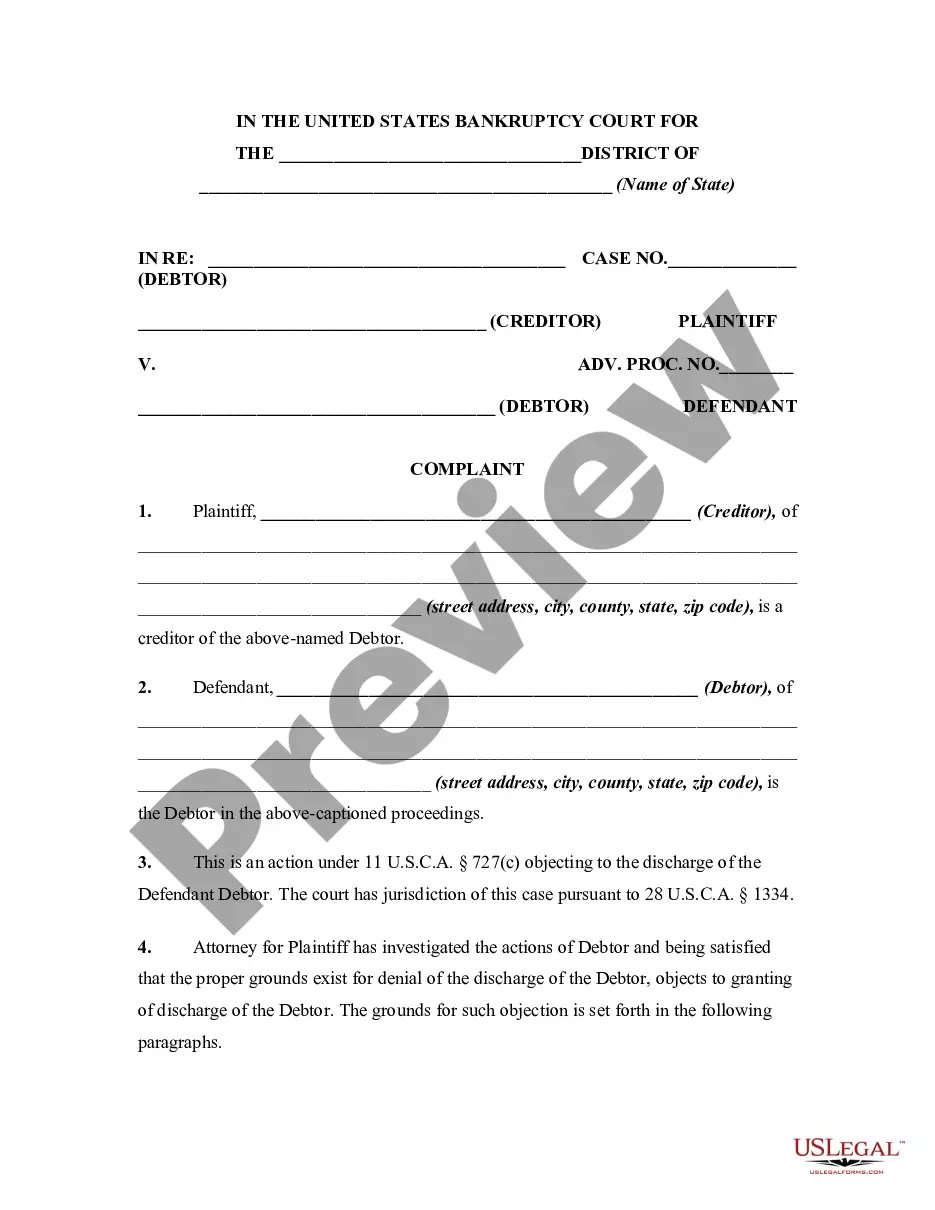
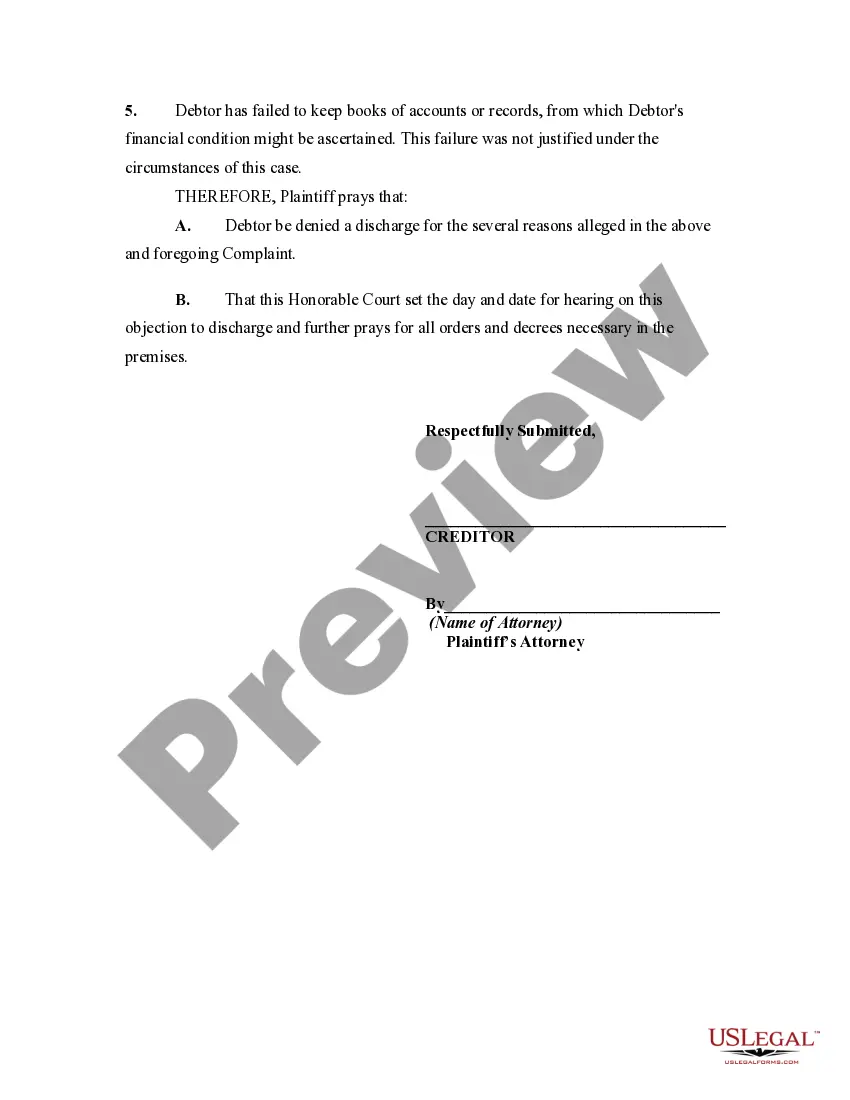
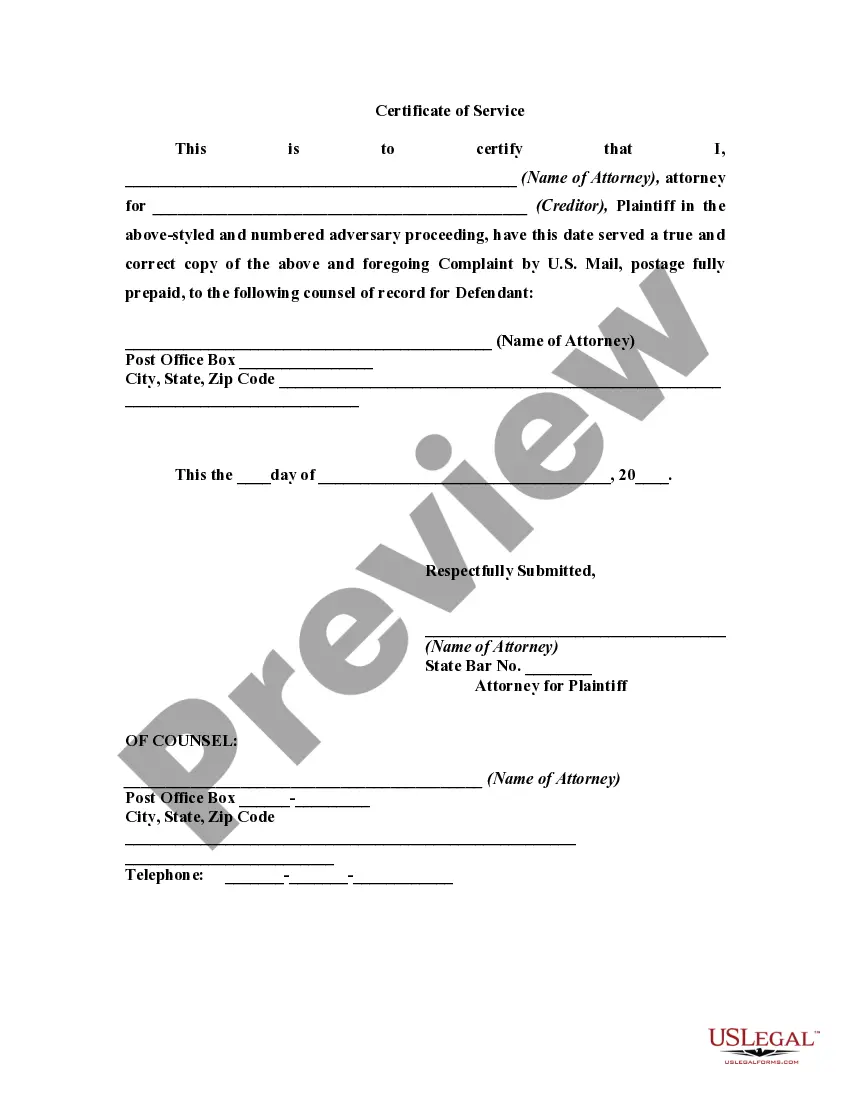
Guam Complaint Objecting to Discharge or Debtor in Bankruptcy Proceeding for Failure to Keep Books and Records
State:
Multi-State
Control #:
US-01088BG
Format:
Word;
Rich Text
Instant download
Description
Free preview
Get your form ready online
Our built-in tools help you complete, sign, share, and store your documents in one place.
Built-in online Word editor
Make edits, fill in missing information, and update formatting in US Legal Forms—just like you would in MS Word.
Export easily
Download a copy, print it, send it by email, or mail it via USPS—whatever works best for your next step.
E-sign your document
Sign and collect signatures with our SignNow integration. Send to multiple recipients, set reminders, and more. Go Premium to unlock E-Sign.
Notarize online 24/7
If this form requires notarization, complete it online through a secure video call—no need to meet a notary in person or wait for an appointment.
Store your document securely
We protect your documents and personal data by following strict security and privacy standards.

Make edits, fill in missing information, and update formatting in US Legal Forms—just like you would in MS Word.

Download a copy, print it, send it by email, or mail it via USPS—whatever works best for your next step.

Sign and collect signatures with our SignNow integration. Send to multiple recipients, set reminders, and more. Go Premium to unlock E-Sign.

If this form requires notarization, complete it online through a secure video call—no need to meet a notary in person or wait for an appointment.

We protect your documents and personal data by following strict security and privacy standards.
Looking for another form?
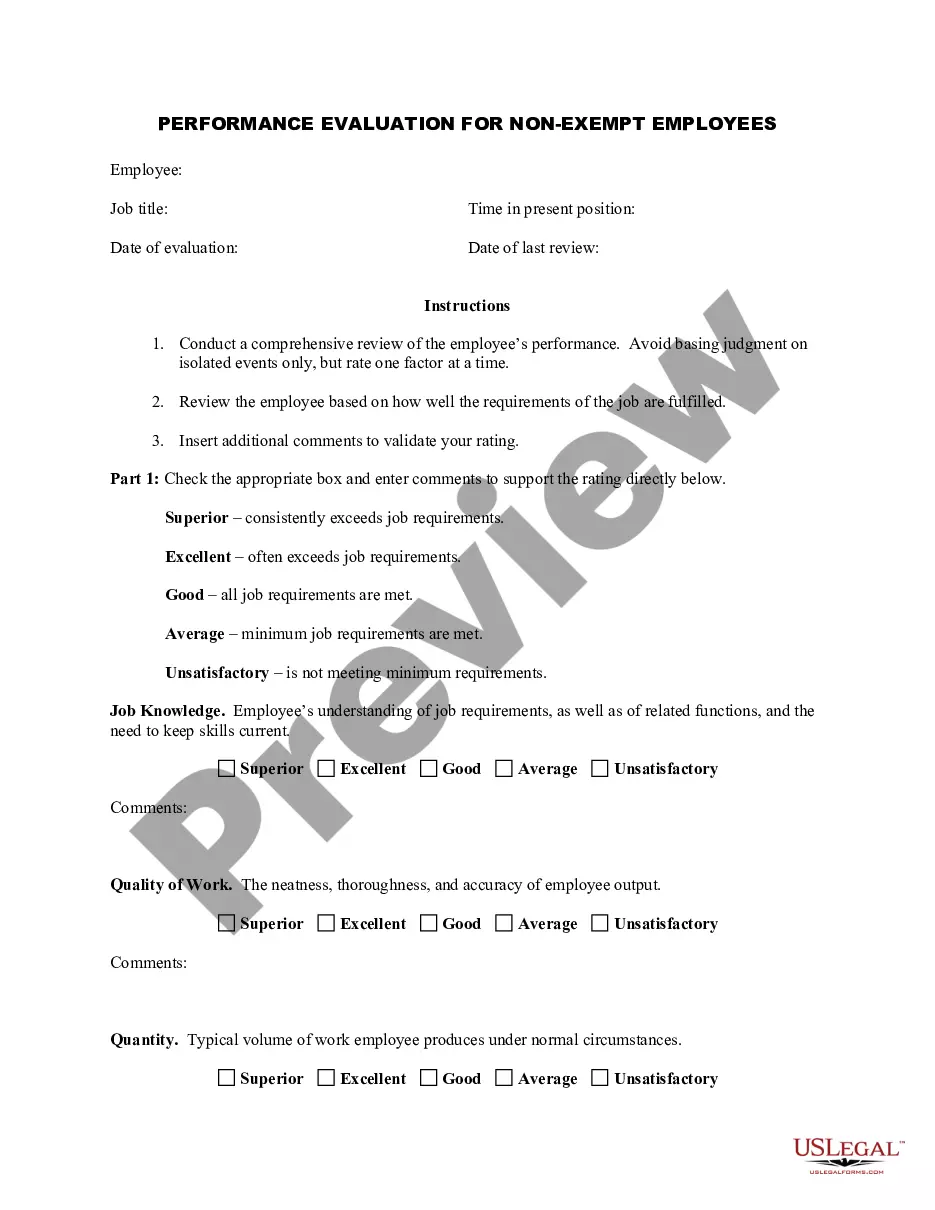



How to fill out Complaint Objecting To Discharge Or Debtor In Bankruptcy Proceeding For Failure To Keep Books And Records?
Are you in a situation where you require documents for either business or personal purposes almost daily.
There are numerous authentic document templates accessible online, but finding ones you can trust isn’t simple.
US Legal Forms provides thousands of form templates, such as the Guam Complaint Objecting to Discharge or Debtor in Bankruptcy Proceeding for Failure to Keep Books and Records, that are designed to meet state and federal requirements.
Choose the pricing plan you prefer, complete the required information to create your account, and pay for your order using PayPal or Visa or Mastercard.
Select a convenient file format and download your copy. Access all the document templates you have purchased in the My documents section. You can retrieve an additional copy of the Guam Complaint Objecting to Discharge or Debtor in Bankruptcy Proceeding for Failure to Keep Books and Records at any time, if necessary. Just select the needed form to download or print the document template. Utilize US Legal Forms, one of the largest collections of valid forms, to save time and reduce mistakes. The service offers professionally crafted legal document templates that you can use for various purposes. Create an account on US Legal Forms and start simplifying your life.
- If you are already acquainted with the US Legal Forms website and possess an account, simply Log In.
- After that, you can download the Guam Complaint Objecting to Discharge or Debtor in Bankruptcy Proceeding for Failure to Keep Books and Records template.
- If you do not have an account and wish to start using US Legal Forms, follow these steps.
- Locate the form you need and ensure it is for the correct state/region.
- Use the Preview option to review the document.
- Read the description to confirm that you have chosen the right form.
- If the form isn’t what you’re seeking, use the Search bar to find the form that meets your needs and criteria.
- Once you find the correct form, click Buy now.
Form popularity
FAQ
The court may deny a chapter 7 discharge for any of the reasons described in section 727(a) of the Bankruptcy Code, including failure to provide requested tax documents; failure to complete a course on personal financial management; transfer or concealment of property with intent to hinder, delay, or defraud creditors; ...
Conditions for Denial of Discharge You've hidden, destroyed, or failed to keep adequate records of your assets and financial affairs. You lied or tried to defraud the court or your creditors. You failed to explain any loss of assets. You refused to obey a lawful order of the court.
If a debt arose from the debtor's intentional wrongdoing, the creditor can object to discharging it. This might involve damages related to a drunk driving accident, for example, or costs caused by intentional damage to an apartment or other property.
Another exception to Discharge is for fraud while acting in a fiduciary capacity, embezzlement, or larceny. Domestic obligations are not dischargeable in Bankruptcy. Damages resulting from the willful and malicious injury by the debtor of another person or his property, are also not dischargeable in Bankruptcy.
The debtor knowingly made a false oath or account, presented a false claim, etc. Failure to comply with a bankruptcy court order.
Section 523 complaints focus on specific debts to a single creditor. A Section 727 complaint may be filed if the creditor or bankruptcy trustee believes that the debtor has not met the requirements for a discharge under Section 727. Section 727 complaints address the discharge of a debtor's entire debt obligations.
Filing for Chapter 7 bankruptcy eliminates credit card debt, medical bills and unsecured loans; however, there are some debts that cannot be discharged. Those debts include child support, spousal support obligations, student loans, judgments for damages resulting from drunk driving accidents, and most unpaid taxes.
An objection to discharge is a notice lodged with the Official Receiver by a trustee to induce a bankrupt to comply with their obligations. An objection will extend the period of bankruptcy so automatic discharge will not occur three years and one day after the bankrupt filed a statement of affairs.
The court may deny a chapter 7 discharge for any of the reasons described in section 727(a) of the Bankruptcy Code, including failure to provide requested tax documents; failure to complete a course on personal financial management; transfer or concealment of property with intent to hinder, delay, or defraud creditors; ...