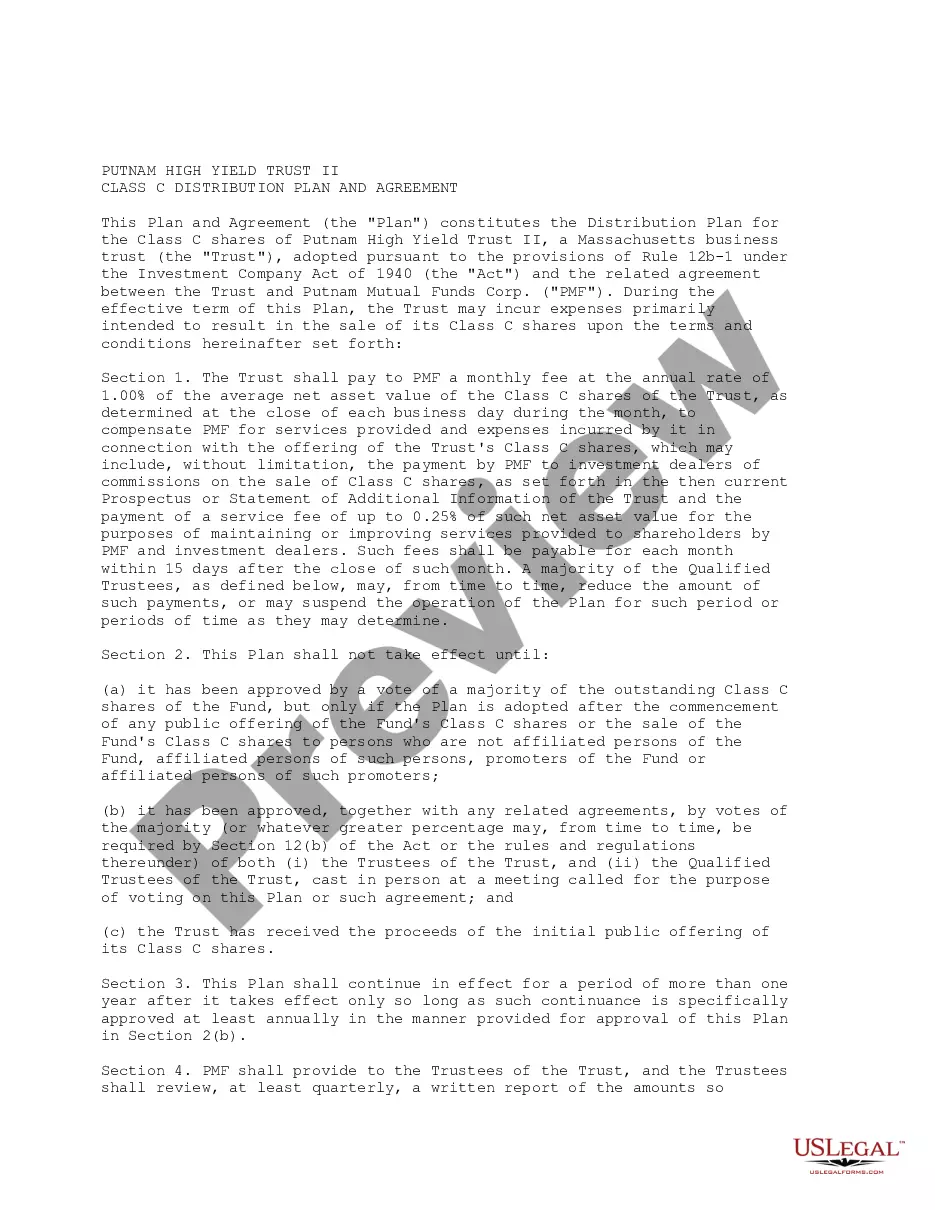
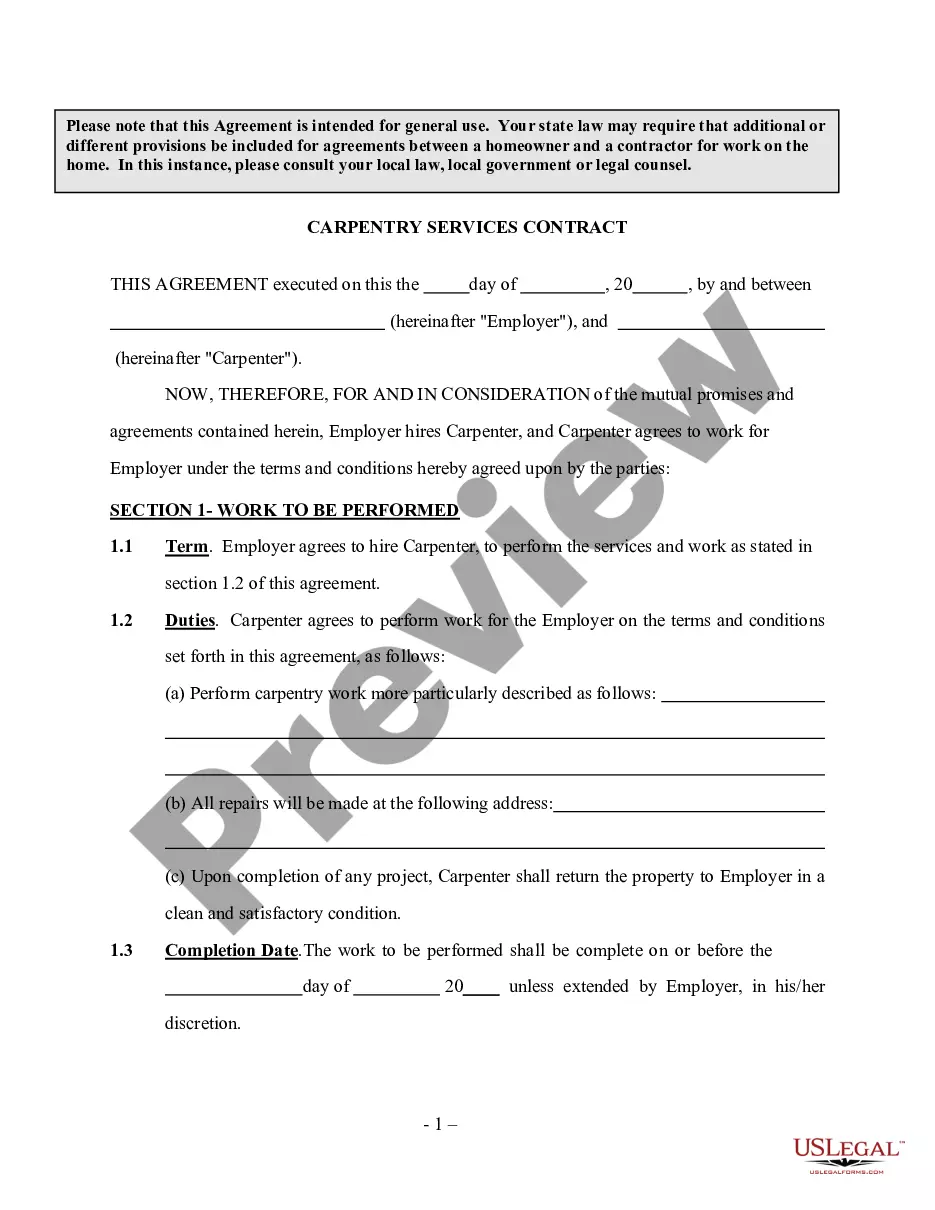
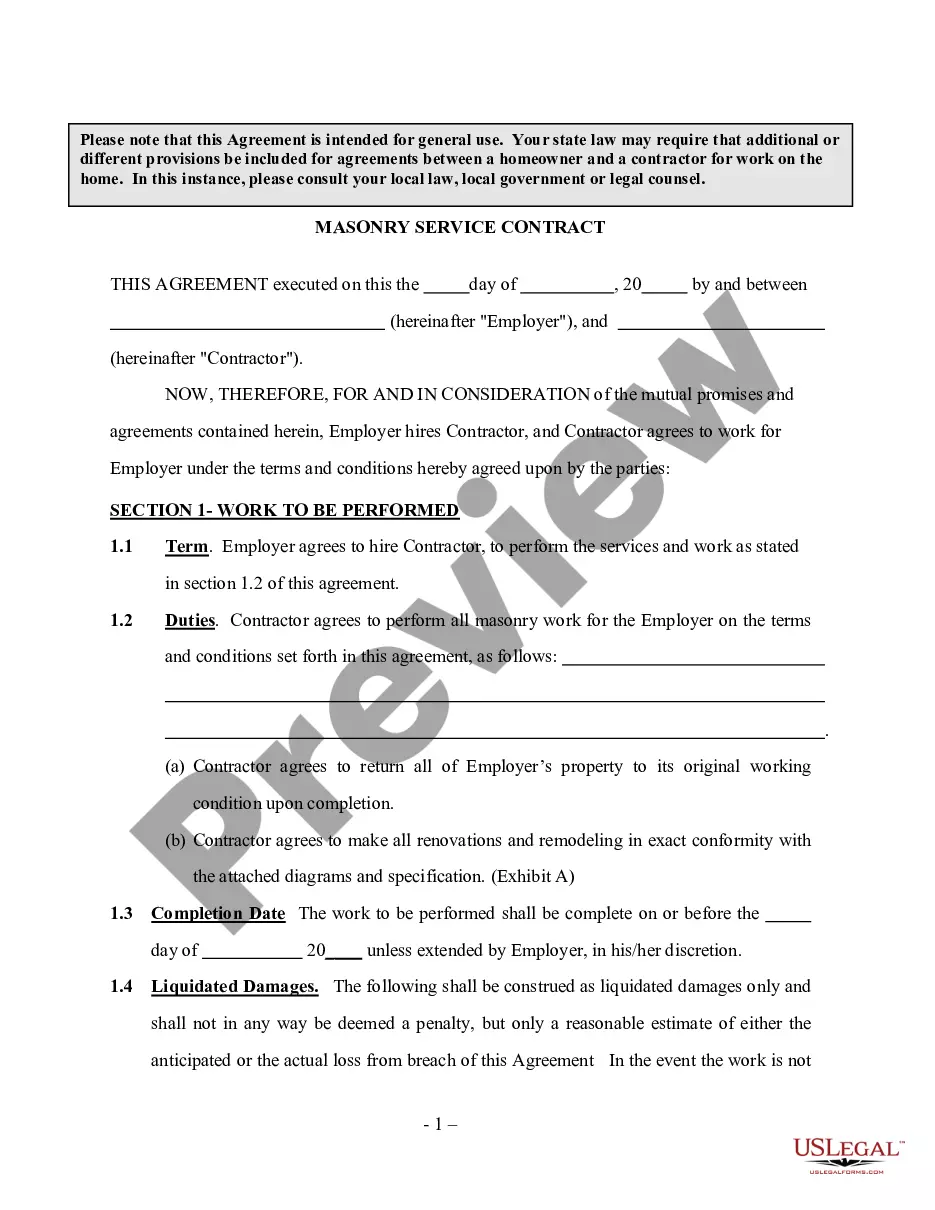
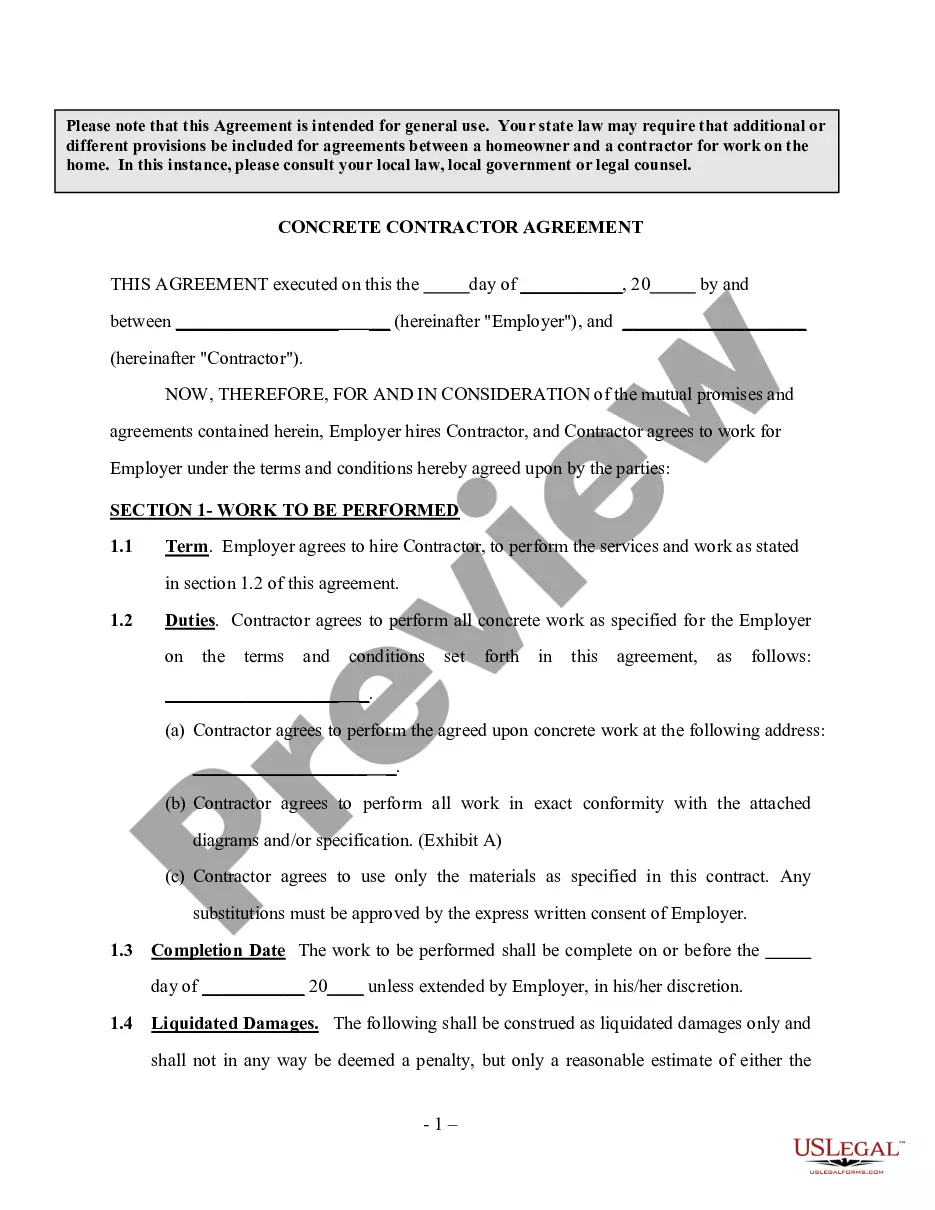
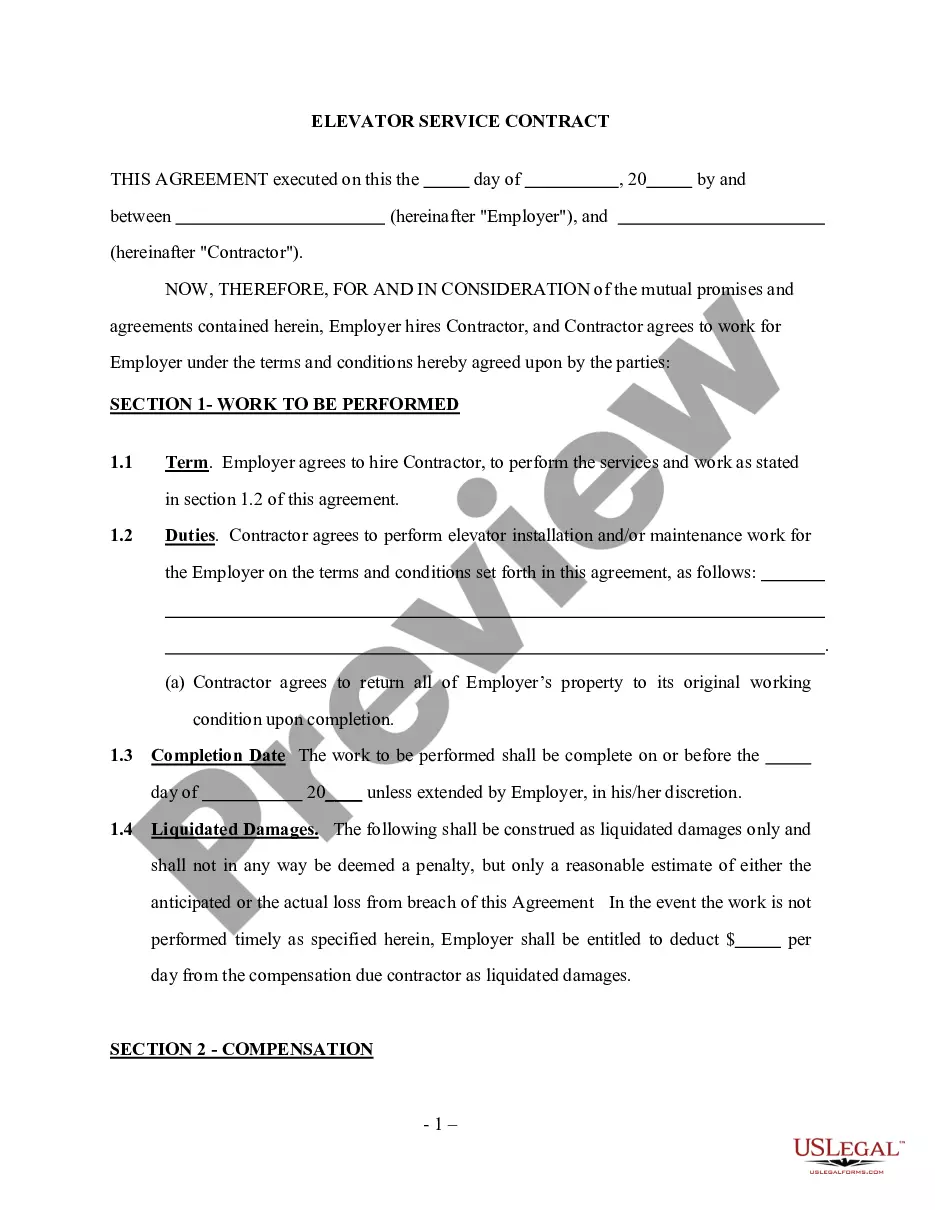
Employer contracts with an independent contractor to provide shoring as specified and agreed upon in the contract.
Georgia Shoring Services Contract - Self-Employed
State:
Multi-State
Control #:
US-INDC-100
Format:
Word;
Rich Text
Instant download
Description
Free preview
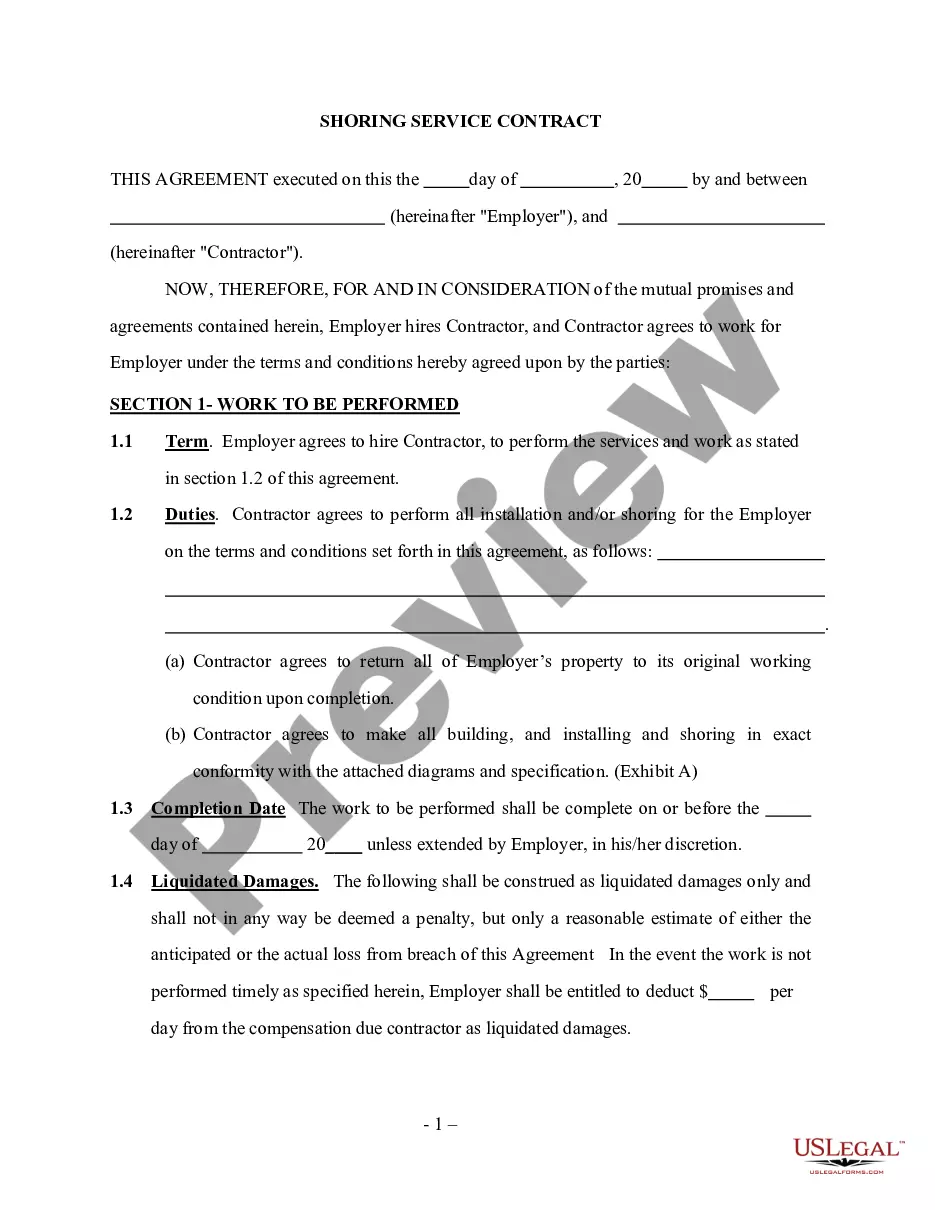
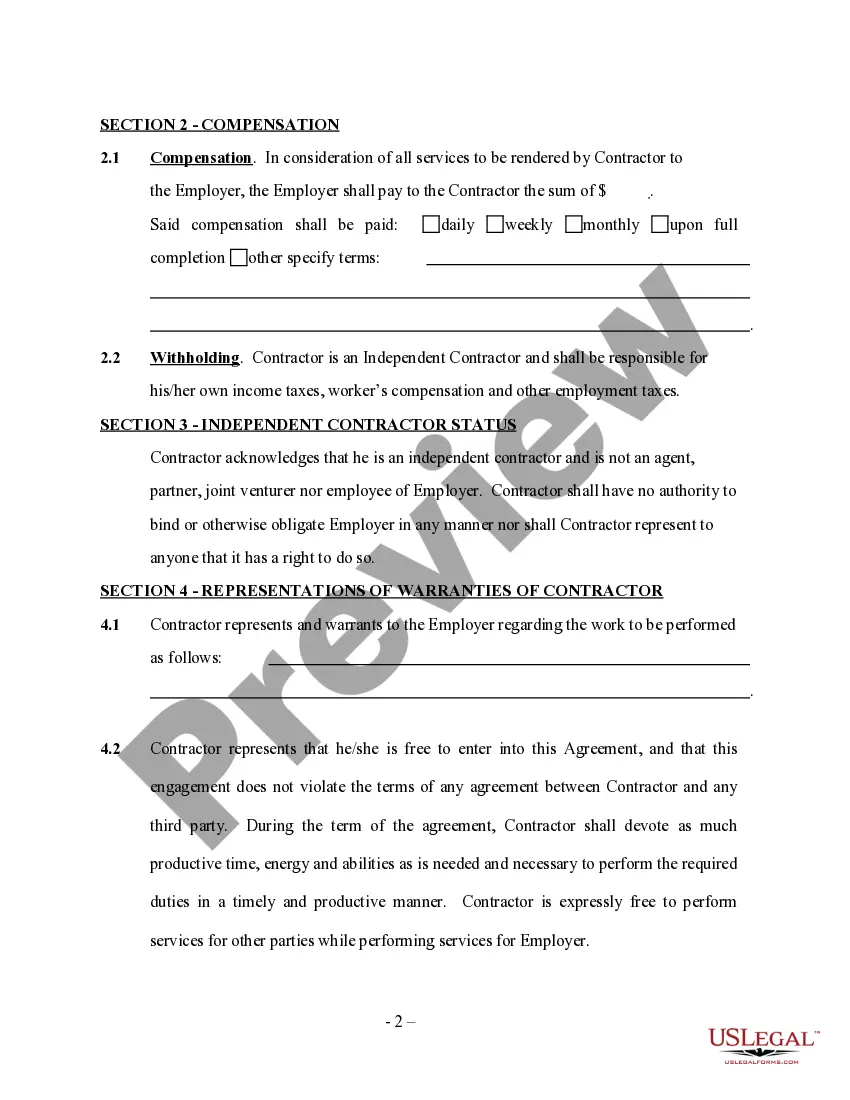
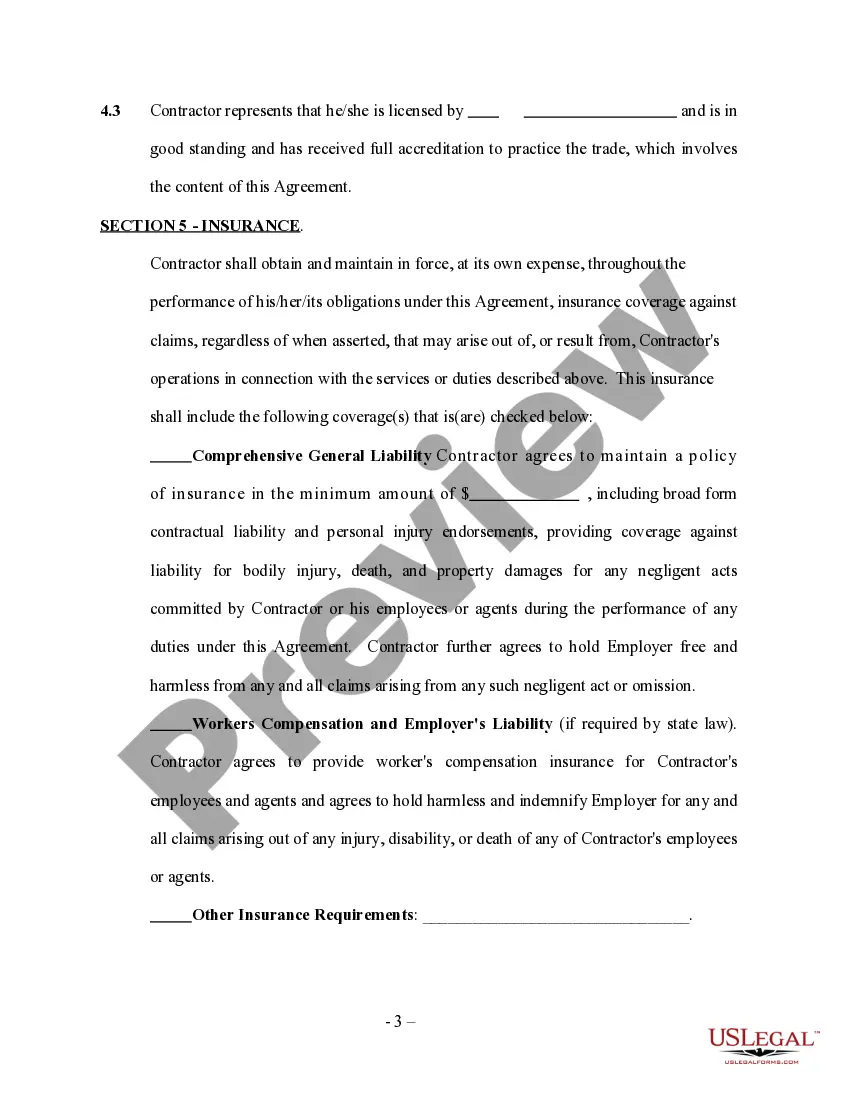
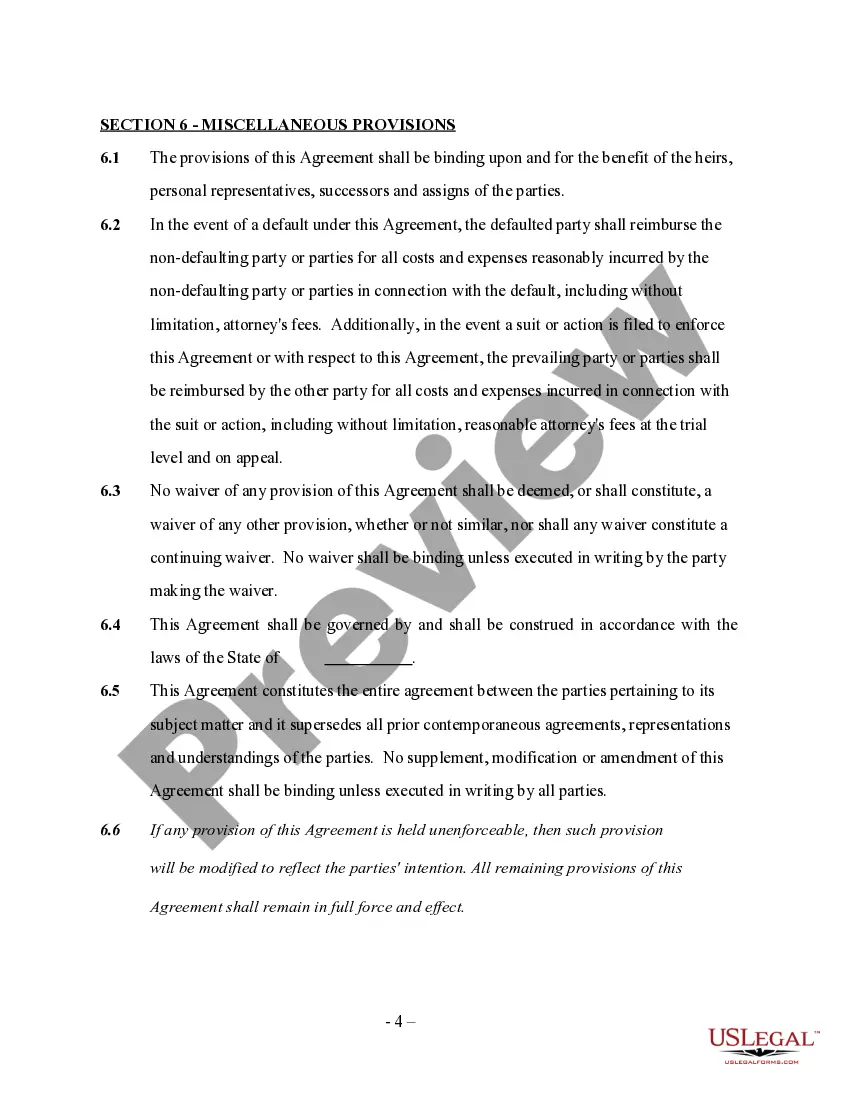
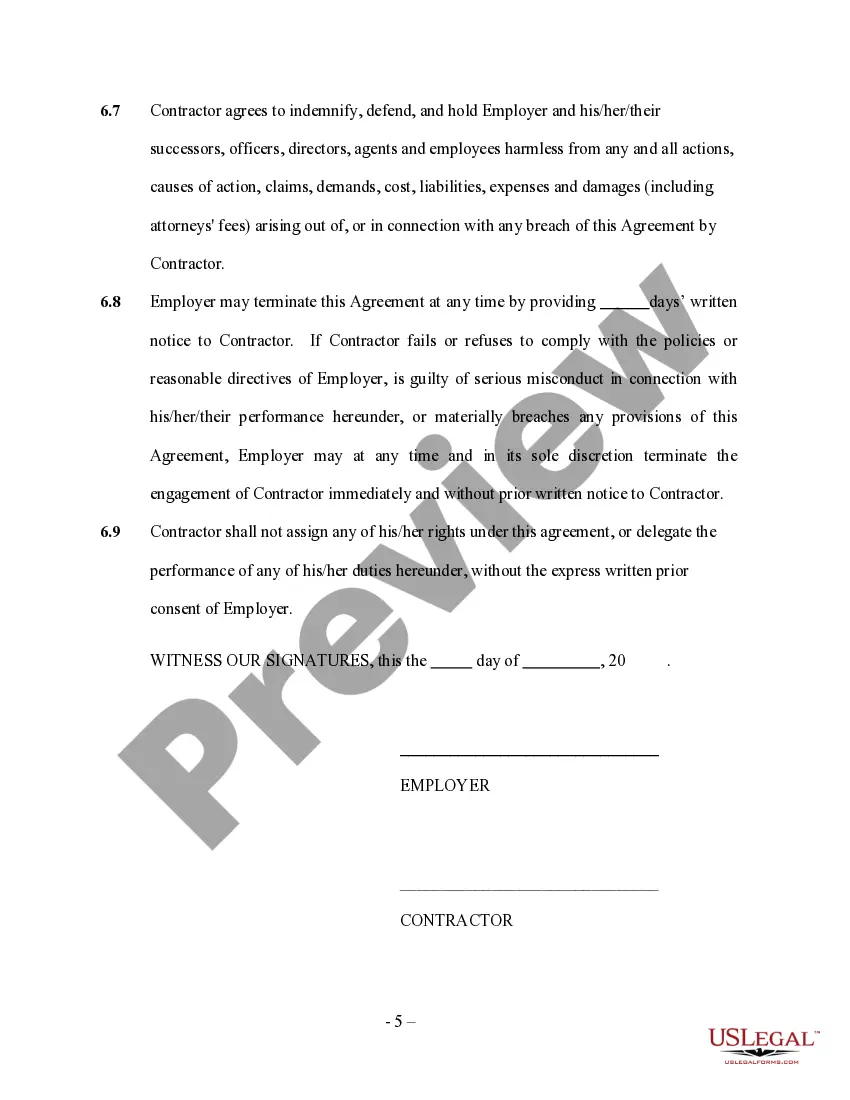
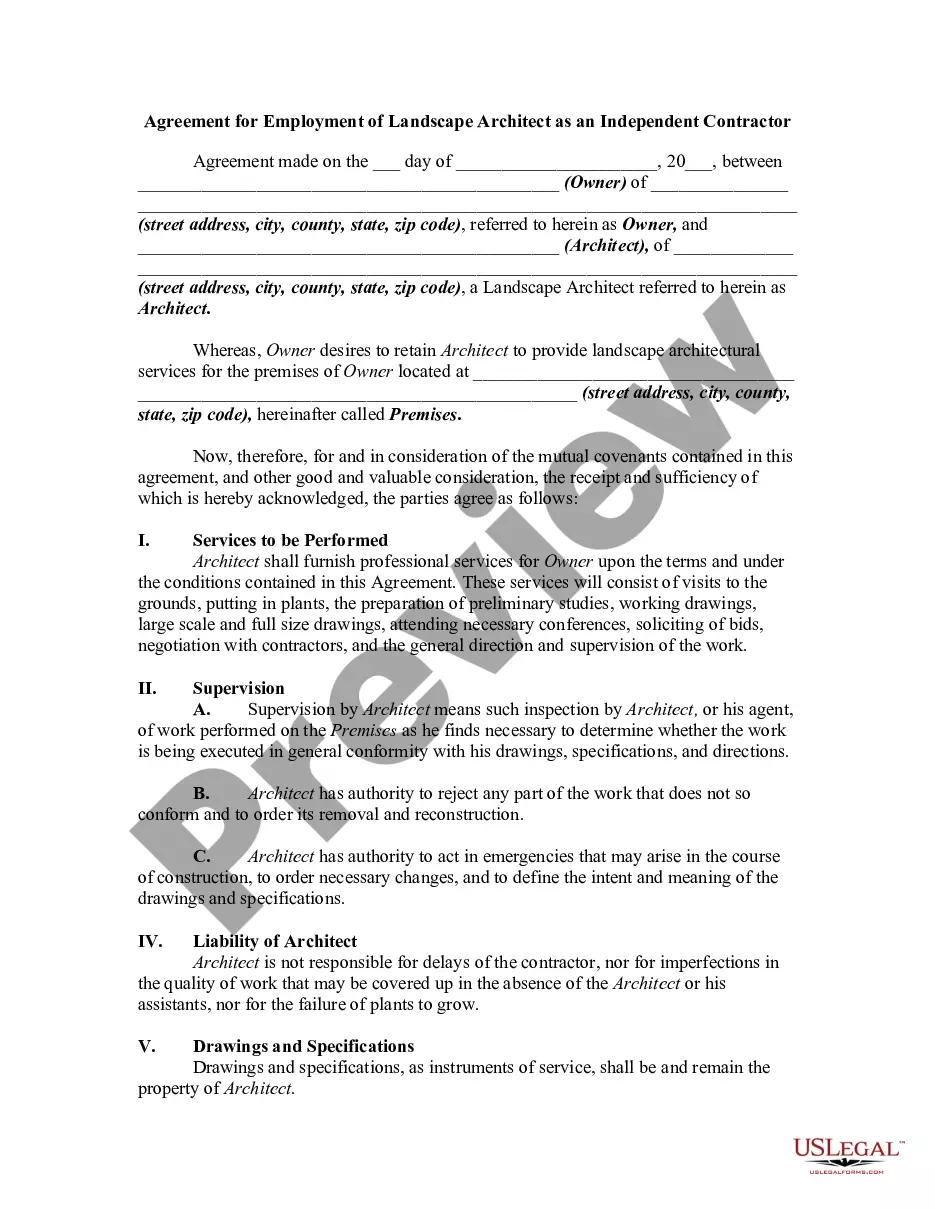
Get your form ready online
Our built-in tools help you complete, sign, share, and store your documents in one place.
Built-in online Word editor
Make edits, fill in missing information, and update formatting in US Legal Forms—just like you would in MS Word.
Export easily
Download a copy, print it, send it by email, or mail it via USPS—whatever works best for your next step.
E-sign your document
Sign and collect signatures with our SignNow integration. Send to multiple recipients, set reminders, and more. Go Premium to unlock E-Sign.
Notarize online 24/7
If this form requires notarization, complete it online through a secure video call—no need to meet a notary in person or wait for an appointment.
Store your document securely
We protect your documents and personal data by following strict security and privacy standards.

Make edits, fill in missing information, and update formatting in US Legal Forms—just like you would in MS Word.

Download a copy, print it, send it by email, or mail it via USPS—whatever works best for your next step.

Sign and collect signatures with our SignNow integration. Send to multiple recipients, set reminders, and more. Go Premium to unlock E-Sign.

If this form requires notarization, complete it online through a secure video call—no need to meet a notary in person or wait for an appointment.

We protect your documents and personal data by following strict security and privacy standards.
Looking for another form?



How to fill out Shoring Services Contract - Self-Employed?
Selecting the appropriate authorized document template can be a challenge.
It goes without saying, there are countless templates accessible on the web, but how will you locate the official form you require.
Utilize the US Legal Forms website. The service offers thousands of templates, such as the Georgia Shoring Services Contract - Self-Employed, which can be utilized for both commercial and personal purposes.
You can review the form using the Preview option and read the form description to ensure it is the appropriate one for you.
- All of the forms are reviewed by professionals and meet federal and state regulations.
- If you are currently registered, Log In to your account and click the Download option to obtain the Georgia Shoring Services Contract - Self-Employed.
- Use your account to search among the legal forms you have purchased previously.
- Visit the My documents tab in your account to get another copy of the document you need.
- If you are a new user of US Legal Forms, here are simple instructions for you to follow.
- First, ensure you have selected the correct form for your city/state.
Form popularity
FAQ
Independent contractors may need a business license, depending on the nature of their work and local regulations. In the case of shoring services, it's wise to check with your local municipal office. A Georgia Shoring Services Contract - Self-Employed can outline your obligations regarding licenses to ensure compliance and avoid any issues down the road.
While it is not mandatory to register your business as an independent contractor in Georgia, doing so can provide numerous benefits. It helps legitimize your work and can protect your personal assets. If you are entering contracts, such as a Georgia Shoring Services Contract - Self-Employed, registration often enhances your credibility and could improve your chances of securing more work.
Yes, you can issue a Form 1099 to someone even if you do not have a business license, as long as the individual performs work for you. However, it is crucial to establish clear contracts, especially when it concerns a Georgia Shoring Services Contract - Self-Employed. It may be wise to consult a tax professional or legal advisor to ensure proper compliance with tax regulations.
In Georgia, you can perform up to $2,500 worth of work without a contractor license. If your project exceeds this amount, you will need to obtain the appropriate license. This rule applies to various types of work, including shoring services. For those dealing with a Georgia Shoring Services Contract - Self-Employed, it's essential to understand these limits to stay compliant.
If you have no contract, your rights can be limited and harder to enforce. You may still have some protections under general labor laws, but having a Georgia Shoring Services Contract - Self-Employed strengthens your position in any disputes. It is always better to have a formal agreement in place to safeguard your rights.
The new federal rule emphasizes the importance of correctly classifying workers as independent contractors or employees. Misclassification can lead to legal and financial consequences. Ensuring your Georgia Shoring Services Contract - Self-Employed adheres to these guidelines will help you maintain compliance.
Yes, having a contract is advisable, even for self-employed individuals. A Georgia Shoring Services Contract - Self-Employed formalizes the agreement and protects your interests. It lays out the scope of work, payment terms, and other essential elements to prevent future disputes.
Independent contractors must comply with tax obligations and local laws, including obtaining necessary licenses. They should also keep proper records of their work and finances. Incorporating these aspects in a Georgia Shoring Services Contract - Self-Employed ensures your operations are legit and efficient.
Technically, you can be classified as a 1099 contractor without a formal contract. However, it is not advisable as a Georgia Shoring Services Contract - Self-Employed provides legal protection and clarifies the working relationship. Having a contract can significantly reduce the risk of disputes.
In Georgia, independent contractors typically need a business license to operate legally. The exact requirements can vary depending on your location and the services you provide. Always check local regulations to ensure your Georgia Shoring Services Contract - Self-Employed complies with licensing requirements.