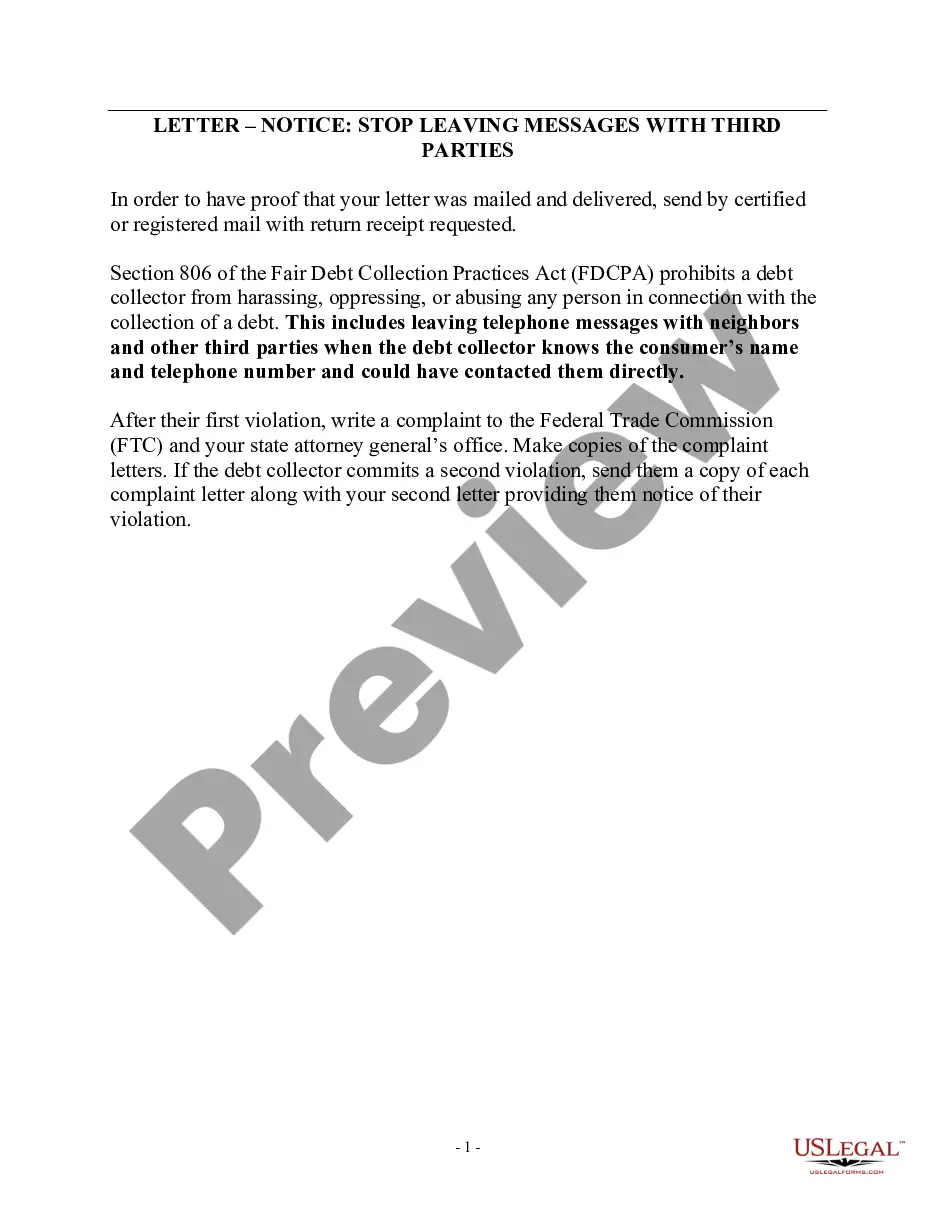
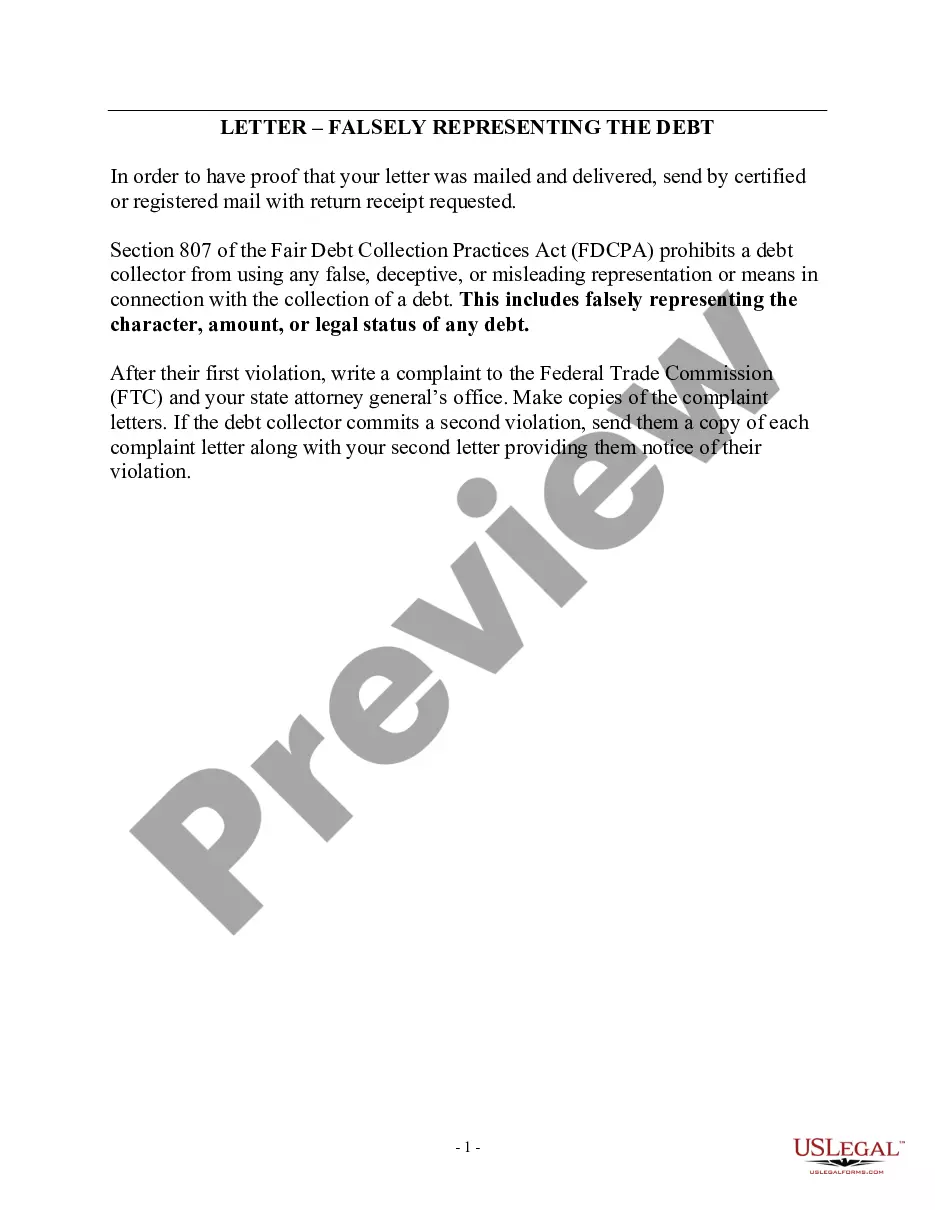
Section 806 of the Fair Debt Collection Practices Act says a debt collector may not harass, oppress, or abuse any person in connection with the collection of a debt. This includes causing a telephone to ring or engaging any person in telephone conversation repeatedly or continuously with intent to annoy, abuse, or harass any person at the called number.
Georgia Notice to Debt Collector - Unlawful Repeated or Continuous Telephone Calls
Category:
State:
Multi-State
Control #:
US-DCPA-32
Format:
Word;
Rich Text
Instant download
Description
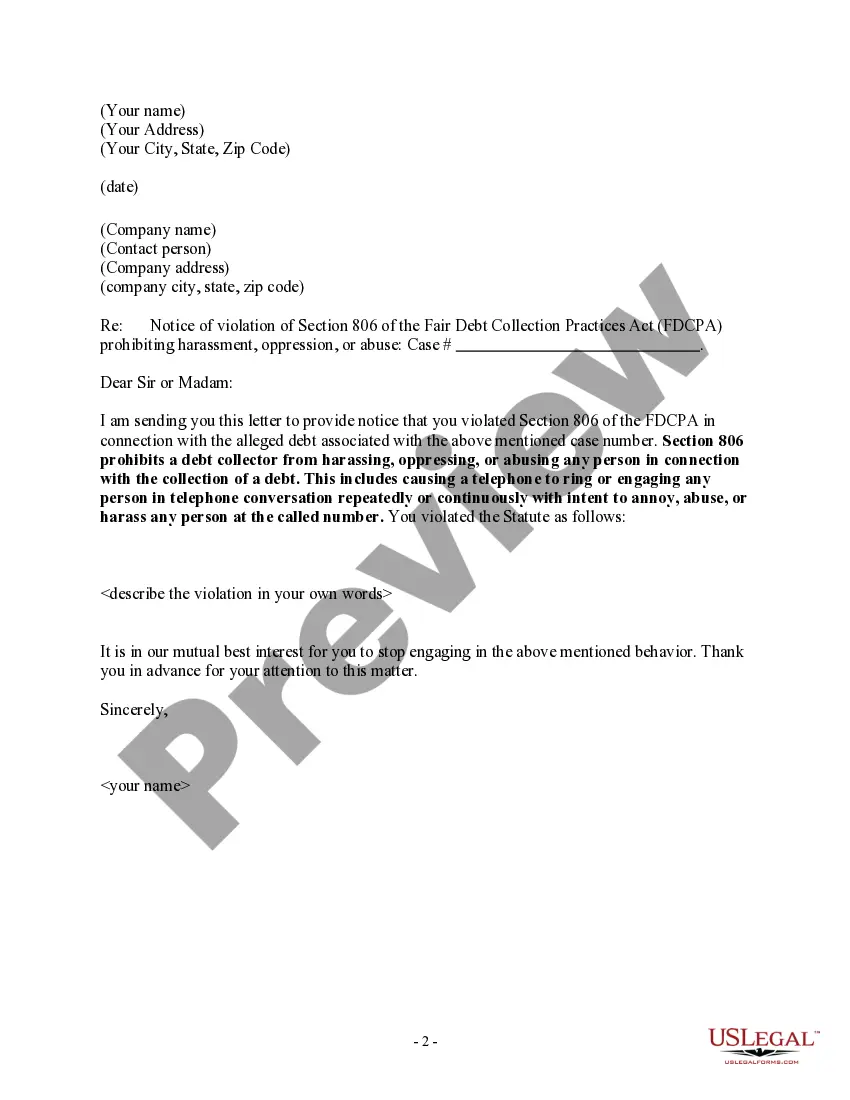
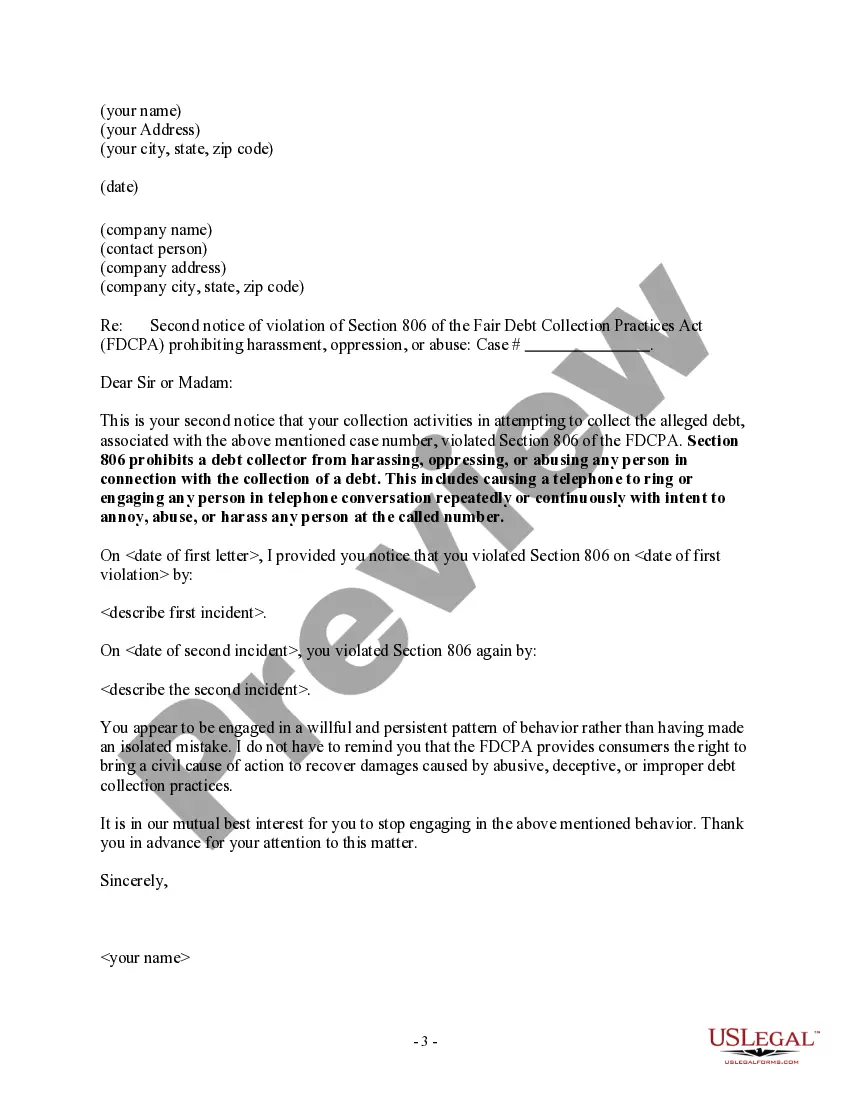
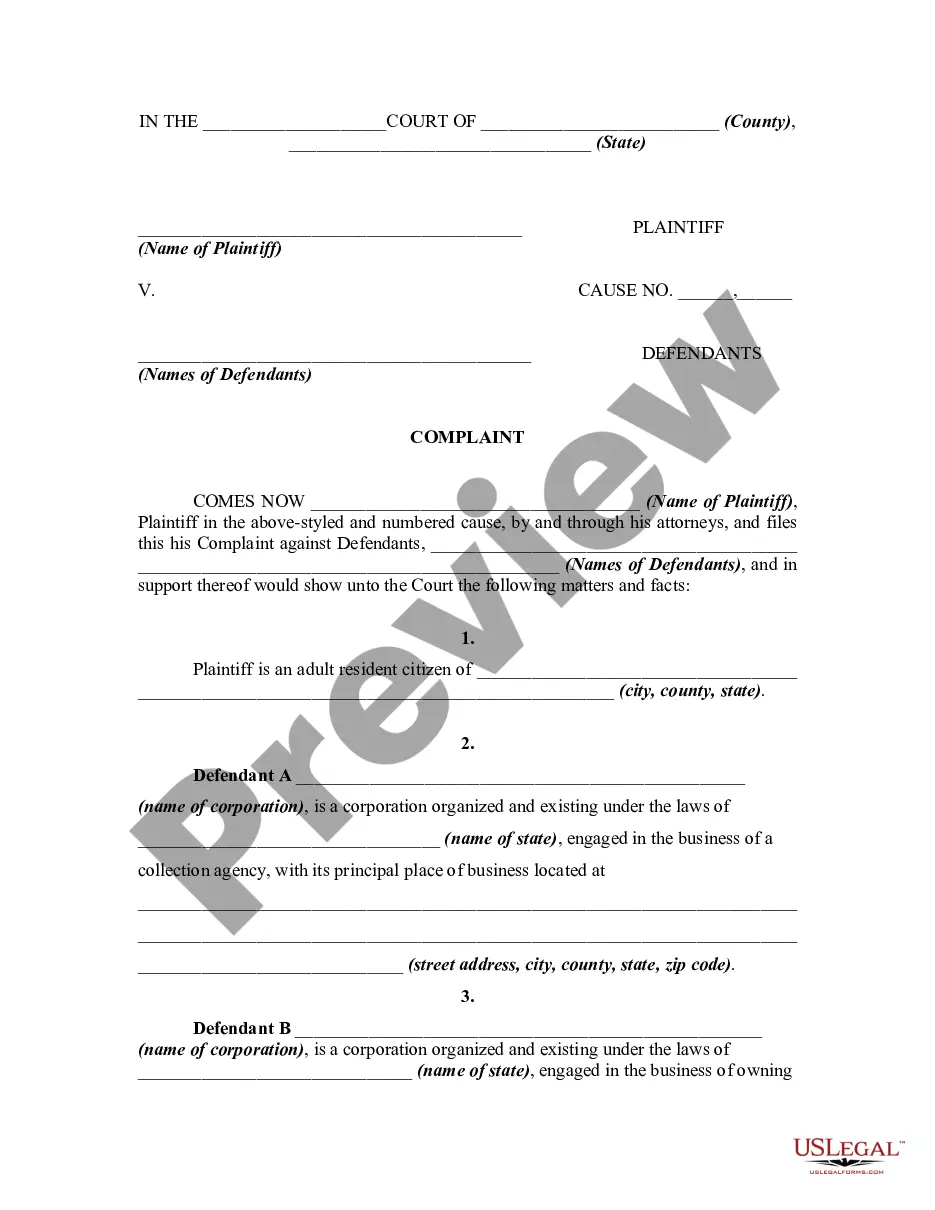
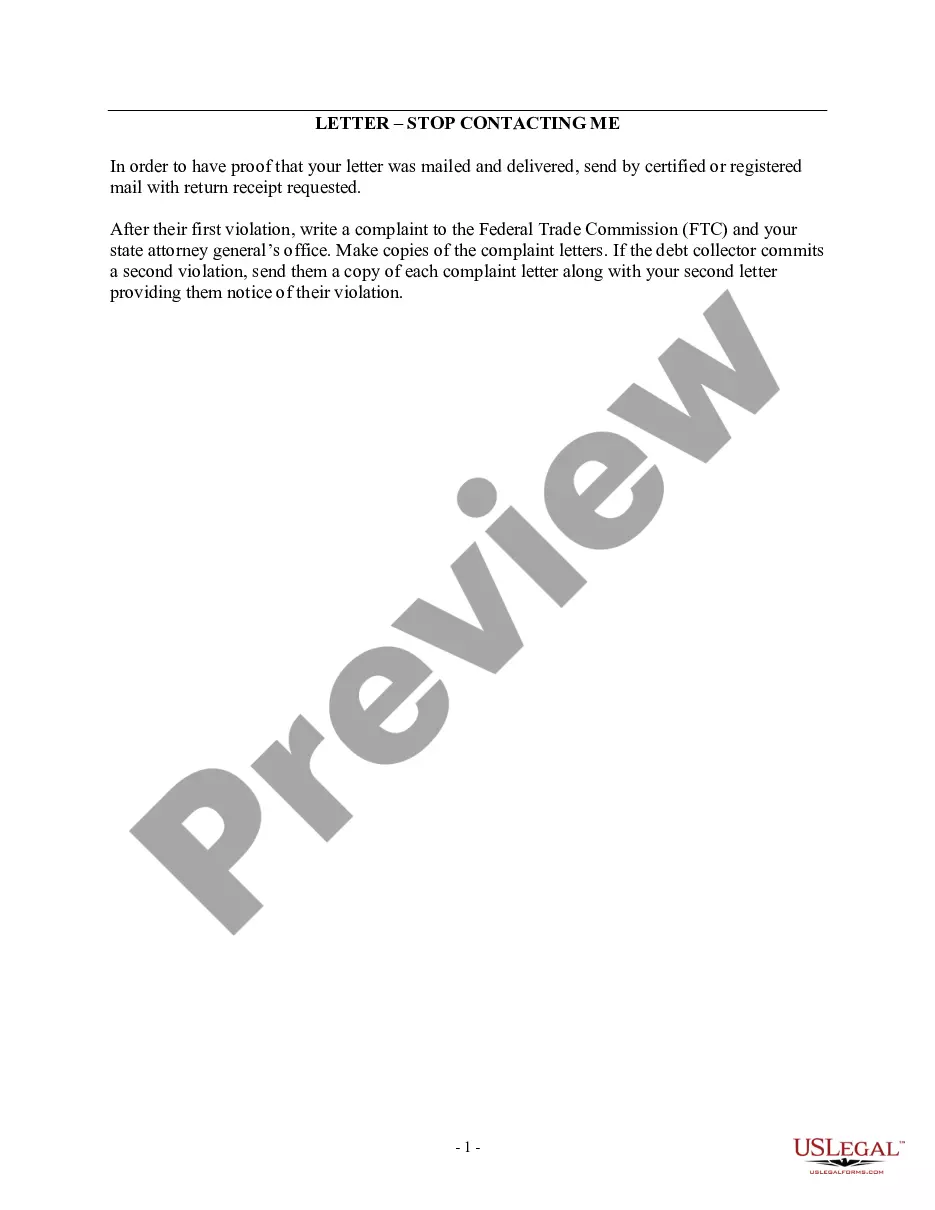
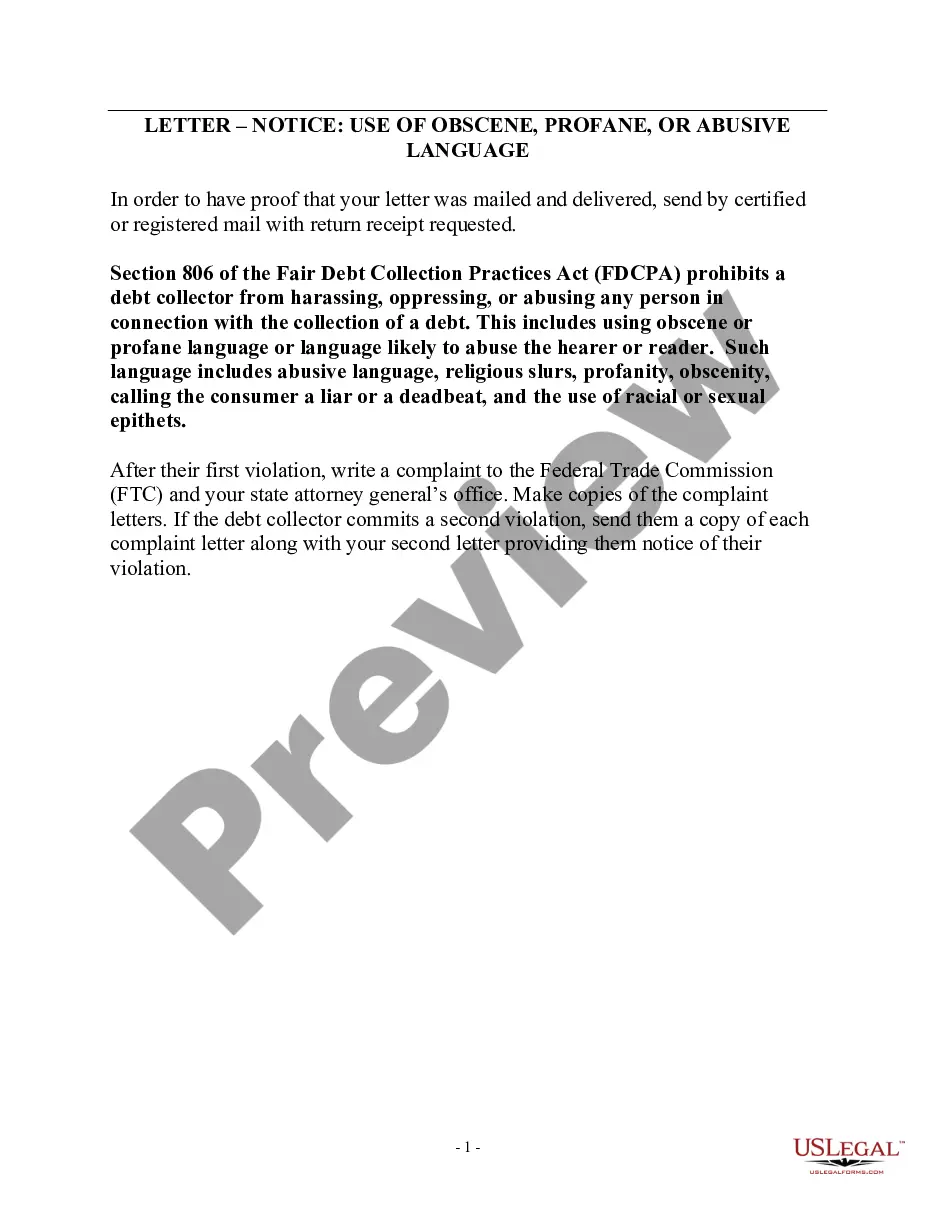
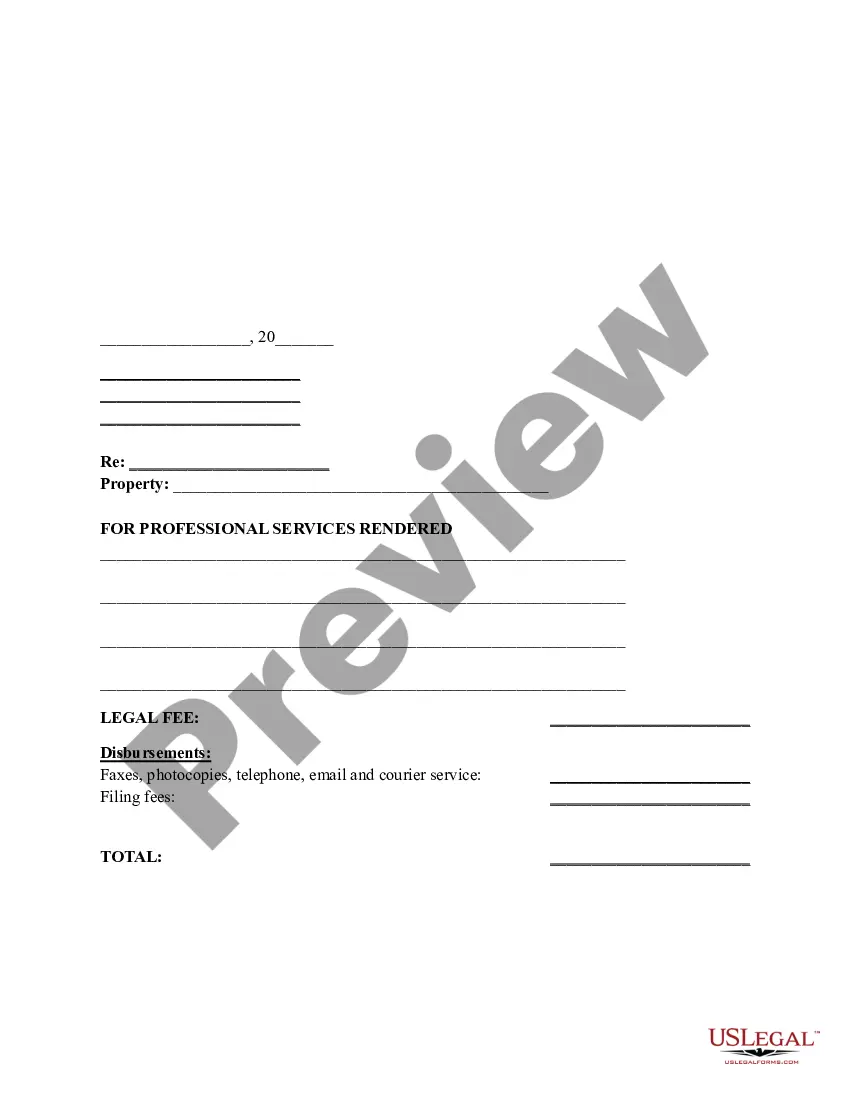
Use this form to notify a debt collector they violated the Fair Debt Collection Practices Act (FDCPA). Receiving notice from a consumer makes it more likely a debt collector will comply with the FDCPA. If they don't comply after receiving notice, your notice letter may help prove that their actions were intentional.
Free preview

How to fill out Notice To Debt Collector - Unlawful Repeated Or Continuous Telephone Calls?
You can spend time online trying to locate the legal document template that meets the state and federal requirements you need.
US Legal Forms offers thousands of legal forms that can be reviewed by experts.
You can easily download or print the Georgia Notice to Debt Collector - Unlawful Repeated or Continuous Telephone Calls from my service.
First, ensure you have selected the correct document template for the region/city of your choice. Review the form description to confirm you have chosen the right form. If available, use the Preview option to review the document template as well.
- If you already have a US Legal Forms account, you may Log In and then click the Obtain button.
- After that, you may complete, modify, print, or sign the Georgia Notice to Debt Collector - Unlawful Repeated or Continuous Telephone Calls.
- Each legal document template you purchase is yours forever.
- To obtain another copy of any purchased form, navigate to the My documents section and click the relevant option.
- If this is your first time using the US Legal Forms website, follow the simple instructions below.
Form popularity
FAQ
Also, debt collectors can't call you numerous times a day. Doing so is considered a form of harassment by the Federal Trade Commission (FTC) and is explicitly not allowed.
Also, debt collectors can't call you numerous times a day. Doing so is considered a form of harassment by the Federal Trade Commission (FTC) and is explicitly not allowed.
How often do I have to get these calls to make it harassment? Just one unwelcome call can be harassing; but usually your local phone company will not take action unless the calls are frequent.
Alberta and Nova Scotia have a similar "three strikes" rule limiting the amount of contact from collectors within a seven-day consecutive period.
Federal law doesn't give a specific limit on the number of calls a debt collector can place to you. A debt collector may not call you repeatedly or continuously intending to annoy, abuse, or harass you or others who share the number.
If you have two outstanding debts, then your debt collector can call you once per debt, resulting in two calls per day max. If a debt collector calls you more than one time per debt each day, this is harassment, and it is illegal.
The FDCPA recently revised some of its debt collection rules and set a call limit of a maximum of 7 times per week per account. If you have multiple collection accounts, that means you might still have to deal with many calls. The new rules will take into effect in 2021.
The FDCPA prohibits debt collectors from calling you repeatedly, using profane language, making threats, or otherwise harassing you. If a debt collector is constantly calling you and causing you stress, sending a cease and desist letter can stop the collector from harassing you.
The statute of limitations is a law that limits how long debt collectors can legally sue consumers for unpaid debt. The statute of limitations on debt varies by state and type of debt, ranging from three years to as long as 20 years.