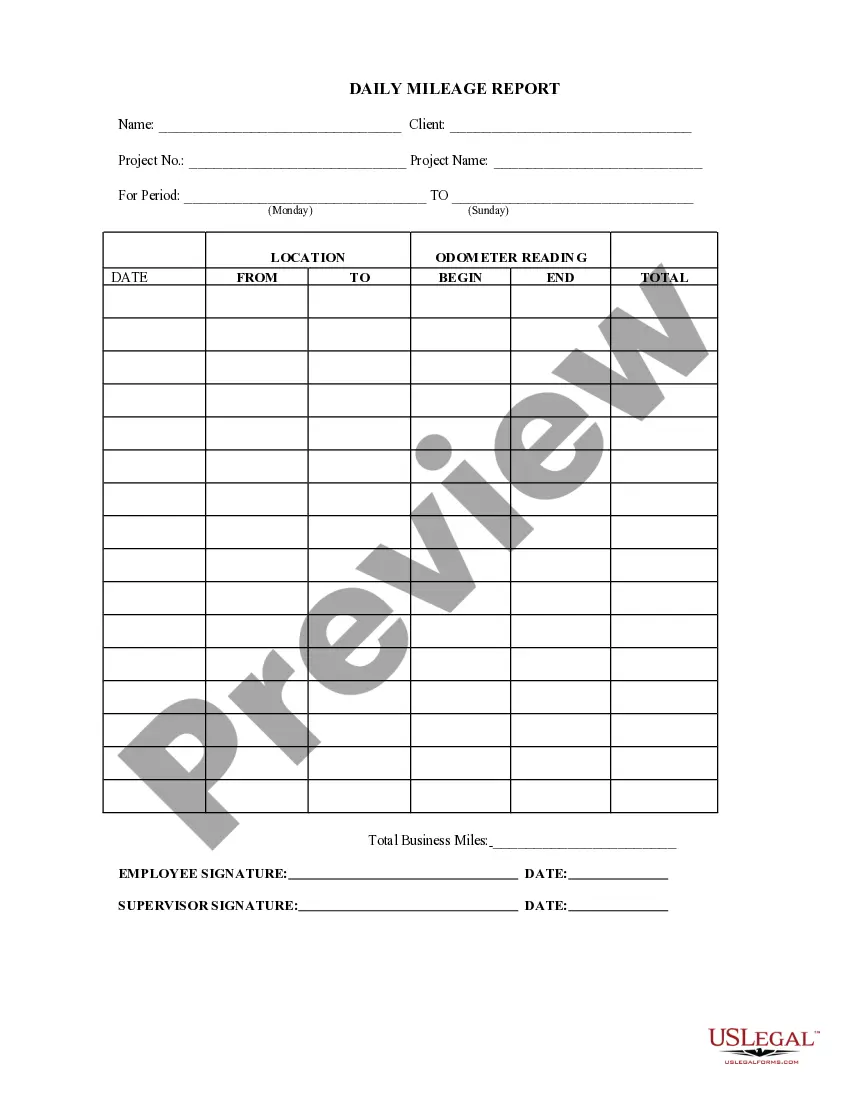
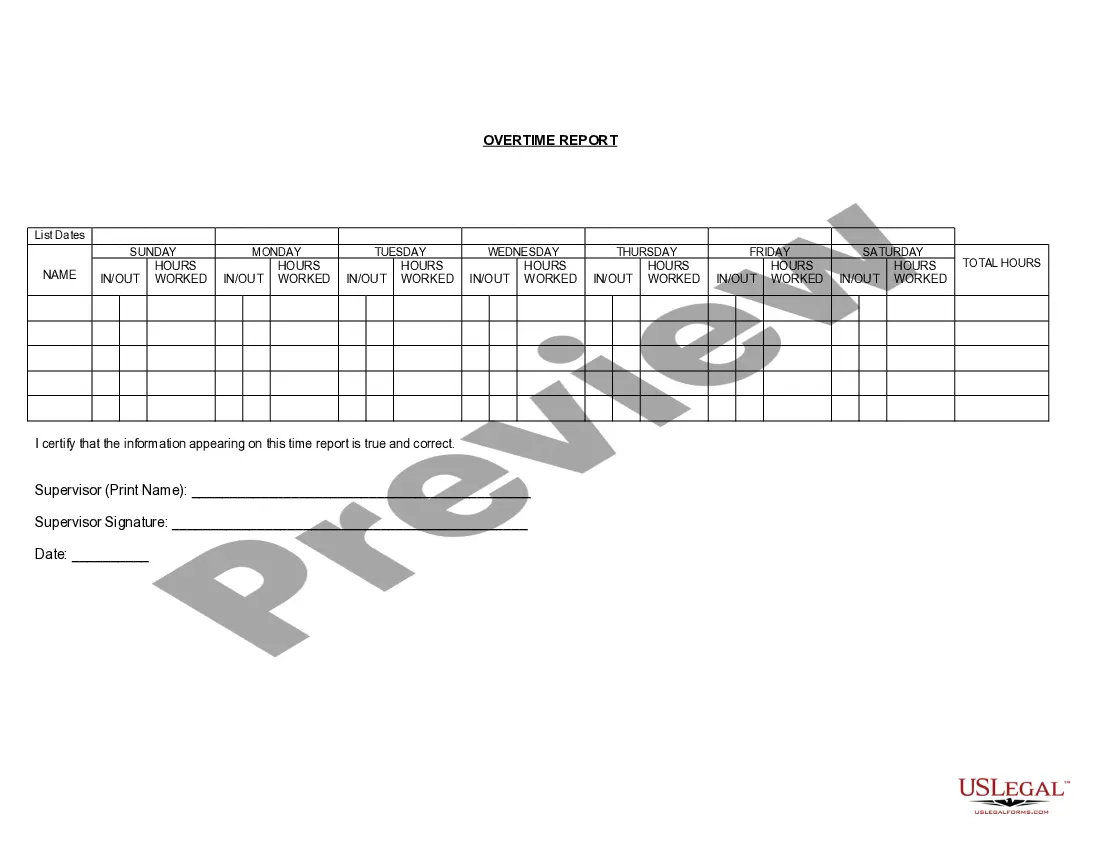
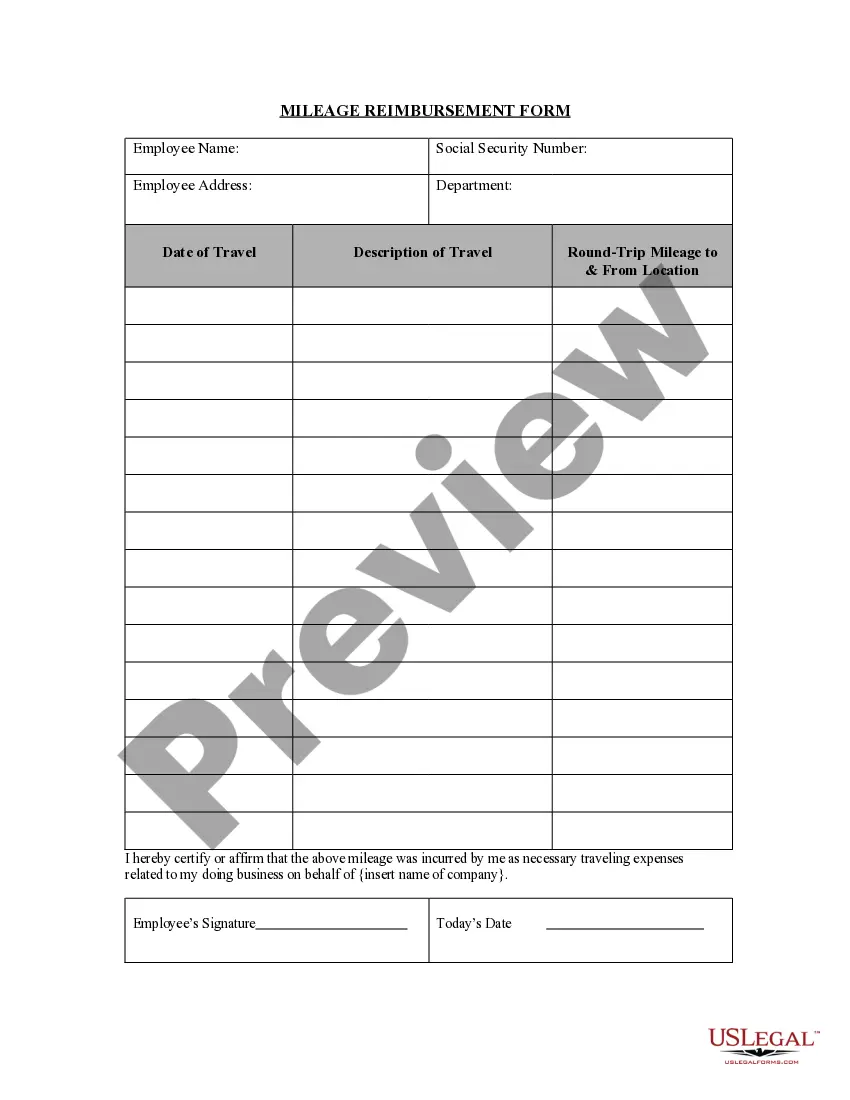
This form documents the daily mileage report for projects. The report consists of the date, location (from/to) and the odometer reading (begin/end), and the total.
Georgia Daily Mileage Report
Instant download
Description



How to fill out Daily Mileage Report?
If you wish to download, obtain, or print authentic document templates, utilize US Legal Forms, the largest collection of official forms, which can be accessed online.
Take advantage of the website's straightforward and user-friendly search feature to locate the paperwork you require. Various templates for business and personal purposes are categorized by types and states, or keywords.
Utilize US Legal Forms to find the Georgia Daily Mileage Report with just a few clicks.
Step 5. Complete the purchase. You can use your Visa or MasterCard or PayPal account to finalize the transaction.
Step 6. Select the format of the official document and download it onto your device. Step 7. Complete, edit, and print or sign the Georgia Daily Mileage Report. Every official document format you purchase is yours indefinitely. You have access to every document you saved in your account. Navigate to the My documents section and select a form to print or download again. Get started and download, and print the Georgia Daily Mileage Report with US Legal Forms. There are thousands of professional and state-specific forms available for your business or personal needs.
- If you are already a US Legal Forms customer, Log In to your account and click the Download button to access the Georgia Daily Mileage Report.
- You can also retrieve forms you previously saved in the My documents section of your account.
- If this is your first time using US Legal Forms, follow the instructions below.
- Step 1. Ensure you have selected the form for the correct region/country.
- Step 2. Use the Preview option to review the form's content. Don't forget to read the description.
- Step 3. If you are not satisfied with the document, utilize the Search field at the top of the screen to find alternative versions of the official form format.
- Step 4. Once you have located the form you need, click the Purchase now button. Choose the pricing plan that suits you and provide your information to create an account.
Form popularity
FAQ
Mileage reimbursement is not legally required in Georgia, but employers are encouraged to establish clear policies. Employees might expect reimbursement for business-related travel, and having a Georgia Daily Mileage Report can support these claims. It's wise for both employees and employers to communicate openly about reimbursement practices to maintain a positive work environment.
While it is not illegal for a company in Georgia to choose not to reimburse mileage, it can lead to employee dissatisfaction and potential turnover. Employees should be aware of their rights and any company policies regarding mileage reimbursement. Keeping a Georgia Daily Mileage Report can aid in discussions with employers about compensation for travel expenses.
Georgia does not have a specific state law mandating mileage reimbursement for employees; however, many employers choose to compensate their workers for business-related travel. When filing a Georgia Daily Mileage Report, it's crucial to understand your company's reimbursement policy. Make sure to keep detailed records of your mileage to facilitate accurate reimbursement.
The mileage rate for Georgia typically follows the federal standard mileage rate set by the IRS. For 2023, the rate is 65.5 cents per mile for business use. When completing your Georgia Daily Mileage Report, utilizing the correct mileage rate ensures accurate reimbursement. Always refer to the IRS website for the most current rates.
In Georgia, the odometer exemption applies to vehicles that are not required to have their odometer reading recorded. This typically includes vehicles that are older than 10 years or those that weigh more than 16,000 pounds. If you're filing a Georgia Daily Mileage Report, it's essential to understand how this exemption may affect your reporting requirements. Always check the latest regulations for any updates.
To contact a Georgia state agency, visit the official Georgia state government website. You can find phone numbers, email addresses, and office locations for various agencies. For specific inquiries related to the Georgia Daily Mileage Report, consider reaching out to the Department of Revenue or the Department of Transportation. They can provide detailed guidance and assistance.
Calculating traffic counts involves gathering data over a specific period and averaging it to determine daily traffic volume. You can utilize tools and reports like the Georgia Daily Mileage Report to assist in this calculation. Additionally, understanding peak hours and seasonal variations can provide deeper insights into traffic trends.
You can obtain traffic counts by contacting local transportation agencies or accessing their online databases. The Georgia Daily Mileage Report is an excellent starting point for finding accurate traffic count data. Furthermore, platforms like uslegalforms can assist you in navigating the necessary channels to acquire this information efficiently.
To view traffic counts on Google Maps, you can use the 'Traffic' layer feature available on the platform. While it primarily shows real-time traffic conditions, you can also find historical traffic data by accessing reports like the Georgia Daily Mileage Report. This integration can help you analyze traffic patterns effectively.
The annual average daily traffic (AADT) is a measurement of the total vehicle traffic on a roadway averaged over a year. This metric helps in understanding traffic volume and patterns, which is essential for planning and development. The Georgia Daily Mileage Report often includes AADT figures, providing clarity on traffic trends in Georgia.