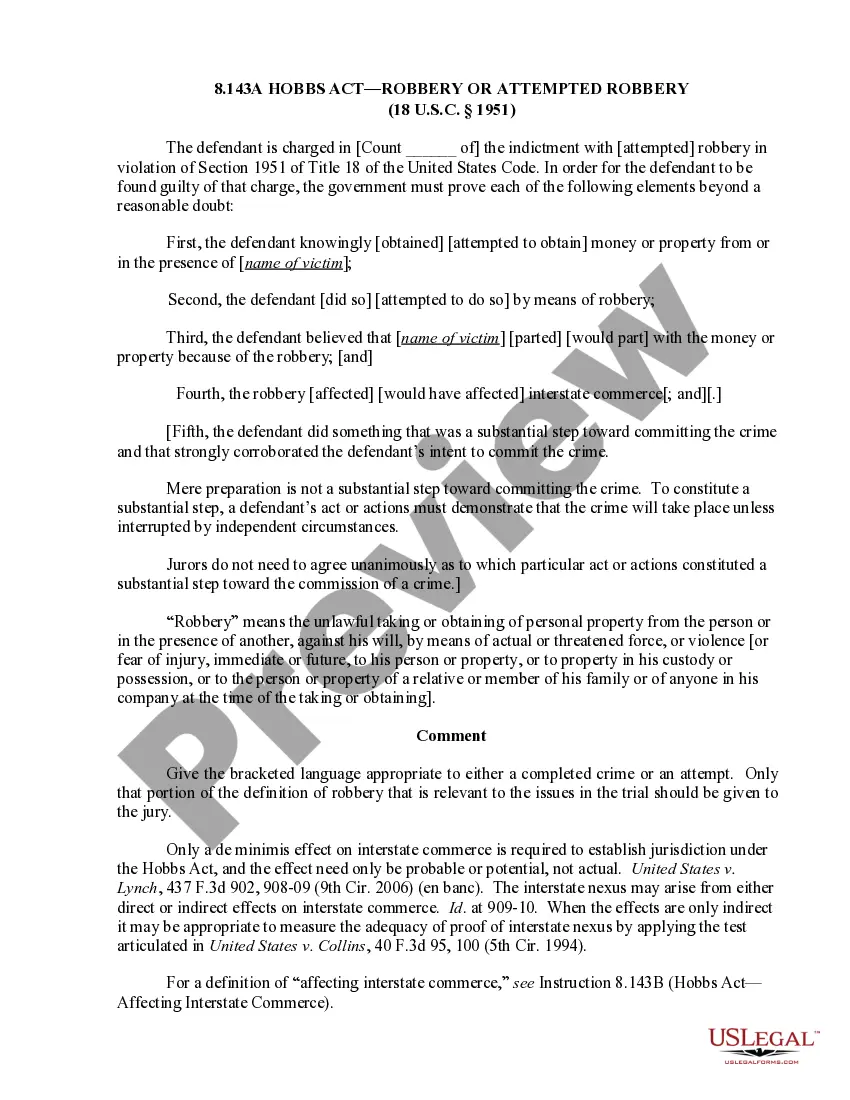
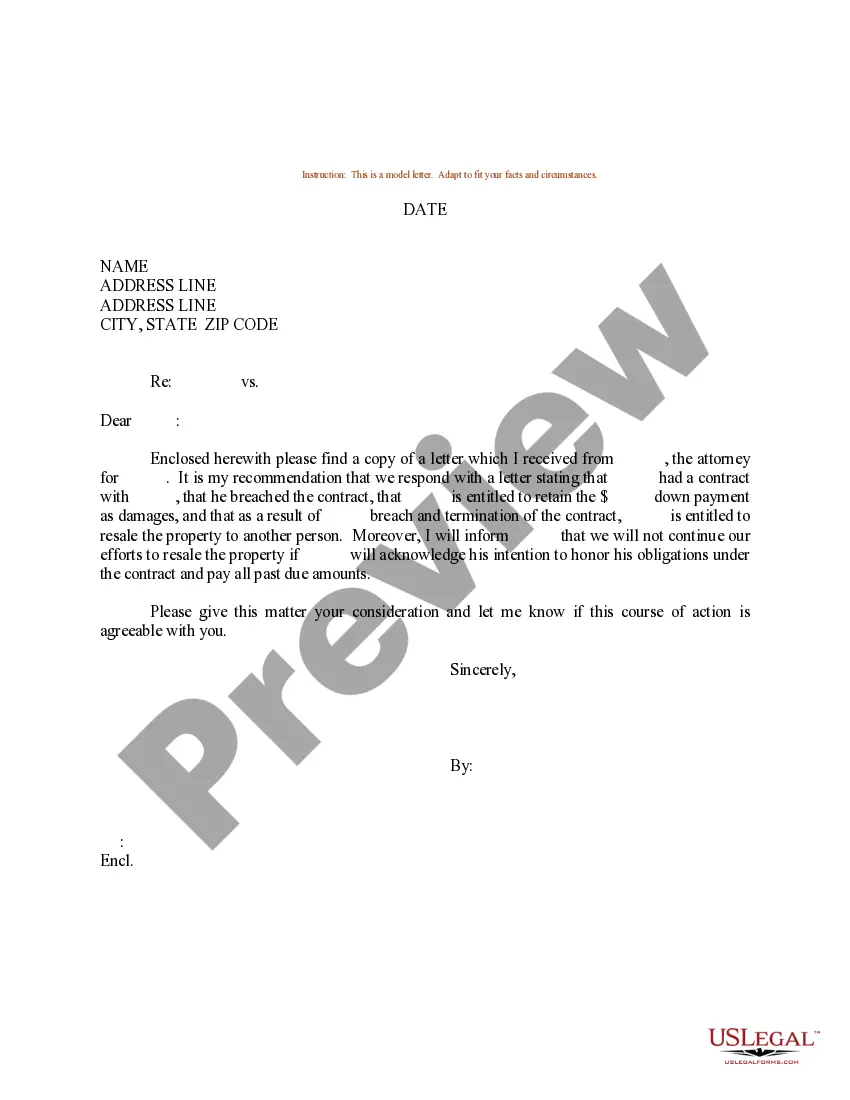
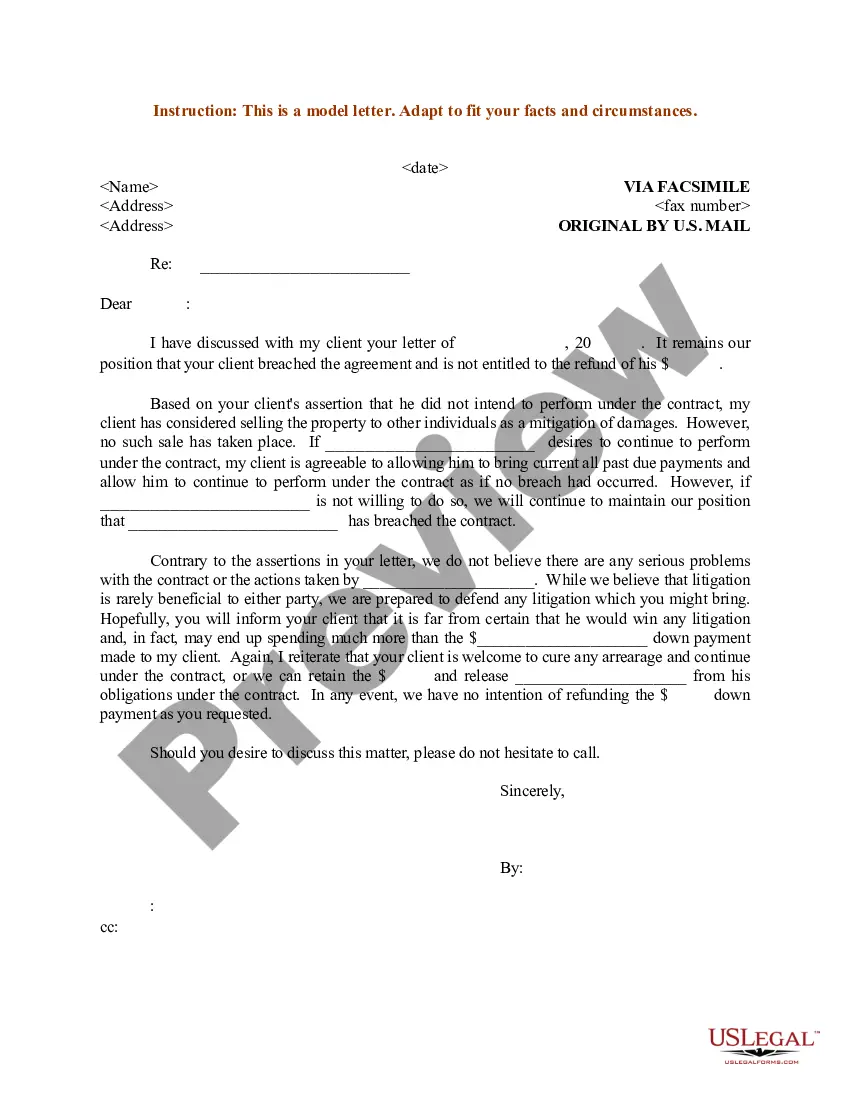
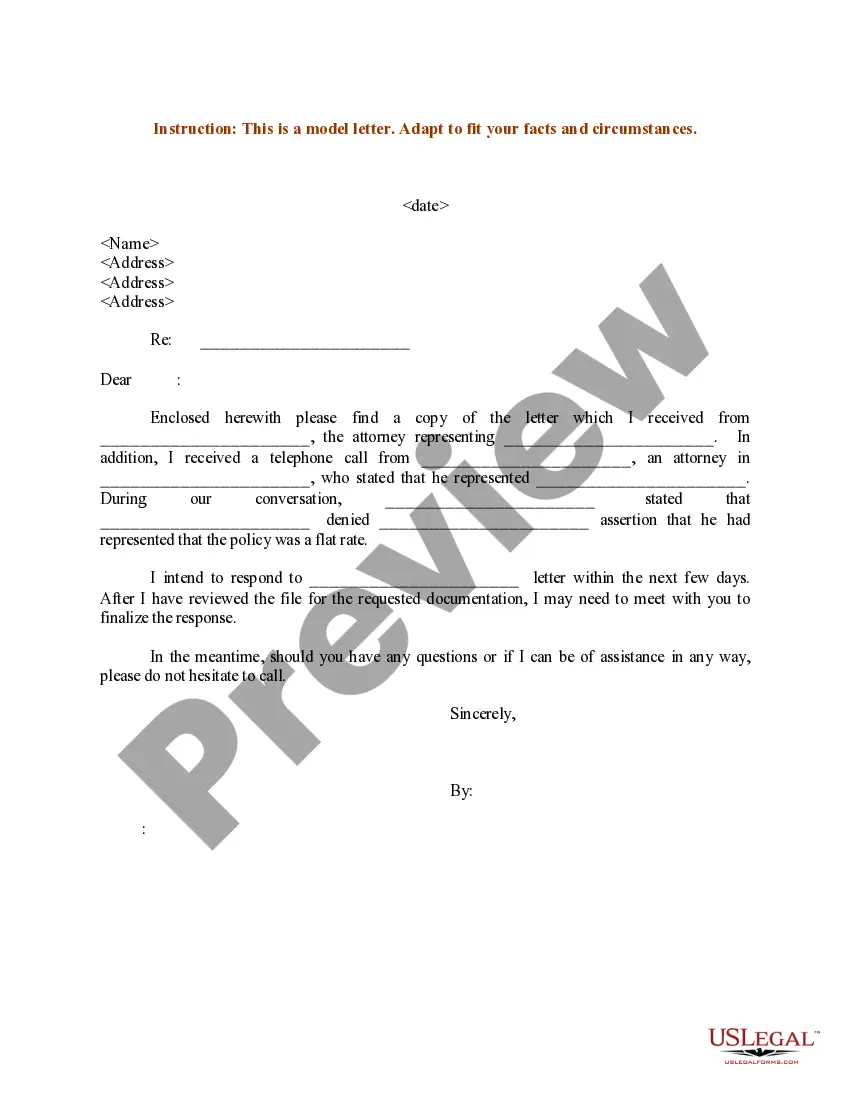
Georgia Sample Letter to Client with Case Update - Breach of Contract Litigation
Description
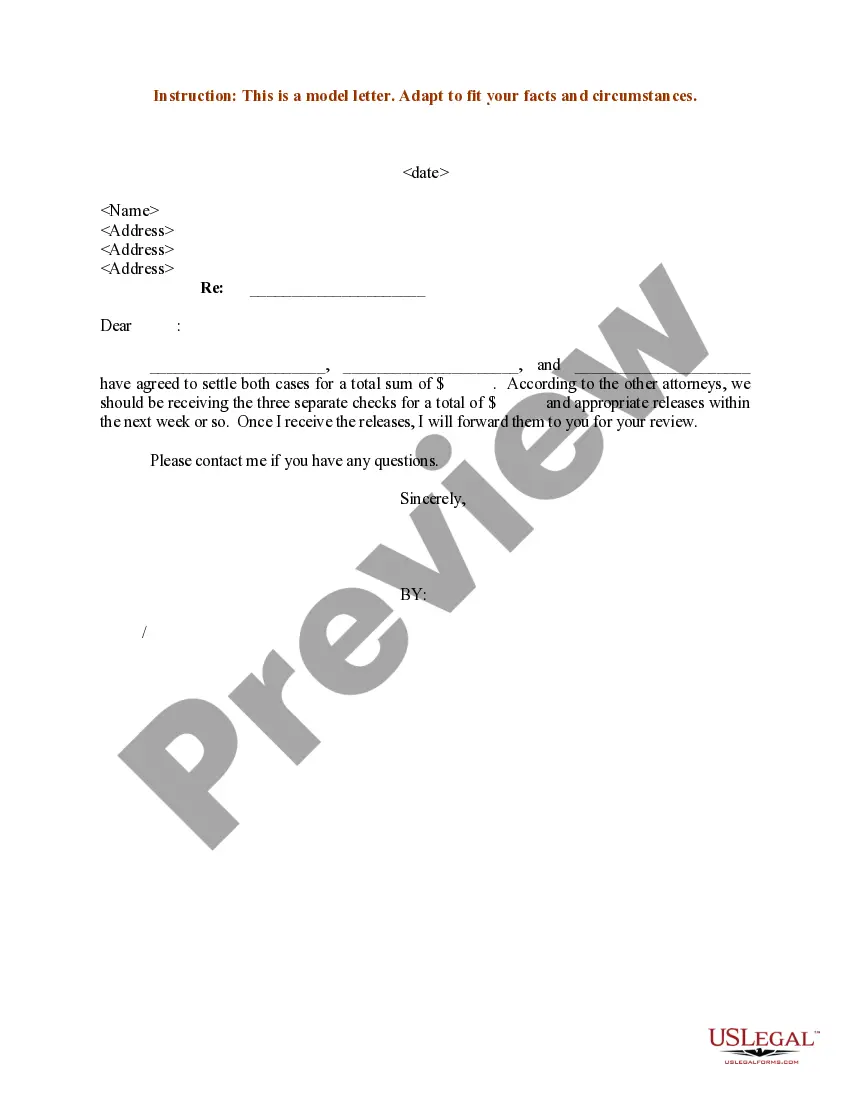
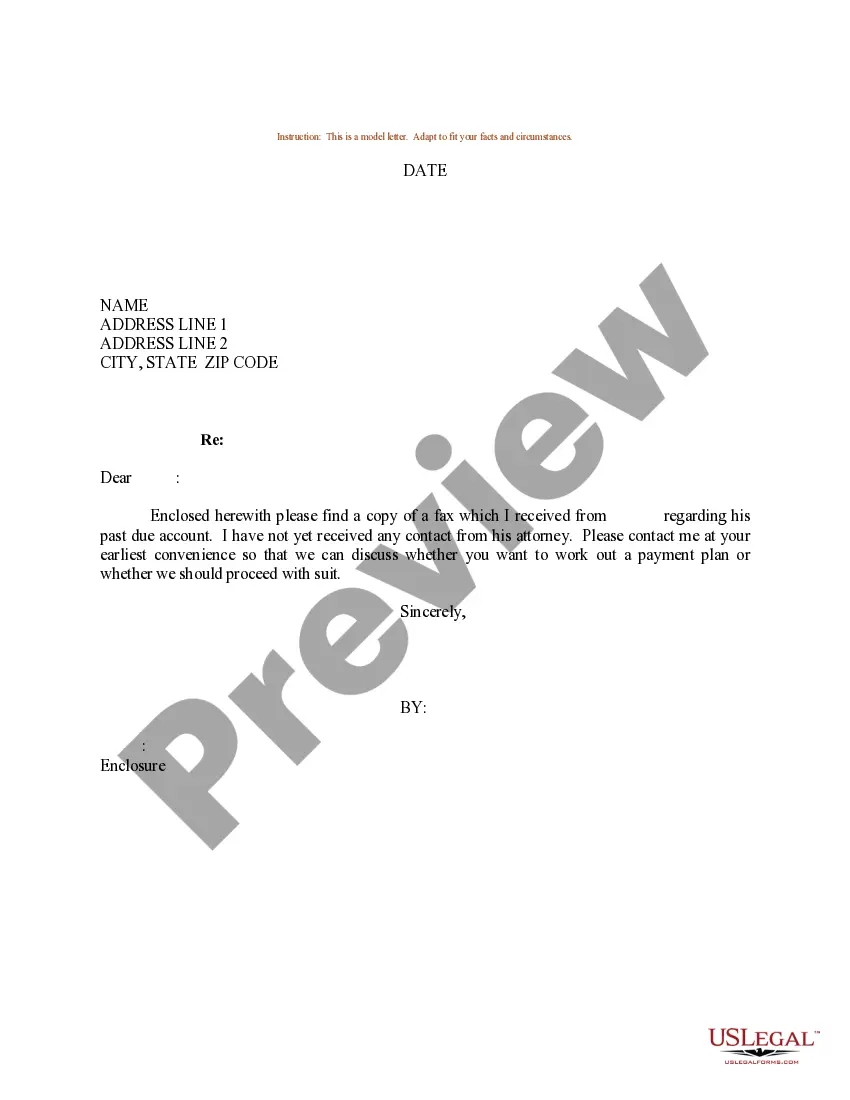
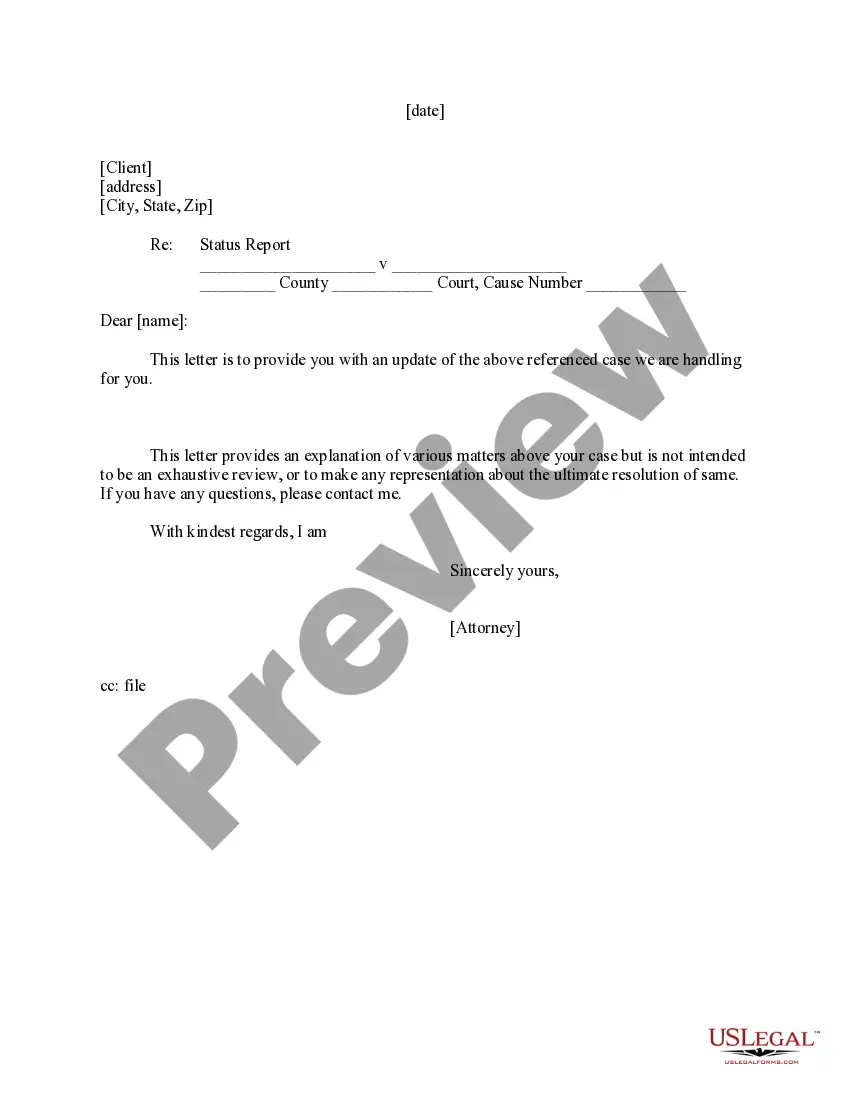
Get your form ready online
Our built-in tools help you complete, sign, share, and store your documents in one place.
Make edits, fill in missing information, and update formatting in US Legal Forms—just like you would in MS Word.
Download a copy, print it, send it by email, or mail it via USPS—whatever works best for your next step.
Sign and collect signatures with our SignNow integration. Send to multiple recipients, set reminders, and more. Go Premium to unlock E-Sign.
If this form requires notarization, complete it online through a secure video call—no need to meet a notary in person or wait for an appointment.
We protect your documents and personal data by following strict security and privacy standards.

Make edits, fill in missing information, and update formatting in US Legal Forms—just like you would in MS Word.

Download a copy, print it, send it by email, or mail it via USPS—whatever works best for your next step.

Sign and collect signatures with our SignNow integration. Send to multiple recipients, set reminders, and more. Go Premium to unlock E-Sign.

If this form requires notarization, complete it online through a secure video call—no need to meet a notary in person or wait for an appointment.

We protect your documents and personal data by following strict security and privacy standards.
Looking for another form?
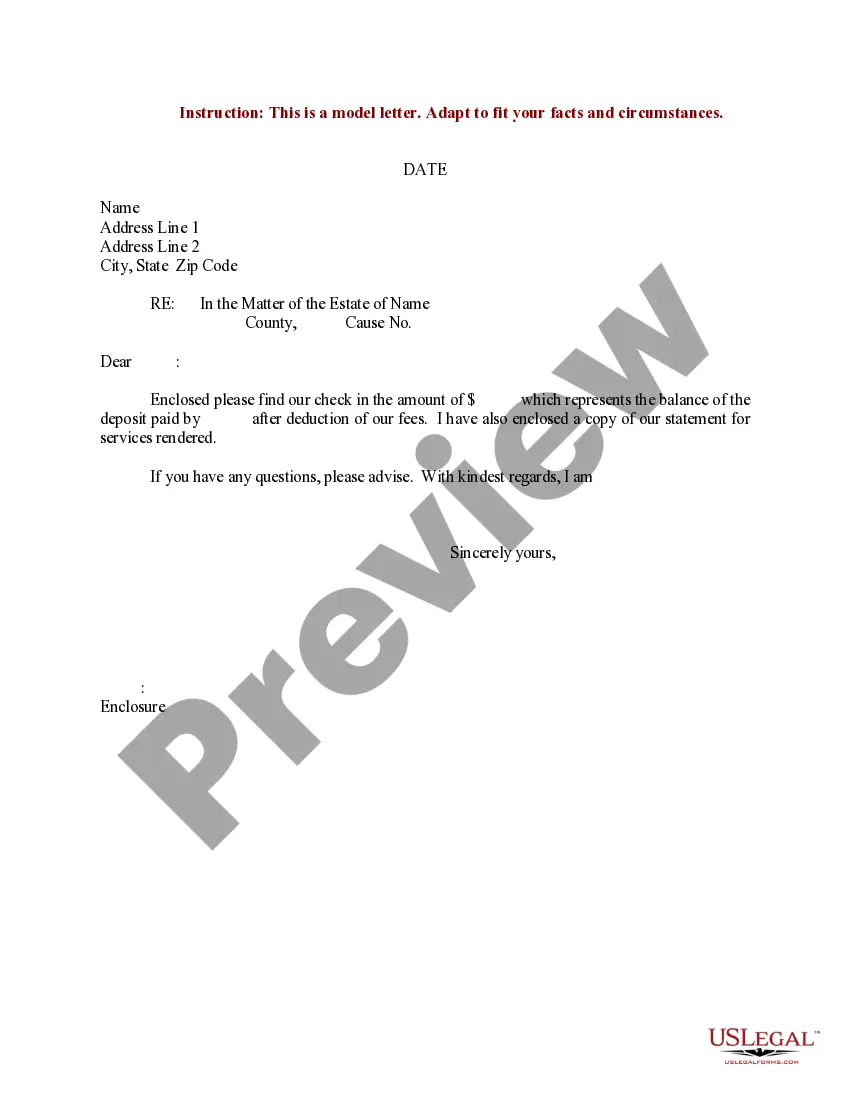







How to fill out Sample Letter To Client With Case Update - Breach Of Contract Litigation?
US Legal Forms - one of the largest collections of legal documents in the United States - offers a variety of legal form templates that you can download or print. By utilizing the website, you can discover thousands of forms for business and personal purposes, organized by categories, states, or keywords.
You can access the latest versions of forms like the Georgia Sample Letter to Client with Case Update - Breach of Contract Litigation in just minutes. If you currently have a monthly subscription, Log In and download the Georgia Sample Letter to Client with Case Update - Breach of Contract Litigation from the US Legal Forms library. The Acquire button will be visible on every form you view. You have access to all previously purchased forms in the My documents section of your account.
If you are using US Legal Forms for the first time, here are some simple steps to get started: Ensure you have selected the correct form for your city/state. Click on the Preview button to review the form's content. Check the form description to confirm that you have chosen the correct document. If the form does not meet your requirements, use the Search box at the top of the page to find one that does. If you are satisfied with the form, confirm your choice by clicking the Purchase now button. Then, select the payment plan you prefer and provide your details to create an account. Process the transaction. Use your credit card or PayPal account to complete the transaction. Select the format and download the form to your device. Make edits. Fill out, modify, print, and sign the downloaded Georgia Sample Letter to Client with Case Update - Breach of Contract Litigation. Each format you added to your account does not have an expiration date and is yours permanently. Therefore, if you wish to download or print another copy, simply go to the My documents section and click on the form you need.
- Access the Georgia Sample Letter to Client with Case Update - Breach of Contract Litigation with US Legal Forms, the most comprehensive collection of legal document templates.
- Utilize a multitude of professional and state-specific templates that meet your business or personal needs and requirements.
Form popularity
FAQ
A petition must contain only a short and plain statement of the claim that shows the plaintiff's entitlement to relief and a demand for judgment. The petition should be simple, concise and direct, and it should give fair notice of the nature of the plaintiff's claim and the grounds on which it is based.
This notice is generally given in the form of a letter that contains several key points: An explanation of the failure to perform. Why you believe there has been a breach of contract. Statement of the next steps that should be taken, which may include a fix for the problem or indicate a desire to end the contract.
The opening paragraph states the legal issue the letter is addressing followed by the facts, a discussion of the law as it applies to the facts and a conclusion which is essentially the advice to the client. Often attorneys include headings to lead the client through this process to arrive at the same conclusion.
4 Elements of a Breach of Contract Claim (and more) The existence of a contract; Performance by the plaintiff or some justification for nonperformance; Failure to perform the contract by the defendant; and, Resulting damages to the plaintiff.
If served with a complaint for breach of contract, simply denying the plaintiff's allegations may not be enough to obtain a favorable outcome. Your answer to the plaintiff's complaint should include all legal and equitable affirmative defenses available to you based on the facts.
Each Party shall have the right to terminate this Agreement immediately in its entirety upon written notice to the other Party if such other Party materially breaches this Agreement and has not cured such breach to the reasonable satisfaction of the other Party within [***] days after notice of such breach from the non ...
Notice of Breach: What to Include Make the date clear. ... Check the notice clause. ... Describe the breach. ... Make sure it's a "material" breach. ... Offer a "cure." In some cases, it may be too late to fix the problem. ... Avoid an emotional tone. ... Try to work it out.
How to Write Step 1: Include Party Information. Contract demand letters should include the parties' names, addresses, phone numbers, and other relevant details. ... Step 2: Add Details About the Breach. ... Step 3: List Potential Cures. ... Step 4: Warn of Potential Remedies. ... Step 5: Sign the Letter.