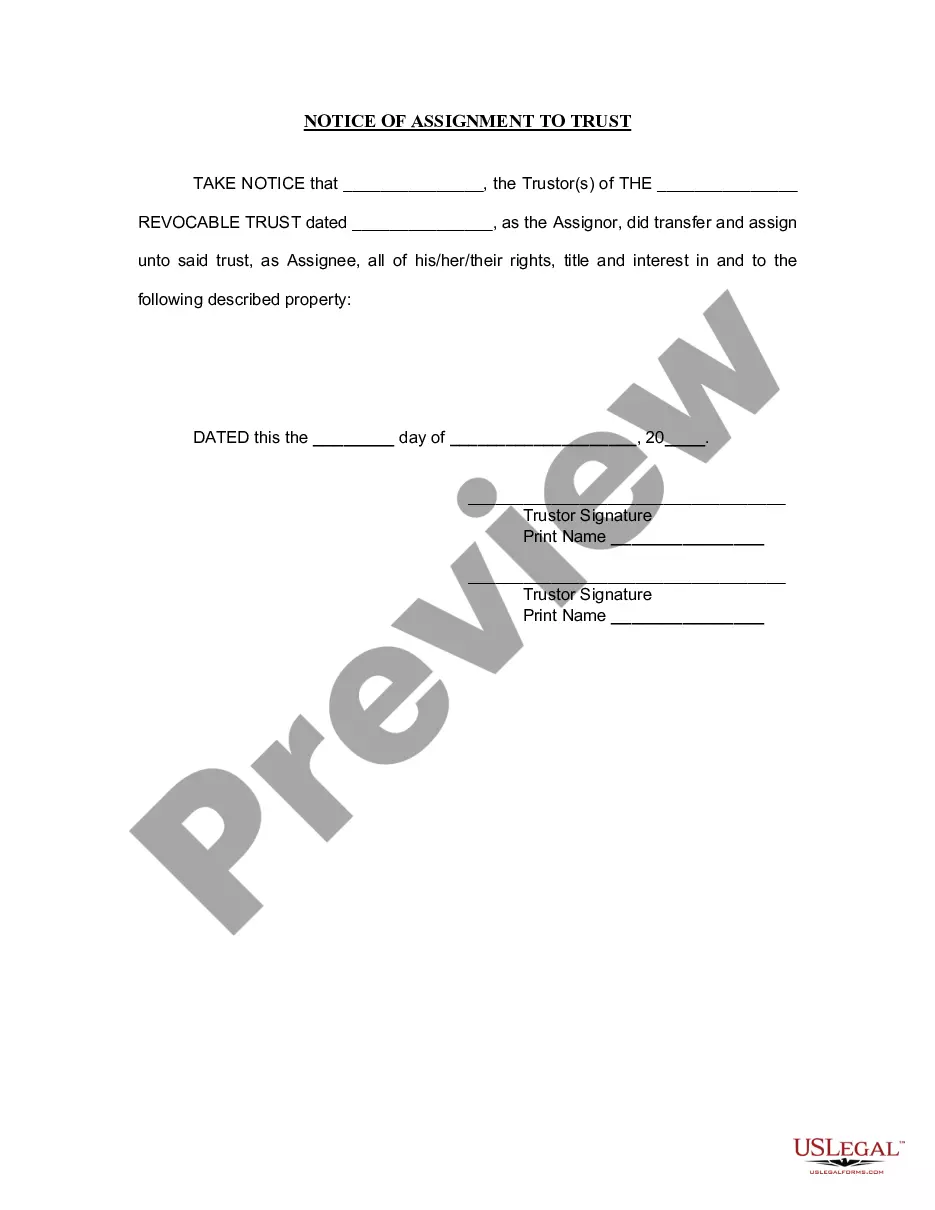
Georgia Notice of Assignment to Living Trust
Overview of this form
The Notice of Assignment to Living Trust is a legal document that indicates the transfer of a trustor's property, assets, or rights into a living trust established during their lifetime. It serves as an official notice, ensuring that the trust is properly funded for estate planning purposes. This form differs from other estate planning documents, such as wills or powers of attorney, as it specifically relates to transferring ownership into a trust vis-a-vis an assignment.
What’s included in this form
- Identifying information of the trustor(s) and the revocable trust.
- A detailed description of the property being assigned to the trust.
- Signature section for the trustor along with their printed name.
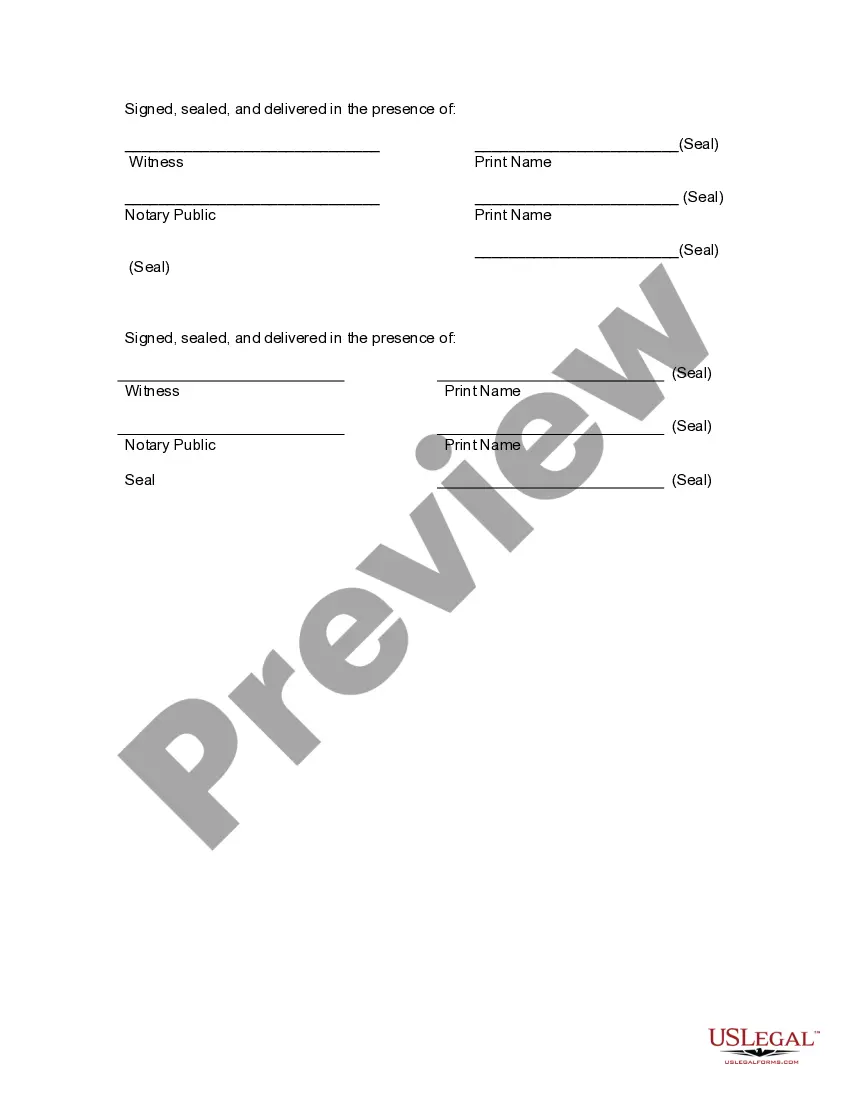
- Signature lines for witnesses and a notary public.
When to use this document
This form is used when a trustor decides to transfer ownership of specific property or assets to a living trust. It is essential when setting up or maintaining a revocable trust, especially in the following scenarios:
- When establishing a new living trust and transferring initial assets.
- When adding or removing assets from an existing trust.
- When clarifying the ownership of property in estate planning documents.
Intended users of this form
- Individuals creating or managing a living trust.
- Trustors looking to assign property to their revocable trust.
- Estate planners or legal representatives assisting clients with asset management.
How to prepare this document
- Identify yourself as the trustor and provide the trust's name and date.
- Clearly describe the property or assets you are assigning to the trust.
- Sign the document as the trustor and print your name below the signature.
- Ensure that the document is witnessed by at least one individual, with their signatures and printed names included.
- Have the document notarized to verify authenticity and facilitate legal compliance.
Does this form need to be notarized?
Yes, this form must be notarized to be legally valid. The notarization verifies the identities of the signing parties and can help prevent disputes in the future. US Legal Forms also offers integrated online notarization services, available 24/7, ensuring a secure and convenient process without needing to travel.
Get your form ready online
Our built-in tools help you complete, sign, share, and store your documents in one place.
Make edits, fill in missing information, and update formatting in US Legal Forms—just like you would in MS Word.
Download a copy, print it, send it by email, or mail it via USPS—whatever works best for your next step.
Sign and collect signatures with our SignNow integration. Send to multiple recipients, set reminders, and more. Go Premium to unlock E-Sign.
If this form requires notarization, complete it online through a secure video call—no need to meet a notary in person or wait for an appointment.
We protect your documents and personal data by following strict security and privacy standards.

Make edits, fill in missing information, and update formatting in US Legal Forms—just like you would in MS Word.

Download a copy, print it, send it by email, or mail it via USPS—whatever works best for your next step.

Sign and collect signatures with our SignNow integration. Send to multiple recipients, set reminders, and more. Go Premium to unlock E-Sign.

If this form requires notarization, complete it online through a secure video call—no need to meet a notary in person or wait for an appointment.

We protect your documents and personal data by following strict security and privacy standards.
Mistakes to watch out for
- Not including a complete and accurate description of the property being assigned.
- Failing to obtain the necessary signatures from witnesses and notaries.
- Not keeping copies of the signed document for personal records.
Benefits of completing this form online
- Convenience of immediate access and download, eliminating the need for in-person visits to a lawyer.
- Editability allows you to fill in your specific information easily.
- Reliability, as the forms are drafted by licensed attorneys to ensure legal validity.
Looking for another form?
Form popularity
FAQ
Yes, you can set up a trust without an attorney in Georgia, especially if you have a straightforward situation. Many individuals successfully create living trusts using online resources and templates. Our Georgia Notice of Assignment to Living Trust service at US Legal Forms offers user-friendly tools that help you easily navigate the process, ensuring your trust is properly established and legally binding.
To file a living trust in Georgia, you first need to create the trust document, outlining the terms and naming the trustee and beneficiaries. After drafting the document, you must then transfer your assets into the trust, which may require updating titles and deeds. For a smoother process, consider using our Georgia Notice of Assignment to Living Trust service at US Legal Forms, which provides templates and guidance to ensure you meet all state requirements.
Transferring property into a living trust in Georgia involves a few important steps. First, draft the living trust document and include all relevant property details. Then, file a Georgia Notice of Assignment to Living Trust to legally document the property transfer. Lastly, ensure that you update titles and deeds to reflect the living trust as the new owner, which you can efficiently manage with the help of US Legal Forms' comprehensive resources.
To transfer your property to a living trust in Georgia, start by creating the trust document with precise details about the trust and its beneficiaries. Next, you need to execute a Georgia Notice of Assignment to Living Trust, which serves as a formal declaration of the transfer. Afterward, you should then retitle your assets, like real estate and bank accounts, in the name of the trust. Using platforms like US Legal Forms can simplify this process, providing templates and guidance to ensure everything is completed correctly.
The biggest mistake parents often make when setting up a trust fund is failing to fund the trust properly. Without transferring assets into the trust, it remains ineffective, and parents may unintentionally leave their beneficiaries with more complications. Understanding the significance of the Georgia Notice of Assignment to Living Trust can help ensure that all intended assets are included.
To transfer property into a trust in Georgia, you typically need to execute a new deed that reflects the trust as the new owner. This process may require legal assistance to ensure compliance with state laws. Using a Georgia Notice of Assignment to Living Trust can facilitate this transfer and make the process more straightforward.
One notable downfall of having a trust is the complexity it can introduce. Setting up a trust incorrectly may lead to unintended tax consequences or issues with asset distribution. Therefore, taking the time to understand the requirements and implications, including the Georgia Notice of Assignment to Living Trust, can be vital for smooth management.
If your parents aim to protect their assets from probate, then establishing a trust may be beneficial. A trust can help ensure that their assets are distributed according to their wishes, avoiding lengthy legal processes. It is essential to consider the specific needs and circumstances of your parents before deciding. A Georgia Notice of Assignment to Living Trust can guide them through this process.
Putting assets in a trust may lead to a loss of control during your lifetime, as assets are technically owned by the trust. This arrangement can make it challenging to access certain assets without following trust guidelines. However, using a Georgia Notice of Assignment to Living Trust simplifies the transfer process, easing your concerns about accessibility.
One disadvantage of a family trust is the ongoing administrative burden it imposes. Trusts require regular maintenance, detailed record-keeping, and may incur legal fees. Additionally, issues like disputes among beneficiaries can arise, complicating the management of the estate. Understanding how a Georgia Notice of Assignment to Living Trust works can help mitigate these concerns.