Georgia Homeowners Association Lien
Understanding this form
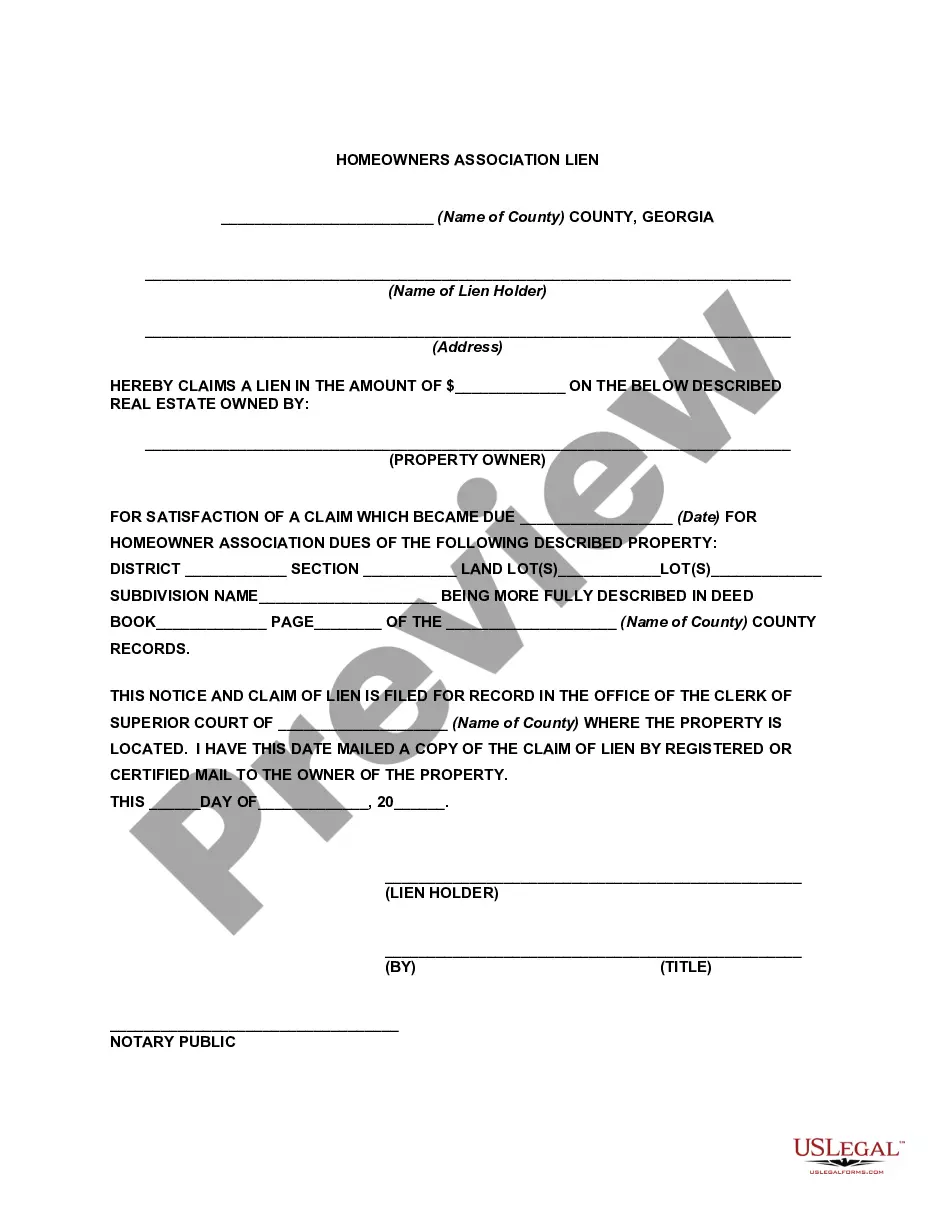
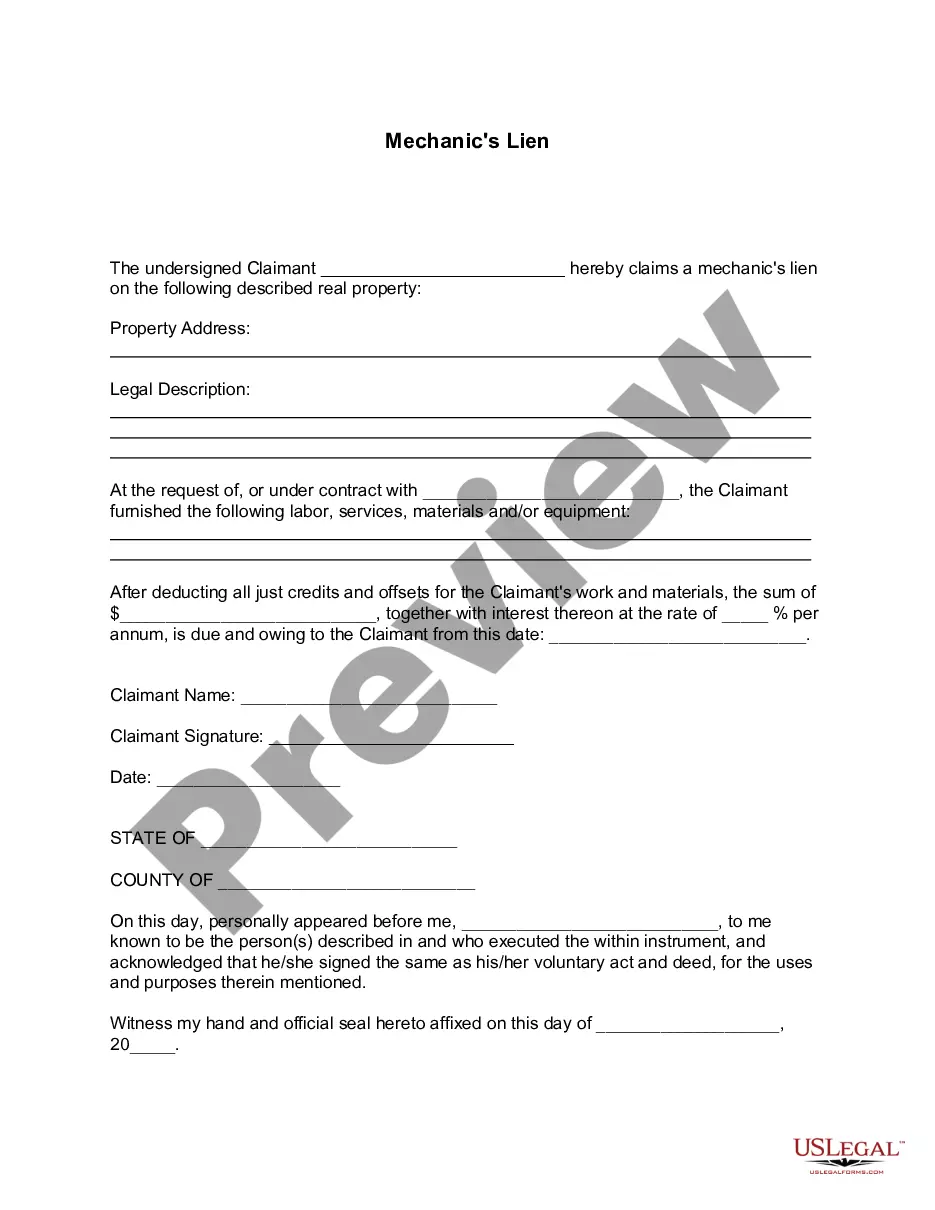
The Georgia Homeowners Association Lien is a legal document that allows a homeowners association (HOA) to claim a lien on the property of a homeowner who has failed to pay their annual dues or assessments. This form serves as a public notice of the HOA's right to collect outstanding payments, which may also include additional costs such as late fees and attorney fees. Unlike other lien forms, this particular lien is specifically tailored for situations involving mandatory homeowner associations in Georgia, ensuring compliance with state regulations.
Form components explained
- Name of the county where the lien is being filed
- Name and address of the lien holder (the homeowners association)
- Amount of the lien based on unpaid dues
- Description of the property subject to the lien
- Date the claim became due
- Signature of the lien holder and a notarization section
When to use this document
This form should be used when a homeowner fails to pay their annual HOA dues, triggering the association's right to file a lien against the property. It is advisable to consider this option after attempts to collect the payment have been unsuccessful. Filing a lien can be an important step for an HOA to secure payments and maintain funding for community upkeep and services.
Who can use this document
- Homeowners associations in Georgia
- Property managers acting on behalf of an HOA
- Board members of a homeowners association
Completing this form step by step
- Enter the name of the county where the property is located.
- Fill in the name and address of the lien holder, typically the homeowners association.
- Specify the amount owed for the homeowner association dues.
- Describe the property that the lien applies to by providing its district, section, land lot(s), and subdivision name.
- Indicate the date when the dues became due.
- Sign the document and have it notarized to legitimize the lien claim.
Notarization guidance
This form needs to be notarized to ensure legal validity. US Legal Forms provides secure online notarization powered by Notarize, allowing you to complete the process through a verified video call, available anytime.
Get your form ready online
Our built-in tools help you complete, sign, share, and store your documents in one place.
Make edits, fill in missing information, and update formatting in US Legal Forms—just like you would in MS Word.
Download a copy, print it, send it by email, or mail it via USPS—whatever works best for your next step.
Sign and collect signatures with our SignNow integration. Send to multiple recipients, set reminders, and more. Go Premium to unlock E-Sign.
If this form requires notarization, complete it online through a secure video call—no need to meet a notary in person or wait for an appointment.
We protect your documents and personal data by following strict security and privacy standards.

Make edits, fill in missing information, and update formatting in US Legal Forms—just like you would in MS Word.

Download a copy, print it, send it by email, or mail it via USPS—whatever works best for your next step.

Sign and collect signatures with our SignNow integration. Send to multiple recipients, set reminders, and more. Go Premium to unlock E-Sign.

If this form requires notarization, complete it online through a secure video call—no need to meet a notary in person or wait for an appointment.

We protect your documents and personal data by following strict security and privacy standards.
Common mistakes
- Failing to include all required property details, which may lead to the lien being disputed.
- Omitting the date the dues became due, creating potential issues in the enforcement of the lien.
- Not notarizing the document when required, which can render the lien invalid.
Benefits of using this form online
- Convenience of downloading and completing the form at your own pace.
- Access to professionally drafted legal language ensuring compliance with Georgia laws.
- Immediate availability, saving time compared to traditional legal processes.
Looking for another form?
Form popularity
FAQ
To settle a Georgia Homeowners Association lien, you first need to contact your HOA directly. Discuss your options, such as setting up a payment plan or negotiating a settlement amount. It's essential to review any associated fees and charges, as well as the official lien documentation. If necessary, consider consulting a legal professional or using platforms like USLegalForms to ensure you understand your rights and obligations.
Yes, you can sue your HOA in Georgia, but it's essential to have a valid reason such as breach of contract or failure to follow the governing documents. If you believe the HOA has acted unlawfully or unfairly, you may pursue legal action to seek resolution. Before proceeding, consider exploring alternatives like mediation or utilizing legal platforms for guidance. Knowledge about your situation and a clear understanding of the Georgia Homeowners Association Lien can empower your case.
While an HOA cannot directly take your house, they can initiate foreclosure proceedings if a lien remains unpaid. This action typically occurs after several attempts to collect outstanding dues. It's important to communicate with your HOA if you face payment difficulties to avoid escalating the situation. Engaging with resources or platforms like US Legal Forms can help you understand your rights and responsibilities regarding a Georgia Homeowners Association Lien.
In Georgia, Homeowners Associations (HOAs) are governed by both their individual governing documents and the Georgia Nonprofit Corporation Act. This means that the rules and regulations of each HOA can vary widely based on their bylaws and covenants. It's essential for homeowners to familiarize themselves with these documents, as they lay out the powers and limitations of the HOA. Remember, a clear understanding of your HOA's governance can help you navigate any issues related to a Georgia Homeowners Association Lien.
To file a lien for Georgia Homeowners Association dues, you must follow specific legal procedures. Start by preparing a formal lien notice, detailing the amount owed and the property involved. Then, file the lien with the county clerk's office in the area where the property is located. Platforms like USLegalForms can provide you with the necessary templates and instructions to simplify this process.
Filing a complaint against a Georgia Homeowners Association involves several steps. First, review your HOA’s governing documents to understand the rules and procedures. Then, you can either contact your HOA board directly or escalate the issue to your state’s regulatory agency if necessary. Utilizing platforms like USLegalForms can guide you through the process effectively, ensuring you have the right forms and information.
Yes, a Georgia Homeowners Association lien can affect your credit score. When a lien is placed on your property due to unpaid dues, it may be reported to credit bureaus, which can lower your credit rating. This can make obtaining loans or mortgages more challenging. It’s essential to address unpaid dues promptly to prevent damage to your credit.