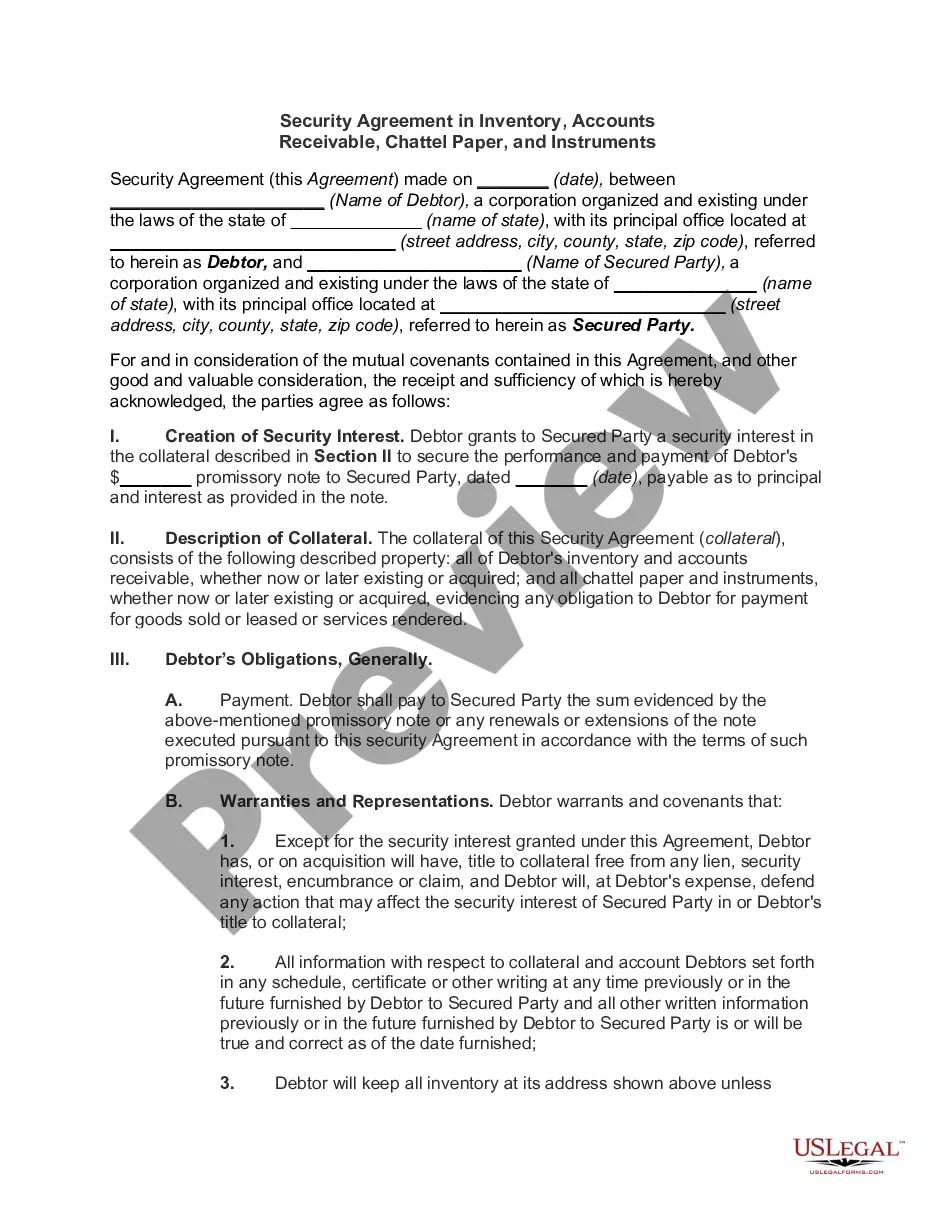
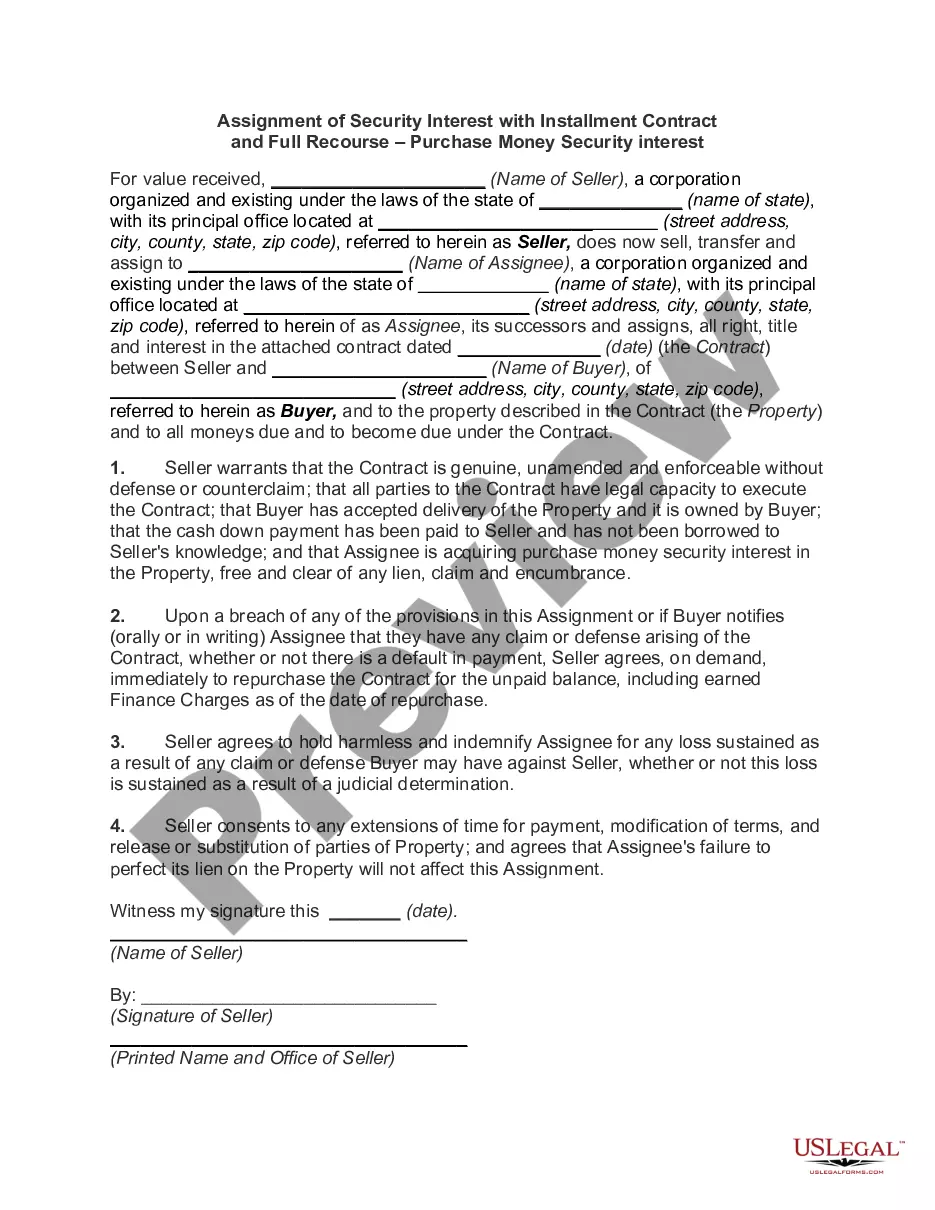
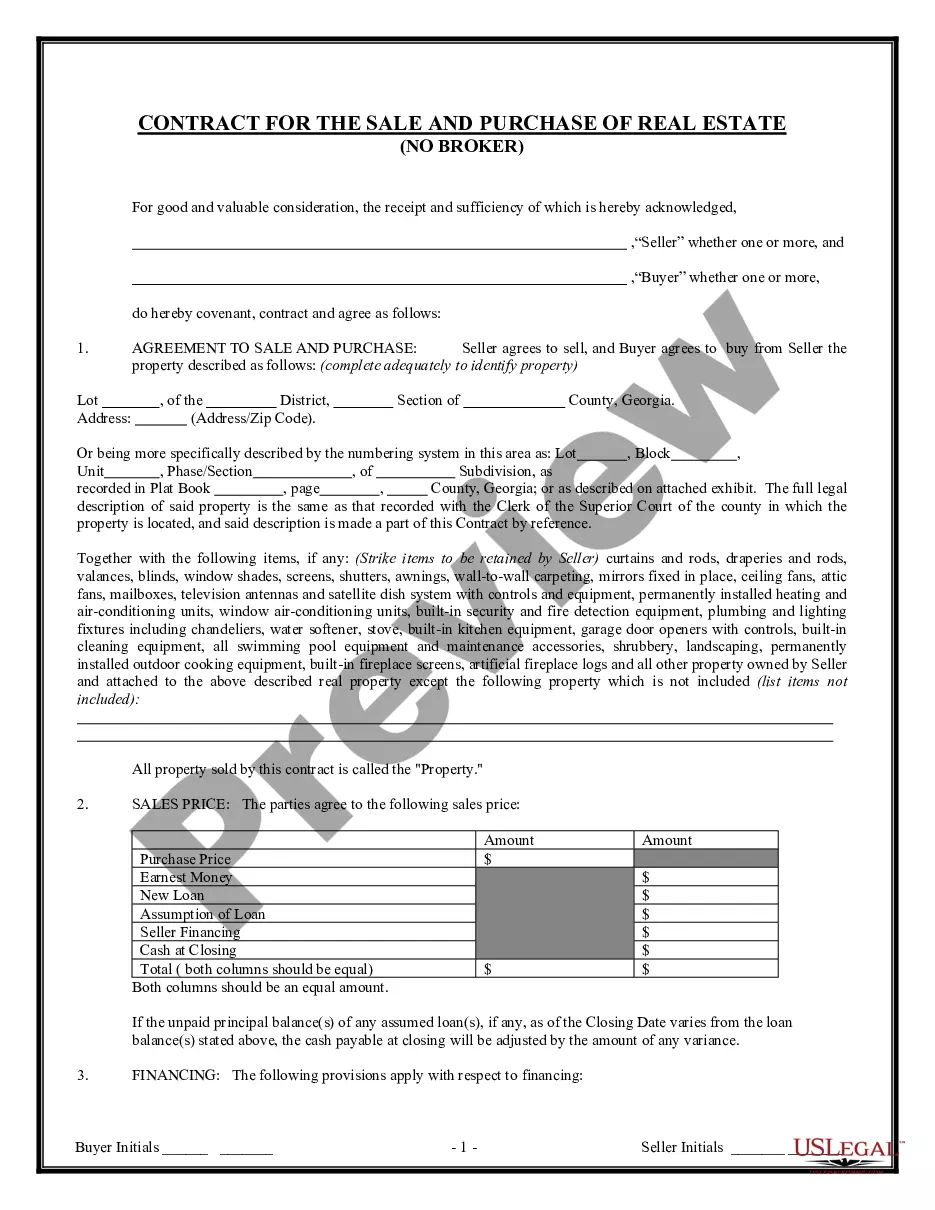
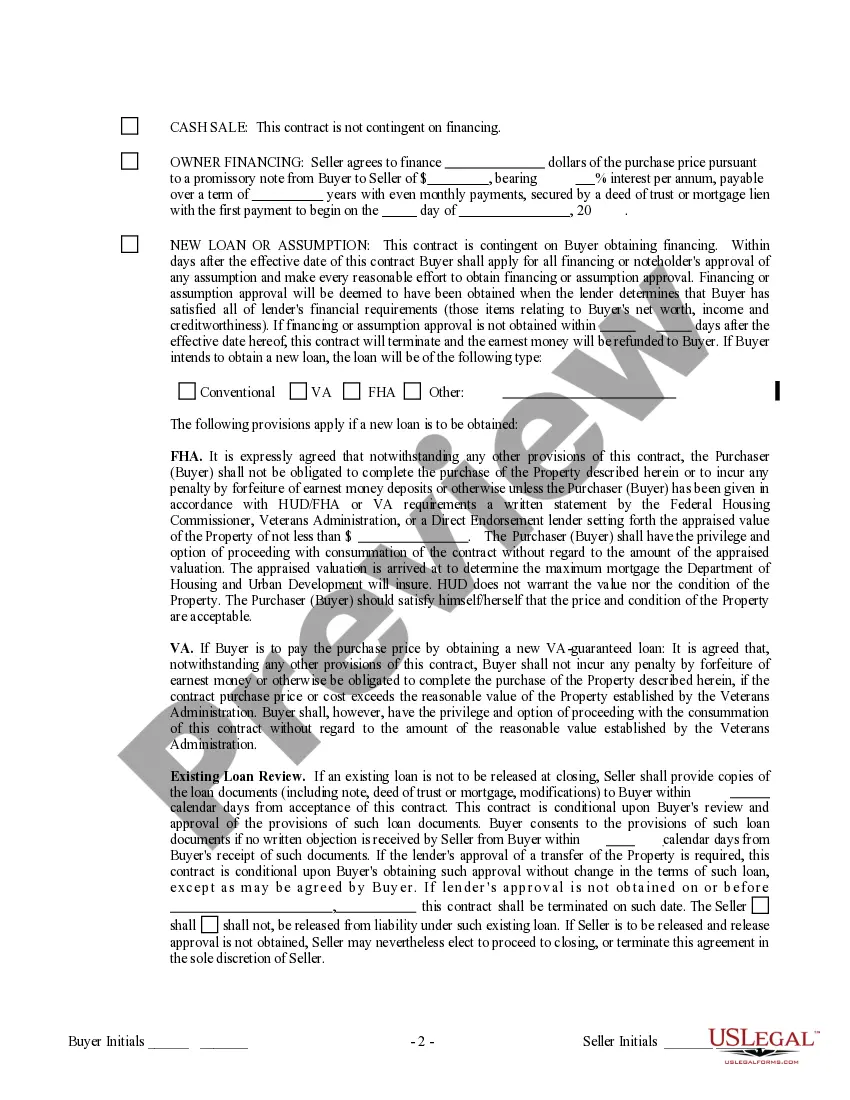
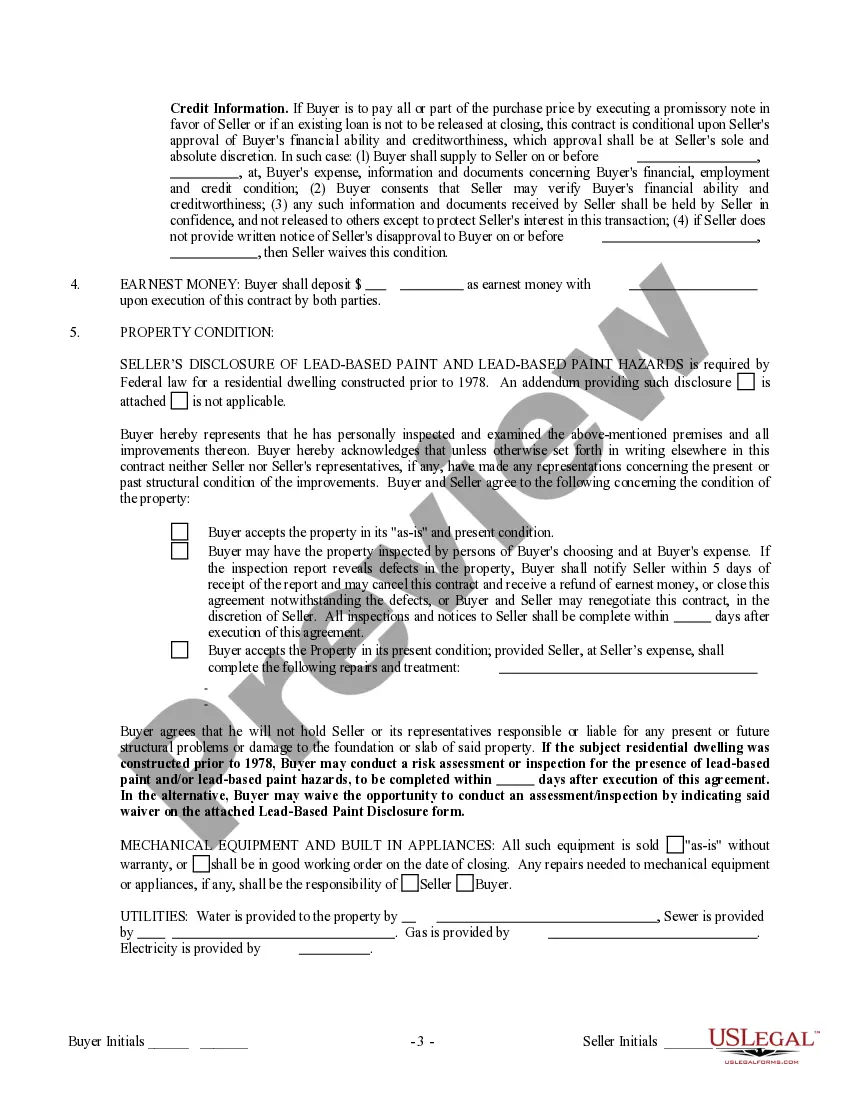
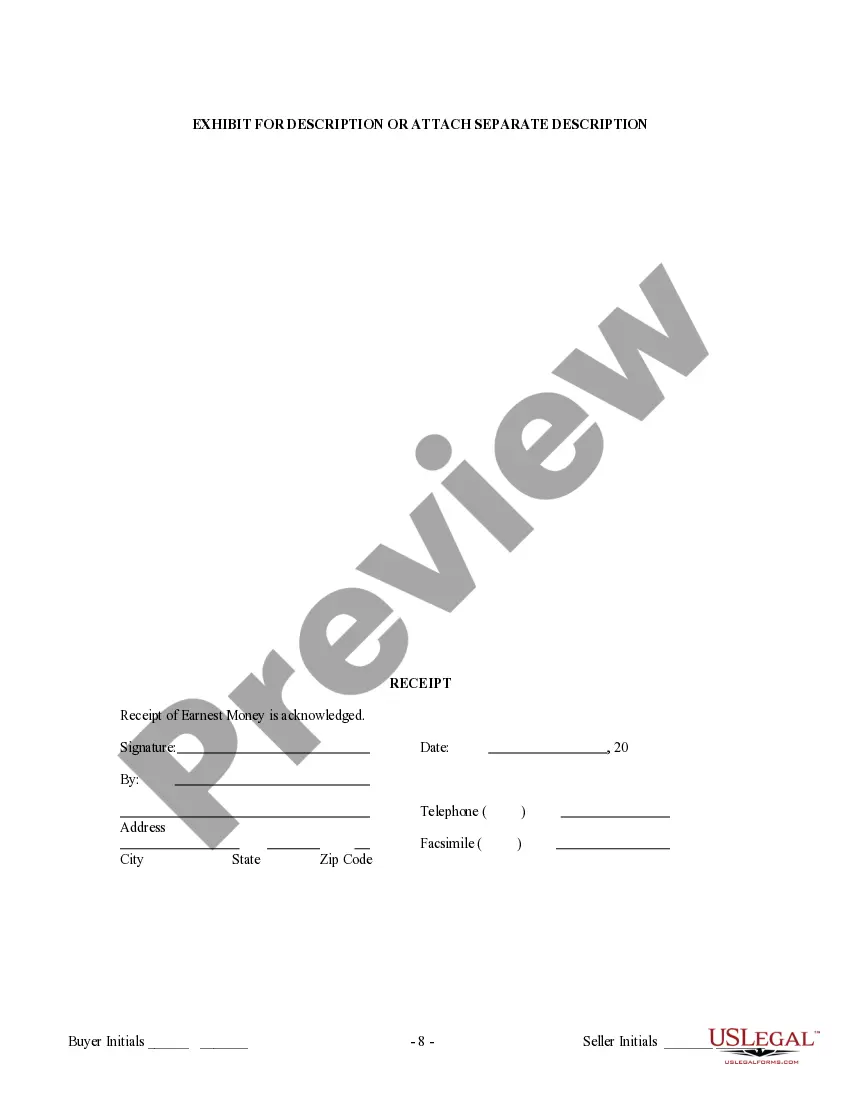
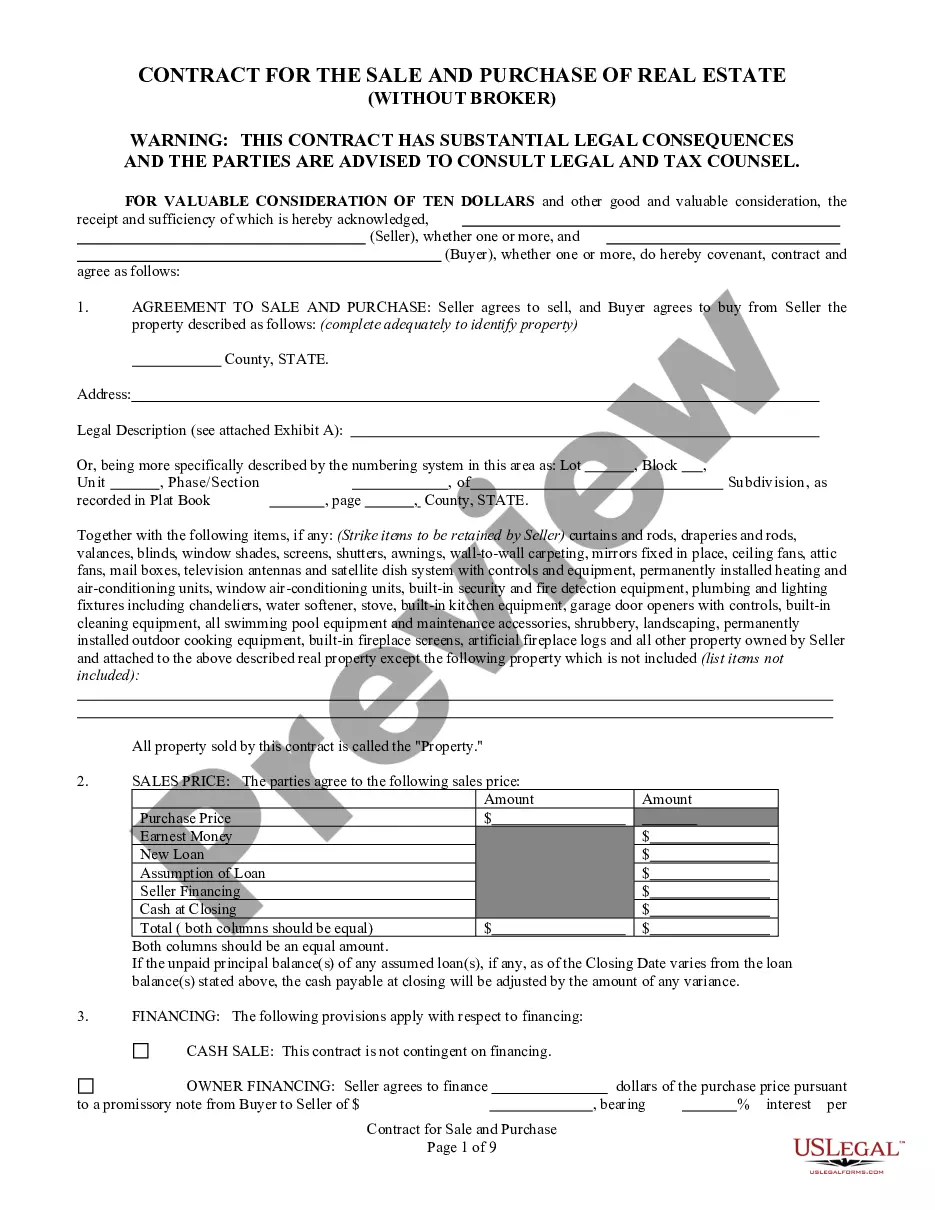
This form is a Contract for the sale of real estate for use in Georgia. It can be used for a cash sale, assumption or new loan buyer. The contract contains provisions common to a real estate transaction. No broker involved.
Georgia Contract for Sale and Purchase of Real Estate with No Broker for Residential Home Sale Agreement
Instant download
Description
Free preview
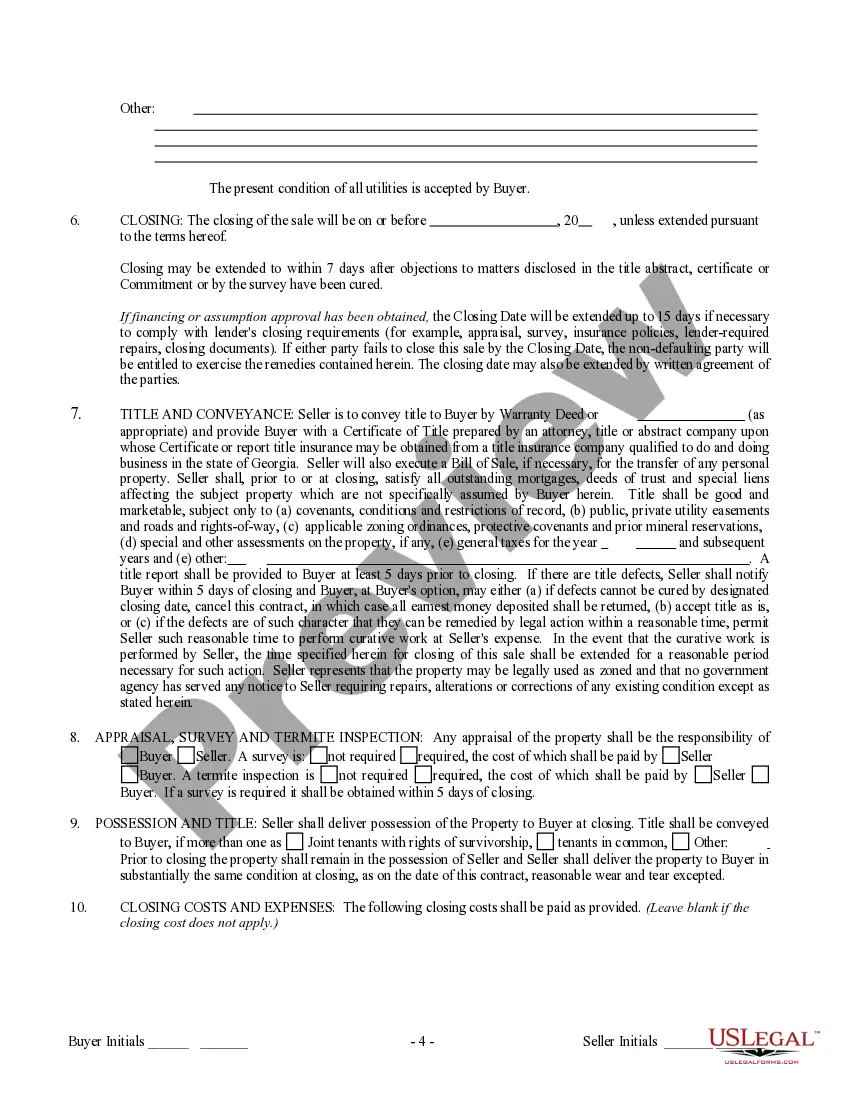
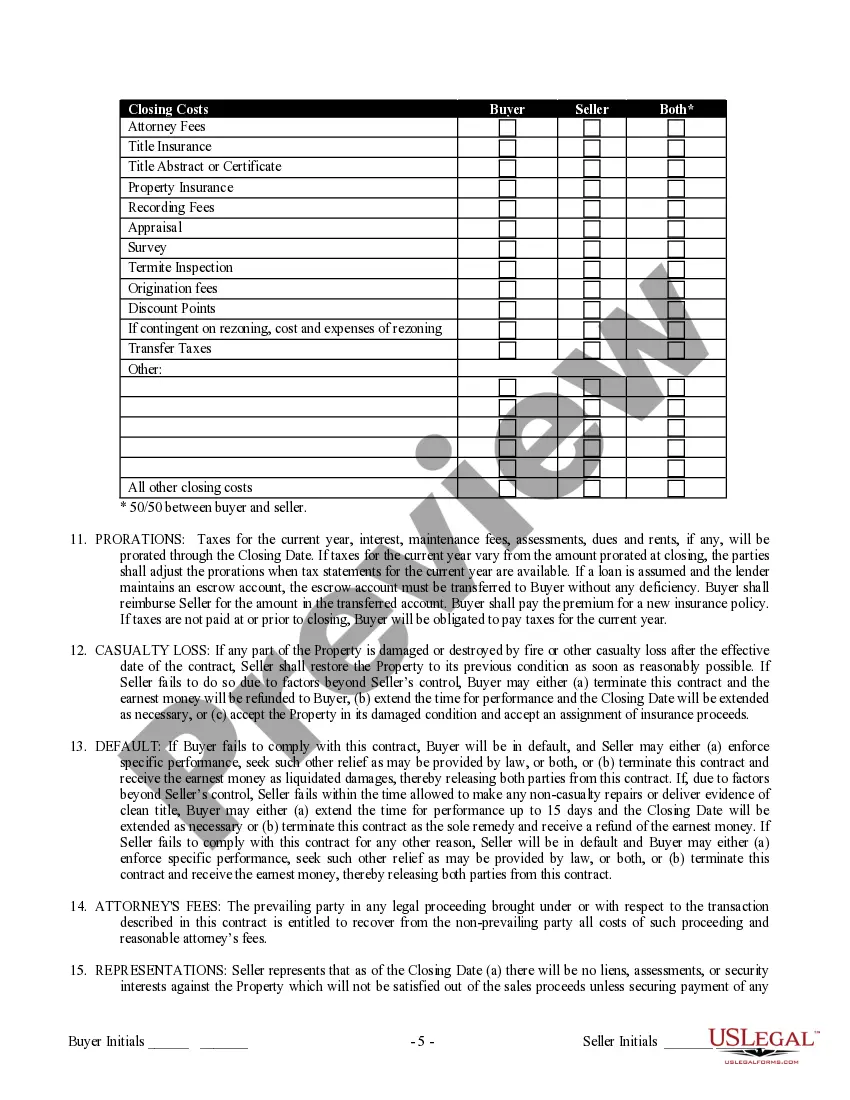
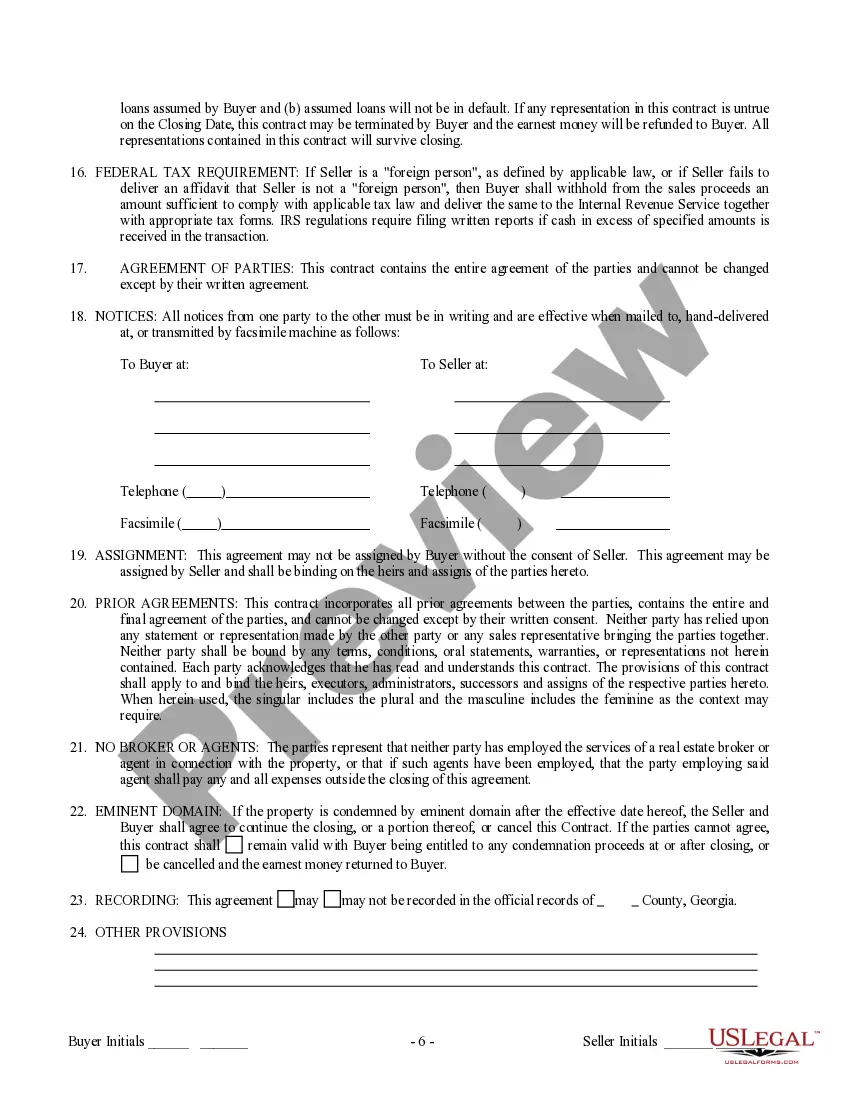
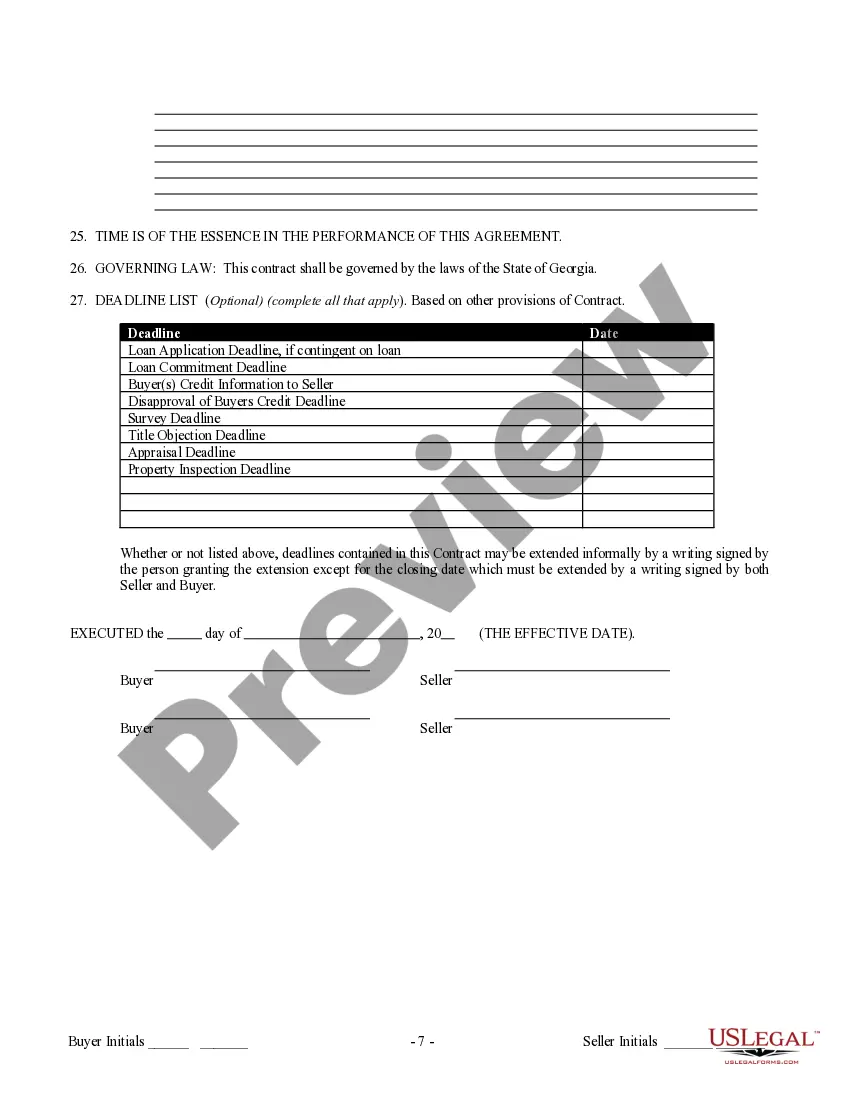
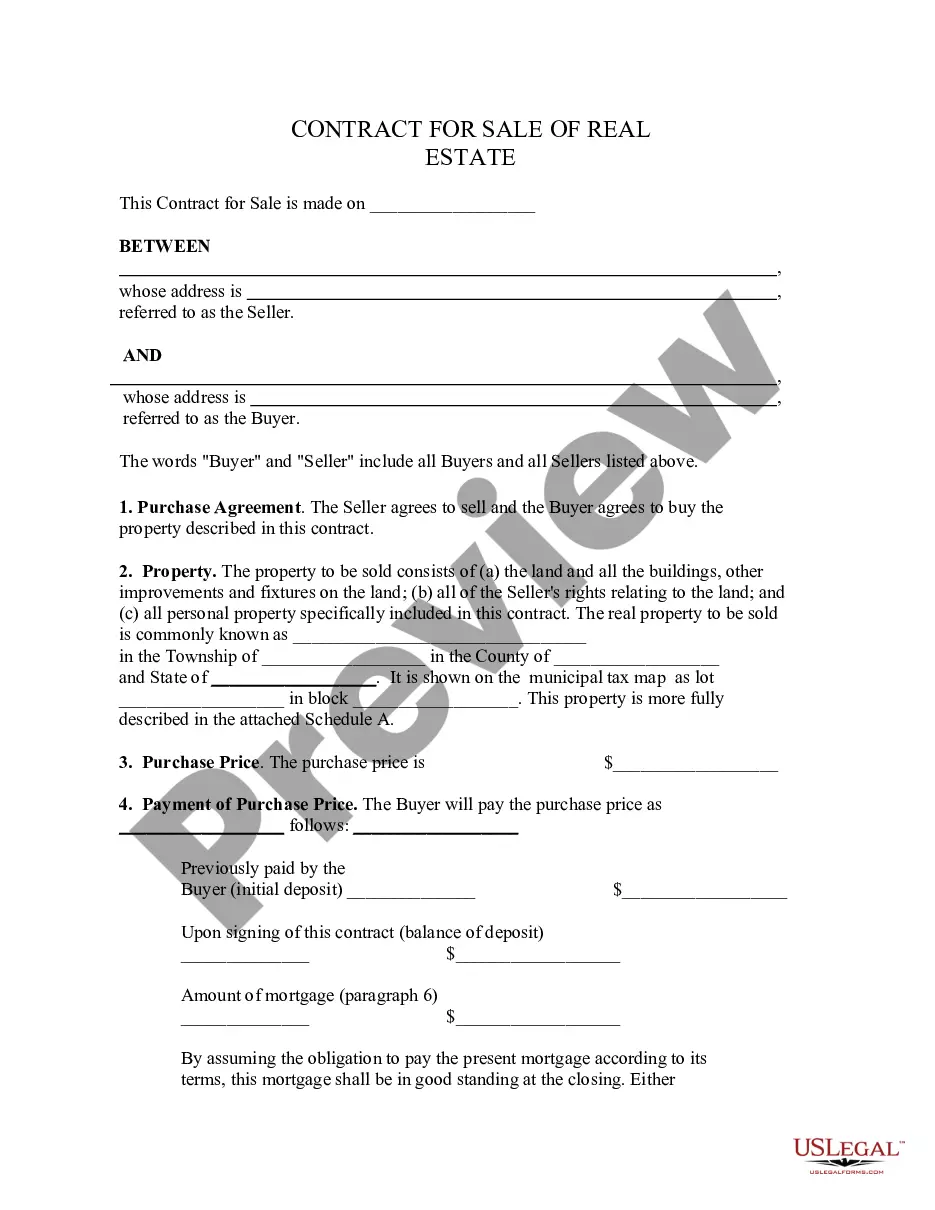
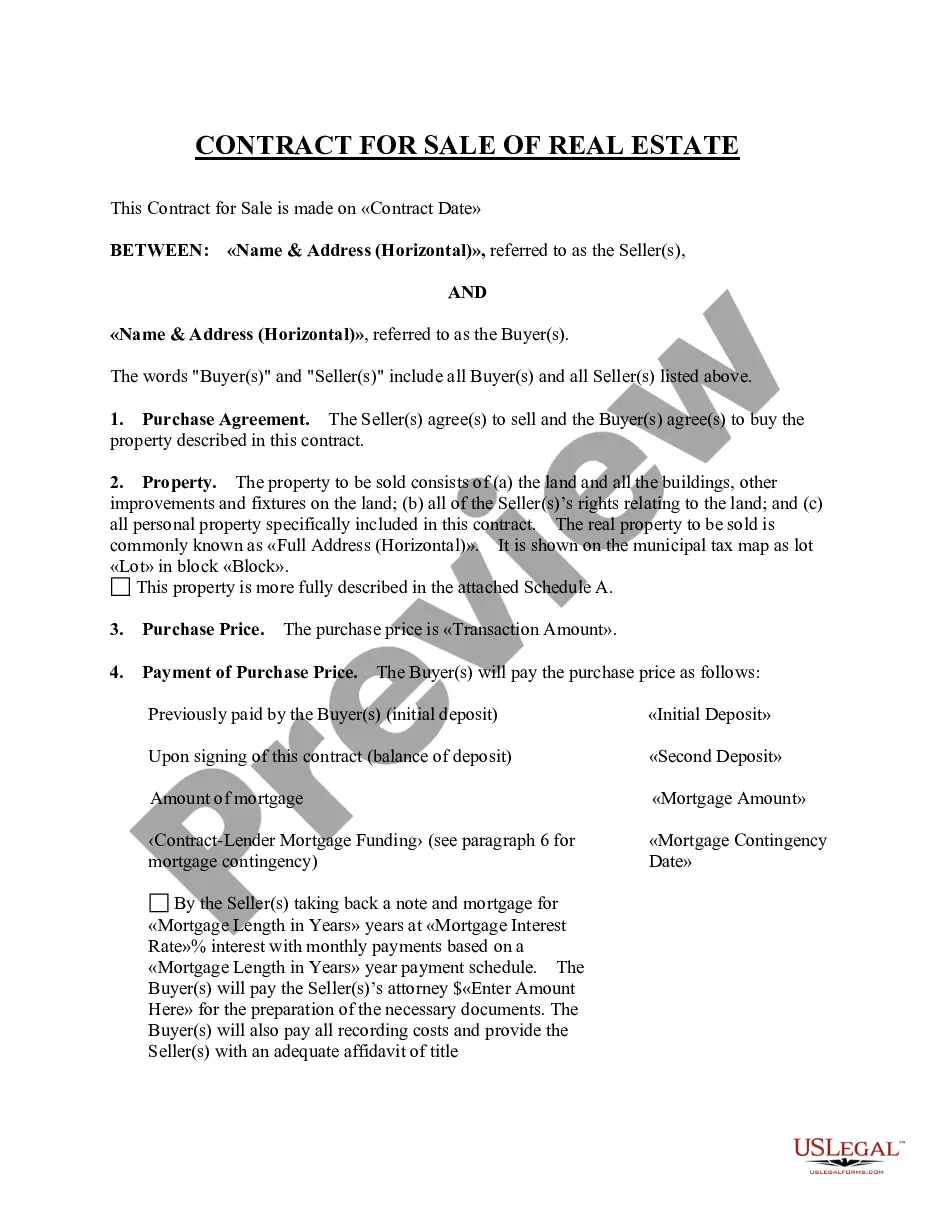
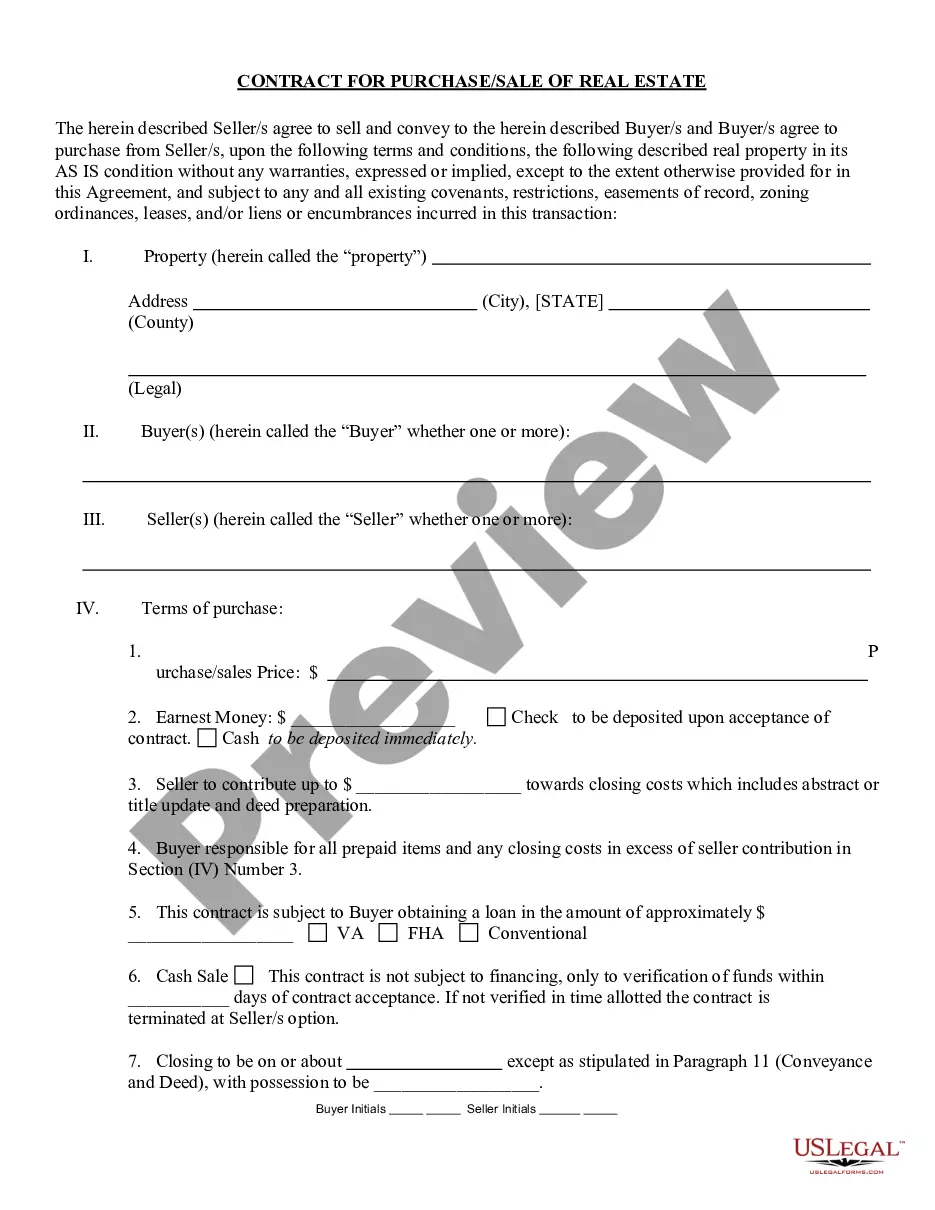
How to fill out Georgia Contract For Sale And Purchase Of Real Estate With No Broker For Residential Home Sale Agreement?
Utilize one of the most comprehensive collections of legal documents.
US Legal Forms serves as a platform where you can locate any state-specific form in just a few clicks, including the Georgia Agreement for Sale and Purchase of Real Property without a Broker for Residential Home Sale examples.
No need to squander your time searching for a court-acceptable form. Our qualified experts guarantee you receive the latest samples consistently.
After selecting a pricing plan, establish your account. Pay using a credit card or PayPal. Download the sample to your computer by clicking on the Download button. That’s it! You should complete the Georgia Agreement for Sale and Purchase of Real Property without a Broker template and review it. To confirm that everything is accurate, consult your local legal advisor for assistance. Register now and easily browse through more than 85,000 useful samples.
- To access the forms repository, select a subscription and create your account.
- If you are already registered, simply Log In and click Download.
- The Georgia Agreement for Sale and Purchase of Real Property without a Broker for Residential Home Sale file will be promptly saved in the My documents section (the area for all forms you download on US Legal Forms).
- To create a new account, follow the simple instructions below.
- When using a state-specific template, make sure to indicate the appropriate state.
- If possible, review the description to understand all the details of the document.
- Use the Preview option if it's available to examine the content of the document.
- If everything seems suitable, click Buy Now.
Form popularity
FAQ
Does a Real Estate Purchase Agreement have to be notarized in order to be valid? No, this document does not have to be signed by a notary public since it does not get filed with the County Recorder's Office.
But unlike buyers, sellers can't back out and forfeit their earnest deposit money (usually 1-3 percent of the offer price). If you decide to cancel a deal when the home is already under contract, you can be either legally forced to close anyway or sued for financial damages.
A purchase agreement is a legal document that is signed by both the buyer and the seller. Once it is signed by both parties, it is a legally binding contract. The seller can only accept the offer by signing the document, not by just providing the goods.
Step 1: Apply For A Mortgage. Step 2: Research The Neighborhood. Step 3: Find A Property. Step 4: Ask For A Seller's Disclosure. Step 5: Make An Offer. Step 6: Hire A Lawyer And Home Inspector. Step 7: Negotiate. Step 8: Finalize Home Financing And Closing.
A real estate deal can take a turn for the worst if the contract is not carefully written to include all the legal stipulations for both the buyer and seller.You can write your own real estate purchase agreement without paying any money as long as you include certain specifics about your home.
Who Prepares The Real Estate Purchase Agreement? Typically, the buyer's agent writes up the purchase agreement. However, unless they are legally licensed to practice law, real estate agents generally can't create their own legal contracts.
The identity of the buyer and seller. A description of the property being purchased. The purchase price. The terms as to how and when payment is to be made. The terms as to how, when, and where the goods will be delivered to the purchaser.
Who Prepares The Real Estate Purchase Agreement? Typically, the buyer's agent writes up the purchase agreement. However, unless they are legally licensed to practice law, real estate agents generally can't create their own legal contracts.
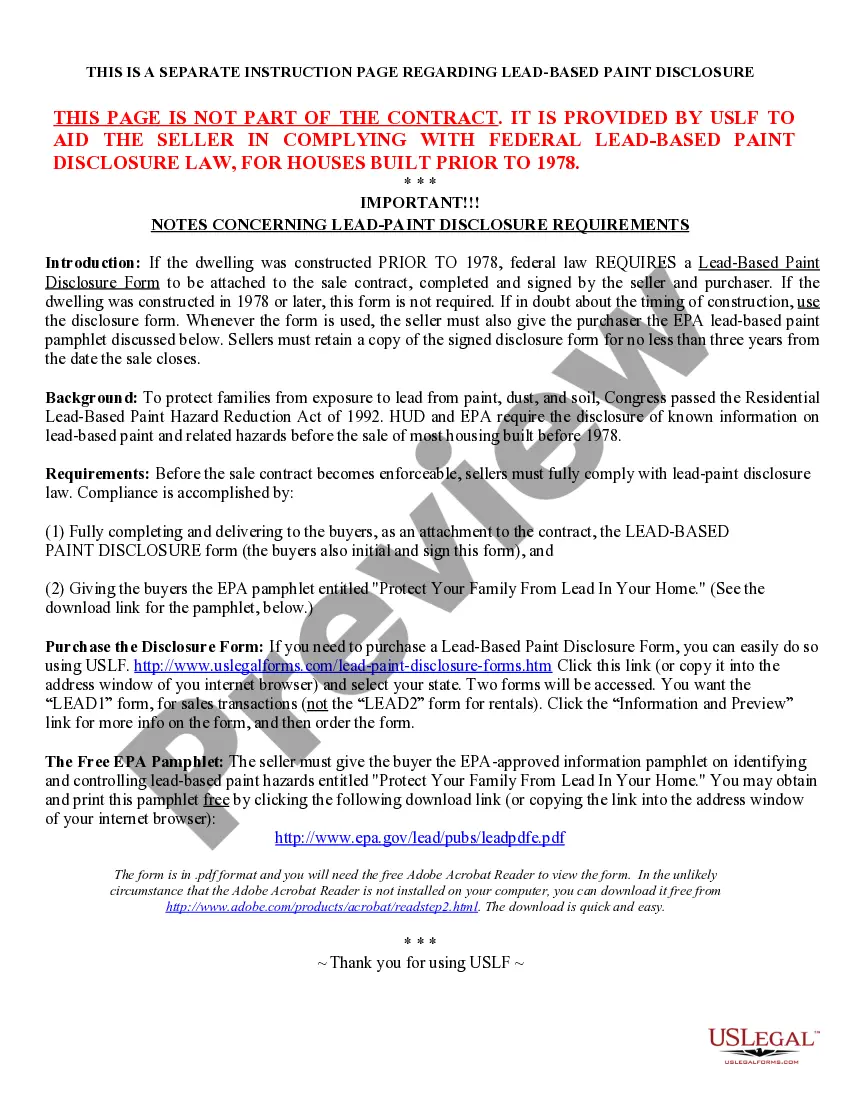
Although Georgia's statutes do not require sellers to fill out a disclosure form, Georgia courts have stated that home sellers must inform buyer about any latent or known material (important) defects in the condition of the home.The Georgia seller must also honestly answer a buyer's questions about the home.