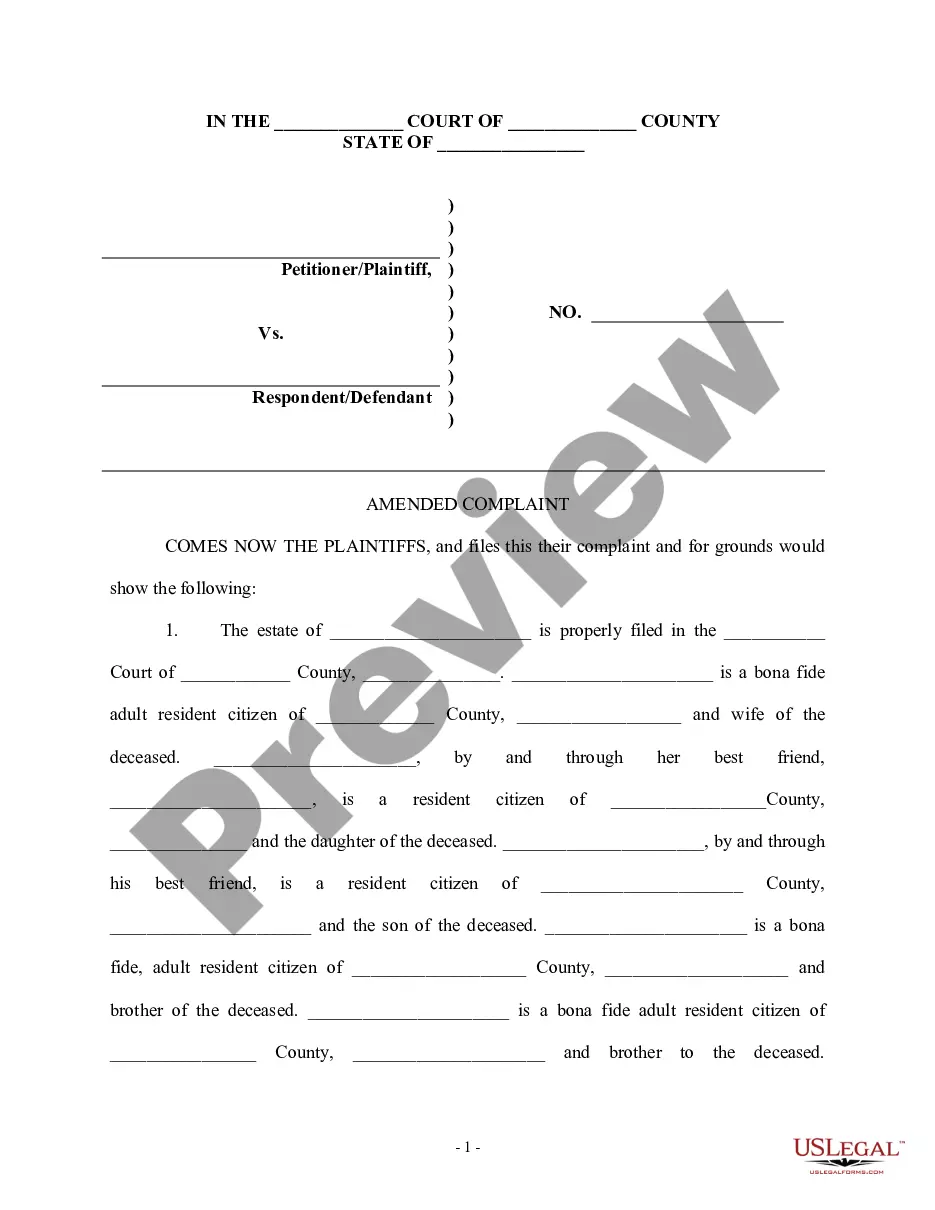
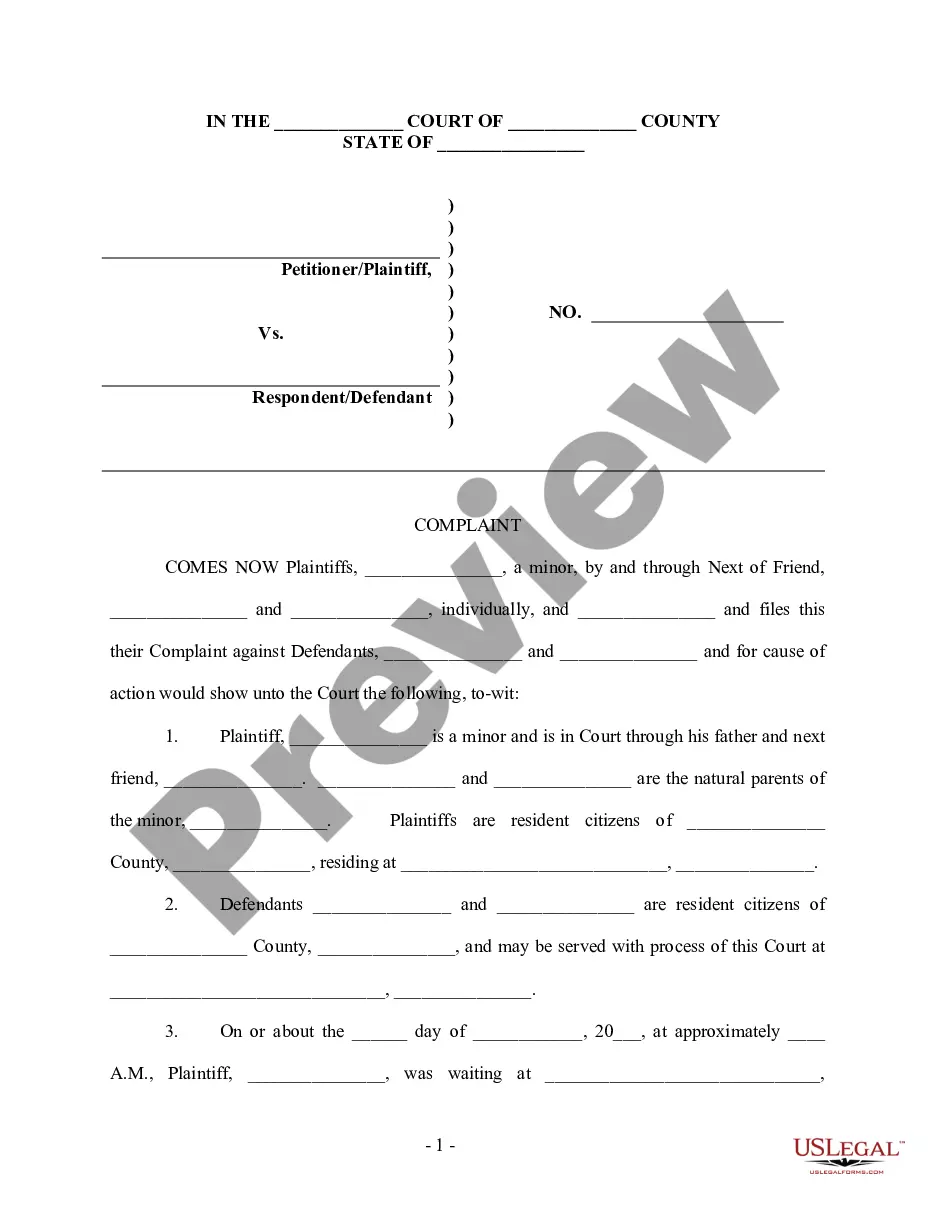
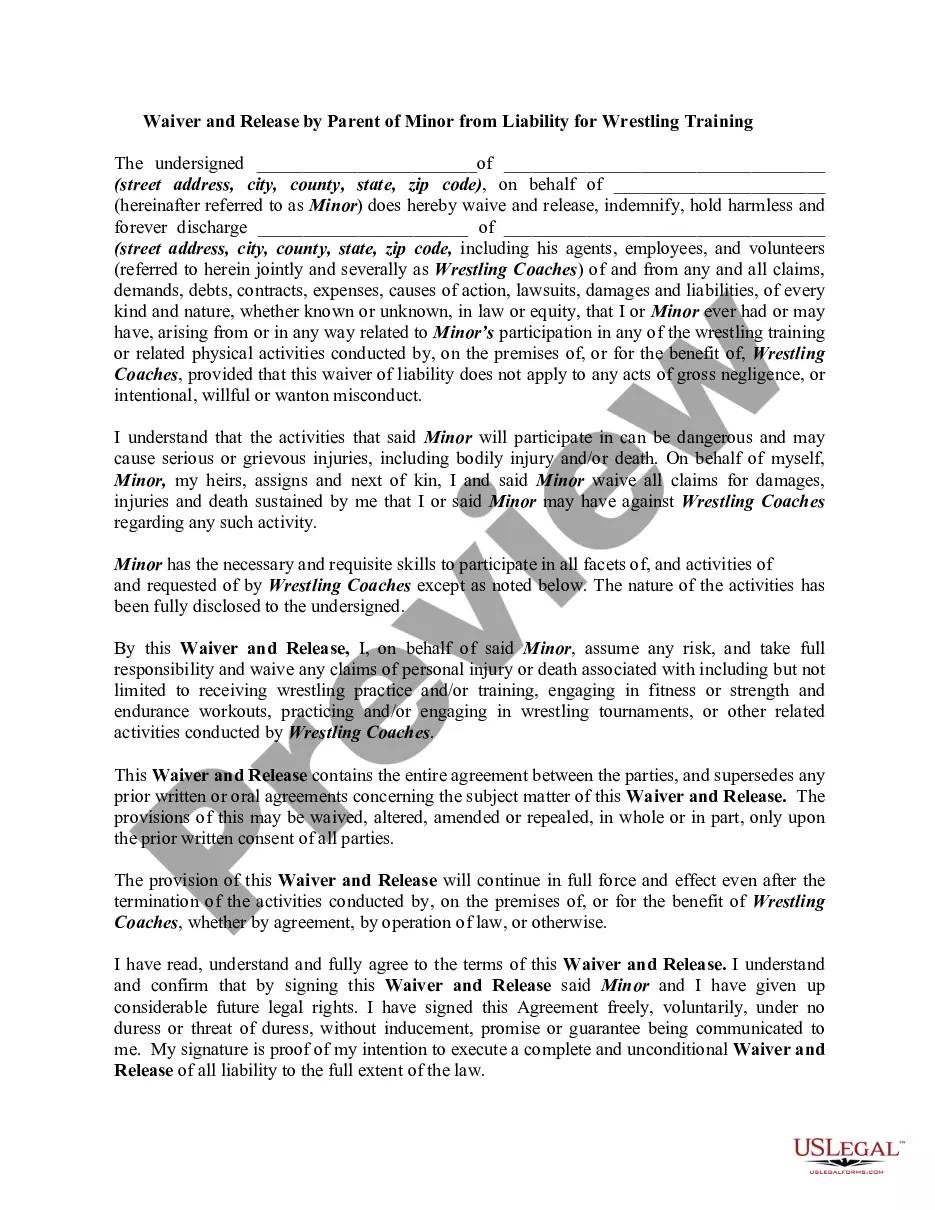
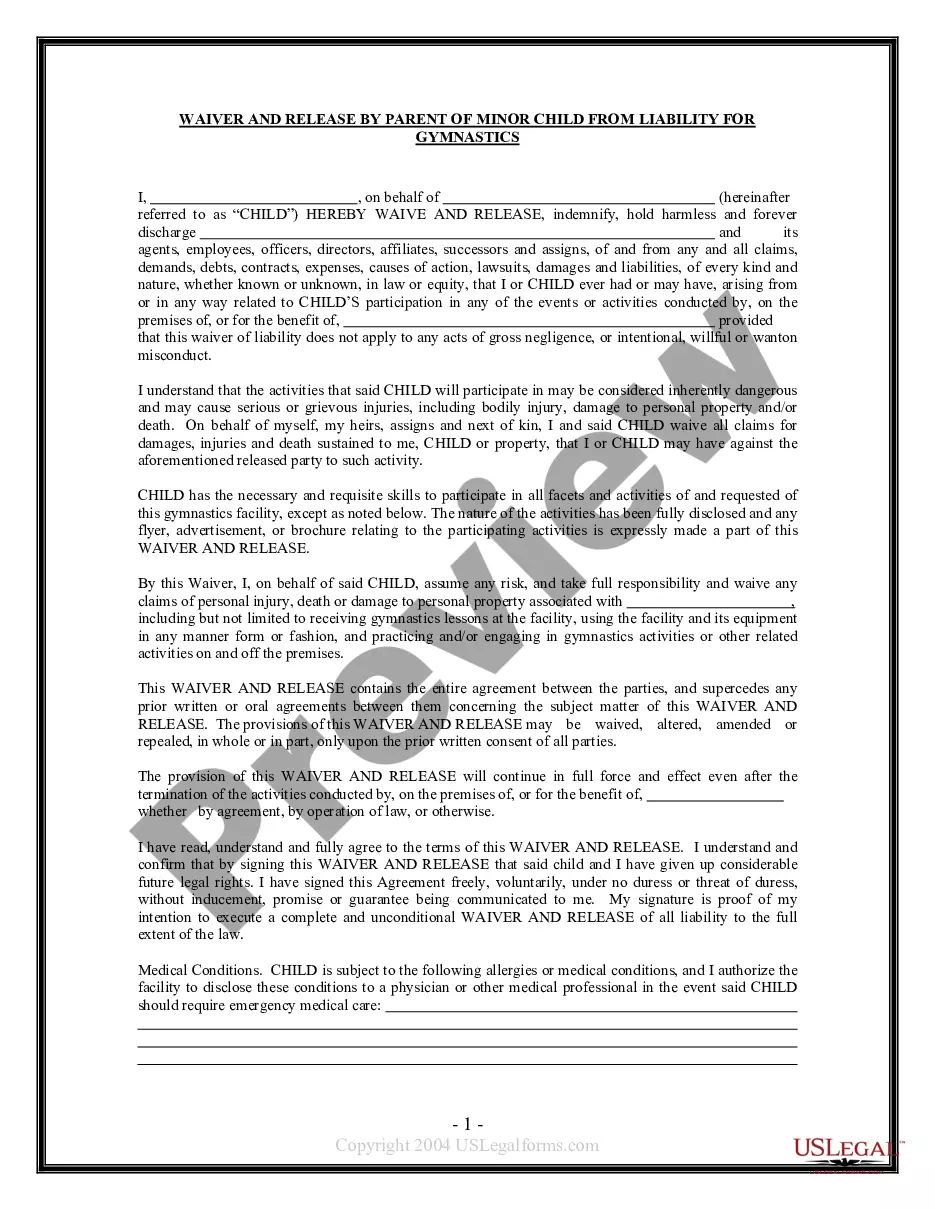
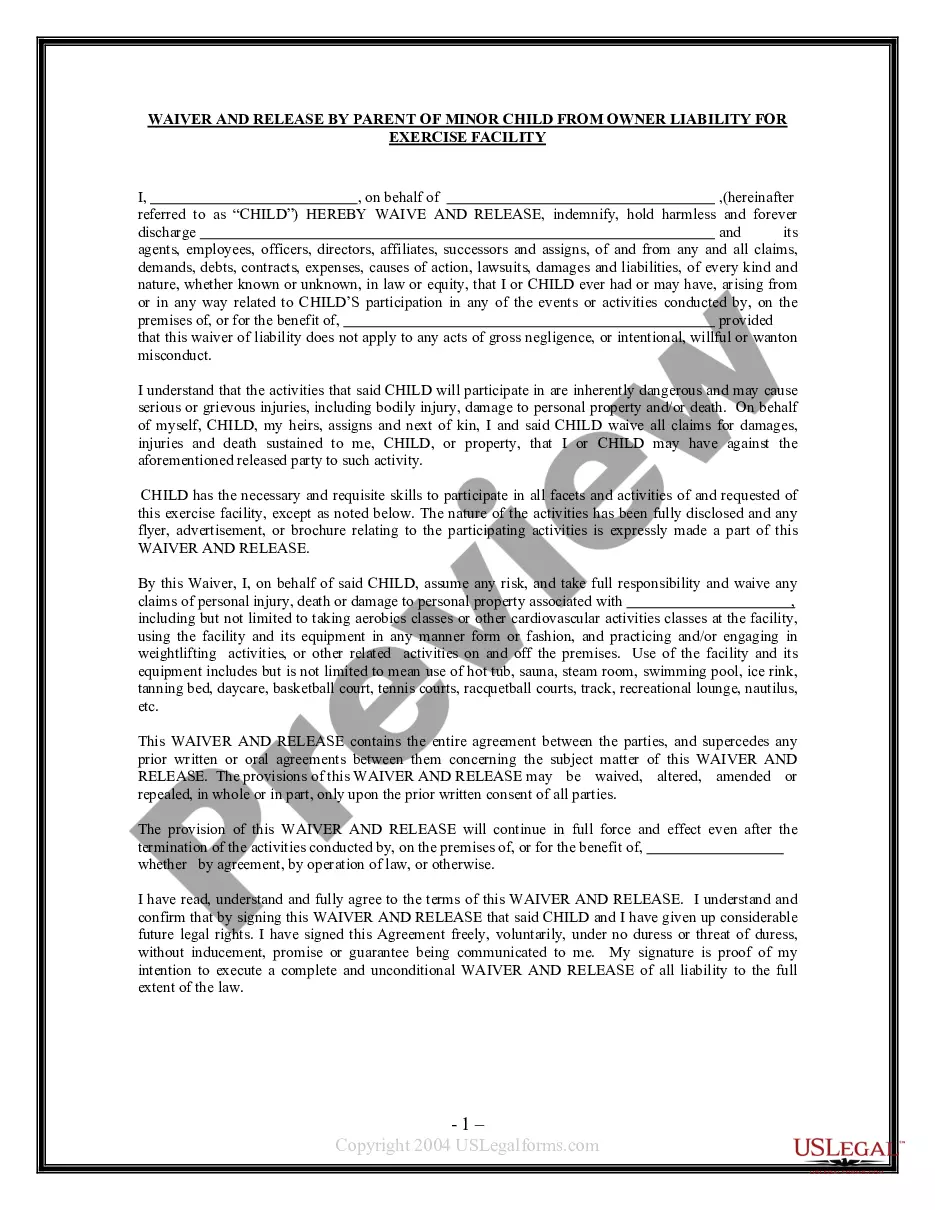
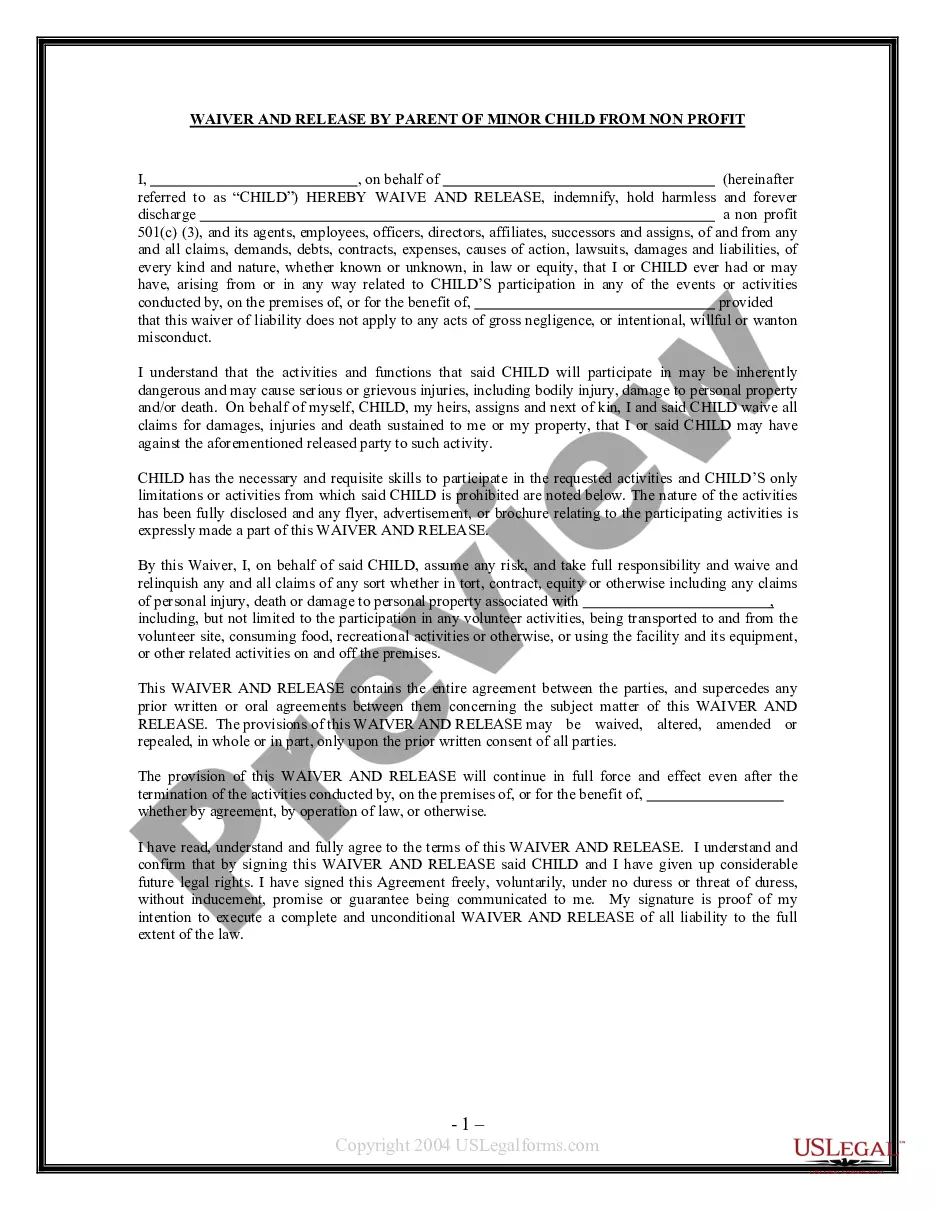
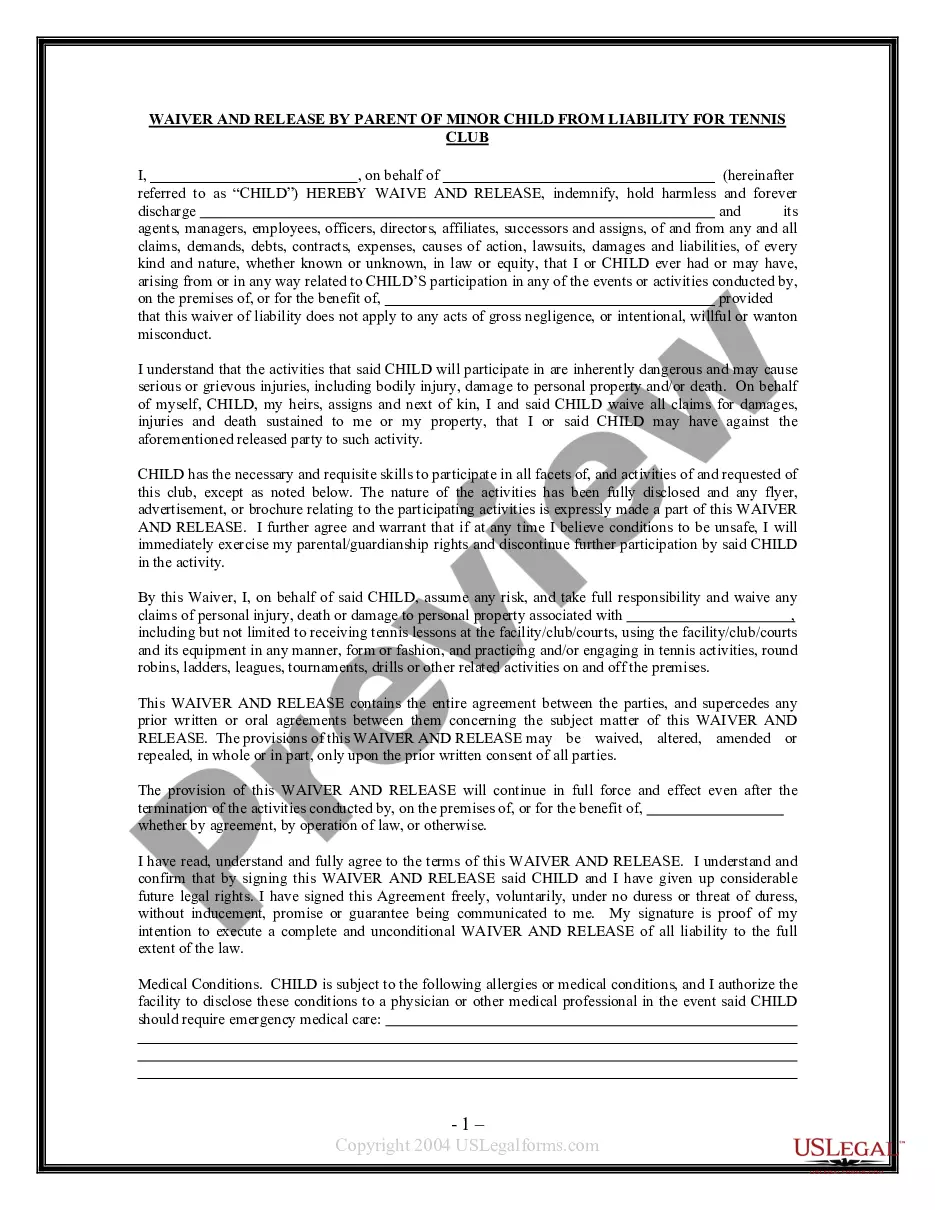
This form allows a parent or guardian to release a dojo facility from liability for injuries which may be incurred by a minor child while on the premises, taking part in activities, etc.
Florida Waiver and Release From Liability For Minor Child for Dojo
Category:
State:
Multi-State
Control #:
US-WAV-01M
Format:
Word;
Rich Text
Instant download
Description
Free preview
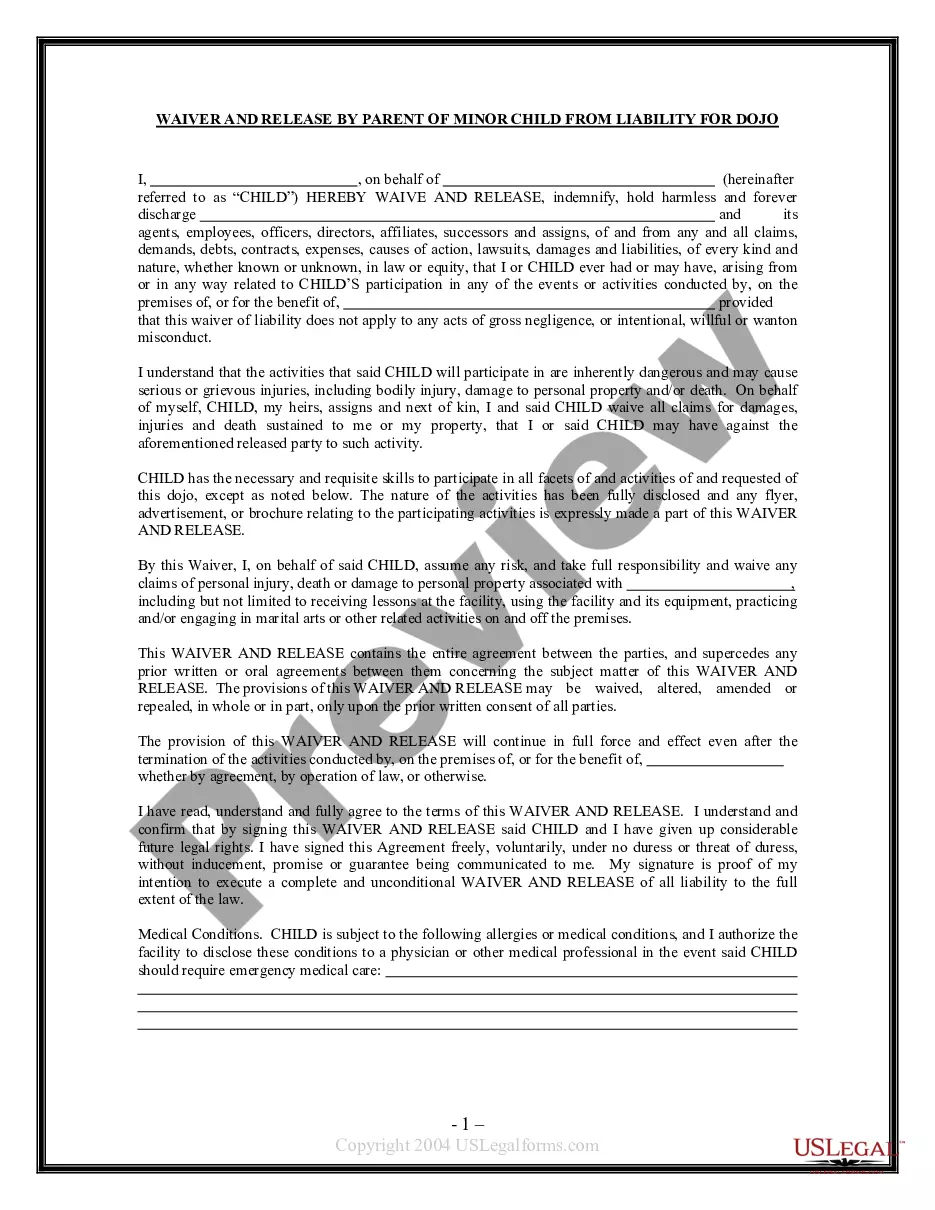
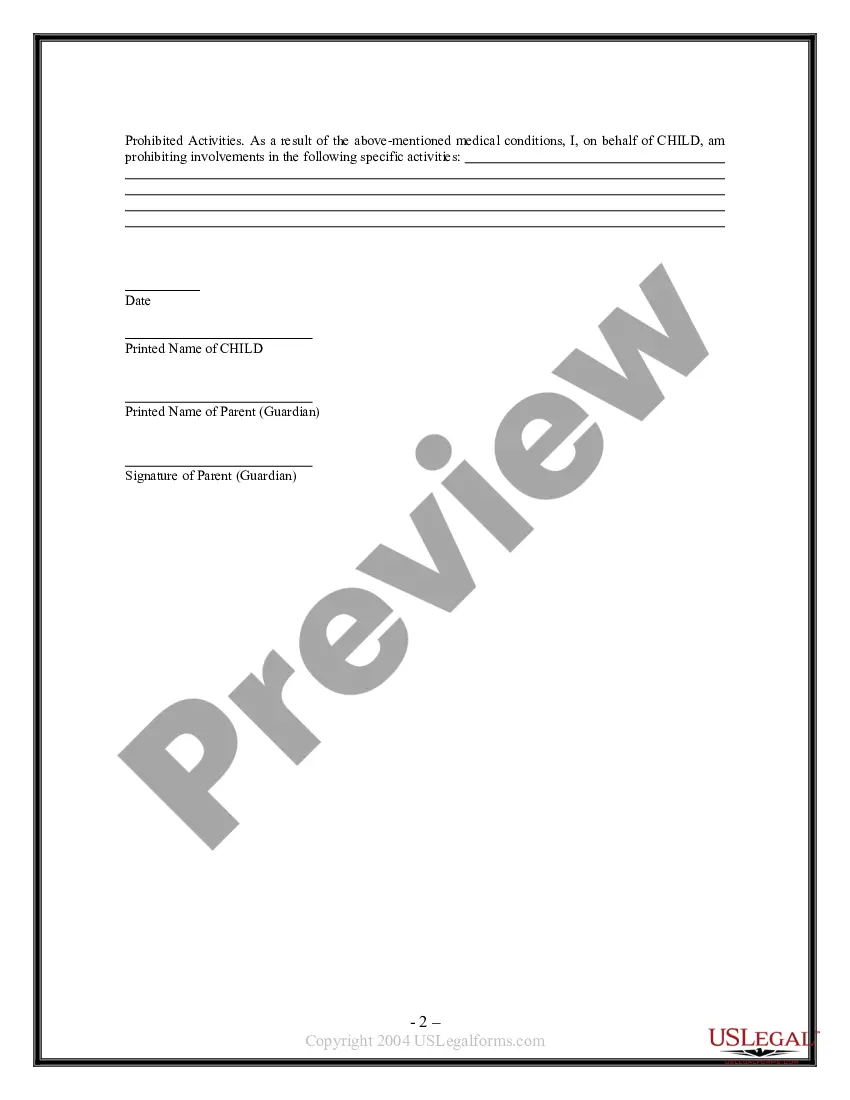

How to fill out Waiver And Release From Liability For Minor Child For Dojo?
Are you in the situation where you require documents for either business or specific purposes every single day? There are numerous legal document templates available online, but finding ones you can trust isn't easy. US Legal Forms offers thousands of document templates, such as the Florida Waiver and Release From Liability For Minor Child for Dojo, that are designed to meet federal and state requirements.
If you are already familiar with the US Legal Forms website and have an account, just Log In. After that, you can download the Florida Waiver and Release From Liability For Minor Child for Dojo template.
If you do not have an account and wish to start using US Legal Forms, follow these steps: Find the document you need and ensure it is for the correct city/state. Use the Review button to check the form. Read the details to confirm you have selected the correct document. If the document isn’t what you’re looking for, utilize the Search area to find the document that fits your needs and requirements. Once you find the right document, click Acquire now. Choose the payment plan you want, fill out the necessary information to create your account, and pay for the order using your PayPal or credit card. Select a convenient file format and download your copy.
- Access all the document templates you have purchased in the My documents section.
- You can retrieve another copy of the Florida Waiver and Release From Liability For Minor Child for Dojo at any time, if needed.
- Just click on the required document to download or print the template.
- Use US Legal Forms, the most extensive collection of legal forms, to save time and avoid mistakes.
- The service provides professionally created legal document templates that can be used for various purposes.
- Create an account on US Legal Forms and start making your life easier.
Form popularity
FAQ
To write a simple release of liability, begin by stating the name of the organization and the purpose of the waiver. Clearly outline the activities involved, emphasizing the risks associated with them, such as martial arts training in the Florida Waiver and Release From Liability For Minor Child for Dojo. Use concise language to explain that the signer agrees to release the organization from any claims arising from participation. Lastly, include a space for the parent or guardian's signature and date to finalize the document.
Creating your own liability waiver involves several key steps. First, identify the activities that pose risks, such as those found in martial arts at a dojo. Next, use a template or legal resource, like USLegalForms, to ensure you include essential clauses that comply with state laws, including the Florida Waiver and Release From Liability For Minor Child for Dojo. After drafting, review the document for clarity, and have parents sign it before their child participates in any activities.
To write a liability waiver form, start by clearly stating the purpose of the document, which is to release the organization from liability. Include specific details about the activity, such as martial arts training in the case of the Florida Waiver and Release From Liability For Minor Child for Dojo. Ensure that the language is straightforward and that it covers potential risks. Finally, have the parent or guardian sign and date the form to make it legally binding.
A parental release of liability form is a legal document designed to protect organizations from legal claims made by parents or guardians of minor children participating in activities. Specifically, the Florida Waiver and Release From Liability For Minor Child for Dojo addresses the risks associated with martial arts training. This form allows parents to acknowledge the inherent risks and relieve the dojo from liability in case of an accident. Using this form helps ensure that both the dojo and the participants are protected.
Liability waivers are enforceable in California solely to the extent they shift to the customer the risk of ordinary negligence. Under California law, a liability waiver cannot excuse an injury caused by a defendant's gross negligence, recklessness or intentionally wrongful act.
A release of liability, also known as a liability waiver or a hold harmless agreement, is a contract in which one party agrees not to hold another party liable for damages or injury. These contracts are common in fields that involve some risk to property, finances, or health.
A liability waiver, or release waiver, is a legal document that a company or organization requires members of the public to sign in order to protect their organization from being sued if you sustain an injury.
The answer under Florida law is complicated. Generally, a court will enforce a waiver if certain requirements are met. However, waivers cannot eliminate a company's liability for personal injuries in all cases. Before a court will enforce a waiver, they must take a close look at it.
The main difference between releases and waivers is the transferring of ownership. When rights are released, they are transferred to another party. When rights are waived, they are gone altogether.
In California, waivers of liability are generally enforceable so long as they have been drafted correctly, are explicit as to the scope of coverage, are legible and use high-visibility text, and do not illegally waive unknown or unrelated claims.