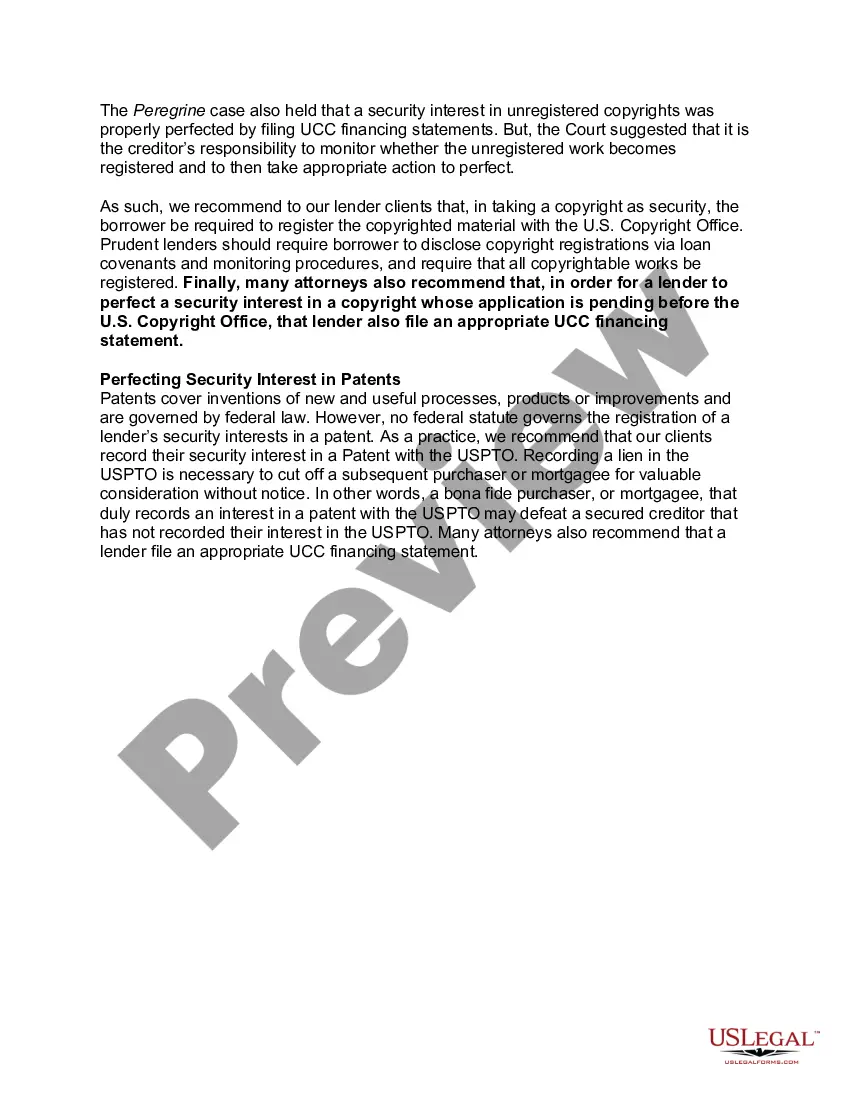
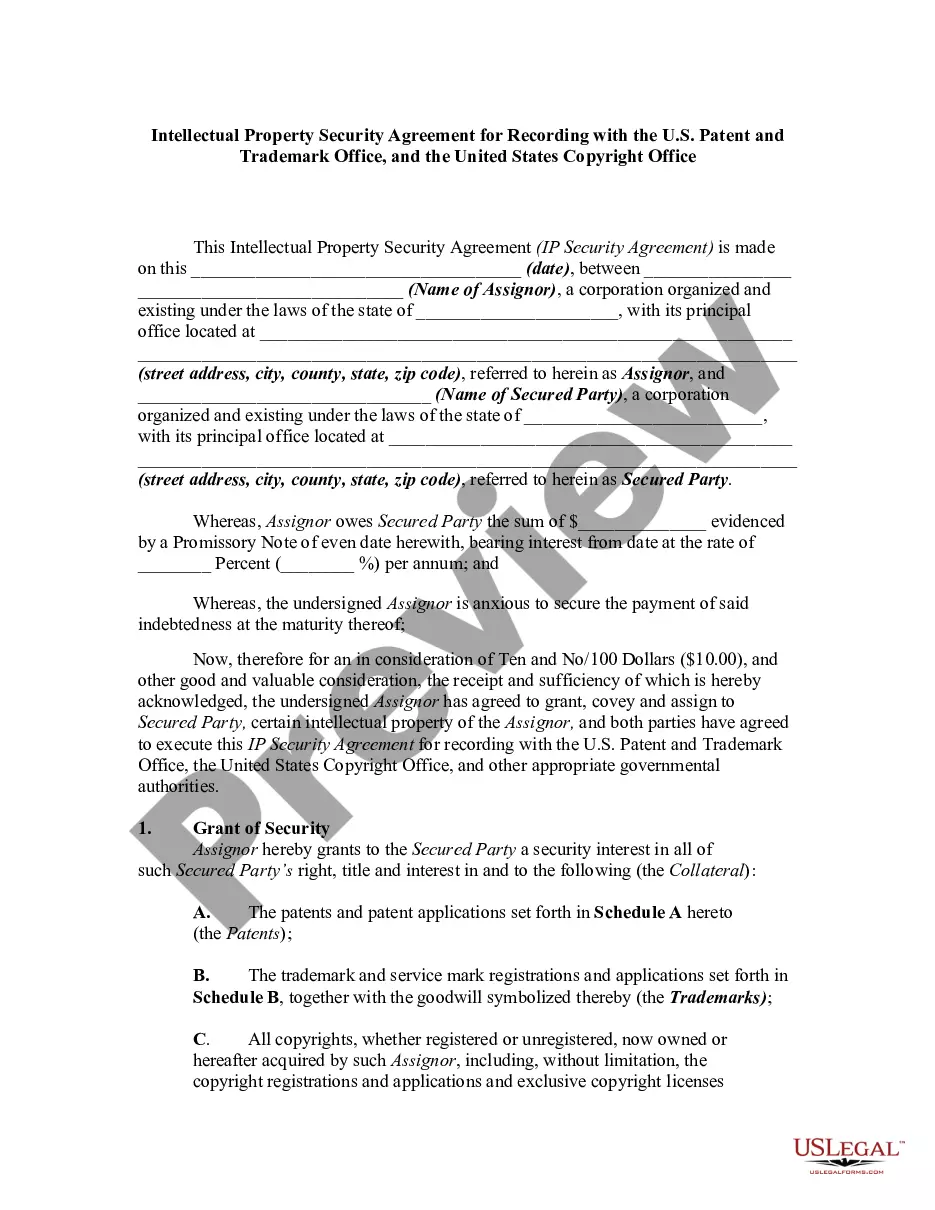
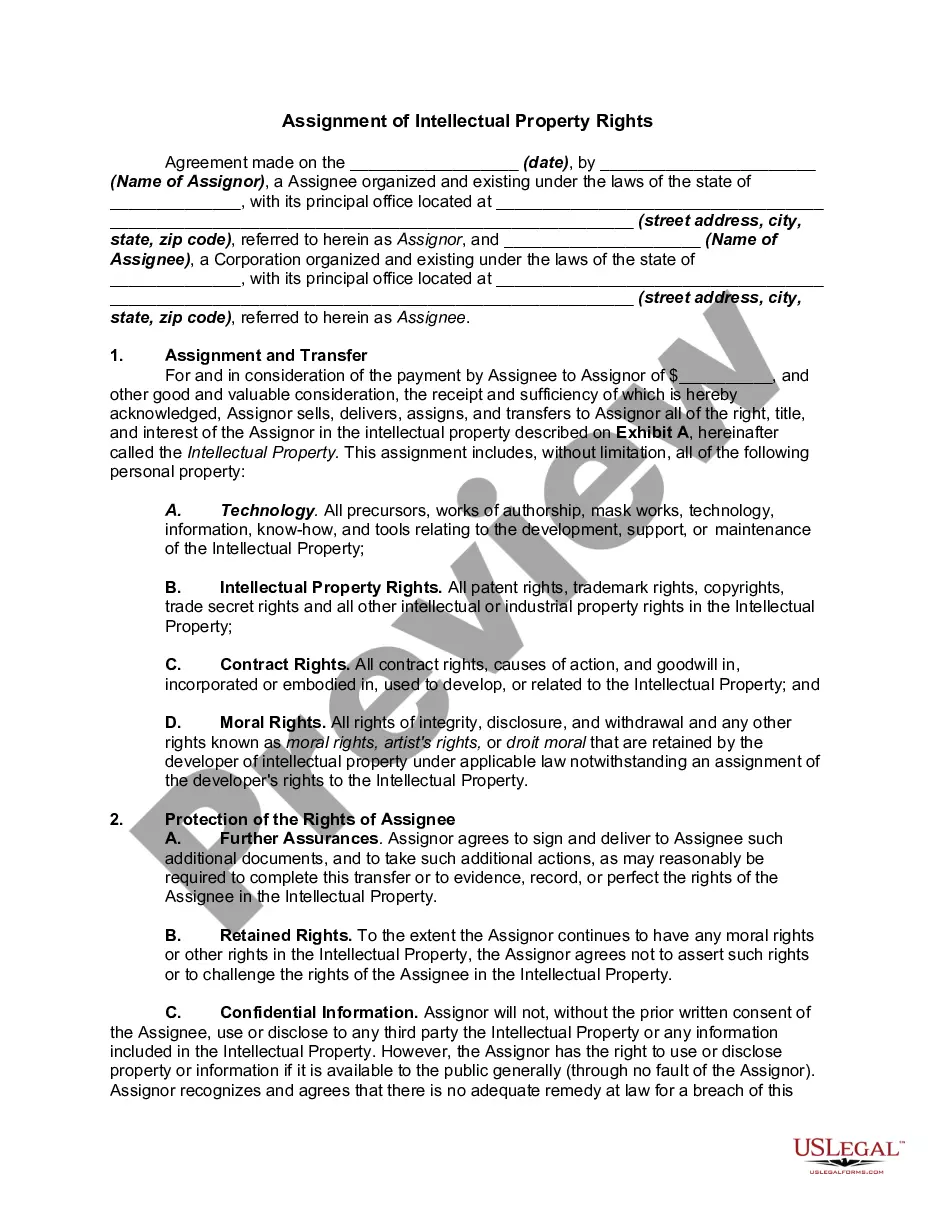
This guide provides an overview of intellectual property rights. Topics included cover trademarks, service marks, copyrights, patents, and trade secrets. Information on remedies for infringement is also provided.
Florida USLegal Guide to Intellectual Property Rights
State:
Multi-State
Control #:
US-GDE-22
Format:
Word;
Rich Text
Instant download
Description
Free preview

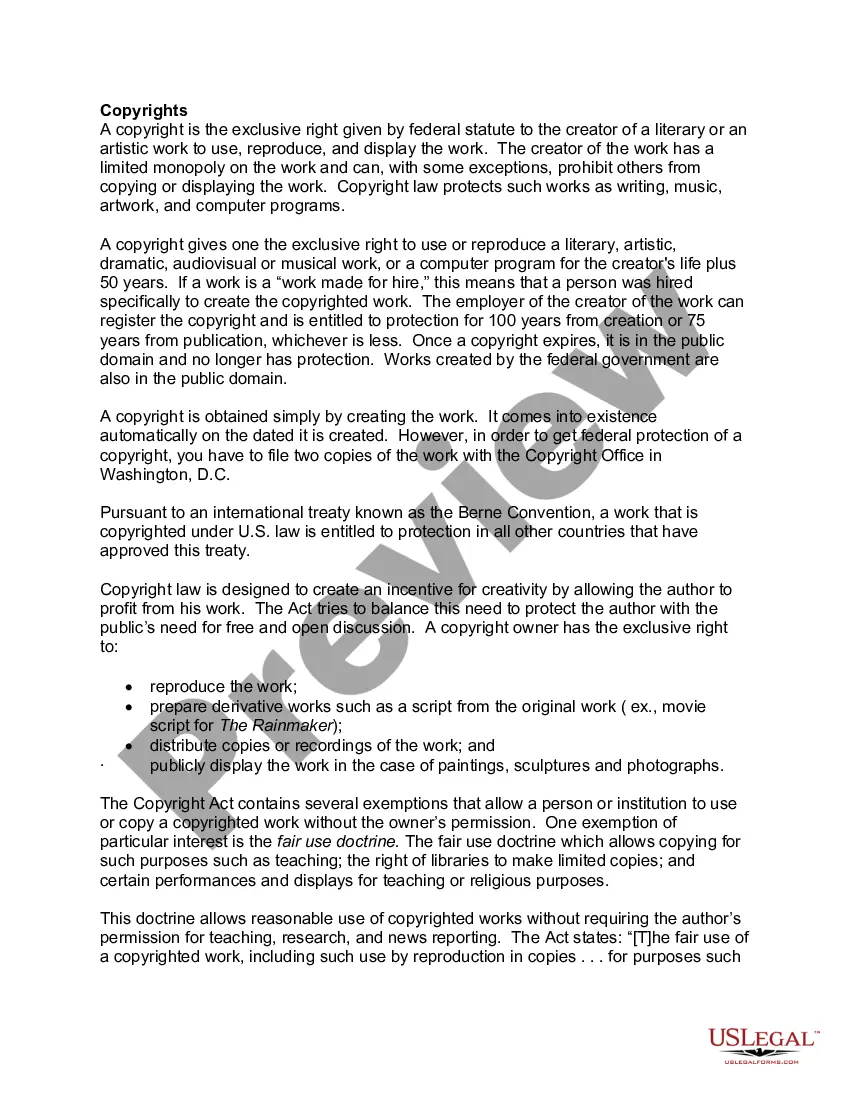
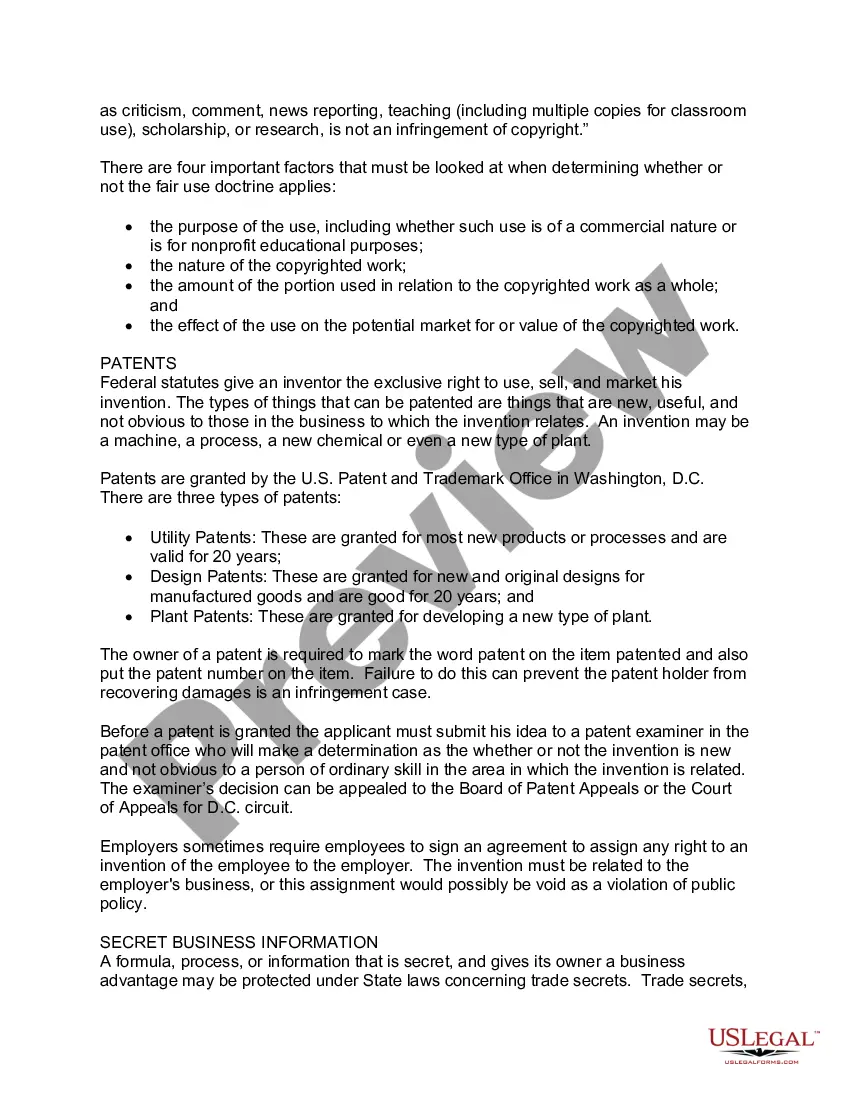
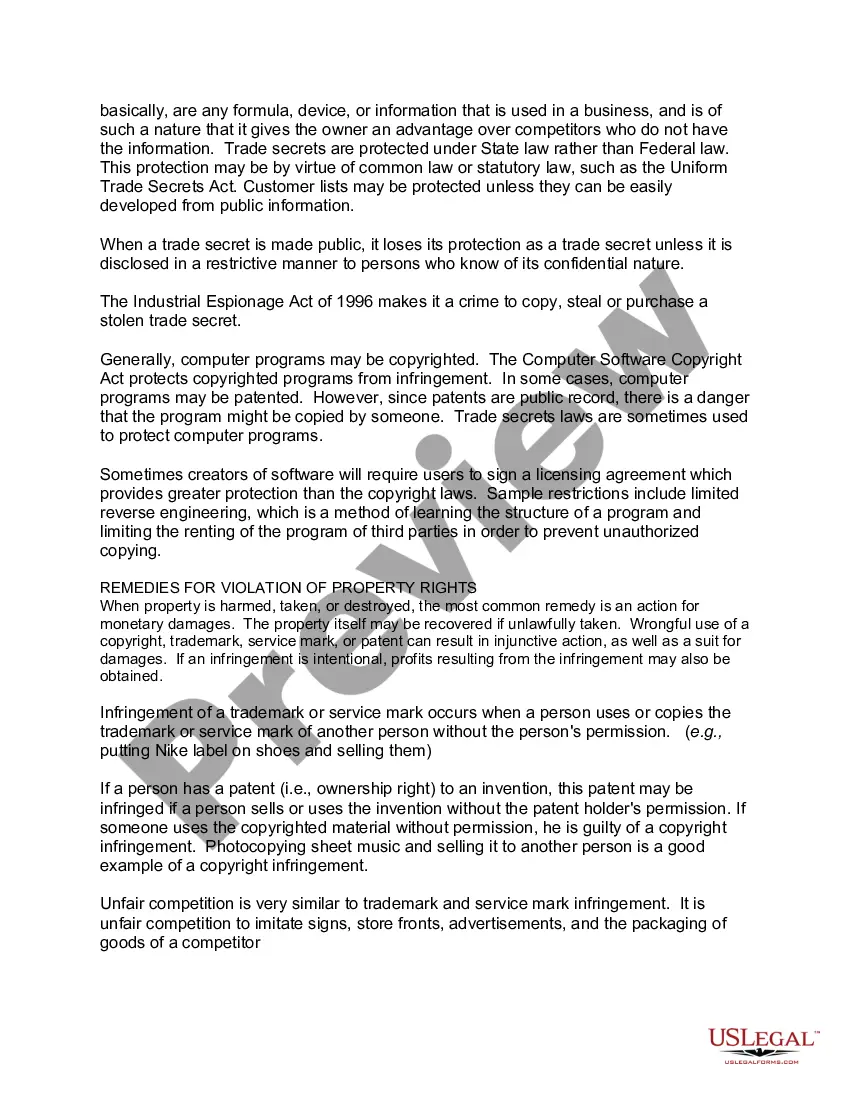
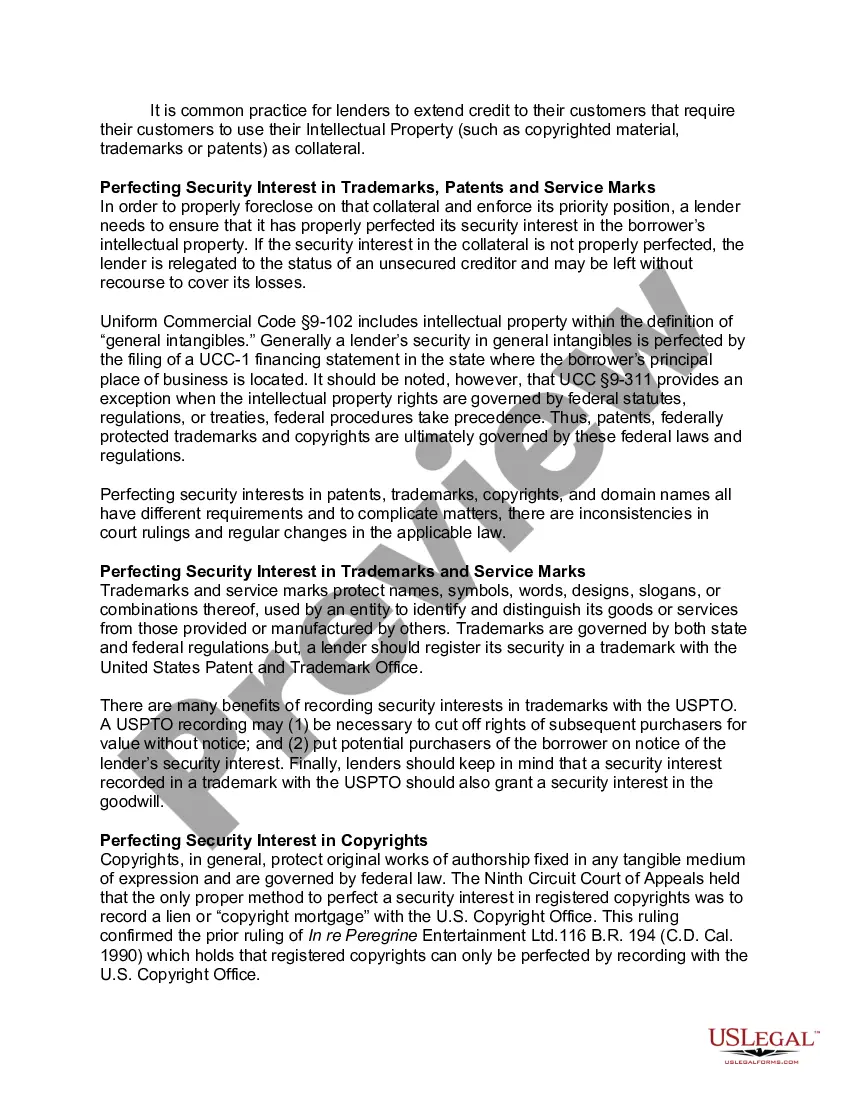

How to fill out USLegal Guide To Intellectual Property Rights?
You might spend time online looking for the correct legal document template that meets the federal and state requirements you need.
US Legal Forms provides thousands of legal forms that are reviewed by professionals.
You can obtain or print the Florida USLegal Guide to Intellectual Property Rights from their service.
If available, utilize the Review option to look through the document template as well.
- If you already have a US Legal Forms account, you can Log In and select the Obtain option.
- Then, you can complete, edit, print, or sign the Florida USLegal Guide to Intellectual Property Rights.
- Every legal document template you purchase is yours permanently.
- To retrieve an additional copy of any purchased form, go to the My documents tab and select the appropriate option.
- If you are using the US Legal Forms website for the first time, follow the simple instructions below.
- First, ensure you have chosen the correct document template for the region/city of your choice.
- Review the form details to make sure you have selected the right one.
Form popularity
FAQ
To effectively write an intellectual property statement, start by defining the intellectual property type, such as a trademark or copyright, and outline the ownership details. Be sure to include any relevant legal protections and rights associated with the property. For a thorough approach, leverage resources like the Florida USLegal Guide to Intellectual Property Rights to support your statements with accurate legal frameworks.
A good sentence for discussing intellectual property is: 'Intellectual property encompasses legal rights that protect creations of the mind, including inventions, literary and artistic works, symbols, names, and images used in commerce.' This definition highlights the broad scope of intellectual property and emphasizes its importance. The Florida USLegal Guide to Intellectual Property Rights also elaborates on these aspects, providing a deeper understanding.
A good example of intellectual property is a patented invention, such as a new technology or a unique product design. This type of intellectual property grants exclusive rights to the inventor, preventing others from making, using, or selling the invention without permission. For more insight and examples, consider exploring the Florida USLegal Guide to Intellectual Property Rights.
Writing an intellectual property disclaimer involves clearly stating that certain rights, such as those related to trademarks or copyrights, are reserved. You should specify that the use of any affiliated content is subject to legal restrictions. Utilizing the Florida USLegal Guide to Intellectual Property Rights can provide you with helpful templates and legal phrasing to ensure your disclaimer is effective and compliant.
To write an intellectual property statement, start by clearly identifying the type of intellectual property you are addressing, such as patents, trademarks, or copyrights. Next, outline the specific rights and ownership details associated with the property. It is important to refer to the Florida USLegal Guide to Intellectual Property Rights for accurate guidance and examples that can help you develop a comprehensive statement.
You can file your intellectual property application with the United States Patent and Trademark Office (USPTO) for patents and trademarks. For copyrights, you would file with the U.S. Copyright Office. The Florida USLegal Guide to Intellectual Property Rights offers guidance on these processes. Ensure that you're using the correct forms and following the specific instructions provided for each type of protection.
Intellectual property lawyers may need to go to court, but not all cases require litigation. Many disputes can be resolved through negotiation or alternative methods. When you refer to the Florida USLegal Guide to Intellectual Property Rights, you'll find that experienced lawyers can help protect your rights without always entering a courtroom. Their expertise can be vital in resolving issues before they escalate.
Obtaining intellectual property rights involves identifying your original work or invention and ensuring it qualifies for protection. Engage with the Florida USLegal Guide to Intellectual Property Rights, which provides insight into the complexities of various rights. Depending on your needs, you may need to register your work with the appropriate government office or file an application. Consulting with an expert can help clarify the requirements.
To obtain intellectual property rights, you must identify the type of IP you want to protect and submit an application to the relevant authorities. It's important to understand the specific criteria and processes for the type of IP you seek to register. The Florida USLegal Guide to Intellectual Property Rights offers invaluable insights into each step, ensuring a clearer path to obtaining your rights.
To obtain permission to use someone else's intellectual property, you usually need to request a license from the rights holder. This may involve negotiating terms and agreements regarding how you plan to use their work. The Florida USLegal Guide to Intellectual Property Rights provides guidance on how to effectively communicate with rights holders to secure the necessary permissions.