Florida Trade Secrets License Agreement and Assignment between Licensor and Licensee
Description
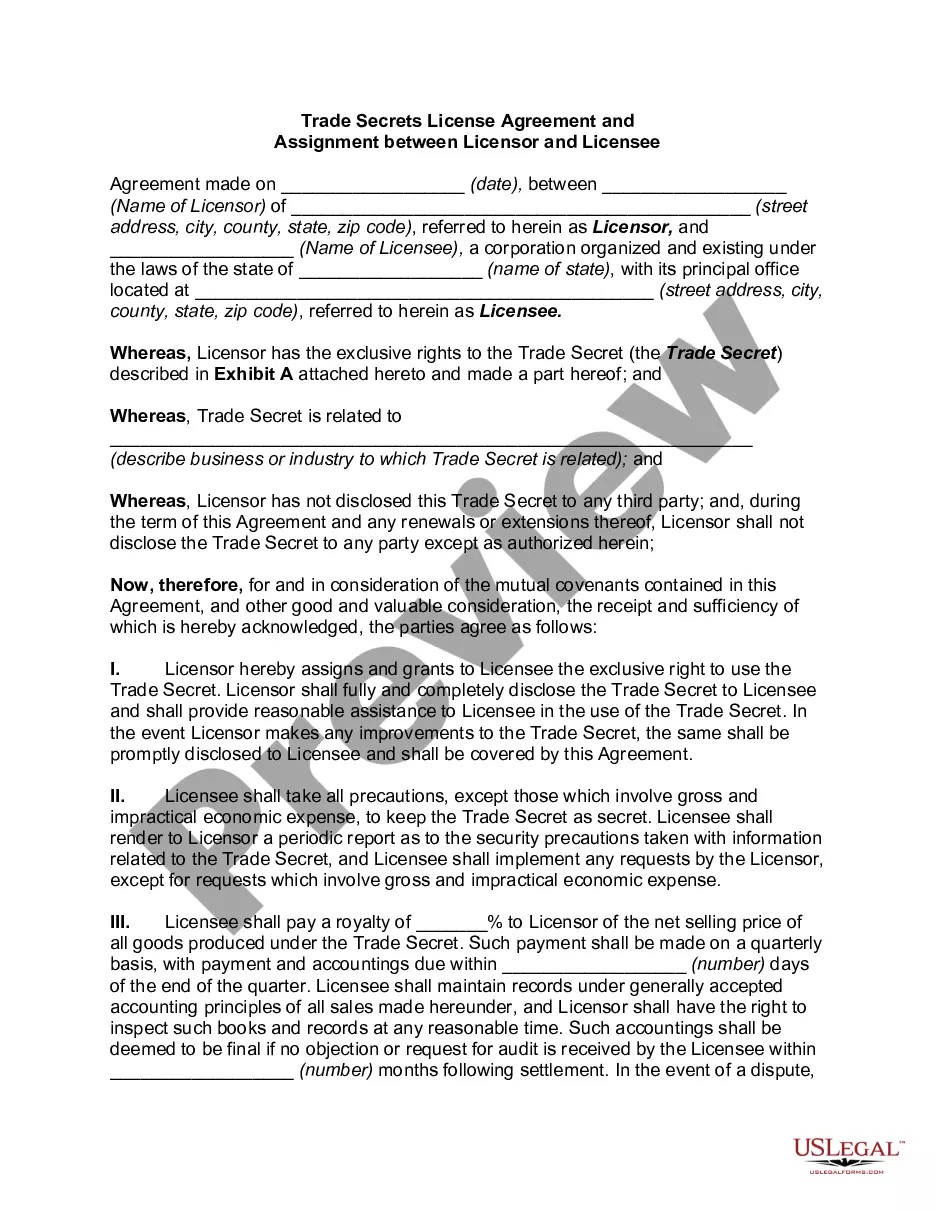
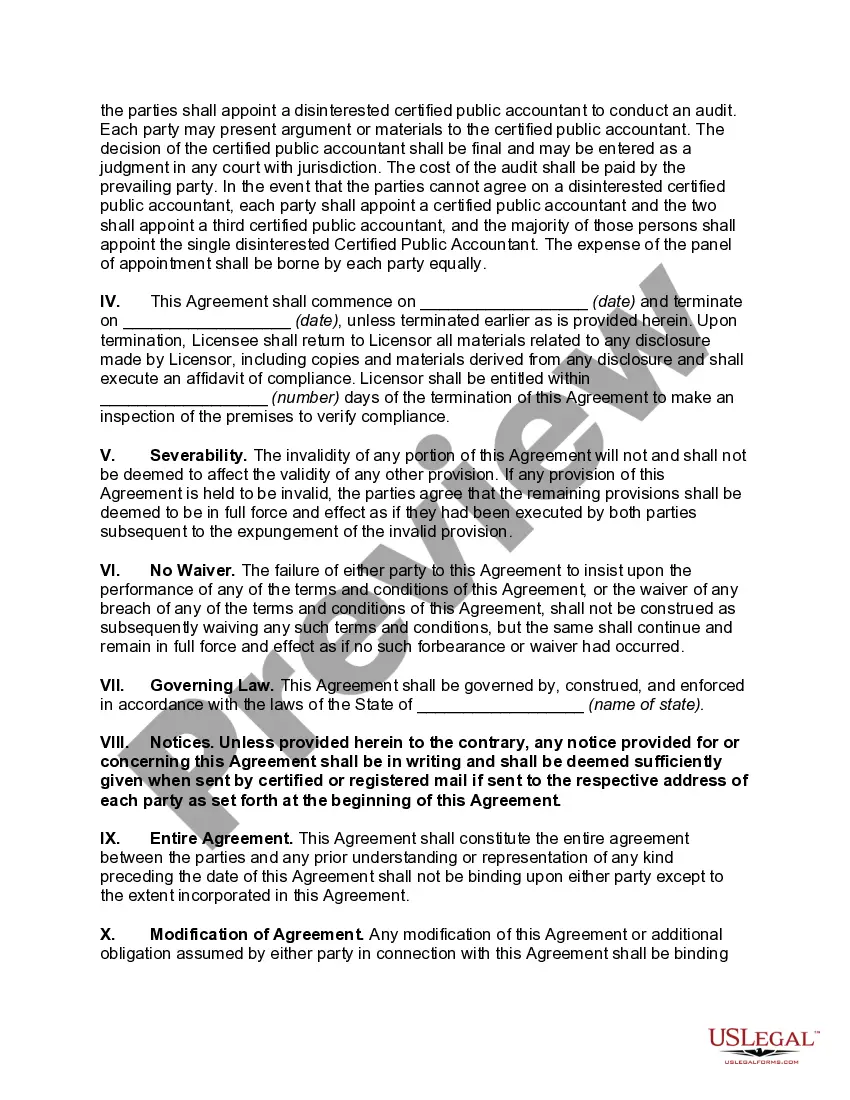
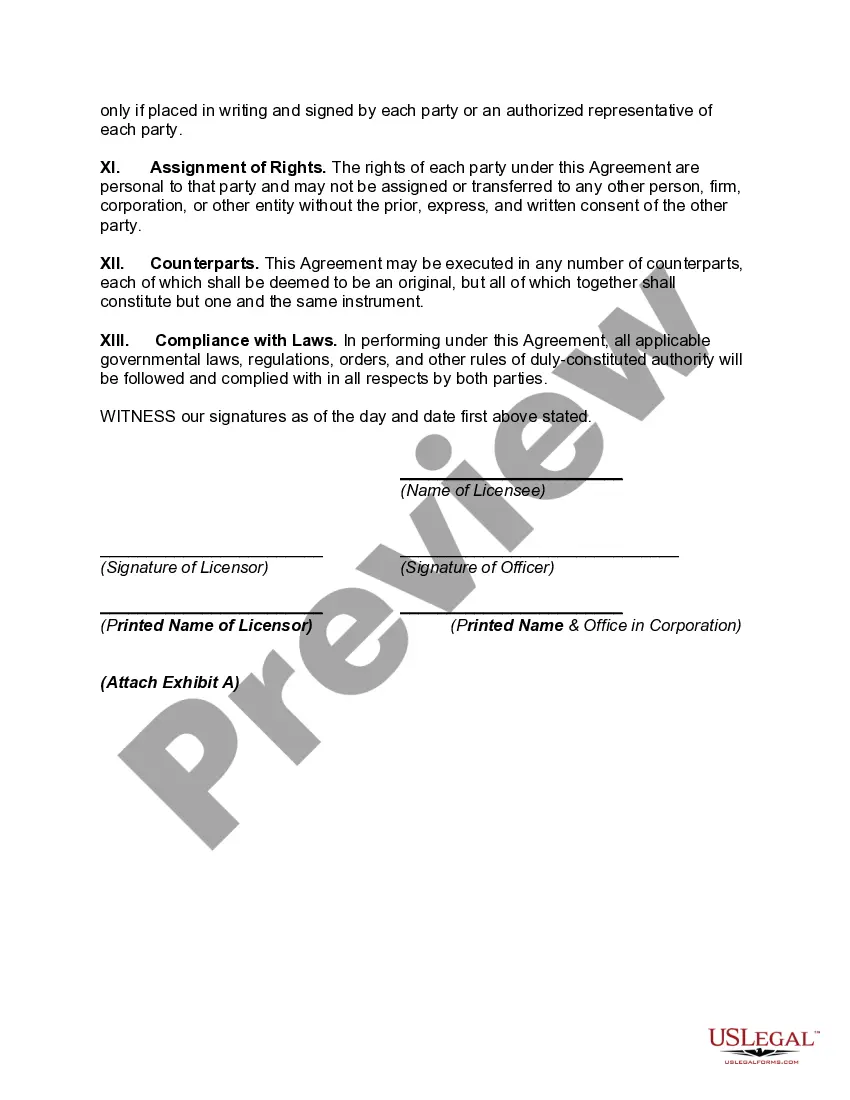
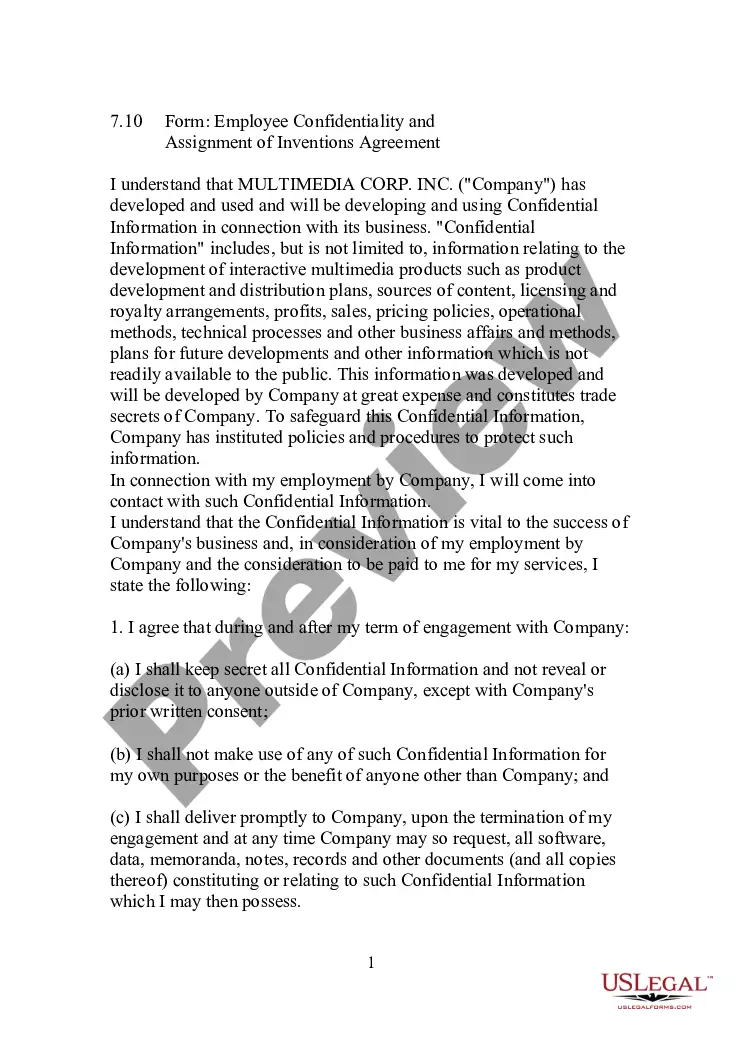
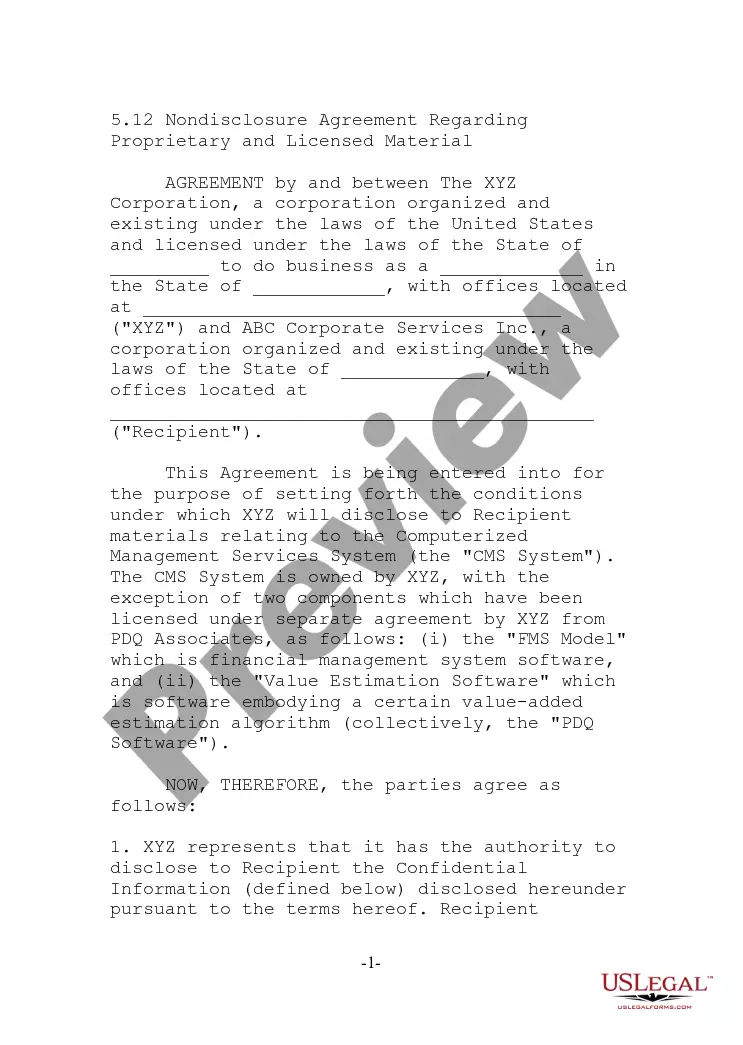
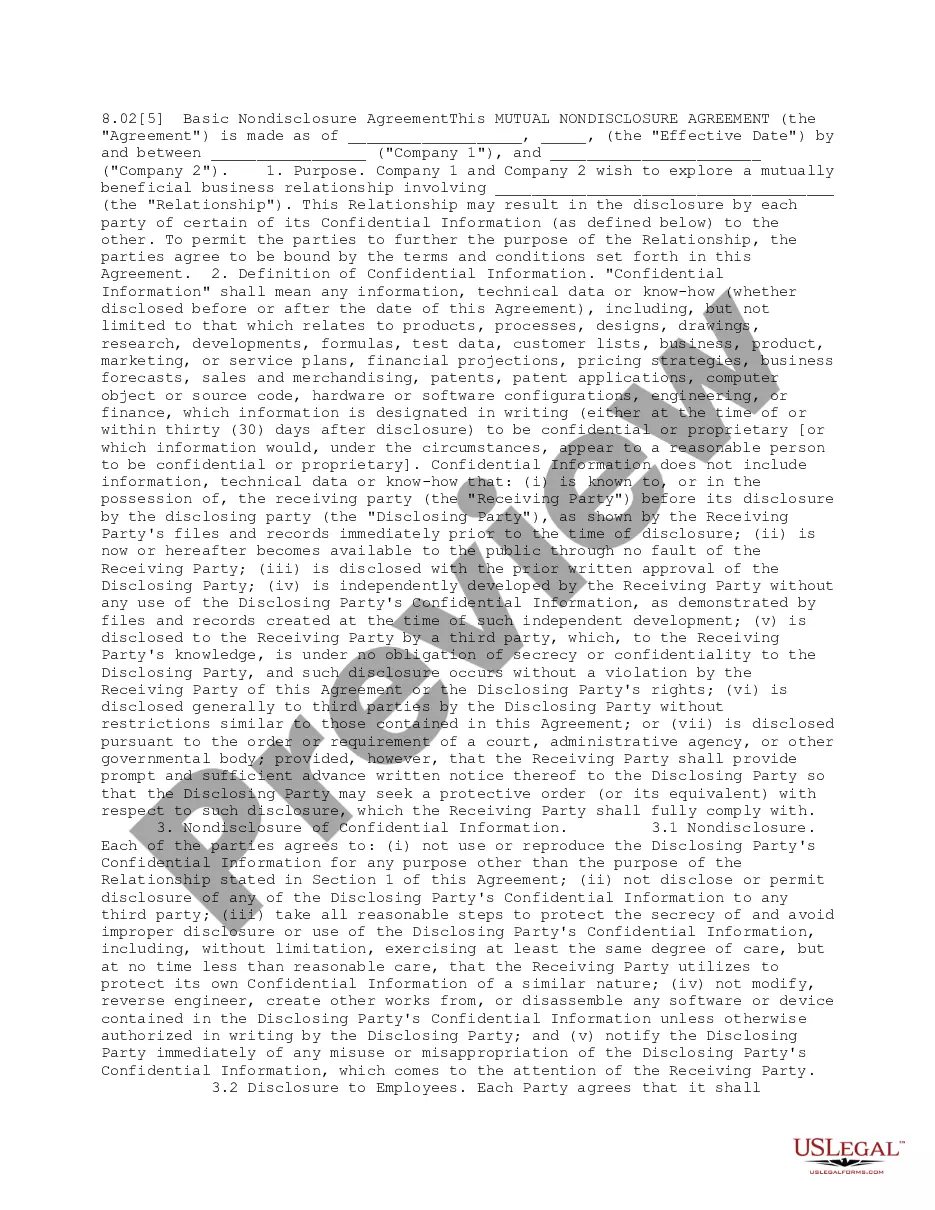
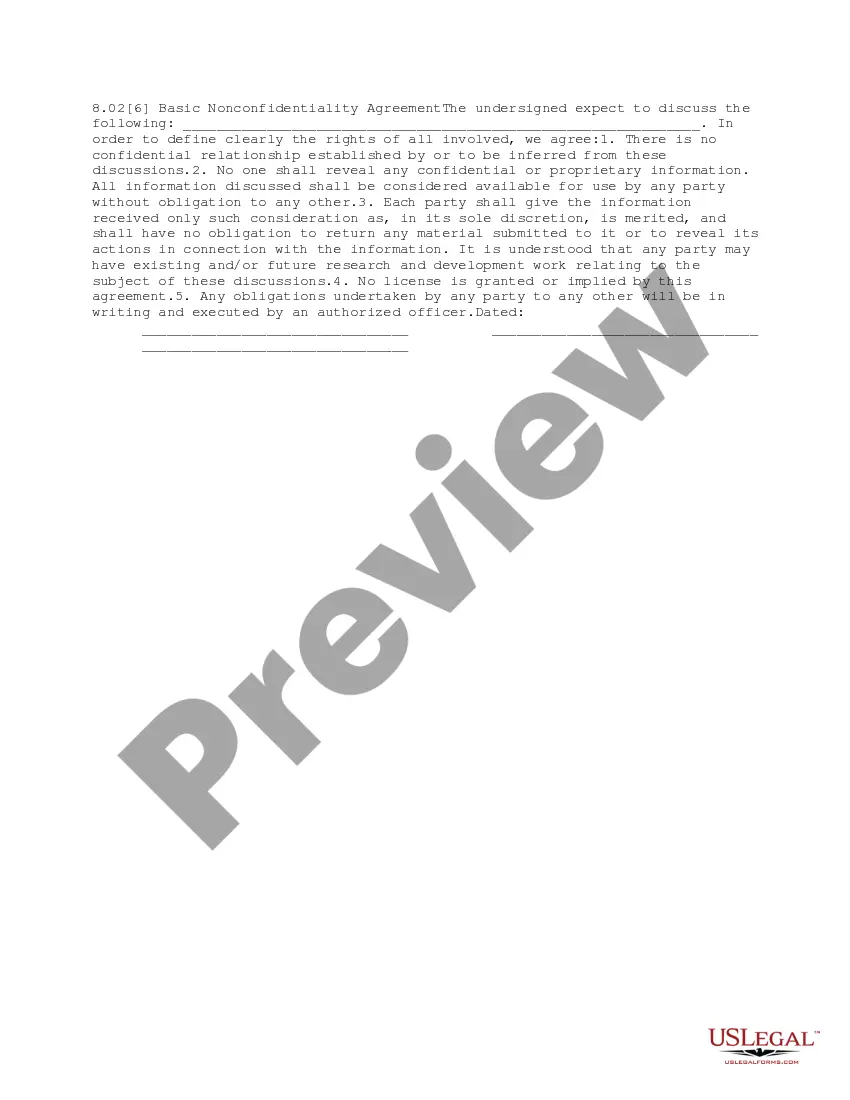
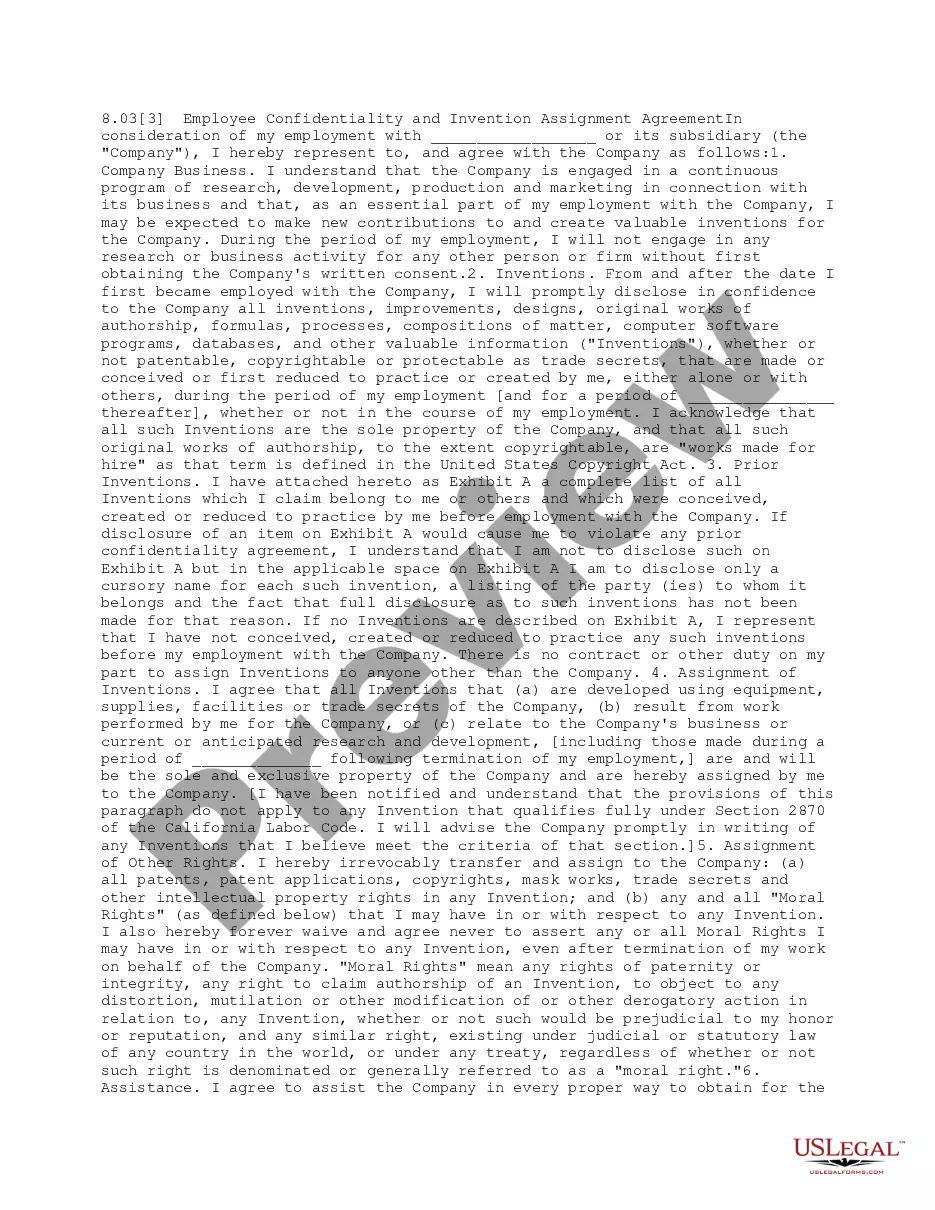
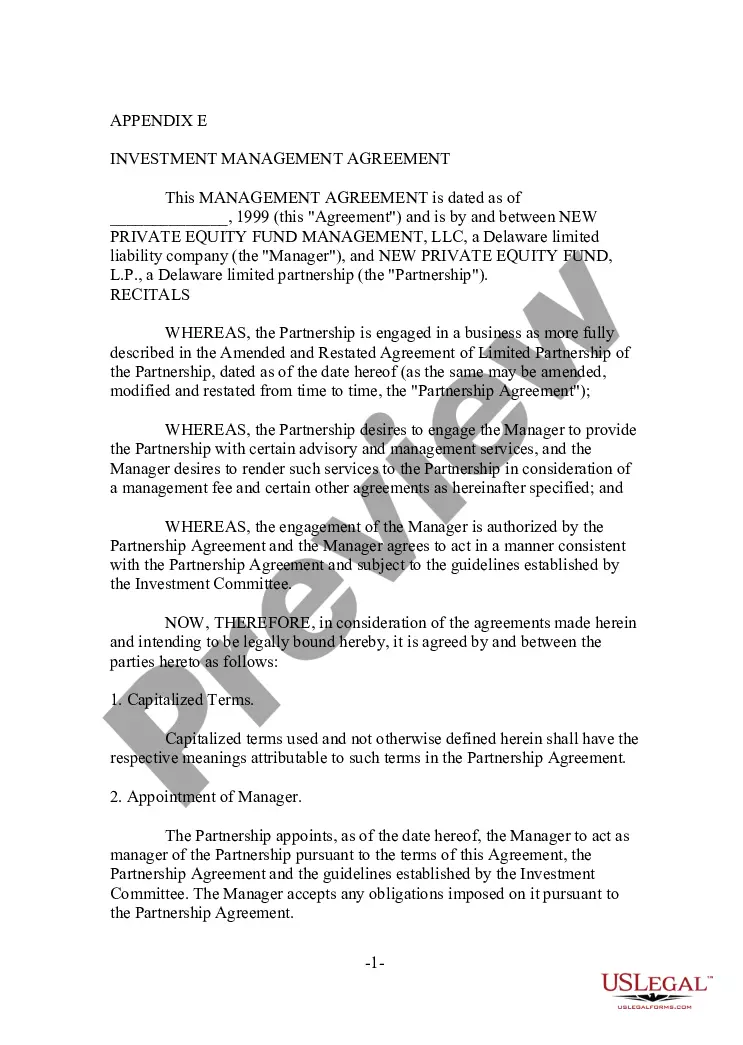
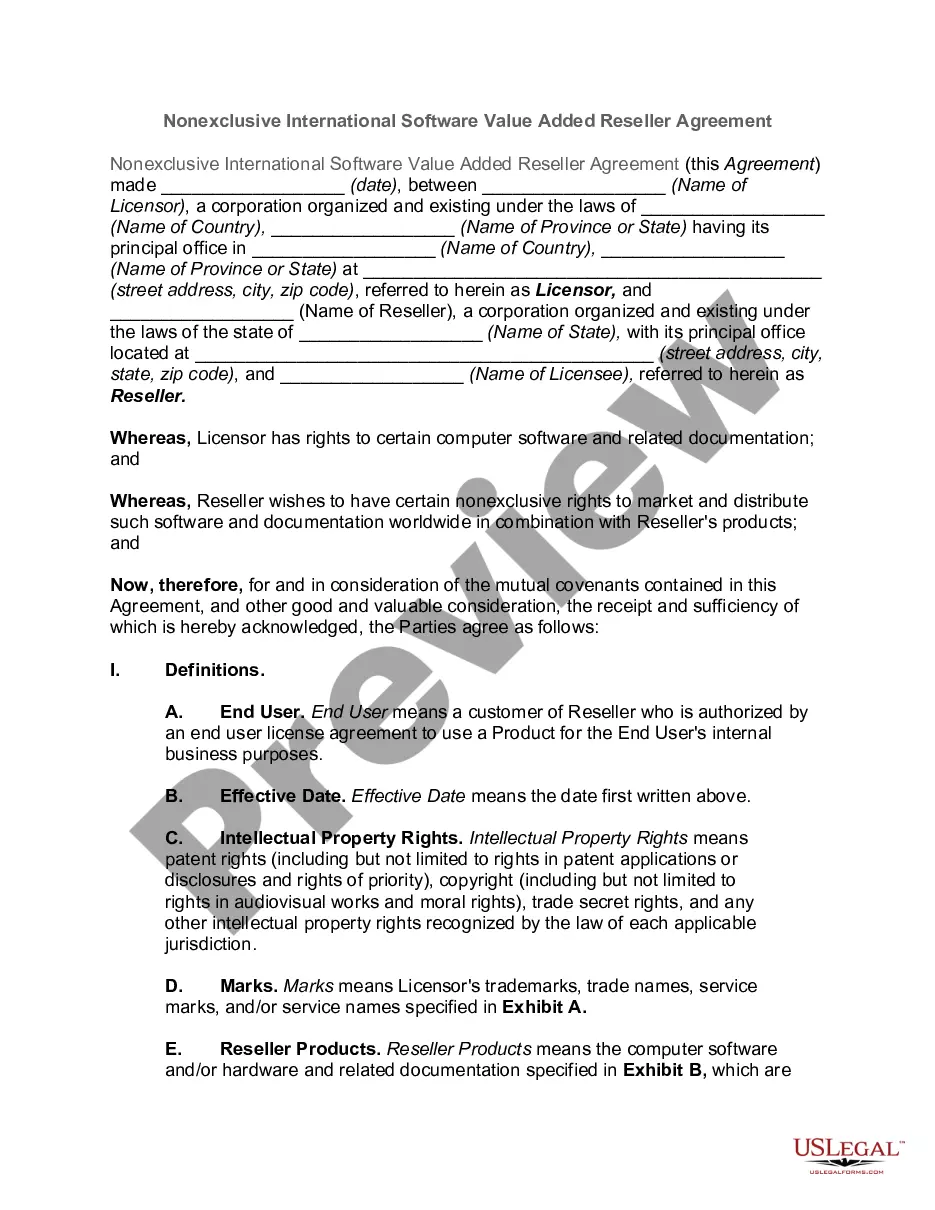

How to fill out Trade Secrets License Agreement And Assignment Between Licensor And Licensee?
Are you presently in a situation where you require documents for potential business or personal activities almost every day.
There are numerous valid document templates accessible online, but sourcing reliable ones can be challenging.
US Legal Forms provides a vast array of form templates, such as the Florida Trade Secrets License Agreement and Assignment between Licensor and Licensee, designed to comply with state and federal requirements.
Select the payment plan you want, fill in the necessary information to create your account, and complete the purchase using your PayPal or credit card.
Choose a convenient format and download your copy. Access all the document templates you have purchased in the My documents menu. You can download an additional copy of the Florida Trade Secrets License Agreement and Assignment between Licensor and Licensee at any time. Just click on the desired form to download or print the document template.
- If you are already familiar with the US Legal Forms site and have an account, simply Log In.
- After that, you can download the Florida Trade Secrets License Agreement and Assignment between Licensor and Licensee template.
- If you do not have an account and wish to start using US Legal Forms, follow these steps.
- Select the form you need and ensure it is for the right region/county.
- Use the Review button to examine the form.
- Read the description to confirm you have chosen the correct form.
- If the form isn’t what you’re looking for, utilize the Search field to find a form that meets your needs and requirements.
- Once you find the correct form, click on Acquire now.
Form popularity
FAQ
Practitioners and licensing executives often refer to three basic types of voluntary licenses: non-exclusive, sole, and exclusive. A non-exclusive licence allows the licensor to retain the right to use the licensed property and the right to grant additional licenses to third parties.
The definition of a licensor is a party or entity that grants a license to someone else. The DMV is an example of a licensor. One who grants a license. (law) A party that grants a license to another.
WHAT IS THE DIFFERENCE BETWEEN ASSIGNMENT AND A LICENSE? The main difference between the two is that in a license the person granting permission (Licensor) retains an interest in the property being licensed, whereas in an assignment the assignor transfers his rights in the property being assigned.
A licensee is any business, organization, or individual that has been granted legal permission by another entity to engage in an activity. The permission, or license, can be given on an express or implied basis.
A licensing agreement is a partnership between an intellectual property rights owner, known as the licensor, and another who is authorised to use such rights, known as the licensee, in exchange for an agreed payment, known as royalty1. There is no transfer of ownership involved.
Approve prospective licensees. Approve licensed products, packaging, marketing and collateral materials. Provide access to licensable assets and/or develop style guide. Register trademarks in appropriate categories.
In particular, a licensee's rights are generally not assignable unless the license agreement expressly permits assignment or the licensor otherwise consents.
Summary. A licensing agreement is a contract between a licensor and licensee in which the licensee gains access to the licensor's intellectual property. The party providing the intellectual property is called the licensor while the party receiving the intellectual property is called the licensee.
In particular, a licensee's rights are generally not assignable unless the license agreement expressly permits assignment or the licensor otherwise consents.
The assignment agreement definition is a portion of the common law that is in charge of transferring the rights of an individual or party to another person or party. The assignment agreement is often seen in real estate but can occur in other contexts as well.