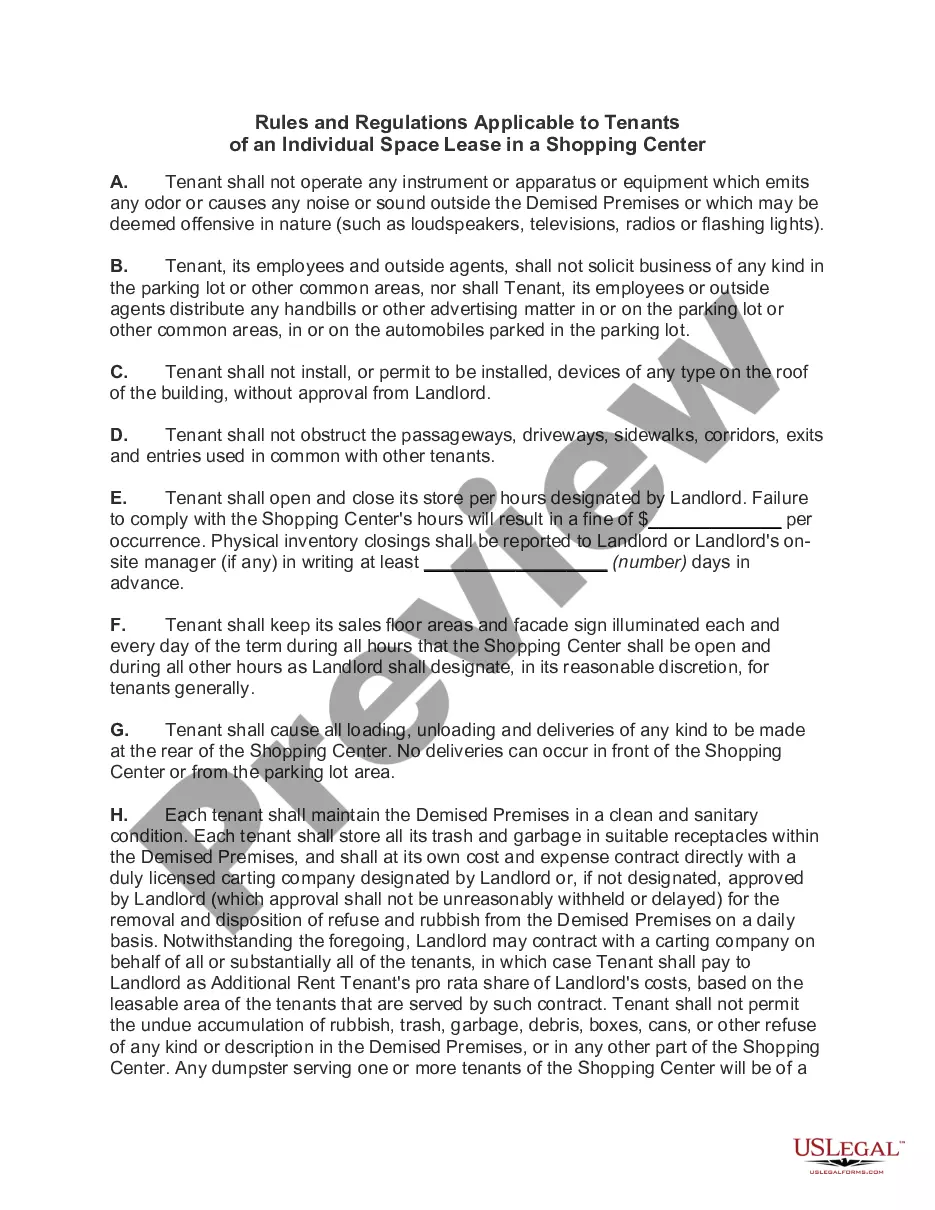
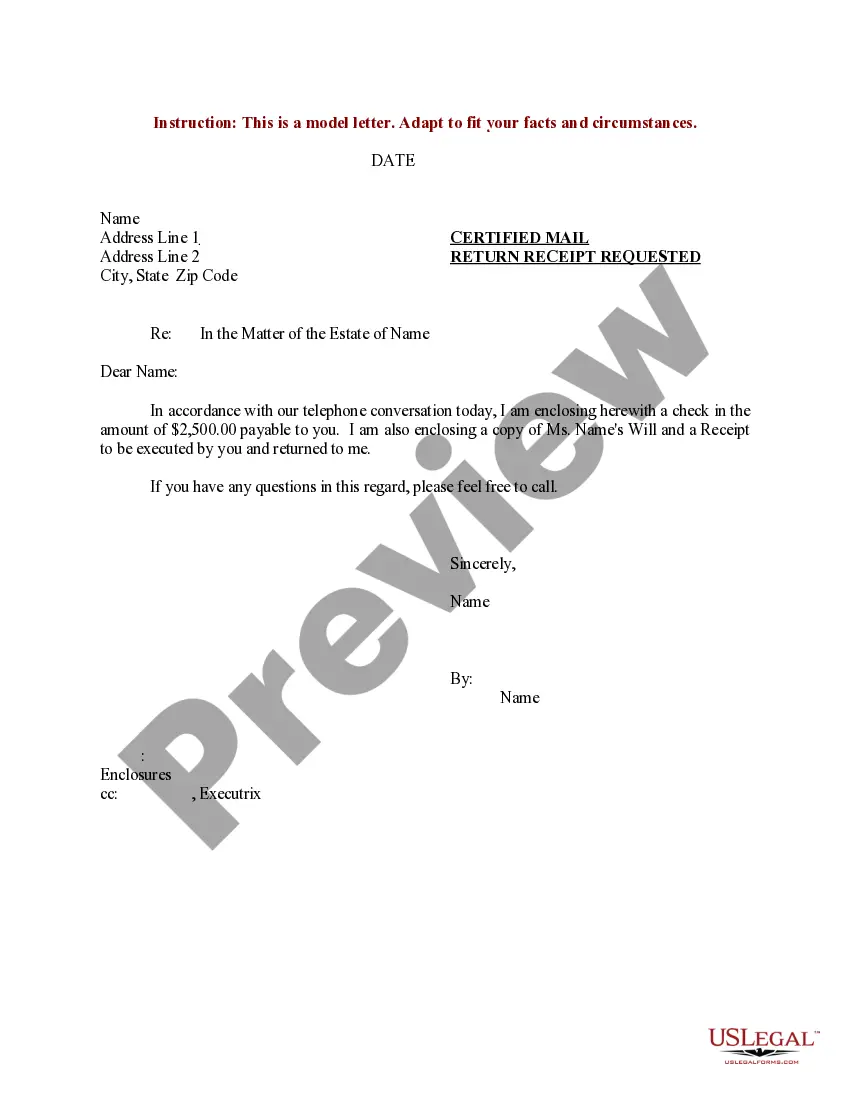
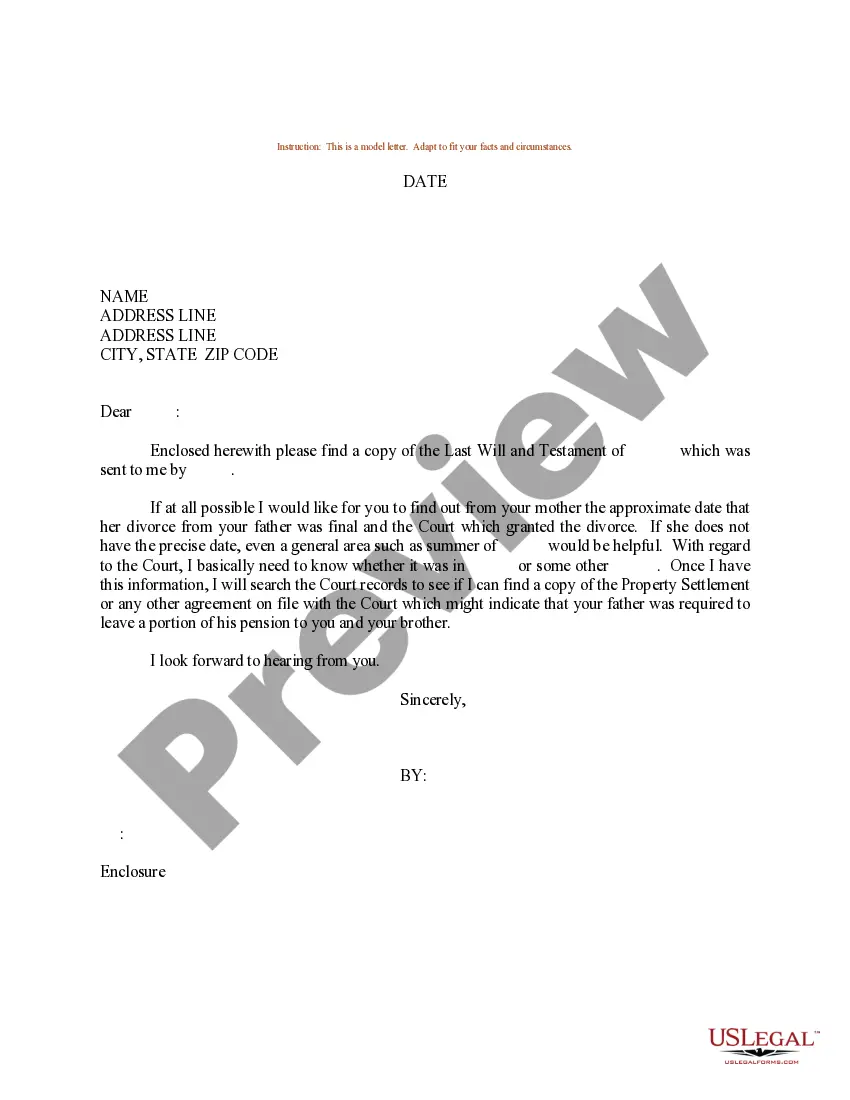
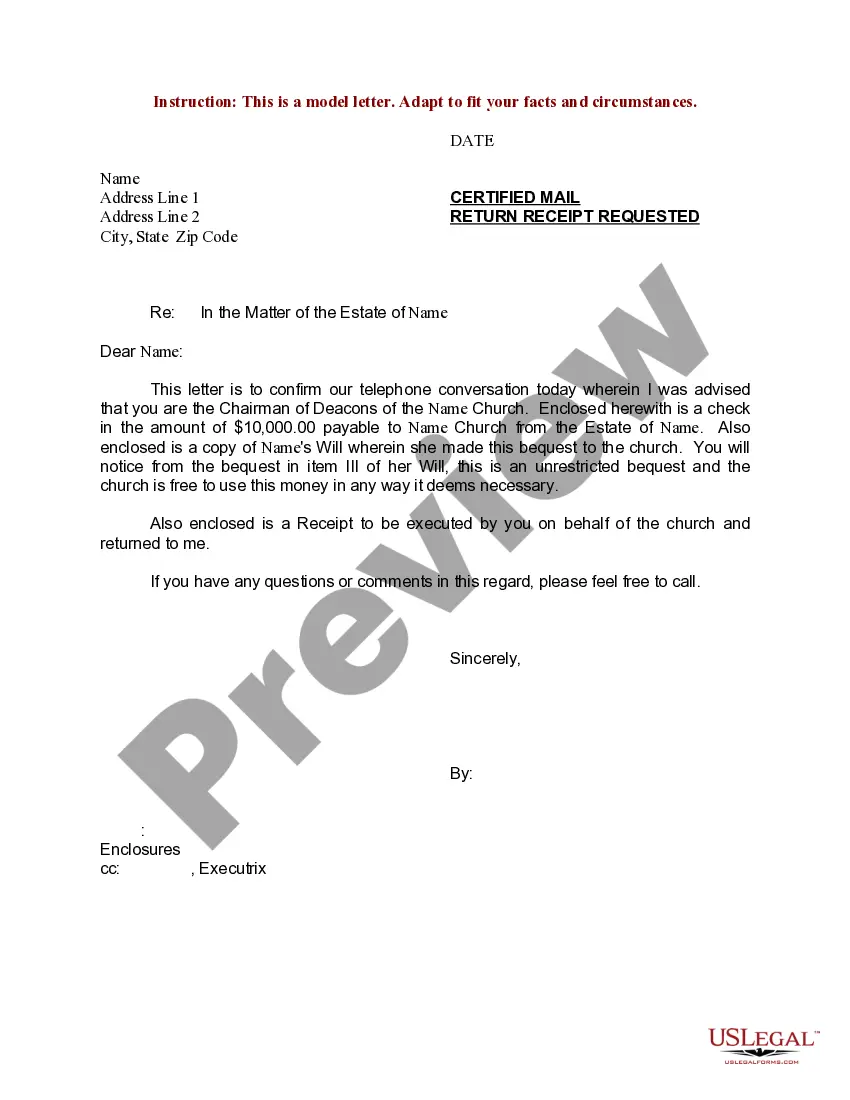
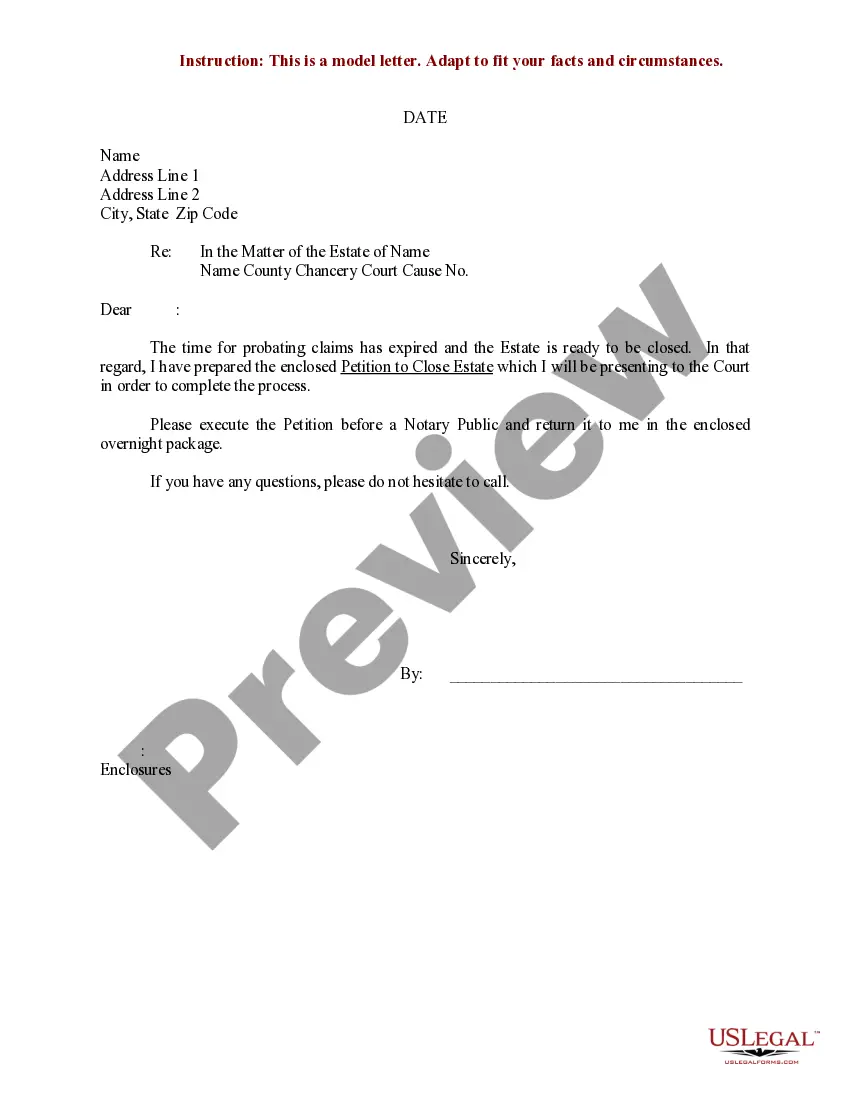
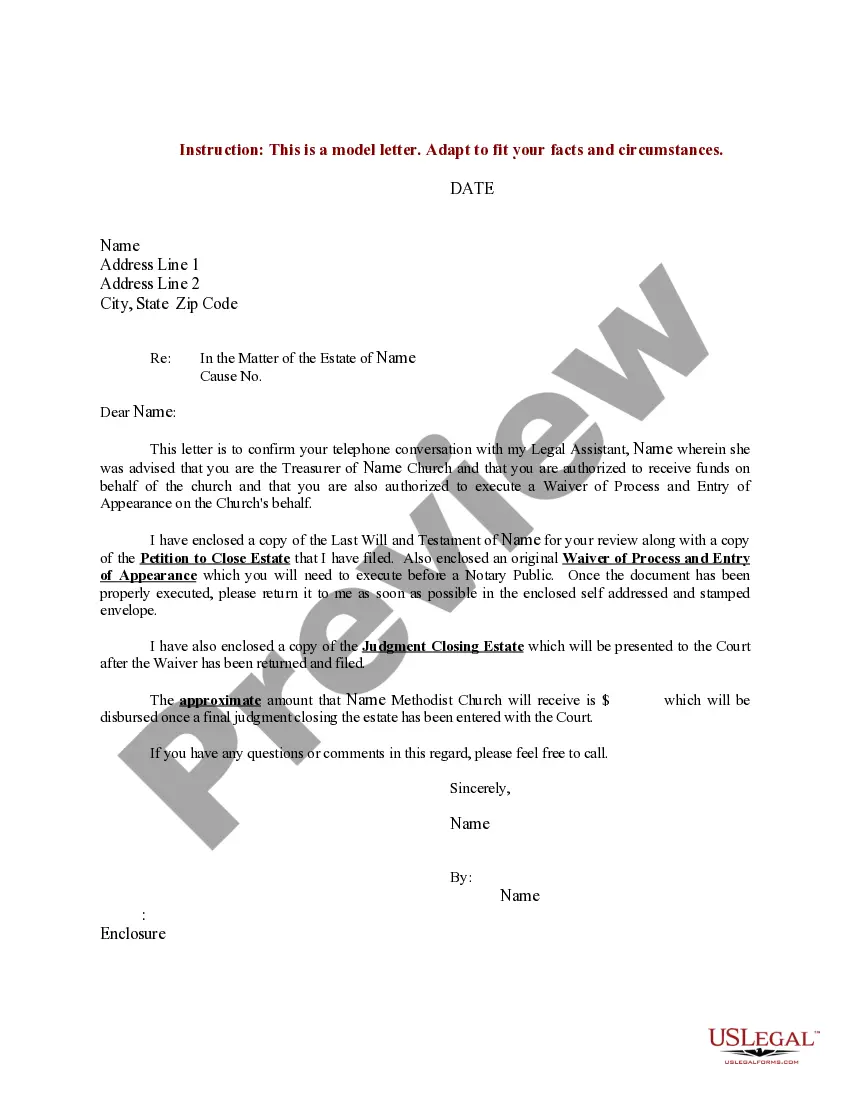
Florida Sample Letter for Execution - Distribution of Will to Individual
Description
Get your form ready online
Our built-in tools help you complete, sign, share, and store your documents in one place.
Make edits, fill in missing information, and update formatting in US Legal Forms—just like you would in MS Word.
Download a copy, print it, send it by email, or mail it via USPS—whatever works best for your next step.
Sign and collect signatures with our SignNow integration. Send to multiple recipients, set reminders, and more. Go Premium to unlock E-Sign.
If this form requires notarization, complete it online through a secure video call—no need to meet a notary in person or wait for an appointment.
We protect your documents and personal data by following strict security and privacy standards.

Make edits, fill in missing information, and update formatting in US Legal Forms—just like you would in MS Word.

Download a copy, print it, send it by email, or mail it via USPS—whatever works best for your next step.

Sign and collect signatures with our SignNow integration. Send to multiple recipients, set reminders, and more. Go Premium to unlock E-Sign.

If this form requires notarization, complete it online through a secure video call—no need to meet a notary in person or wait for an appointment.

We protect your documents and personal data by following strict security and privacy standards.
Looking for another form?



How to fill out Sample Letter For Execution - Distribution Of Will To Individual?
Choosing the best legal papers format can be a battle. Naturally, there are tons of templates accessible on the Internet, but how would you get the legal type you require? Utilize the US Legal Forms internet site. The service offers a huge number of templates, including the Florida Sample Letter for Execution - Distribution of Will to Individual, which can be used for business and private demands. Every one of the varieties are checked out by specialists and meet state and federal demands.
When you are previously authorized, log in to the accounts and click on the Down load option to obtain the Florida Sample Letter for Execution - Distribution of Will to Individual. Utilize your accounts to check from the legal varieties you might have acquired previously. Go to the My Forms tab of your own accounts and acquire another backup of your papers you require.
When you are a brand new end user of US Legal Forms, listed below are straightforward instructions that you can comply with:
- First, make certain you have selected the proper type for your personal metropolis/county. It is possible to examine the shape utilizing the Preview option and browse the shape explanation to guarantee this is the best for you.
- If the type fails to meet your needs, use the Seach area to obtain the correct type.
- Once you are certain the shape is proper, click the Buy now option to obtain the type.
- Opt for the costs strategy you would like and enter in the needed info. Design your accounts and pay for the transaction making use of your PayPal accounts or charge card.
- Opt for the data file structure and acquire the legal papers format to the system.
- Total, revise and print and sign the acquired Florida Sample Letter for Execution - Distribution of Will to Individual.
US Legal Forms may be the most significant library of legal varieties that you can find different papers templates. Utilize the service to acquire expertly-made papers that comply with state demands.
Form popularity
FAQ
A Will is a written document outlining your choices about who will receive your property you own only in your name and how it will be divided when you die. If you have children under the age of 18, you can also name someone to be their guardian in your Will.
The disposition without administration process involves the person who paid funeral and/or final medical bills of the decedent getting reimbursed using the assets in the decedent's estate. Heirs or beneficiaries can only benefit from this process if: The decedent did not leave behind any real estate or real property.
A Notice to Heirs document enables you to officially notify those family members, and others mentioned in the Will, that they may be potential heirs to the estate. It alerts them to an informal probate.
Probate is the process completed when a decedent leaves assets to distribute, such as bank accounts, real estate, and financial investments. Probate is the general administration of a deceased person's will or the estate of a deceased person without a will.
A will is a legal document that sets forth your wishes regarding the distribution of your property and the care of any minor children. If you die without a will, those wishes may not be carried out.
Probate is when the court supervises the processes that transfer legal title of property from the estate of the person who has died (the "decedent") to his or her beneficiaries.
A will, or a last will and testament, is a legal document that describes how you would like your property and other assets to be distributed after your death.
Generally, beneficiaries have to wait a certain amount of time, say at least six months. That time is used to allow creditors to come forward and to pay them off with the estate assets. (In some cases, an executor may make partial distributions to the heirs after he or she estimates the debts.