Florida Complaint for malicious prosecution
Description
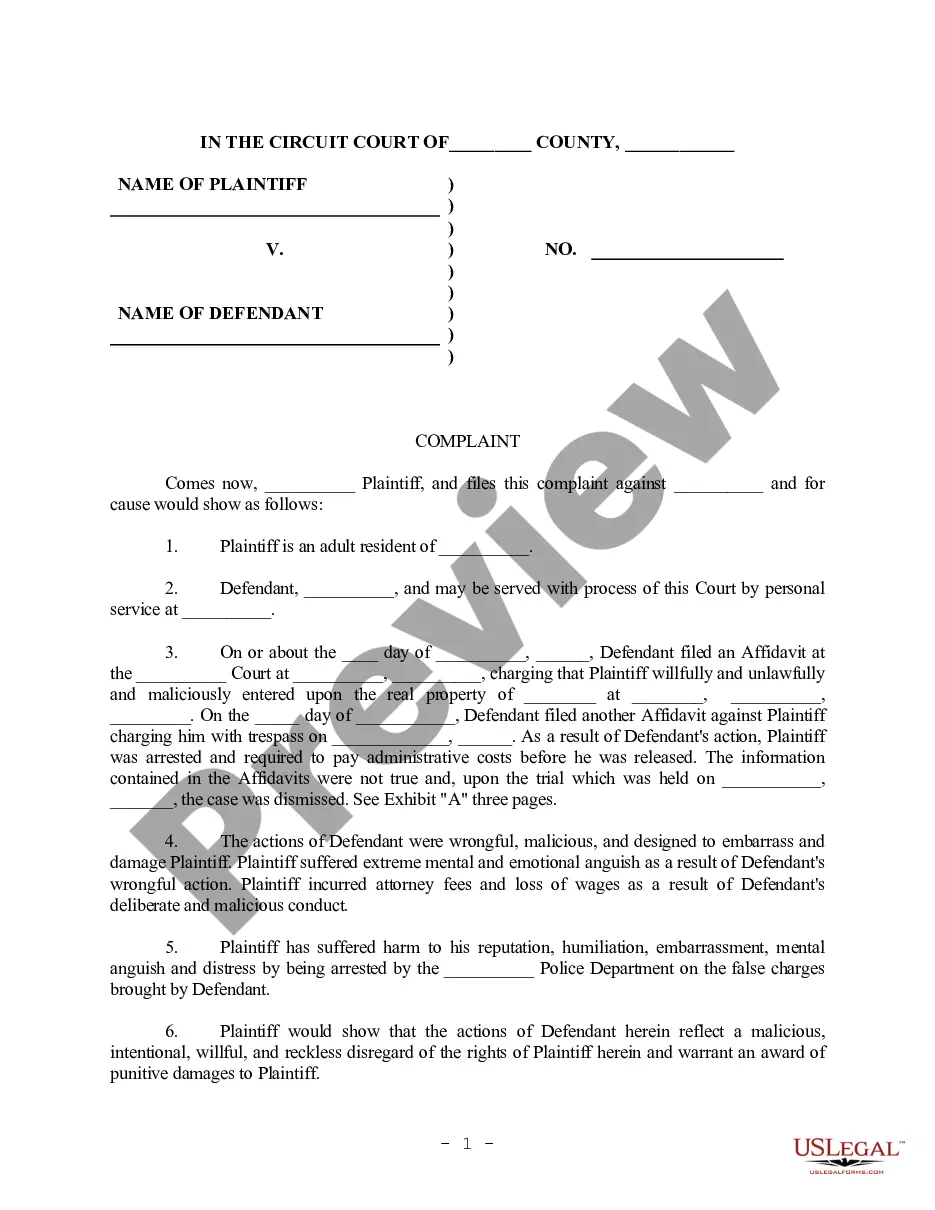
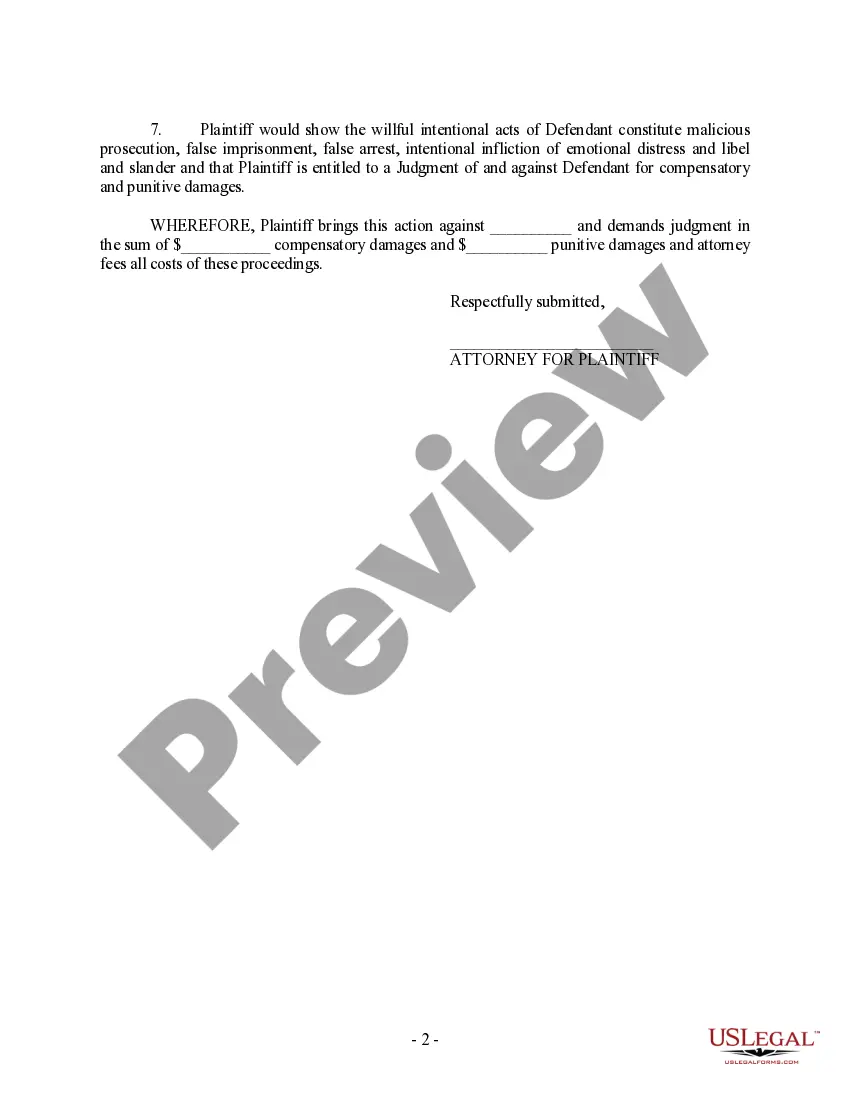

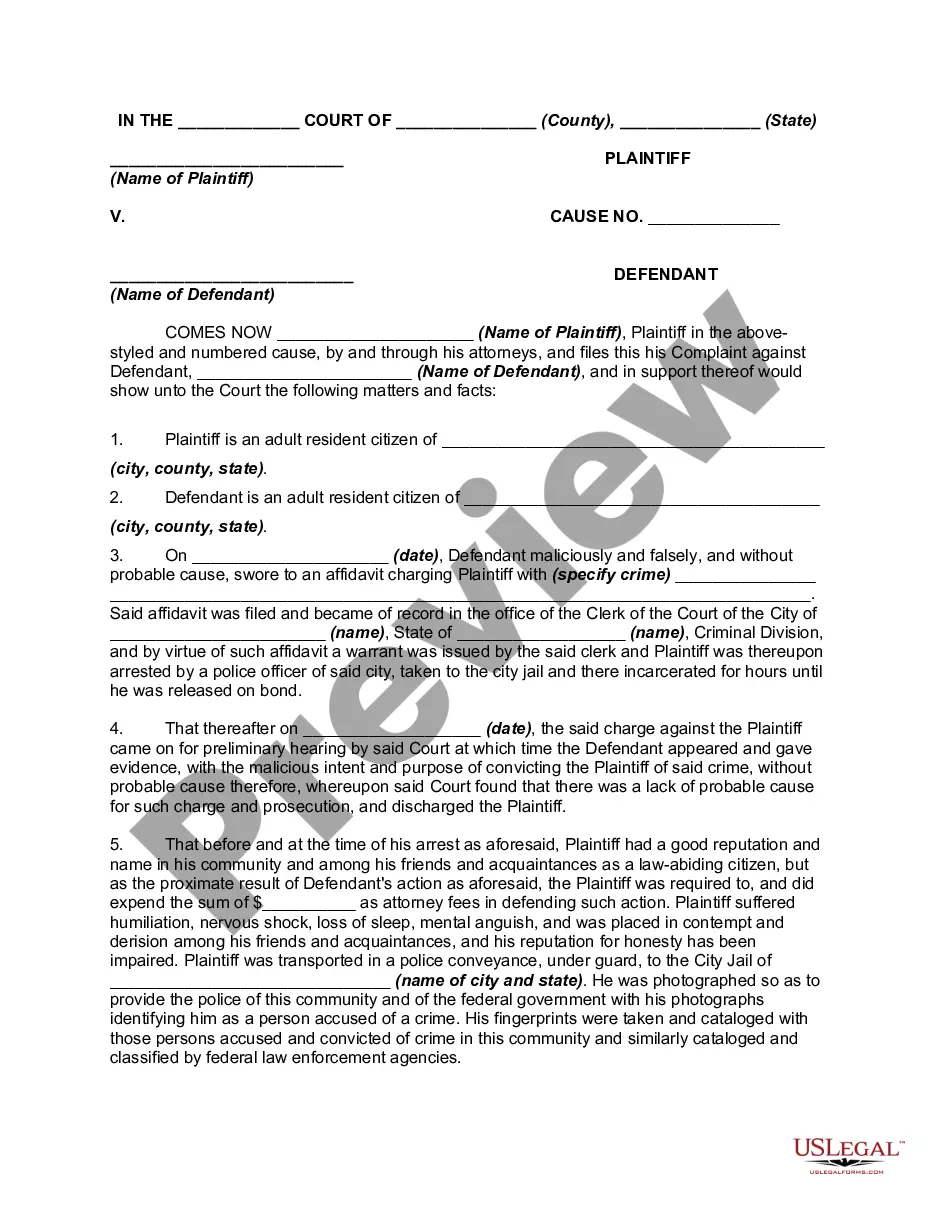
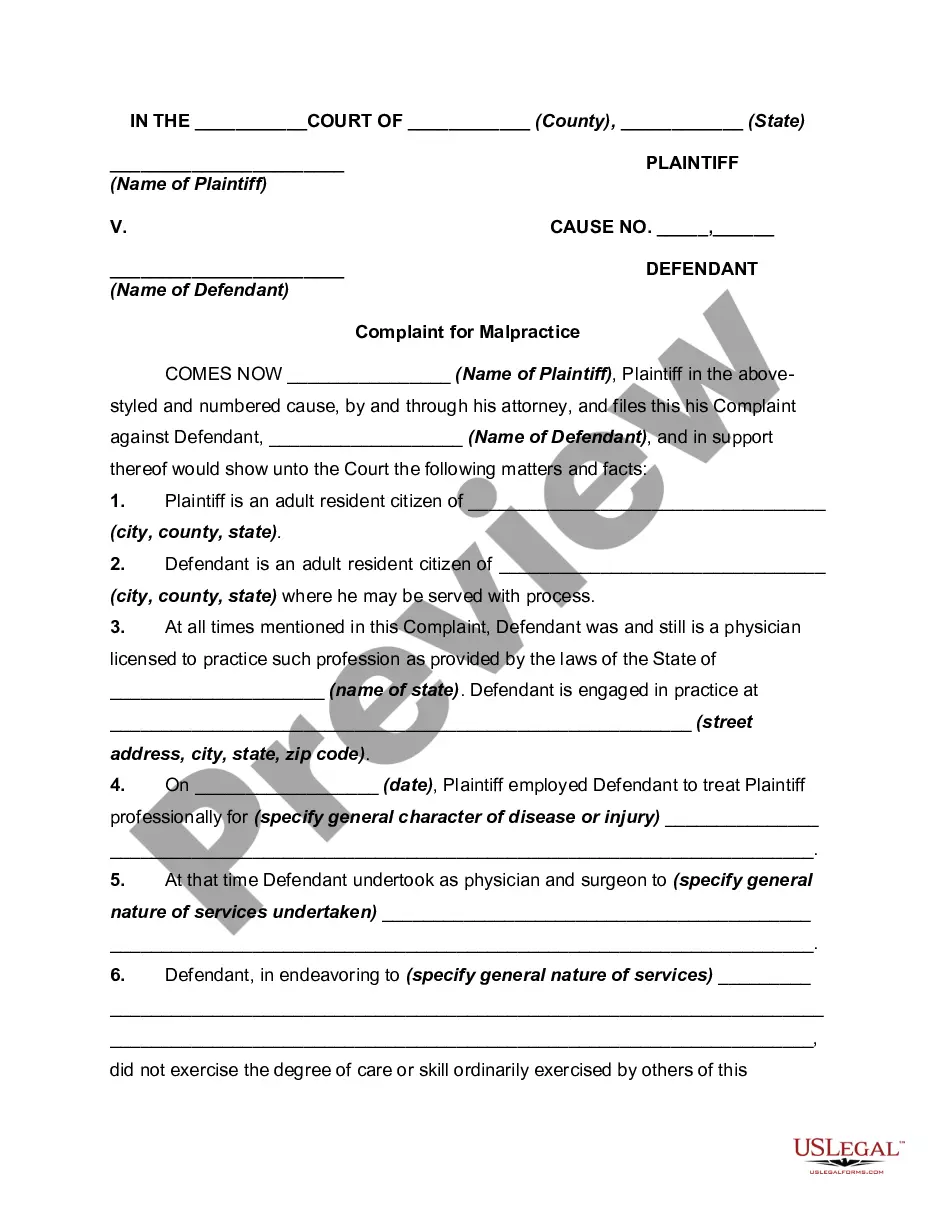
Get your form ready online
Our built-in tools help you complete, sign, share, and store your documents in one place.
Make edits, fill in missing information, and update formatting in US Legal Forms—just like you would in MS Word.
Download a copy, print it, send it by email, or mail it via USPS—whatever works best for your next step.
Sign and collect signatures with our SignNow integration. Send to multiple recipients, set reminders, and more. Go Premium to unlock E-Sign.
If this form requires notarization, complete it online through a secure video call—no need to meet a notary in person or wait for an appointment.
We protect your documents and personal data by following strict security and privacy standards.

Make edits, fill in missing information, and update formatting in US Legal Forms—just like you would in MS Word.

Download a copy, print it, send it by email, or mail it via USPS—whatever works best for your next step.

Sign and collect signatures with our SignNow integration. Send to multiple recipients, set reminders, and more. Go Premium to unlock E-Sign.

If this form requires notarization, complete it online through a secure video call—no need to meet a notary in person or wait for an appointment.

We protect your documents and personal data by following strict security and privacy standards.
Looking for another form?

How to fill out Complaint For Malicious Prosecution?
US Legal Forms - one of the largest collections of official documents in the United States - offers a vast selection of valid form templates that you can download or print. By using this site, you will find a multitude of forms for business and personal purposes, categorized by types, states, or keywords. You can obtain the latest versions of forms such as the Florida Complaint for malicious prosecution within seconds.
If you have a subscription, Log In and download the Florida Complaint for malicious prosecution from the US Legal Forms library. The Download button will be visible on every form you view. You can access all previously downloaded forms in the My documents section of your account.
If you are using US Legal Forms for the first time, here are some simple steps to help you get started: Ensure you have selected the correct form for your city/state. Click on the Preview button to review the form's details. Read the form description to confirm you have selected the right one. If the form does not meet your requirements, use the Search field at the top of the page to find one that does. If you are satisfied with the form, confirm your selection by clicking the Buy now button. Then, choose the payment plan you prefer and provide your credentials to register for an account. Complete the payment. Use your credit card or PayPal account to finalize the transaction. Choose the format and download the form to your device. Make modifications. Fill out, edit, print, and sign the downloaded Florida Complaint for malicious prosecution. Each template added to your account has no expiration date and belongs to you permanently. So, if you wish to download or print another copy, simply go to the My documents section and click on the form you need.
- Access the Florida Complaint for malicious prosecution with US Legal Forms, the most extensive collection of official document templates.
- Utilize a multitude of professional and state-specific templates that cater to your business or personal needs and requirements.
Form popularity
FAQ
An actual intention to do the particular kind of harm that in fact was done; or. recklessness as to whether such harm should occur or not (i.e. the accused has foreseen that the particular kind of harm might be done and yet has gone on to take the risk of it).
Examples of criminal malicious prosecution can include law enforcement pursuing baseless charges, such as: Charging someone with a crime to cover up misconduct by law enforcement. Trying to ruin an individual's reputation by bringing groundless criminal charges against them.
However, to win a malicious prosecution claim, the plaintiff (the person filing the lawsuit) must prove the following elements: The Original Lawsuit Was Terminated in the Plaintiff's Favor. ... There Was No Probable Cause. ... The Defendant Pursued the Lawsuit Maliciously. ... The Plaintiff Suffered Damages.
What is Malicious Prosecution? Regarding criminal charges, malicious prosecution claims arise when a Pennsylvania or federal prosecutor knowingly and maliciously intends to file charges against a defendant.
Since a malicious prosecution case is a type of civil lawsuit, the burden of proof is a preponderance of the evidence. Under California law, this means the evidence of the defendant being guilty of malicious prosecution is more than the evidence arguing the other side.
Creating a false accusation against someone or fabricating evidence to their detriment. Exaggerating or fabricating their account of events e.g. accusing the individual of assault to justify their own use of excessive force.
A malicious prosecution complainant is a victim of: False accusations, such as when a police officer falsely testifies that the complainant assaulted them when what actually happened was the opposite. Fabricated evidence against the complainant. One-sided or unsubstantial.
Malice, such as bringing a civil claim against you while knowing evidence was false, must be present. You must also prove that you have suffered damage as a result of the claim being brought and that this claim was brought Maliciously and without a reasonable cause.