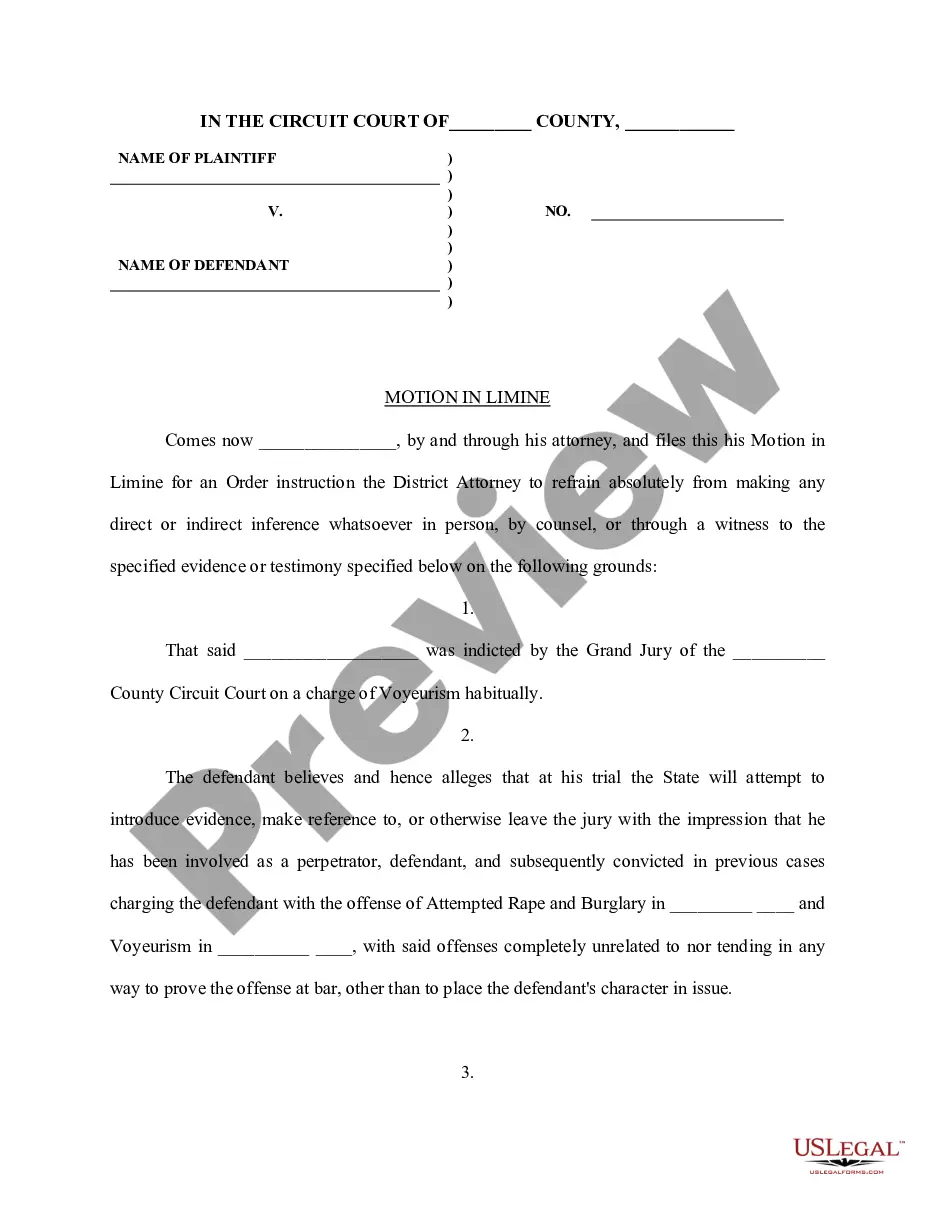
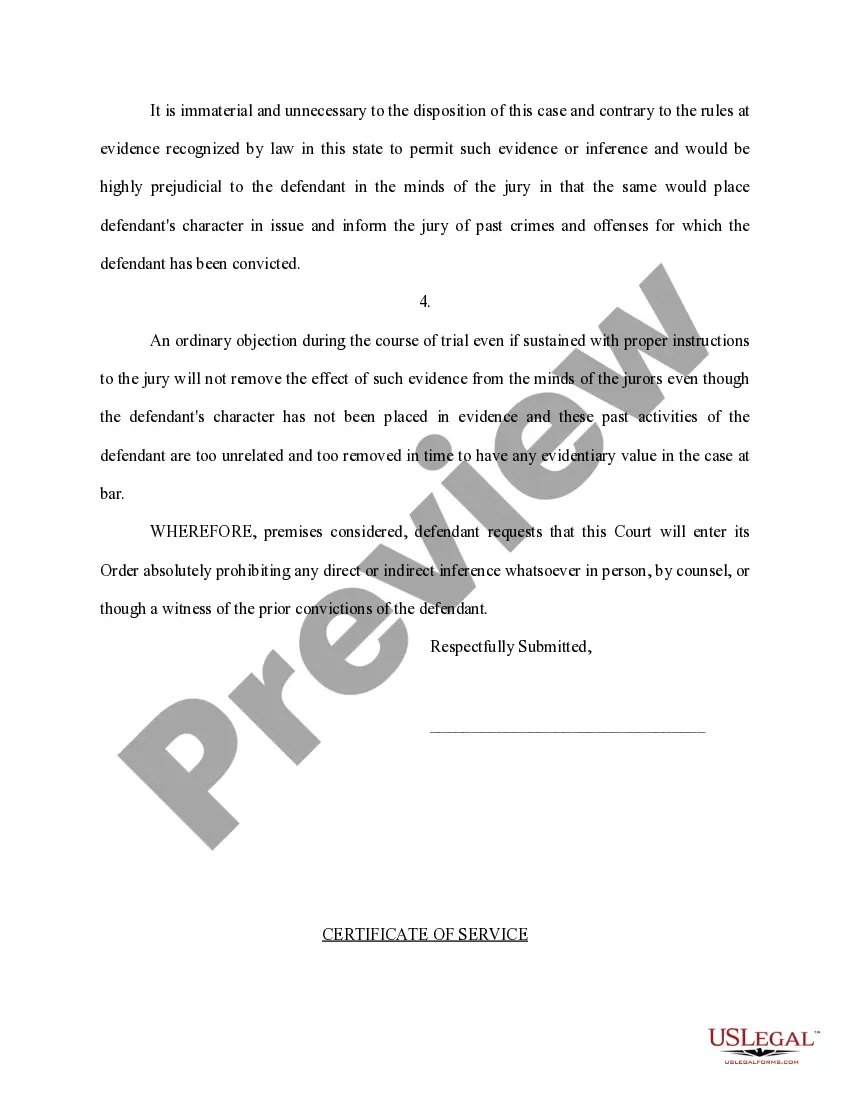
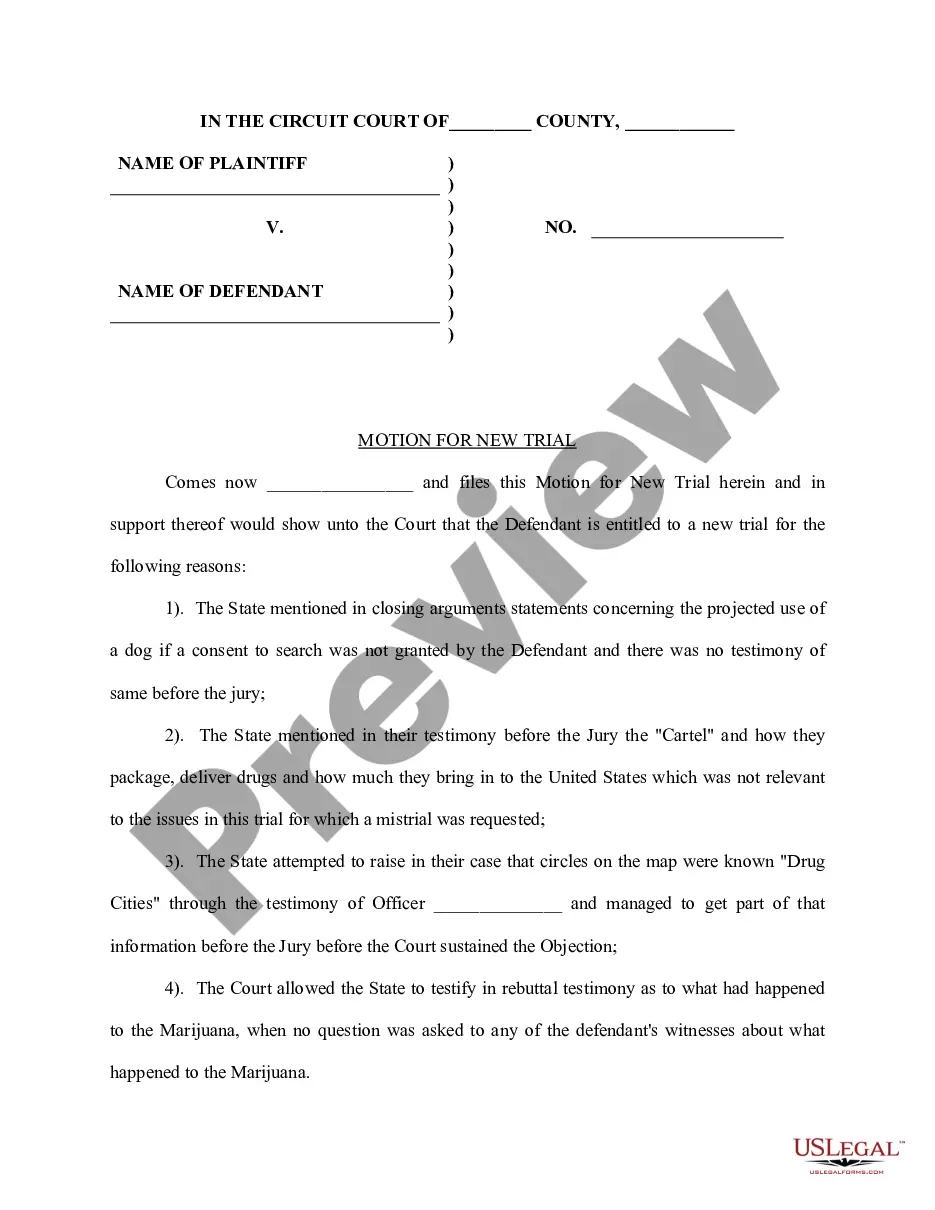
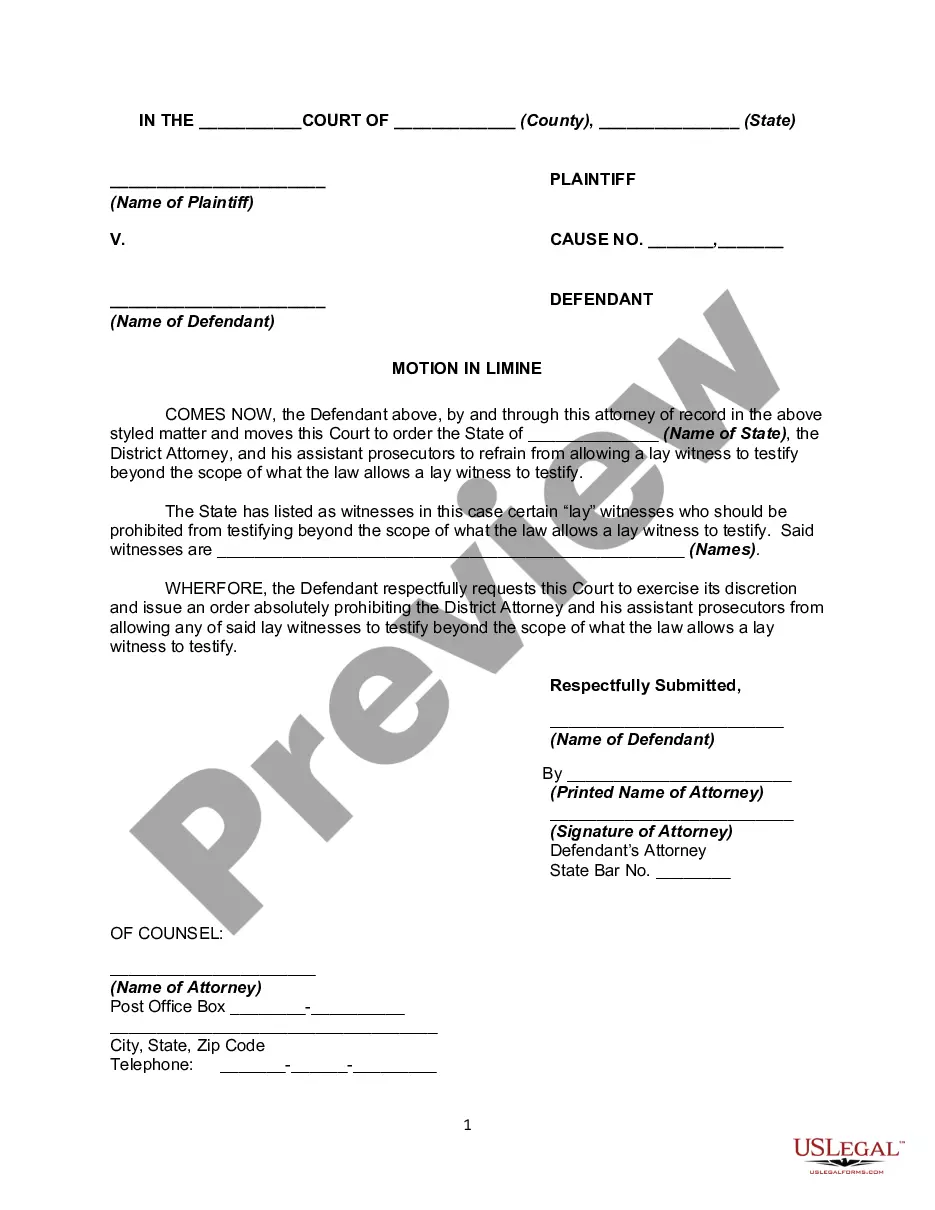
Florida Motion in Limine
Description

Get your form ready online
Our built-in tools help you complete, sign, share, and store your documents in one place.
Make edits, fill in missing information, and update formatting in US Legal Forms—just like you would in MS Word.
Download a copy, print it, send it by email, or mail it via USPS—whatever works best for your next step.
Sign and collect signatures with our SignNow integration. Send to multiple recipients, set reminders, and more. Go Premium to unlock E-Sign.
If this form requires notarization, complete it online through a secure video call—no need to meet a notary in person or wait for an appointment.
We protect your documents and personal data by following strict security and privacy standards.

Make edits, fill in missing information, and update formatting in US Legal Forms—just like you would in MS Word.

Download a copy, print it, send it by email, or mail it via USPS—whatever works best for your next step.

Sign and collect signatures with our SignNow integration. Send to multiple recipients, set reminders, and more. Go Premium to unlock E-Sign.

If this form requires notarization, complete it online through a secure video call—no need to meet a notary in person or wait for an appointment.

We protect your documents and personal data by following strict security and privacy standards.
Looking for another form?

How to fill out Motion In Limine?
Are you in a location where you require documents for potential business or personal purposes almost every workday.
There are numerous authentic document templates accessible online, but finding versions you can trust is not simple.
US Legal Forms offers thousands of template formats, including the Florida Motion in Limine, which can be tailored to meet state and federal regulations.
Once you find the right form, click Get now.
Select a convenient file format and download your version.
- If you are already familiar with the US Legal Forms website and have an account, simply Log In.
- After that, you can download the Florida Motion in Limine template.
- If you do not have an account and wish to start using US Legal Forms, follow these instructions.
- Obtain the form you need and verify it is for the correct city/region.
- Utilize the Preview button to review the form.
- Examine the description to confirm that you have chosen the proper form.
- If the form is not what you are looking for, use the Search section to find the form that meets your needs.
Form popularity
FAQ
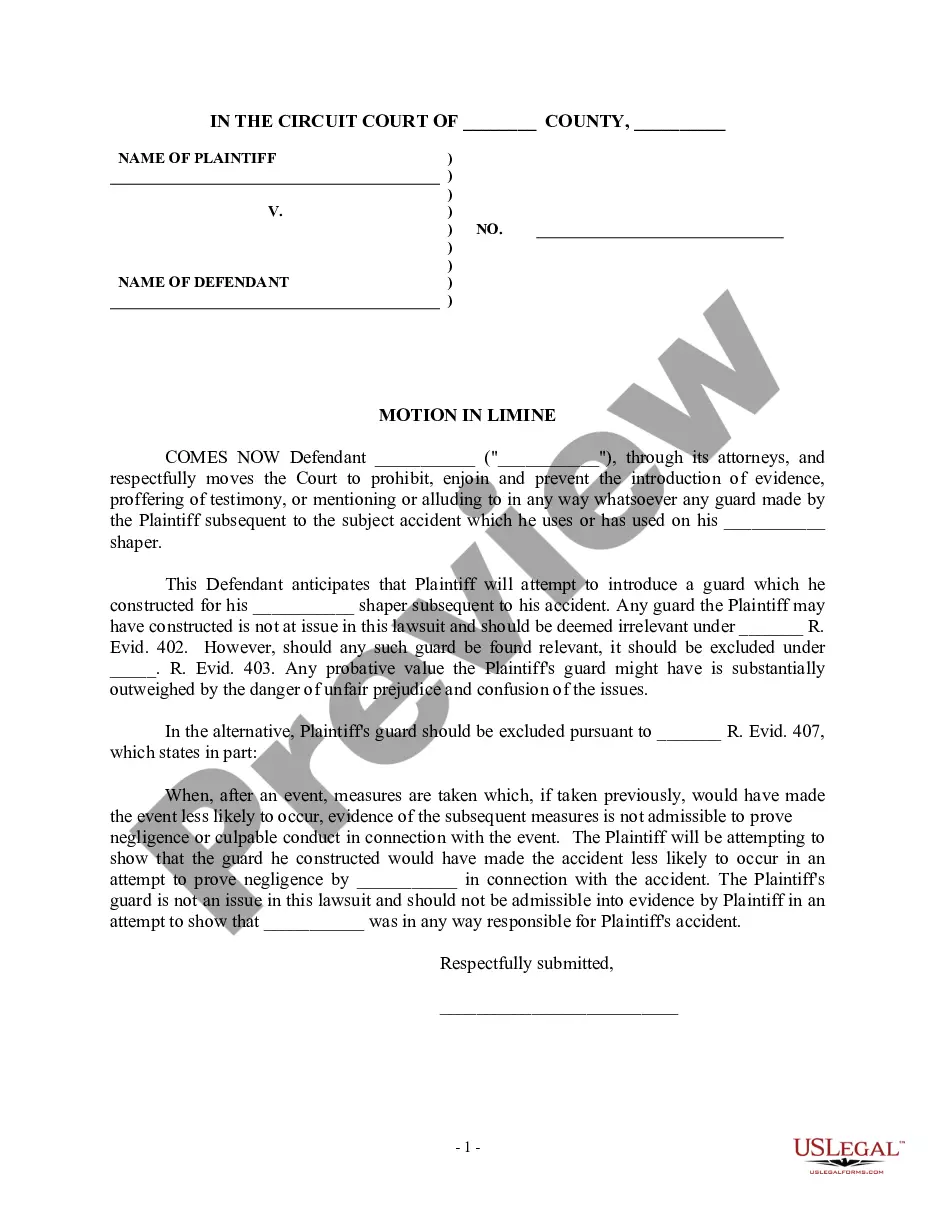
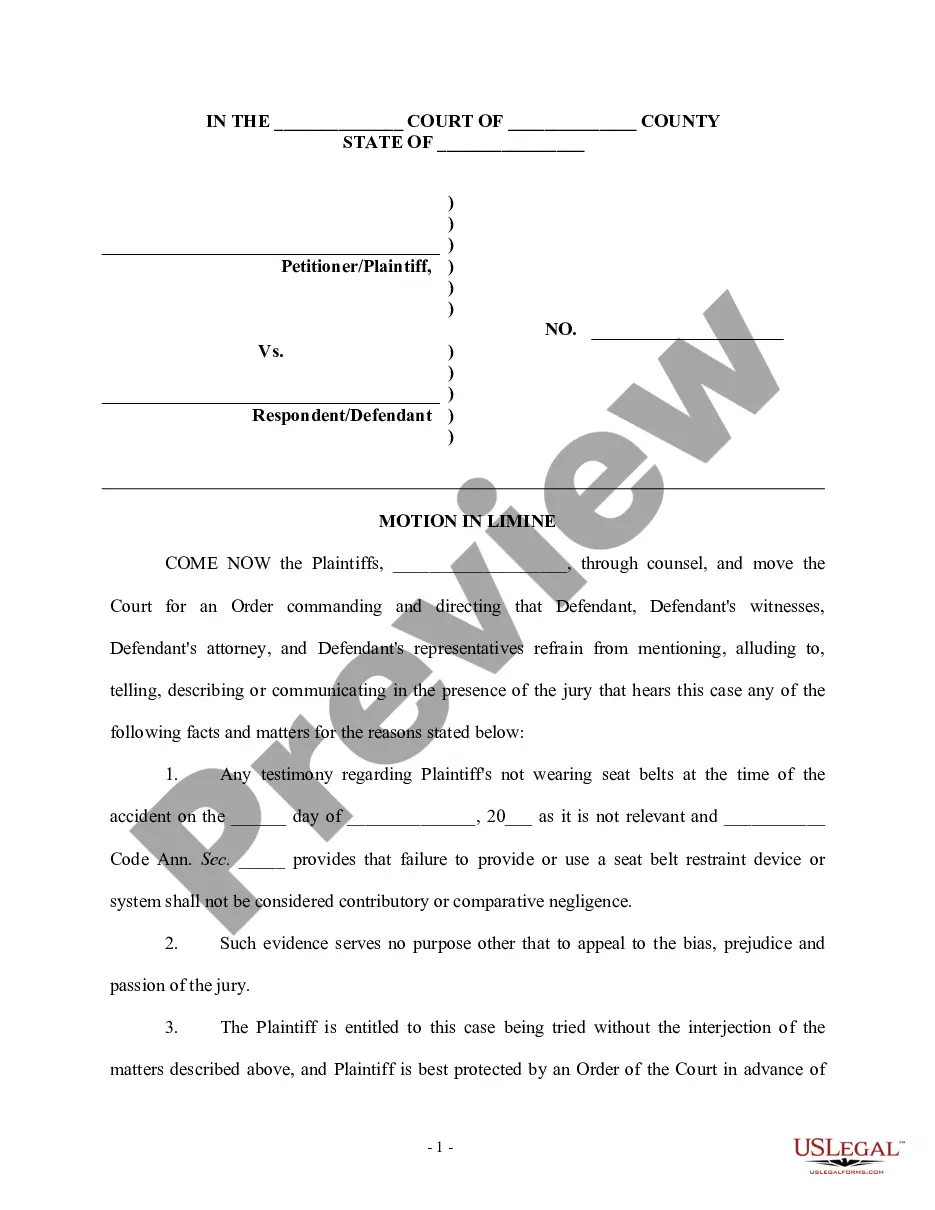
The purpose of a motion in limine is to prevent the introduction of matters at trial which are irrelevant, inadmissible or prejudicial. Some key statutes to rely on in excluding those types of evidence from being introduced at trial are Evidence Code sections 350 and 352.
A motion in limine Defined A motion, heard in advance of jury selection, which asks the court to instruct the defendant (or plaintiff), its counsel and witnesses not to mention certain facts unless and until permission of the court is first obtained outside the presence and hearing of the jury.
Motions in limine should be carefully drafted to make clear precisely what evidence should be excluded and to explain with as much clarity as possible why the inadmissible evidence is so damaging that its mere mention would be unfairly prejudicial.
Another way to narrow your motion in limine is to highlight statements, arguments, or lines of questioning by opposing counsel that are in essence "Golden Rule" arguments due to the suggestion that a witness put themselves in the plaintiff's position or the implication that the defendant's conduct endangered the ...
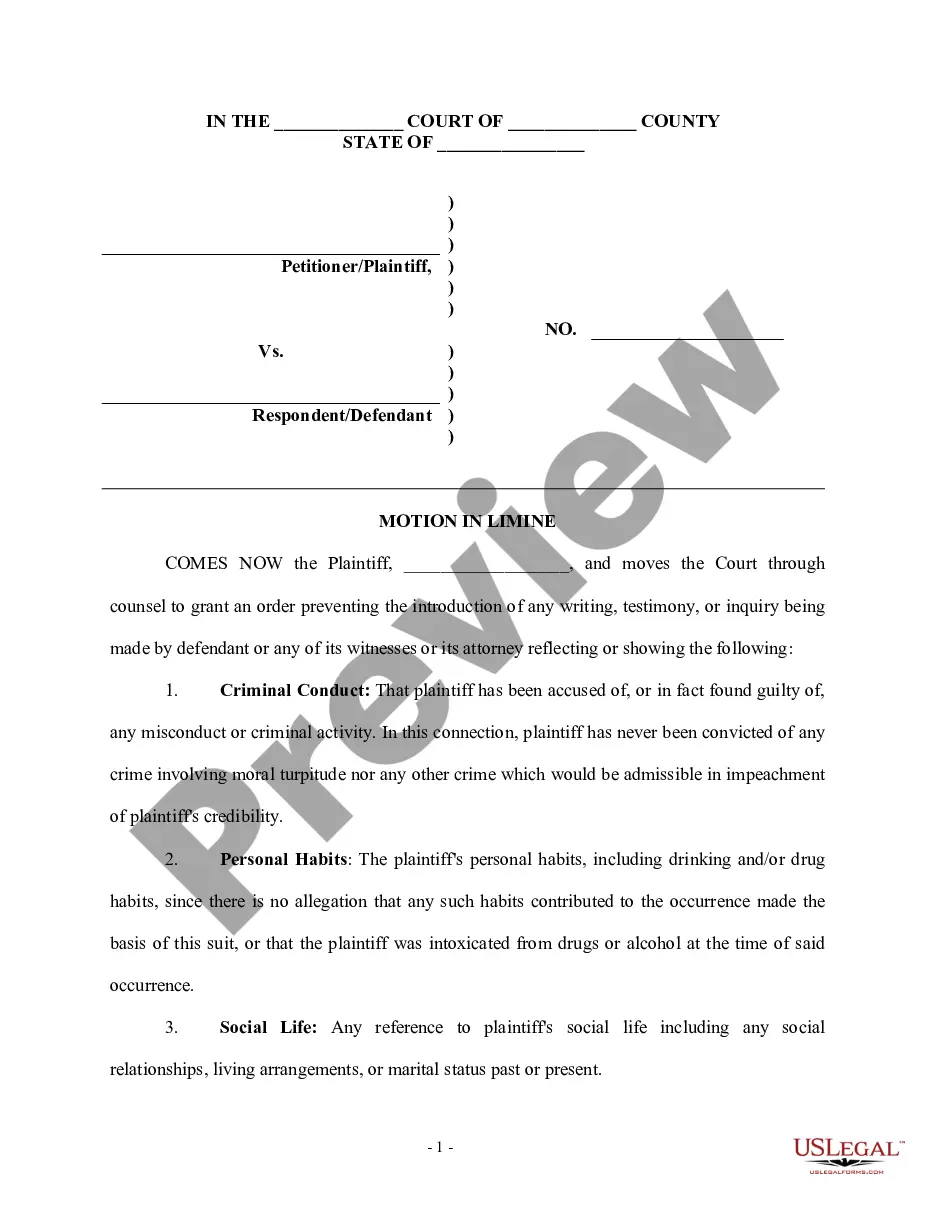
Examples of motions in limine would be that the attorney for the defendant may ask the judge to refuse to admit into evidence any personal information, or medical, criminal or financial records, using the legal grounds that these records are irrelevant, immaterial, unreliable, or unduly prejudicial, and/or that their ...
Motions in limine (?on or at the threshold? or ?in the beginning?) can be a useful tool in a trial lawyer's hands. Used strategically and prophylactically, they can ?eliminate the noise surrounding? a trial by preventing an opposing party from placing inadmissible evidence before the jury.
A motion in limine is decided by the judge outside of the presence of the jury. The purpose of a motion in limine is to address potentially prejudicial, irrelevant, or inadmissible information that could unduly influence a jury or hinder the fair administration of justice.