Florida Guide for Protecting Deceased Persons from Identity Theft
Description
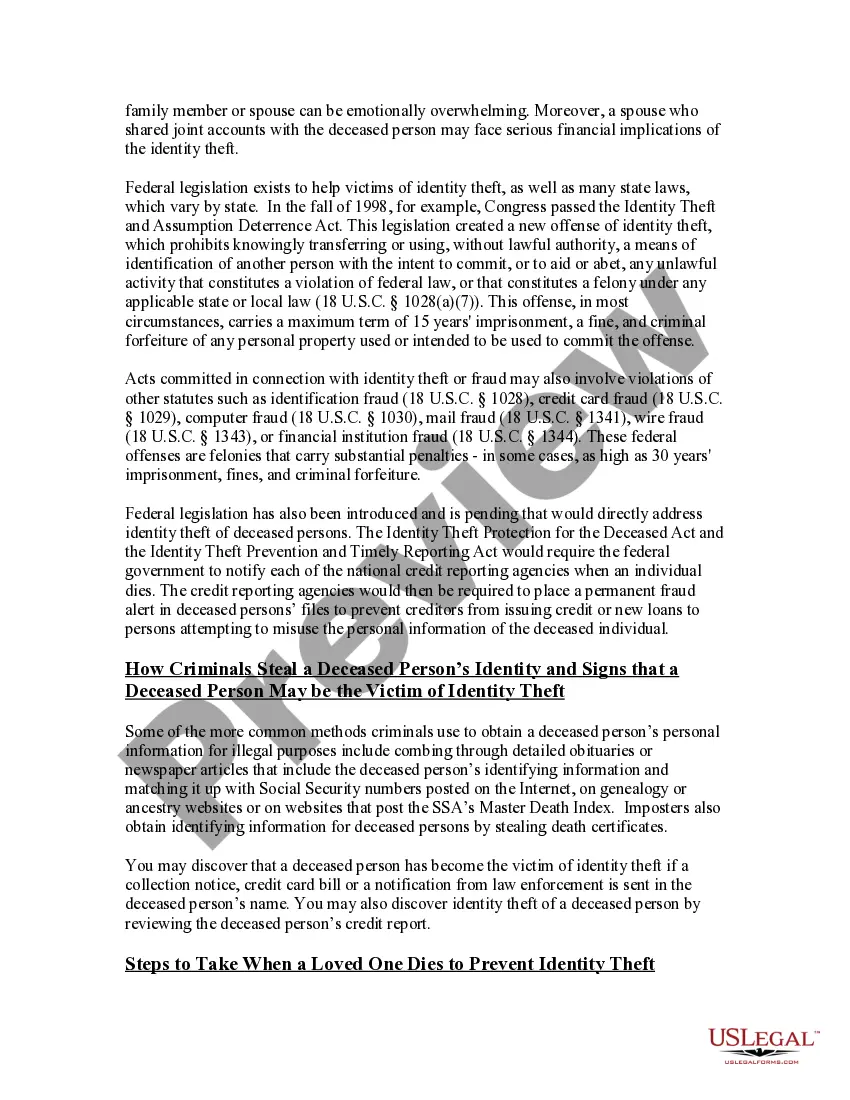
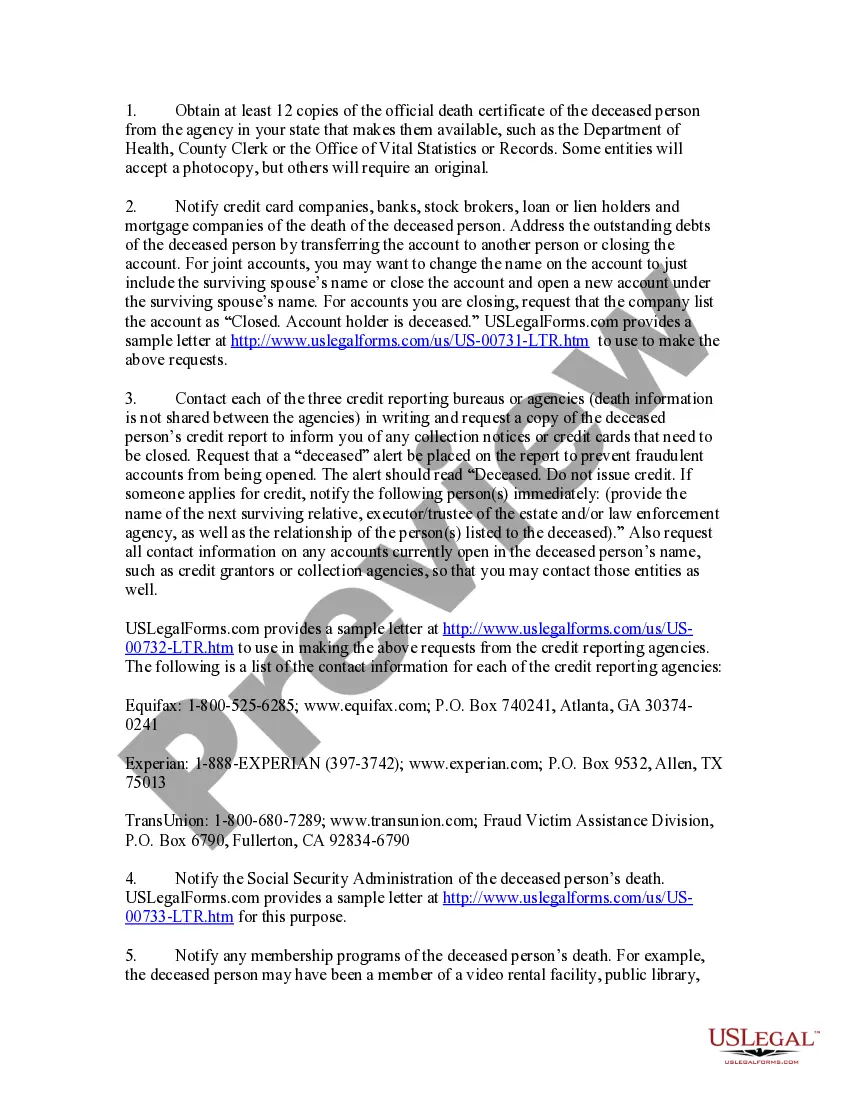
How to fill out Guide For Protecting Deceased Persons From Identity Theft?
If you wish to aggregate, acquire, or produce sanctioned document templates, utilize US Legal Forms, the largest assortment of sanctioned forms available online. Utilize the site's straightforward and convenient search feature to locate the documents you require. Various templates for commercial and personal purposes are organized by categories and suggests, or keywords. Utilize US Legal Forms to find the Florida Guide for Safeguarding Deceased Individuals from Identity Theft with just a few clicks.
If you are already a US Legal Forms user, sign in to your account and click on the Download button to receive the Florida Guide for Safeguarding Deceased Individuals from Identity Theft. You can also access forms you previously obtained within the My documents section of your account.
If you are utilizing US Legal Forms for the first time, adhere to the guidelines below: Step 1. Ensure you have selected the form for the appropriate city/state. Step 2. Use the Preview option to review the form's details. Don’t forget to read the description. Step 3. If you are not satisfied with the form, utilize the Search field at the top of the screen to find alternative versions of your legal form template. Step 4. Once you have found the form you need, select the Buy now button. Choose the payment plan you prefer and enter your information to register for an account. Step 5. Complete the transaction. You can use your credit card or PayPal account to finalize the purchase. Step 6. Choose the format of your legal form and download it onto your device. Step 7. Complete, modify, and print or sign the Florida Guide for Safeguarding Deceased Individuals from Identity Theft.
- Every legal document template you obtain is yours indefinitely.
- You will have access to every form you acquired within your account.
- Select the My documents section and choose a form to print or download again.
- Stay proactive and download, and print the Florida Guide for Safeguarding Deceased Individuals from Identity Theft with US Legal Forms.
- There are countless professional and state-specific forms available for your business or personal needs.
Form popularity
FAQ
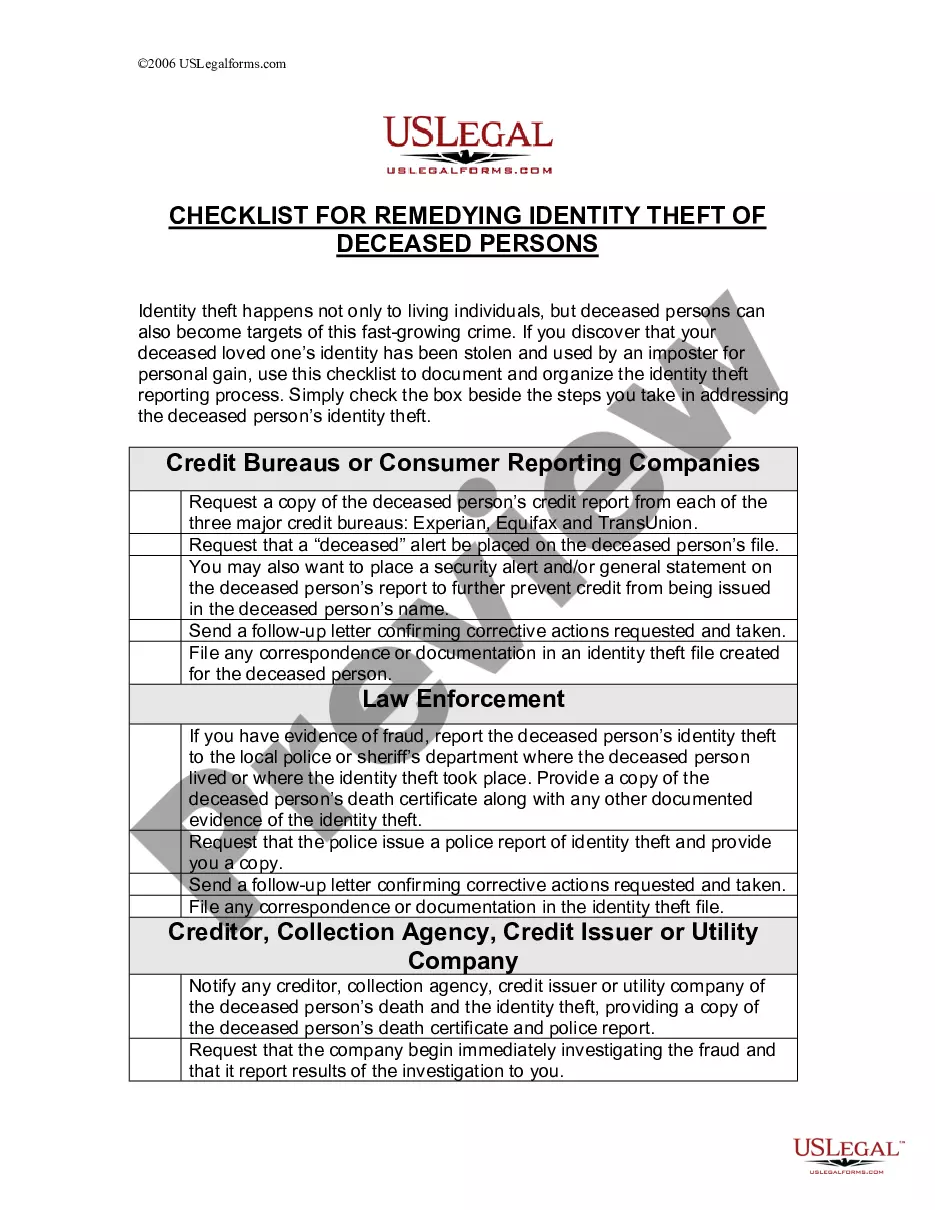
Send a written notice to all financial institutions where the deceased had an account instructing them to close all individual accounts and remove the deceased's name from joint accounts: As soon as you receive the certified copies of the death certificate, send a letter and a certified copy to each of the financial ...
Steps for Victims of Identity Theft or Fraud Place a fraud alert on your credit report. Close out accounts that have been tampered with or opened fraudulently. Report the identity theft to the Federal Trade Commission. File a report with your local police department.
How to protect yourself from identity theft Avoid sharing personal information on social media. ... Don't access personal accounts over unsecured wireless networks. ... Protect your accounts with strong passwords and multifactor authentication.
Identity theft can happen to anyone, but you can reduce the risk of becoming a victim by taking some simple steps to protect your personal information. Keep Your Personal Information Secure. ... Monitor Your Credit Reports, Bank and Credit Accounts. ... Ask Questions Before You Share Your Information.
Avoid listing birth date, maiden name, or other personal identifiers in obituaries as they could be useful to ID thieves. Report the death to the Social Security Administration by calling 800-772-1213. Order multiple certified copies of the death certificate with and without cause of death.
Use this checklist to protect yourself from identity theft. Keep your mail safe. ... Read your account statements. ... Check your credit reports. ... Shred! ... Store personal documents at home. ... Be wary of unknown phone calls and emails. ... Create difficult logins and passwords. ... Use one credit card for online shopping.
775.084. (b) Any person who willfully and without authorization fraudulently uses personal identification information concerning a person without first obtaining that person's consent commits a felony of the second degree, punishable as provided in s. 775.082, s.
To report identity theft, contact: The Federal Trade Commission (FTC) online at IdentityTheft.gov or call 1-877-438-4338. The three major credit reporting agencies. Ask them to place fraud alerts and a credit freeze on your accounts.
Keeping Social Security cards at home, getting a locked mailbox and being careful what you share on social media are a few easy ways to help better protect yourself from identity theft.
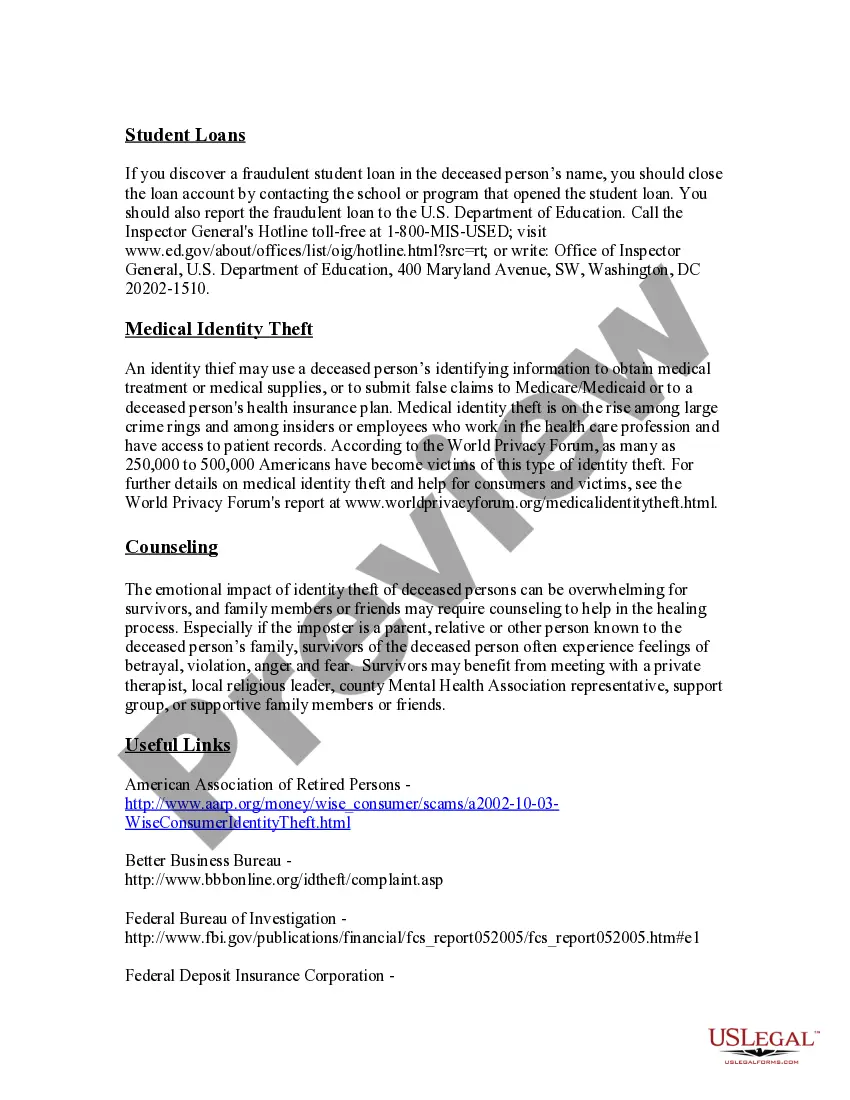
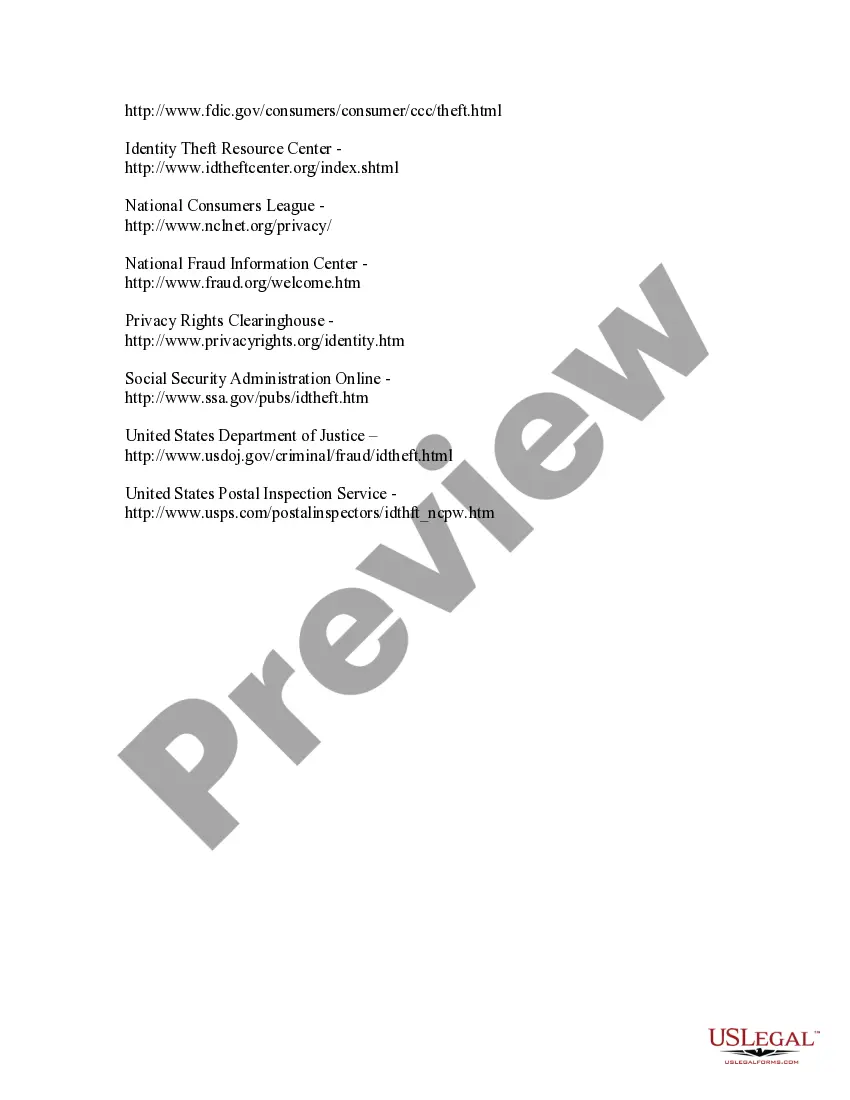
Even after someone dies, it's still possible for criminals to use their information to illegally open credit cards, apply for loans, file fraudulent tax returns, and buy goods and services. In some cases, thieves intentionally steal the identity of someone who has died ? a practice known as ghosting.