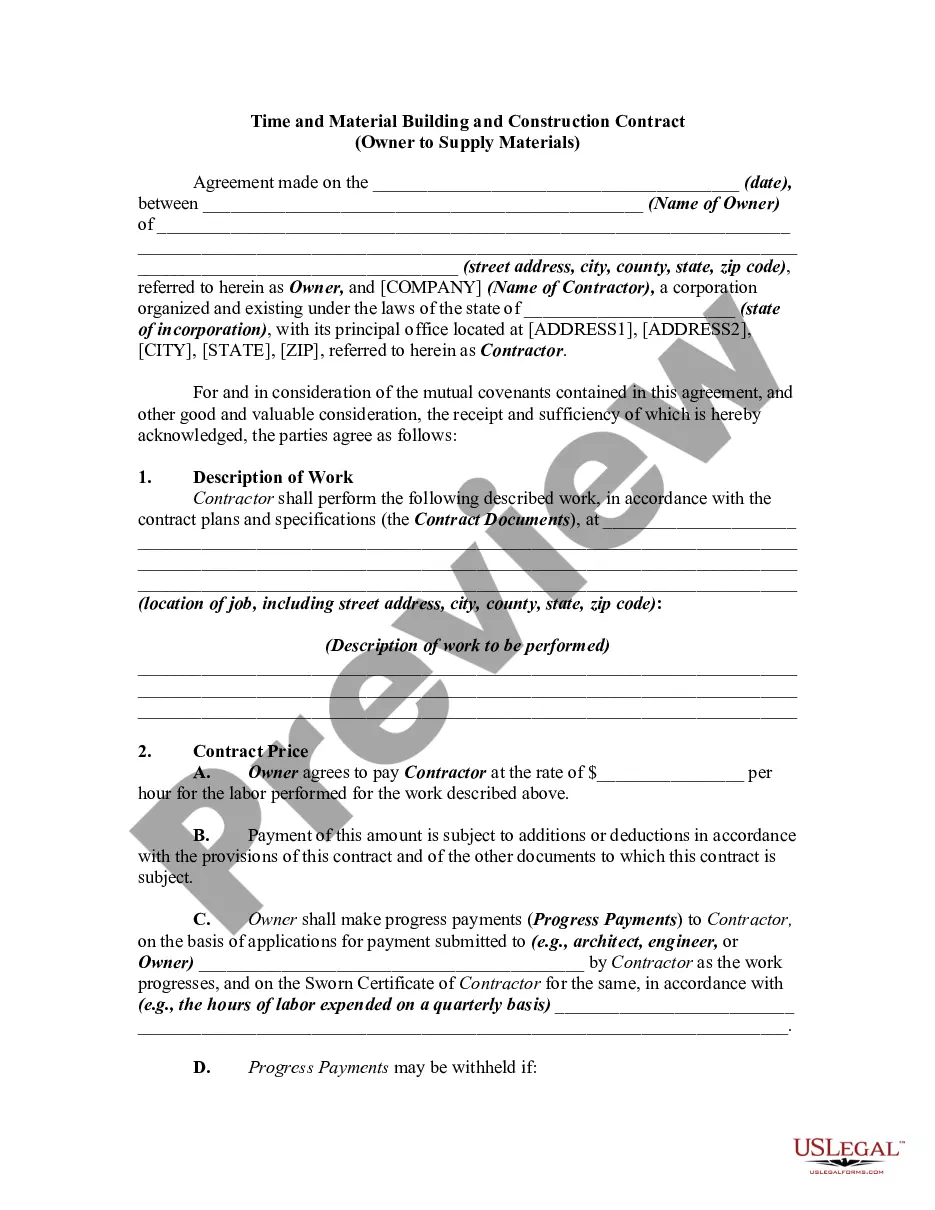
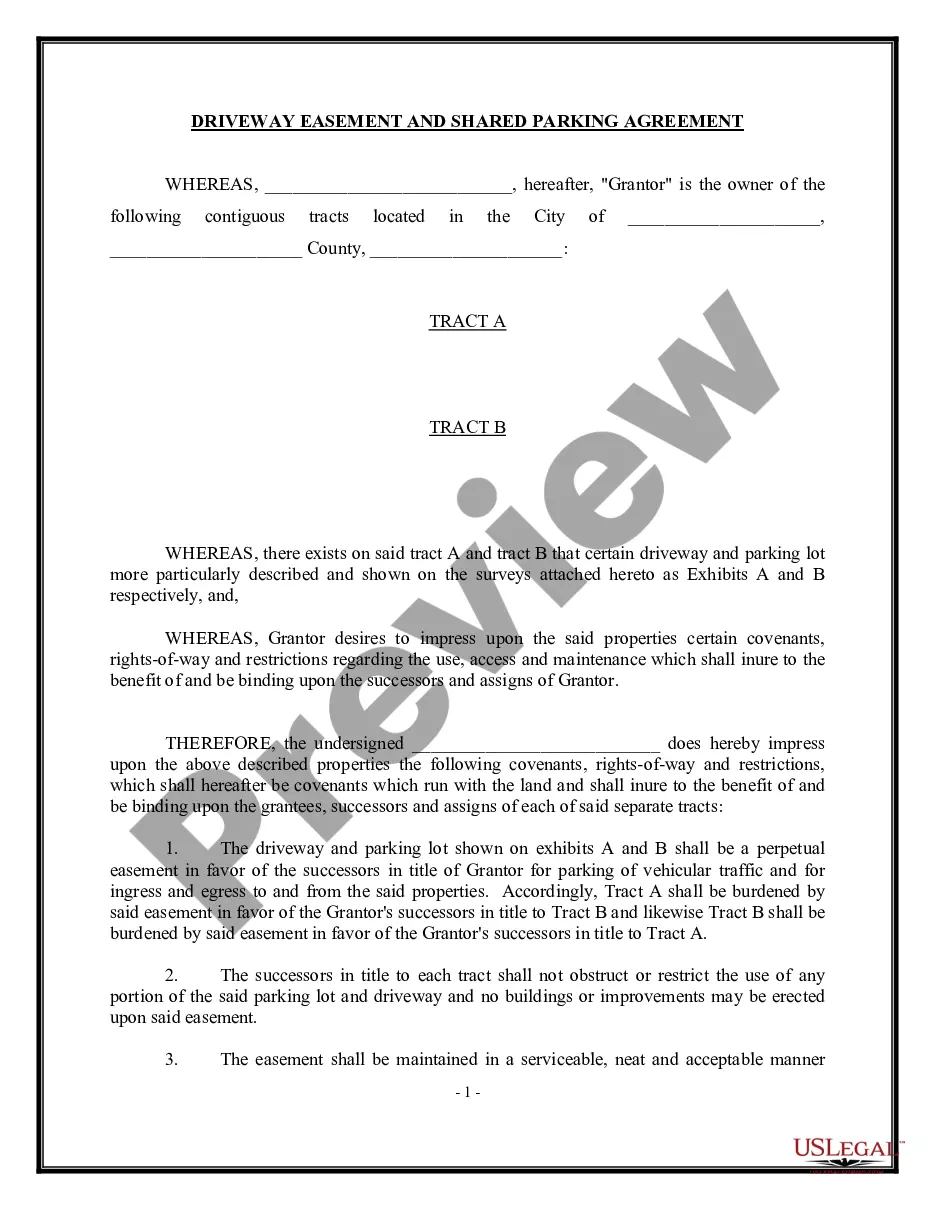
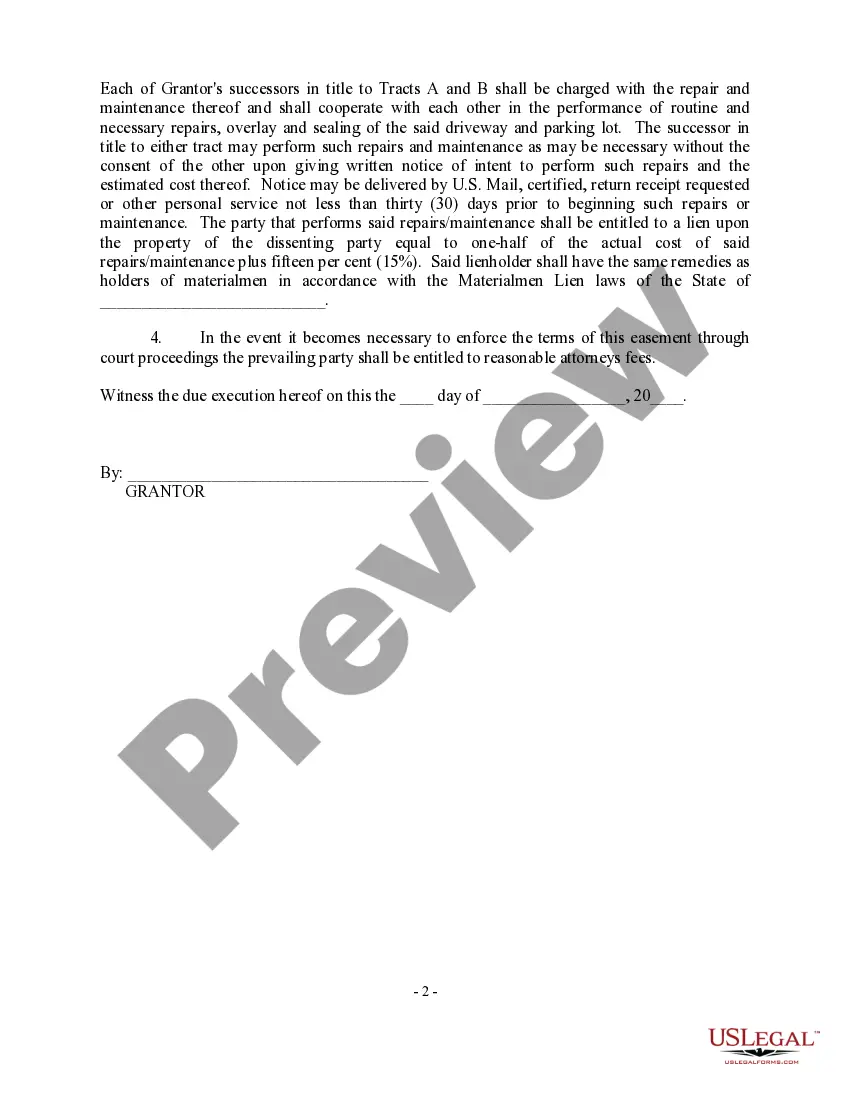
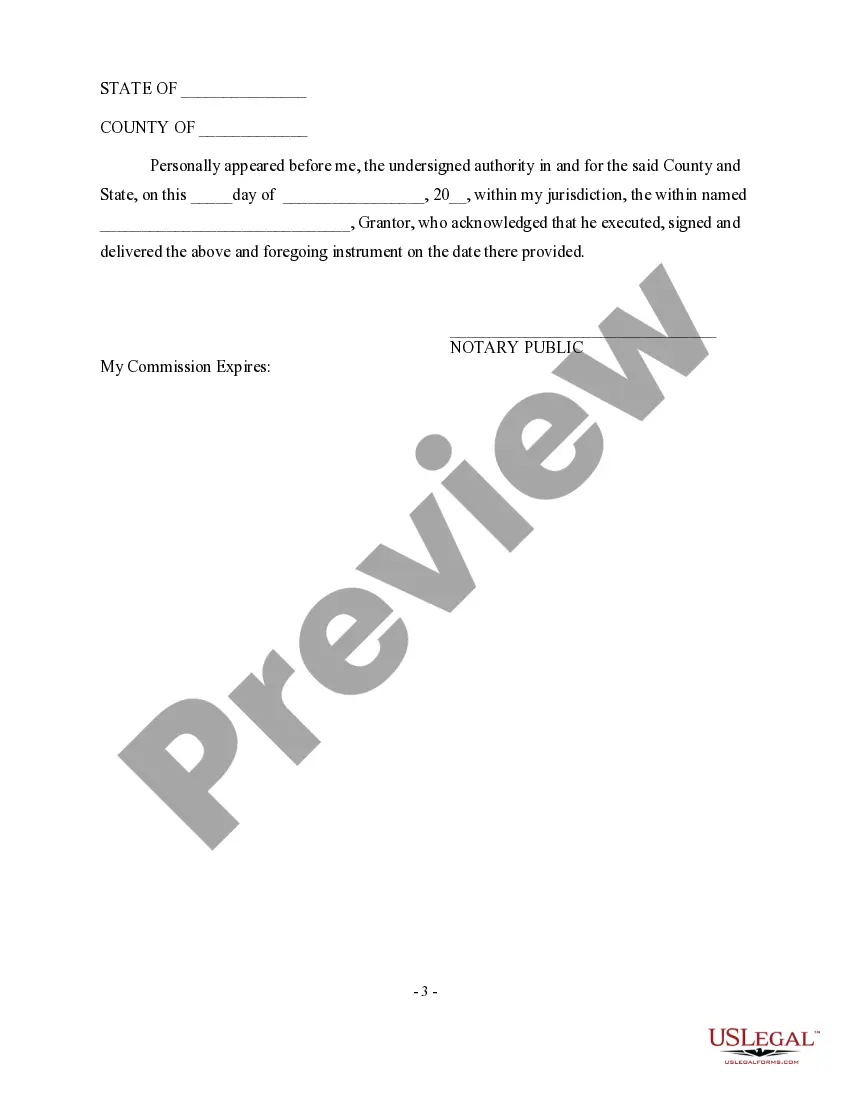
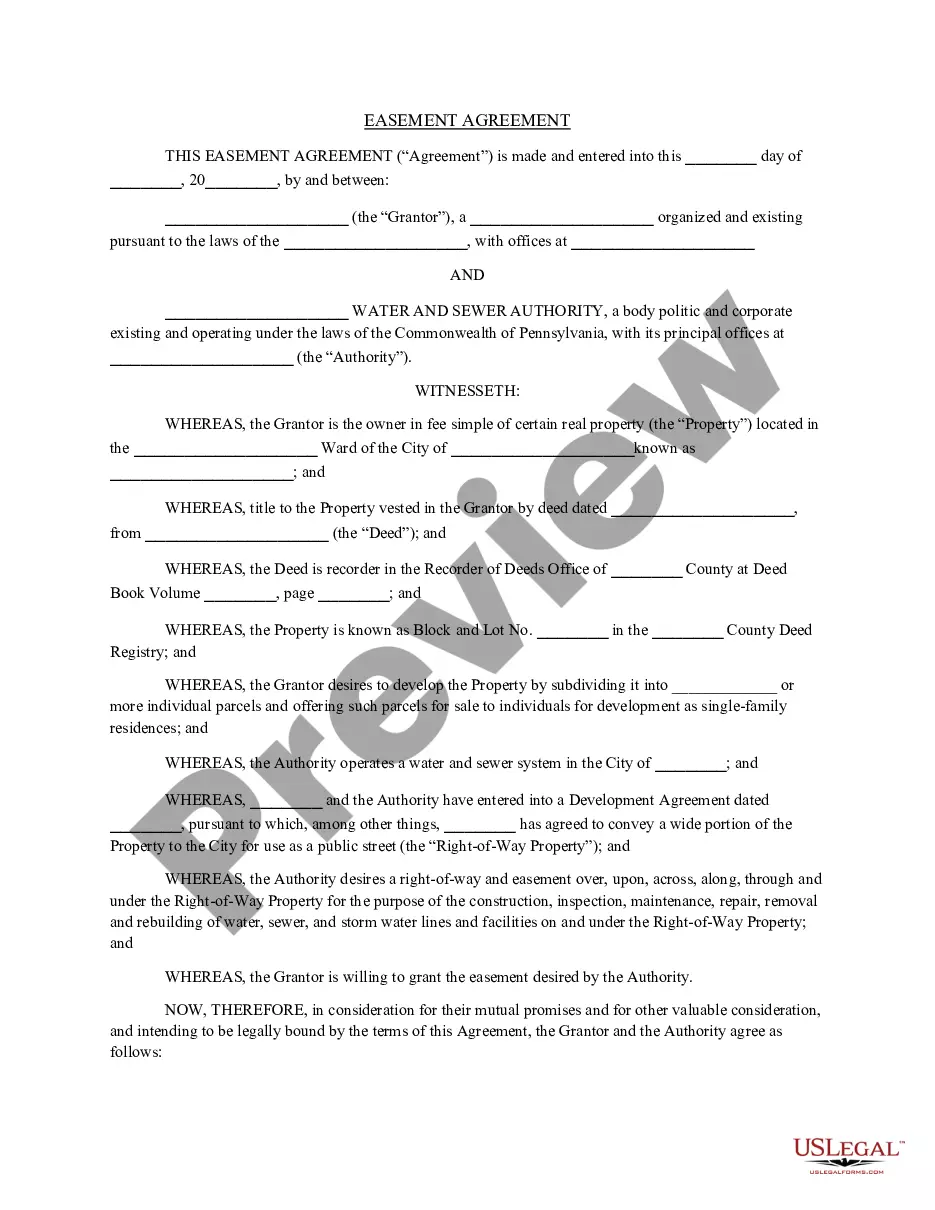
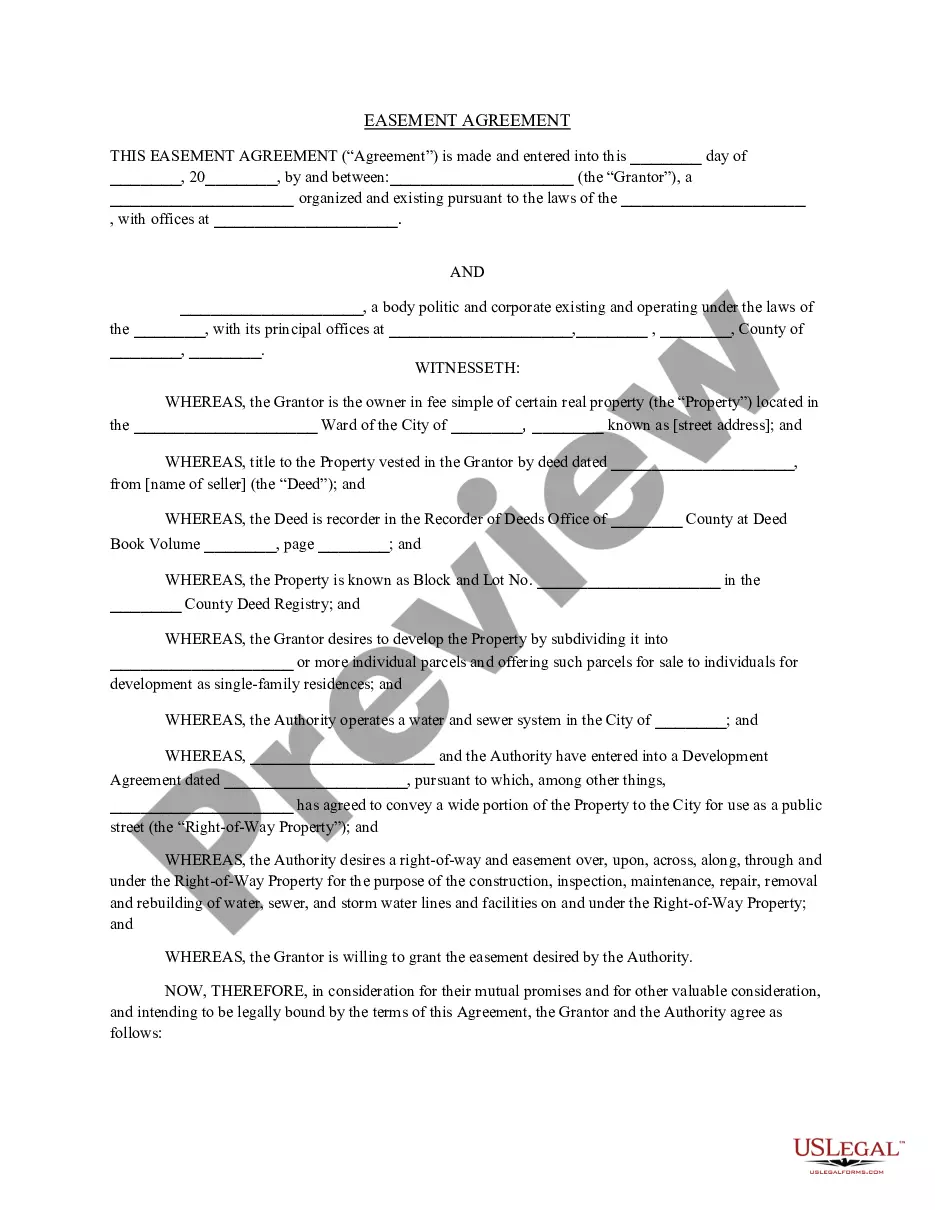
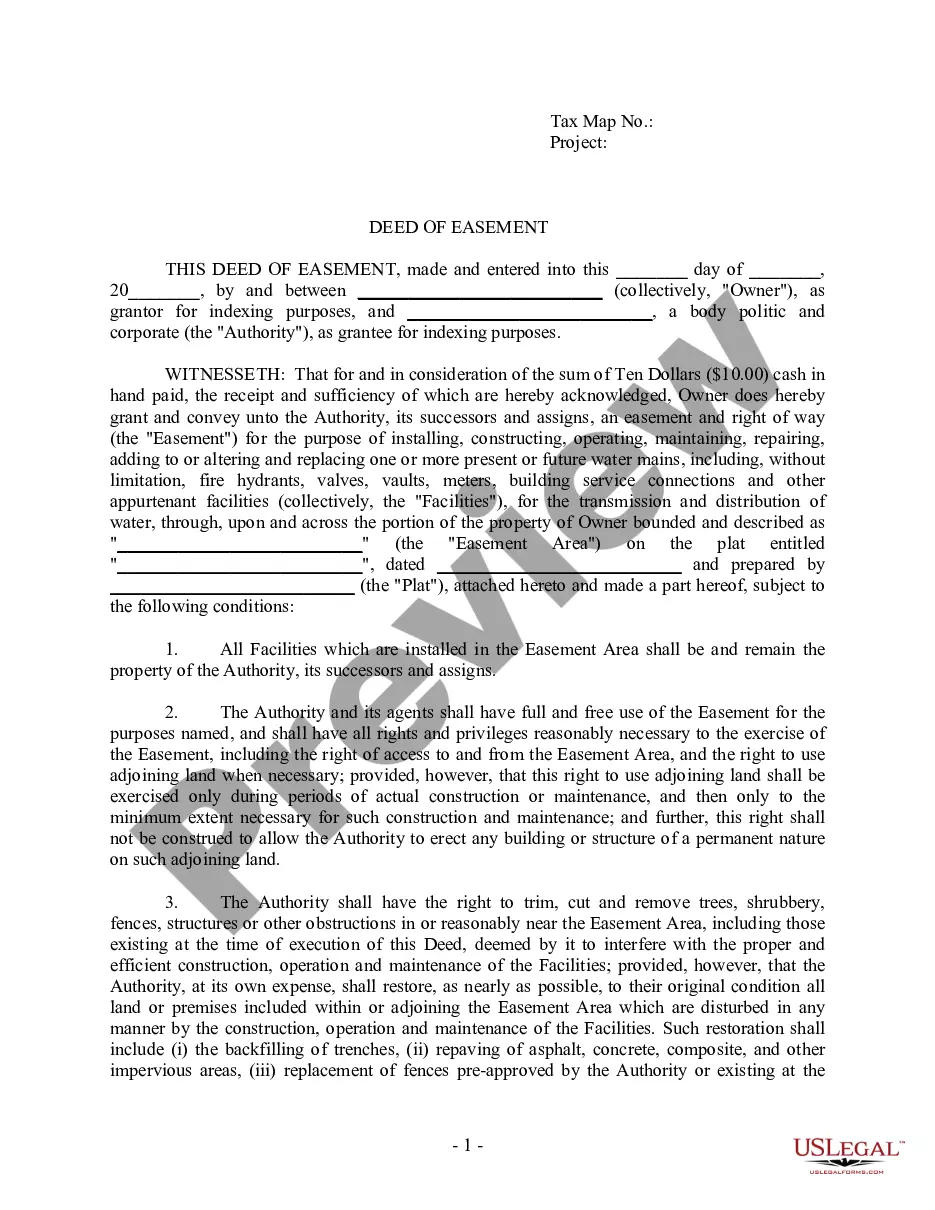
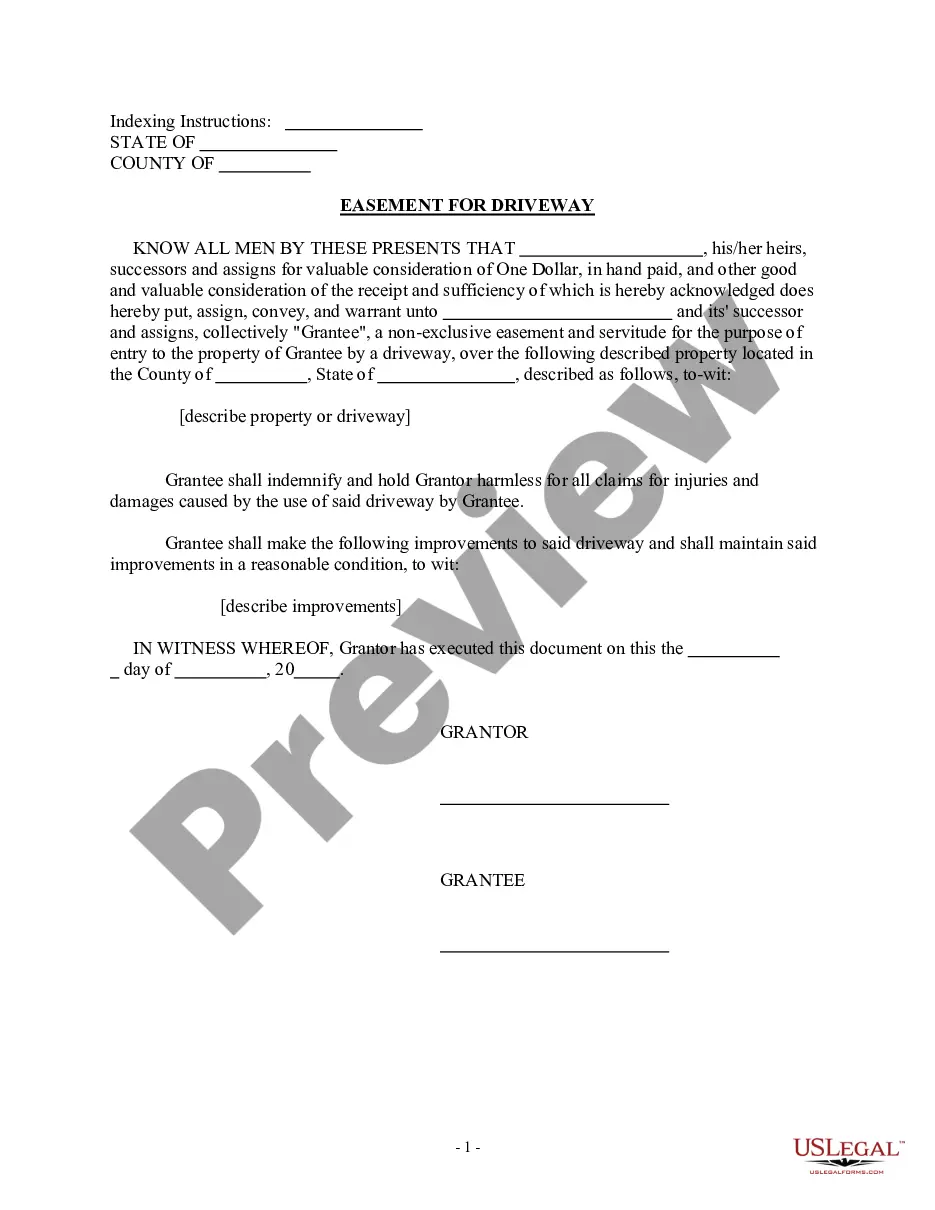
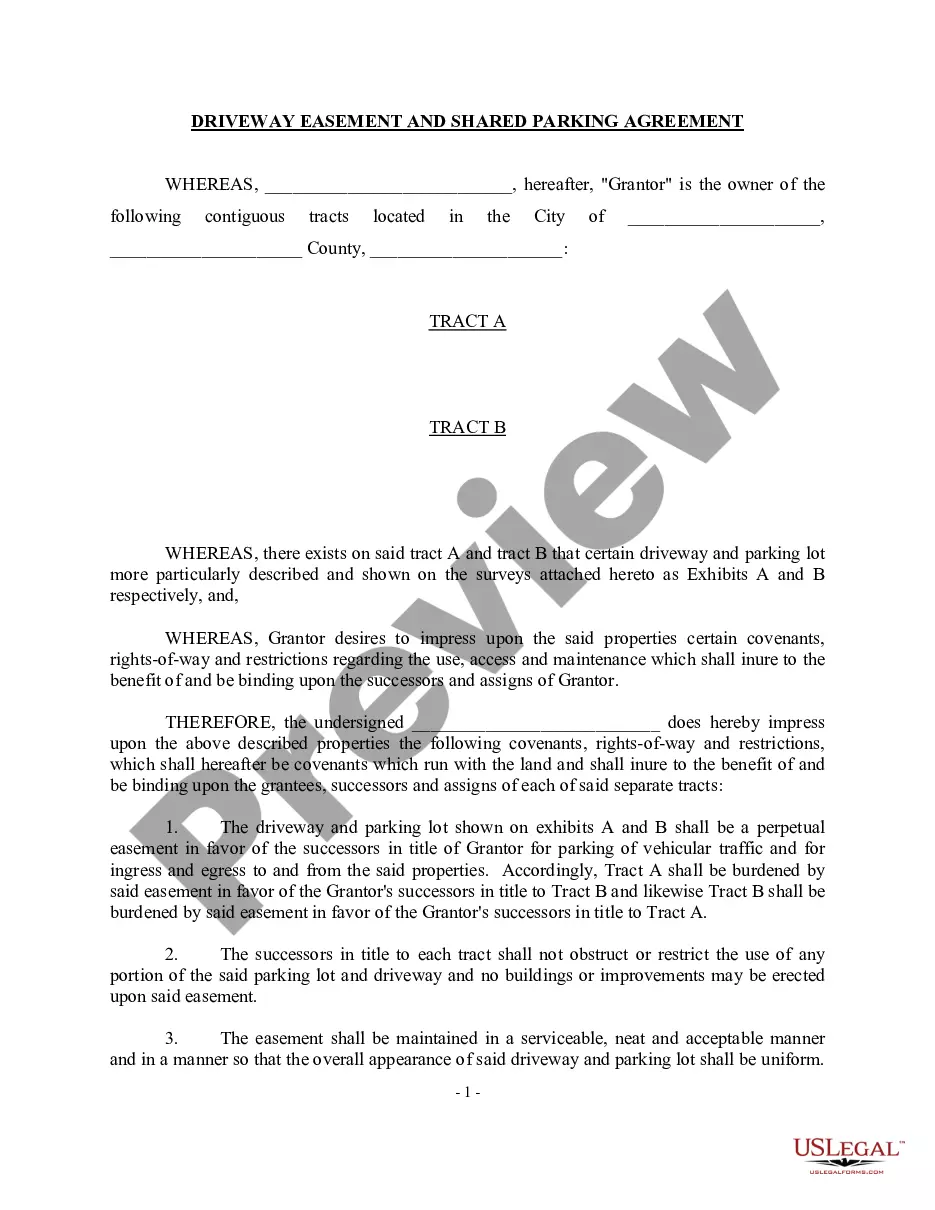
This form is a Driveway Easement and Shared Parking Agreement. The grantor conveys to the grantee certain covenants, rights-of-way, and restrictions regarding the use of a driveway and parking lot.
Florida Easement - Shared Parking
State:
Multi-State
Control #:
US-00498
Format:
Word;
Rich Text
Instant download
Description
Free preview
Get your form ready online
Our built-in tools help you complete, sign, share, and store your documents in one place.
Built-in online Word editor
Make edits, fill in missing information, and update formatting in US Legal Forms—just like you would in MS Word.
Export easily
Download a copy, print it, send it by email, or mail it via USPS—whatever works best for your next step.
E-sign your document
Sign and collect signatures with our SignNow integration. Send to multiple recipients, set reminders, and more. Go Premium to unlock E-Sign.
Notarize online 24/7
If this form requires notarization, complete it online through a secure video call—no need to meet a notary in person or wait for an appointment.
Store your document securely
We protect your documents and personal data by following strict security and privacy standards.

Make edits, fill in missing information, and update formatting in US Legal Forms—just like you would in MS Word.

Download a copy, print it, send it by email, or mail it via USPS—whatever works best for your next step.

Sign and collect signatures with our SignNow integration. Send to multiple recipients, set reminders, and more. Go Premium to unlock E-Sign.

If this form requires notarization, complete it online through a secure video call—no need to meet a notary in person or wait for an appointment.

We protect your documents and personal data by following strict security and privacy standards.
Looking for another form?

How to fill out Easement - Shared Parking?
Locating the appropriate legal document format can be a challenge.
Clearly, there are numerous templates accessible online, but how can you discover the legal form you need.
Utilize the US Legal Forms website.
First, ensure you have chosen the correct form for your city/county. You can view the form using the Preview option and read the form description to confirm it is suitable for you.
- The platform provides thousands of templates, such as the Florida Easement - Shared Parking, suitable for business and personal purposes.
- All documents are reviewed by professionals and comply with state and federal regulations.
- If you are currently registered, Log In to your account and click on the Download button to retrieve the Florida Easement - Shared Parking.
- Use your account to access the legal forms you have previously purchased.
- Navigate to the My documents tab in your account and obtain another copy of the document you need.
- If you are a new user of US Legal Forms, here are some straightforward tips for you to follow.
Form popularity
FAQ
1. Right-of-way: The minimum right-of-way width for a private street shall be 25 feet, centered on the roadway, with a minimum 7.5 feet drainage and utility easement on each side. 2.
If a person uses another's real property for more than the time allowed by state laws on adverse possession (what's called the statute of limitation period), that person may be able to "derive an easement by prescription." In other words, you have a legal right to use the land.
Different jurisdiction may have different rules and regulation with regards to driveway easements. Generally, a width of 30 feet is fairly common.
It's the government's duty to ensure drainage easement areas are properly maintained. However, they'll direct most of the maintenance responsibilities to the property owner.
An easement gives the grantee the right to use the property for a specific purpose. However, a right-of-way only allows a grantee to cross over another person's property. Rights-of-ways do not allow you to use the property for any reason. Driveways and sidewalks are examples of rights-of-ways.
The standard easement area for this project is 10 feet by 10 feet. This area provides adequate space to , maintain, repair and replace electric equipment. In some cases, the easement may be wider depending on the equipment necessary to . What does it mean if my property has an underground easement?
With an easement, a landowner, without sharing profits, has the right to use and enjoy another landowner's land. Easements are created either by a written contract or by implication in situations such as streets, parks, or alleyways.