Florida Quit Claim Deed
Understanding this form
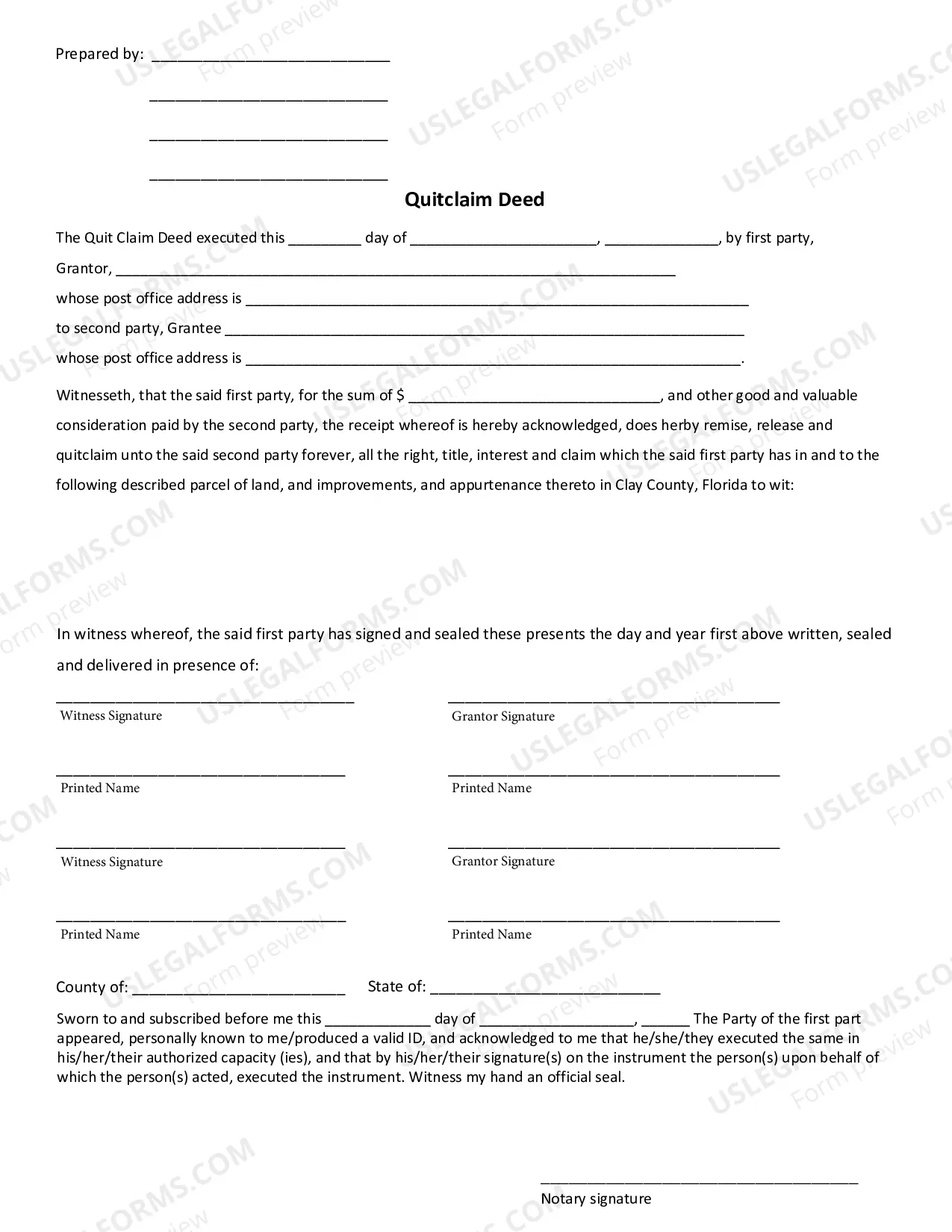
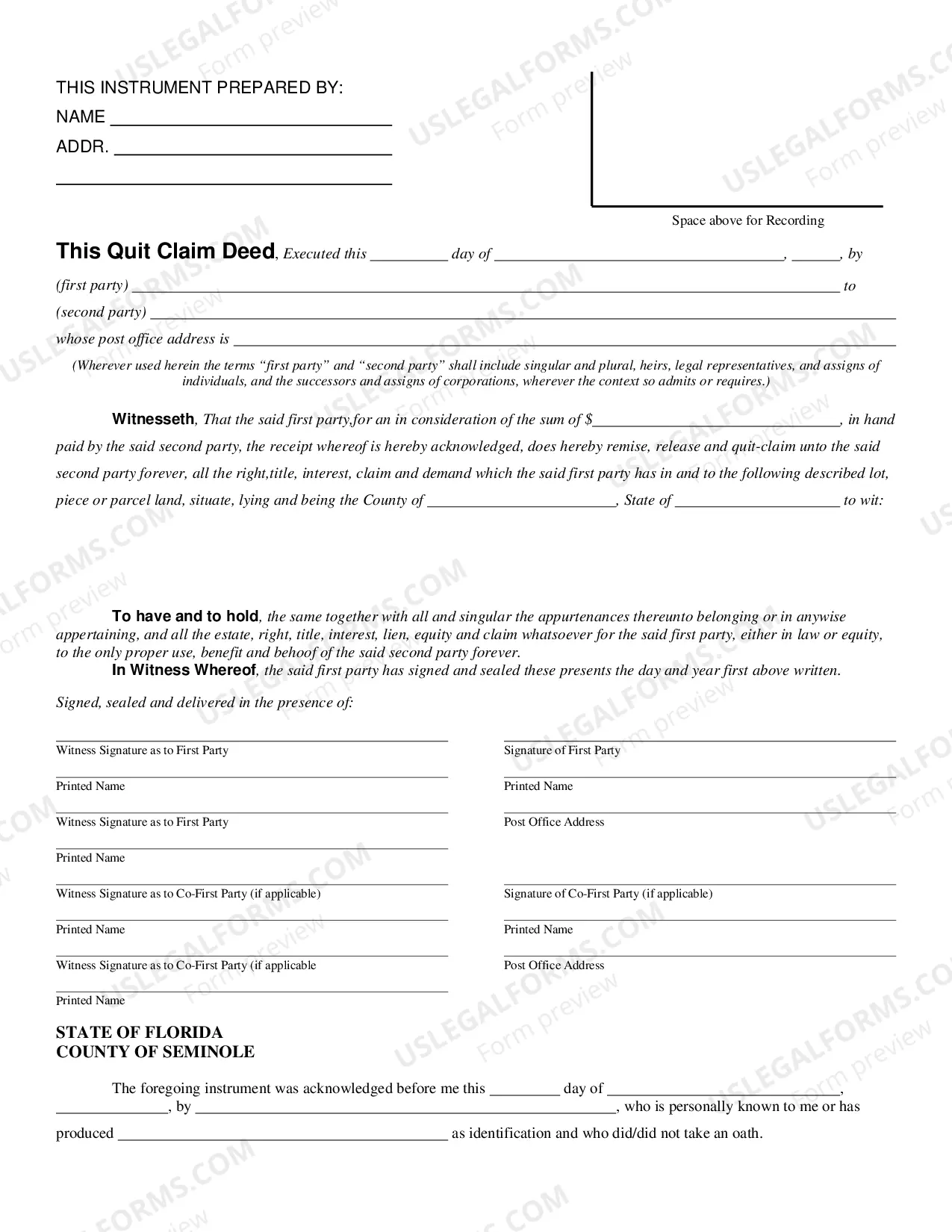
A quit claim deed is a legal document that transfers ownership of real property from one party to another without making any warranties about the property title. Unlike other types of deeds, such as warranty deeds, a quit claim deed does not guarantee that the granter holds valid title to the property being conveyed. This form is useful for transferring property between family members or as part of a divorce settlement where the parties are familiar with the propertyâs status.
What’s included in this form
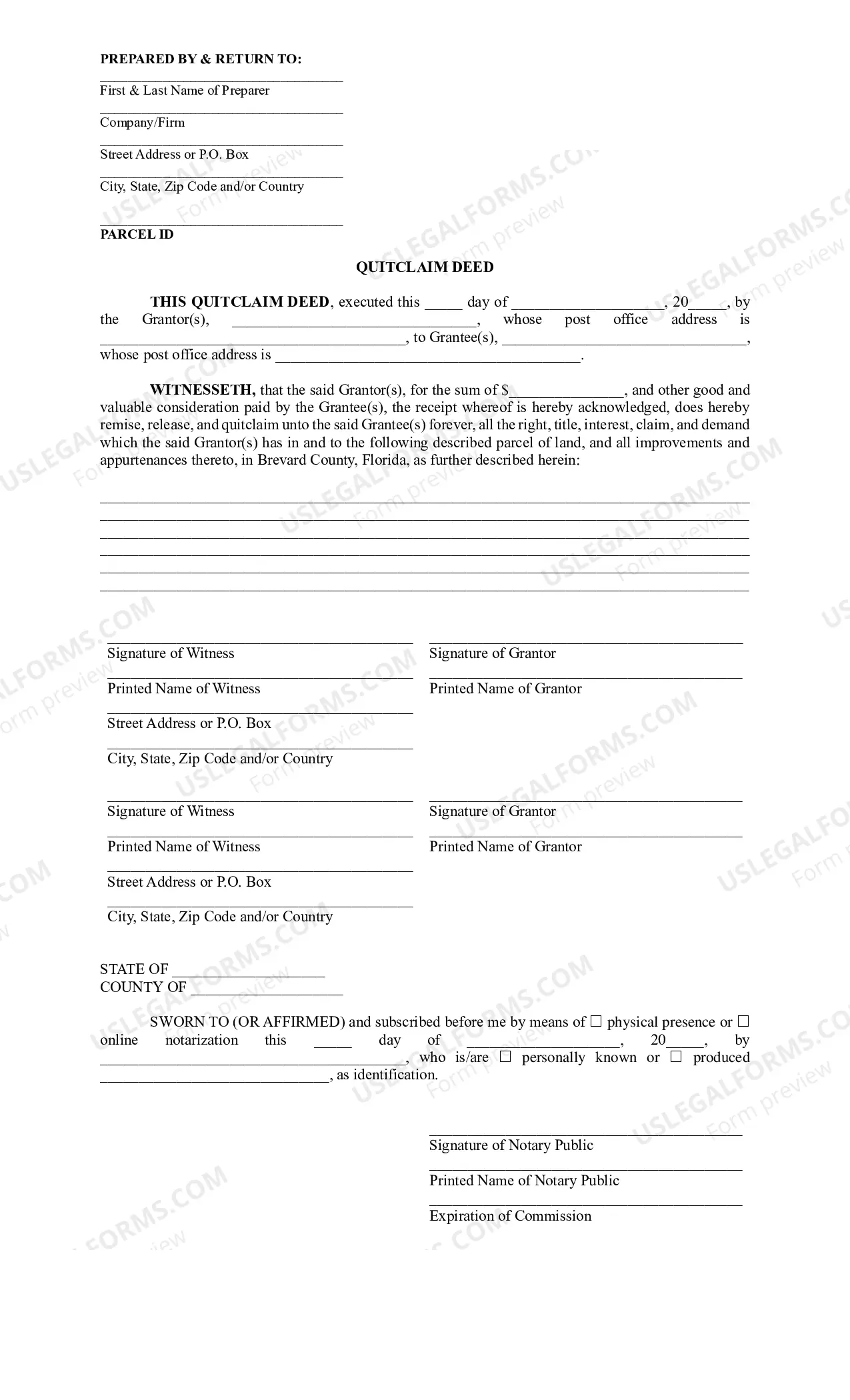
- The names and addresses of the grantor(s) and grantee(s).
- The legal description of the property being transferred.
- The signature of the grantor(s) and witnesses, if required.
- The notary acknowledgment section to validate the deed.

Situations where this form applies
You should use a quit claim deed when you need to transfer property ownership quickly and without the complexities involved in other deeds. Common scenarios include transferring property as a gift to family members, settling a divorce by transferring ownership, or correcting a mistake in a previous property transfer.
Who should use this form
- Individuals transferring property to family members.
- Couples finalizing divorce settlements involving property.
- Property owners correcting errors in public records.
How to complete this form
- Identify the parties involved by entering the full names and addresses of the grantor(s) and grantee(s).
- Provide the legal description of the property being transferred.
- Specify the consideration being paid (if any) for the property transfer.
- Have all grantor(s) sign the form in the presence of witnesses and a notary public.
- File the completed quit claim deed with the appropriate local county office for record keeping.
Is notarization required?
Yes, this form must be notarized to be legally valid. A notary public will verify the identities of the signers and confirm that they are signing the document voluntarily. US Legal Forms provides integrated online notarization options, available 24/7, ensuring a secure and convenient way to complete this requirement.
Get your form ready online
Our built-in tools help you complete, sign, share, and store your documents in one place.
Make edits, fill in missing information, and update formatting in US Legal Forms—just like you would in MS Word.
Download a copy, print it, send it by email, or mail it via USPS—whatever works best for your next step.
Sign and collect signatures with our SignNow integration. Send to multiple recipients, set reminders, and more. Go Premium to unlock E-Sign.
If this form requires notarization, complete it online through a secure video call—no need to meet a notary in person or wait for an appointment.
We protect your documents and personal data by following strict security and privacy standards.

Make edits, fill in missing information, and update formatting in US Legal Forms—just like you would in MS Word.

Download a copy, print it, send it by email, or mail it via USPS—whatever works best for your next step.

Sign and collect signatures with our SignNow integration. Send to multiple recipients, set reminders, and more. Go Premium to unlock E-Sign.

If this form requires notarization, complete it online through a secure video call—no need to meet a notary in person or wait for an appointment.

We protect your documents and personal data by following strict security and privacy standards.
Common mistakes to avoid
- Failing to have the deed notarized, which can invalidate the transfer.
- Providing an incorrect legal description of the property.
- Not including the names and addresses of all parties involved in the transfer.
Benefits of completing this form online
- Convenient access to a professionally drafted quit claim deed template.
- Editable format allows you to tailor the document to your specific situation.
- Reliable service ensures the form meets legal requirements of your jurisdiction.
Quick recap
- A quit claim deed is a straightforward way to transfer property ownership without warranties.
- The form is most suitable for known parties and situations where trust exists.
- Ensure the document is properly completed and notarized for it to be effective.
Looking for another form?
Form popularity
FAQ
Individuals often utilize a Florida Quit Claim Deed to simplify the transfer of property between family members or to clear up title issues. This type of deed is particularly useful in situations like divorce, estate planning, or transferring property to a trust. The quit claim deed allows for a swift transfer without extensive paperwork, which can save time and costs. If you need assistance with creating a quit claim deed, consider using uslegalforms, which offers easy-to-use templates tailored for Florida.
In Florida, a quit claim deed transfers ownership of real estate without any warranties. The grantor simply gives up their interest in the property, which means the recipient takes on any risks associated with the title. It is essential for the deed to be properly executed, signed, and notarized before it is recorded with the county clerk. When dealing with a Florida Quit Claim Deed, it is advisable to consult with a legal professional to ensure all state regulations are met.
In Florida, a quitclaim deed can be prepared by anyone, but it is often recommended that a legal professional handle it to ensure accuracy and compliance with state laws. A qualified attorney or a title company can provide valuable assistance in drafting the deed, which minimizes the risk of errors. If you prefer a DIY approach, US Legal Forms offers user-friendly templates that streamline the preparation of your Florida Quit Claim Deed, ensuring you have all necessary information included.
To file a Florida Quit Claim Deed, you must first prepare the document with accurate details of the property and the parties involved. Next, you need to sign the deed in front of a notary public and have the signature witnessed. After that, you can file the quitclaim deed with the county clerk's office where the property is located. Using a platform like US Legal Forms can simplify this process, providing easy access to templates and detailed guidance.
Yes, you can prepare your own Florida Quit Claim Deed, but ensure that you understand the necessary requirements and legal implications. While it may seem straightforward, inaccuracies can result in complications. Using resources like USLegalForms can make this easier by providing accurate templates and instructions tailored for Florida law.
Filling out the quitclaim deed form involves entering the grantor's and grantee's full names, detailing the property description, and specifying the nature of the transfer. Be careful to accurately provide all the required details, as mistakes can cause legal issues later on. Platforms such as USLegalForms offer templates and guidance to streamline this process.
To properly fill out a Florida Quit Claim Deed, ensure you provide all required information, including the property’s legal description, owners' names, and the date of the transfer. It’s vital to sign in the presence of a notary to make the deed valid. Additionally, after signing, file the completed deed with the county clerk’s office for public record.
An example of a quitclaim might involve a family member transferring their interest in a property to another family member without a financial exchange. For instance, a parent may use a Florida Quit Claim Deed to transfer their home to their child. Such transfers often occur within families and can simplify the process of transferring ownership.
Using a Florida Quit Claim Deed can lead to various issues, such as potential disputes over property rights. This type of deed does not guarantee clear ownership, which means if the grantor had liabilities, the grantee might be responsible for them. Therefore, it’s crucial to understand the implications and seek legal advice when necessary.
To fill out a Florida Quit Claim Deed, start by clearly stating the names of the grantor and grantee. Next, include a legal description of the property, which can often be found in previous deed documents or tax records. It’s essential to sign the document in front of a notary and ensure that all the information is accurate to avoid future complications.