Florida Revocation of Statutory Living Will
About this form
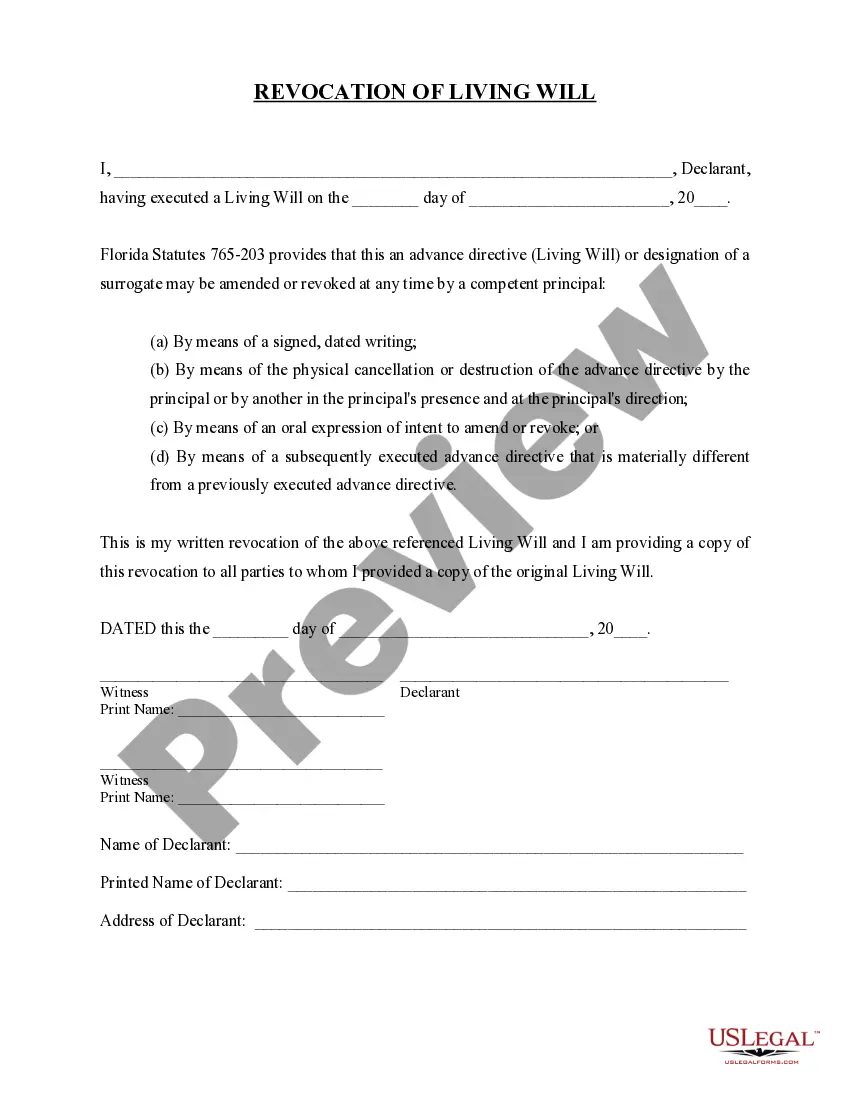
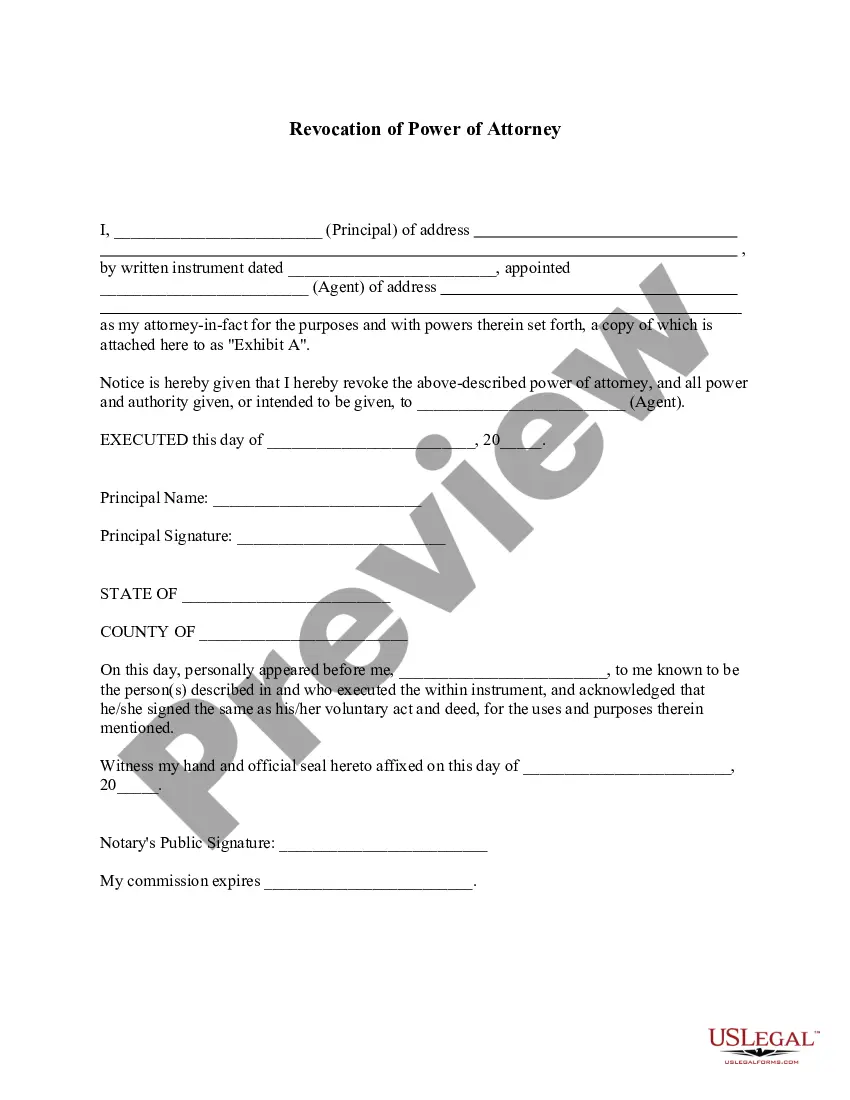
The Revocation of Statutory Living Will is a legal document that allows an individual to withdraw or revoke their previously stated wishes regarding life-sustaining procedures. This form specifically nullifies the intentions expressed in a prior Living Will and complies with state statutory laws. Unlike the original Statutory Living Will form, this document clearly communicates a change in the declarant's healthcare preferences as they relate to end-of-life care.
Main sections of this form
- Declarant's personal information, including name and address.
- Date of the originally executed Living Will that is being revoked.
- Clear statement of revocation of the previous Living Will.
- Signature of the declarant alongside date of revocation.
- Signatures of at least two witnesses to ensure validity.
When this form is needed
You should use the Revocation of Statutory Living Will if you have previously executed a Living Will and wish to change or completely withdraw your prior decisions regarding healthcare treatments at the end of your life. This may occur if your health status changes, you have a change in personal beliefs, or you simply wish to update your medical directives.
Who can use this document
- Individuals who have previously completed a Statutory Living Will.
- People who wish to communicate a change in their healthcare preferences.
- Those seeking to ensure that their current wishes regarding life-sustaining procedures are accurately reflected.
How to prepare this document
- Fill in the declarant's name and address at the top of the form.
- Enter the date when the original Living Will was executed.
- Clearly state that you are revoking the original Living Will.
- Sign and date the revocation to confirm your intent.
- Obtain signatures from at least two witnesses, ensuring they also print their names.
Notarization requirements for this form
In most cases, this form does not require notarization. However, some jurisdictions or signing circumstances might. US Legal Forms offers online notarization powered by Notarize, accessible 24/7 for a quick, remote process.
Get your form ready online
Our built-in tools help you complete, sign, share, and store your documents in one place.
Make edits, fill in missing information, and update formatting in US Legal Forms—just like you would in MS Word.
Download a copy, print it, send it by email, or mail it via USPS—whatever works best for your next step.
Sign and collect signatures with our SignNow integration. Send to multiple recipients, set reminders, and more. Go Premium to unlock E-Sign.
If this form requires notarization, complete it online through a secure video call—no need to meet a notary in person or wait for an appointment.
We protect your documents and personal data by following strict security and privacy standards.

Make edits, fill in missing information, and update formatting in US Legal Forms—just like you would in MS Word.

Download a copy, print it, send it by email, or mail it via USPS—whatever works best for your next step.

Sign and collect signatures with our SignNow integration. Send to multiple recipients, set reminders, and more. Go Premium to unlock E-Sign.

If this form requires notarization, complete it online through a secure video call—no need to meet a notary in person or wait for an appointment.

We protect your documents and personal data by following strict security and privacy standards.
Typical mistakes to avoid
- Not including the original execution date of the Living Will.
- Failing to have the required witness signatures.
- Not clearly stating the intent to revoke the previous Living Will.
Why complete this form online
- Convenient access to legal templates at any time.
- Editable documents to tailor to personal circumstances.
- Reliability and compliance with state laws by using attorney-drafted forms.
Looking for another form?


Form popularity
FAQ
The most effective method to revoke a will in Florida is to follow the legal guidelines for revocation. You can physically destroy the will, draft a new will that explicitly states the revocation, or use a formal revocation document. Engaging with a platform like USLegalForms can streamline your understanding of the Florida revocation of statutory living will process, ensuring that all legal requirements are met properly and efficiently.
Overturning a will in Florida can be quite challenging. The law generally upholds the testator's intentions, requiring solid evidence to prove issues like lack of capacity, undue influence, or improper execution. If you're considering the Florida revocation of statutory living will, it’s crucial to work with legal professionals familiar with state laws. They can help navigate this complex process and advocate for your rights.
To void a will in Florida, you should create a new will that explicitly states your intention to revoke any previous wills. Additionally, you can physically destroy the old will, such as tearing or burning it, to demonstrate your decision clearly. If you have a Florida Revocation of Statutory Living Will, follow the procedure outlined in the document to ensure it’s officially revoked. For comprehensive assistance in this process, consider using US Legal Forms, which offers reliable resources and templates tailored to your needs.
In Florida, you generally have a period of three months from the date of the will's formal admission to probate to contest it. It’s important to act promptly, as delays may forfeit your right to challenge the will. Understanding the timeline associated with the Florida Revocation of Statutory Living Will can help you streamline the process. Seeking assistance from uslegalforms can provide vital support in meeting legal deadlines.
To successfully contest a will in Florida, you need substantial evidence that supports your claim, such as medical records or testimony from witnesses. Documentation demonstrating the absence of the testator's capacity or instances of undue influence also plays a crucial role in the process. Additionally, leveraging knowledge about the Florida Revocation of Statutory Living Will can help you build a compelling case. Resources from uslegalforms can guide you in gathering the necessary information effectively.
A revocation of a will in Florida typically occurs due to specific actions taken by the testator, such as creating a new will or physically destroying the original document. Factors like marriage, divorce, or the birth of a child can also prompt a Florida Revocation of Statutory Living Will. Understanding these dynamics can help you navigate potential changes to estate plans. Consulting with professionals from uslegalforms can provide clarity in these situations.
Contesting a will in Florida can be worthwhile, especially if you believe the will does not reflect the true wishes of the deceased. In cases involving issues like undue influence, lack of capacity, or improper execution, the Florida Revocation of Statutory Living Will may apply. We suggest evaluating your situation carefully, as contesting a will can involve legal complexities and emotional challenges. Utilizing platforms like uslegalforms can simplify the process of understanding your rights and options.
The three types of revocation include explicit revocation, implicit revocation, and destruction of the initial document. Explicit revocation occurs through a clear statement indicating the intent to revoke. Implicit revocation happens when a new living will contradicts the prior instructions, effectively making it obsolete. Being aware of these options is vital for anyone considering the Florida Revocation of Statutory Living Will.
A will in Florida can be invalidated for several reasons such as lack of proper execution, absence of witnesses, or if the person was not of sound mind when creating it. Misrepresentation or fraud can also lead to a will being deemed invalid. Knowing these factors is essential when dealing with the Florida Revocation of Statutory Living Will, as they can impact the effectiveness of your directives. Ensuring proper procedures can help maintain the validity of your wishes.
A will can be revoked in three primary ways: by creating a new document that states the intent to revoke, by physically destroying the document, and through actions that imply revocation. The most secure method is to create a new will that explicitly states your wishes, ensuring clarity and reducing potential confusion. Understanding how these methods work is crucial, especially when dealing with the Florida Revocation of Statutory Living Will.