Letter to debt collector telling them to correctly apply your payment
About this form
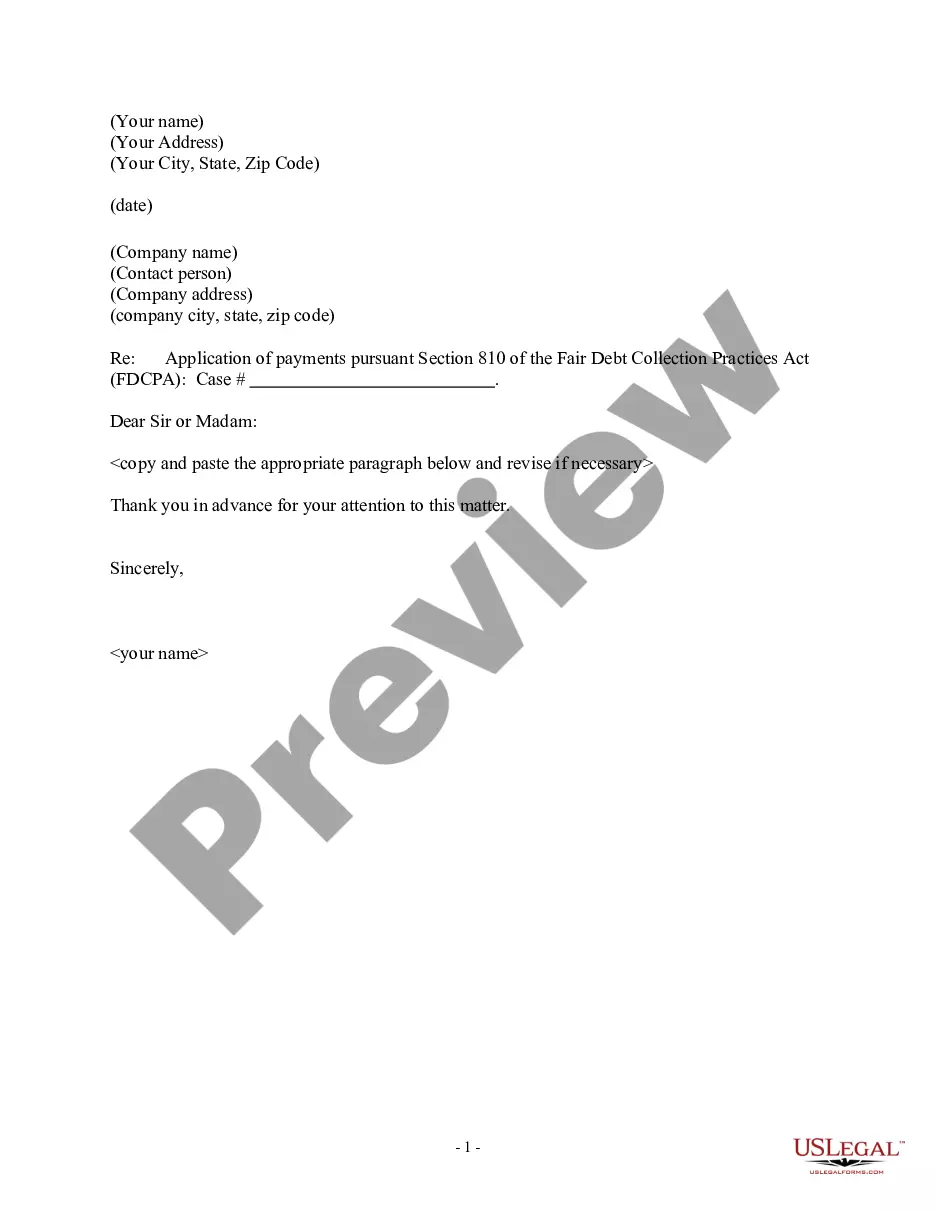
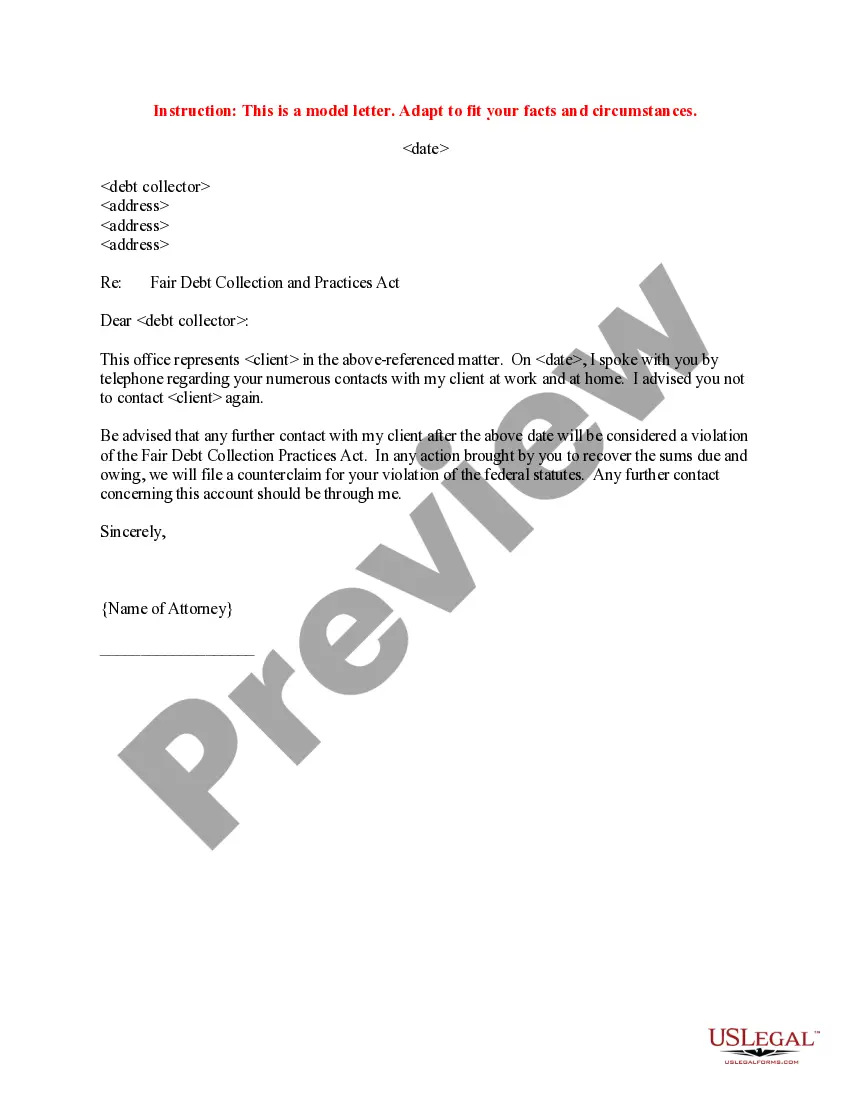
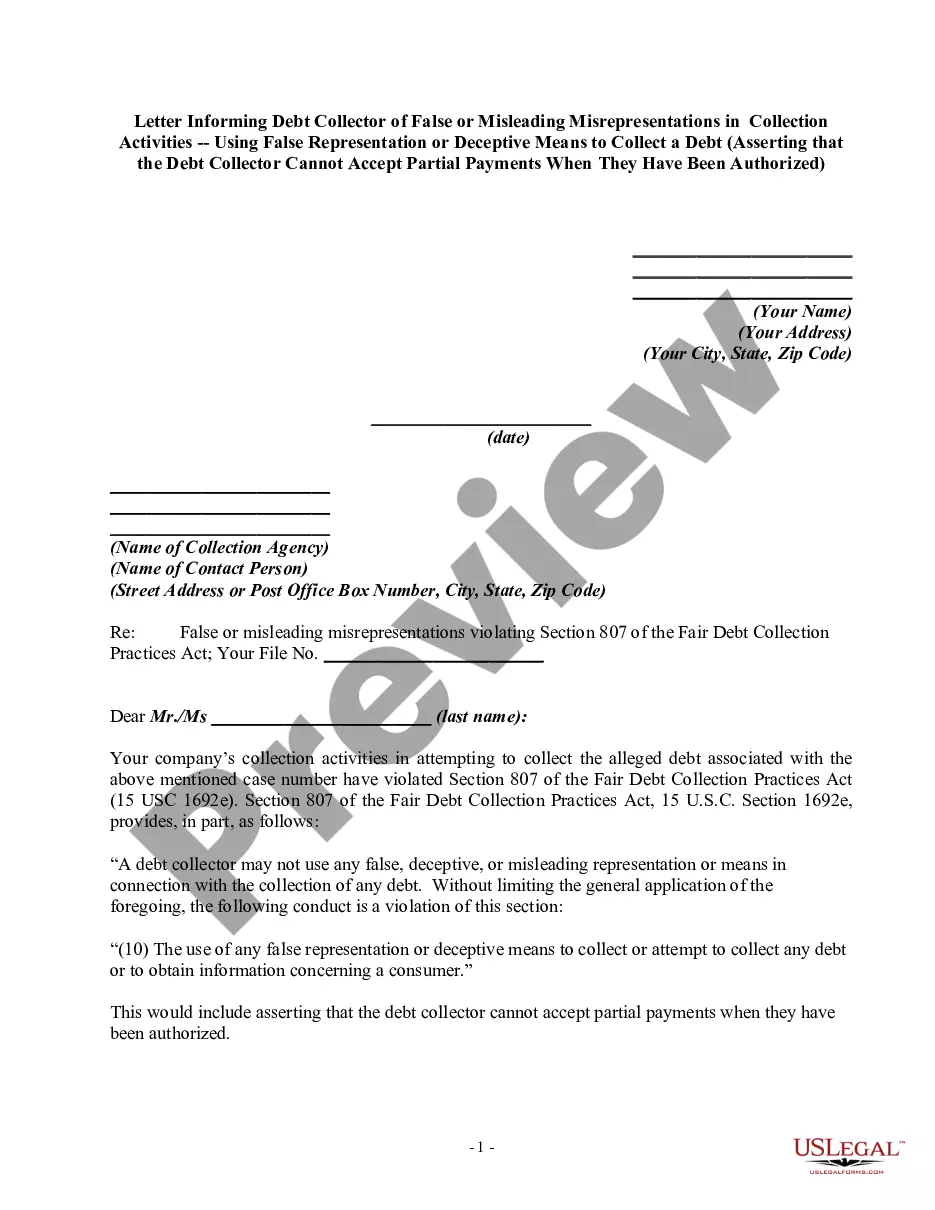
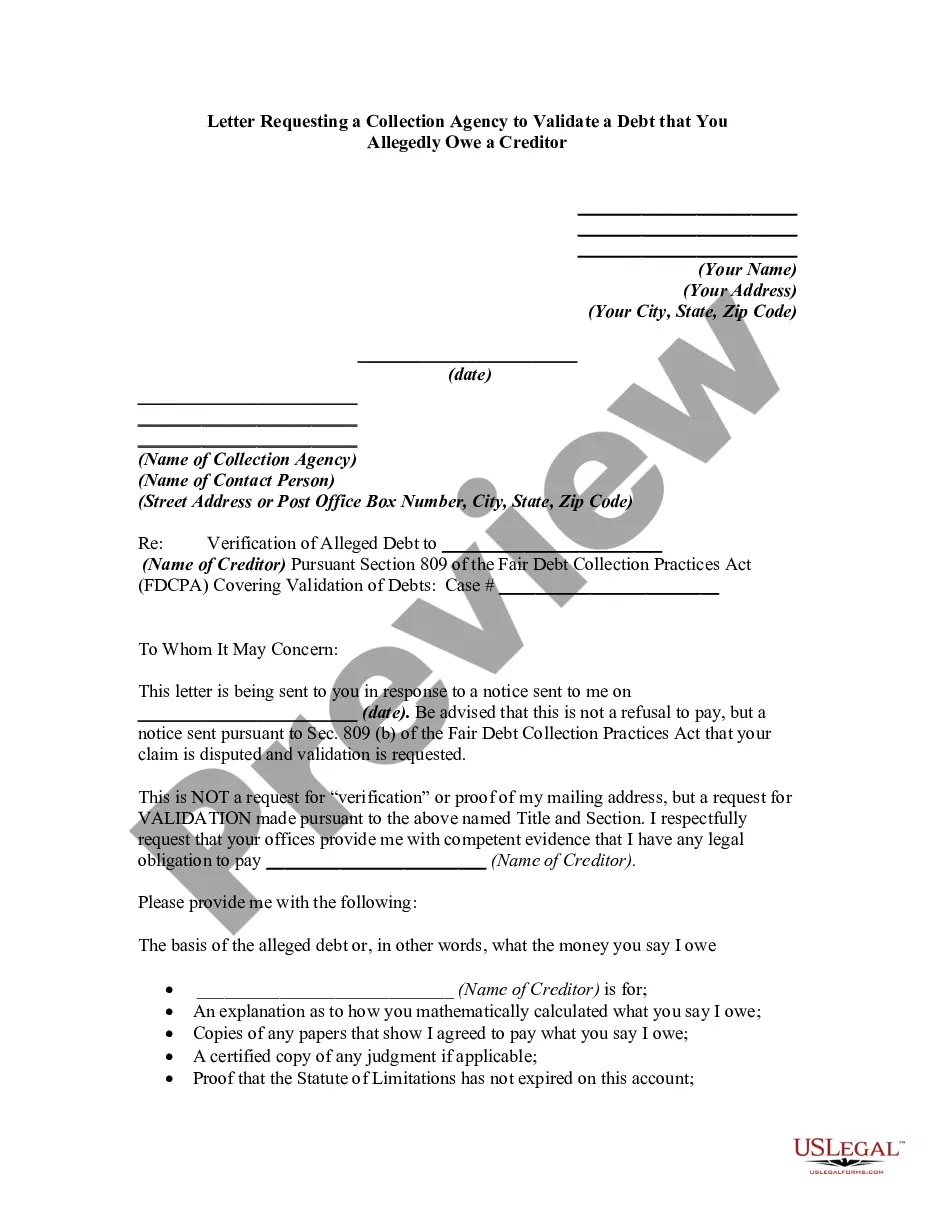
This letter to a debt collector is a formal notice that instructs them to correctly apply your payment in accordance with the Fair Debt Collection Practices Act (FDCPA). It serves to notify the debt collector of any misapplication of funds related to your debts, particularly when you have disputed any of these debts. This form is crucial for protecting your rights as a consumer and ensuring debt collectors adhere to legal protocols.
Main sections of this form
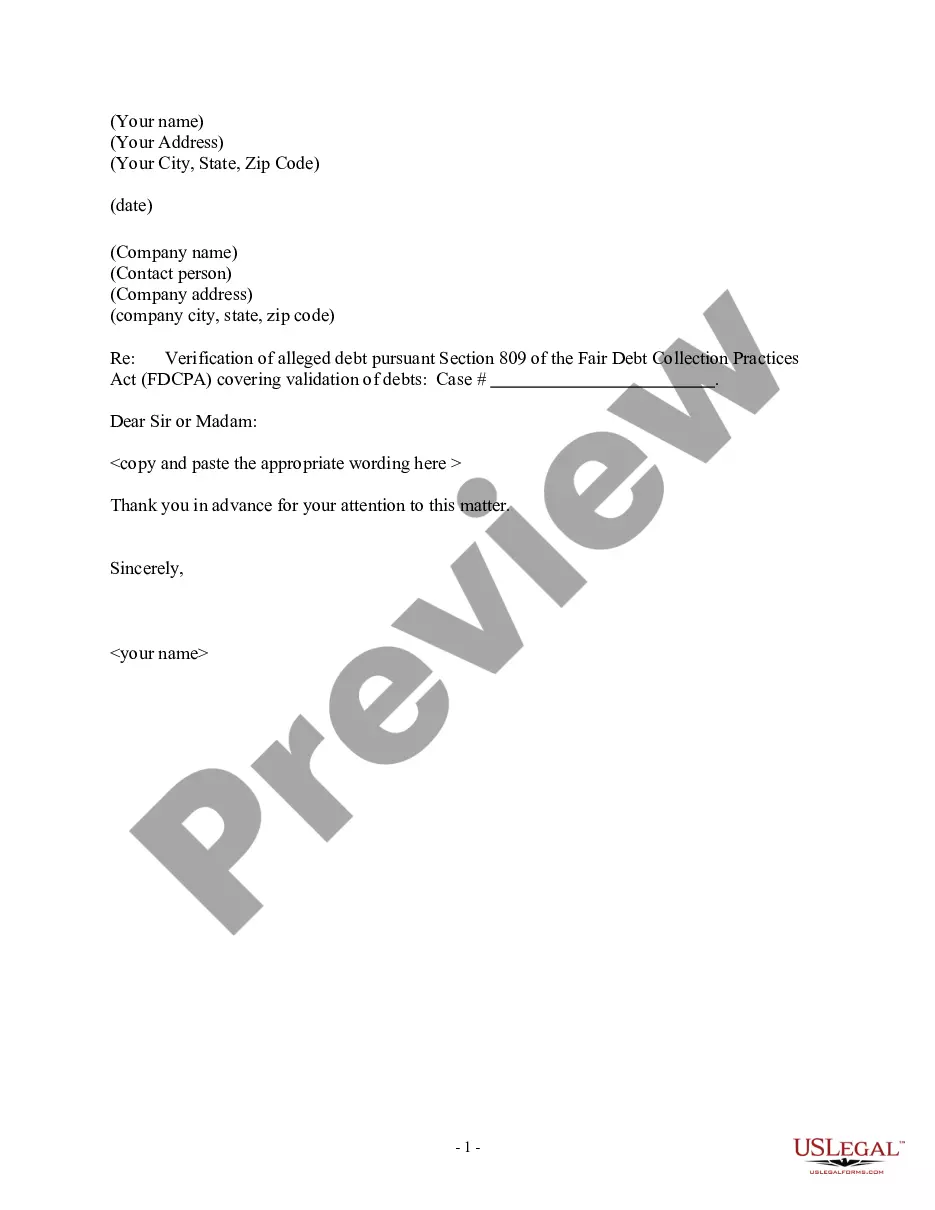
- Your contact information: Includes space for your name, address, and date.
- Debt collector's information: Provides fields for including the name and address of the debt collection agency.
- Subject line: Clearly indicates the purpose of the letter regarding the application of payments.
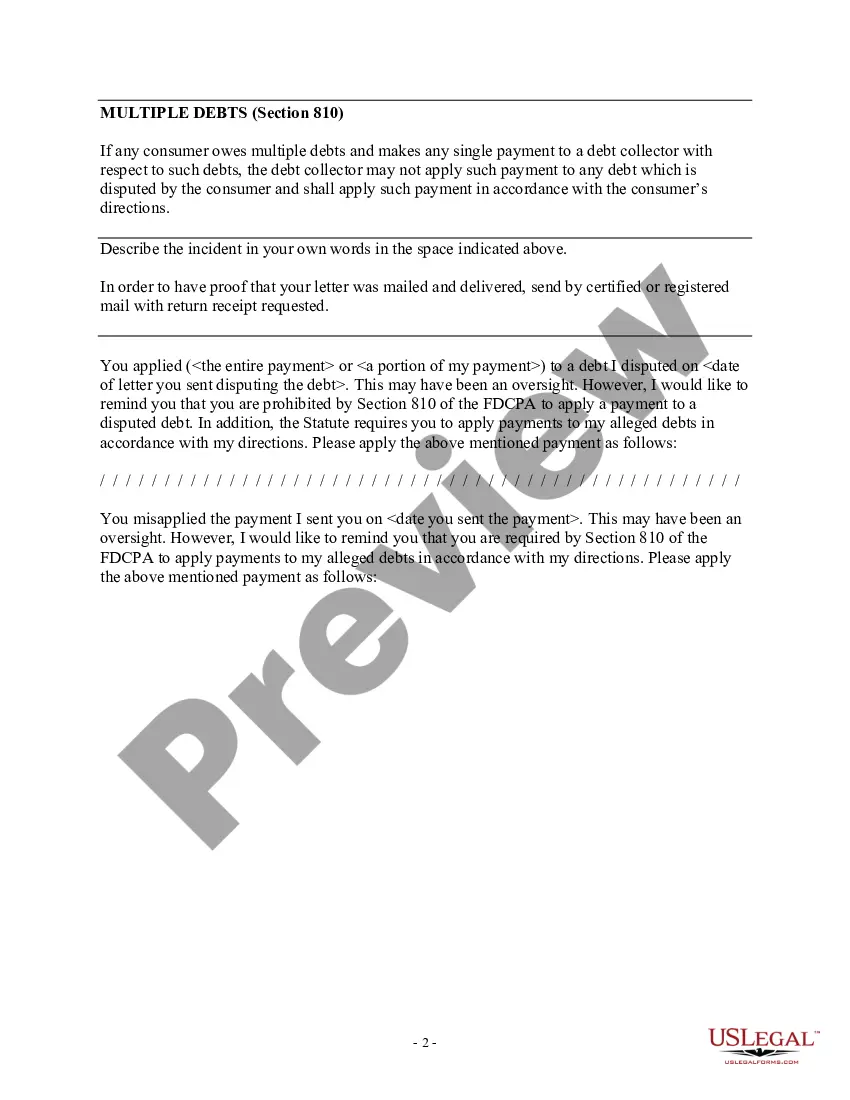
- Explanation of the violation: Space to detail how the debt collector misapplied your payment.
- Payment direction: Area to specify how you would like your payment to be applied correctly.
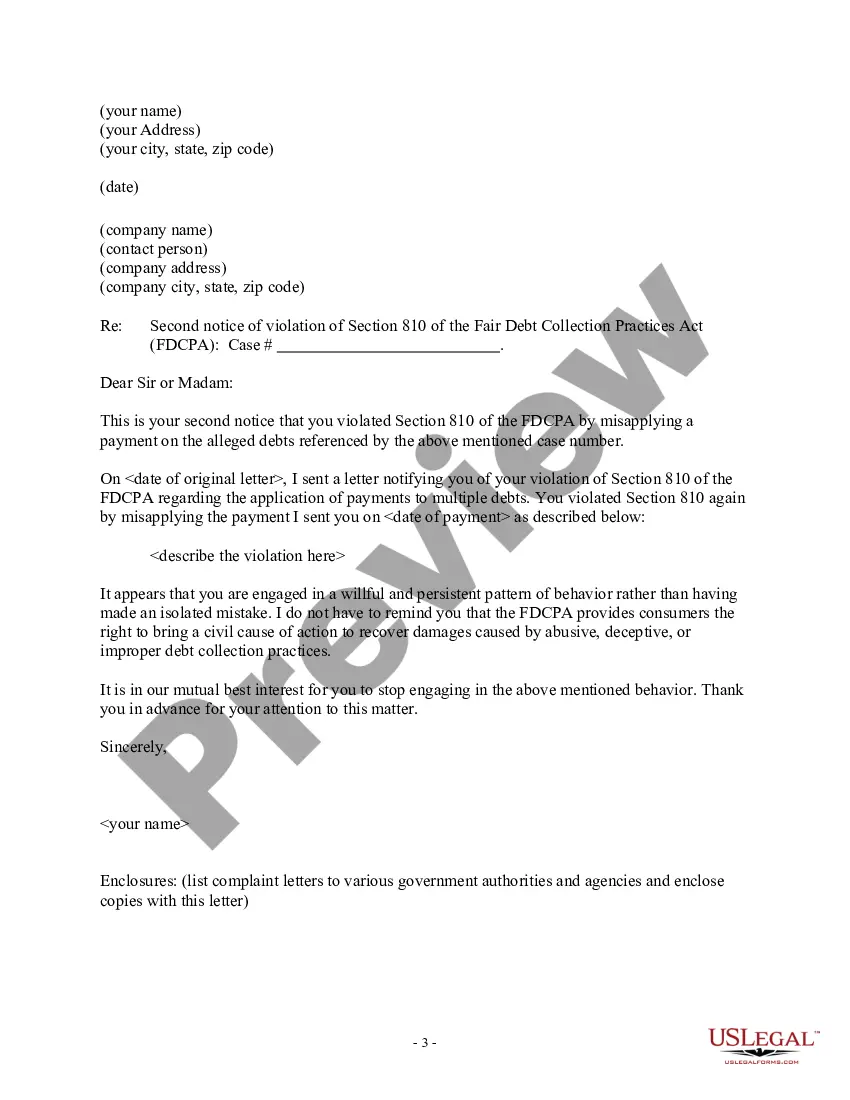
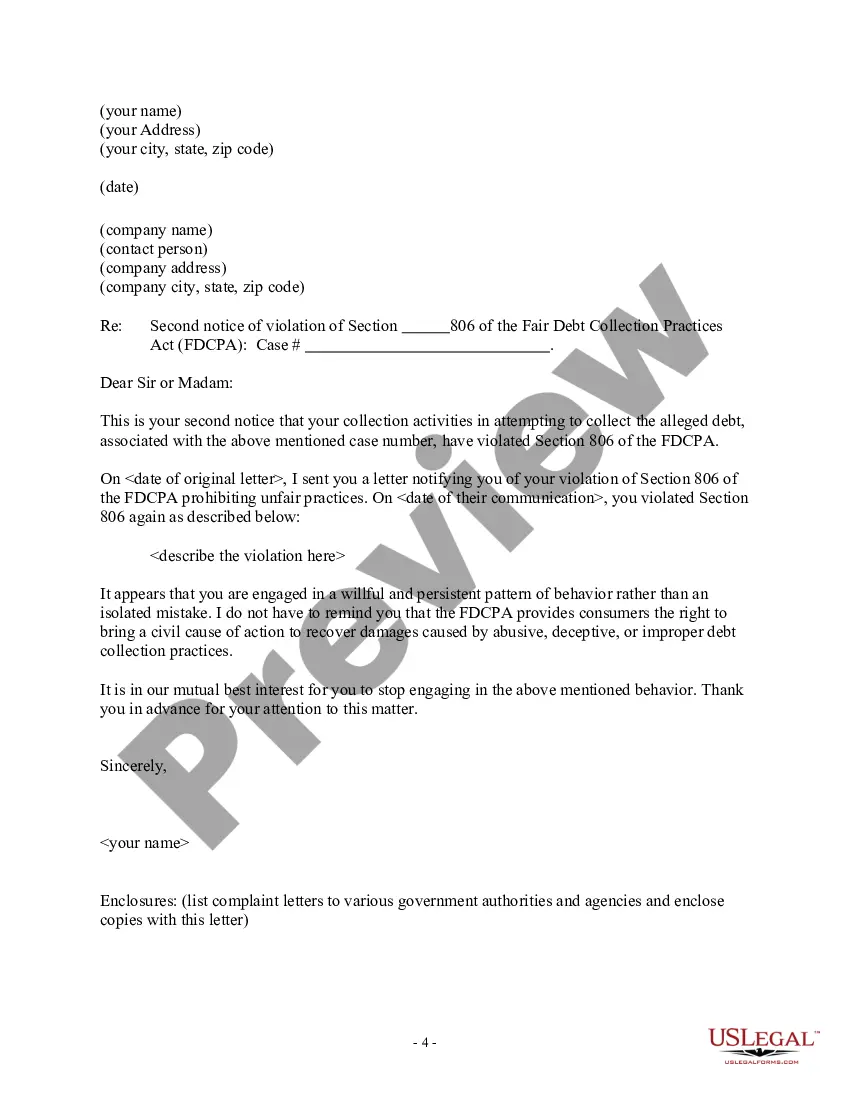
- Follow-up notice: Includes provisions for warning the collector of future legal actions if violations continue.
When to use this form
You should use this letter when a debt collector has misapplied your payment, especially if you have disputed the debt or disagree with how they are handling your payments. It is particularly useful if you have made a payment but want it to be applied to a specific account or debt. Additionally, this form is valuable if you need to follow up on a previous communication to the debt collector about their error.
Who should use this form
- Consumers who are dealing with multiple debts and have made payments to a debt collector.
- Individuals who have disputed one or more debts with a debt collector.
- Anyone who believes a debt collector has violated their rights under the FDCPA.
- People seeking to document their communications with debt collectors to protect their consumer rights.
Instructions for completing this form
- Enter your contact information at the top of the letter.
- Provide the date of the letter for your records.
- Add the debt collector's contact details so they can respond to your request.
- Detail the payment misapplied by the debt collector and how it should have been allocated.
- Specify the corrections you are requesting regarding the application of your payment.
- Sign the letter and send it via certified or registered mail to ensure proof of delivery.
Notarization requirements for this form
This form usually doesn’t need to be notarized. However, local laws or specific transactions may require it. Our online notarization service, powered by Notarize, lets you complete it remotely through a secure video session, available 24/7.
Get your form ready online
Our built-in tools help you complete, sign, share, and store your documents in one place.
Make edits, fill in missing information, and update formatting in US Legal Forms—just like you would in MS Word.
Download a copy, print it, send it by email, or mail it via USPS—whatever works best for your next step.
Sign and collect signatures with our SignNow integration. Send to multiple recipients, set reminders, and more. Go Premium to unlock E-Sign.
If this form requires notarization, complete it online through a secure video call—no need to meet a notary in person or wait for an appointment.
We protect your documents and personal data by following strict security and privacy standards.

Make edits, fill in missing information, and update formatting in US Legal Forms—just like you would in MS Word.

Download a copy, print it, send it by email, or mail it via USPS—whatever works best for your next step.

Sign and collect signatures with our SignNow integration. Send to multiple recipients, set reminders, and more. Go Premium to unlock E-Sign.

If this form requires notarization, complete it online through a secure video call—no need to meet a notary in person or wait for an appointment.

We protect your documents and personal data by following strict security and privacy standards.
Common mistakes to avoid
- Failing to provide accurate information about the payment misapplied.
- Not sending the letter via certified mail, which can affect documentation of your complaint.
- Neglecting to keep copies of all correspondence for your records.
- Using unclear language when explaining how the payment should be applied.
Benefits of using this form online
- Convenience: Easily fill out and download the form from home without needing to visit a legal office.
- Editability: Customize the letter to match your specific situation and ensure accuracy.
- Reliability: Utilize legally drafted templates created by licensed attorneys to ensure compliance with laws.
Legal use & context
- This form is grounded in the legal protections provided by the FDCPA.
- It serves as an official notice, which can be important if the situation escalates legally.
- Using this form helps establish a record of your communication and demands with the debt collector.
Summary of main points
- This form serves to notify a debt collector of a misapplied payment and instruct them on proper allocation.
- Utilizing this form helps protect your rights under the Fair Debt Collection Practices Act.
- It is crucial to document all communications with debt collectors for potential legal recourse.
Looking for another form?
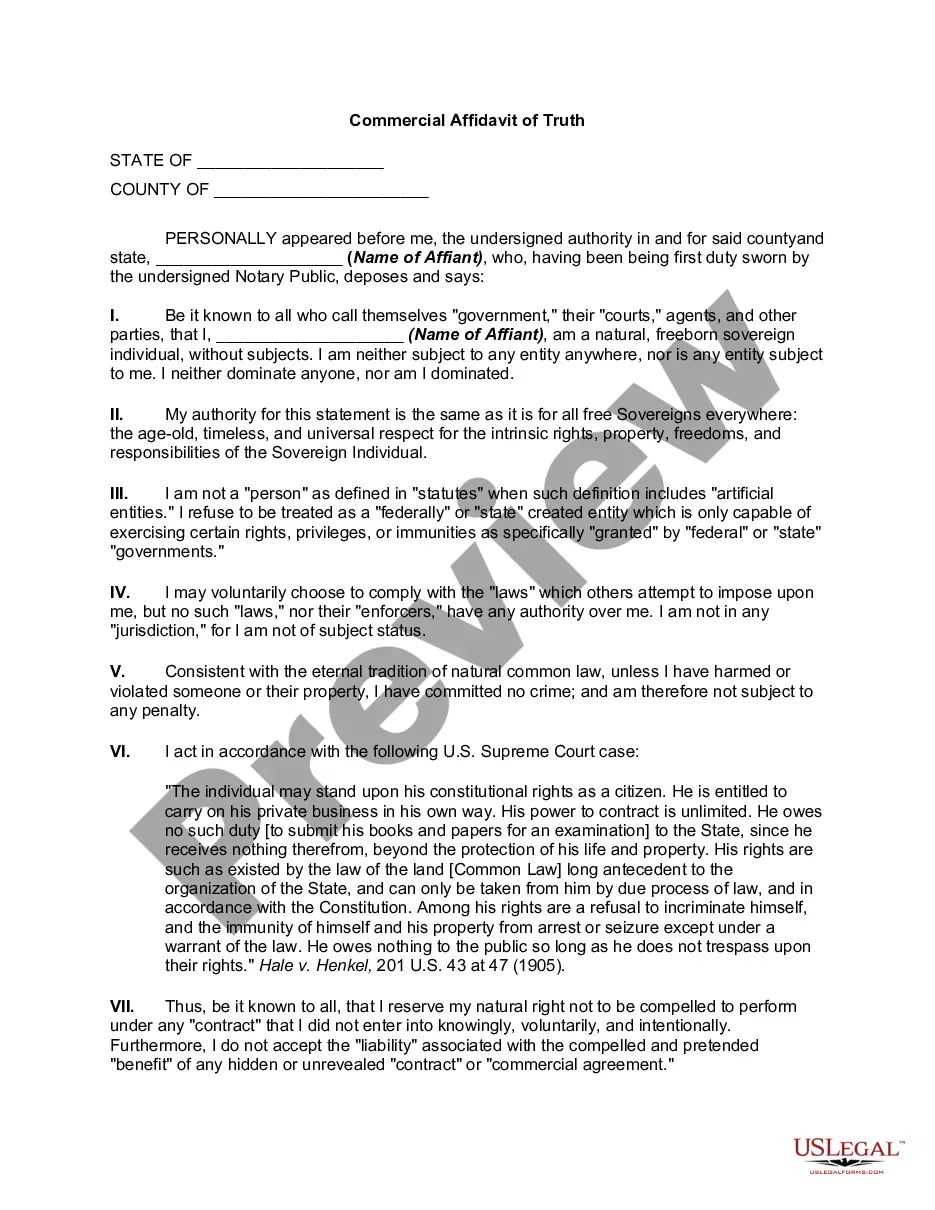
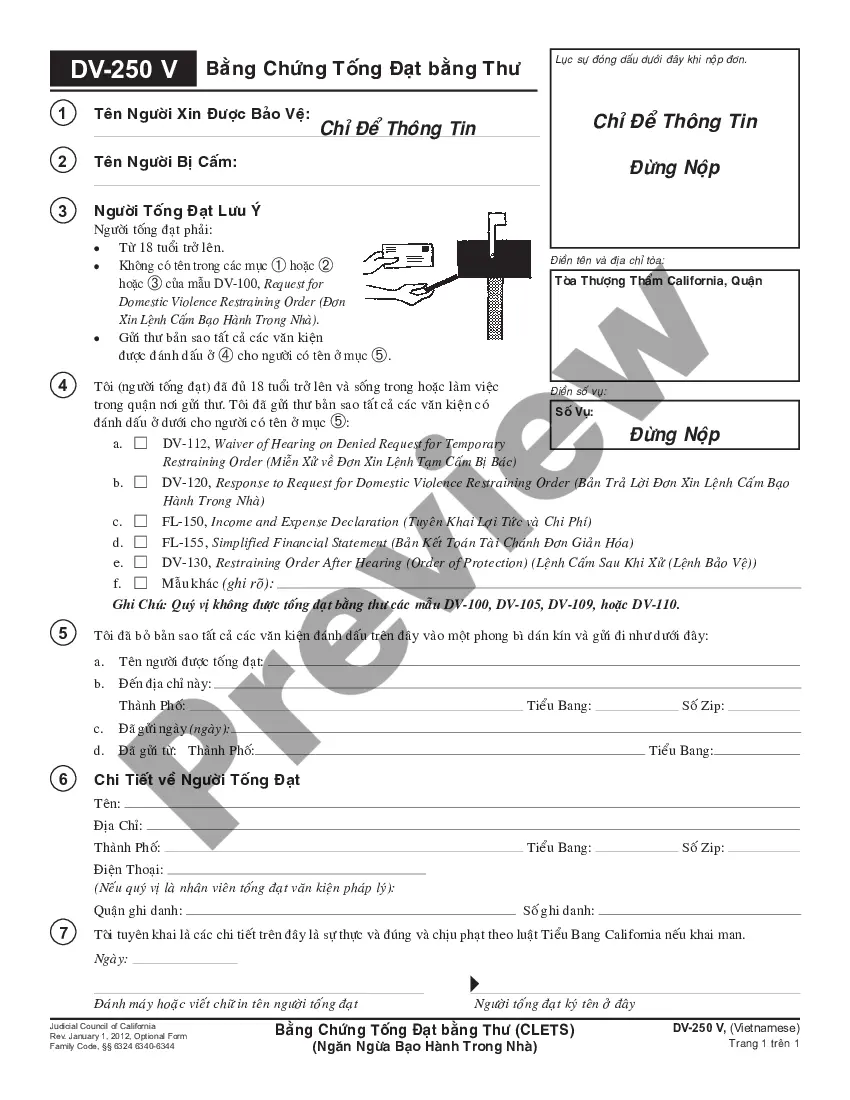
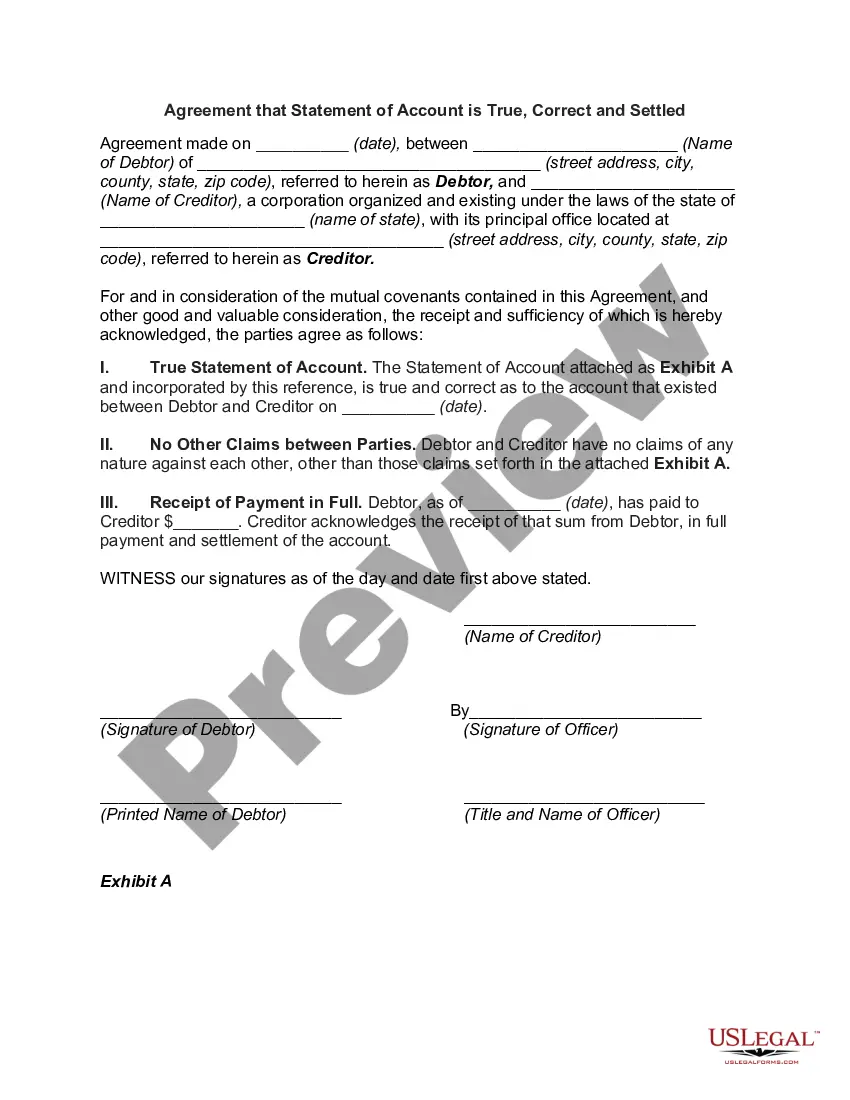
Form popularity
FAQ
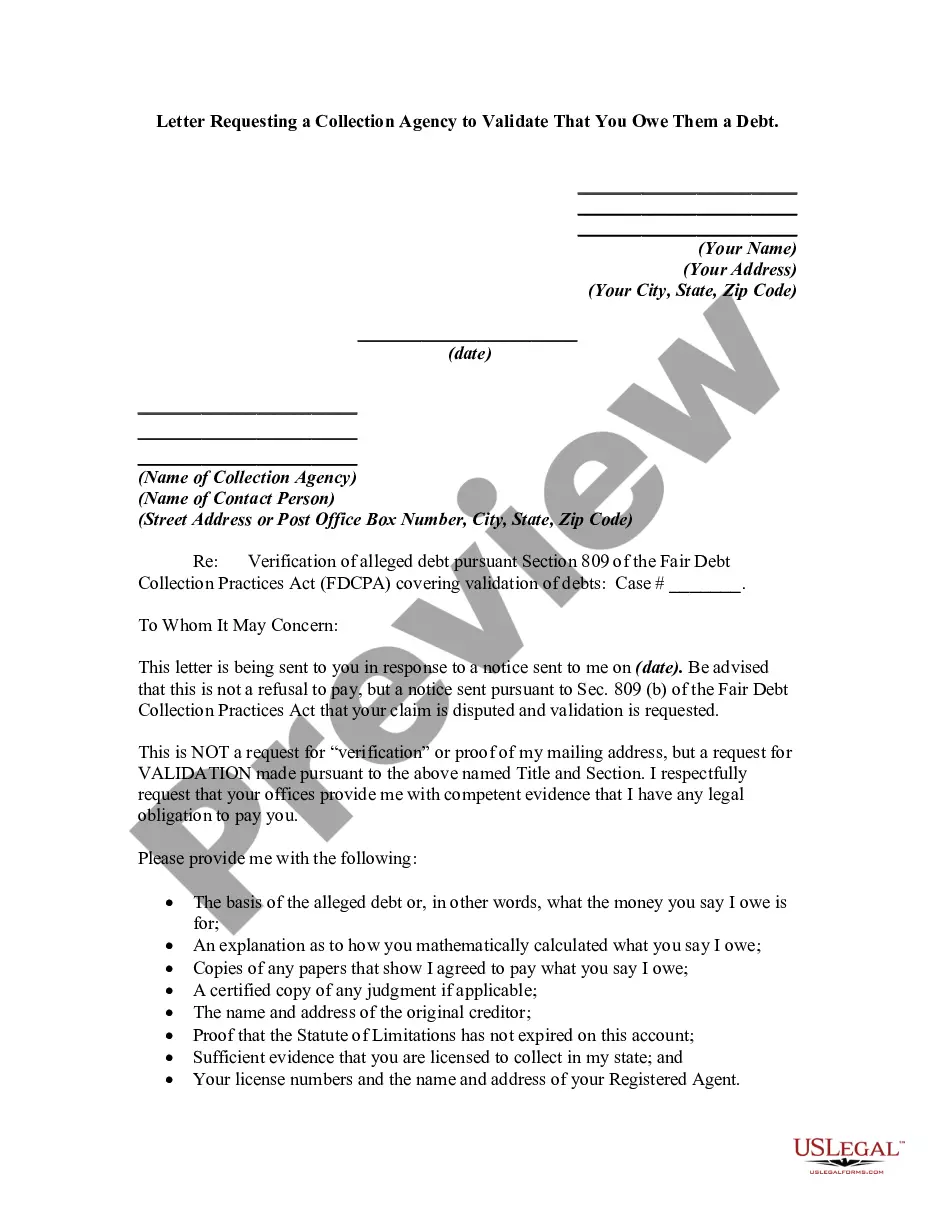
Your full name and address. The collections agency's name and address. A request for the amount of the debt claimed to be owed. A request for the name of the original creditor. A request for the judgment information (if applicable) A request for proof of the company's license.
Debt collectors cannot harass or abuse you. They cannot swear, threaten to illegally harm you or your property, threaten you with illegal actions, or falsely threaten you with actions they do not intend to take. They also cannot make repeated calls over a short period to annoy or harass you.
This is not a good time. Please call back at 6. I don't believe I owe this debt. Can you send information on it? I prefer to pay the original creditor. Give me your address so I can send you a cease and desist letter. My employer does not allow me to take these calls at work.
Write a debt settlement letter to your creditor. Explain your current situation and how much you can pay. Also, provide them with a clear description of what you expect in return, such as removal of missed payments or the account shown as paid in full on your report.
Their name. Company name. Address. Call-back phone number. Website URL. State license number, if available as not all states license collectors.
If you pay the collection agency directly, the debt is removed from your credit report in six years from the date of payment. If you don't pay, it purges six years from the last activity date, but you may be at risk for wage garnishment.
I am responding to your contact about a debt you are attempting to collect. You contacted me by phone/mail, on date. You identified the debt as any information they gave you about the debt. Please stop all communication with me and with this address about this debt.
When a Debt Collector Calls, How Should You Answer? The phone call from a debt collector never comes at a good timebut the best response is to confront the state of these affairs head-on. You may want to hide or ignore the situation and hope it goes awaybut that can make things worse.
Never Give Them Your Personal Information. A call from a debt collection agency will include a series of questions. Never Admit That The Debt Is Yours. Even if the debt is yours, don't admit that to the debt collector. Never Provide Bank Account Information.