Florida Mortagee's Affidavit
What is this form?
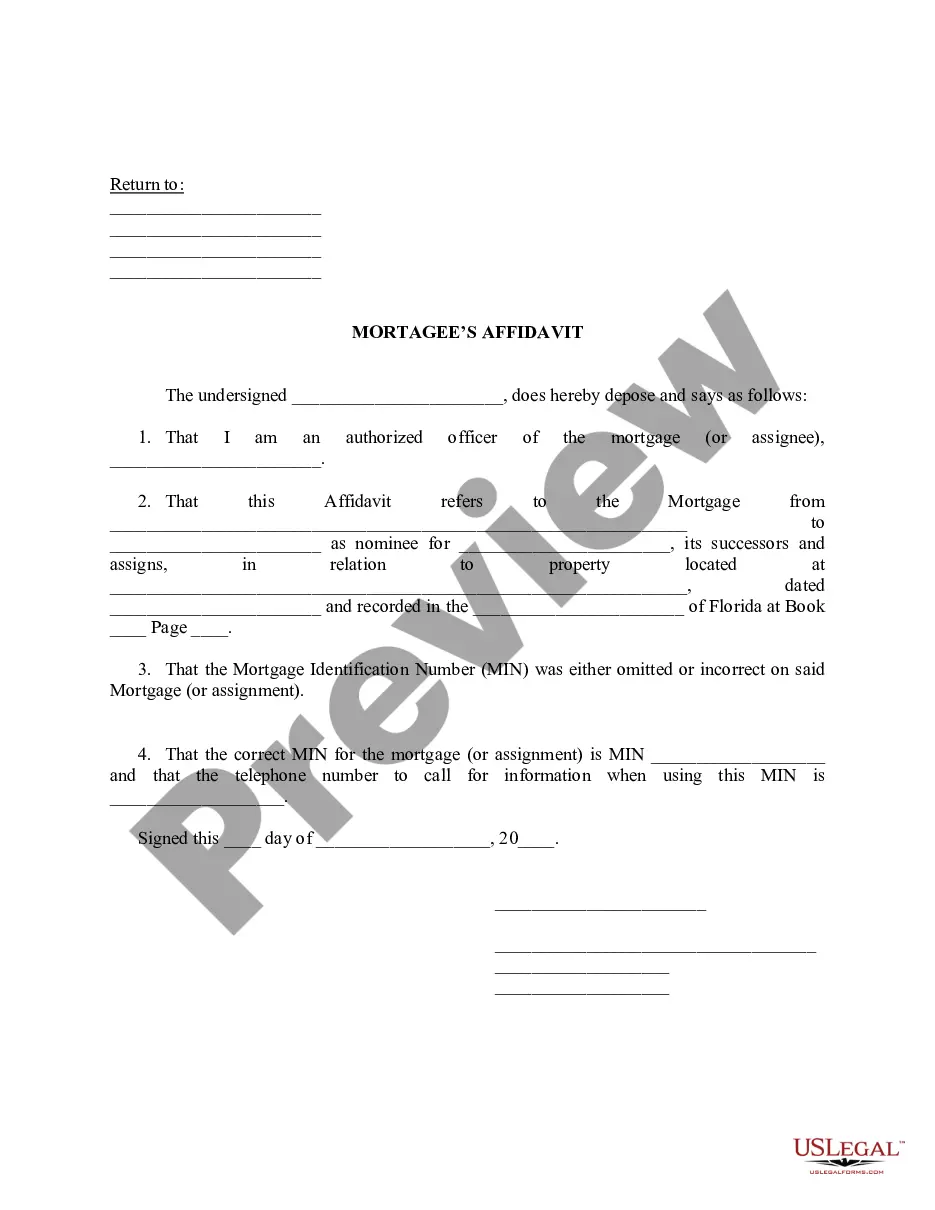
A mortgagee's affidavit is a sworn statement made by an authorized party in a real estate transaction. It attests to specific details of a mortgage, including corrections to the Mortgage Identification Number (MIN). This form is essential for ensuring accurate recordkeeping and validating the mortgage documents related to a property.
Form components explained
- Identifying information about the mortgagee and property.
- Details regarding the mortgage's date, recording information, and parties involved.
- Corrective statement regarding the Mortgage Identification Number.
- Contact information for inquiries related to the MIN.
- Signatures of the mortgagee, witnesses, and a notary public.


When to use this form
This form is used during real estate transactions when there is a need to correct or certify information related to a mortgage. It becomes essential when the Mortgage Identification Number is either missing or incorrect, as it serves to clarify and validate the mortgage agreement and its details.
Who needs this form
- Mortgage lenders and their representatives.
- Borrowers who need to certify corrections in their mortgage documents.
- Real estate agents involved in property transactions.
- Attorneys representing clients in mortgage-related matters.
How to complete this form
- Identify the authorized mortgagee and enter their name.
- Specify the mortgage involved, including the date and recording details.
- Correct or enter the Mortgage Identification Number (MIN) as necessary.
- Gather signatures from the mortgagee and two witnesses.
- Have the affidavit notarized by a qualified public notary.
Is notarization required?
Yes, this form must be notarized to be legally valid. This process provides an additional layer of verification to the statements made in the affidavit, ensuring their authenticity. US Legal Forms offers integrated online notarization services that are available 24/7, allowing you to complete the notarization through a secure video call without the need for travel.
Get your form ready online
Our built-in tools help you complete, sign, share, and store your documents in one place.
Make edits, fill in missing information, and update formatting in US Legal Forms—just like you would in MS Word.
Download a copy, print it, send it by email, or mail it via USPS—whatever works best for your next step.
Sign and collect signatures with our SignNow integration. Send to multiple recipients, set reminders, and more. Go Premium to unlock E-Sign.
If this form requires notarization, complete it online through a secure video call—no need to meet a notary in person or wait for an appointment.
We protect your documents and personal data by following strict security and privacy standards.

Make edits, fill in missing information, and update formatting in US Legal Forms—just like you would in MS Word.

Download a copy, print it, send it by email, or mail it via USPS—whatever works best for your next step.

Sign and collect signatures with our SignNow integration. Send to multiple recipients, set reminders, and more. Go Premium to unlock E-Sign.

If this form requires notarization, complete it online through a secure video call—no need to meet a notary in person or wait for an appointment.

We protect your documents and personal data by following strict security and privacy standards.
Mistakes to watch out for
- Failing to provide accurate information about the mortgage details.
- Omitting the signatures of witnesses or the notary.
- Leaving the Mortgage Identification Number (MIN) incorrect or blank.
- Not specifying the correct legal description of the property.
Why complete this form online
- Convenience of accessing the form anytime and anywhere.
- Easy to edit and customize based on specific transaction needs.
- Reliable information drafted by licensed attorneys ensures legal compliance.
- Secure storage and retrieval of completed forms.
Looking for another form?

Form popularity
FAQ
The Florida Mortagee's Affidavit is a Florida sworn statement by the lender (mortgagee) about facts related to a mortgage loan. It is used to certify loan details for court filings, title work, or other lender actions in Florida. The affidavit is typically sworn or affirmed and may be notarized. False statements can expose the signer to perjury charges.
Yes. This standard form is available as a downloadable template you can complete for Florida loan matters. It should be filled accurately and, if required, notarized or affirmed before an authorized official before use in filings or court proceedings.
A mortgage affidavit is a sworn statement by the lender (mortgagee) about facts related to a loan. In Florida, the Florida Mortagee's Affidavit would be used to certify loan details for court filings, title work, or related lender actions. Statements must be truthful and made under oath, with penalties for false statements.
After signing, the Florida Mortagee's Affidavit is sworn or affirmed before an authorized official and becomes evidence of the stated loan facts. The document may be filed with a court, used in title or lien matters, or provided to other parties as part of Florida loan proceedings. False statements can expose the signer to perjury charges.
Florida generally requires affidavits to be sworn or affirmed and, in many cases, notarized before a notary public or other authorized official. The statements should clearly identify the parties and facts, be dated, and reflect truthfulness to avoid perjury penalties.
This form is executed by the mortgagee (lender) to attest loan facts from the lender's perspective, such as lien status or payment history. A mortgagor's affidavit would be signed by the borrower and focus on the borrower's representations or obligations, not the lender's.