Florida Landlord Agreement to allow Tenant Alterations to Premises
What this document covers
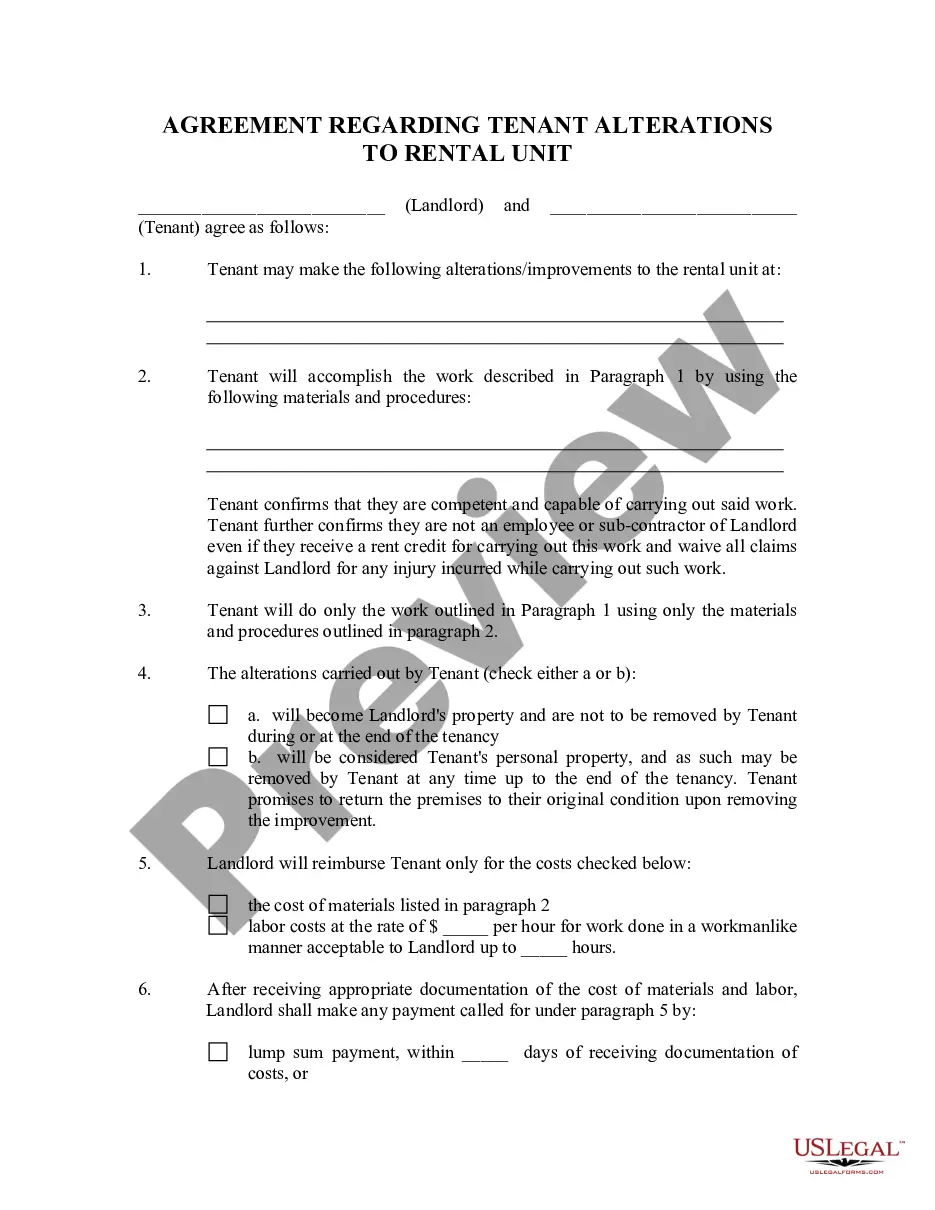
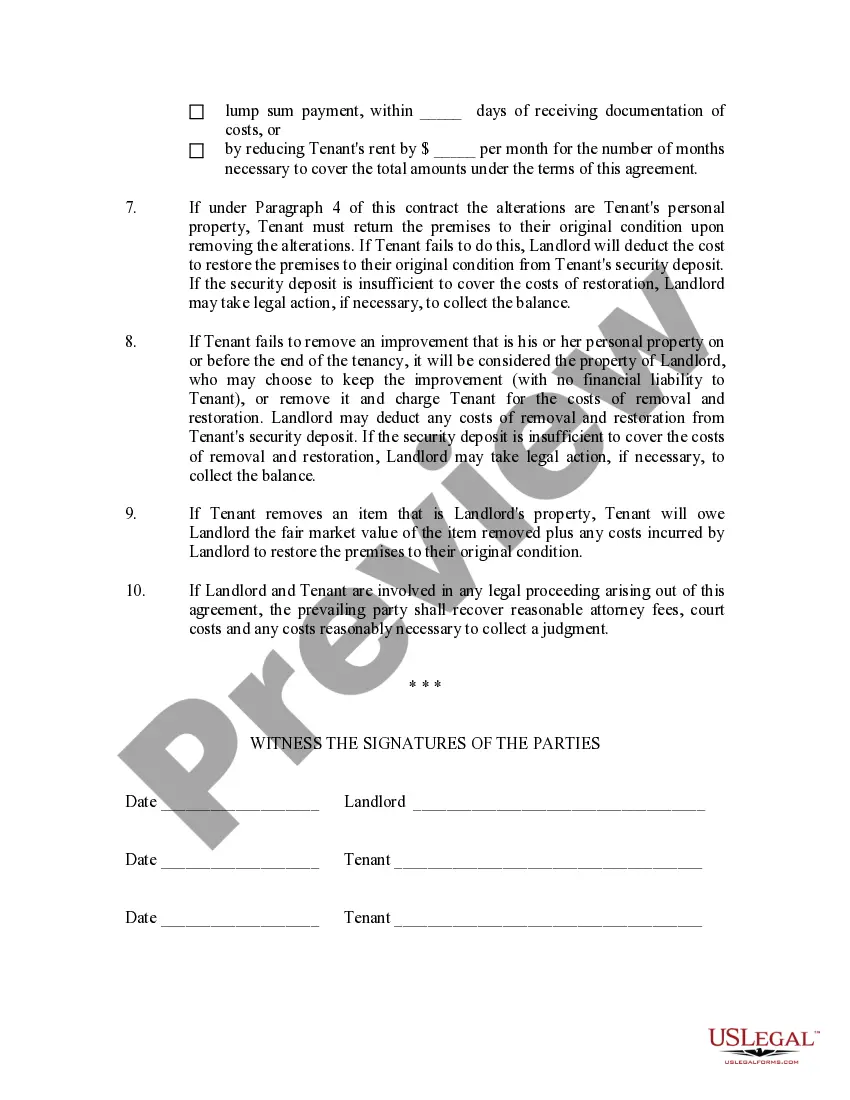
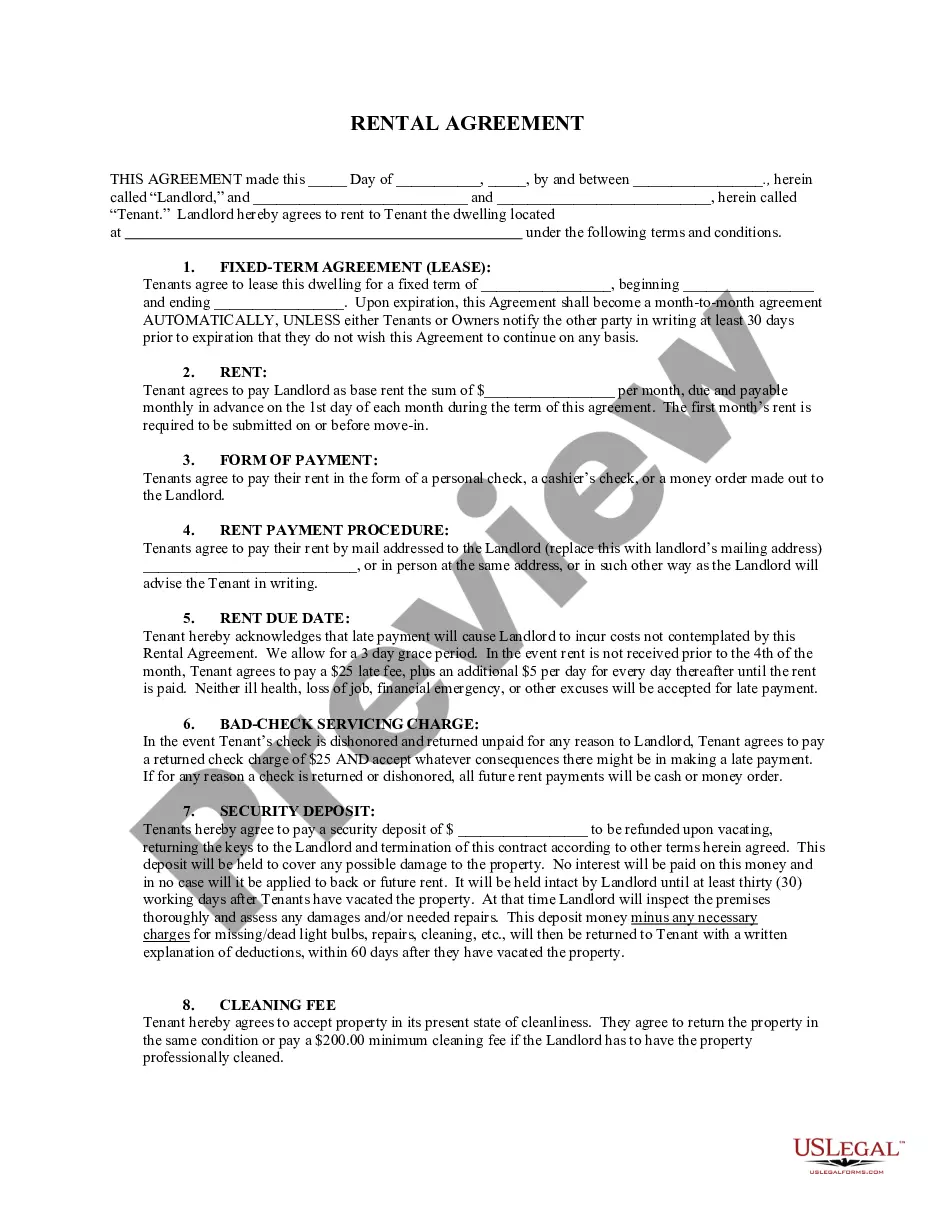
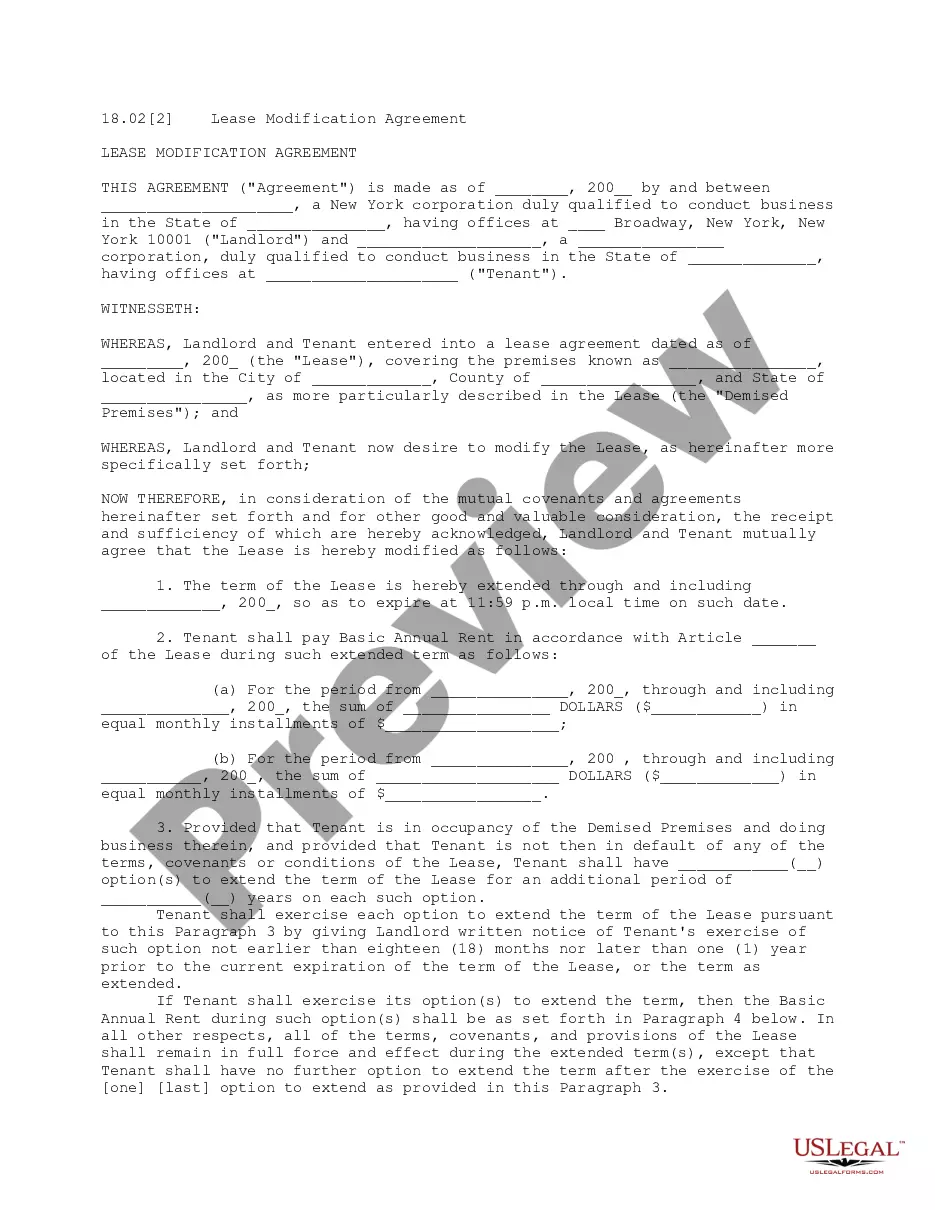
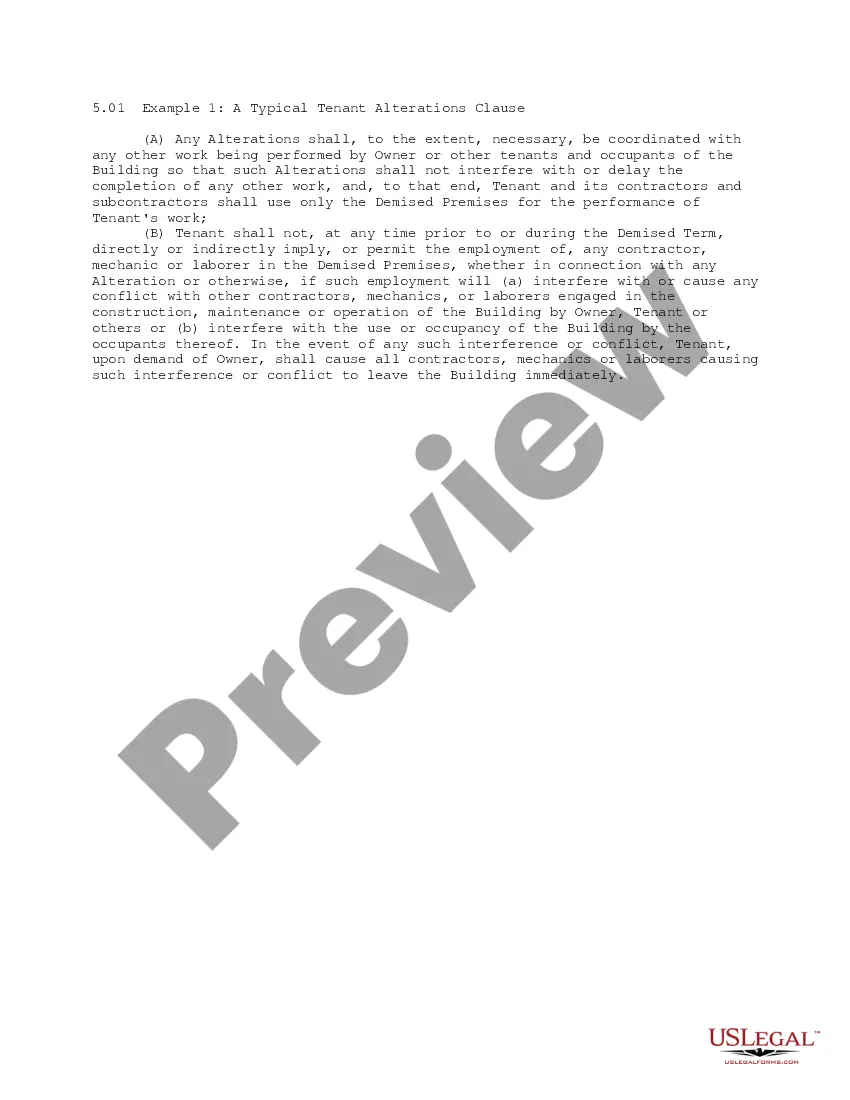
The Landlord Agreement to allow Tenant Alterations to Premises is a legal contract that outlines the terms under which a tenant may make alterations to a rented property. This form helps ensure clarity on who is responsible for costs, the ownership of the improvements made, and the conditions under which the tenant may remove these alterations. It serves to prevent misunderstandings between landlords and tenants, differentiating it from other rental agreements, which typically do not cover tenant modifications.
Key parts of this document
- Parties involved: Identification of the landlord and tenant.
- Alterations allowed: A description of the specific changes the tenant is permitted to make.
- Property ownership: Clauses addressing whether improvements are landlord or tenant property.
- Cost reimbursement: Details regarding material and labor costs, including payment timing.
- Restoration obligations: Requirements for returning the premises to its original state.
- Legal costs: Provisions for recovering expenses in the event of a legal dispute.
When to use this document
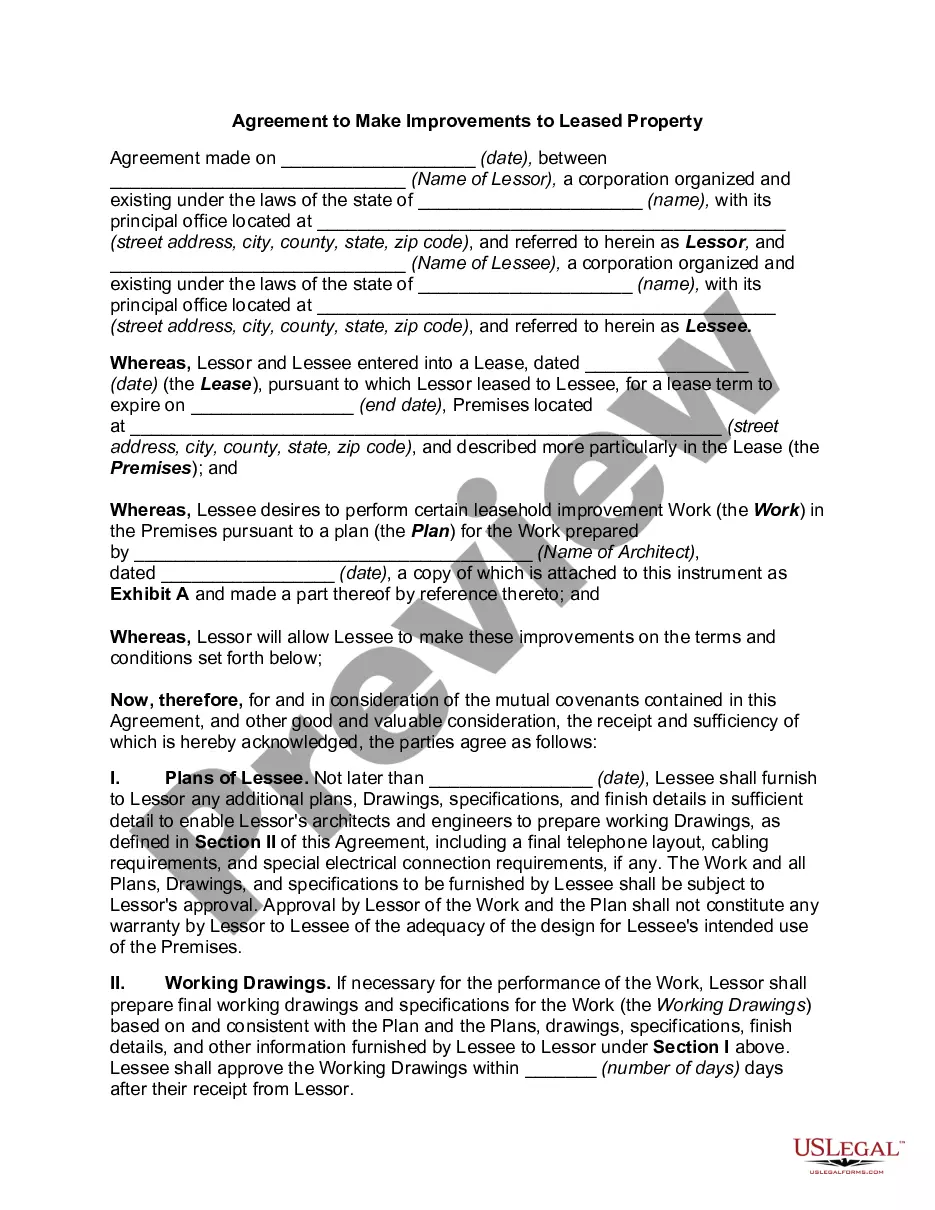
This form should be used when a tenant wishes to make changes or improvements to a rented space and needs permission from the landlord. For instance, if a tenant wants to repaint walls, install new fixtures, or make structural changes, this agreement outlines the parameters of those alterations, including financial responsibilities and property rights. It is particularly useful in situations where communication about modifications may lead to potential conflicts.
Who should use this form
This form is intended for:
- Landlords who want to formalize agreements regarding tenant modifications to their property.
- Tenants seeking permission to make alterations to their rental unit while ensuring they have clear understanding of ownership and responsibilities.
- Property managers handling rental agreements and needing to clarify alteration terms with tenants.
Completing this form step by step
- Identify the parties: Fill in the names of the landlord and tenant.
- Specify the rental unit: Indicate the address of the property where alterations will take place.
- List allowed alterations: Describe the specific changes the tenant is allowed to make.
- Define materials and labor: Outline the materials to be used and any labor costs involved.
- Agree on payment terms: Indicate how the landlord will reimburse the tenant for costs.
- Sign and date: Ensure all parties sign and date the agreement to make it legally binding.
Notarization guidance
Notarization is not commonly needed for this form. However, certain documents or local rules may make it necessary. Our notarization service, powered by Notarize, allows you to finalize it securely online anytime, day or night.
Get your form ready online
Our built-in tools help you complete, sign, share, and store your documents in one place.
Make edits, fill in missing information, and update formatting in US Legal Forms—just like you would in MS Word.
Download a copy, print it, send it by email, or mail it via USPS—whatever works best for your next step.
Sign and collect signatures with our SignNow integration. Send to multiple recipients, set reminders, and more. Go Premium to unlock E-Sign.
If this form requires notarization, complete it online through a secure video call—no need to meet a notary in person or wait for an appointment.
We protect your documents and personal data by following strict security and privacy standards.

Make edits, fill in missing information, and update formatting in US Legal Forms—just like you would in MS Word.

Download a copy, print it, send it by email, or mail it via USPS—whatever works best for your next step.

Sign and collect signatures with our SignNow integration. Send to multiple recipients, set reminders, and more. Go Premium to unlock E-Sign.

If this form requires notarization, complete it online through a secure video call—no need to meet a notary in person or wait for an appointment.

We protect your documents and personal data by following strict security and privacy standards.
Avoid these common issues
- Failing to specify which alterations are permitted.
- Not clarifying the ownership of the improvements made.
- Neglecting to outline payment and reimbursement processes.
- Overlooking the requirement to restore the premises to its original condition.
Advantages of online completion
- Convenience: Easily download and complete the form at your pace.
- Editability: Customize sections to fit your specific rental situation.
- Expert quality: Forms are drafted by licensed attorneys to ensure legal accuracy.
Legal use & context
- The agreement helps enforce the terms of tenant alterations legally, providing a documented basis for any disputes.
- It is essential for landlords to maintain control over their property while allowing tenants to personalize their living space.
Quick recap
- This form formalizes the agreement for tenant alterations to rental premises.
- Clear terms regarding property ownership and responsibilities benefit both parties.
- Proper completion of the form avoids potential legal disputes in the future.
Looking for another form?
Form popularity
FAQ
Statute 83.55 in Florida addresses the responsibilities of landlords related to repair and maintenance obligations. This statute reinforces that landlords must keep premises in a habitable condition, which is crucial when tenants seek to make alterations. Having a comprehensive Florida Landlord Agreement to allow Tenant Alterations to Premises can clarify these responsibilities and prevent potential disputes.
Tenants can make reasonable alterations or improvements to a rental property, provided they have the landlord's consent as per the rental agreement. Common examples include painting walls or installing shelves, as long as these changes do not conflict with existing laws or agreements. A clear Florida Landlord Agreement to allow Tenant Alterations to Premises can help define what constitutes acceptable changes.
In Florida, it is illegal for landlords to retaliate against tenants for exercising their rights or to enter a rental property without proper notice. Furthermore, landlords cannot ignore maintenance responsibilities, especially when tenants make alterations that improve the property. Awareness of these regulations can be essential when drafting a Florida Landlord Agreement to allow Tenant Alterations to Premises.
Florida statute 83.63 pertains to the conditions under which a tenant can seek relief or remedies in disputes relating to rental agreements. This statute emphasizes the importance of clear communication between landlords and tenants, particularly on property alterations. A well-structured Florida Landlord Agreement to allow Tenant Alterations to Premises can prevent misunderstandings and disputes.
Statute 83.03 in Florida outlines definitions related to landlord-tenant relationships, including what constitutes rental agreements and lease terms. This statute is vital for those drafting or reviewing rental agreements, as it clarifies key terms used throughout the laws. Therefore, having this knowledge is beneficial when creating a Florida Landlord Agreement to allow Tenant Alterations to Premises.
Chapter 83.53 in Florida statutes specifically focuses on rental agreements and the guidelines for modifications to leased premises. This chapter provides clarity for both parties on how alterations should be handled and what constitutes reasonable changes. It serves as a critical legal reference for anyone drafting a Florida Landlord Agreement to allow Tenant Alterations to Premises.
Section 83.53 of the Florida statutes addresses the rights and responsibilities of landlords and tenants regarding property alterations. This section outlines when a tenant must seek permission from the landlord before making changes. Understanding this statute is essential for a Florida Landlord Agreement to allow Tenant Alterations to Premises, as it sets the framework for what is permissible.
Yes, you can change things in a rental property, but it typically requires the landlord's permission. Landlords often set specific terms regarding what alterations tenants can make through the lease agreement. A well-crafted Florida Landlord Agreement to allow Tenant Alterations to Premises outlines these permissions, ensuring a smooth process for tenants to customize their living space while respecting the property owner’s rights.
An alteration to a rental property refers to any modification that changes the property's structure, layout, or design. This can include painting walls, installing new fixtures, or making significant renovations. Understanding what constitutes an alteration is crucial for both landlords and tenants, which is why a Florida Landlord Agreement to allow Tenant Alterations to Premises is vital. It provides clear guidelines on acceptable changes and helps prevent disputes.
The alterations and improvements clause is a component of a lease agreement that details the conditions under which tenants can modify the rental property. This clause is essential for safeguarding the landlord's interests while permitting tenants the flexibility to make necessary changes. A comprehensive Florida Landlord Agreement to allow Tenant Alterations to Premises typically includes this clause to clarify the process for obtaining consent and ensuring that modifications enhance the property's value.