Florida Three day eviction notice
What is this form?
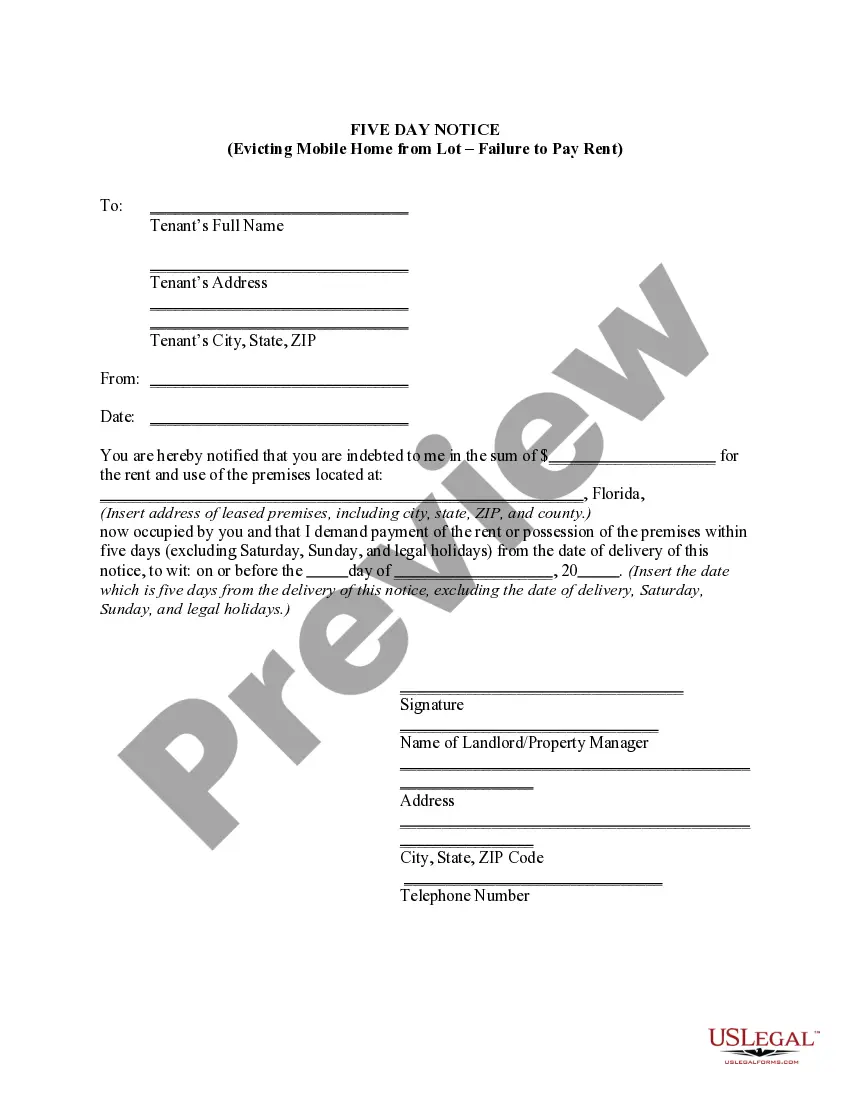
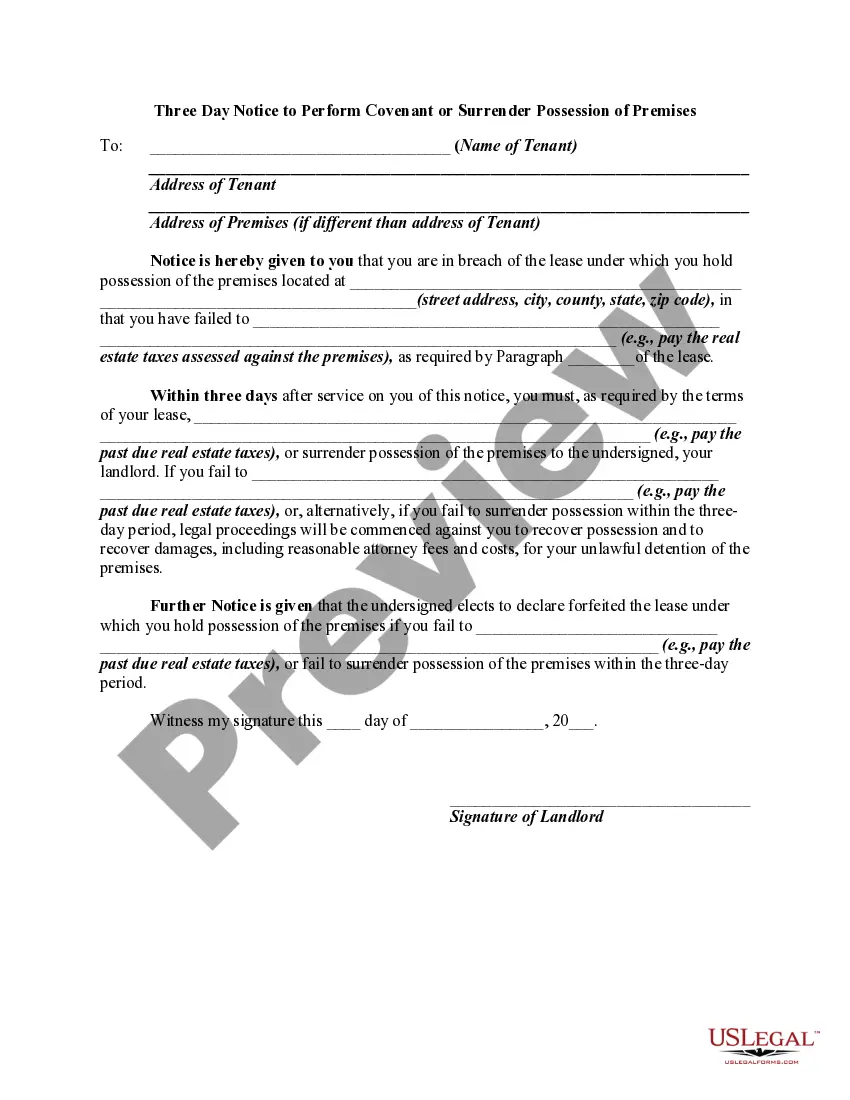
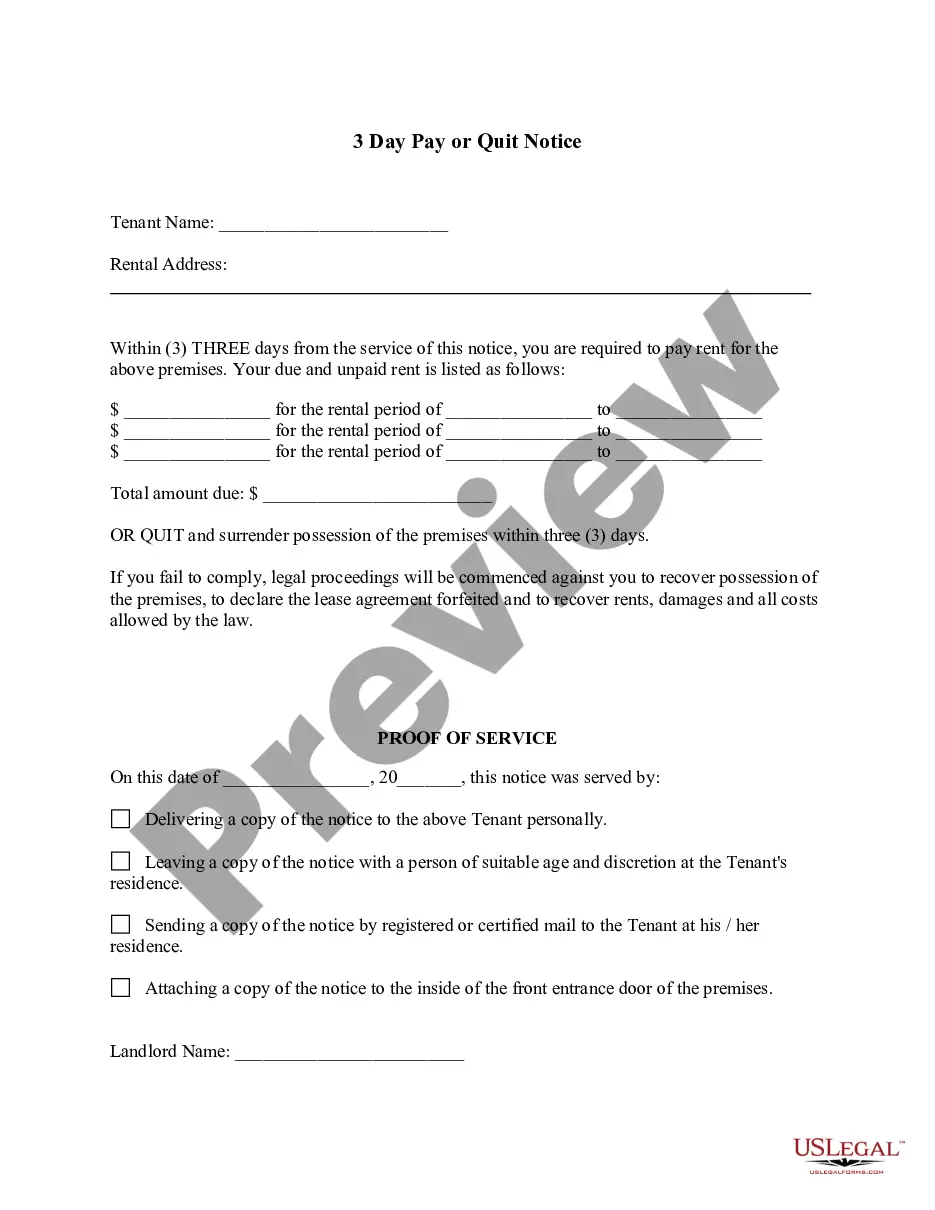
A Three Day Eviction Notice is a legal document used by landlords in Florida when a tenant fails to pay rent or violates lease terms. This notice informs the tenant that they have three days to either pay the outstanding rent or vacate the property. It differs from other eviction notices because it specifically addresses non-payment of rent or violations that require immediate action, focusing on urgency in resolving the issue.
Main sections of this form
- Tenant's full name and address
- Landlord's name and contact information
- The amount owed in rent
- Address of the leased premises
- Deadline for payment or possession
- Signature of the landlord or property manager

When to use this document
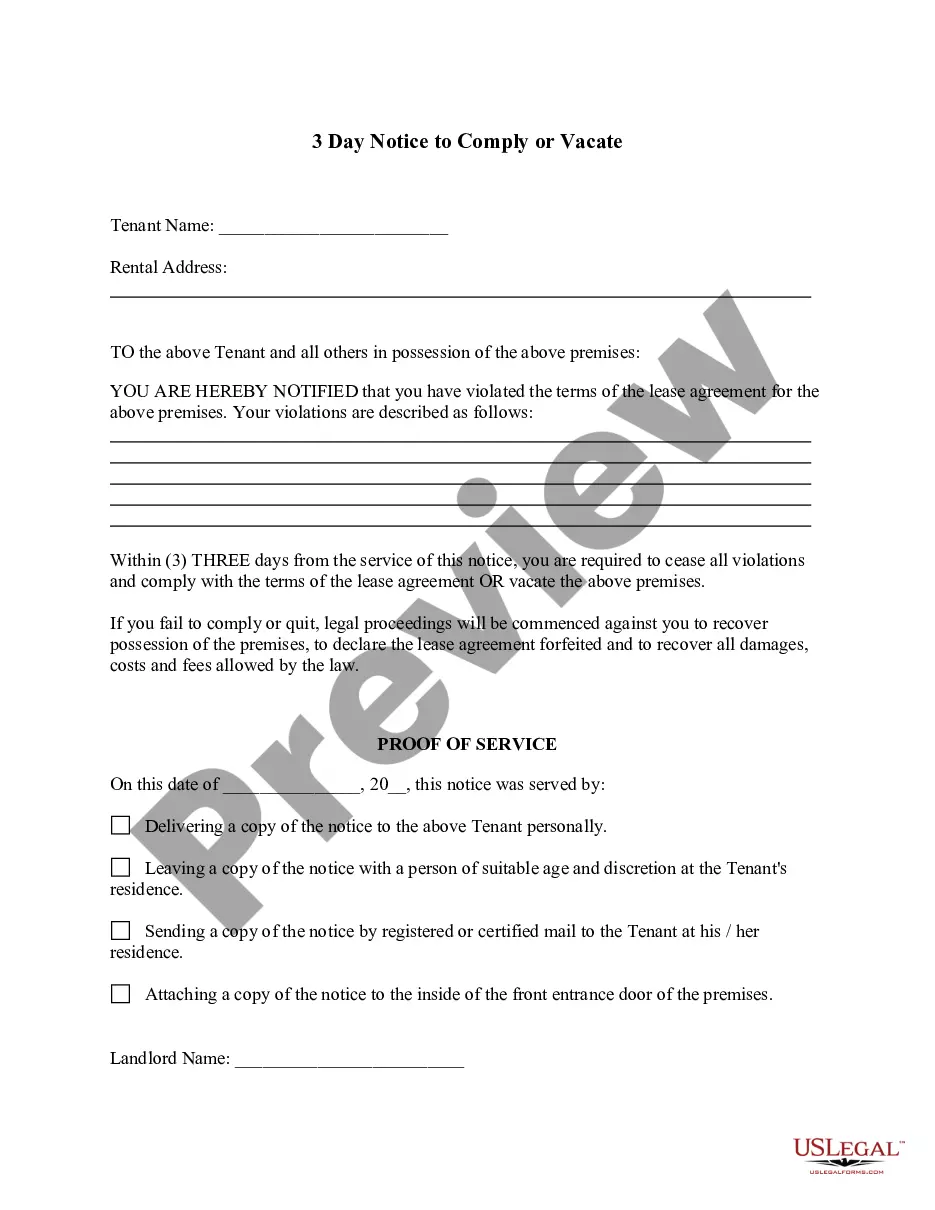
This form is essential when a landlord intends to initiate eviction proceedings against a tenant who has not paid rent. It can also be used in cases where a tenant violates lease terms and immediate action is required. The landlord must deliver this notice to inform the tenant of their obligations and to initiate the eviction process if necessary.
Intended users of this form
- Landlords seeking to collect unpaid rent
- Property managers managing rental agreements
- Investors owning rental properties
- Anyone leasing property in Florida
How to complete this form
- Identify the tenant by entering their full name and address.
- Provide the landlord's name and contact information.
- Specify the amount owed for rent clearly.
- Fill in the address of the leased property.
- Insert the deadline date for payment or possession.
- Sign and date the notice before delivering it to the tenant.
Does this document require notarization?
This form does not typically require notarization unless specified by local law. However, it is essential to follow any additional requirements that may apply based on local regulations or lease agreements.
Get your form ready online
Our built-in tools help you complete, sign, share, and store your documents in one place.
Make edits, fill in missing information, and update formatting in US Legal Forms—just like you would in MS Word.
Download a copy, print it, send it by email, or mail it via USPS—whatever works best for your next step.
Sign and collect signatures with our SignNow integration. Send to multiple recipients, set reminders, and more. Go Premium to unlock E-Sign.
If this form requires notarization, complete it online through a secure video call—no need to meet a notary in person or wait for an appointment.
We protect your documents and personal data by following strict security and privacy standards.

Make edits, fill in missing information, and update formatting in US Legal Forms—just like you would in MS Word.

Download a copy, print it, send it by email, or mail it via USPS—whatever works best for your next step.

Sign and collect signatures with our SignNow integration. Send to multiple recipients, set reminders, and more. Go Premium to unlock E-Sign.

If this form requires notarization, complete it online through a secure video call—no need to meet a notary in person or wait for an appointment.

We protect your documents and personal data by following strict security and privacy standards.
Common mistakes to avoid
- Forgetting to specify the correct amount of rent owed.
- Not including the complete address of the rental property.
- Failing to calculate the deadline for payment accurately.
- Not signing the notice, which can invalidate it.
Why use this form online
- Convenience of downloading and printing the form immediately.
- Editable fields allow customization according to specific situations.
- Access to professionally drafted forms ensures legal reliability.
Legal use & context
- This form is legally enforceable when properly completed and delivered.
- Failure to comply with the notice may lead to eviction proceedings.
- Ensure compliance with all local tenant laws during the eviction process.
Looking for another form?
Form popularity
FAQ
The speed of an eviction in Florida can vary, but it typically starts with a Florida three day eviction notice. If you do not respond or vacate within that timeframe, the landlord must file with the court. The entire process can take several weeks, depending on court schedules and tenant responses. Staying informed about your rights and the eviction timeline can help you navigate this challenging situation.
No, a landlord cannot evict you without a court order in Florida. Even after serving a Florida three day eviction notice, legal proceedings must be followed. A court order ensures that the eviction process respects tenant rights and is conducted fairly. If you find yourself facing eviction, understanding your rights is crucial.
You can obtain a Florida three day eviction notice through various means, including legal websites and forms services like US Legal Forms. These platforms provide templates that meet Florida's legal standards, making the process straightforward. Simply fill out the necessary details and follow the specified delivery methods. It's crucial to ensure that the notice complies with Florida law to avoid complications.
In Florida, a Florida three day eviction notice must typically be delivered in person or through certified mail. Emailing this notice does not usually meet legal requirements. Proper delivery methods are crucial for the eviction process to be valid. If you have questions about how to serve an eviction notice legally, consulting with a legal professional may be beneficial.
In Florida, a landlord cannot legally evict a tenant without going through the court process. This means that even if a landlord serves a Florida three day eviction notice, they must still file for an eviction in court if the tenant does not vacate. This legal process helps protect tenant rights and ensures due process. It's important for tenants to respond promptly to any eviction notices.
The new eviction laws in Florida include changes that impact how landlords handle notices and evictions. The laws require landlords to follow specific procedures when serving a Florida three day eviction notice. Tenants now have additional rights related to these notices, helping to ensure fair treatment. Staying updated on these laws is essential for both landlords and tenants.
An illegal eviction in Florida happens when a landlord removes a tenant without following the legal process. This includes actions like changing locks, shutting off utilities, or physically removing a tenant's belongings. It's critical to understand that tenants have rights. If you receive a Florida three day eviction notice, you should seek legal guidance to understand your options.
A defective Florida three day eviction notice occurs when it does not meet the legal requirements. This could include issues such as missing signatures, inaccurate amounts owed, or improper service methods. Identifying and addressing these defects promptly is essential, as they can undermine a landlord's case in court.
When counting a Florida three day eviction notice, the day the tenant receives the notice is considered Day One. Exclude weekends and legal holidays when counting these days. It's essential to ensure the notice is served properly, as miscounting can lead to delays and complications in the eviction process.
Florida Statutes Section 83.56 outlines the statute for a three day eviction notice. This law permits landlords to issue a notice for non-payment of rent, demanding payment within three days. Understanding this statute is vital for both landlords and tenants to ensure compliance and take appropriate action in eviction proceedings.