Florida Owner's Sworn Statement Concerning Direct Contracts Form - Construction - Mechanic Liens - Individual
About this form
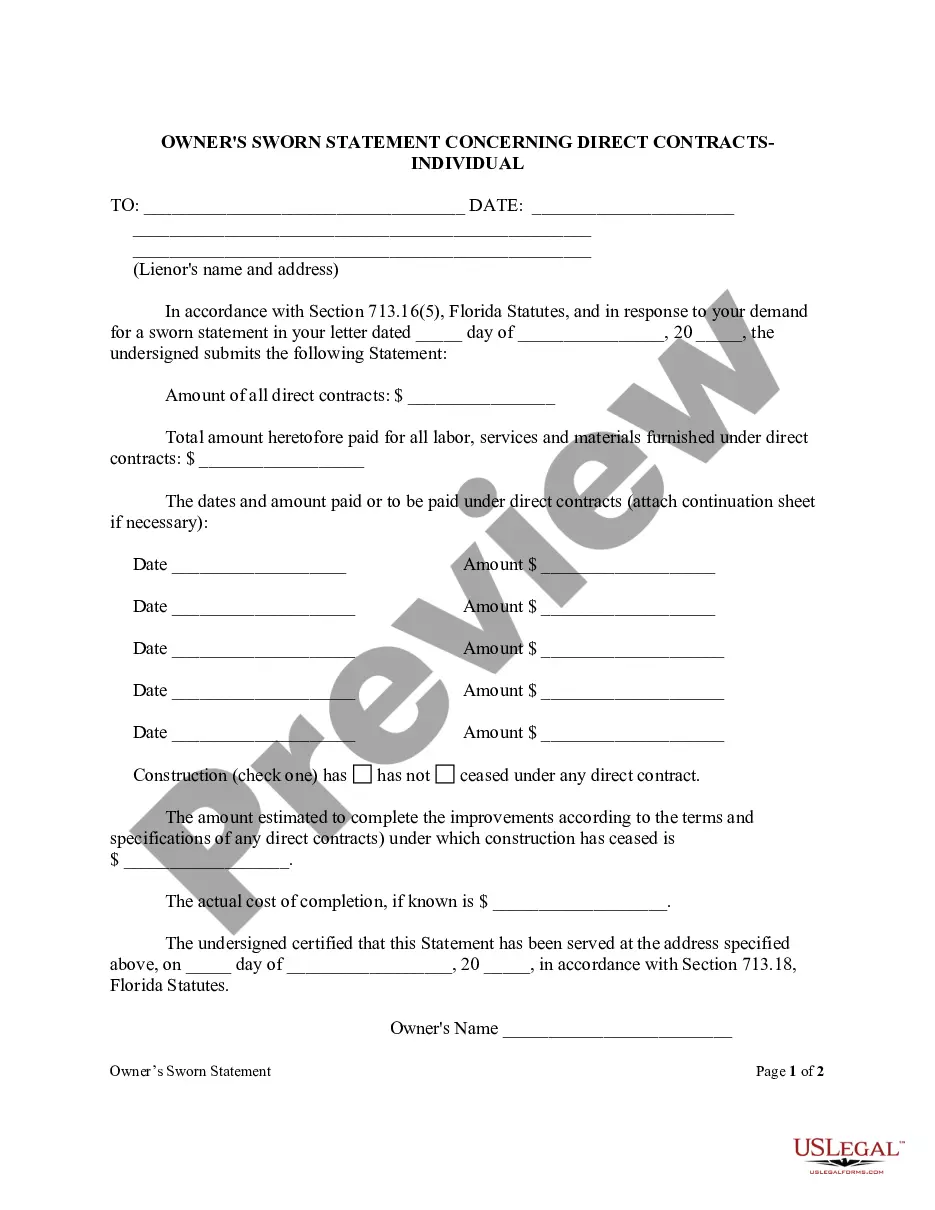
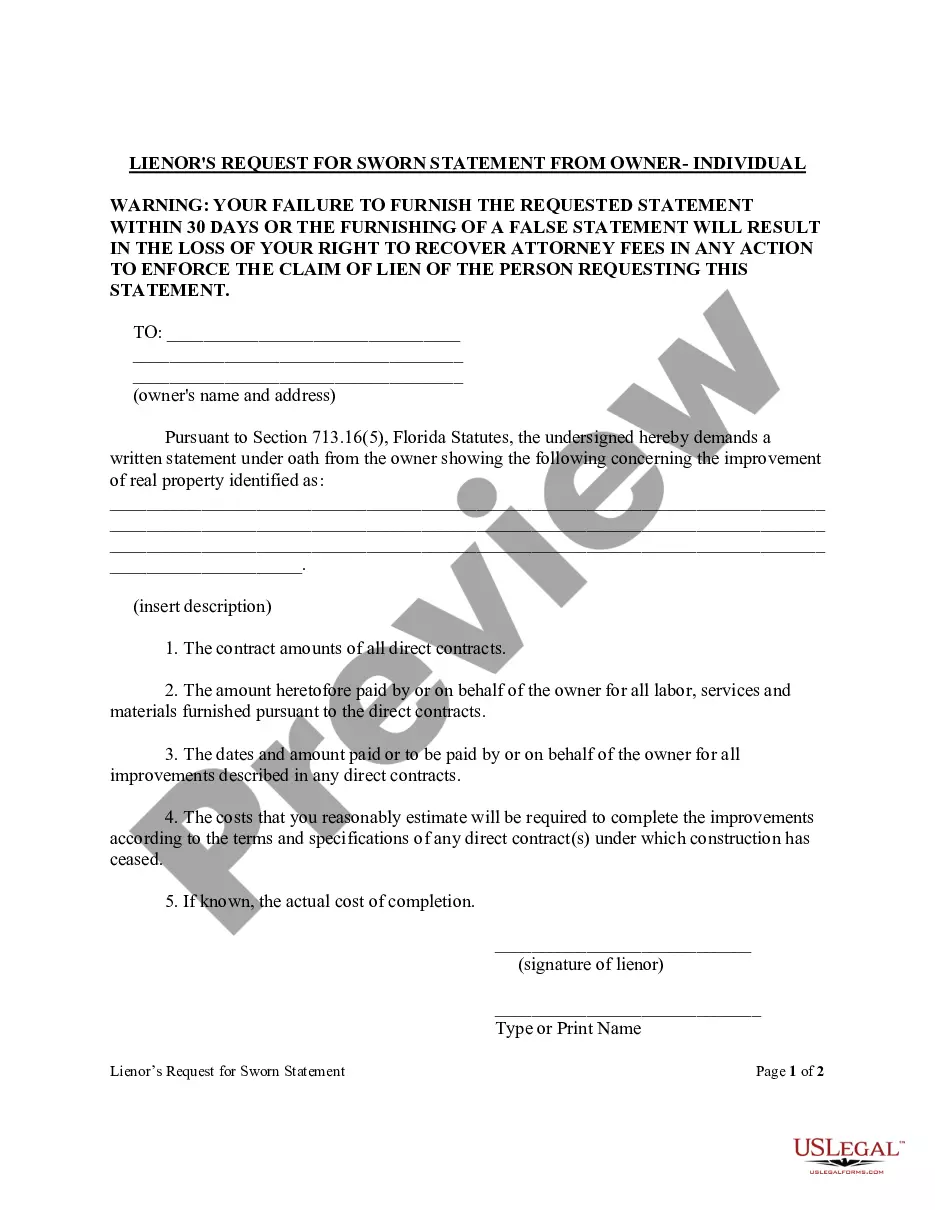
The Owner's Sworn Statement Concerning Direct Contracts Form is a legal document used by individual owners to respond to requests from lienors for a detailed account of all direct contracts related to construction work. This form serves to provide a sworn statement regarding payments made for labor, materials, and services in accordance with these contracts. It is distinct from other construction-related documents as it specifically addresses payment verification and contractor obligations, ensuring that both owners and lienors have a clear understanding of payment histories and outstanding amounts.
What’s included in this form
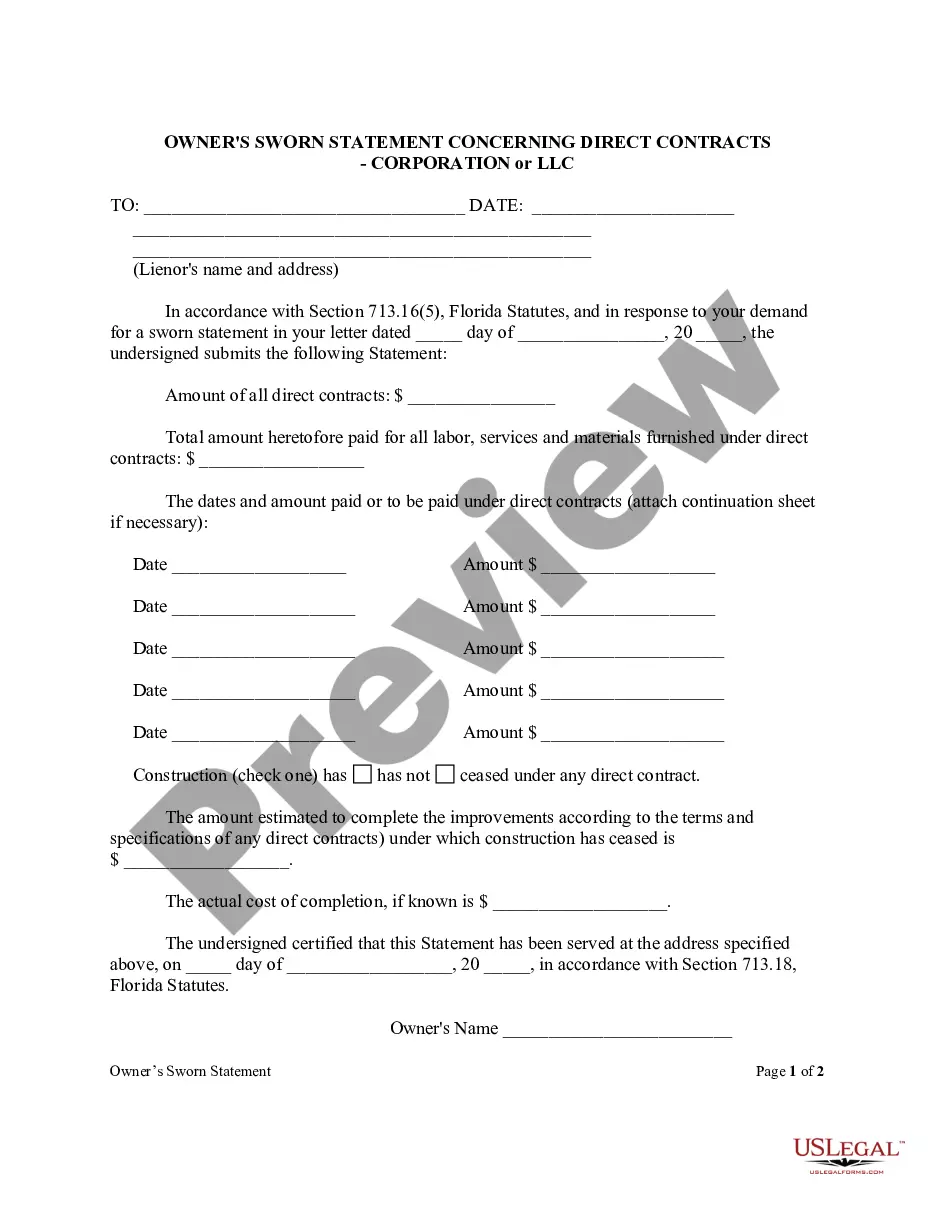
- Owner's details including name and address
- Details of the lienor requesting the statement
- Total amount of all direct contracts
- Breakdown of all payments made for labor, services, and materials
- Verification of whether construction has ceased
- Estimated costs for completing any paused construction
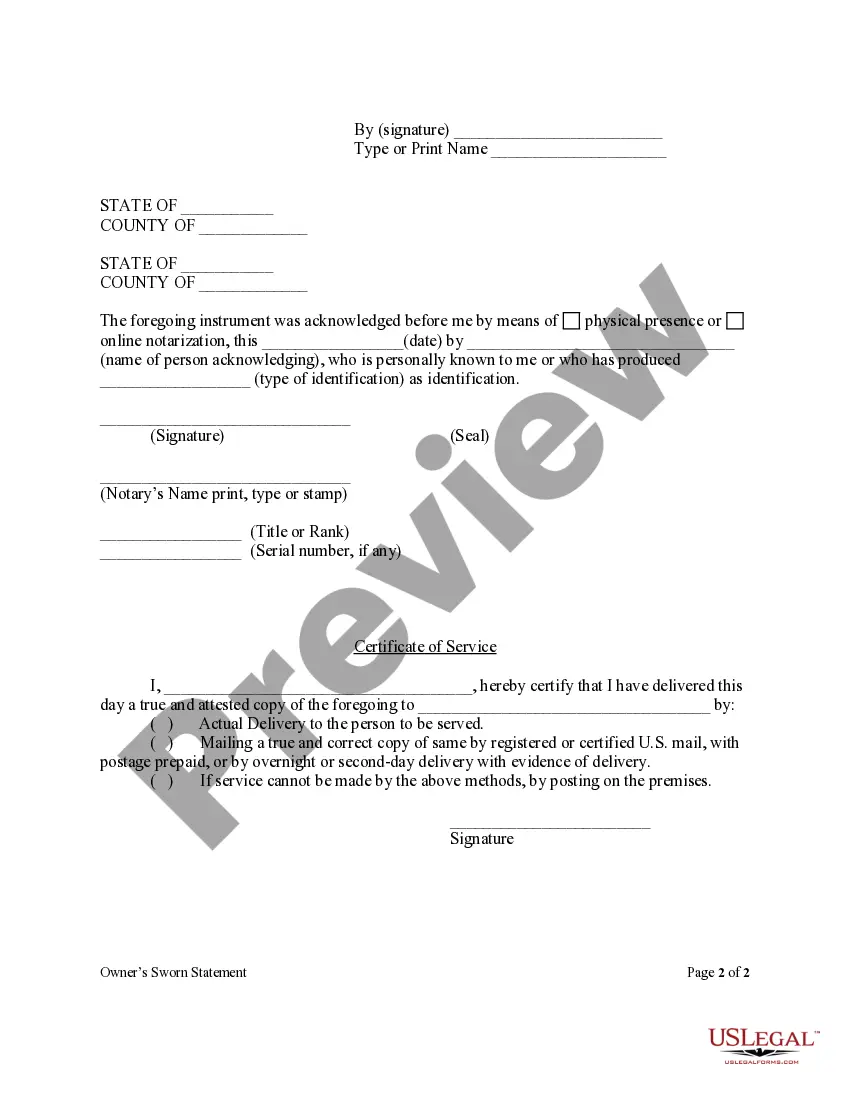
- Certification of service to the lienor
- Notary public acknowledgment
When this form is needed
This form should be used when an individual owner receives a request from a lienor for a sworn statement of payments made under direct contracts. It is crucial when construction is in process or has been paused, particularly if there are concerns regarding outstanding payments or lien rights. This form helps clarify the amount of money paid and any future payment obligations, ensuring transparency and legal compliance in the context of mechanic liens.
Who this form is for
- Individual property owners engaging in construction projects
- Lienors seeking verification of payments associated with direct contracts
- Contractors and subcontractors wanting an official record of payments
- Legal representatives handling construction disputes
How to complete this form
- Enter the name and address of the lienor requesting the statement.
- Provide the total amount of all direct contracts related to your project.
- List each payment made for labor, materials, and services, along with the corresponding dates.
- Indicate whether construction has ceased and provide estimated costs to complete any outstanding work.
- Sign and date the form before a notary public to validate the statement.
- Certify that the completed form has been delivered to the lienor as specified.
Notarization requirements for this form
Notarization is required for this form to take effect. Our online notarization service, powered by Notarize, lets you verify and sign documents remotely through an encrypted video session, available 24/7.
Get your form ready online
Our built-in tools help you complete, sign, share, and store your documents in one place.
Make edits, fill in missing information, and update formatting in US Legal Forms—just like you would in MS Word.
Download a copy, print it, send it by email, or mail it via USPS—whatever works best for your next step.
Sign and collect signatures with our SignNow integration. Send to multiple recipients, set reminders, and more. Go Premium to unlock E-Sign.
If this form requires notarization, complete it online through a secure video call—no need to meet a notary in person or wait for an appointment.
We protect your documents and personal data by following strict security and privacy standards.

Make edits, fill in missing information, and update formatting in US Legal Forms—just like you would in MS Word.

Download a copy, print it, send it by email, or mail it via USPS—whatever works best for your next step.

Sign and collect signatures with our SignNow integration. Send to multiple recipients, set reminders, and more. Go Premium to unlock E-Sign.

If this form requires notarization, complete it online through a secure video call—no need to meet a notary in person or wait for an appointment.

We protect your documents and personal data by following strict security and privacy standards.
Avoid these common issues
- Failing to provide accurate payment amounts or dates.
- Neglecting to notarize the document, which can impact its validity.
- Not including all required information about direct contracts.
- Forgetting to certify the service delivery to the lienor.
Why use this form online
- Easy downloadable access ensures you have the latest version of the form.
- Replace any complex legal jargon with user-friendly language.
- Convenient editing allows for tailored completion specific to your project.
- Time-efficient alternative to hiring a lawyer for basic documentation needs.
Looking for another form?

Form popularity
FAQ
I declare that, to the best of my knowledge and belief, the information herein is true and complete. I understand this statement is made for use as evidence in court and is subject to penalty for perjury.
Sworn statements are very similar to another class of court documents called affidavits. Affidavits contain similar statements and claims, but have been signed, witnessed, and certified by a public official.However, most courts would prefer to enter in an affidavit rather than a sworn statement.
To write a sworn statement, prepare a numbered list of each fact to which you want to swear, and then sign the bottom below a sentence that indicates the statement is sworn and made under penalty of perjury.
A sworn statement is a written statement of fact related to a legal proceeding. It is signed by the declarant to state that all the content is true, and that they acknowledge that the penalty of perjury may follow if they do not tell the truth.
Title the affidavit. First, you'll need to title your affidavit. Craft a statement of identity. The very next section of your affidavit is what's known as a statement of identity. Write a statement of truth. State the facts. Reiterate your statement of truth. Sign and notarize.
A sworn statement is signed and notarized after the signer takes an oath that the information provided is true to the best of his or her knowledge. In the end, it is a legal document, and there are consequences for falsifying information.
A sworn statement about what? That's really the question. It's illegal to force someone to make a statement against themselves. It's a violation of their Article 31 rights under the UCMJ.
A sworn statement is a written statement of fact related to a legal proceeding. It is signed by the declarant to state that all the content is true, and that they acknowledge that the penalty of perjury may follow if they do not tell the truth.