Florida Quitclaim Deed - Trust to Trust
Overview of this form
A Quitclaim Deed - Trust to Trust is a legal document used to transfer real property from one trust to another. Unlike other types of deeds, a quitclaim deed does not guarantee that the property title is clear; it simply conveys the grantor's interest in the property to the grantee trust. This form is specifically designed for situations where the transfer of property occurs between trusts, with an emphasis on complying with applicable state laws.
Key parts of this document
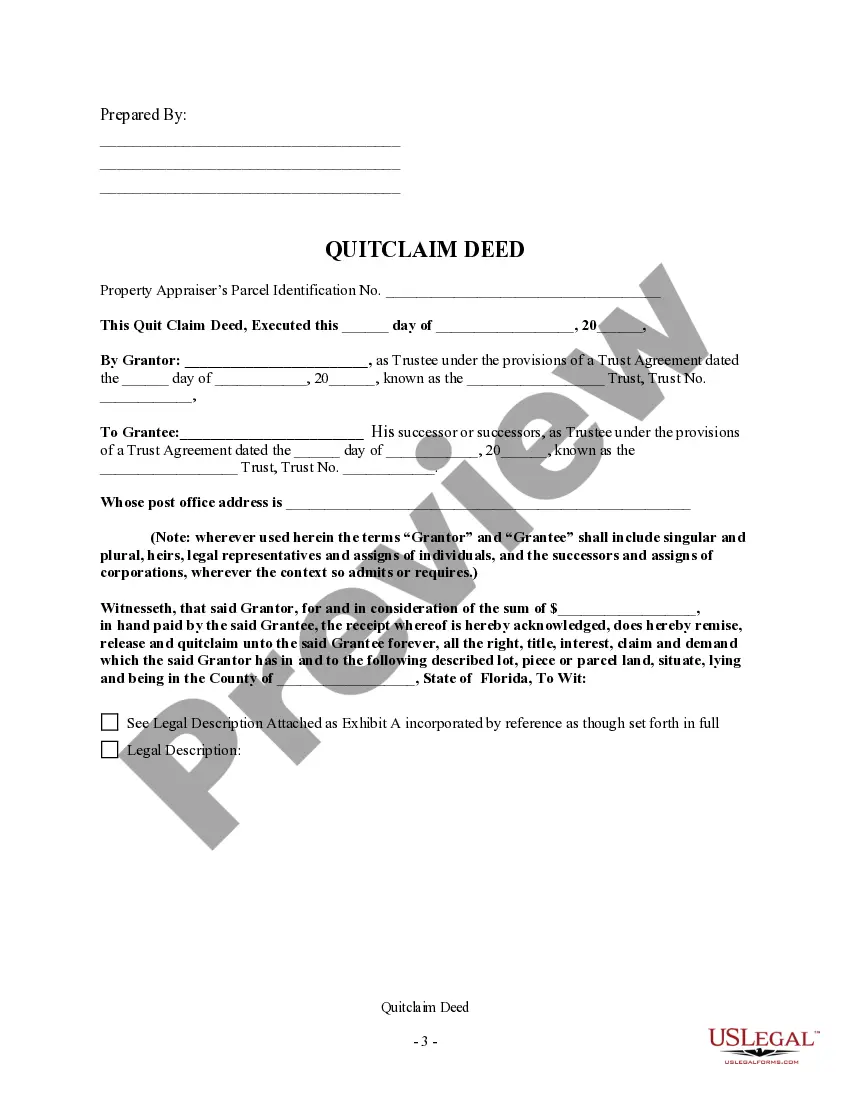
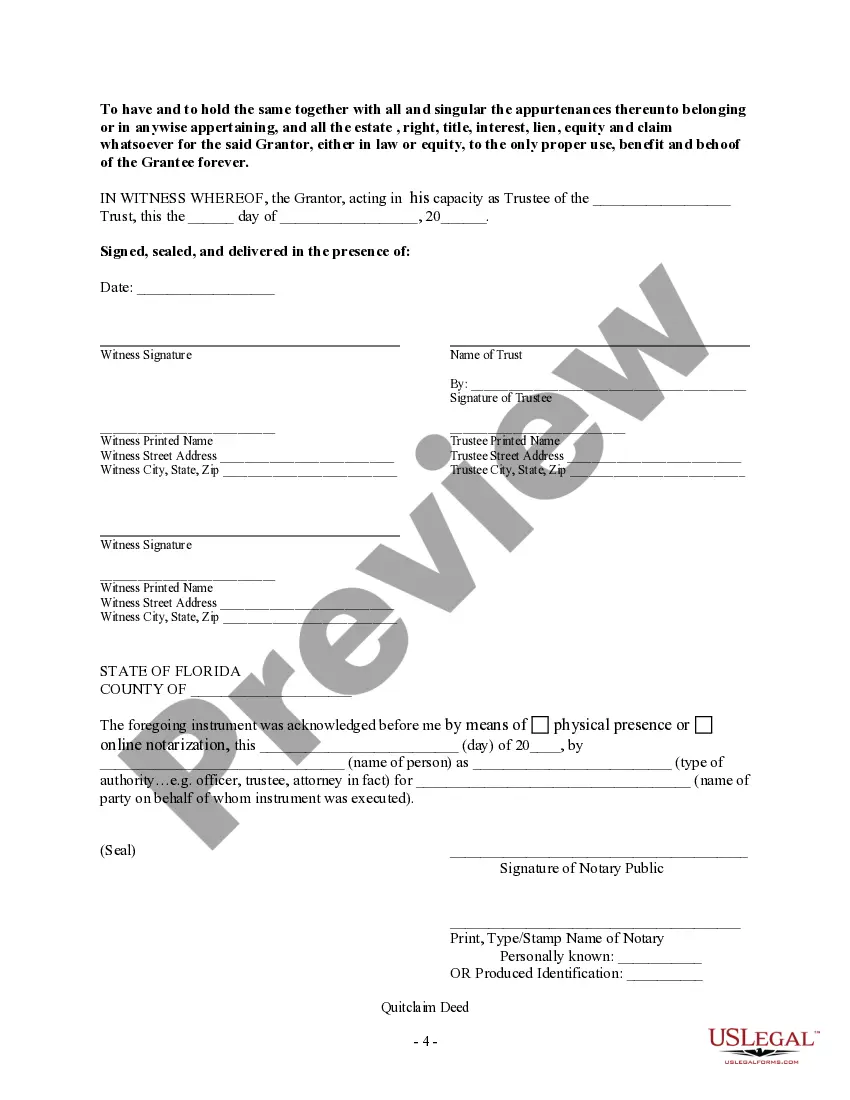
- Identification of the grantor as the trustee of the transferring trust.
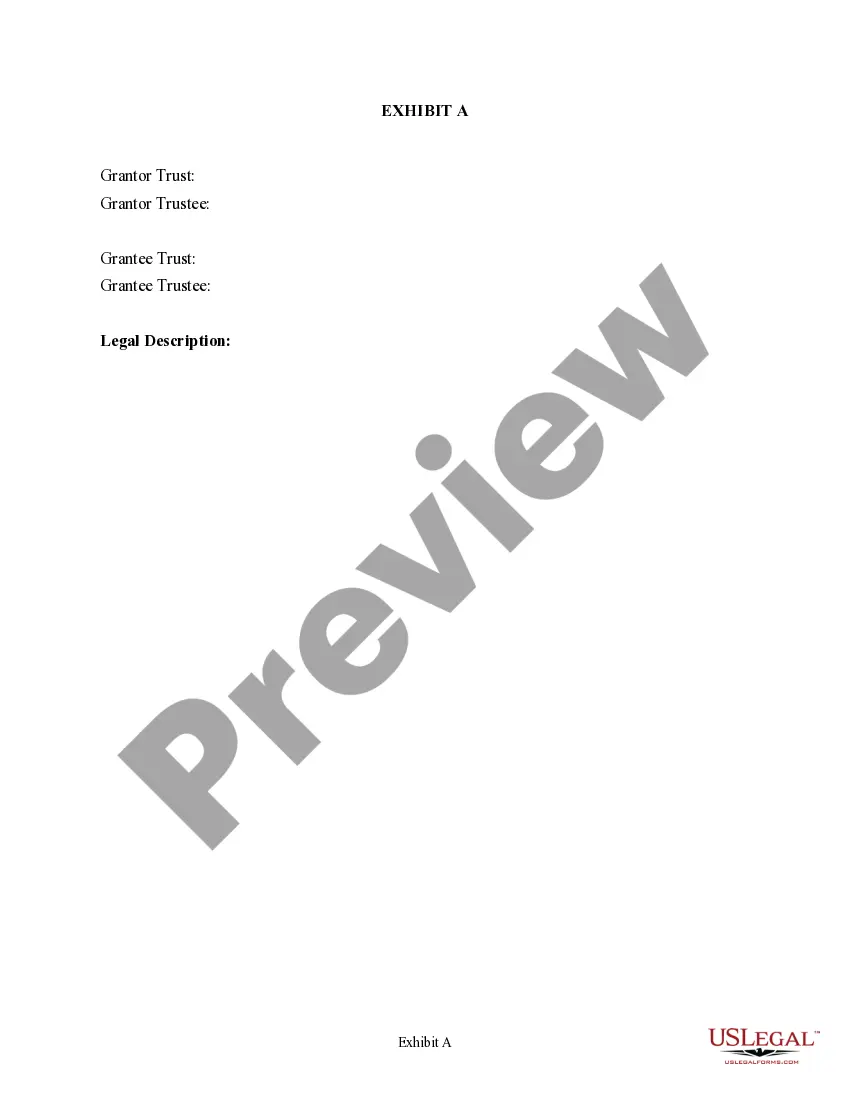
- Details of the property being transferred, including legal descriptions.
- Identification of the grantee, which is another trust.
- Space for signature and date to validate the transfer.
- Compliance statement ensuring adherence to state statutory laws.





When this form is needed
This form should be used when a trustee wishes to transfer real property from one trust to another. It is commonly utilized in estate planning, asset management, or when reorganizing trust agreements. A quitclaim deed is particularly useful in transferring property without the need for extensive title searches or warranties, making it a streamlined option for trustees.
Who needs this form
This form is intended for:
- Trustees managing assets within trust agreements.
- Individuals overseeing the transfer of property between trusts.
- Estate planners and legal professionals assisting clients in property transactions.
Instructions for completing this form
- Identify the grantor as the trustee of the transferring trust.
- Enter the name and details of the property being transferred.
- Specify the name of the grantee, which should also be a trust.
- Complete the date of the transaction.
- Obtain the signature of the grantor in their capacity as trustee.
Is notarization required?
Notarization is required for this form to take effect. Our online notarization service, powered by Notarize, lets you verify and sign documents remotely through an encrypted video session, available 24/7.
Get your form ready online
Our built-in tools help you complete, sign, share, and store your documents in one place.
Make edits, fill in missing information, and update formatting in US Legal Forms—just like you would in MS Word.
Download a copy, print it, send it by email, or mail it via USPS—whatever works best for your next step.
Sign and collect signatures with our SignNow integration. Send to multiple recipients, set reminders, and more. Go Premium to unlock E-Sign.
If this form requires notarization, complete it online through a secure video call—no need to meet a notary in person or wait for an appointment.
We protect your documents and personal data by following strict security and privacy standards.

Make edits, fill in missing information, and update formatting in US Legal Forms—just like you would in MS Word.

Download a copy, print it, send it by email, or mail it via USPS—whatever works best for your next step.

Sign and collect signatures with our SignNow integration. Send to multiple recipients, set reminders, and more. Go Premium to unlock E-Sign.

If this form requires notarization, complete it online through a secure video call—no need to meet a notary in person or wait for an appointment.

We protect your documents and personal data by following strict security and privacy standards.
Typical mistakes to avoid
- Failing to correctly identify all parties involved in the transaction.
- Leaving out the legal description of the property.
- Not signing the form as required by law.
- Omitting the date of the transfer.
Why complete this form online
- Convenience of completing the form remotely without the need for physical paperwork.
- Editability allows for easy updates and corrections as needed.
- Reliable access to accurate legal language drafted by licensed attorneys.
Quick recap
- A Quitclaim Deed - Trust to Trust is used to transfer property between trusts.
- Ensure all parties are accurately identified and signatures are obtained.
- Always check state-specific requirements before using the form.
- Consider notarization for added legal protection and validity of the deed.
Looking for another form?

Form popularity
FAQ
To complete the quitclaim deed form, ensure that you accurately enter the names of all parties involved. Briefly describe the property, and if applicable, reference previous deeds for clarity. Next, make sure to notarize the document after signing to validate it. For guidance and templates that suit the Florida Quitclaim Deed - Trust to Trust requirement, US Legal Forms offers excellent resources.
Filling out a Florida quit claim deed involves a few straightforward steps. Start by providing the names and addresses of the grantor and grantee, then include the property's legal description and any relevant parcel identification numbers. Always check for accuracy before signing, as errors may complicate ownership transfer. For a smooth experience, consider using US Legal Forms to access templates tailored for a Florida Quitclaim Deed - Trust to Trust.
To quit claim a deed to a trust in Florida, you will first need to prepare a quit claim deed form. Make sure you list the grantor and the trustee correctly, alongside the legal description of the property. After filling out the form, you must sign it in the presence of a notary public before filing it with the county clerk. This process ensures that the Florida Quitclaim Deed - Trust to Trust transition is legally recognized.
To transfer a deed to a trust in Florida, begin by drafting a quitclaim deed that specifies the grantee as the trust. The grantor must sign the deed, and it must be notarized. After signing, file the deed with the local county clerk's office for proper recording. By using a Florida Quitclaim Deed - Trust to Trust, you can ensure that the process is executed smoothly and legally.
While putting your house in a trust can offer benefits, there are some disadvantages to consider. For instance, it may not shield the property from all creditors, and you'll incur costs related to establishing and managing the trust. Additionally, moving the house into a trust using a Florida Quitclaim Deed - Trust to Trust could trigger property tax reassessments. Carefully weigh these factors before making a decision.
Yes, a quitclaim deed can transfer property from a trust to another party or to a new trust. This type of deed allows the trustee to convey their interest in the property without guarantees. If you want to make changes to the property's ownership, using a quitclaim deed is a viable route. Always consider consulting with a legal expert to ensure the transfer complies with Florida's regulations.
One of the biggest mistakes parents make when setting up a trust fund is not clearly defining the terms and conditions of the trust. It's crucial to outline how assets should be managed and distributed to avoid confusion later. Additionally, failing to fund the trust properly can lead to complications. Using a Florida Quitclaim Deed - Trust to Trust can help ensure assets are correctly transferred into the trust.
To transfer property to a trust in Florida, you first need to create a trust document that outlines the terms of the trust. After this, you will execute a quitclaim deed that transfers ownership from you to the trust. It's essential to have this deed properly notarized and recorded. This method ensures your property is managed according to your wishes through the Florida Quitclaim Deed - Trust to Trust.
In Florida, a quitclaim deed allows the transfer of property without guaranteeing that the title is clear. This means the grantor transfers their interest in the property to the grantee without any warranties. To be valid, the deed must be signed by the grantor and must be notarized. Furthermore, it is important to record the deed with the county clerk to protect against future claims.