Delaware Last Will and Testament for Widow or Widower with Minor Children
What this document covers
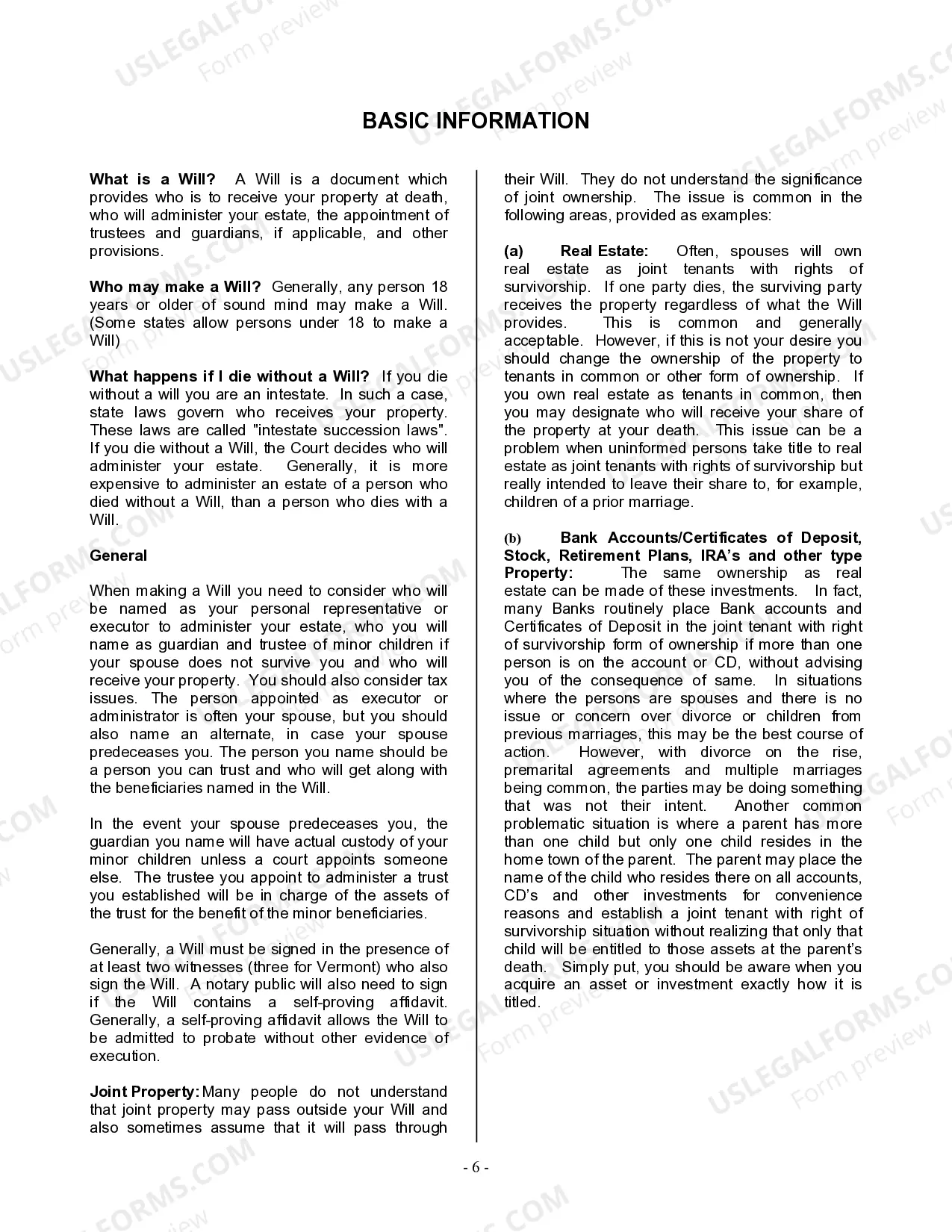
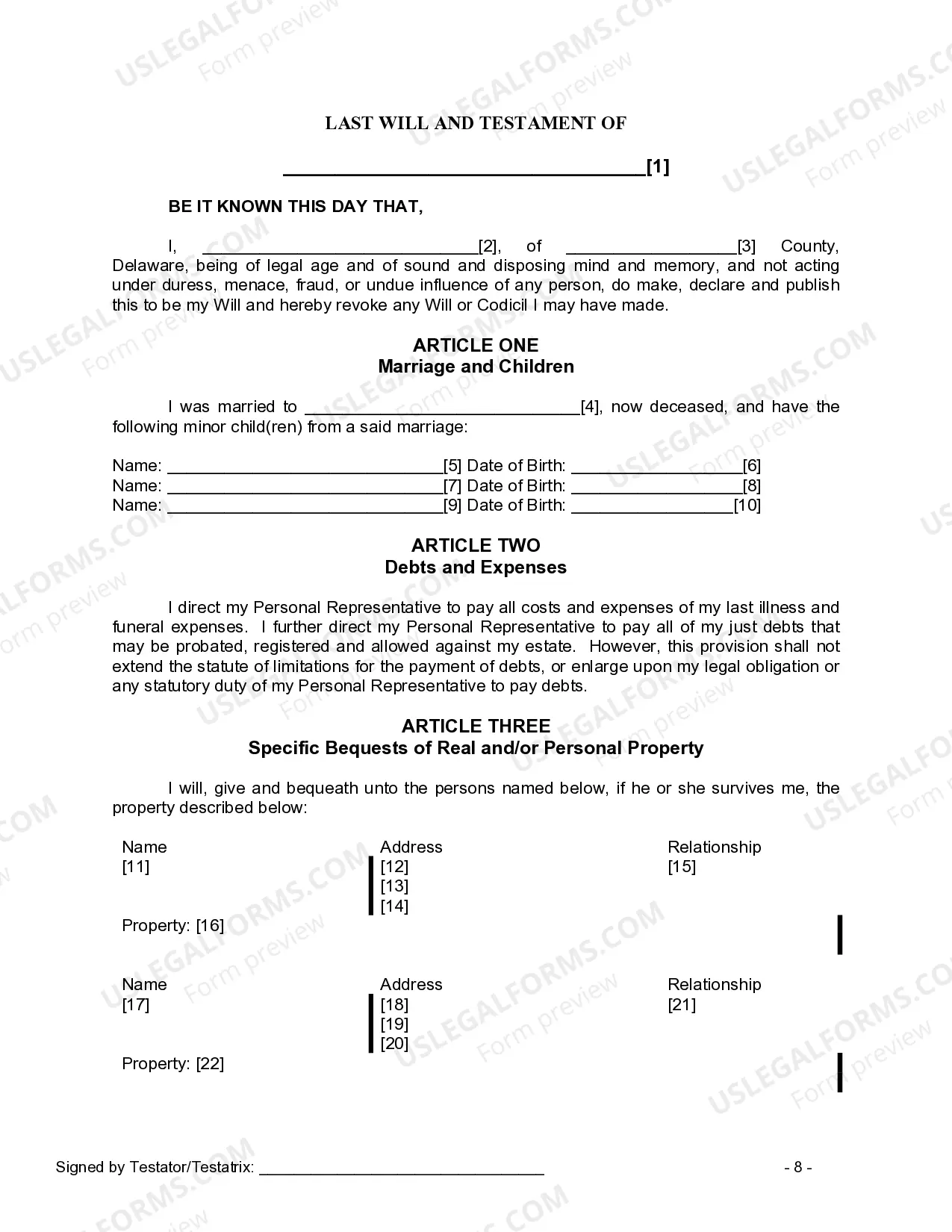
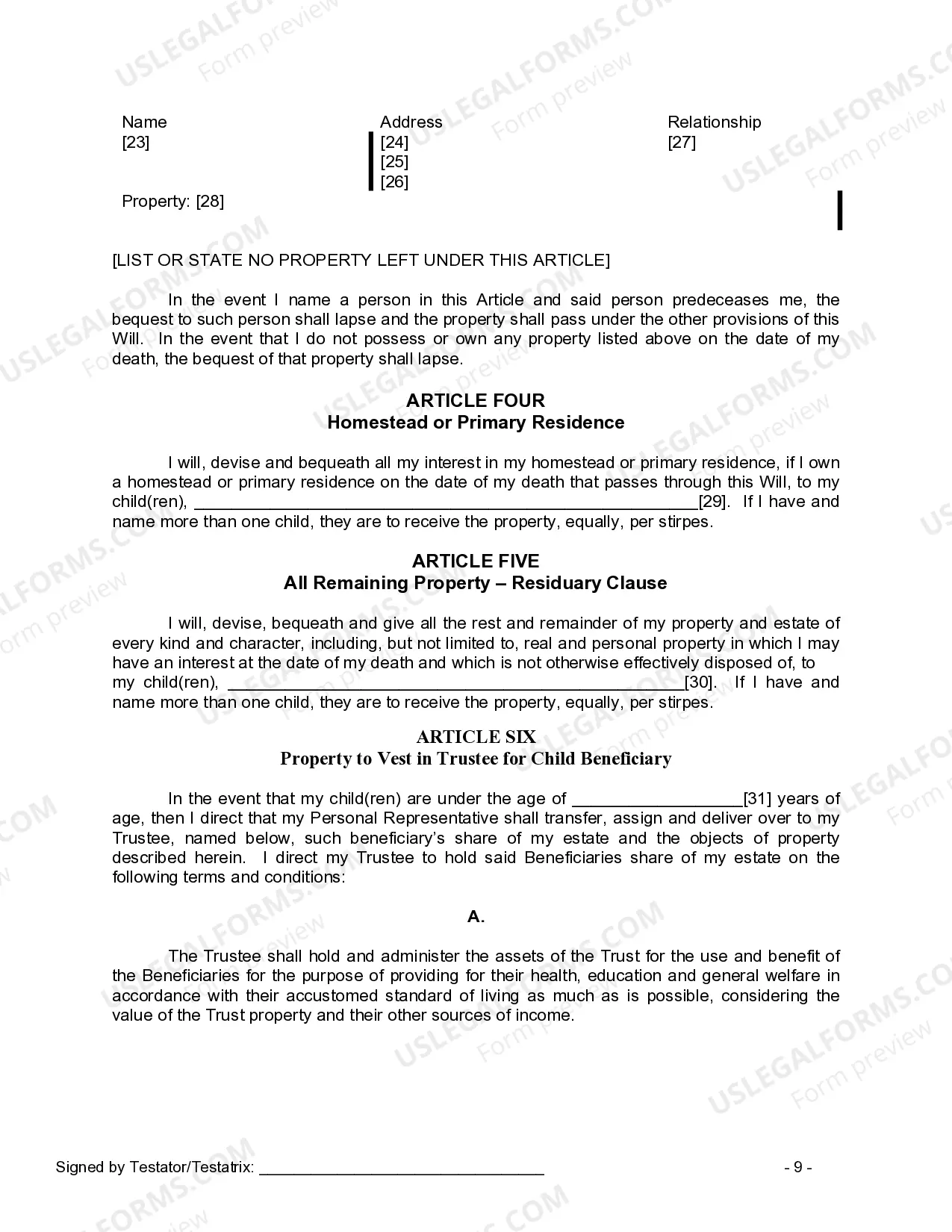
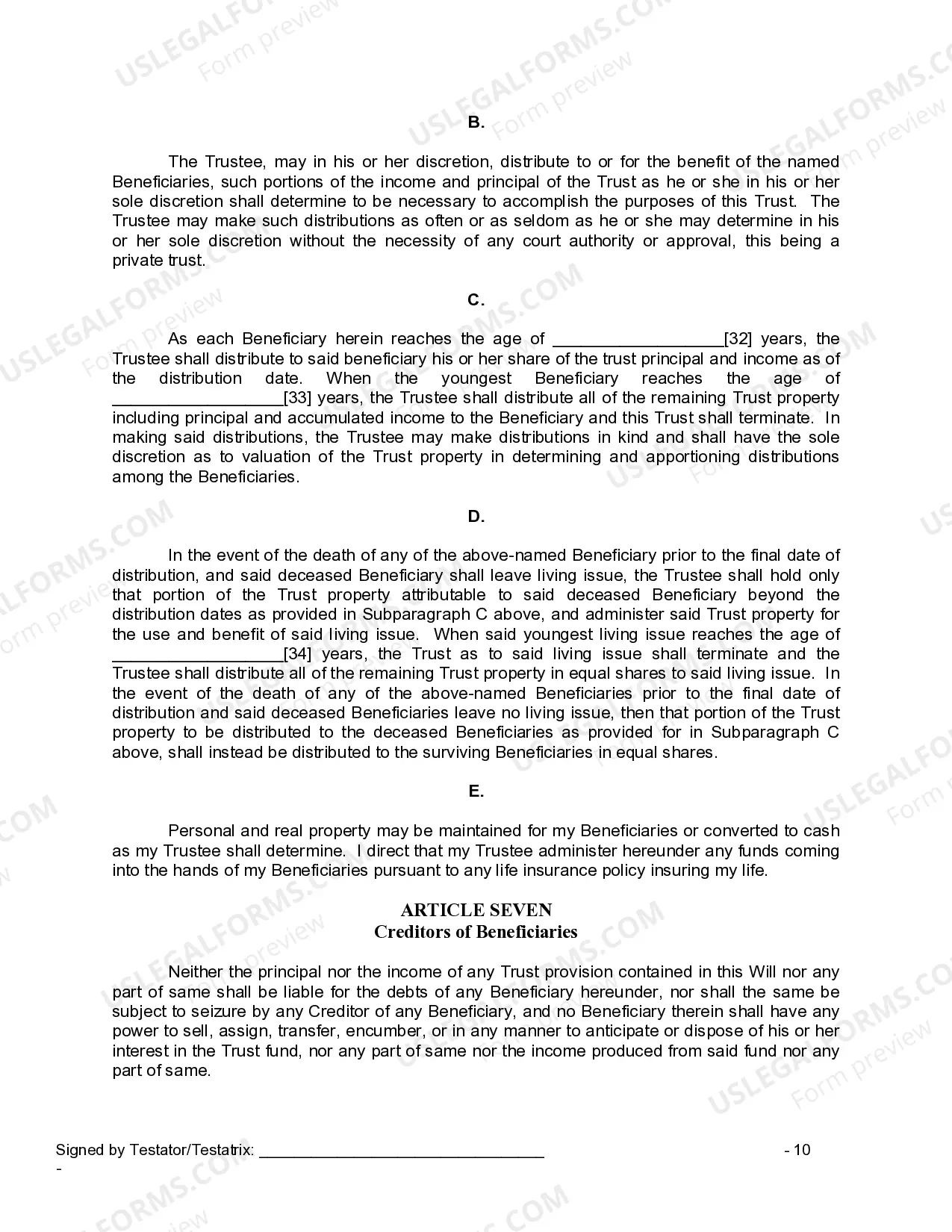
The Last Will and Testament for Widow or Widower with Minor Children is a legal document that outlines how a surviving spouse wishes to distribute their assets after death. It specifically addresses the interests of minor children by appointing guardians and trustees, ensuring their financial security. This will differs from a standard Last Will and Testament as it includes provisions for minor children, which are critical for protecting their inheritance and care.
Key parts of this document
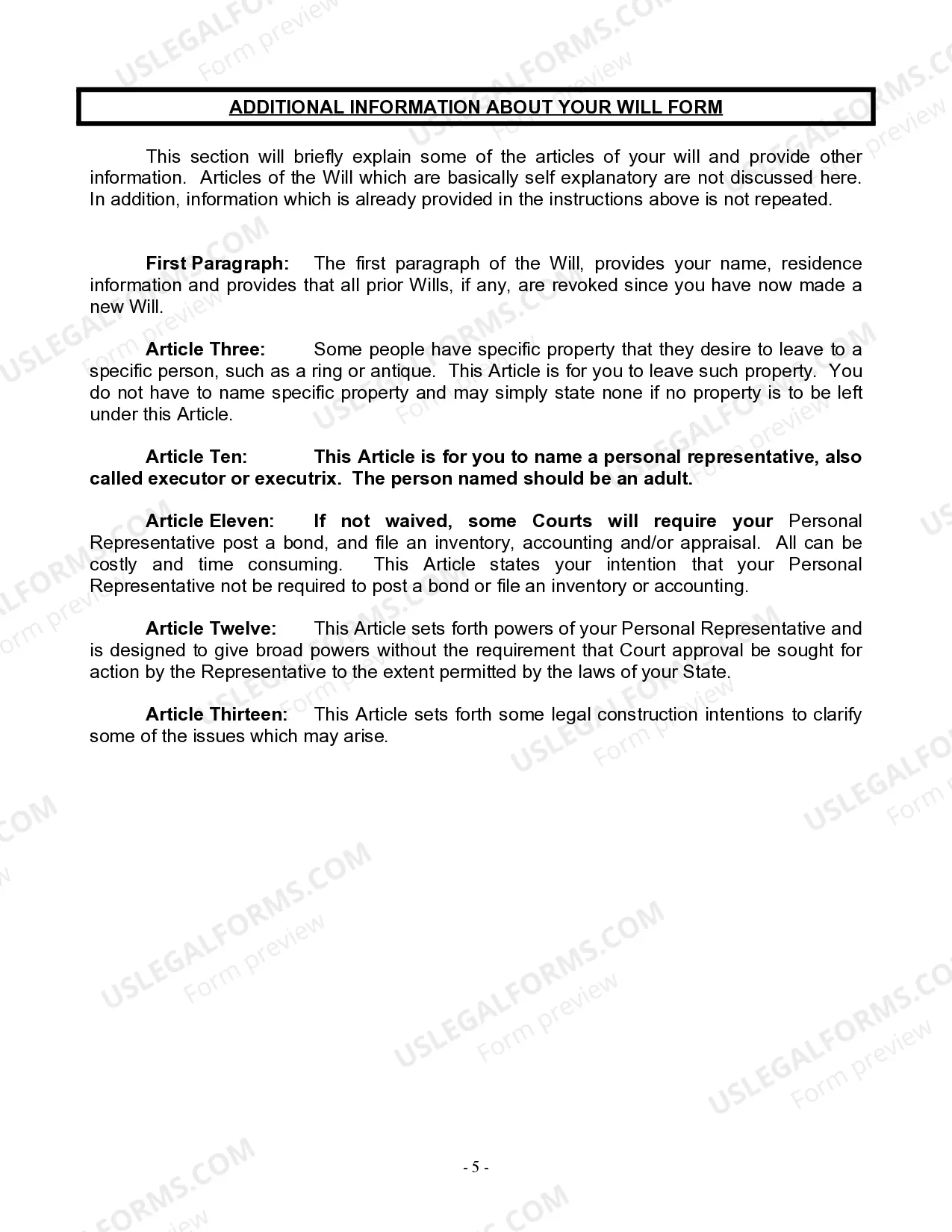
- Appointment of a personal representative or executor to manage the estate.
- Designation of beneficiaries who will receive your property.
- Provisions for appointing a guardian for minor children.
- Creation of a trust for assets allocated to minor children.
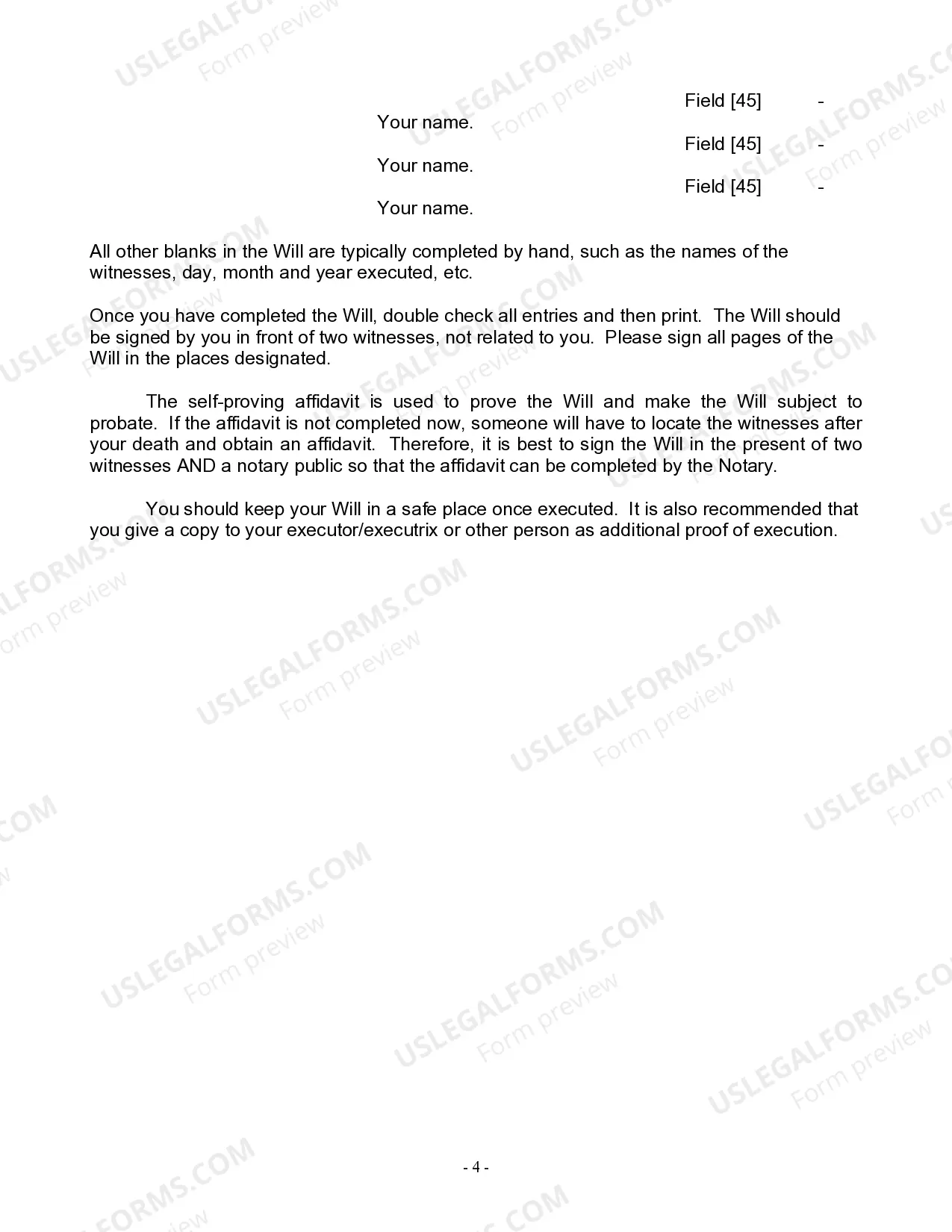
- Instructions for how and when the will should be signed and witnessed.




When to use this form
This form is essential for widows or widowers who have minor children and want to ensure their assets are distributed according to their wishes. It is particularly useful when one spouse has passed away, and the surviving spouse needs to make specific legal arrangements for their childrenâs future well-being and care in the event of their own passing.
Who this form is for
- Widows or widowers with minor children.
- Individuals who want to ensure proper guardianship for their children.
- People looking to create a trust for their children's inheritance.
- Anyone wanting to specify their wishes for property distribution.
Completing this form step by step
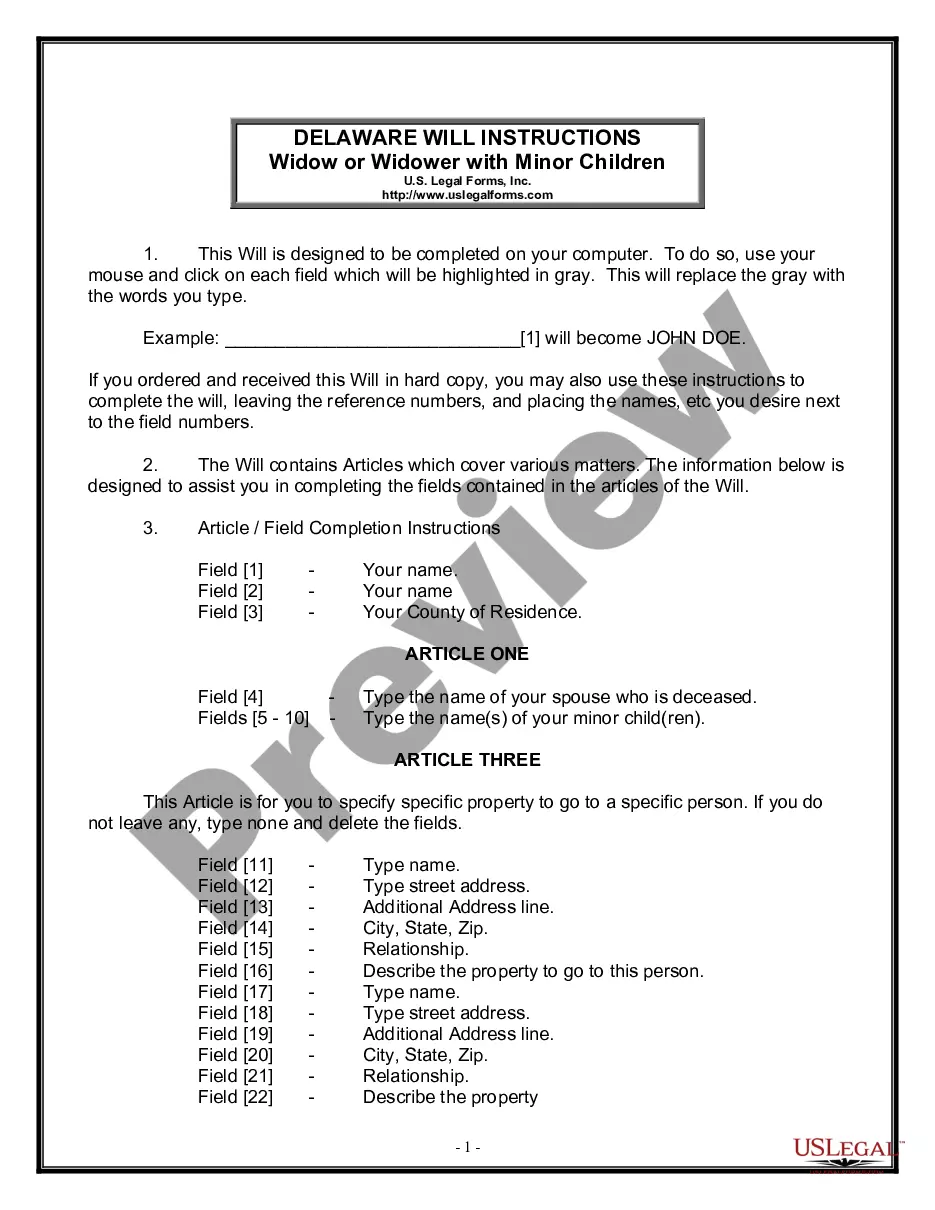
- Identify yourself by entering your name and county of residence.
- Specify the name of your deceased spouse and list your minor children.
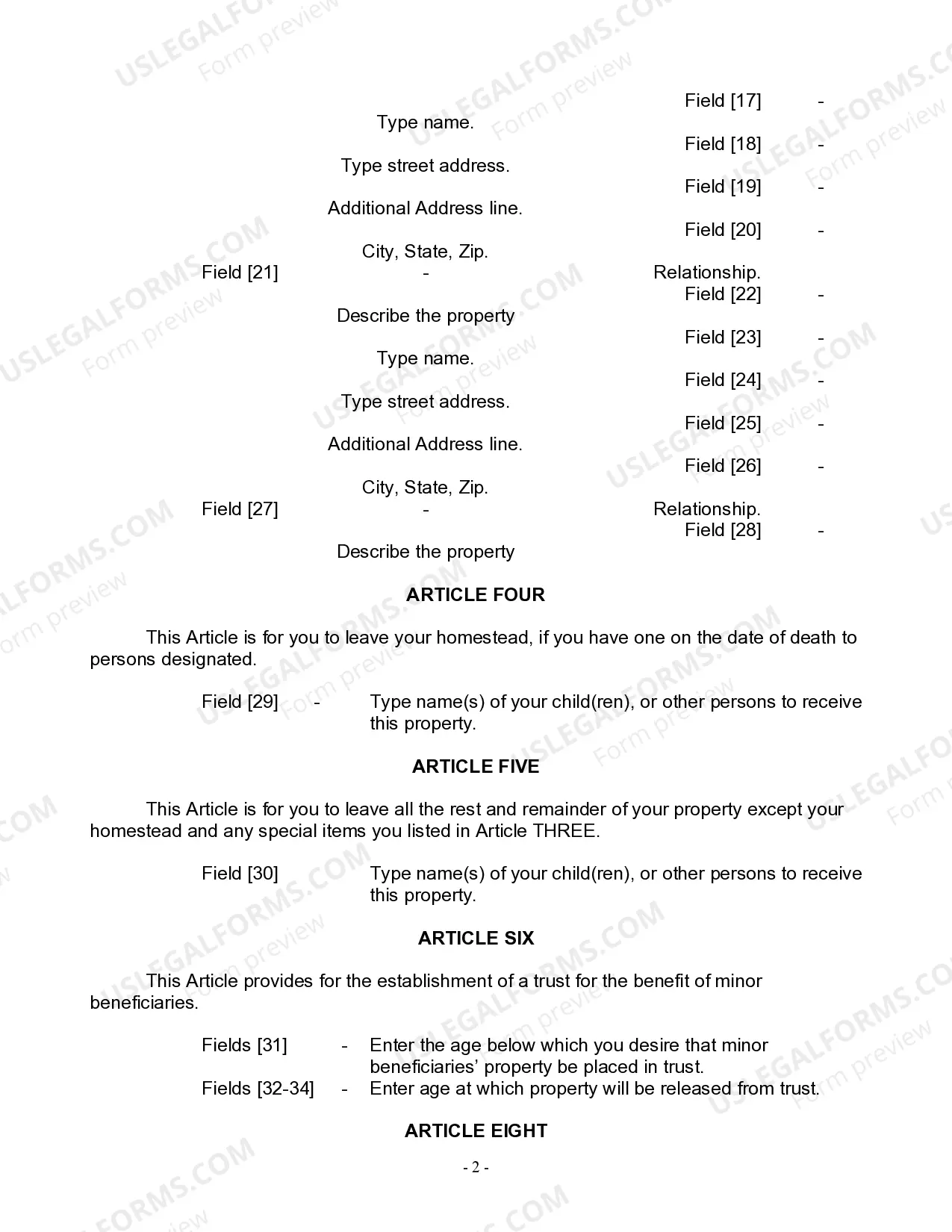
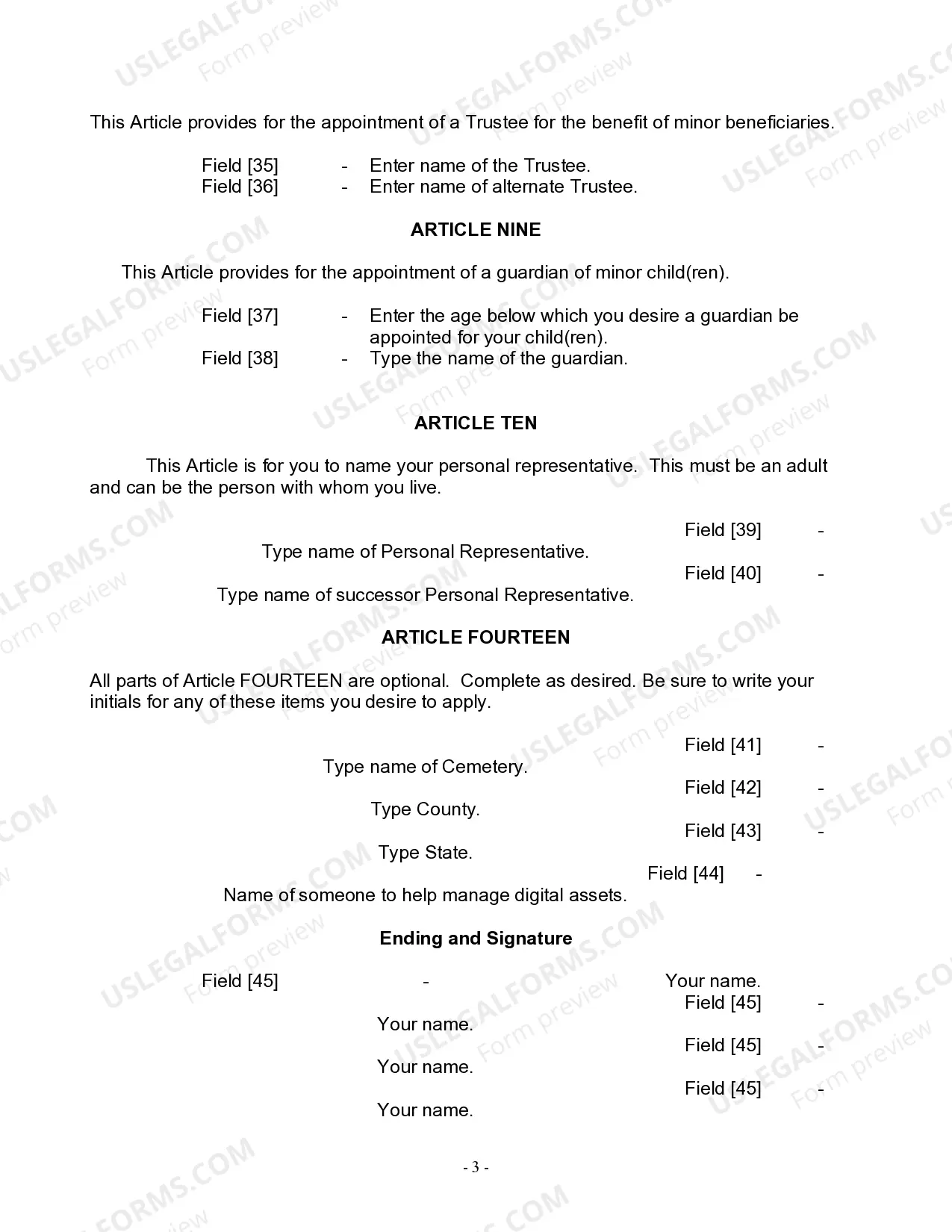
- Designate specific individuals for property bequests and appoint a guardian for your children.
- Include details for any trusts set up for minor beneficiaries.
- Ensure the document is signed in front of two witnesses who are not related to you.
- If applicable, have the will notarized to simplify the probate process.
Is notarization required?
Yes, this form must be notarized to be legally valid. Including a notarized self-proving affidavit simplifies the probate process by eliminating the need to locate witnesses after your death. US Legal Forms offers integrated online notarization services available 24/7 through secure video calls.
Get your form ready online
Our built-in tools help you complete, sign, share, and store your documents in one place.
Make edits, fill in missing information, and update formatting in US Legal Forms—just like you would in MS Word.
Download a copy, print it, send it by email, or mail it via USPS—whatever works best for your next step.
Sign and collect signatures with our SignNow integration. Send to multiple recipients, set reminders, and more. Go Premium to unlock E-Sign.
If this form requires notarization, complete it online through a secure video call—no need to meet a notary in person or wait for an appointment.
We protect your documents and personal data by following strict security and privacy standards.

Make edits, fill in missing information, and update formatting in US Legal Forms—just like you would in MS Word.

Download a copy, print it, send it by email, or mail it via USPS—whatever works best for your next step.

Sign and collect signatures with our SignNow integration. Send to multiple recipients, set reminders, and more. Go Premium to unlock E-Sign.

If this form requires notarization, complete it online through a secure video call—no need to meet a notary in person or wait for an appointment.

We protect your documents and personal data by following strict security and privacy standards.
Common mistakes
- Failing to have the will signed by required witnesses.
- Not specifying guardians for minor children.
- Leaving out essential information about property bequests.
- Overlooking the need for notarization in states that require it.
- Not reviewing or updating the will after significant life changes.
Benefits of completing this form online
- Convenience of completing the form from home.
- Editability allows for quick updates and changes.
- Access to professionally drafted templates ensures legality.
- Instantaneous download saves time compared to traditional methods.
Looking for another form?

Form popularity
FAQ
In Washington, notarization is not required for a will to be valid. However, if your will is self-proving, which means it is signed in front of a notary, it can make the probate process smoother. If you are drafting a Delaware Last Will and Testament for a Widow or Widower with Minor Children, consider using UsLegalForms for guidance on state-specific requirements. This can streamline the preparation process while ensuring legal compliance.
In Minnesota, a will does not need to be notarized to be valid. However, having witnesses sign your will can provide extra security and help in case of disputes. If you are considering a Delaware Last Will and Testament for a Widow or Widower with Minor Children, using a witnessed approach may be beneficial. This strategy can also be helpful if you travel or live in different states.
You can find a reliable form to create a Delaware Last Will and Testament for a Widow or Widower with Minor Children through UsLegalForms. This platform offers customizable templates that meet Delaware's legal requirements. You can fill out the form easily online, ensuring it addresses your specific needs. It's an efficient way to prepare your will without unnecessary hassle.
The executor of a will with a surviving spouse is typically the person named in the will itself. If you create a Delaware Last Will and Testament for Widow or Widower with Minor Children, it’s wise to appoint someone reliable who can act in your children’s best interests. Should the named executor not be available, the court may appoint someone based on state laws. For assistance in designating an executor, uslegalforms provides accessible resources.
A surviving spouse cannot unilaterally change the executor named in a will. If you are the widow or widower and need to make changes, you must create a new Delaware Last Will and Testament for Widow or Widower with Minor Children. This legally revokes the previous will and allows you to appoint a new executor. You can easily draft a new will through uslegalforms for peace of mind.
A spouse generally cannot change the executor of a will without consent unless they are the named executor. If you're drafting a Delaware Last Will and Testament for Widow or Widower with Minor Children, it's important to designate an executor you trust. This designation ensures your wishes are carried out as intended. You can find templates and guidance on uslegalforms to help you with your will.
To avoid probate in Delaware, consider setting up a trust or designating beneficiaries directly on assets. Additionally, a well-structured Delaware Last Will and Testament for Widow or Widower with Minor Children can minimize probate challenges by clearly outlining your wishes. This approach can streamline the transfer of assets and protect your children's future. Platforms like uslegalforms can help you with this process.
In general, a surviving spouse may have rights that can override a beneficiary designation, but this depends on specific circumstances outlined in the Delaware Last Will and Testament for Widow or Widower with Minor Children. Typically, if a will specifies a beneficiary, that designation is honored unless the spouse is entitled to a marital share. Clarifying this can be crucial for estate planning, and uslegalforms can guide you through creating an appropriate will.
Creating a Delaware Last Will and Testament for Widow or Widower with Minor Children does not legally require a lawyer. However, consulting one can provide clarity and assurance that your will meets all legal standards. This is especially important when ensuring your minor children are properly cared for after your passing. Using platforms like uslegalforms can help you draft your will effectively.
For a will to be valid in Delaware, it must be written, signed by the testator, and witnessed by at least two individuals who are not beneficiaries. A clear expression of your wishes contributes to the validity of your document. By crafting a Delaware Last Will and Testament for Widow or Widower with Minor Children, you ensure your specific desires for your minor children and assets are legally recognized.