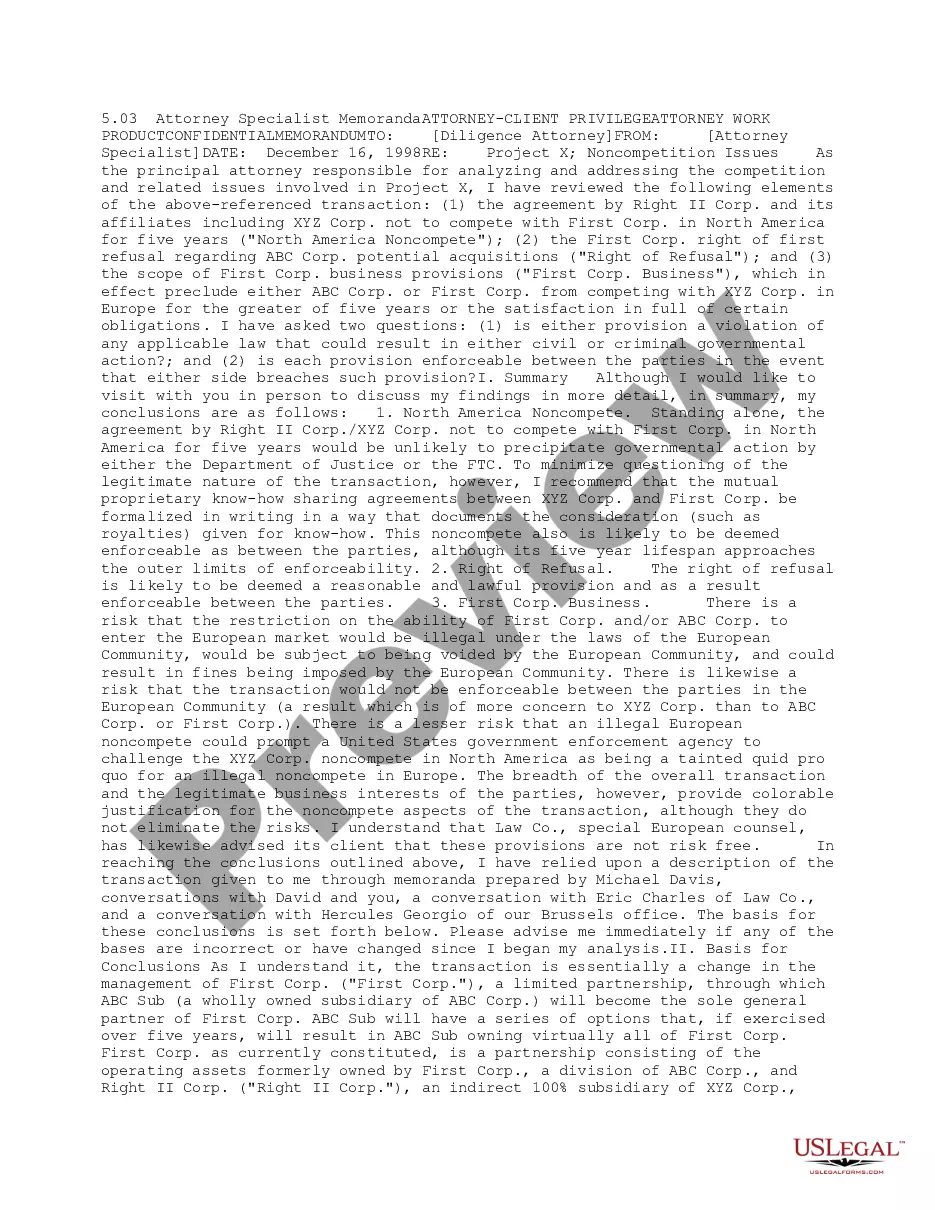
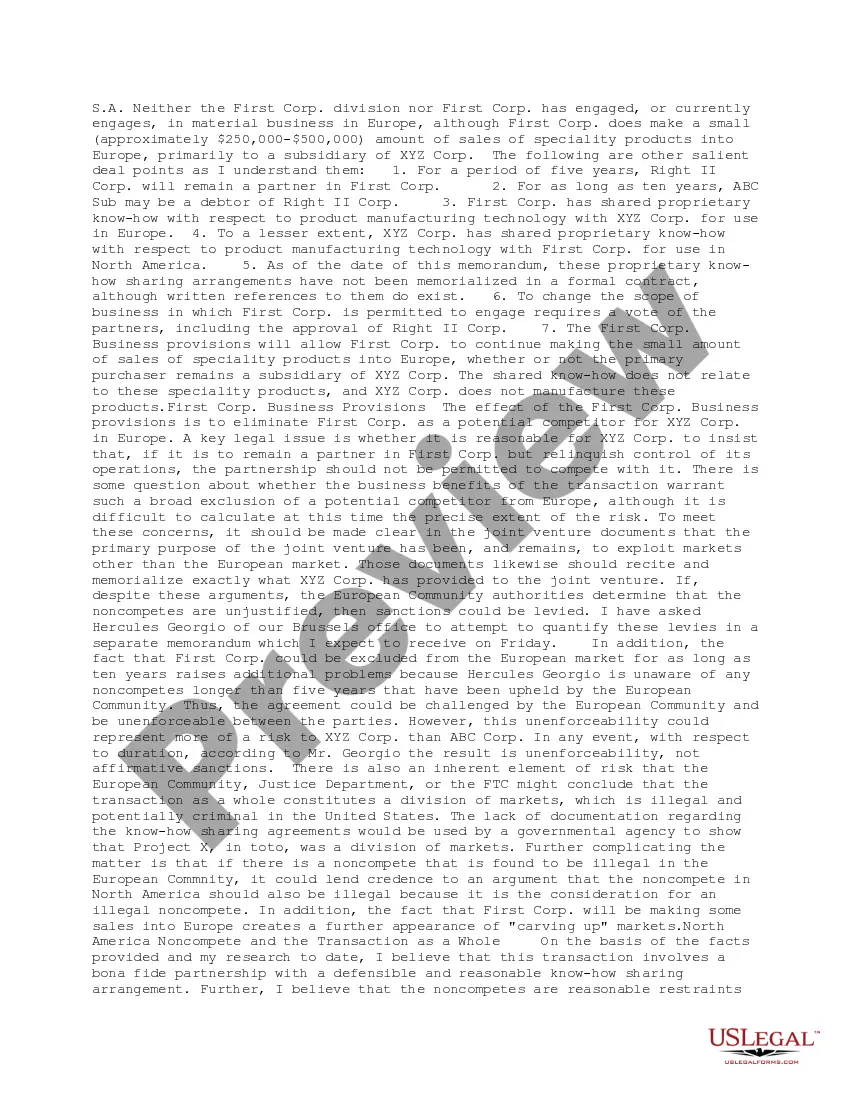
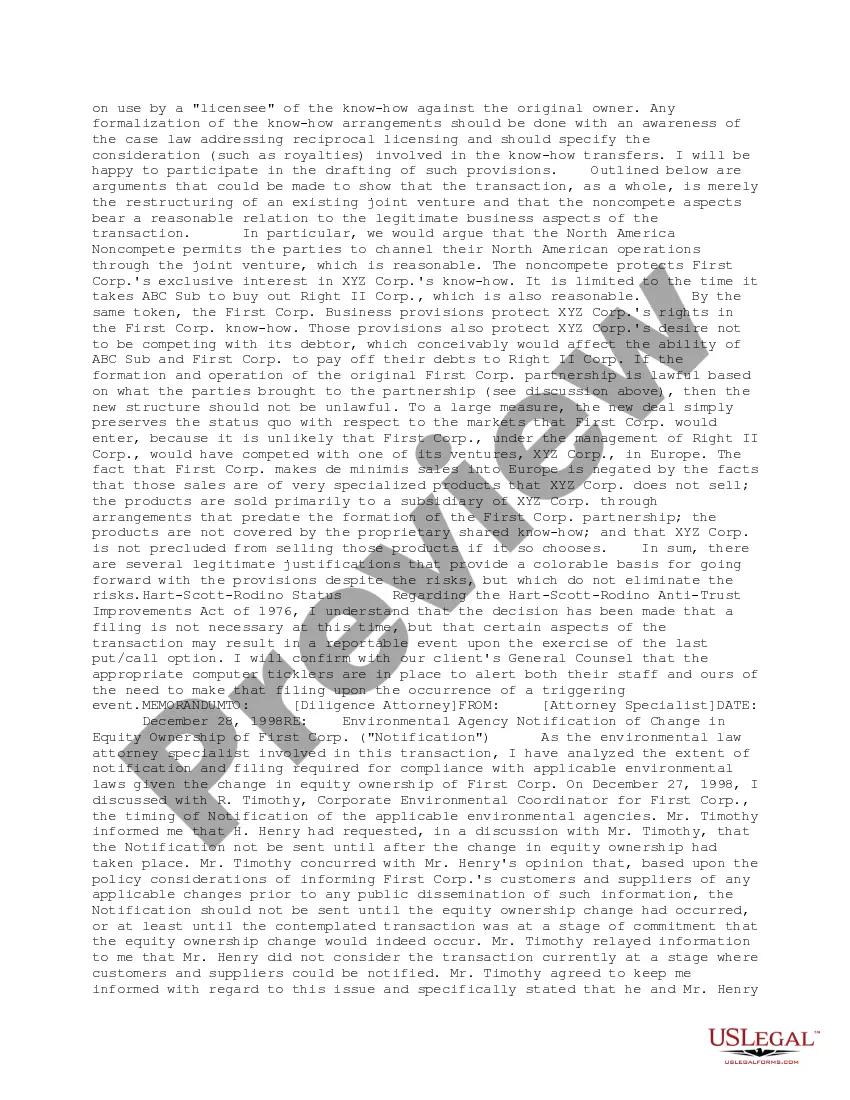
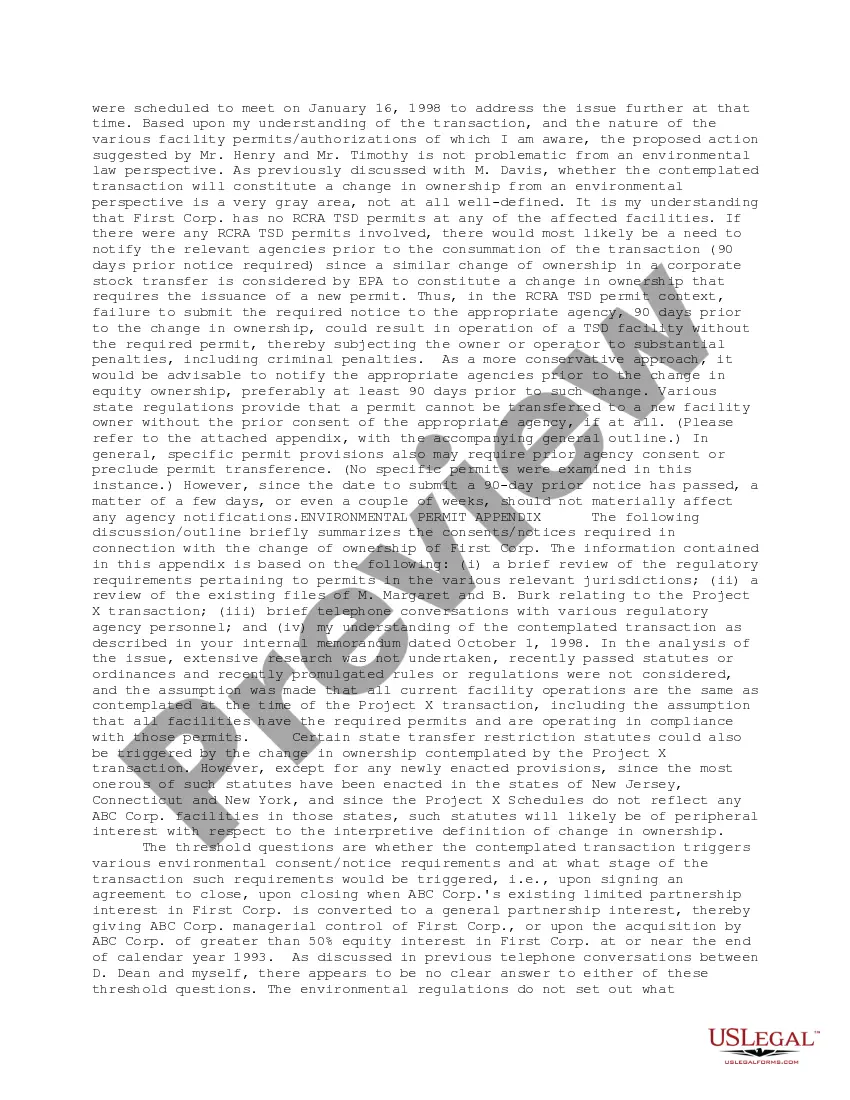
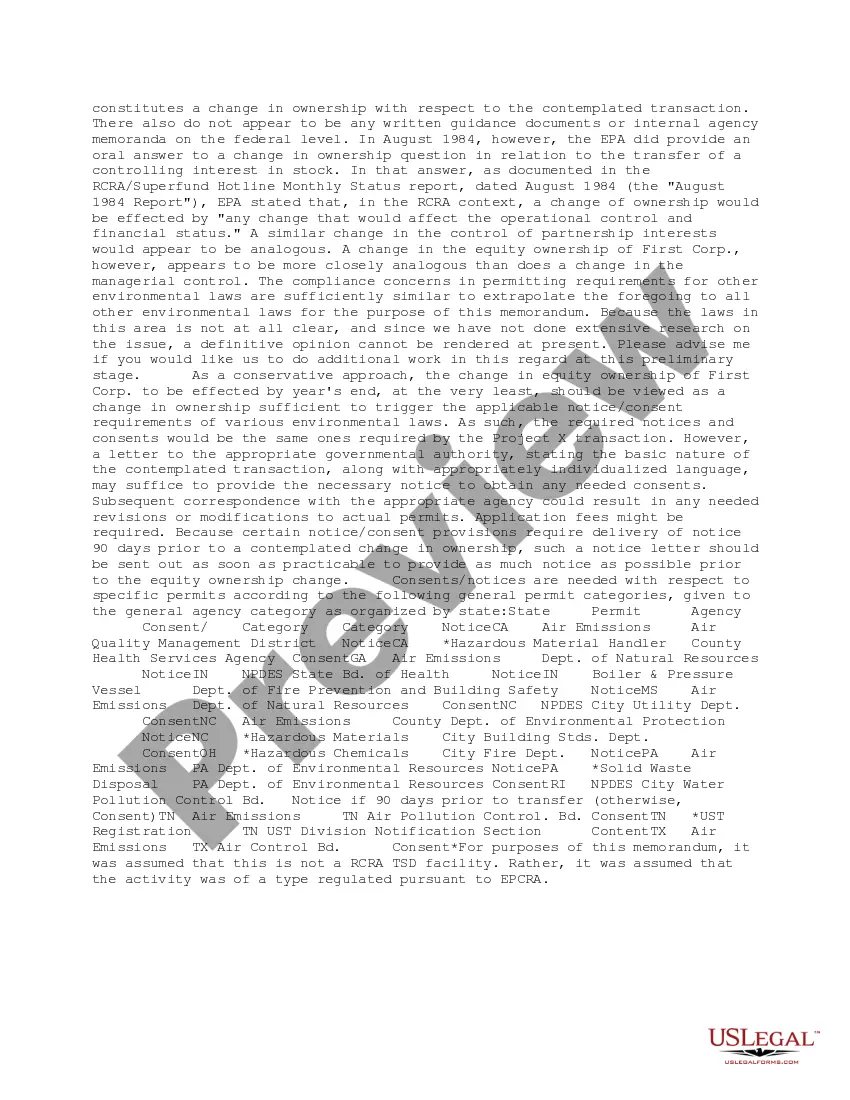
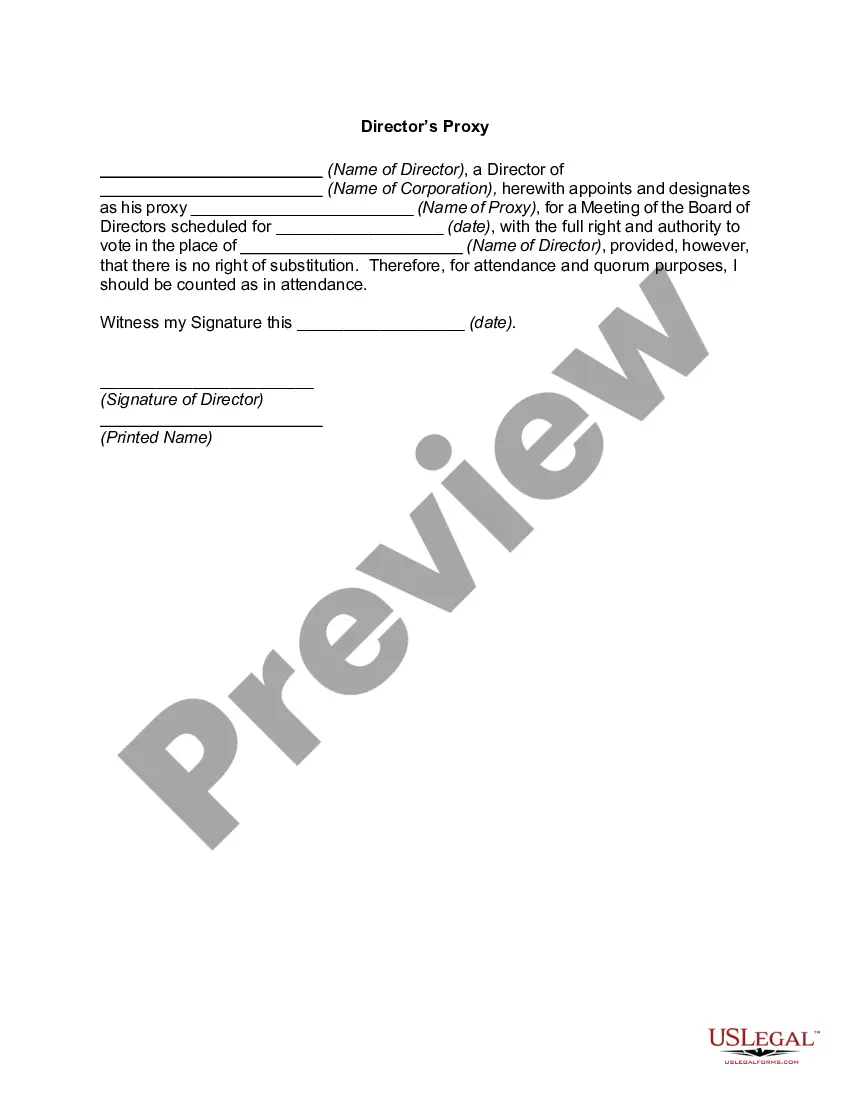
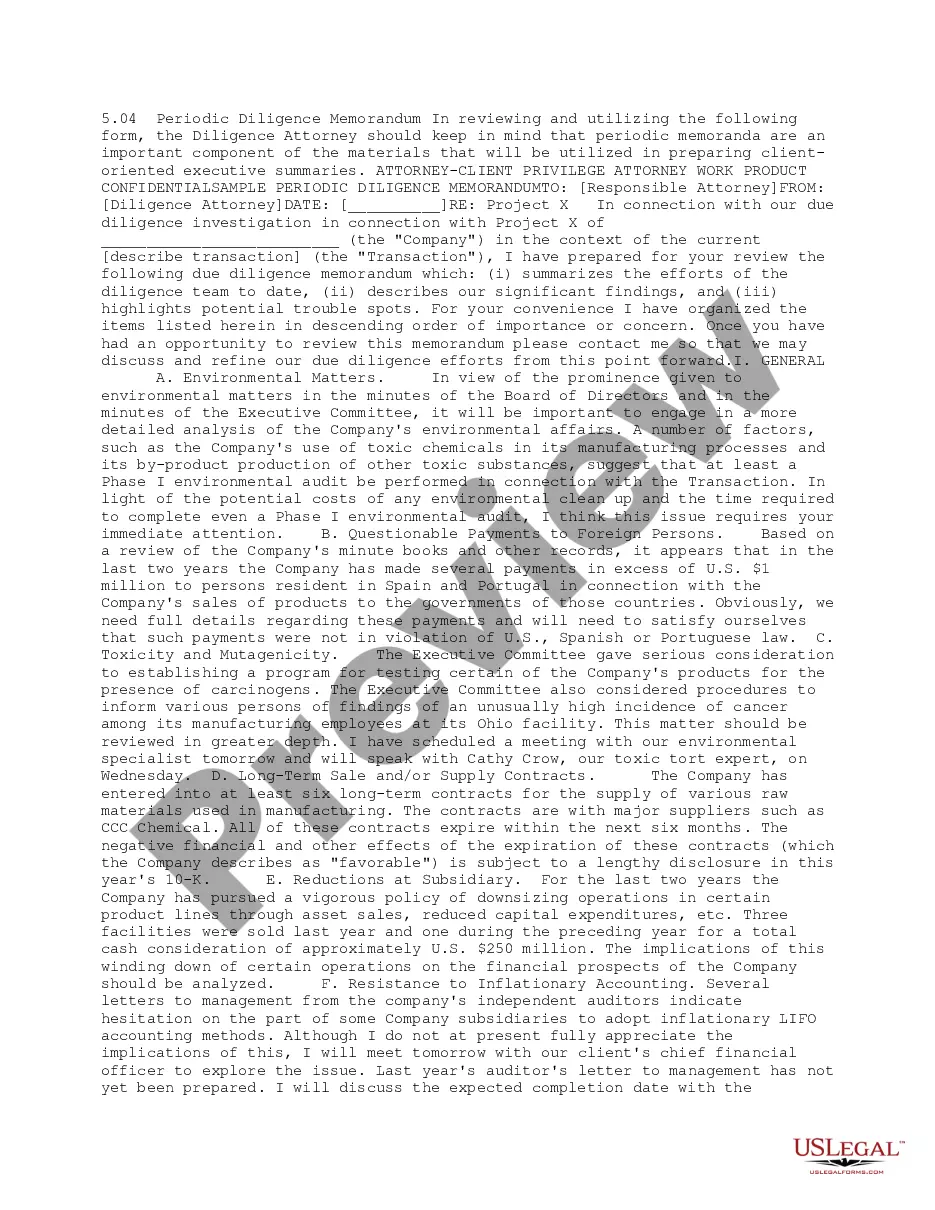
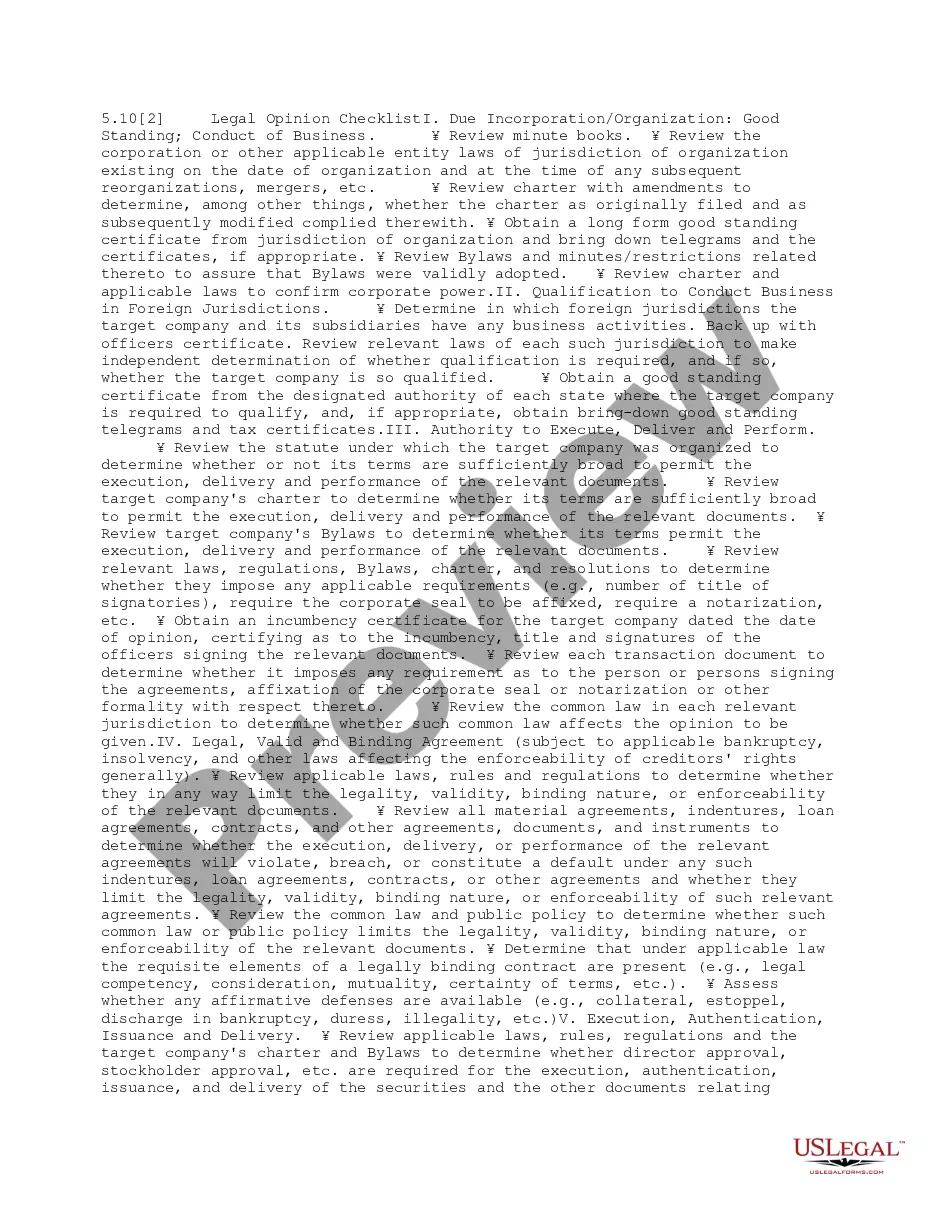
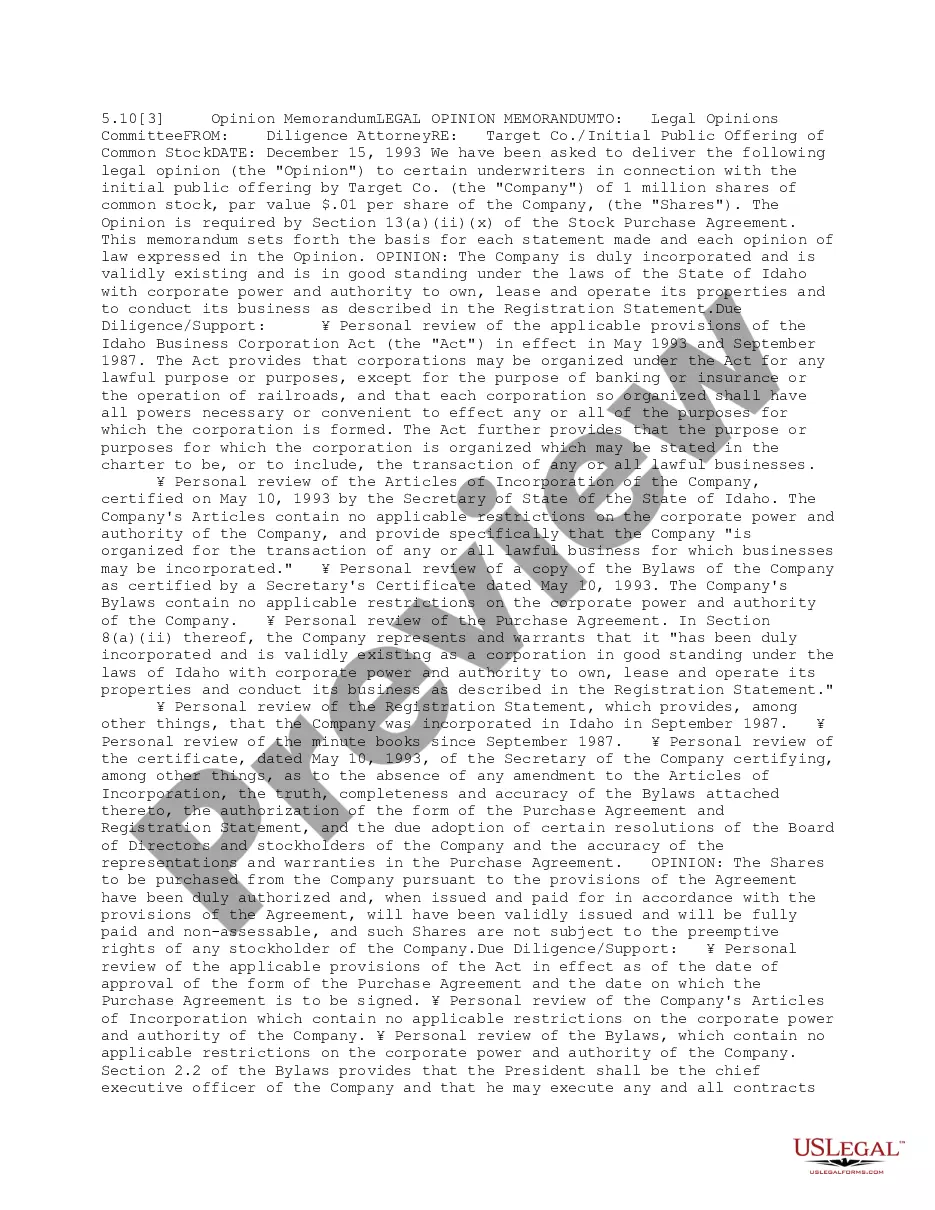
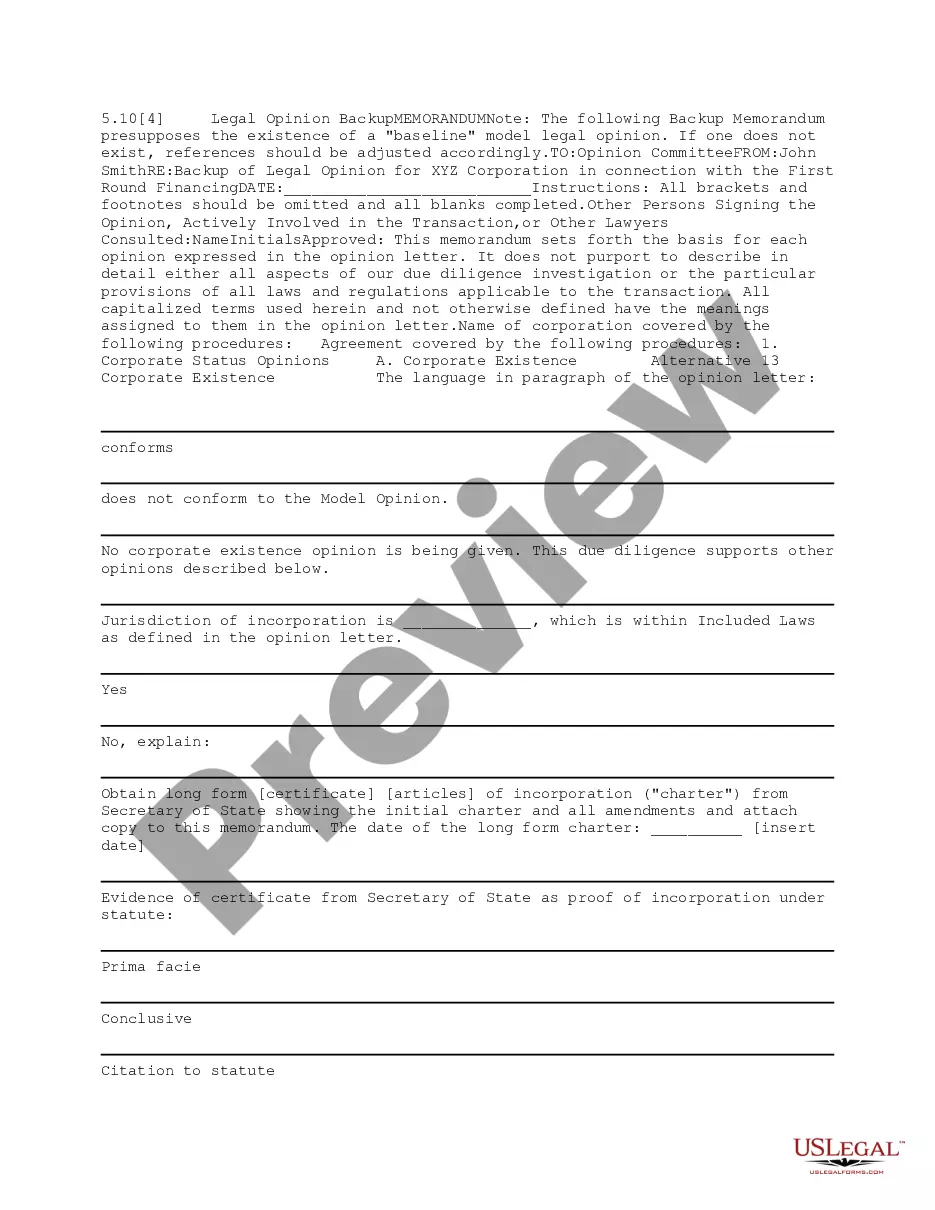
This due diligence form is a memorandum completed by the attorney responsible for analyzing and addressing competitors and other issues of interest in business transactions.
Delaware Attorney Specialist Memoranda
Category:
State:
Multi-State
Control #:
US-DD0503
Format:
Word;
PDF;
Rich Text
Instant download
Description
Free preview
Get your form ready online
Our built-in tools help you complete, sign, share, and store your documents in one place.
Built-in online Word editor
Make edits, fill in missing information, and update formatting in US Legal Forms—just like you would in MS Word.
Export easily
Download a copy, print it, send it by email, or mail it via USPS—whatever works best for your next step.
E-sign your document
Sign and collect signatures with our SignNow integration. Send to multiple recipients, set reminders, and more. Go Premium to unlock E-Sign.
Notarize online 24/7
If this form requires notarization, complete it online through a secure video call—no need to meet a notary in person or wait for an appointment.
Store your document securely
We protect your documents and personal data by following strict security and privacy standards.

Make edits, fill in missing information, and update formatting in US Legal Forms—just like you would in MS Word.

Download a copy, print it, send it by email, or mail it via USPS—whatever works best for your next step.

Sign and collect signatures with our SignNow integration. Send to multiple recipients, set reminders, and more. Go Premium to unlock E-Sign.

If this form requires notarization, complete it online through a secure video call—no need to meet a notary in person or wait for an appointment.

We protect your documents and personal data by following strict security and privacy standards.
Looking for another form?



How to fill out Attorney Specialist Memoranda?
You can invest hrs on-line attempting to find the authorized file template which fits the federal and state needs you need. US Legal Forms offers a large number of authorized varieties that are reviewed by pros. You can actually acquire or print out the Delaware Attorney Specialist Memoranda from your services.
If you already have a US Legal Forms profile, it is possible to log in and click the Acquire option. After that, it is possible to total, modify, print out, or signal the Delaware Attorney Specialist Memoranda. Each and every authorized file template you get is the one you have forever. To have another copy of any bought kind, visit the My Forms tab and click the corresponding option.
If you work with the US Legal Forms site the very first time, keep to the straightforward recommendations beneath:
- Initially, make sure that you have selected the right file template to the area/area of your liking. See the kind explanation to make sure you have chosen the right kind. If readily available, use the Preview option to search throughout the file template also.
- In order to locate another model of the kind, use the Lookup industry to obtain the template that meets your needs and needs.
- After you have identified the template you would like, simply click Get now to continue.
- Select the rates plan you would like, type your accreditations, and register for your account on US Legal Forms.
- Total the financial transaction. You can utilize your bank card or PayPal profile to purchase the authorized kind.
- Select the structure of the file and acquire it for your product.
- Make alterations for your file if needed. You can total, modify and signal and print out Delaware Attorney Specialist Memoranda.
Acquire and print out a large number of file layouts making use of the US Legal Forms Internet site, that provides the biggest collection of authorized varieties. Use skilled and status-specific layouts to tackle your company or individual requirements.
Form popularity
FAQ
A memorandum in a legal sense can refer to a comprehensive and organized written document that summarizes and analyzes relevant laws based on legal research to support a conclusion on a particular legal issue.
(d) Length of memorandum Except in a summary judgment or summary adjudication motion, no opening or responding memorandum may exceed 15 pages. In a summary judgment or summary adjudication motion, no opening or responding memorandum may exceed 20 pages. No reply or closing memorandum may exceed 10 pages.
The sections of a legal memorandum are: Heading or Caption. Facts. Issue(s) Presented. Brief Answer. Reasoning or Discussion. Conclusion.
Remember the legal memo's purpose is to inform, not to argue the facts. The legal memo must therefore provide an objective summary of all relevant case law and how it applies to the facts at hand.