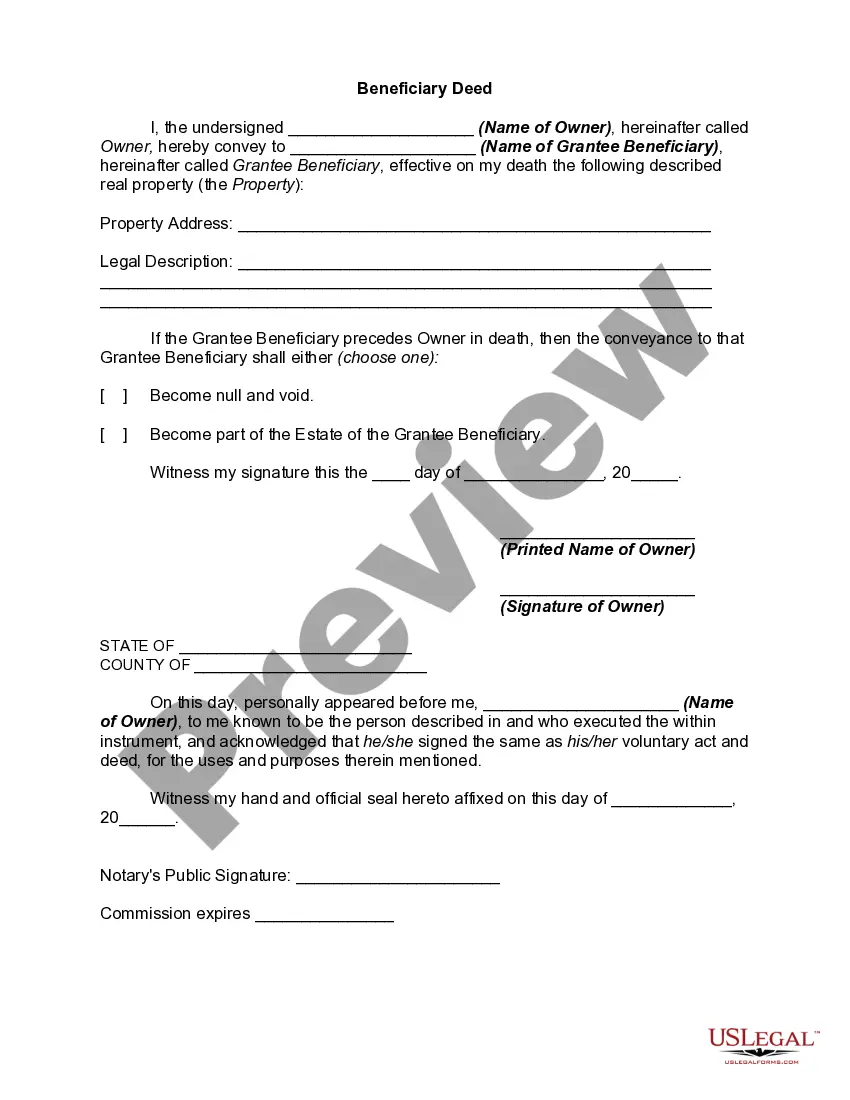
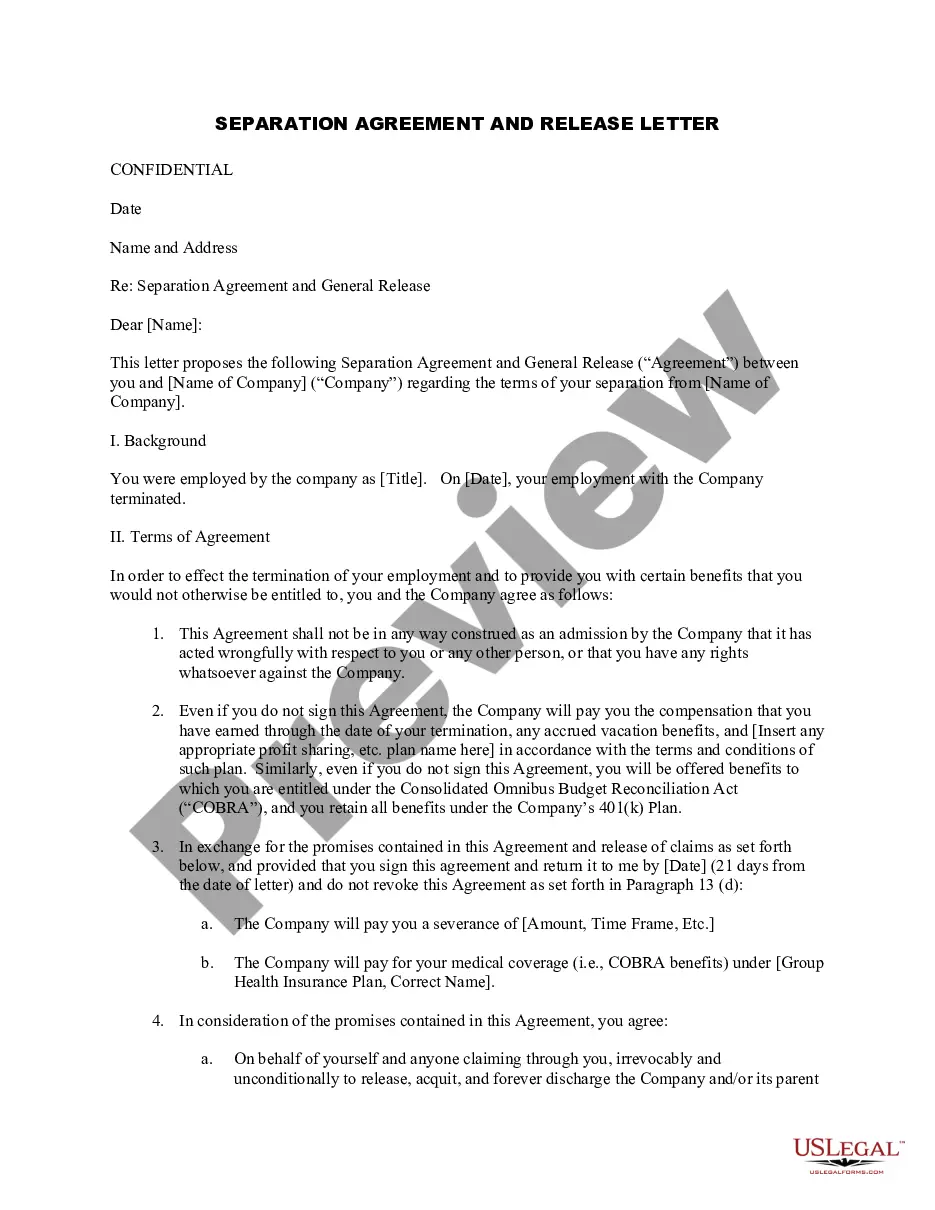
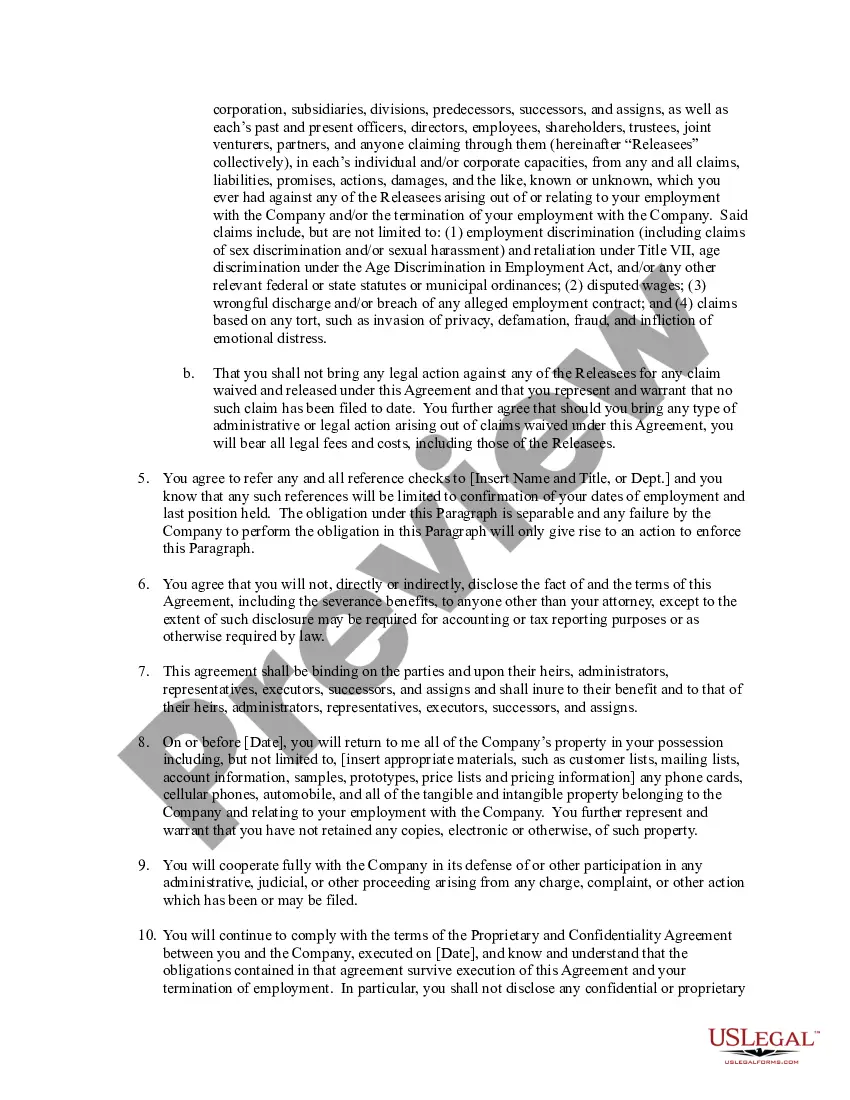
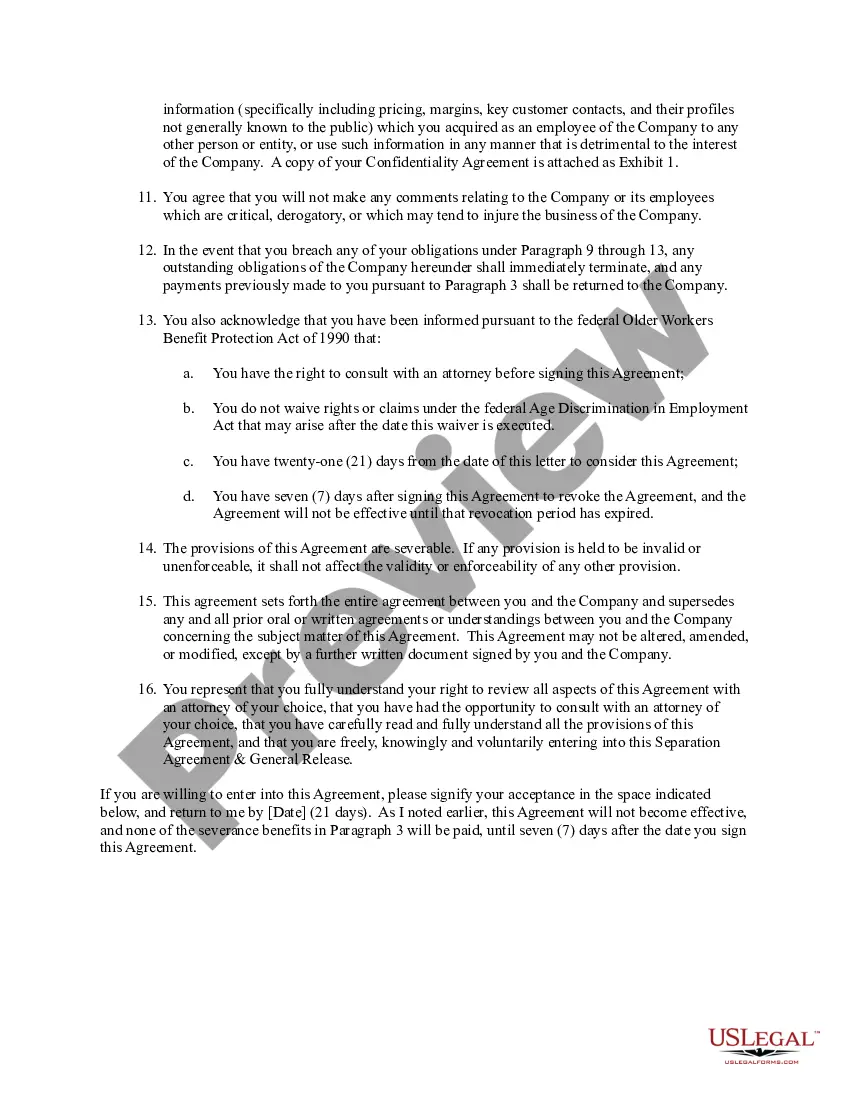
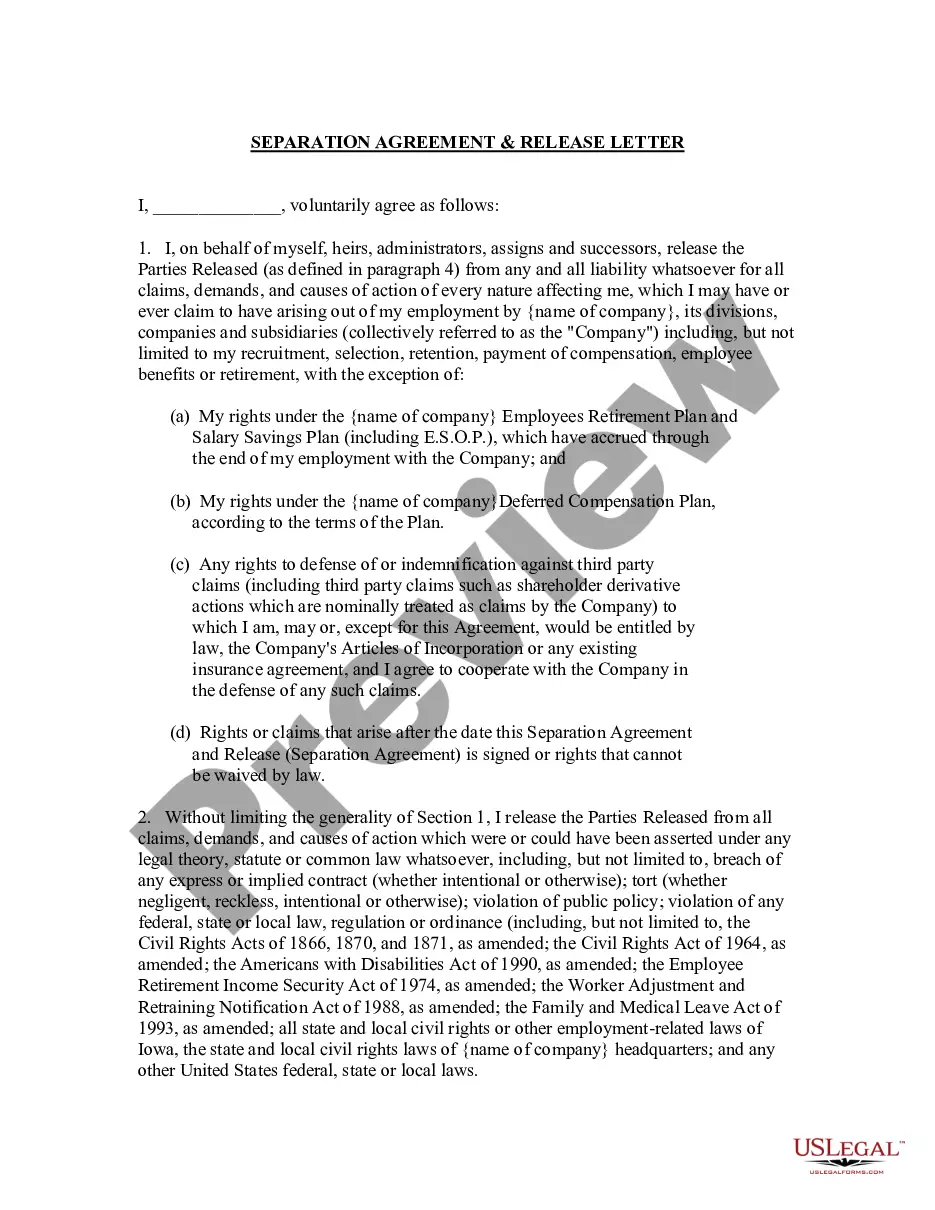
Delaware Separation Agreement and Release Letter for Exiting Employee
Description
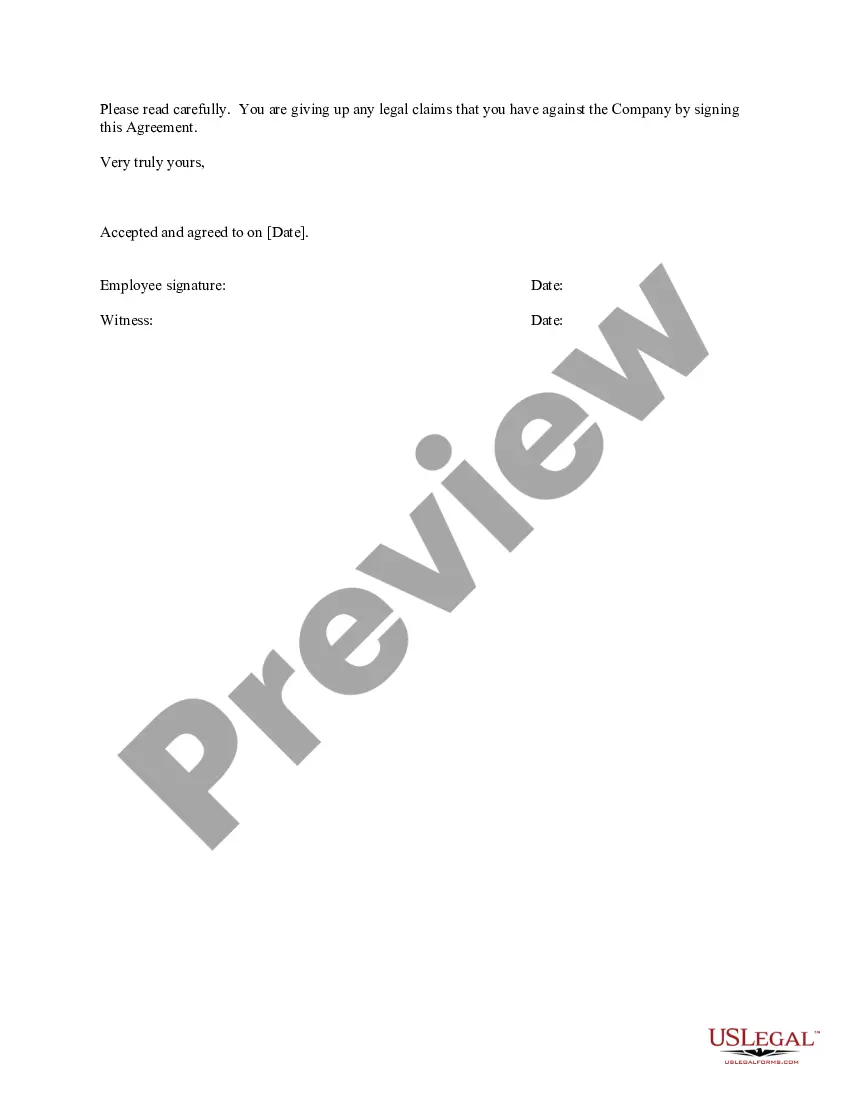
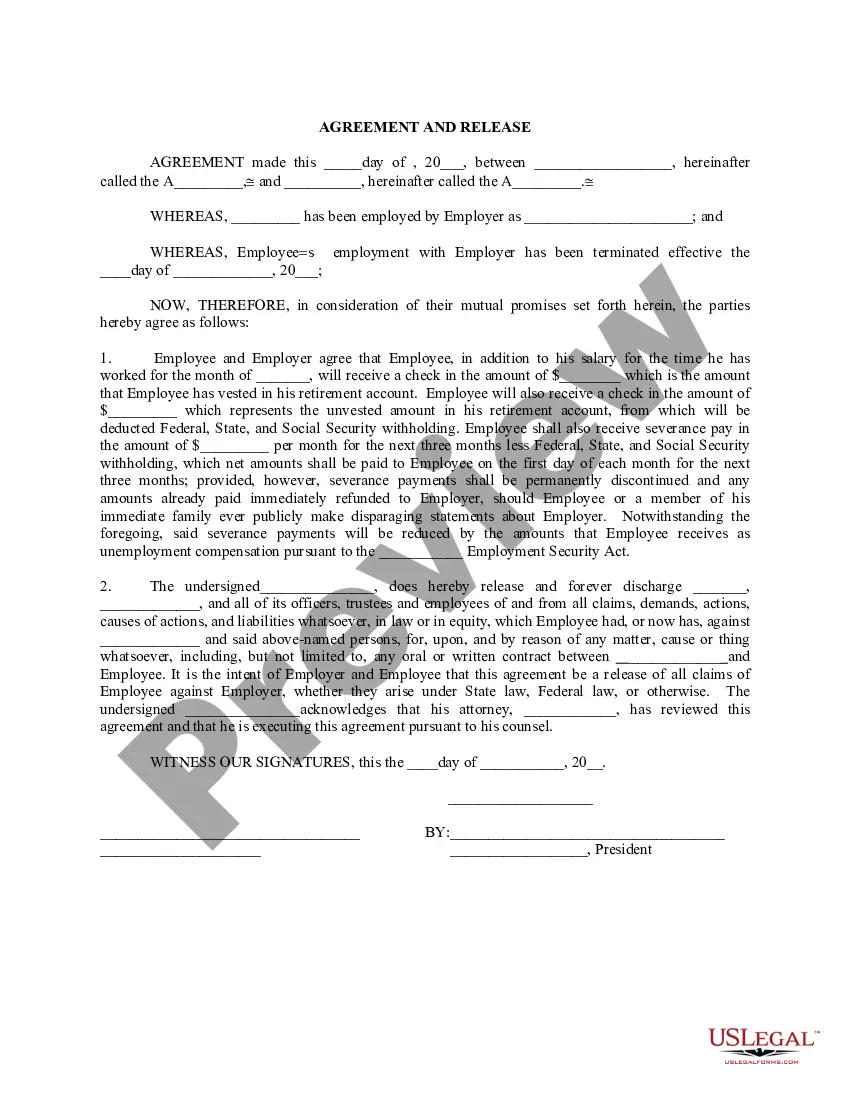
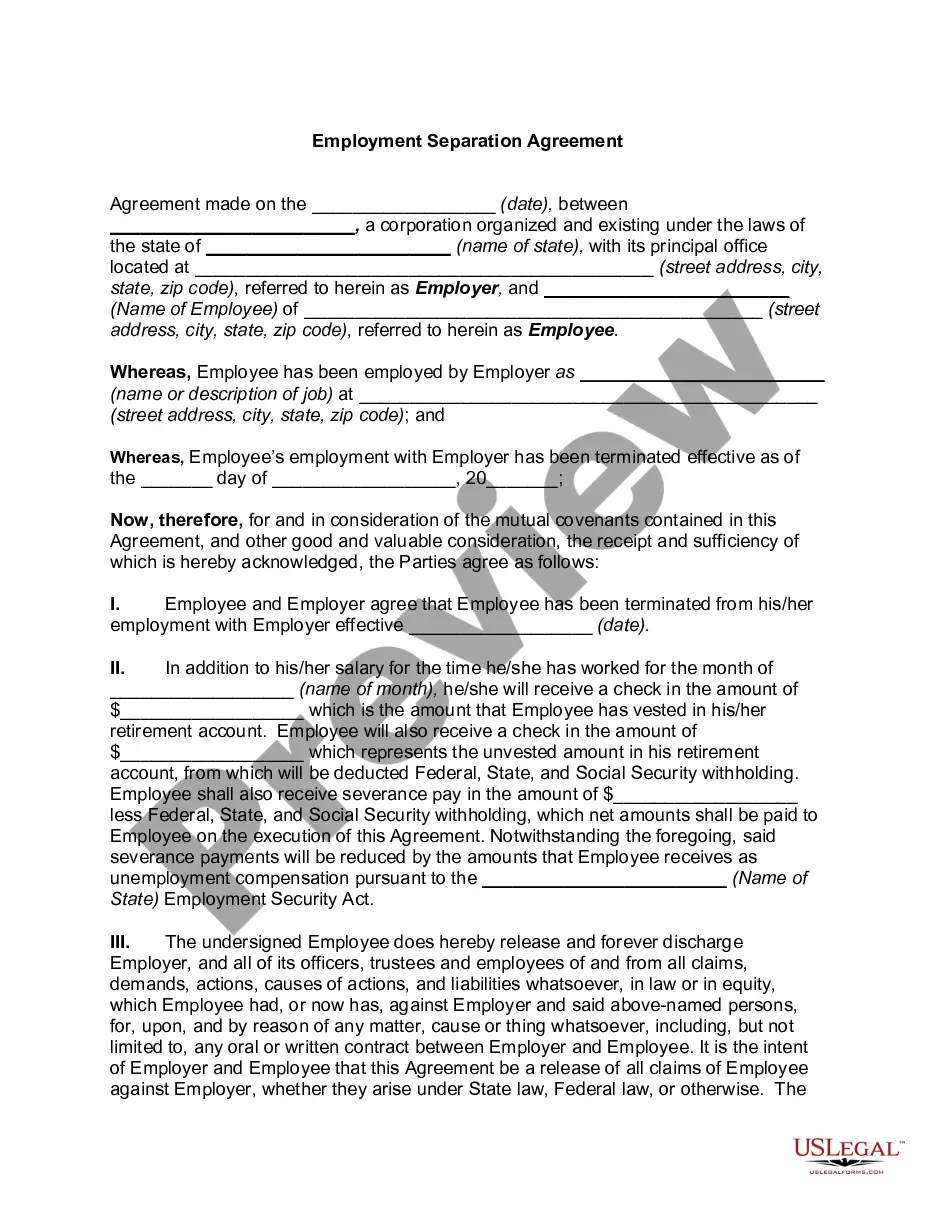
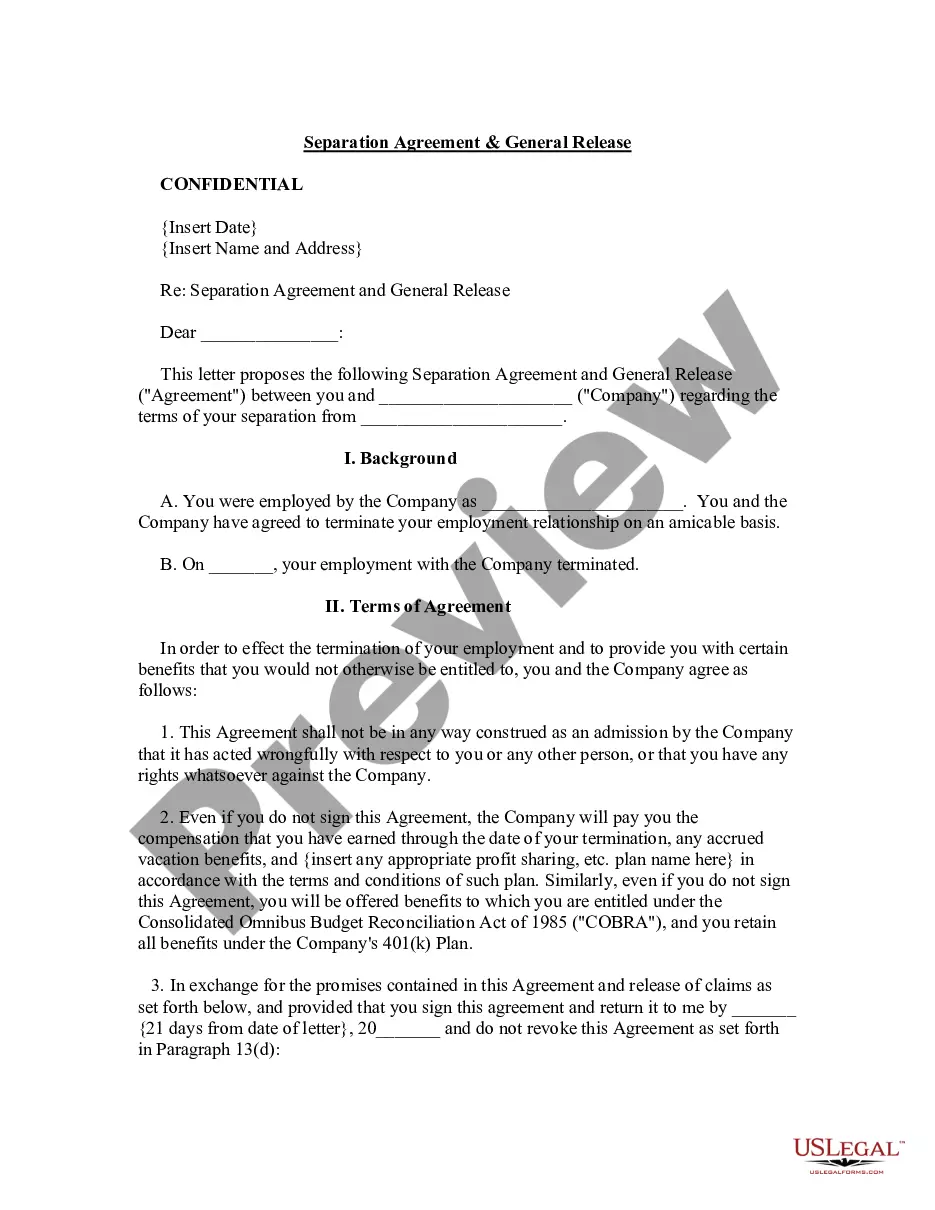
Get your form ready online
Our built-in tools help you complete, sign, share, and store your documents in one place.
Make edits, fill in missing information, and update formatting in US Legal Forms—just like you would in MS Word.
Download a copy, print it, send it by email, or mail it via USPS—whatever works best for your next step.
Sign and collect signatures with our SignNow integration. Send to multiple recipients, set reminders, and more. Go Premium to unlock E-Sign.
If this form requires notarization, complete it online through a secure video call—no need to meet a notary in person or wait for an appointment.
We protect your documents and personal data by following strict security and privacy standards.

Make edits, fill in missing information, and update formatting in US Legal Forms—just like you would in MS Word.

Download a copy, print it, send it by email, or mail it via USPS—whatever works best for your next step.

Sign and collect signatures with our SignNow integration. Send to multiple recipients, set reminders, and more. Go Premium to unlock E-Sign.

If this form requires notarization, complete it online through a secure video call—no need to meet a notary in person or wait for an appointment.

We protect your documents and personal data by following strict security and privacy standards.
Looking for another form?


How to fill out Separation Agreement And Release Letter For Exiting Employee?
Locating the appropriate legitimate document format can be challenging.
It's no surprise that numerous templates are available online, but how can you find the genuine form you need.
Visit the US Legal Forms website. This service offers thousands of templates, including the Delaware Separation Agreement and Release Letter for Departing Employee, which you can utilize for business and personal purposes.
You can browse the form using the Review button and examine the form description to ensure it is suitable for you.
- All forms are reviewed by professionals and meet state and federal standards.
- If you already have an account, Log In and click the Obtain button to access the Delaware Separation Agreement and Release Letter for Departing Employee.
- Use your account to review the legal documents you may have acquired previously.
- Navigate to the My documents section of your account to obtain another copy of the documents you need.
- If you are a new user of US Legal Forms, here are some simple steps to follow.
- First, make sure you have selected the correct form for your city/county.
Form popularity
FAQ
Employee separation or separation of employment refers to the process of managing the end of the employment cycle. There are many different types of separations which include both voluntary and involuntary. ESC recommends a formal process for all types of separation.
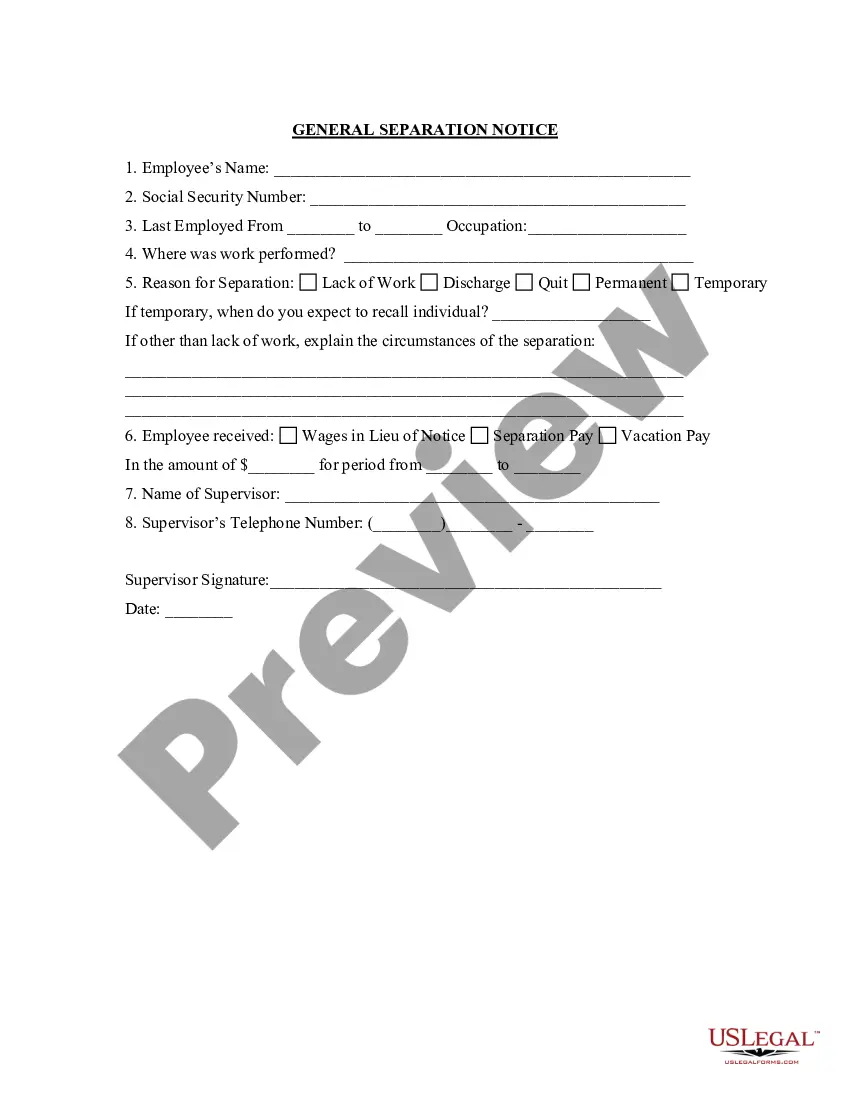
A general separation notice is a written communication from an employer or an employee saying that the employment relationship is ending.
When a company ends an employee's job, they typically provide a termination letter, also called a letter of separation, stating the reason for termination and next steps. A termination letter is an official and professional way to document and describe the separation between the employee and employer.
Employment separation occurs when the employment contract or at-will agreement between an employee and his or her company comes to an end. Some terminations will be forced by an employer, including getting fired or laid off. Other separations, like retirement or resignation, will be voluntary.
A separated employee is one who leaves an employment situation for any reason, whether voluntary or involuntary. A terminated employee is involuntarily let go, usually because of poor performance or lack of work.
Resignation and Release means a Resignation and Release to be entered into by each director and officer required by Section 2.8(j) to resign at Closing in form and substance reasonably satisfactory to the Purchaser and each applicable officer and director.
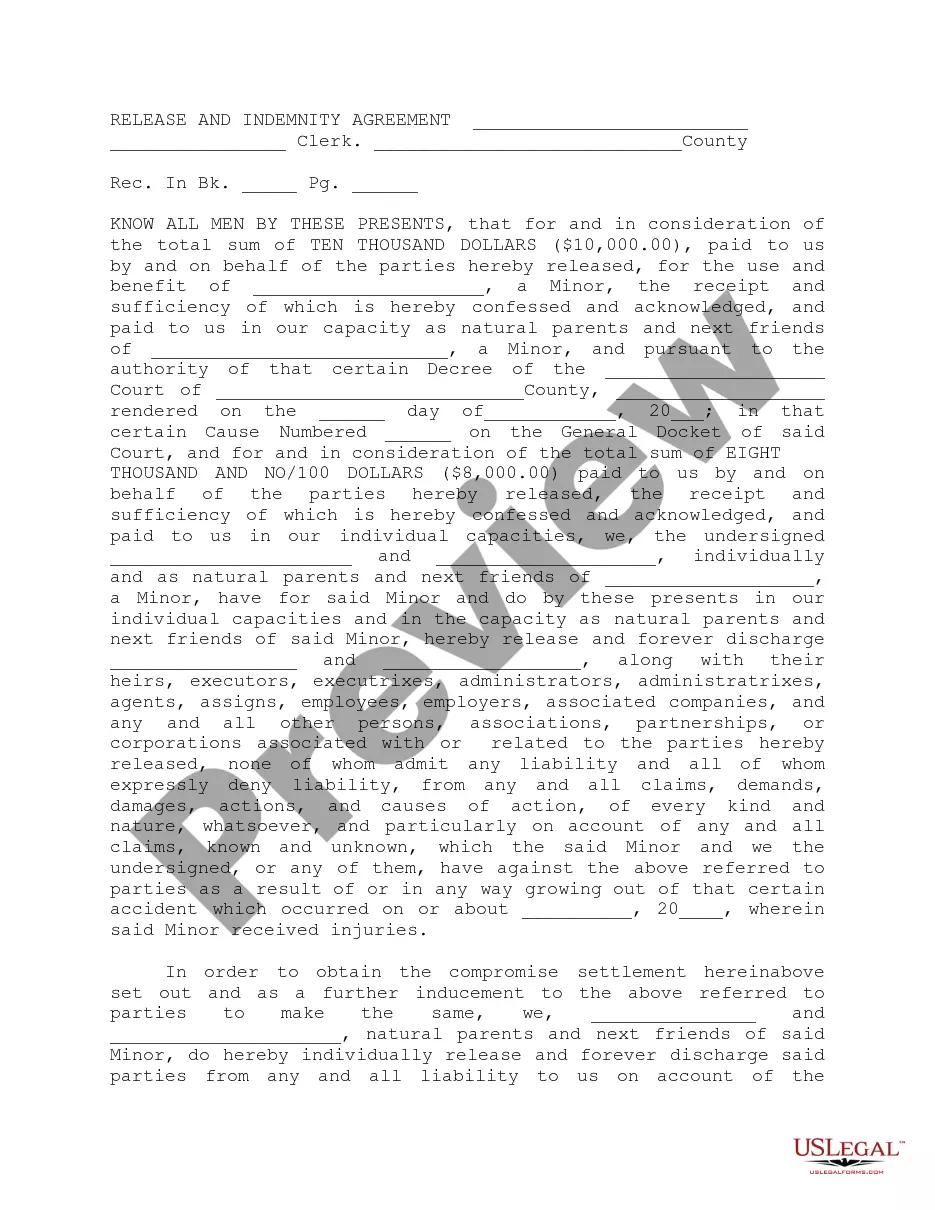
A release is an agreement not to sue; it waives your right to sue and company and "releases" your employer from legal liability for claims you may have against it.
A separation and release agreement is a contract between a company and a departing worker, usually an employee. A properly-drafted separation and release agreement can greatly benefit the company. It can minimize the threat of litigation, guard against the loss of clients or staff, and protect good-will and reputation.
The primary difference between termination and resignation is in who initiates the severance of employment: Resignation means the employee has decided to sever the employment. We usually call this quitting. Termination means the employer has decided to sever the employment.
The main difference between resignation and termination lies in who initiated the severance of employment. With a resignation, you decide to end your employment; whereas in contrast, with a termination, your employer makes the decision to end your employment.