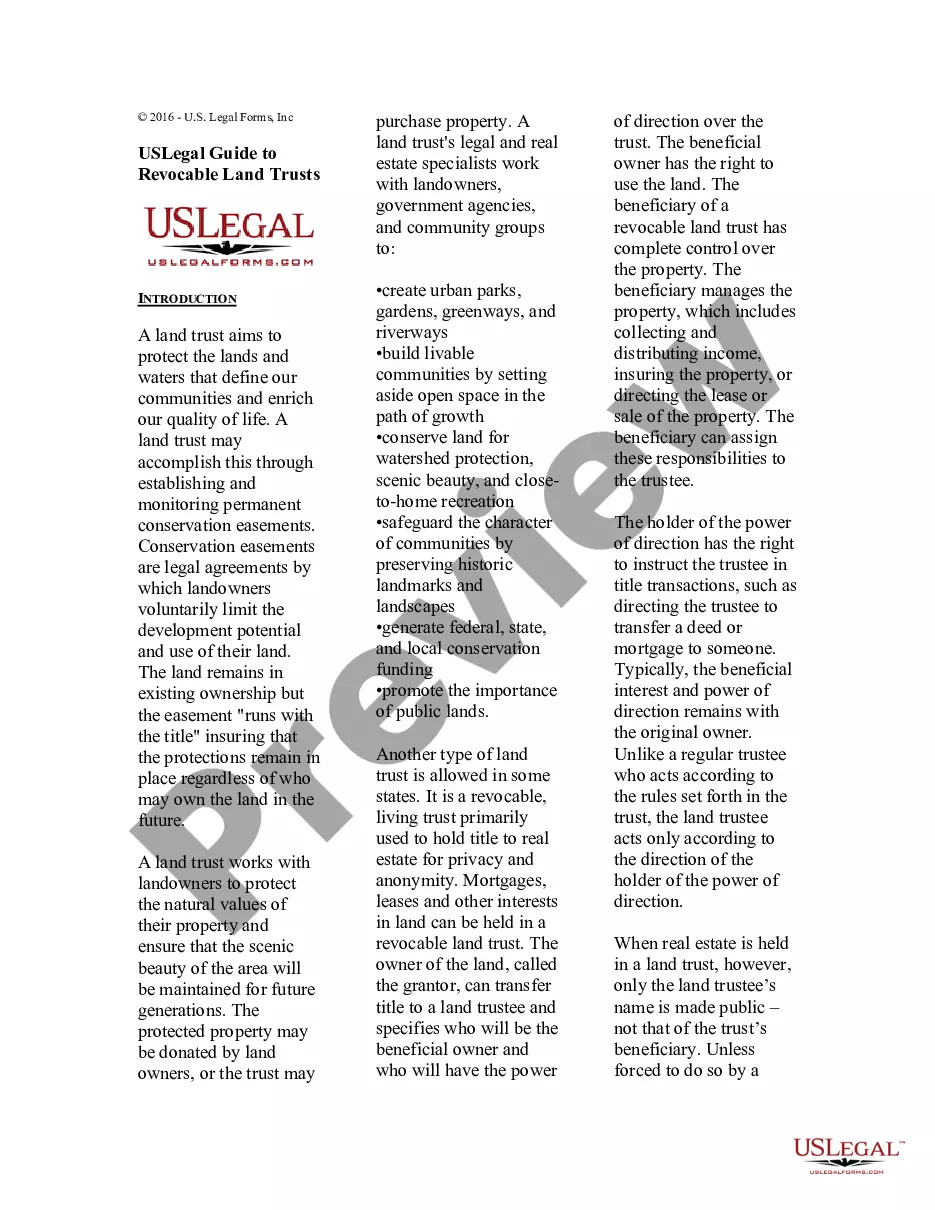
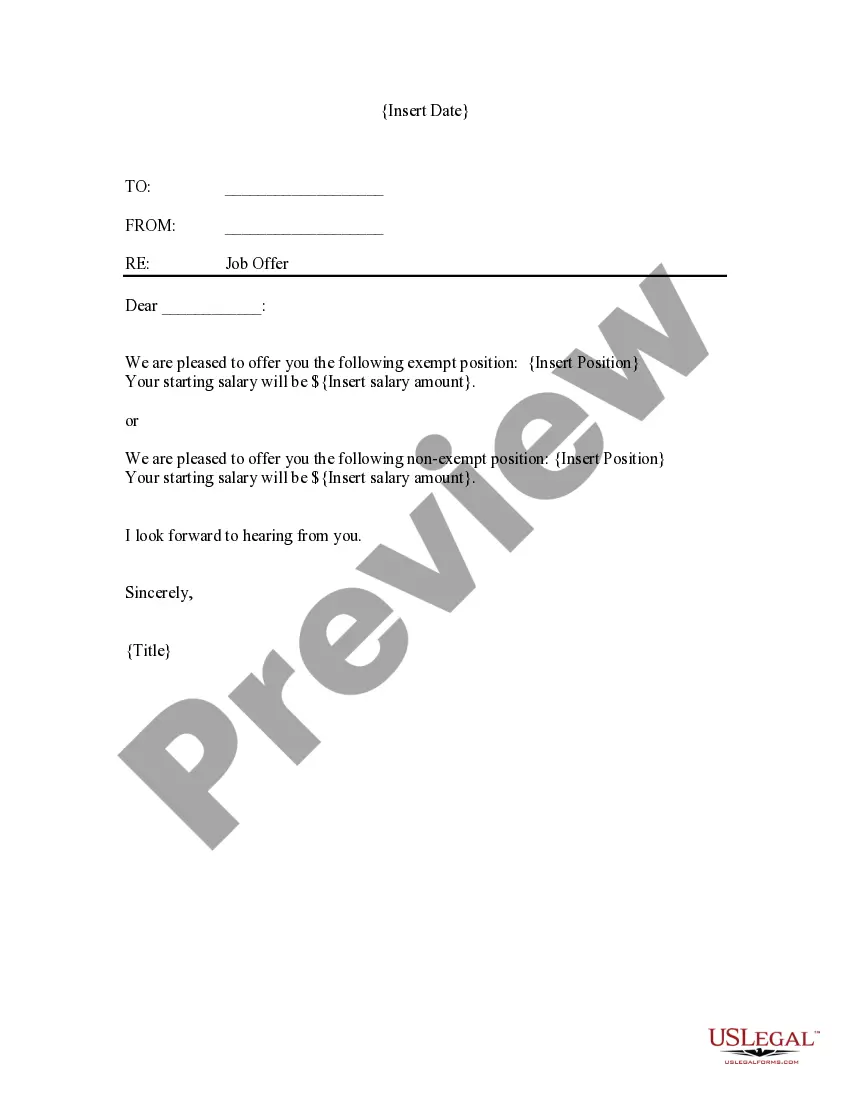
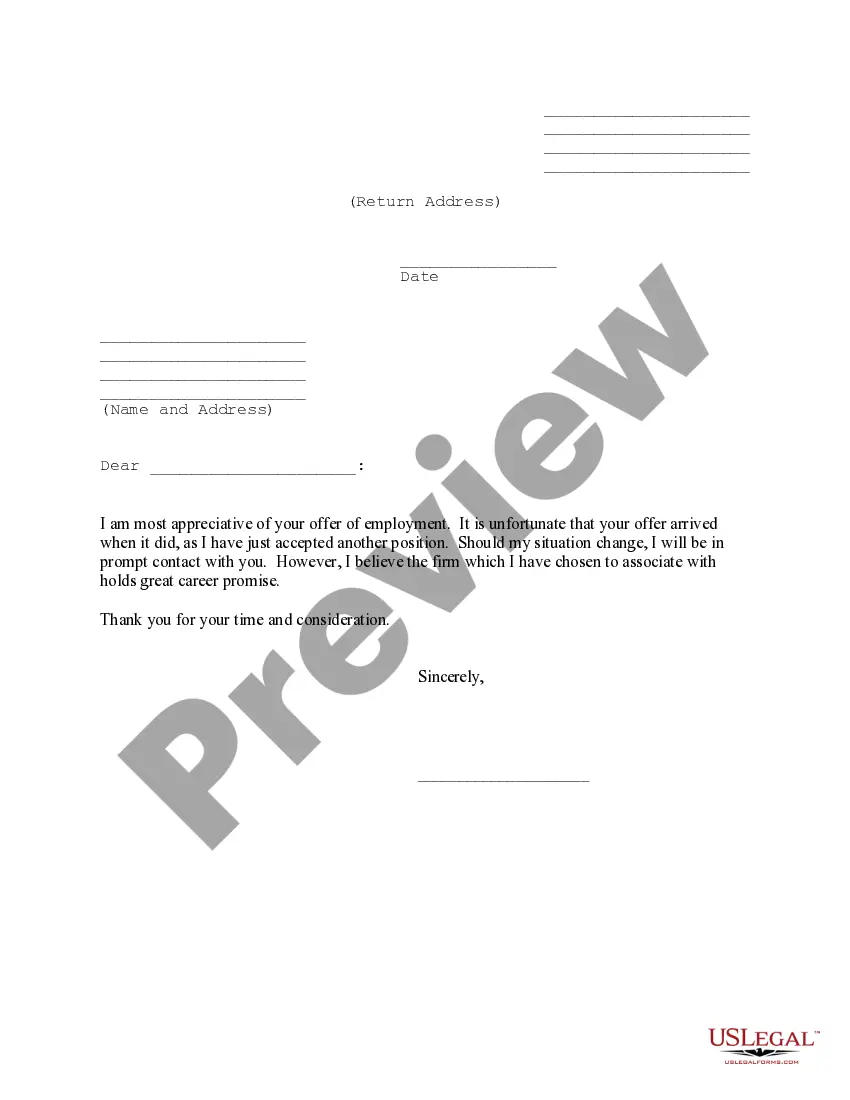
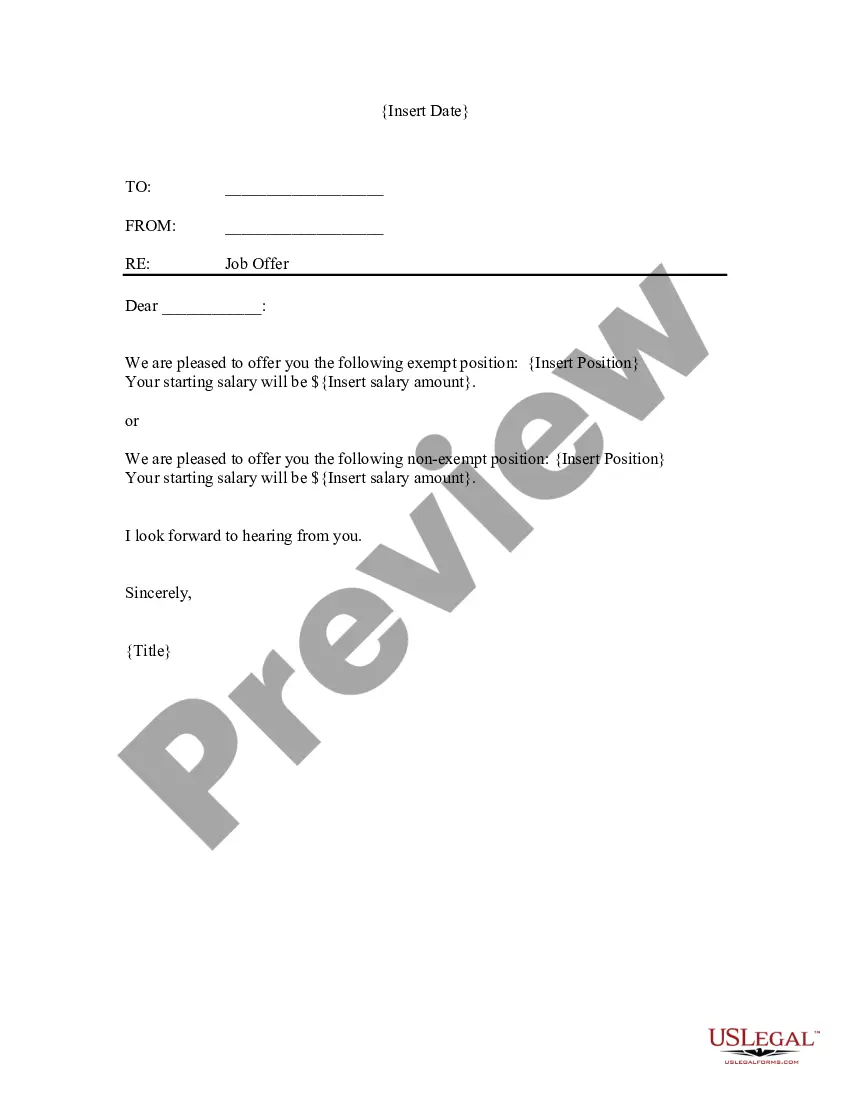
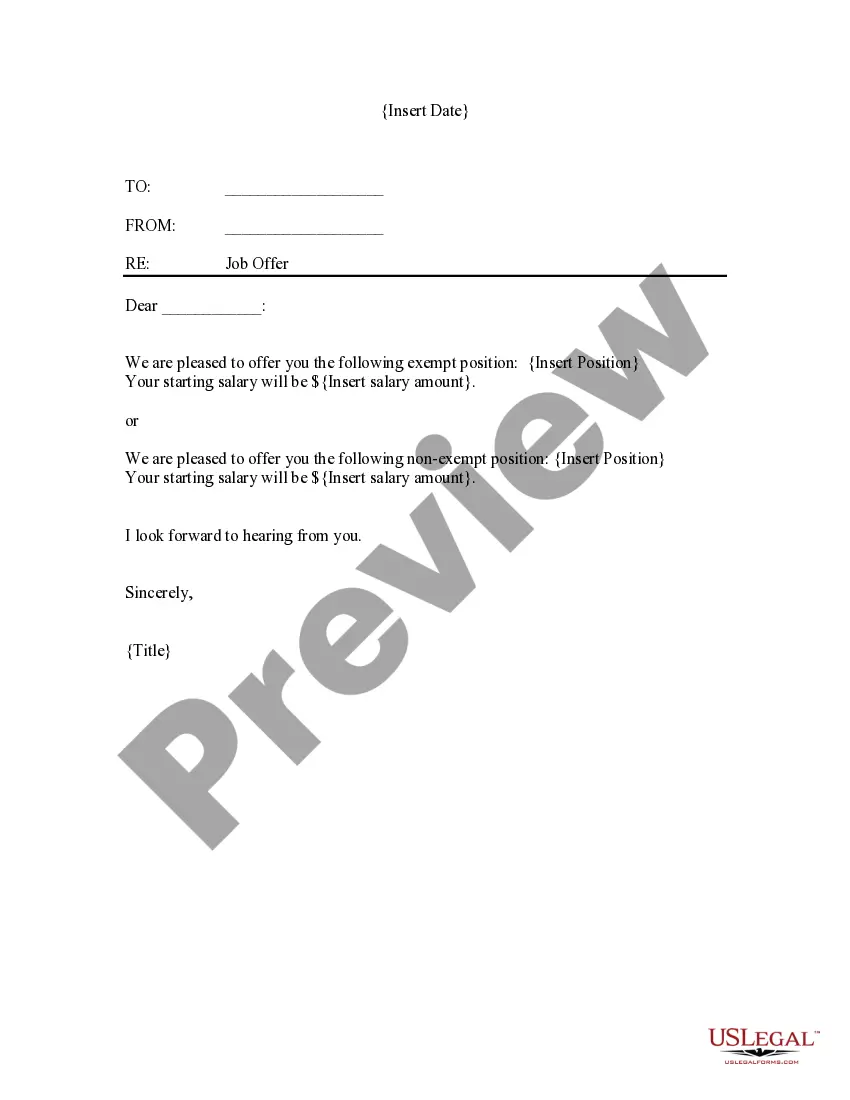
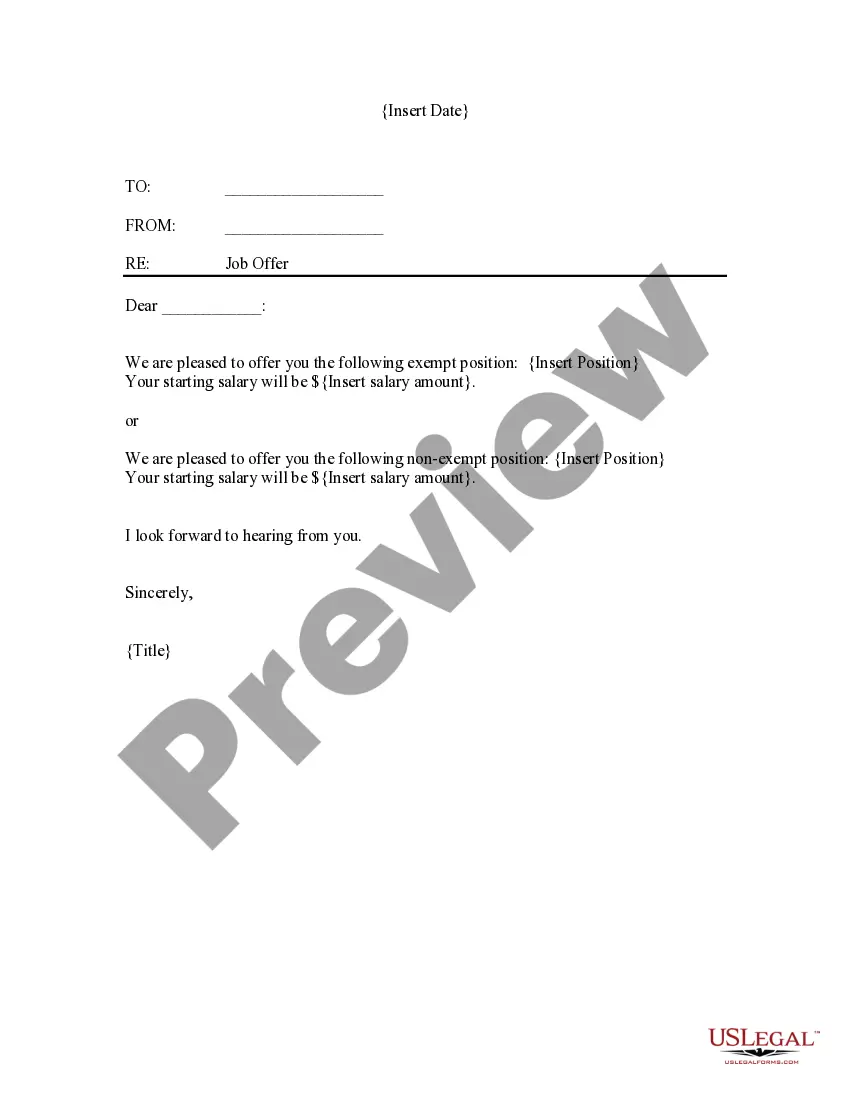
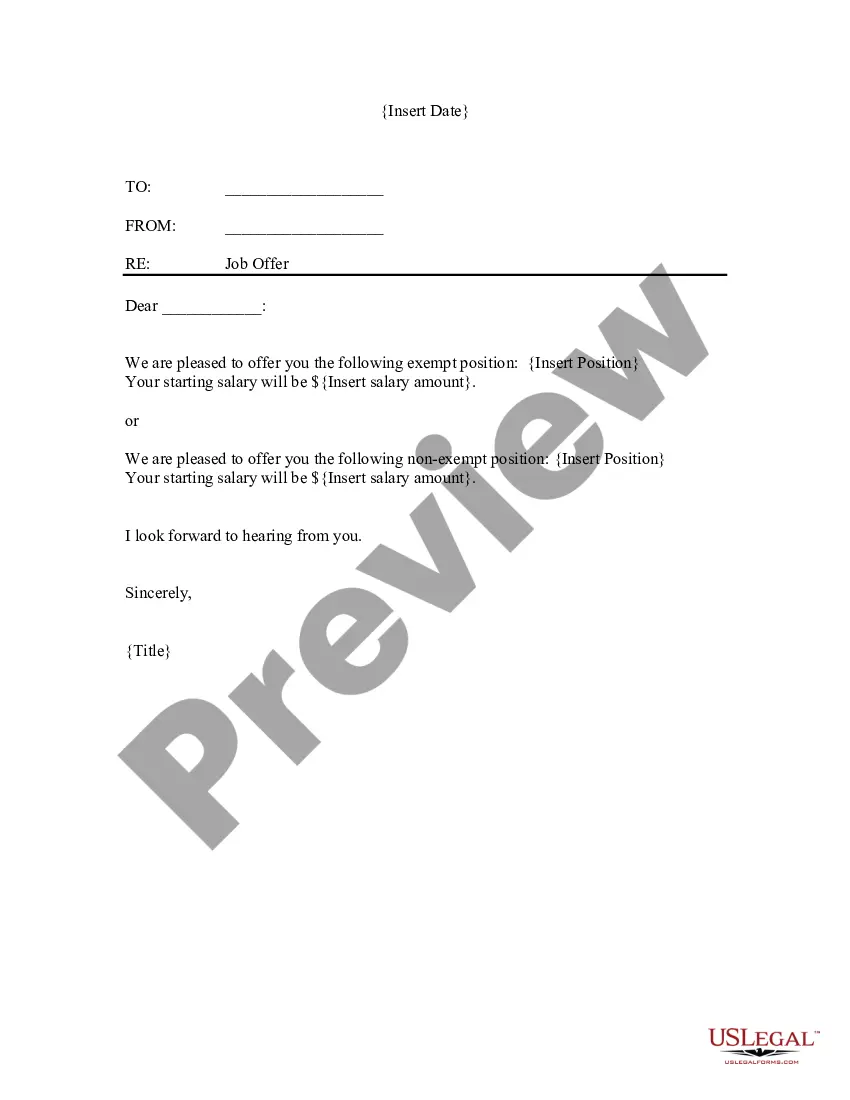
Delaware Job Offer Letter for Part Time
Description
Get your form ready online
Our built-in tools help you complete, sign, share, and store your documents in one place.
Make edits, fill in missing information, and update formatting in US Legal Forms—just like you would in MS Word.
Download a copy, print it, send it by email, or mail it via USPS—whatever works best for your next step.
Sign and collect signatures with our SignNow integration. Send to multiple recipients, set reminders, and more. Go Premium to unlock E-Sign.
If this form requires notarization, complete it online through a secure video call—no need to meet a notary in person or wait for an appointment.
We protect your documents and personal data by following strict security and privacy standards.

Make edits, fill in missing information, and update formatting in US Legal Forms—just like you would in MS Word.

Download a copy, print it, send it by email, or mail it via USPS—whatever works best for your next step.

Sign and collect signatures with our SignNow integration. Send to multiple recipients, set reminders, and more. Go Premium to unlock E-Sign.

If this form requires notarization, complete it online through a secure video call—no need to meet a notary in person or wait for an appointment.

We protect your documents and personal data by following strict security and privacy standards.
Looking for another form?
How to fill out Job Offer Letter For Part Time?
If you need to download, retrieve, or create official document templates, utilize US Legal Forms, the largest assortment of official forms available online.
Take advantage of the website's straightforward and user-friendly search function to locate the documents you require.
Different templates for business and personal uses are categorized by topics and states, or keywords.
Step 4. Once you have found the form you need, select the Get now button. Choose the pricing option you prefer and provide your details to register for an account.
Step 5. Complete the transaction. You can use your credit card or PayPal account to finalize the purchase.
- Utilize US Legal Forms to find the Delaware Job Offer Letter for Part Time in just a few clicks.
- If you are already a US Legal Forms customer, sign in to your account and click the Download button to obtain the Delaware Job Offer Letter for Part Time.
- You can also access forms you previously downloaded in the My documents section of your account.
- If this is your first time using US Legal Forms, follow the steps outlined below.
- Step 1. Ensure you have selected the form for the correct region/state.
- Step 2. Use the Review feature to check the form's content. Be sure to read the details.
- Step 3. If you are not satisfied with the form, use the Search field at the top of the page to find other versions of the official form template.
Form popularity
FAQ
Thank you very much for offering me this exciting opportunity. I understand the terms of the offer, and will be able to give you my response by your requested deadline of February 16.
Some important details about an offer letter are: It is NOT a legally binding contract. It does NOT include promises of future employment or wages. It includes an employment at-will statement.
It should therefore be well-constructed, error-free and contain the following details.Express your thanks. Begin your job offer acceptance letter by thanking your new employer for offering you the position.Officially accept the job offer.Clarify the salary and benefits.Note your start date.Conclude on a positive note.
A letter of employment, also known as an employment verification letter, is a document that confirms an individual's working status. Professionals may need to write these on behalf of their team members to provide financial information for third-party organizations, such as mortgage lenders and landlords.
After an informal job offer, respond to the person you spoke with to get more information. Start your email or letter telling them you enjoyed speaking with them, are interested in talking more about coming to work for the company, and would like more information.
In general, offer letters are less formal than employment contracts, which typically set terms and conditions of employment that are legally binding. It's also vital for employers to understand that they aren't required by federal law to send an offer letter to new hires.
Dear, Thank you for offering me the position of Name of Position at Name of Company. I am delighted to accept your offer and very excited to begin this journey. As we have previous discussed / As stated in the offer letter, I accept my starting salary of Salary for this position.
3. Accept or decline the offerFormally accept the job. Directly state that you agree to the terms of the position at the beginning of your email.Express your thanks.Confirm employment details.Ask about final steps.Notify other employers.Formally decline the job.Consider providing a reason.Thank the employer.More items...?
Whereas an offer letter is unofficial (avoiding statements that promise future wages or employment), an employment contract is exactly the opposite, setting wages and length of employment in legally binding stone.
There's nothing illegal about the employer asking for that information. Of course, you don't have to provide it if you don't want to, but if their intention is to use it to counter-offer, it may actual help you to give them the information they're requesting.