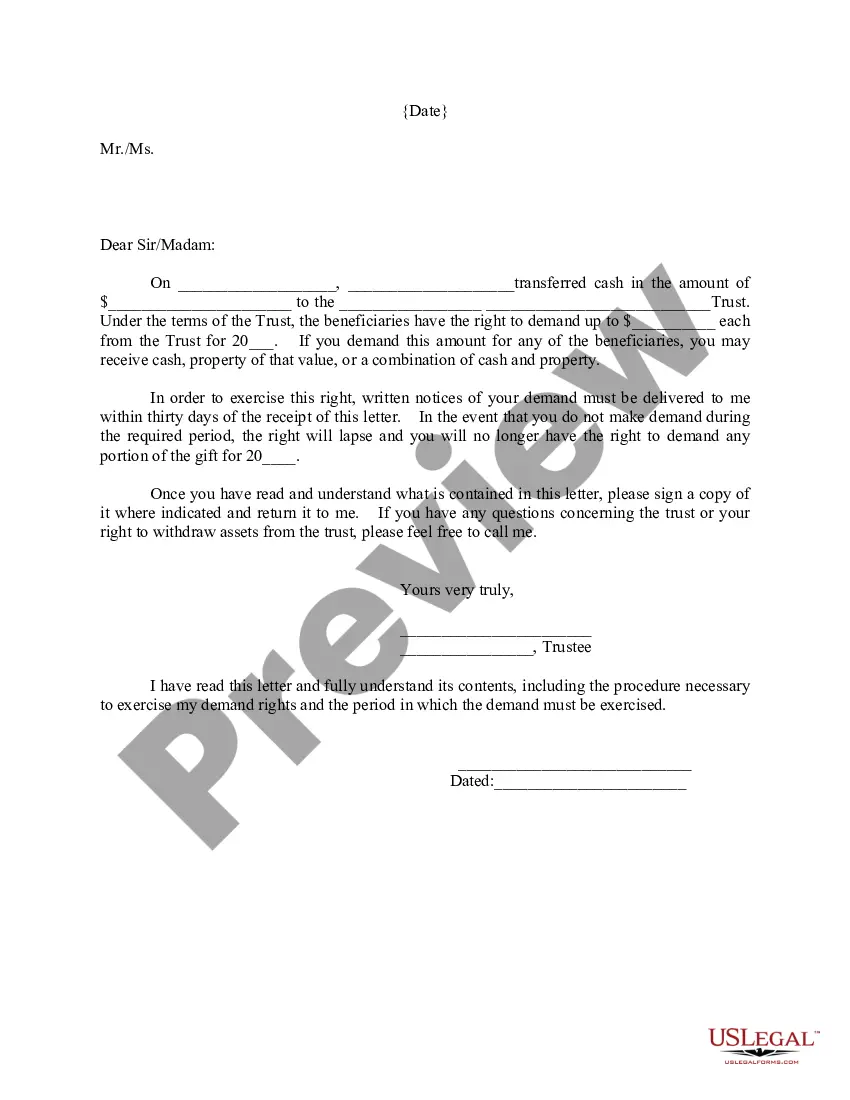
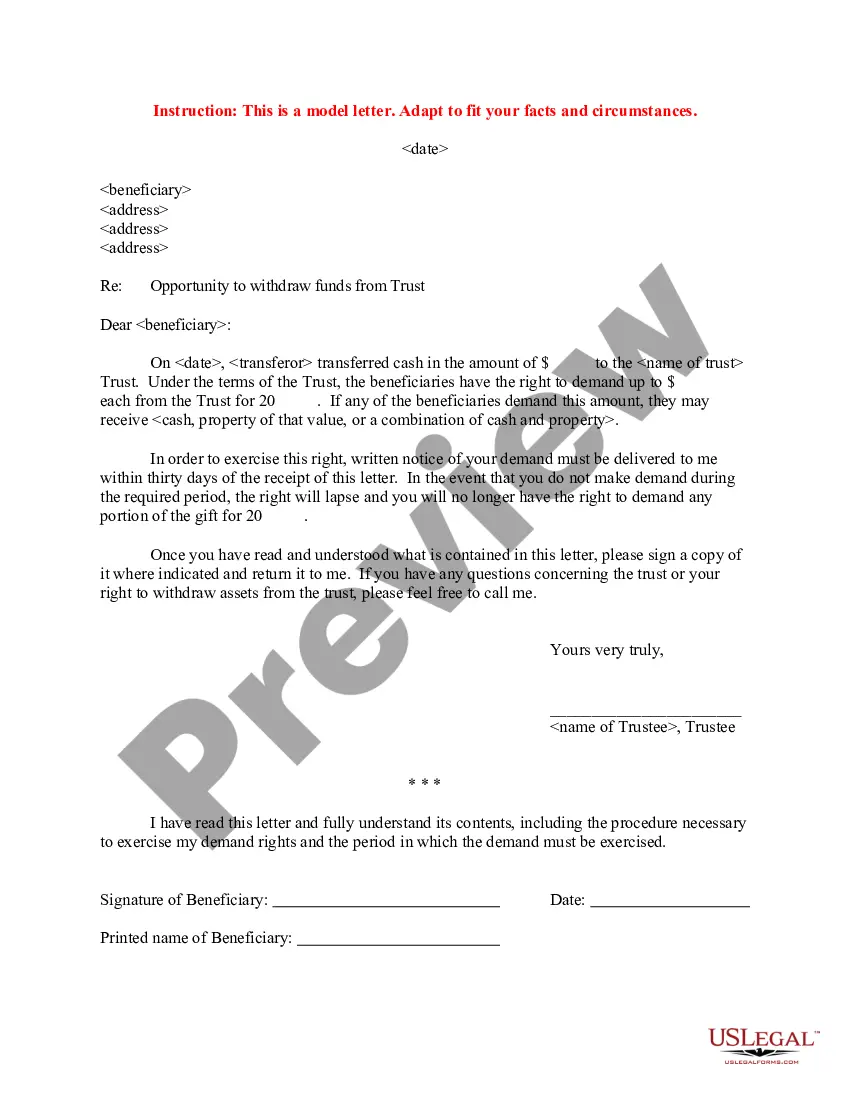
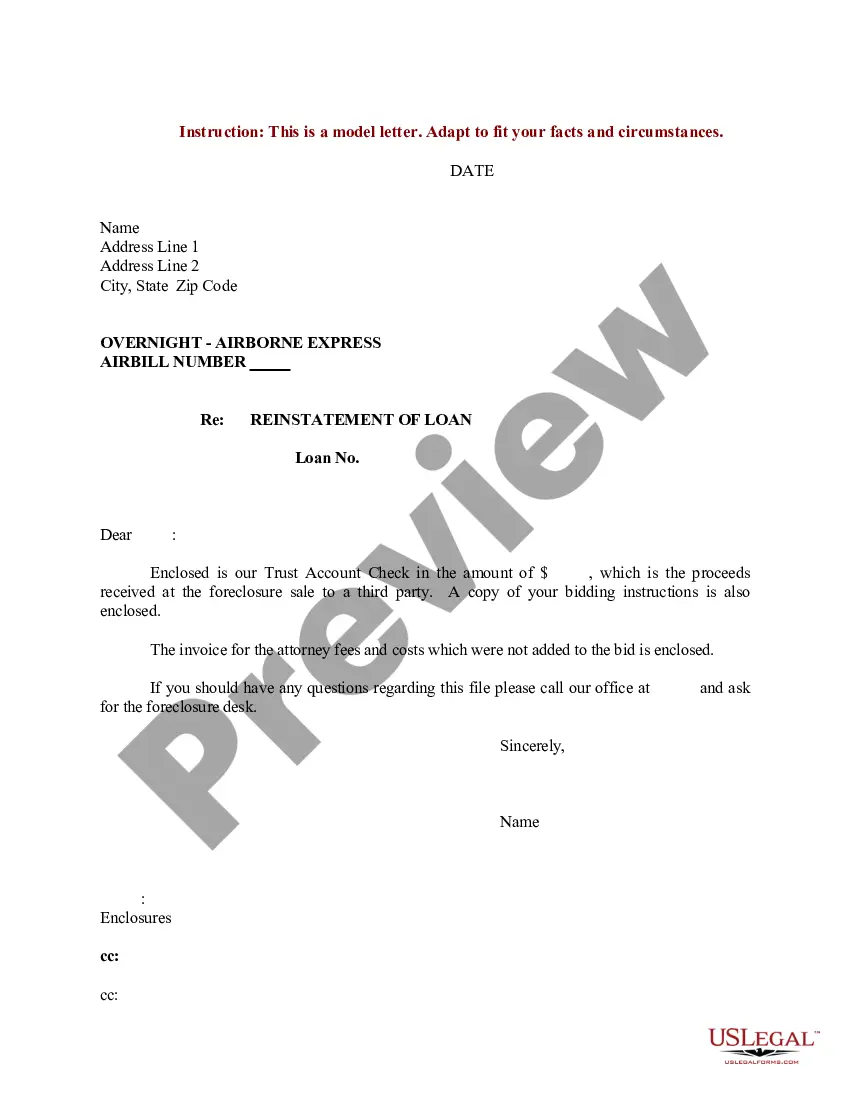
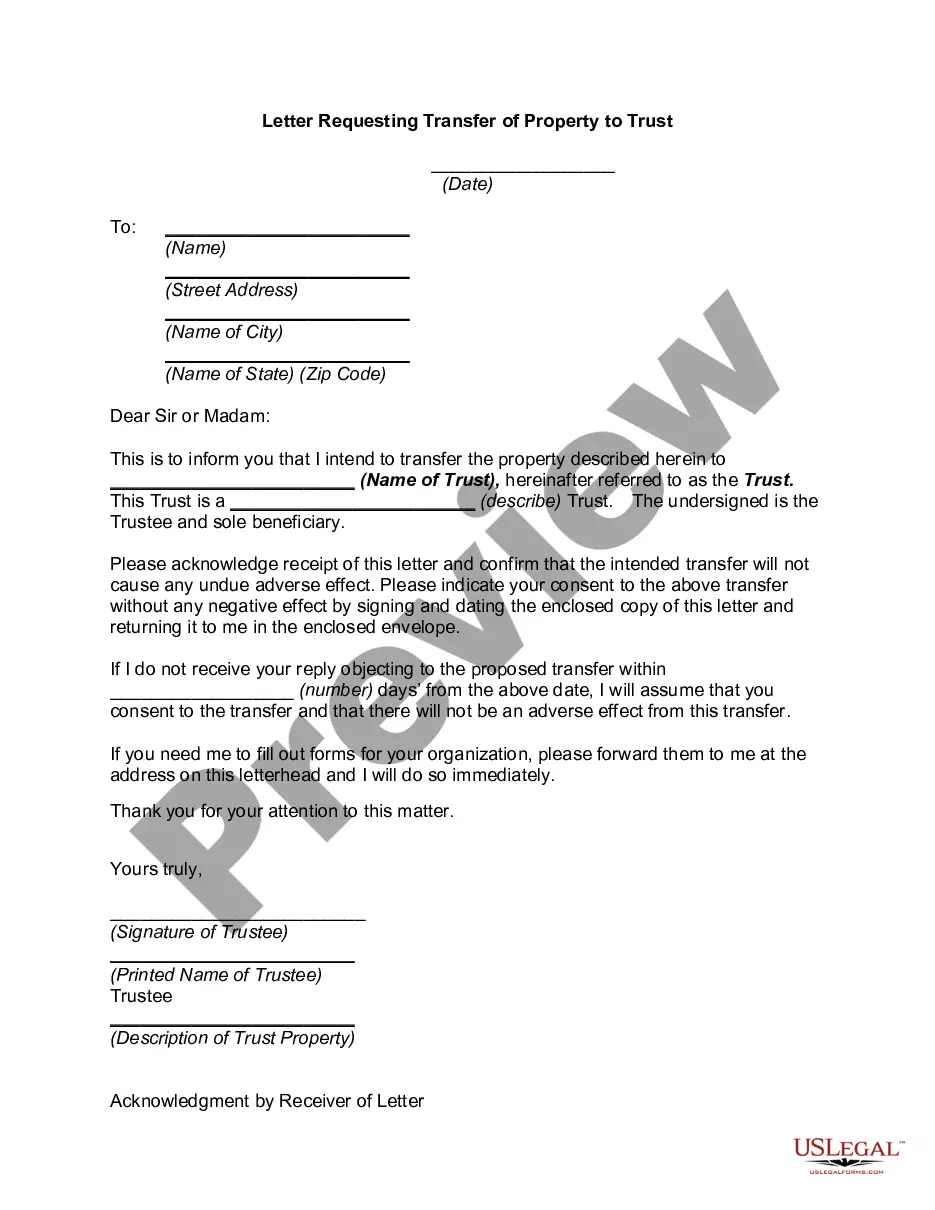
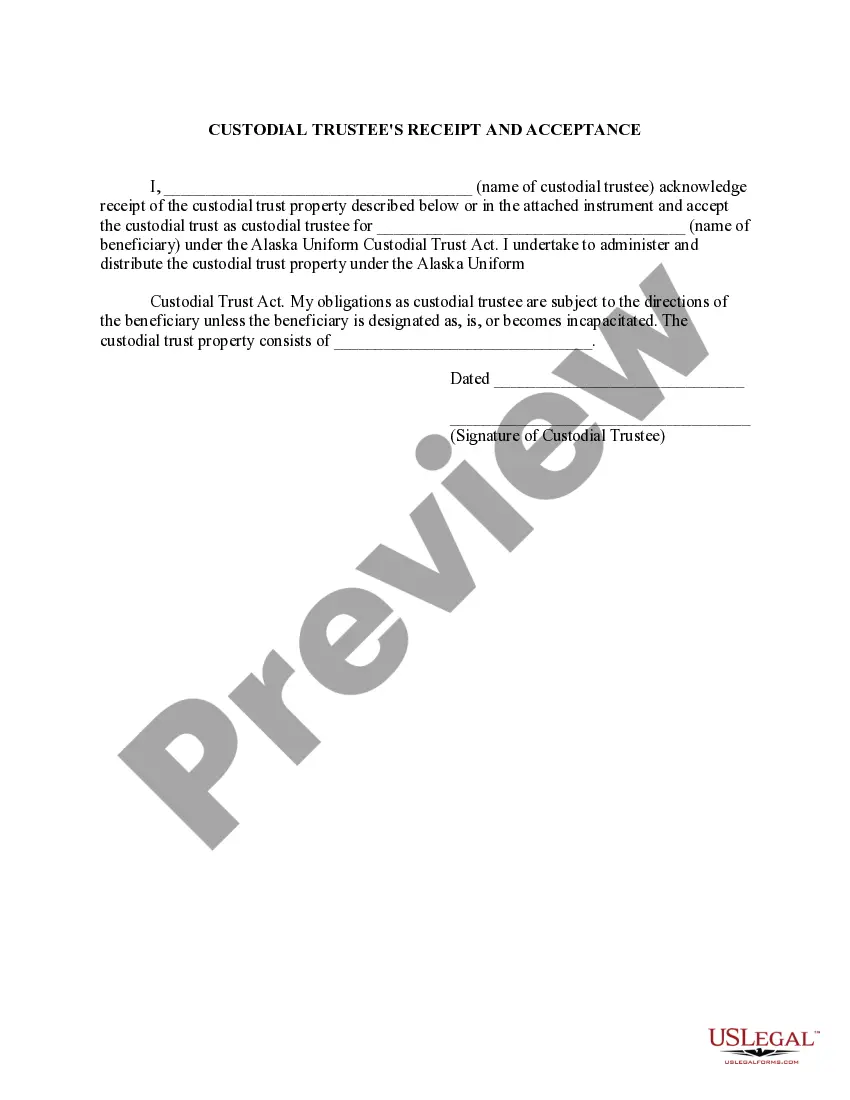
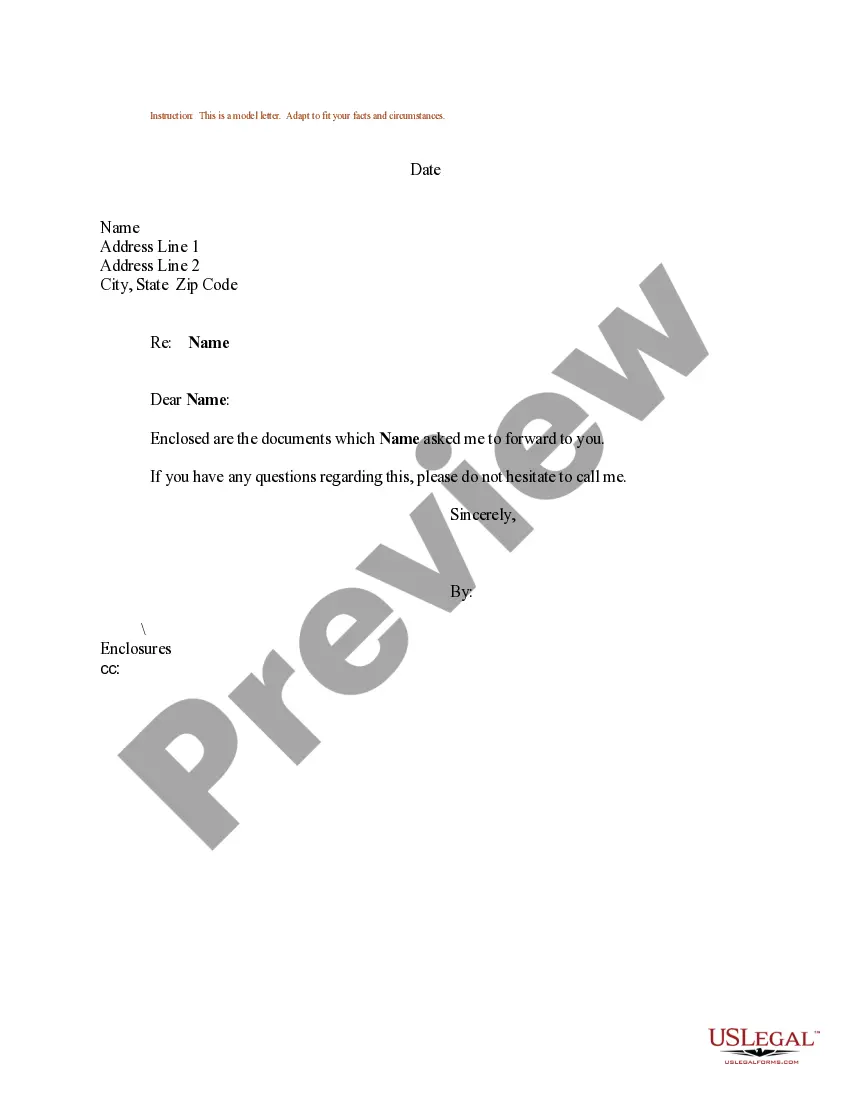
Trustee informs the trustor that he/she has the right to demand a certain amount of funds from the trust during the year. If the trustor demands a withdrawal for any of the beneficiaries, he/she may receive cash, property of that value, or a combination of cash and property.
Delaware Letter regarding trust money
Instant download
Description
Get your form ready online
Our built-in tools help you complete, sign, share, and store your documents in one place.
Built-in online Word editor
Make edits, fill in missing information, and update formatting in US Legal Forms—just like you would in MS Word.
Export easily
Download a copy, print it, send it by email, or mail it via USPS—whatever works best for your next step.
E-sign your document
Sign and collect signatures with our SignNow integration. Send to multiple recipients, set reminders, and more. Go Premium to unlock E-Sign.
Notarize online 24/7
If this form requires notarization, complete it online through a secure video call—no need to meet a notary in person or wait for an appointment.
Store your document securely
We protect your documents and personal data by following strict security and privacy standards.

Make edits, fill in missing information, and update formatting in US Legal Forms—just like you would in MS Word.

Download a copy, print it, send it by email, or mail it via USPS—whatever works best for your next step.

Sign and collect signatures with our SignNow integration. Send to multiple recipients, set reminders, and more. Go Premium to unlock E-Sign.

If this form requires notarization, complete it online through a secure video call—no need to meet a notary in person or wait for an appointment.

We protect your documents and personal data by following strict security and privacy standards.
Looking for another form?





How to fill out Letter Regarding Trust Money?
US Legal Forms - one of the largest repositories of legal documents in the United States - provides a vast selection of legal form templates that you can download or create.
By utilizing the website, you can access thousands of forms for business and personal purposes, organized by categories, states, or keywords. You can find the latest versions of forms such as the Delaware Letter concerning trust money in mere seconds.
If you already have a membership, Log In and obtain the Delaware Letter concerning trust money from the US Legal Forms library. The Download button will appear on every form you view. You can access all previously downloaded forms from the My documents section of your account.
Process the transaction. Use your credit card or PayPal account to complete the transaction.
Select the format and download the form to your device. Edit. Complete, modify, and print and sign the downloaded Delaware Letter concerning trust money. Each template you added to your account has no expiration date and is yours forever. So, if you wish to download or print another copy, simply go to the My documents section and click on the form you need.
- Make sure to have selected the correct form for your city/state.
- Click the Preview button to review the content of the form.
- Check the form description to ensure you have chosen the accurate form.
- If the form does not meet your requirements, use the Search field at the top of the screen to find one that does.
- If you are satisfied with the form, confirm your selection by clicking the Acquire now button.
- Then, choose the pricing plan you prefer and provide your information to register for an account.
Form popularity
FAQ
Delaware Code 3591 pertains to specific provisions related to trusts and estate planning. It outlines the rights and responsibilities of trustees and beneficiaries. Knowing this code is crucial for effectively managing trust assets and ensuring compliance with Delaware law.
Financial Accounts: There are several types of financial assets that can be owned by a trust, including:Bonds and stock certificates.Shareholders stock from closely held corporations.Non-retirement brokerage and mutual fund accounts.Money market accounts, cash, checking and savings accounts.Annuities.More items...?
Delaware has a state fiduciary income tax on income accumulated in a non-grantor trust where the trust itself, and not the grantor, is taxed on income earned by the trust. However, there is a full exemption from this tax if the income is accumulated for beneficiaries who are not current Delaware residents.
How Can I Get My Money Out of a Trust?Create a Revocable Trust. There are revocable and irrevocable living trusts.List Your Rights. Spell out your right to withdraw money in the trust documents.Name Yourself a Trustee. Put the name of the trust, with yourself as trustee, on the ownership documents.Transfer Your Assets.
What Assets Should Go Into a Trust?Bank Accounts. You should always check with your bank before attempting to transfer an account or saving certificate.Corporate Stocks.Bonds.Tangible Investment Assets.Partnership Assets.Real Estate.Life Insurance.
If you named yourself as the initial Trustee, your bank account will list your name as Trustee in place of your individual name. Most banks can finalize the change in ownership to the Trust and keep the same account numbers. However, some banks may require new account numbers for your Trust.
How to Fund a Trust: Bank Accounts and Other Financial AccountsContact your bank to see what's required to transfer your accounts to the Trust. Your bank will provide any necessary forms.Complete, sign and return forms to your bank.Have the bank change the title to the Trustee of the Trust.
To transfer real property into your Trust, a new deed reflecting the name of the Trust must be executed, notarized and recorded with the County Recorder in the County where the property is located. Care must be taken that the exact legal description in the existing deed appears on the new deed.
Assets That Can And Cannot Go Into Revocable TrustsReal estate.Financial accounts.Retirement accounts.Medical savings accounts.Life insurance.Questionable assets.
For trusts, distributions are taxable to the beneficiary, and the trust must file a Schedule K-1 for each beneficiary paid. The beneficiary will then report the income on their tax return. The trust must also generate a Form 1041 to report the total amount of income the trust earned from the grantor's date of death.