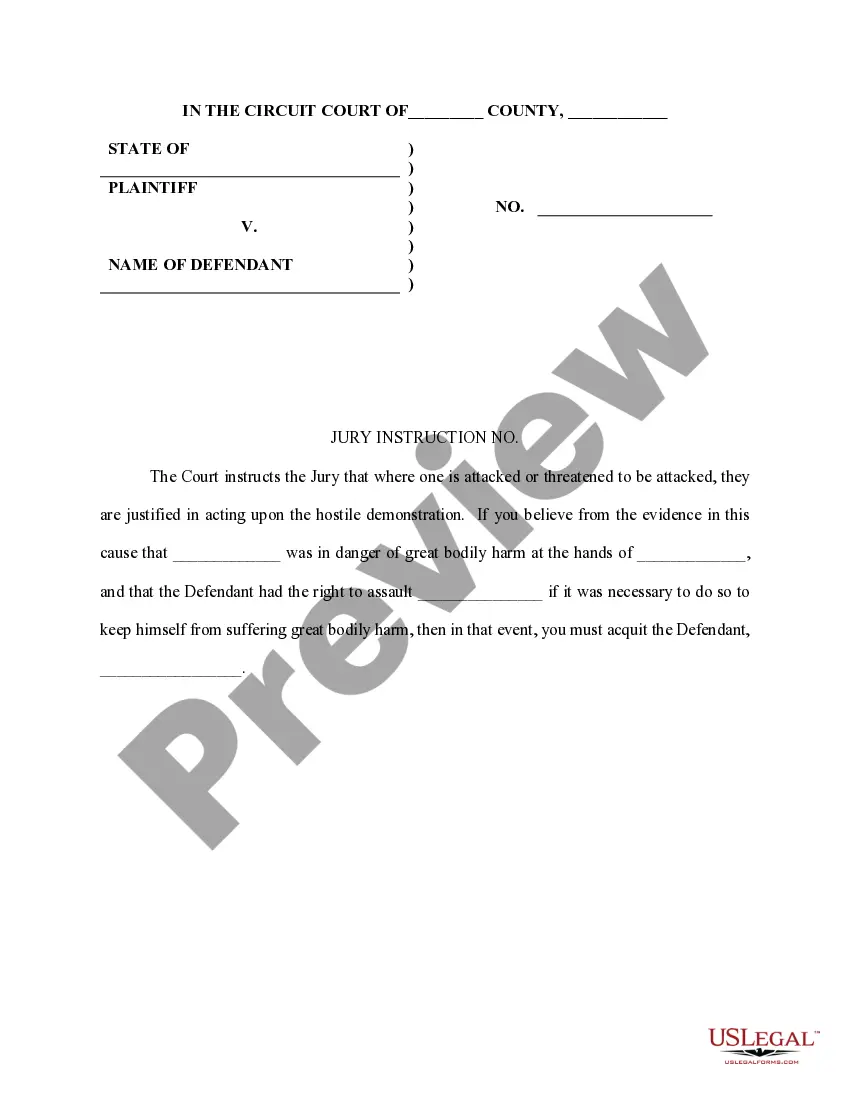
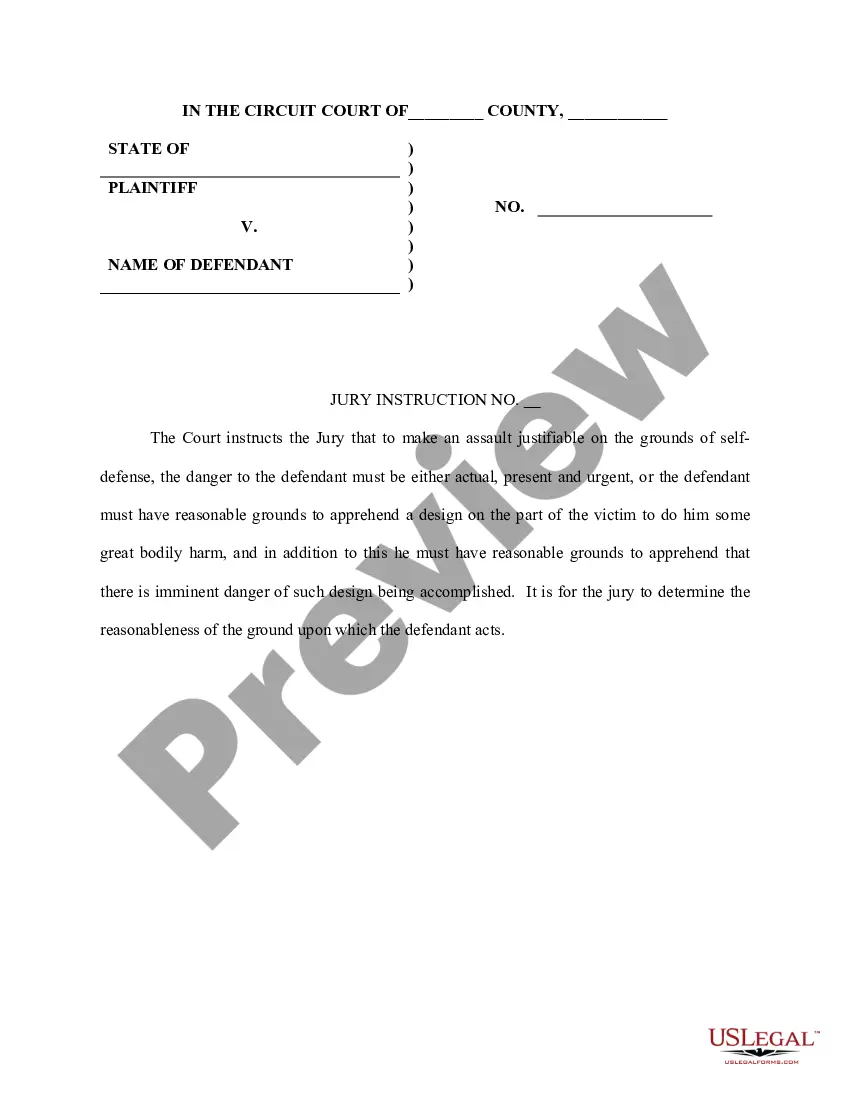
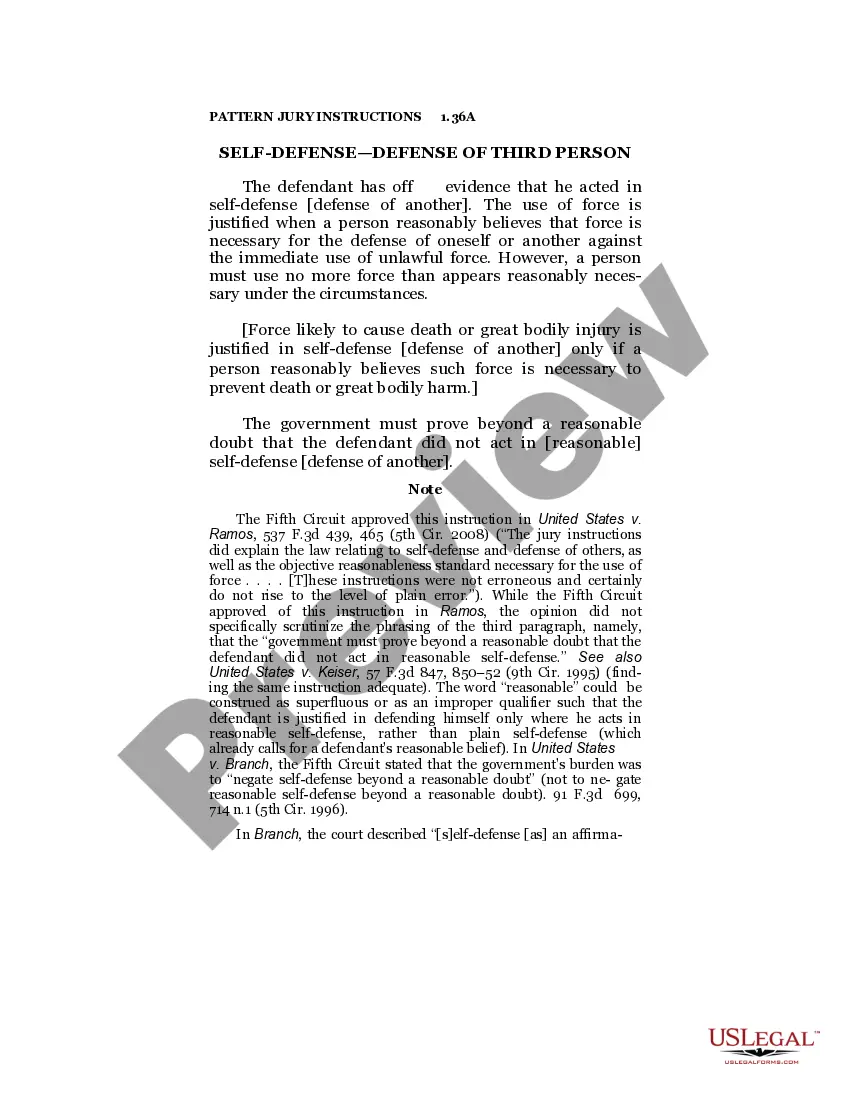
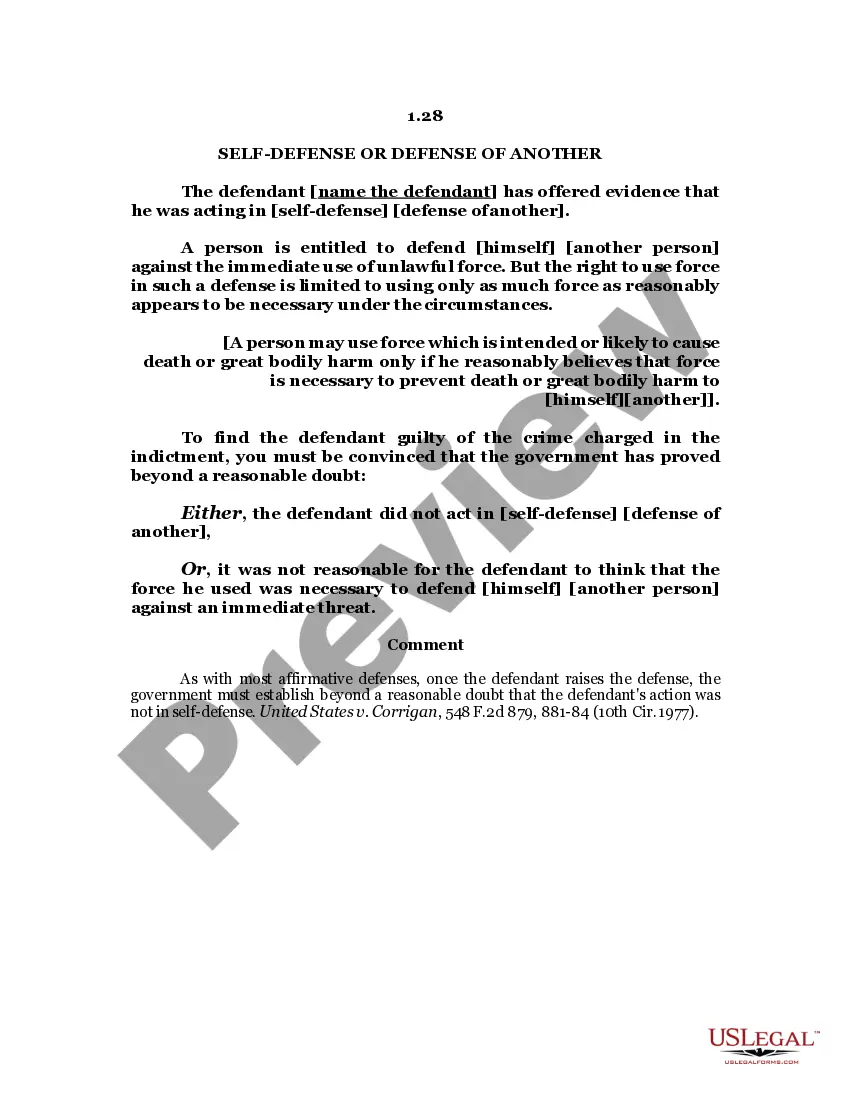
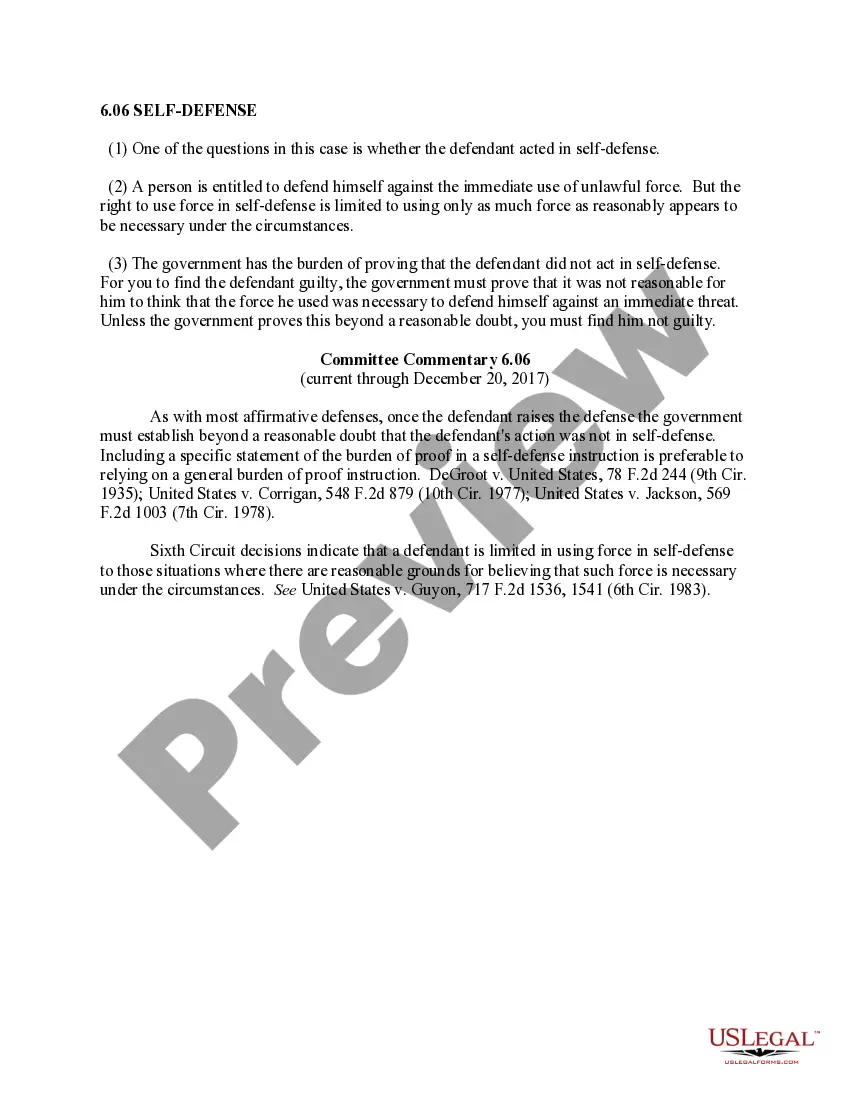
Delaware Self-Defense
Description
Get your form ready online
Our built-in tools help you complete, sign, share, and store your documents in one place.
Make edits, fill in missing information, and update formatting in US Legal Forms—just like you would in MS Word.
Download a copy, print it, send it by email, or mail it via USPS—whatever works best for your next step.
Sign and collect signatures with our SignNow integration. Send to multiple recipients, set reminders, and more. Go Premium to unlock E-Sign.
If this form requires notarization, complete it online through a secure video call—no need to meet a notary in person or wait for an appointment.
We protect your documents and personal data by following strict security and privacy standards.

Make edits, fill in missing information, and update formatting in US Legal Forms—just like you would in MS Word.

Download a copy, print it, send it by email, or mail it via USPS—whatever works best for your next step.

Sign and collect signatures with our SignNow integration. Send to multiple recipients, set reminders, and more. Go Premium to unlock E-Sign.

If this form requires notarization, complete it online through a secure video call—no need to meet a notary in person or wait for an appointment.

We protect your documents and personal data by following strict security and privacy standards.
Looking for another form?


How to fill out Self-Defense?
If you need to gather, acquire, or print authorized document templates, utilize US Legal Forms, the largest assortment of legal forms available online. Take advantage of the site’s straightforward and convenient search to find the documents you require. Numerous templates for business and personal purposes are organized by categories and states, or keywords. Use US Legal Forms to obtain the Delaware Self-Defense in just a few clicks.
If you are already a US Legal Forms user, Log In to your account and click the Download button to access the Delaware Self-Defense. You can also view forms you previously obtained from the My documents section of your account.
If you are using US Legal Forms for the first time, follow these steps: Step 1. Ensure you have selected the form for the correct city/state. Step 2. Utilize the Preview option to review the content of the form. Remember to read the details. Step 3. If you are unsatisfied with the form, use the Search field at the top of the screen to find other types of the legal form template. Step 4. Once you have located the form you need, click the Purchase now button. Choose the pricing plan you prefer and enter your details to register for the account. Step 5. Complete the payment. You can use your credit card or PayPal account to finalize the transaction. Step 6. Select the format of the legal form and download it to your device. Step 7. Fill out, edit, and print or sign the Delaware Self-Defense.
- Every legal document template you obtain is your property permanently.
- You have access to every form you acquired in your account.
- Click the My documents section and choose a form to print or download again.
- Compete and acquire, and print the Delaware Self-Defense with US Legal Forms.
- There are numerous professional and state-specific forms available for your business or personal needs.
Form popularity
FAQ
There are no statutory exceptions or exemptions for household or family members on any grounds, whether self-defense, safety instructions, maintenance, or merely moving the gun about the house. This means, under New Jersey law, the concept of a family house gun is inherently unlawful.
New Jersey law allows you to protect yourself or others outside of your home: Protecting yourself (NJ Rev Stat § 2C:3-4 (2013)). Use of force is justifiable when an individual reasonably believes it is necessary to protect himself or herself against an attack perpetrated by someone else.
Self-defense laws in at least 23 states (Arizona, Arkansas, Colorado, Florida, Georgia, Idaho, Illinois, Indiana, Kentucky, Louisiana, Maryland, Michigan, Montana, New Hampshire, North Carolina, North Dakota, Oklahoma, Ohio, Pennsylvania, South Carolina, Tennessee West Virginia and Wisconsin) provide civil immunity ...
As the terms imply, this NJ criminal defense applies to those very limited instances where conduct, which would otherwise be criminal in nature, is excused because it was necessary or justified. For obvious reasons, the defense only applies when a narrow set of requirements have been met.
Maryland does not have a stand your ground law. The state's case law imposes a duty to retreat before resorting to deadly force outside the home.
The State of Delaware technically speaking does not have a "Castle Law." It does however have self-defense laws that require no ?duty of retreat? in very restricted circumstances.
Any person has the right to defend himself or herself from harm. Under New Jersey law, a person who has harmed another when acting in self-defense may avoid punishment or jail time that might otherwise be applied.
As a legal concept, "self-defense" is what we call a "legal justification," or "affirmative defense." It means that you did commit the act at issue, but that you had a certain basis or reason to act in such a manner, such that you cannot be found criminally or civilly liable.