Delaware Statutory Personal Durable Power of Attorney
Understanding this form
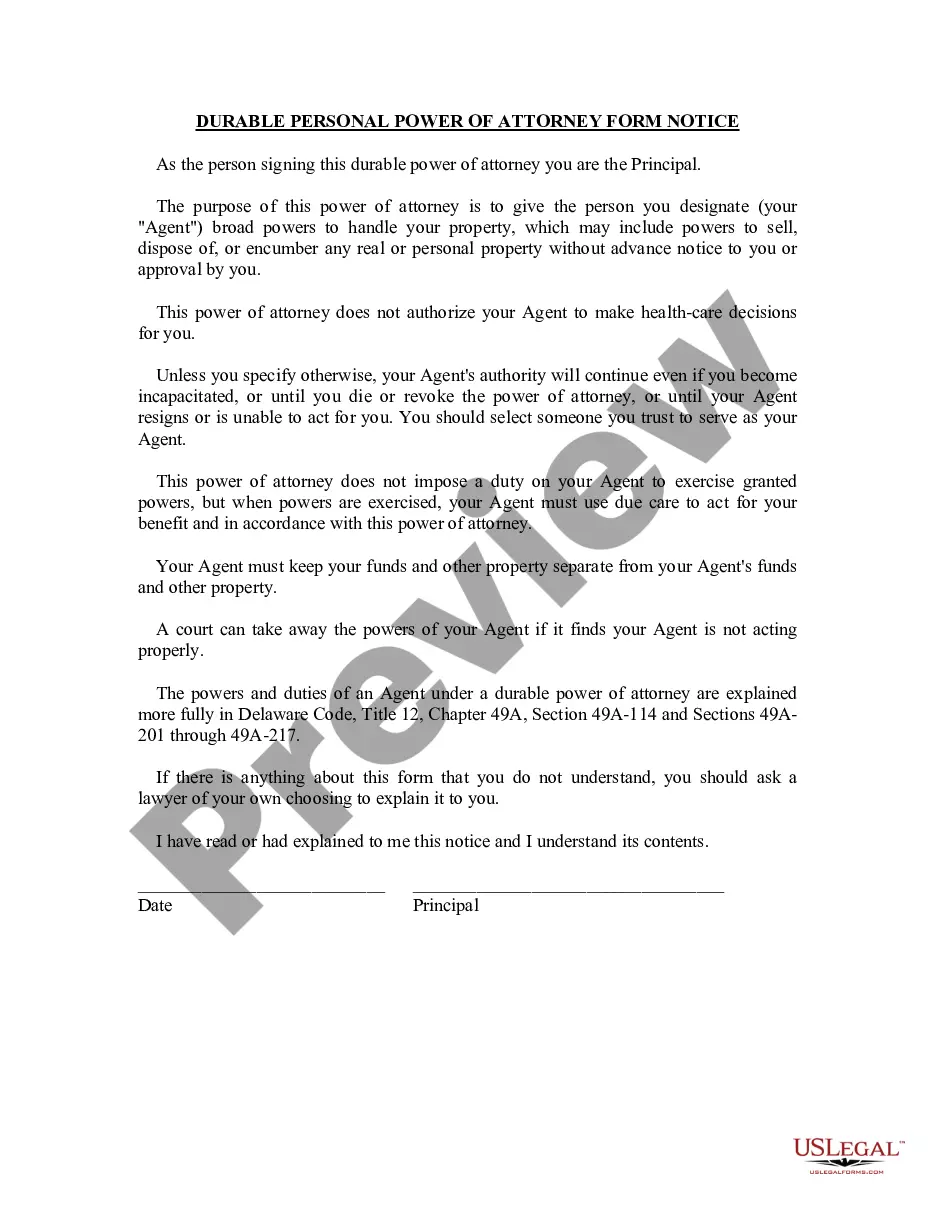
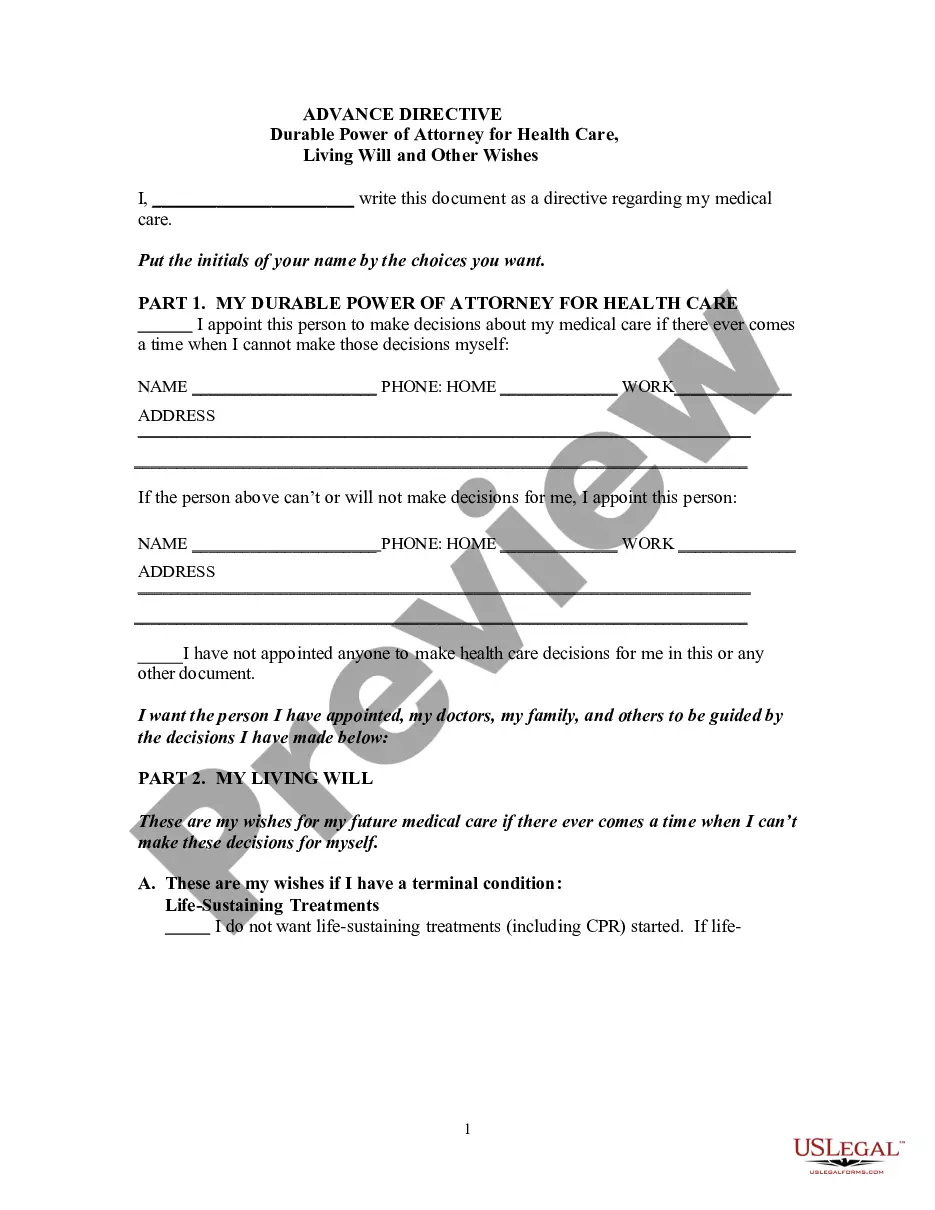
The Delaware Statutory Personal Durable Power of Attorney is a legal document that grants a designated person, known as your Agent, the authority to manage your property and financial affairs. This power of attorney allows your Agent to sell, dispose of, or encumber any real or personal property, continuing even if you become incapacitated. It's important to note that this document does not authorize your Agent to make healthcare decisions for you, making it distinct from other types of power of attorney forms.
Key components of this form
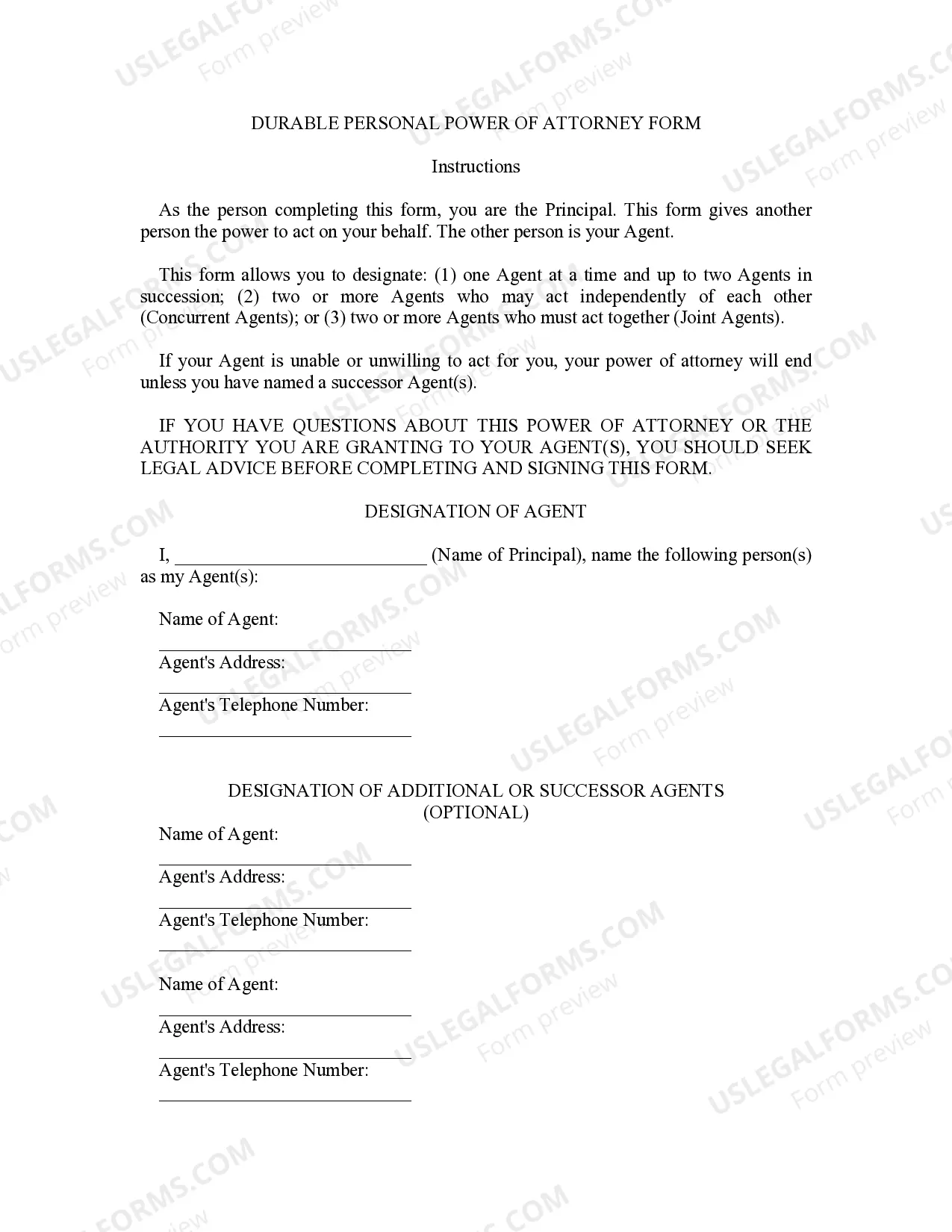
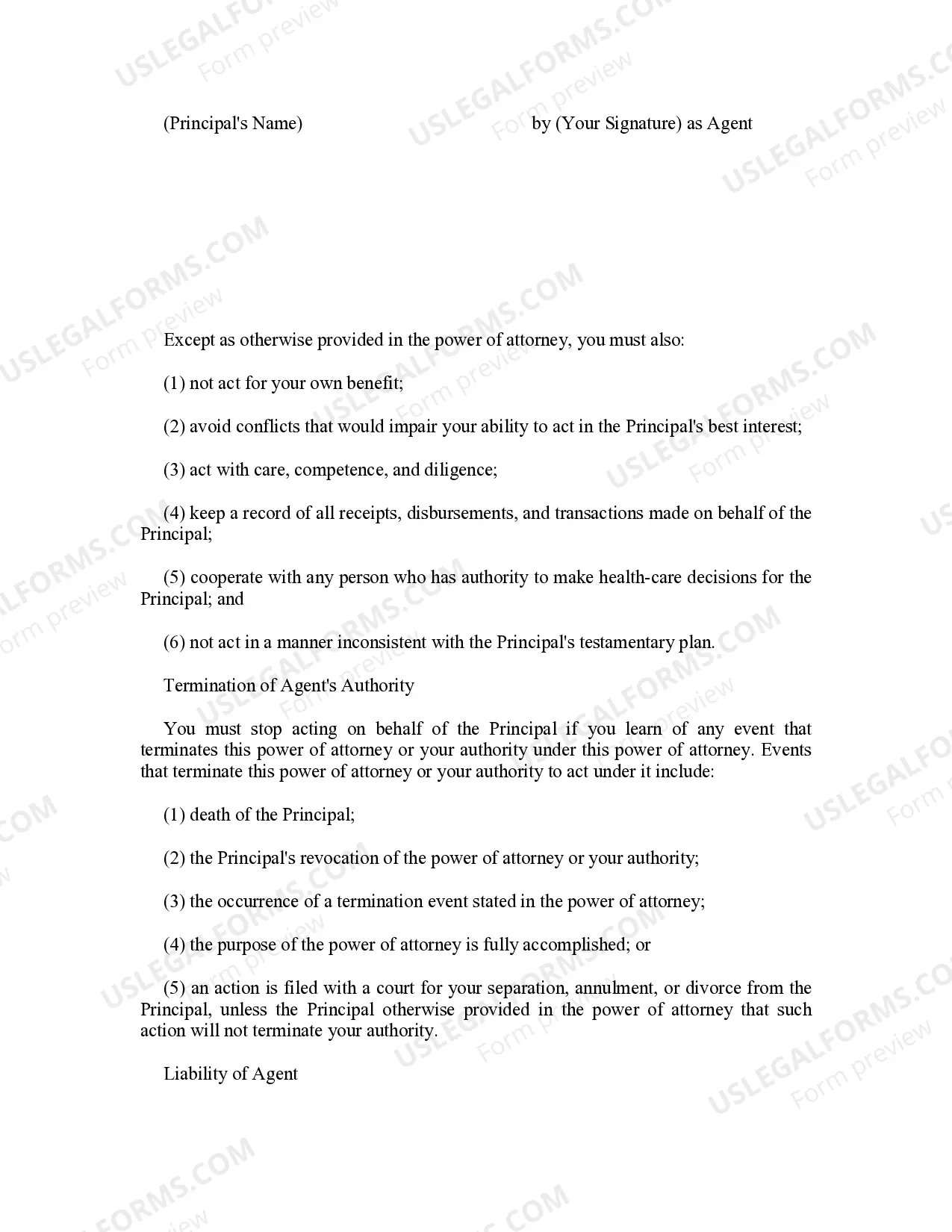
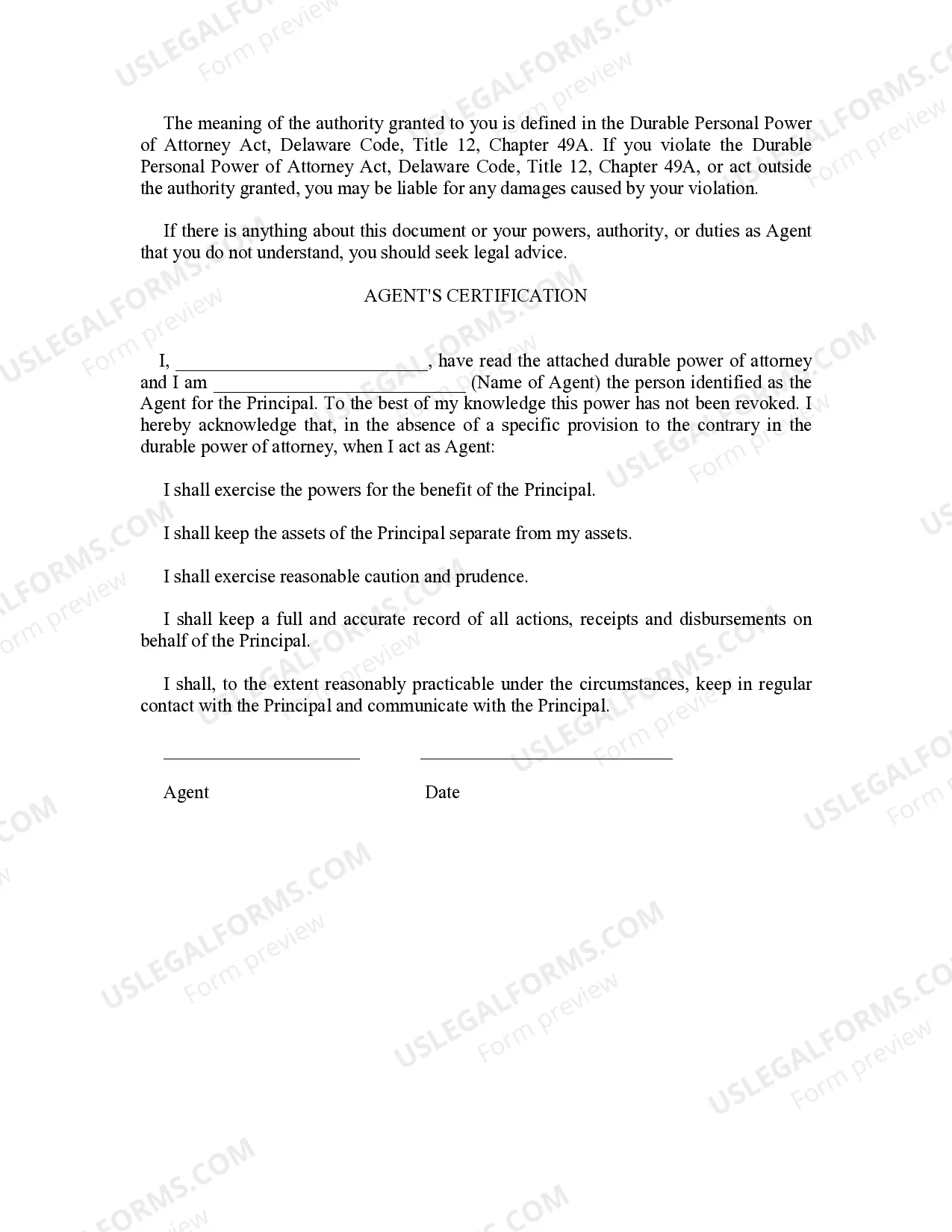
- Principal and Agent Designation: Identifies the person granting authority (Principal) and names the designated Agent.
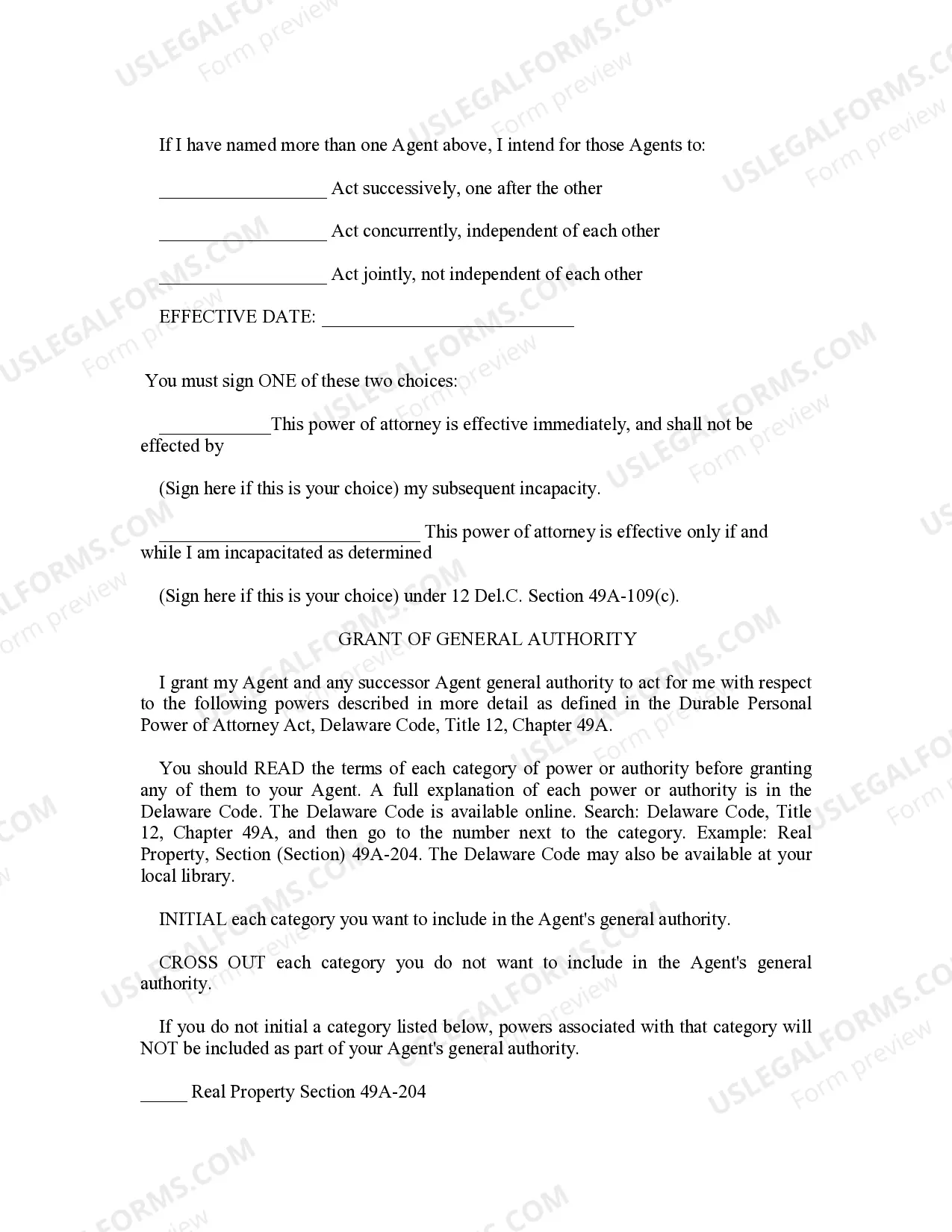
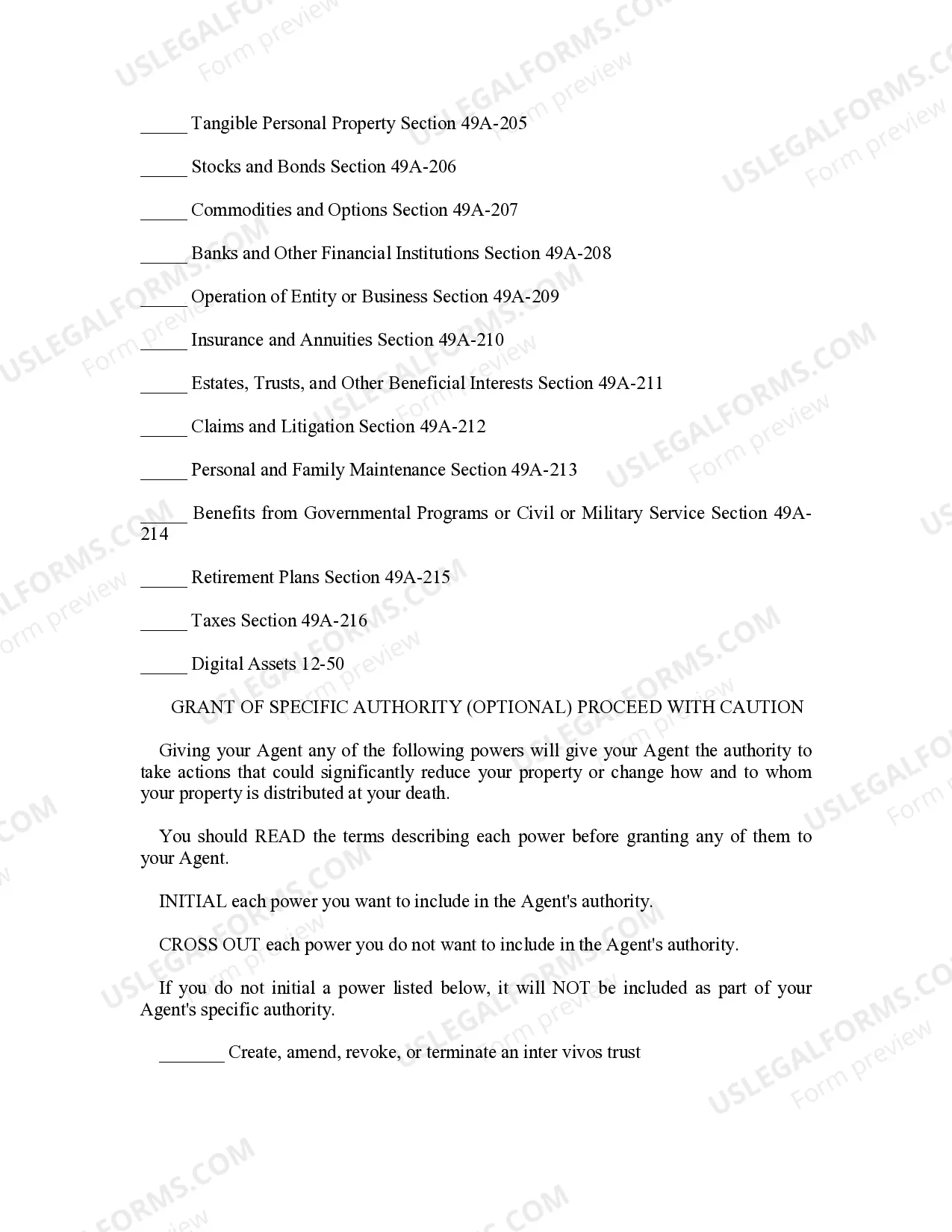
- General Authority Grant: Specifies the powers granted to the Agent regarding property management.
- Effectiveness Clause: Indicates whether the power of attorney is effective immediately or only when the Principal becomes incapacitated.
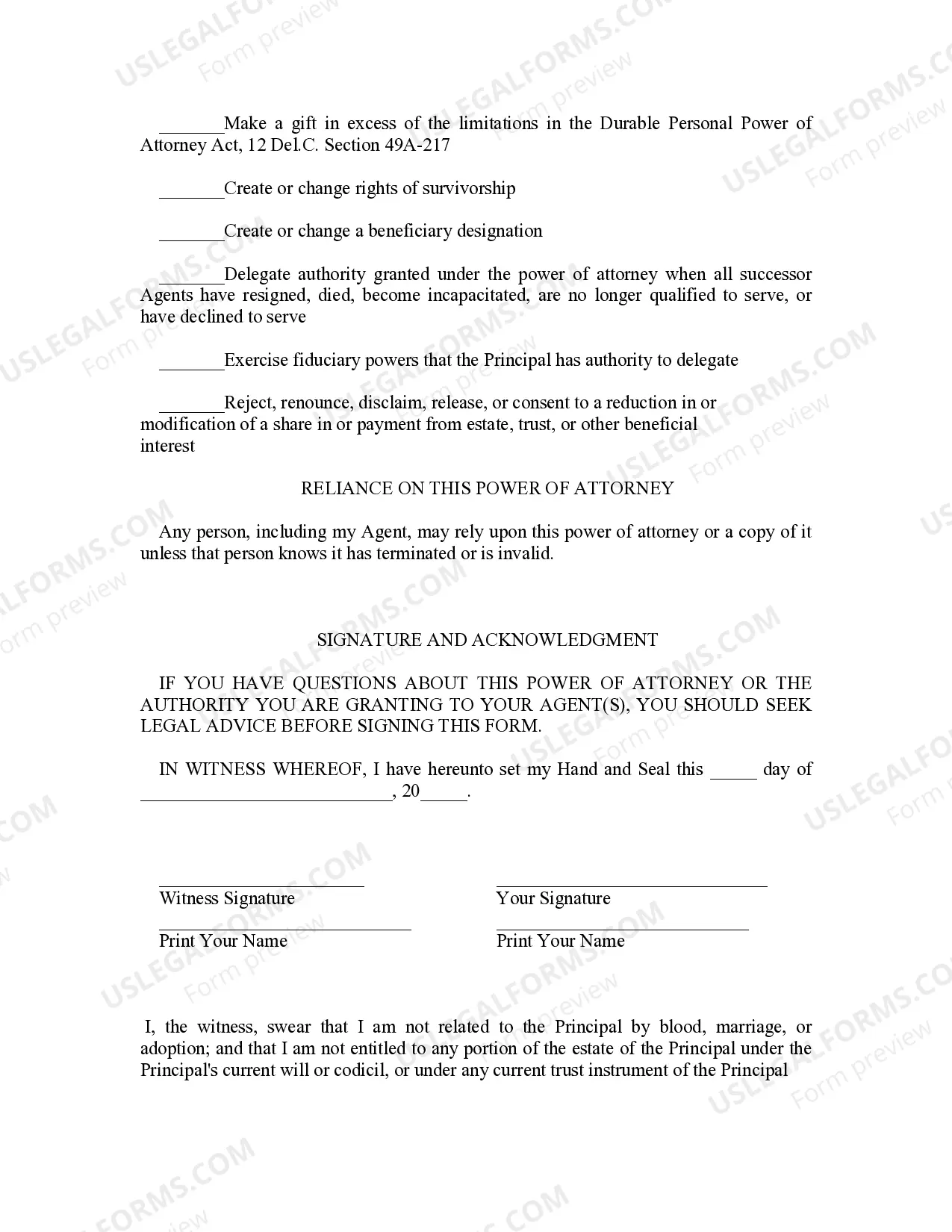
- Initials for Specific Powers: Allows the Principal to initial specific categories of authority the Agent may exercise.
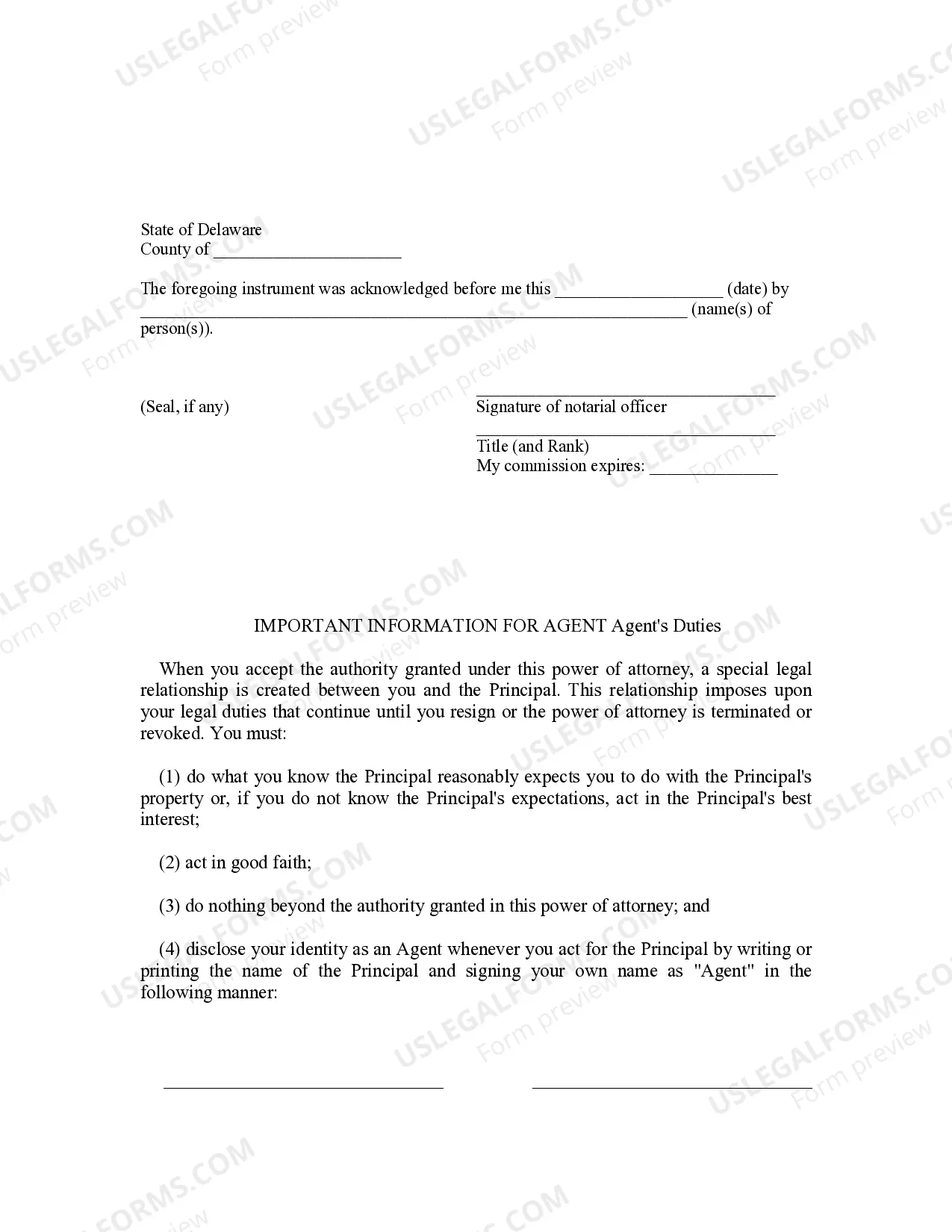
- Signature and Witness Requirements: Requires signatures from the Principal and a witness to validate the document.
Situations where this form applies
This form is useful in various situations, including when you want to appoint someone to manage your financial matters while you are unavailable or incapacitated. It is crucial for individuals with considerable assets or complex financial situations who want to ensure their affairs are handled by a trusted individual without further delays or complications.
Who should use this form
This form is intended for:
- Individuals who want to designate a trusted person to handle their financial affairs.
- Those seeking to ensure their property management continues seamlessly in case of incapacity.
- Delaware residents looking to establish a legally recognized power of attorney that meets state-specific requirements.
How to prepare this document
- Identify the parties: Enter your name as the Principal and the designated Agent's information.
- Select the authority: Initial the categories of authority you wish to grant your Agent.
- Specify the effective date: Choose whether your power of attorney will be effective immediately or only upon your incapacity.
- Sign and date the document: Ensure you sign the form in the presence of a witness.
- Have the witness sign: The witness must also sign the form, confirming they have no conflicts of interest.
Notarization requirements for this form
Notarization is required for this form to take effect. Our online notarization service, powered by Notarize, lets you verify and sign documents remotely through an encrypted video session, available 24/7.
Get your form ready online
Our built-in tools help you complete, sign, share, and store your documents in one place.
Make edits, fill in missing information, and update formatting in US Legal Forms—just like you would in MS Word.
Download a copy, print it, send it by email, or mail it via USPS—whatever works best for your next step.
Sign and collect signatures with our SignNow integration. Send to multiple recipients, set reminders, and more. Go Premium to unlock E-Sign.
If this form requires notarization, complete it online through a secure video call—no need to meet a notary in person or wait for an appointment.
We protect your documents and personal data by following strict security and privacy standards.

Make edits, fill in missing information, and update formatting in US Legal Forms—just like you would in MS Word.

Download a copy, print it, send it by email, or mail it via USPS—whatever works best for your next step.

Sign and collect signatures with our SignNow integration. Send to multiple recipients, set reminders, and more. Go Premium to unlock E-Sign.

If this form requires notarization, complete it online through a secure video call—no need to meet a notary in person or wait for an appointment.

We protect your documents and personal data by following strict security and privacy standards.
Avoid these common issues
- Failing to choose an Agent who is trustworthy and reliable.
- Not specifying whether the power of attorney is effective immediately or only upon incapacity.
- Overlooking the notary or witness signature requirements.
- Insufficiently detailing the powers granted to the Agent.
Benefits of completing this form online
- Convenience: Access and complete the form from anywhere at any time.
- Editability: Easily update the document as your circumstances change.
- Efficiency: Instant download allows for immediate use without delays.
Legal use & context
- This power of attorney remains in effect even if you become incapacitated unless you specify otherwise.
- The document can be revoked at any time, provided the Principal is of sound mind.
- Agents have a fiduciary duty to act in the best interest of the Principal.
Quick recap
- A Delaware Statutory Personal Durable Power of Attorney allows for the management of financial affairs by a designated Agent.
- It is essential to select a trustworthy Agent due to the significant powers granted.
- Helpful for planning for incapacitation and managing property when you cannot do so yourself.
- Ensure the form is completed correctly, including notarization, to maintain its validity.
Looking for another form?


Form popularity
FAQ
It is a Delaware statutory document that designates an Agent to handle the Principal's property and financial affairs, continuing if the Principal is incapacitated. It does not authorize healthcare decisions. The form provides a general authority grant, an effectiveness clause, an option to initials specific powers, and requires the Principal's signature and a witness to validate it.
Yes, a statutory POA is a POA that follows a state's statutory form and rules. The Delaware Statutory Personal Durable Power of Attorney is Delaware's statutory version for financial matters, giving the Agent general authority over property, with an effectiveness clause, initials for specific powers, and a signature plus witness requirement. It does not grant healthcare decisions.
Yes. Delaware recognizes statutory power of attorney for financial matters, and this form is the state's statutory Delaware option for a durable POA. It designates an Agent to manage property and finances, may take effect immediately or upon incapacity, requires a signature and witness, and does not authorize healthcare decisions.
Delaware POA rules, as reflected in this form, include designating a Principal and Agent, granting general authority over property, choosing when the POA takes effect (immediately or on incapacity), providing an initials for specific powers section, and requiring the Principal's signature and a witness. It does not authorize healthcare decisions.
You can use this Delaware Statutory Personal Durable Power of Attorney form to designate an Agent, tailor powers, and ensure validity with a Principal’s signature and a witness. For more complex estates or to ensure compliance with Delaware law, consider consulting a licensed attorney.
This form is the Delaware statutory version focused on financial and property matters. It includes an Effectiveness Clause, an Initials for Specific Powers section, and a required signature with a witness, while explicitly excluding healthcare decisions, distinguishing it from many general durable POA forms.