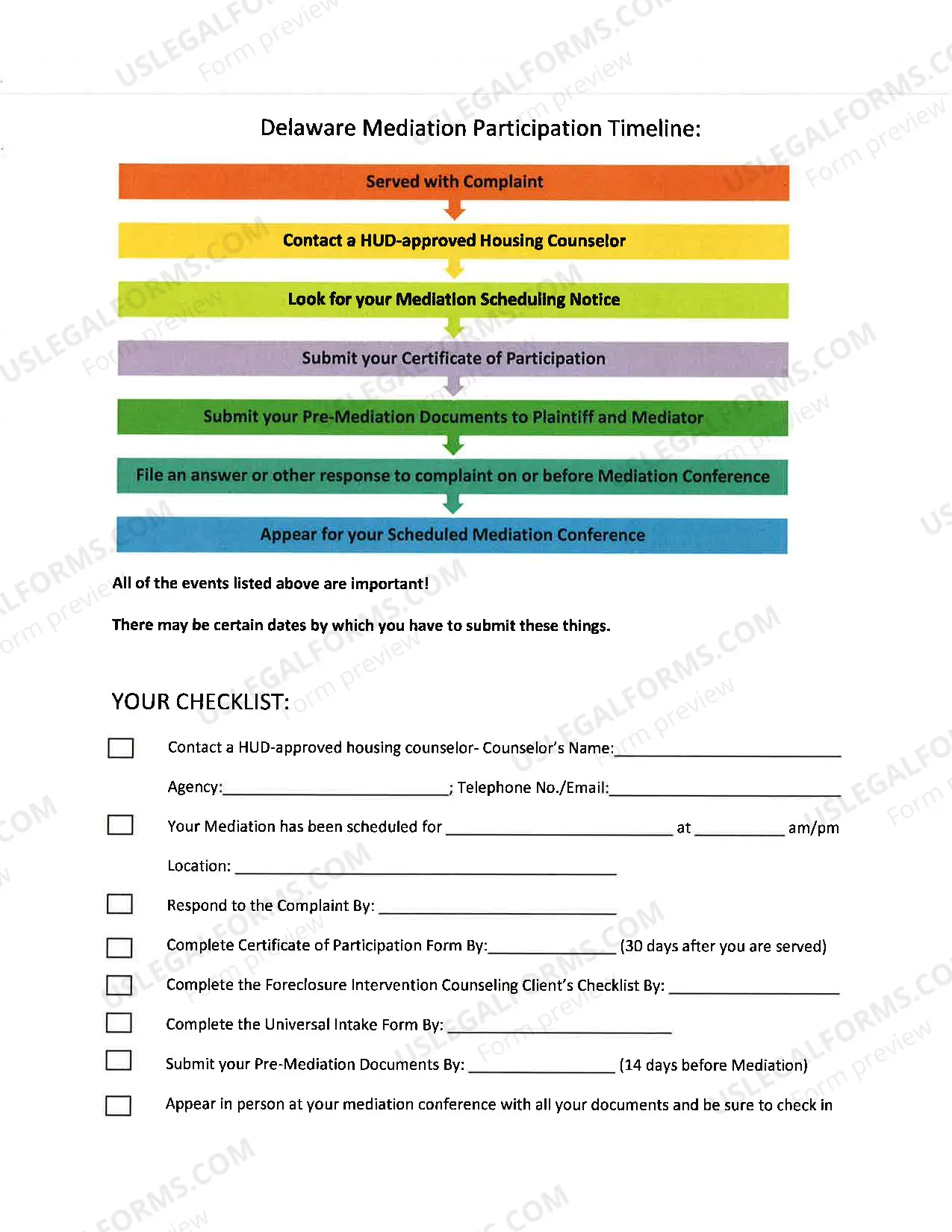
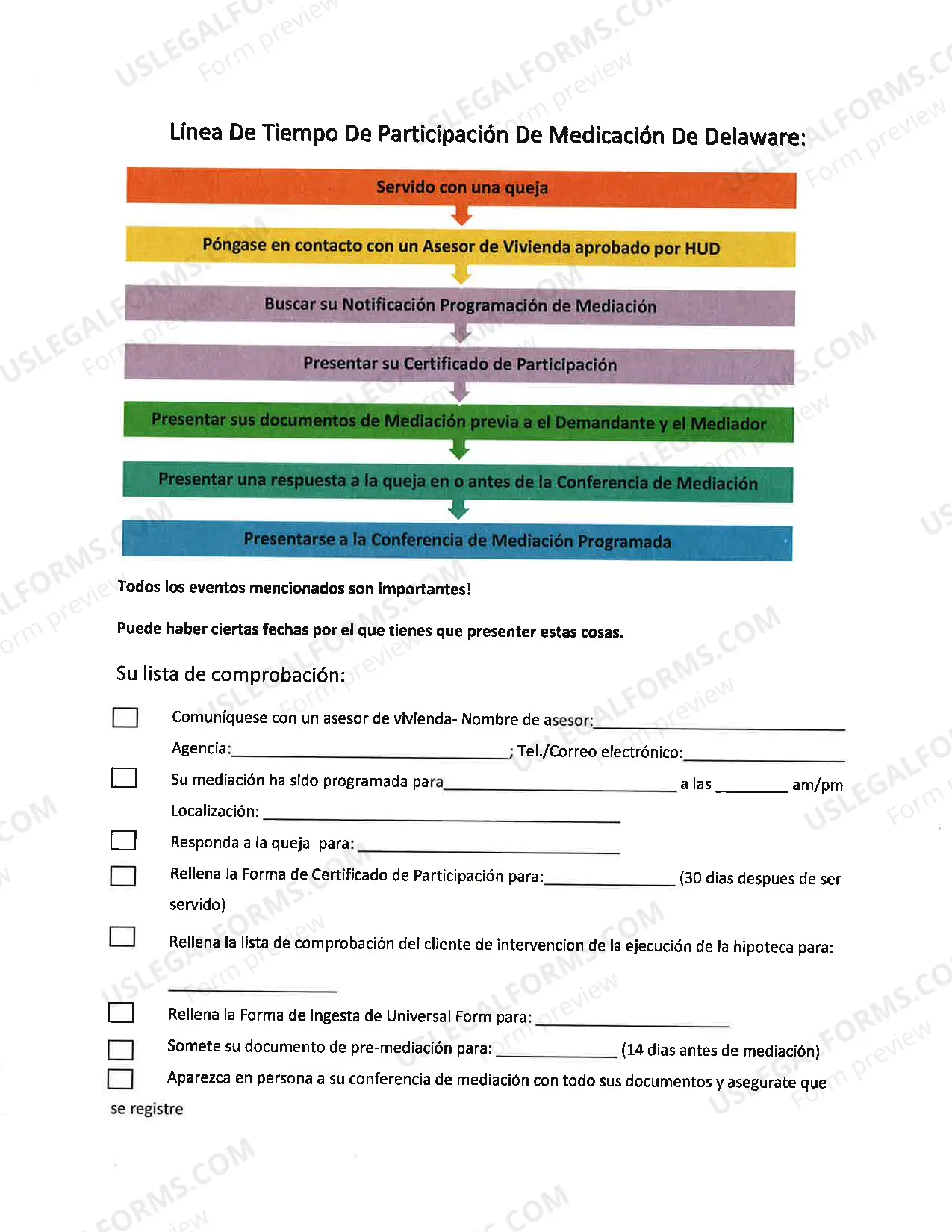
Delaware Mediation Participation Timeline
Description
Get your form ready online
Our built-in tools help you complete, sign, share, and store your documents in one place.
Make edits, fill in missing information, and update formatting in US Legal Forms—just like you would in MS Word.
Download a copy, print it, send it by email, or mail it via USPS—whatever works best for your next step.
Sign and collect signatures with our SignNow integration. Send to multiple recipients, set reminders, and more. Go Premium to unlock E-Sign.
If this form requires notarization, complete it online through a secure video call—no need to meet a notary in person or wait for an appointment.
We protect your documents and personal data by following strict security and privacy standards.

Make edits, fill in missing information, and update formatting in US Legal Forms—just like you would in MS Word.

Download a copy, print it, send it by email, or mail it via USPS—whatever works best for your next step.

Sign and collect signatures with our SignNow integration. Send to multiple recipients, set reminders, and more. Go Premium to unlock E-Sign.

If this form requires notarization, complete it online through a secure video call—no need to meet a notary in person or wait for an appointment.

We protect your documents and personal data by following strict security and privacy standards.
Looking for another form?

How to fill out Delaware Mediation Participation Timeline?
How much time and resources do you typically allocate for creating formal documentation.
There’s a better alternative to obtaining such forms than engaging legal professionals or spending countless hours scouring the internet for a suitable template. US Legal Forms is the premier online repository that offers expertly drafted and verified state-specific legal documents for any use, such as the Delaware Mediation Participation Timeline.
Another advantage of our library is that you can access previously obtained documents that are securely stored in your profile in the My documents tab. Retrieve them anytime and re-complete your paperwork as often as required.
Reduce time and energy spent on preparing official documents with US Legal Forms, one of the most reliable online solutions. Join us today!
- Review the form content to ensure it adheres to your state rules. To do this, read the form description or use the Preview option.
- If your legal document doesn’t meet your requirements, look for another one using the search tab located at the top of the page.
- If you are already a member of our service, Log In and download the Delaware Mediation Participation Timeline. If not, proceed to the following steps.
- Click Buy now after you locate the correct template. Choose the subscription plan that best fits your needs to access all the resources our library offers.
- Create an account and complete the payment for your subscription. You can make a payment using your credit card or PayPal - our service is entirely secure for that.
- Download your Delaware Mediation Participation Timeline to your device and complete it on a printed version or electronically.
Form popularity
FAQ
Typically, mediation lasts from two to five hours, but many factors can influence this duration. The complexity of the issues and the willingness of both parties to negotiate impact the time spent. For a clearer picture, consulting the Delaware Mediation Participation Timeline can provide valuable insight into the expected time and process involved.
One downside of mediation is that it may not lead to a resolution, requiring subsequent court action. While mediation is less formal, not all disputes can be settled this way, particularly in high-conflict scenarios. However, understanding the Delaware Mediation Participation Timeline can help you assess when mediation may be a viable option before considering court.
Mediation sessions usually last between two to four hours, but this can vary based on the case's complexity. Some cases may require multiple sessions spread over days or weeks, especially if both parties are still negotiating terms. Being familiar with the Delaware Mediation Participation Timeline allows parties to plan their schedules accordingly and manage expectations.
The duration from mediation to court can vary significantly. Generally, if mediation does not resolve the issue, you might wait several weeks to months before court proceedings start. This timeframe depends on court schedules and the complexity of the case. Understanding the Delaware Mediation Participation Timeline can help you navigate this transition more efficiently.
While mediation itself does not have a rigid time limit, it is often beneficial to set a timeline for sessions to promote focus and efficiency. Many mediators suggest completing the process swiftly to manage costs and maintain momentum. By being aware of the Delaware Mediation Participation Timeline, you can have a clearer understanding of how to streamline your mediation efforts.
After mediation, if an agreement is not reached, you can proceed to court almost immediately. However, it is wise to allow some time to review the mediation discussions or consult legal advice. Typically, if you understand the Delaware Mediation Participation Timeline, you can manage your next steps more effectively while keeping court options open without unnecessary delays.
There is no strict time limit for mediation, but many sessions last a few hours up to a full day, depending on the complexity of the issues. It is essential to schedule sessions that allow ample time for discussion and resolution. If you are working under a certain timeline, understanding the Delaware Mediation Participation Timeline can help you plan effectively and ensure timely resolutions.
Mediation does have limitations; it may not suit every dispute, especially those requiring legal precedent or mandatory outcomes. Some parties may approach mediation unwillingly, which can hinder productive dialogue. Additionally, if an agreement cannot be reached, you may need to pursue litigation. Familiarizing yourself with the Delaware Mediation Participation Timeline provides insight into how mediation can be advantageous despite these limitations.
Mediation in Minnesota involves a neutral third party who helps disputing parties communicate and find common ground. The mediator guides the conversation but does not make decisions for you. Participants have the opportunity to express their concerns, explore solutions, and work towards a mutually acceptable agreement. Understanding the Delaware Mediation Participation Timeline can enhance your experience and outcomes.
Securing a trial date after mediation can vary widely based on the court's schedule and the specifics of your case. Typically, it may take several weeks to a few months to receive a trial date. The speed at which this occurs can be influenced by how mediation progressed and any agreements made. Understanding this timeline can help you prepare better for your Delaware Mediation Participation Timeline.