Delaware Postnuptial Property Agreement

Understanding this form
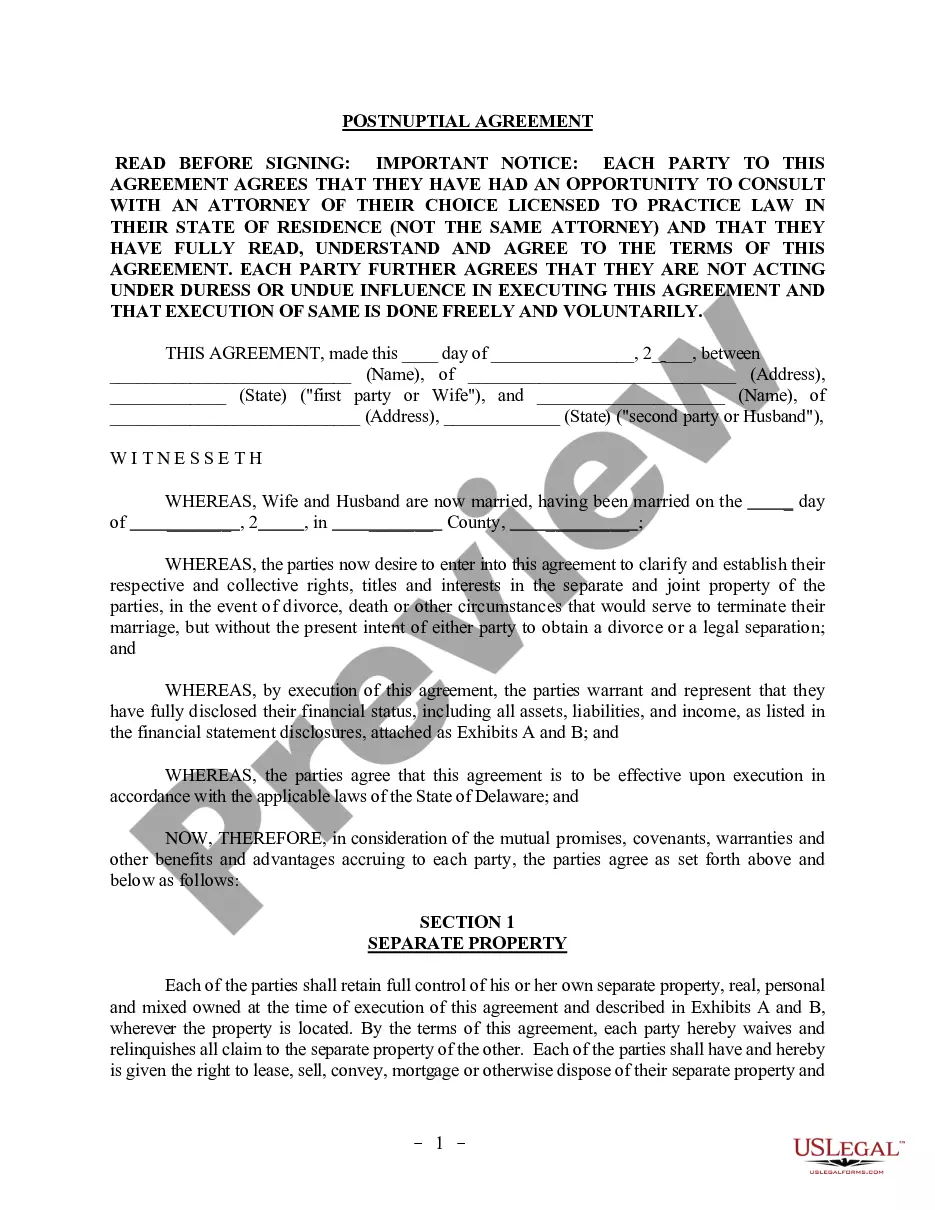
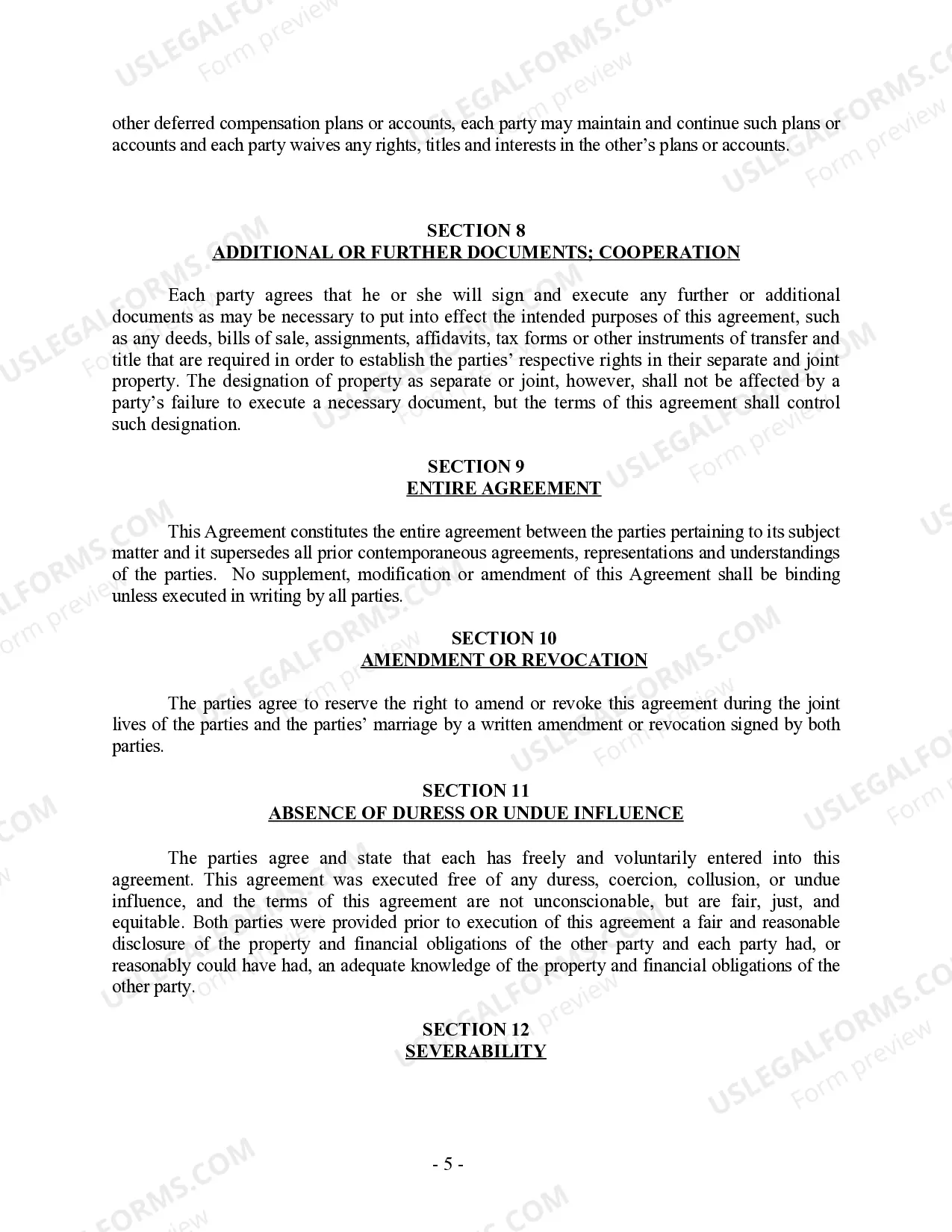
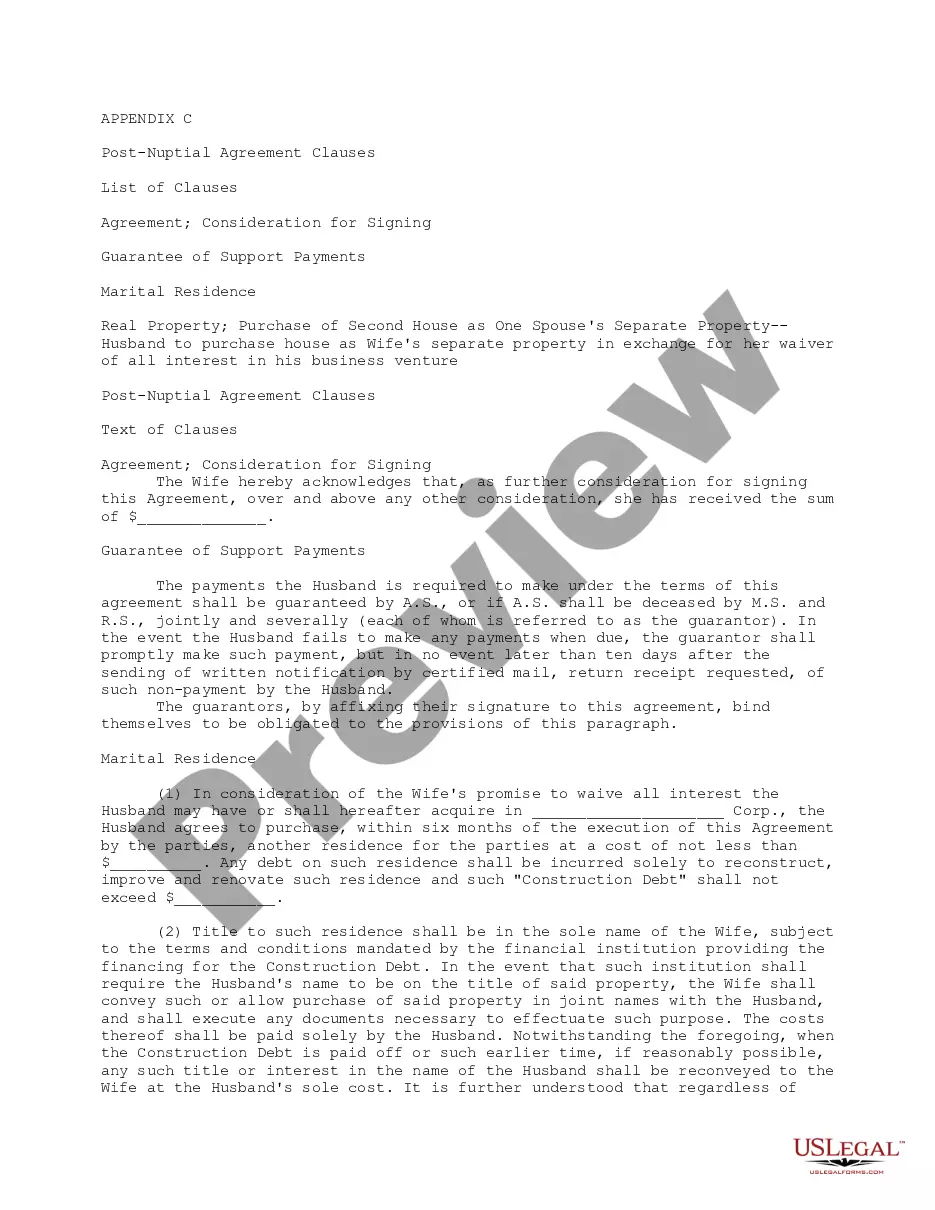
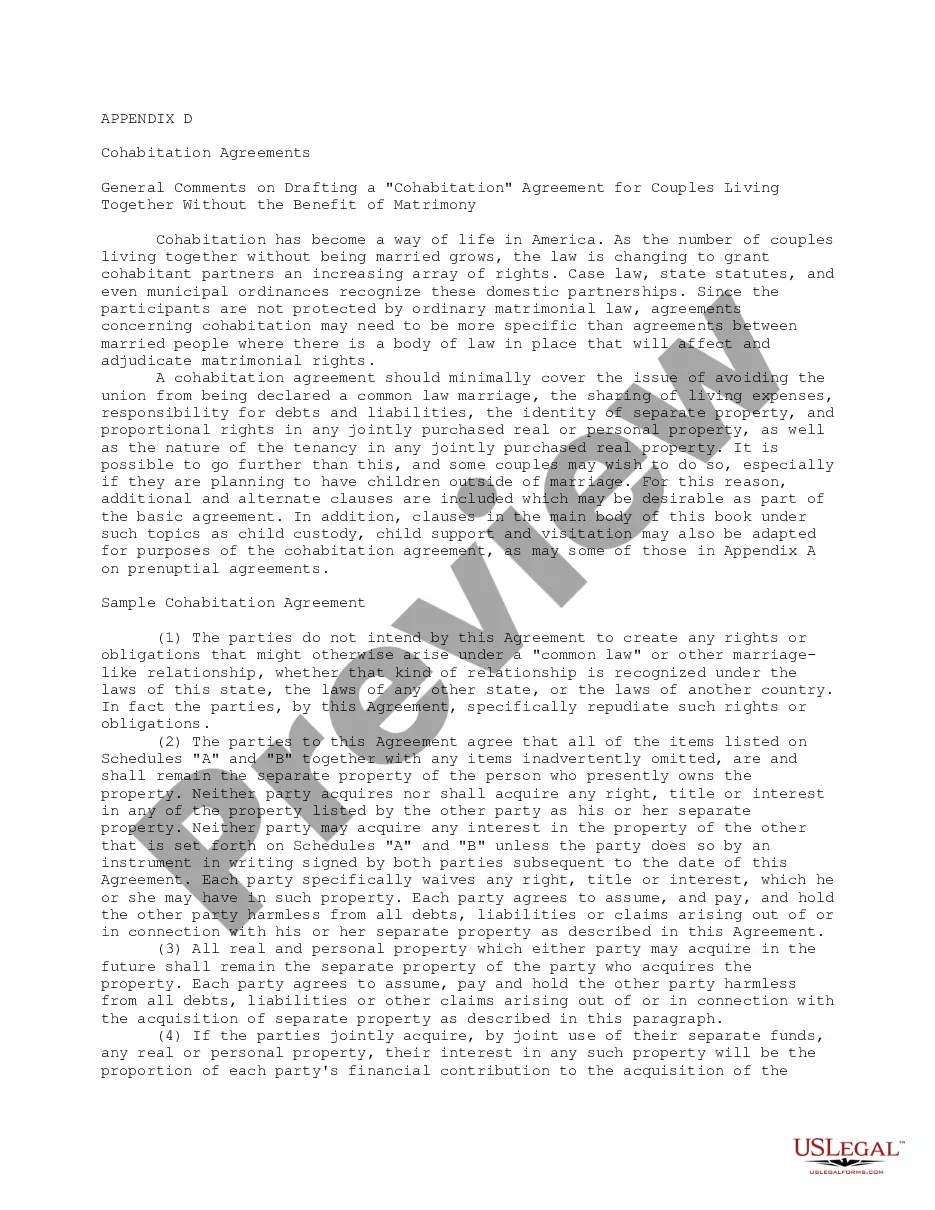
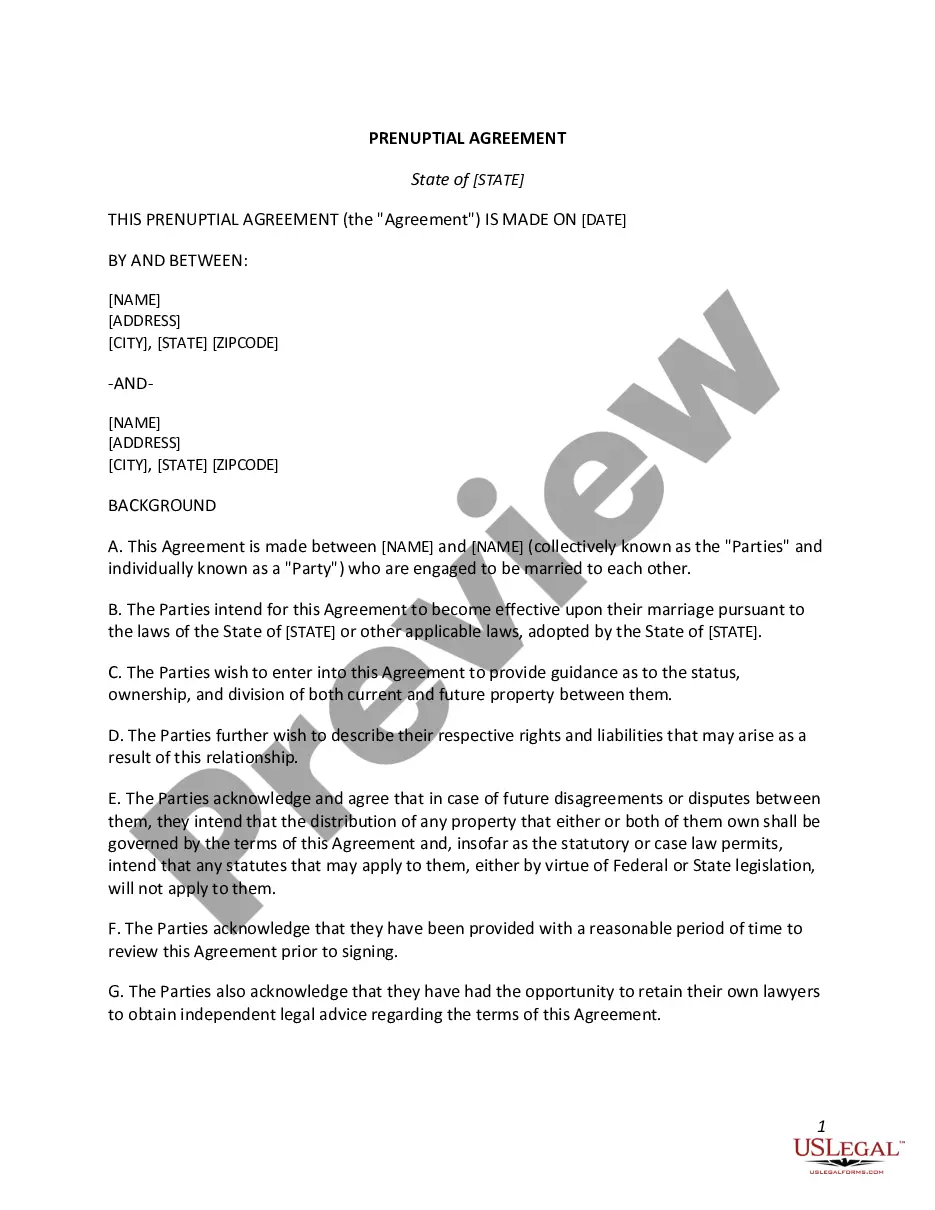
The Postnuptial Property Agreement is a legal document designed to clarify the ownership and management of both separate and joint property between spouses during their marriage. Unlike a prenuptial agreement, which is created before marriage, this agreement addresses property rights after the marriage has begun. This form ensures that both parties understand their respective rights to property in the event of a divorce, separation, or death, and lays the groundwork for asset protection and financial clarity in the marriage.
Main sections of this form
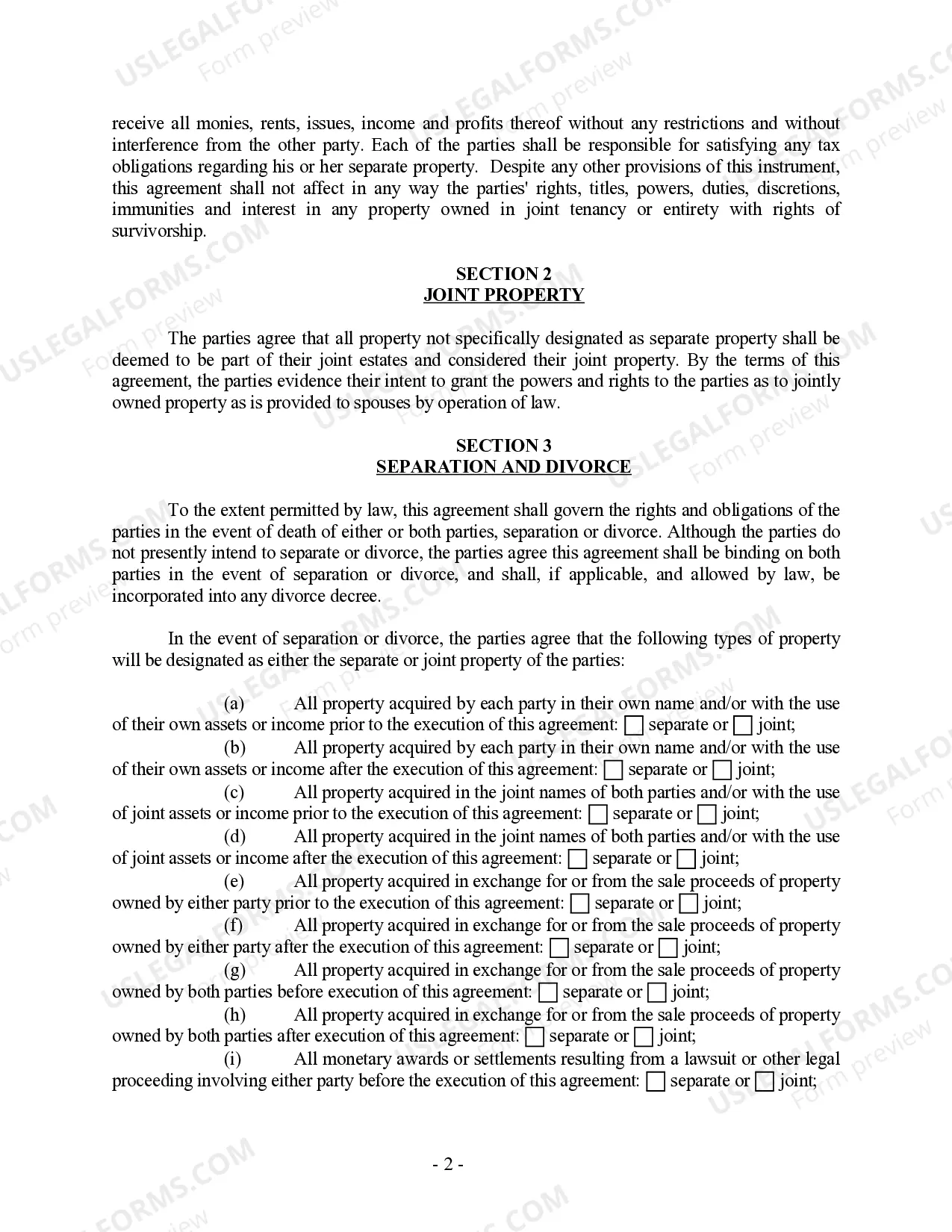
- Definitions of separate and joint property.
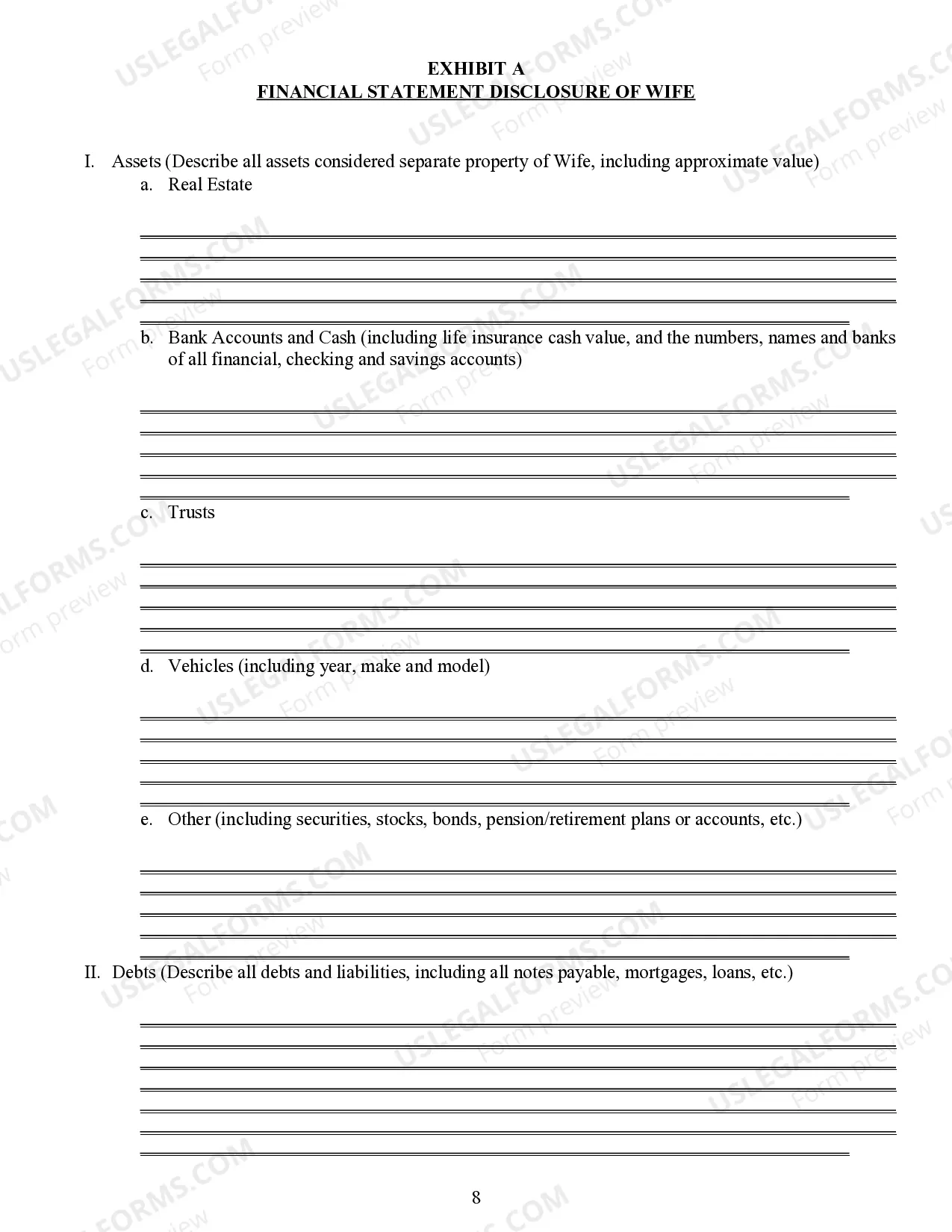
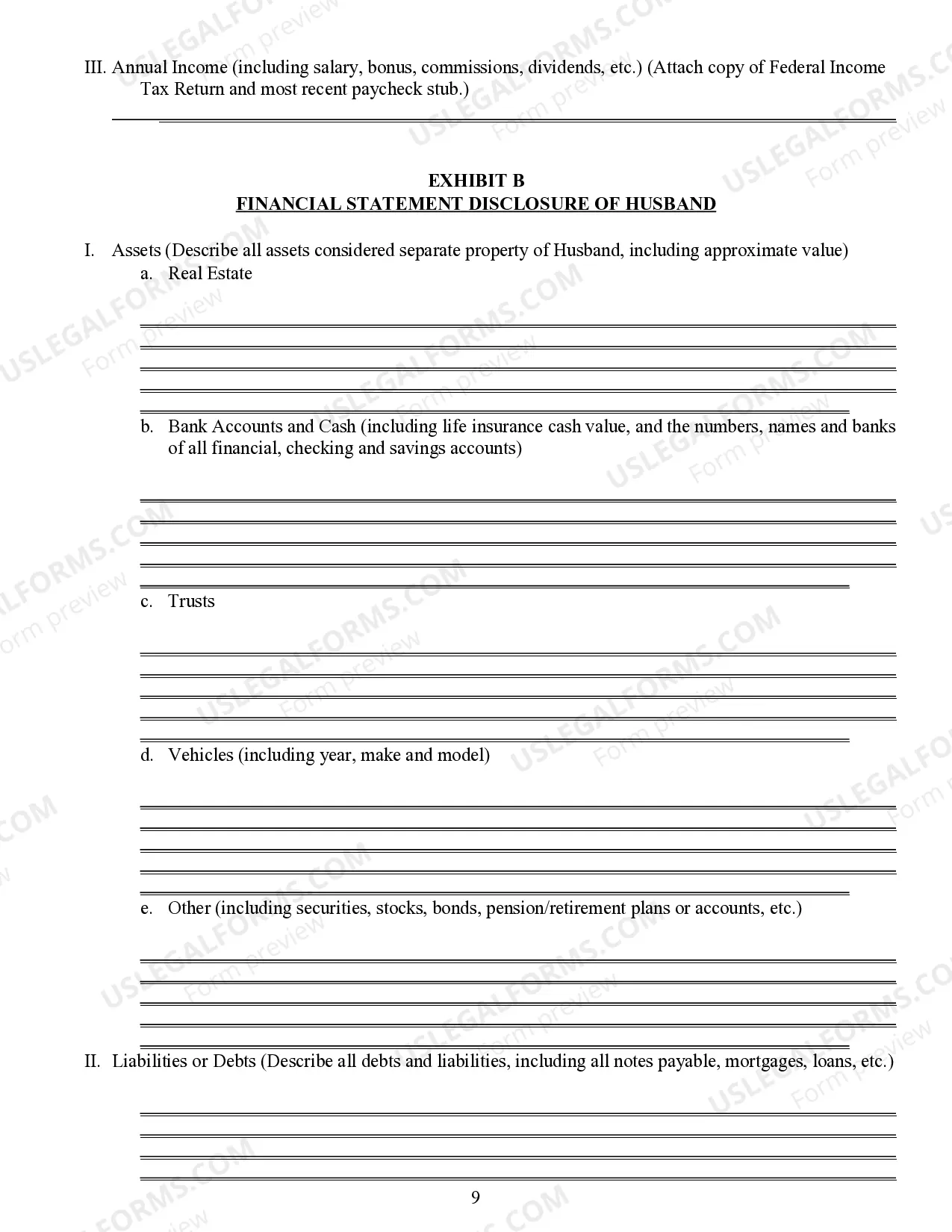
- Mutual disclosure of financial status by both parties.
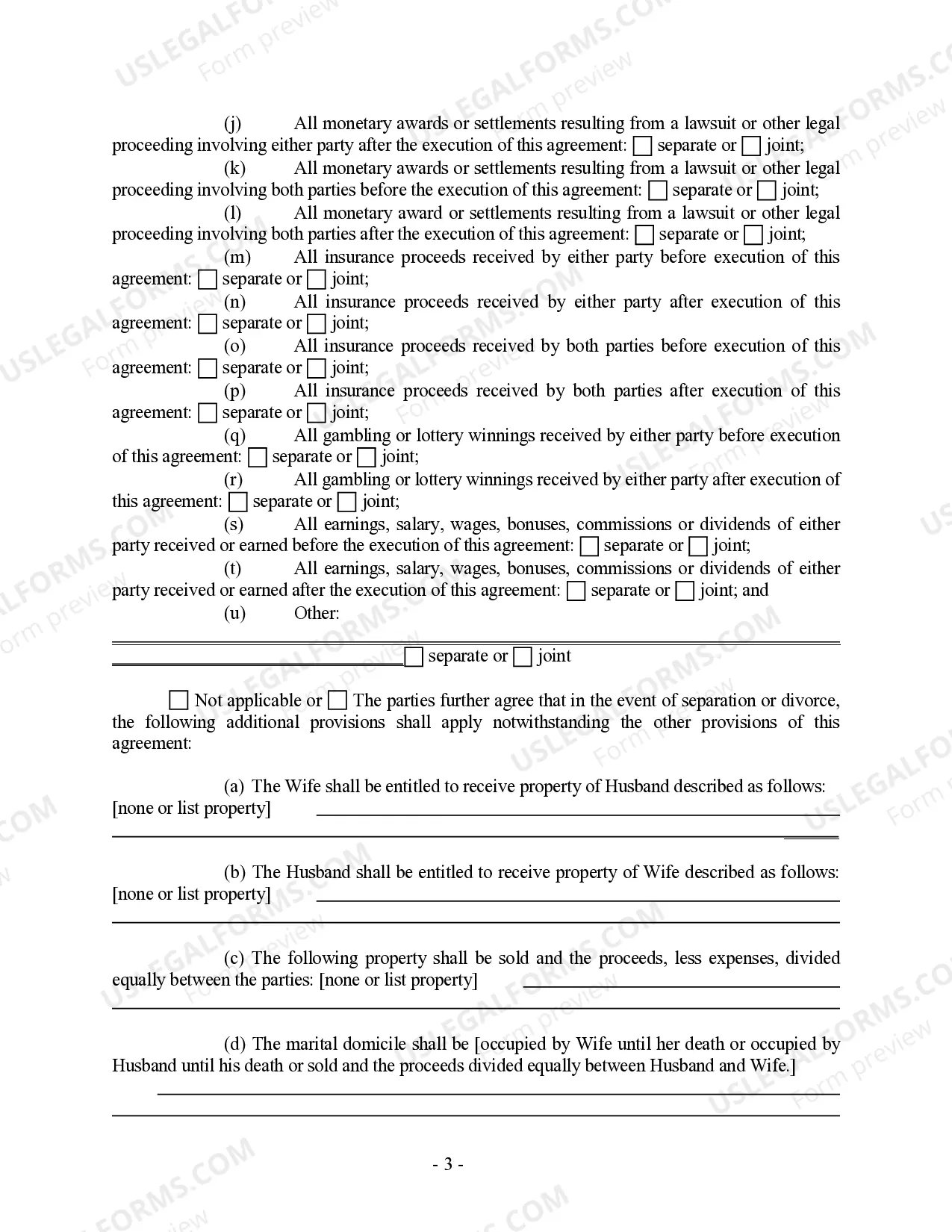
- Provisions regarding property acquired before and after execution of the agreement.
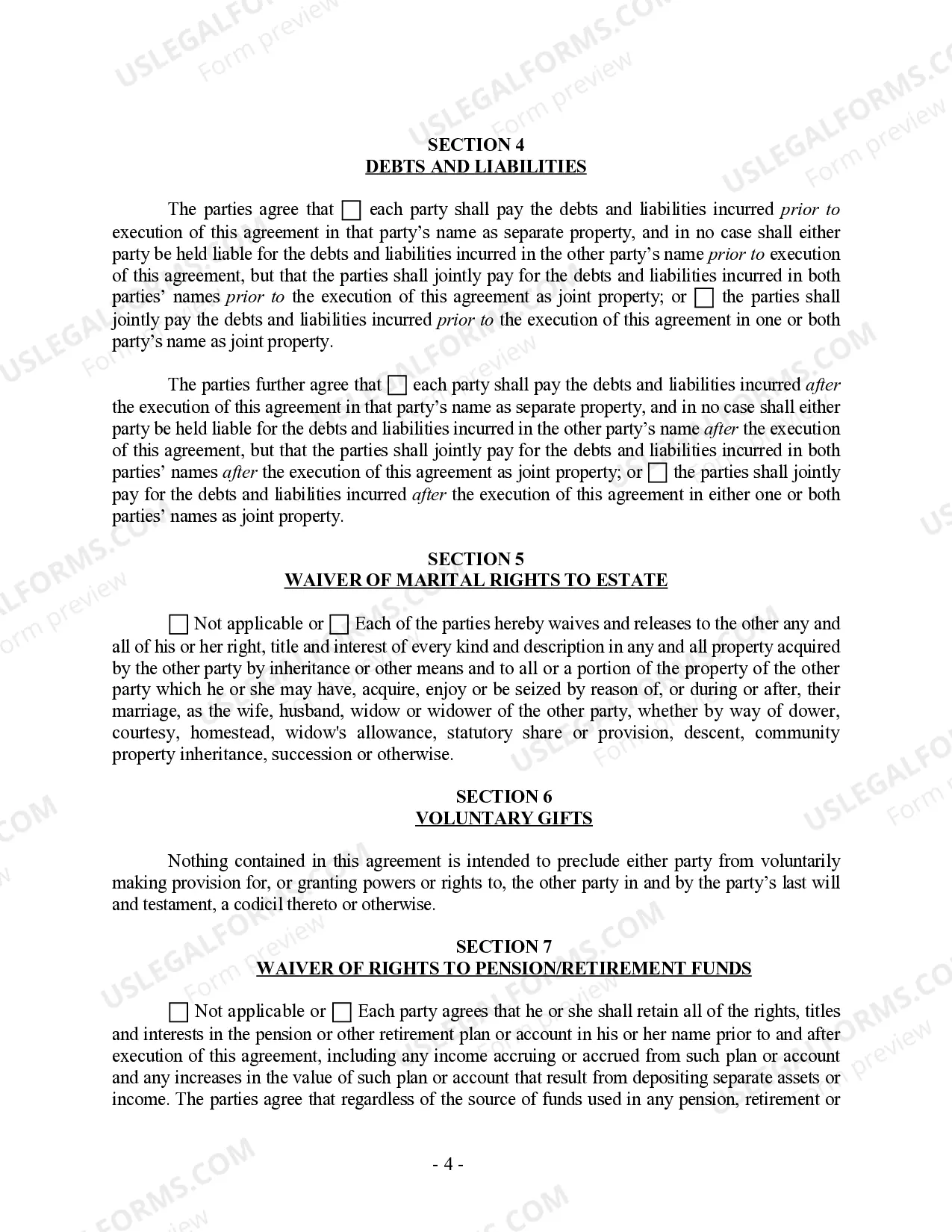
- Clauses specifying debt responsibilities incurred after the agreement.
- Waivers of marital rights to estate and pension funds.
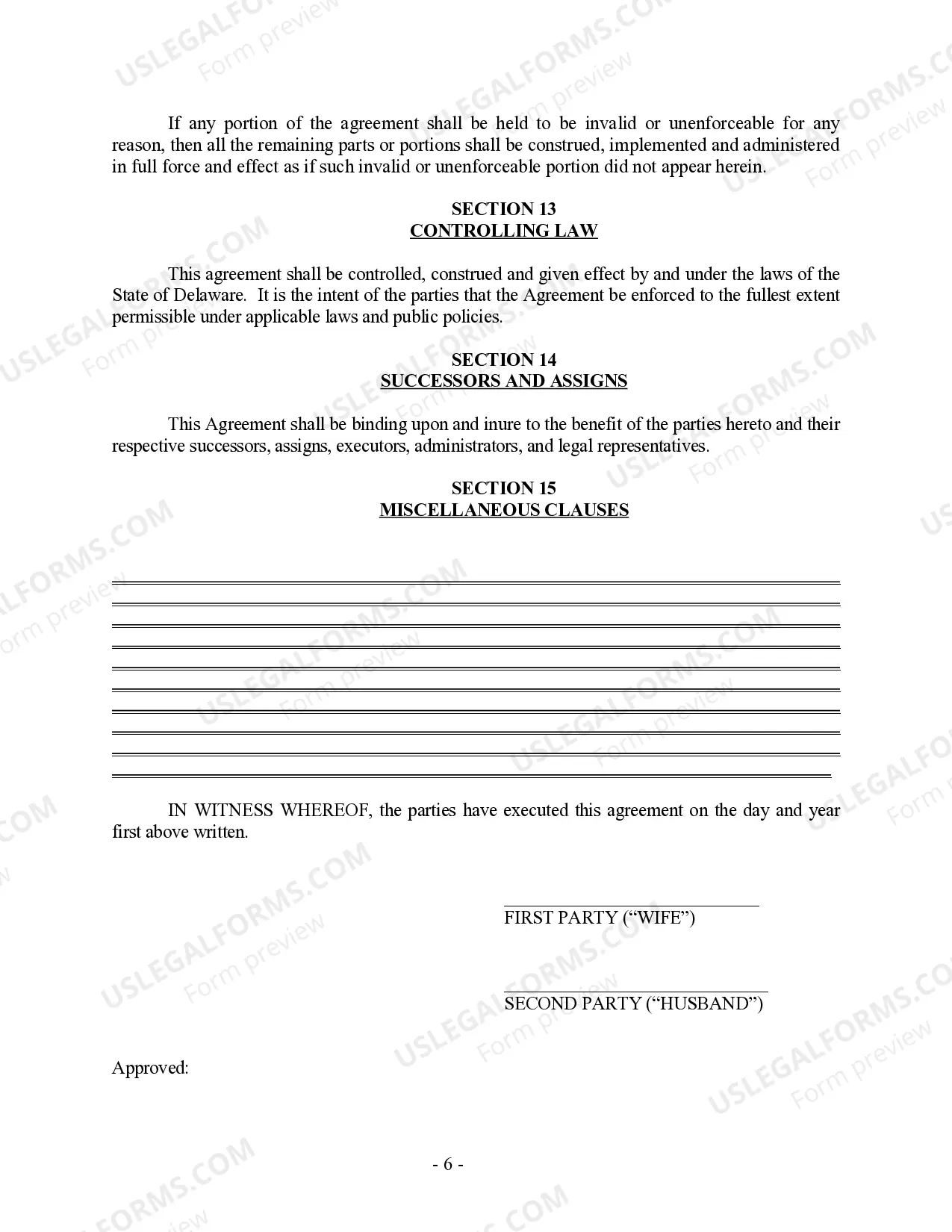
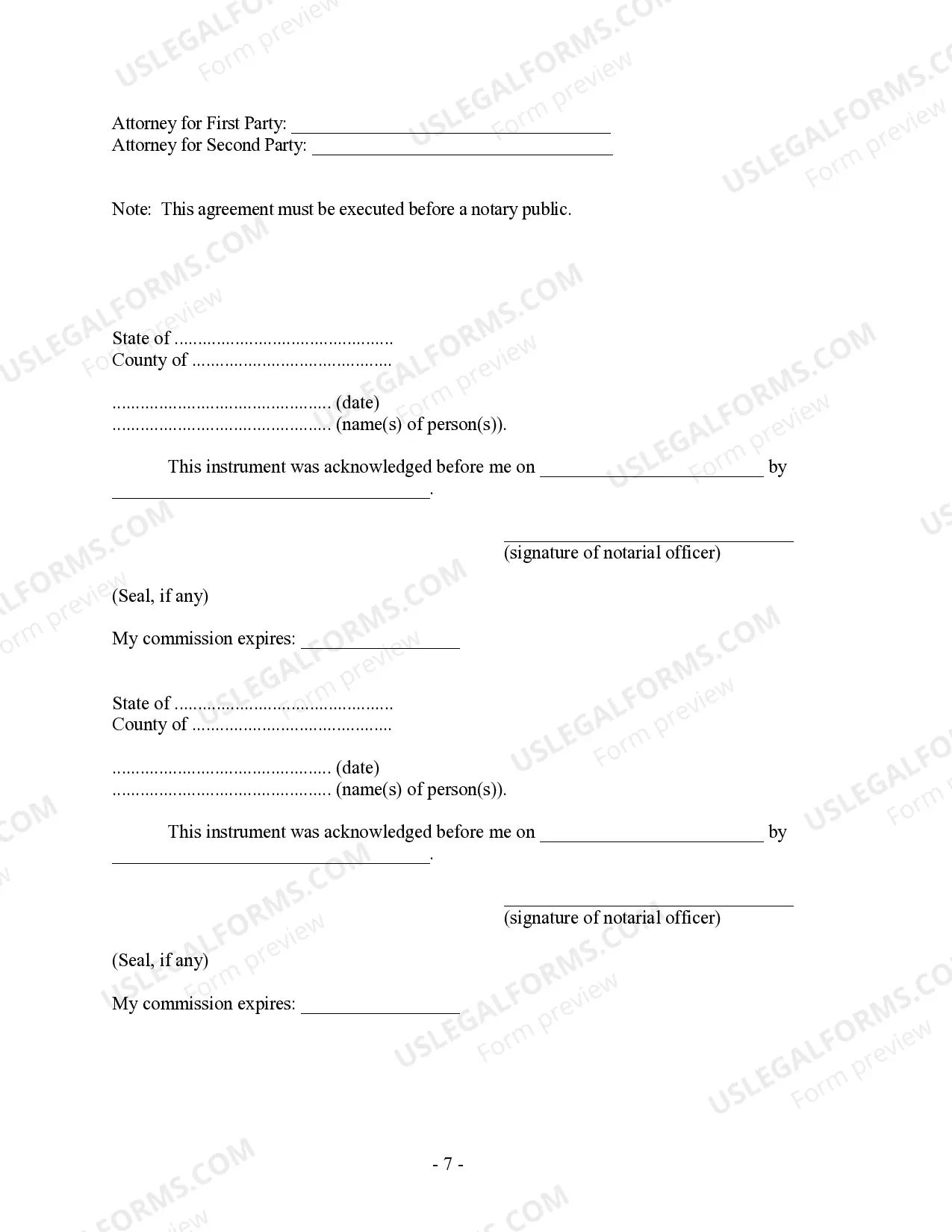
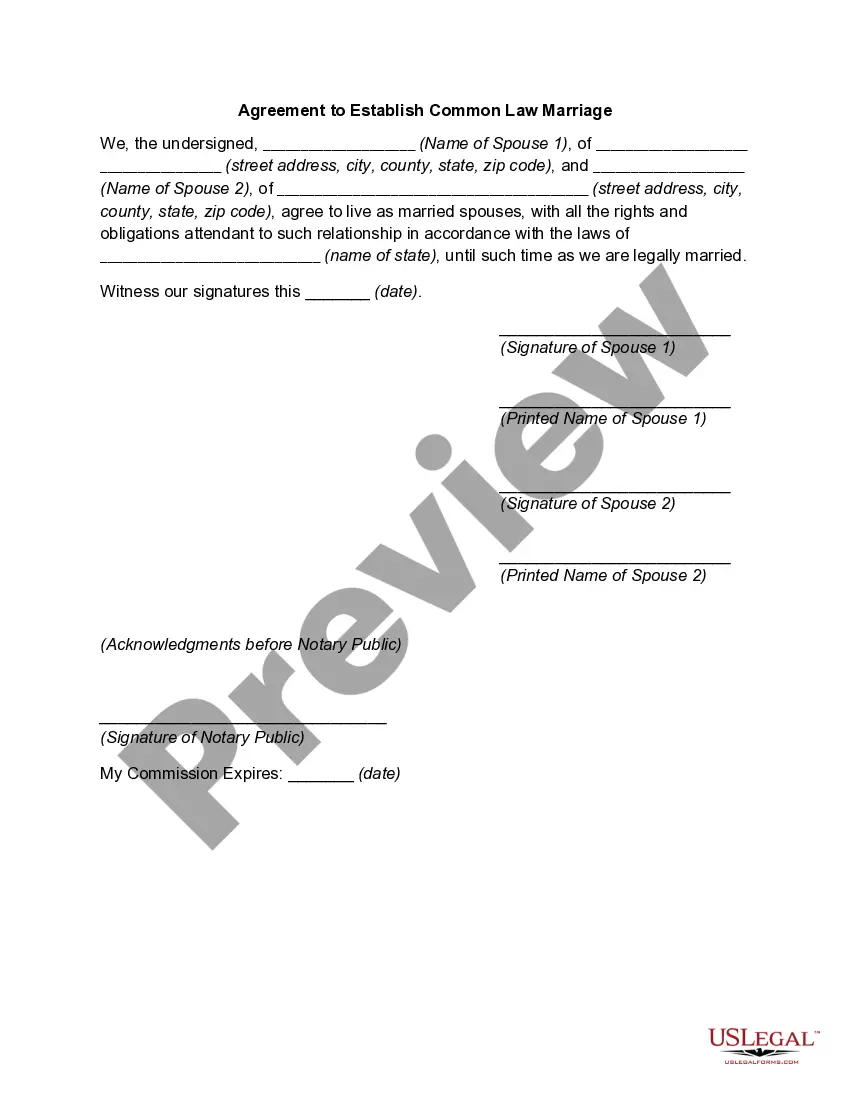
- Details for notarization and binding agreement upon both parties.
Situations where this form applies
This Postnuptial Property Agreement should be utilized when a couple wants to clarify their respective property rights after marriage. It is particularly useful in situations where significant assets are owned by one or both parties prior to marriage, or when the couple has acquired new property during the marriage. Additionally, this agreement can help provide peace of mind by outlining financial responsibilities in the event of divorce, separation, or death, thereby reducing potential conflicts regarding asset division.
Who can use this document
- Couples who are married and want to define their property rights.
- Spouses with substantial individual assets prior to the marriage.
- Individuals entering a marriage with children from previous relationships.
- Couples wishing to clarify financial obligations and asset distributions.
Completing this form step by step
- Identify the parties involved in the agreement, including full names and addresses.
- Clearly list and disclose each party's separate property in the designated sections.
- Specify which property is considered joint property and how it will be treated.
- Include any provisions related to debts and how they will be managed after execution.
- Both parties should sign and have the document notarized for legal validity.
Notarization requirements for this form
To make this form legally binding, it must be notarized. Our online notarization service, powered by Notarize, lets you verify and sign documents remotely through an encrypted video session.
Get your form ready online
Our built-in tools help you complete, sign, share, and store your documents in one place.
Make edits, fill in missing information, and update formatting in US Legal Forms—just like you would in MS Word.
Download a copy, print it, send it by email, or mail it via USPS—whatever works best for your next step.
Sign and collect signatures with our SignNow integration. Send to multiple recipients, set reminders, and more. Go Premium to unlock E-Sign.
If this form requires notarization, complete it online through a secure video call—no need to meet a notary in person or wait for an appointment.
We protect your documents and personal data by following strict security and privacy standards.

Make edits, fill in missing information, and update formatting in US Legal Forms—just like you would in MS Word.

Download a copy, print it, send it by email, or mail it via USPS—whatever works best for your next step.

Sign and collect signatures with our SignNow integration. Send to multiple recipients, set reminders, and more. Go Premium to unlock E-Sign.

If this form requires notarization, complete it online through a secure video call—no need to meet a notary in person or wait for an appointment.

We protect your documents and personal data by following strict security and privacy standards.
Mistakes to watch out for
- Failing to fully disclose financial information, which could invalidate the agreement.
- Not having both parties consult separate legal counsel, which is critical for enforceability.
- Omitting property or debts that are not included in the agreement, leading to future disputes.
- Neglecting to notarize the document, risking its legal status.
Benefits of completing this form online
- Convenience of downloading and completing the form at your own pace.
- Immediate access to a legally compliant template drafted by licensed attorneys.
- Editability to suit specific personal circumstances and property arrangements.
- Online guidance available to assist with understanding each section of the form.
Looking for another form?
Form popularity
FAQ
Certain provisions cannot be included in a postnuptial agreement, including decisions regarding child custody and child support. A Delaware Postnuptial Property Agreement typically focuses on the division of assets and debts, rather than matters of child-related issues. Furthermore, agreements should not include provisions that encourage divorce or violate state laws. For clarity and compliance, consulting legal resources, such as US Legal Forms, can help you structure a sound agreement.
Several factors can render a postnuptial agreement invalid, especially a Delaware Postnuptial Property Agreement. If either party did not enter into the agreement voluntarily, or if there was a lack of full disclosure of assets, the agreement may be challenged. Additionally, agreements that are deemed unconscionable or made under duress may not be enforceable. To avoid these pitfalls, consider using a trustworthy platform like US Legal Forms for guidance.
Yes, post-nuptial agreements can hold up in court when properly drafted and executed. In the context of a Delaware Postnuptial Property Agreement, both parties must enter into the agreement voluntarily, and it should be fair and transparent. Courts in Delaware typically uphold these agreements as long as they meet legal standards and do not contravene public policy. It is advisable to seek legal counsel to ensure your agreement is valid.
Yes, you can create your own Delaware postnuptial property agreement, but it is crucial to follow legal guidelines to make it valid. While templates and resources are available online, like those on USLegalForms, it's recommended to consult with a qualified attorney. A lawyer can help tailor the agreement to your specific needs and ensure all necessary elements are included for enforceability. This proactive approach minimizes potential disputes in the future.
To file a Delaware postnuptial property agreement, both parties should sign the document in the presence of a notary public. After notarization, it is advisable to keep the agreement in a safe location and provide copies to each party involved. Unlike divorce decrees, postnuptial agreements do not require a court filing, but having it properly documented can help in any future disputes. Utilizing a platform like USLegalForms can help streamline the process and ensure compliance with state laws.
Yes, a Delaware postnuptial property agreement can hold up in court if it meets specific legal requirements. It is essential that both parties properly disclose their assets and enter the agreement voluntarily. Additionally, the agreement must be fair and reasonable at the time of signing. To ensure its enforceability, consider working with legal professionals who specialize in Delaware family law.
Creating a Delaware Postnuptial Property Agreement involves several key steps. First, both partners should discuss their intentions and the terms they wish to include in the agreement, such as property division and financial responsibilities. Next, it’s essential to formalize this agreement in writing, ensuring it clearly outlines each party's rights and obligations. Consulting with a legal expert can further ensure that your Delaware Postnuptial Property Agreement complies with state laws and effectively protects your interests.
Yes, postnuptial agreements are enforceable in Delaware, given they are properly executed and addressed significant legal requirements. The court will consider factors such as fairness, full disclosure of assets, and voluntary consent from both parties. Utilizing professional services, like those offered by uslegalforms, can help ensure that your Delaware Postnuptial Property Agreement is both clear and compliant.
While you can draft your own post nuptial agreement, it’s advisable to seek legal assistance to ensure it meets Delaware's legal requirements. Do-it-yourself agreements may lack necessary provisions or clarity, which could lead to complications later. Using a platform like uslegalforms can simplify the process and ensure you have a customized and compliant document.
A properly drafted Delaware Postnuptial Property Agreement can hold up in court, provided it meets certain legal standards. Courts typically examine whether both parties entered into the agreement voluntarily, with a clear understanding of the terms. Ensuring the document is fair and that both parties had access to independent legal advice can further strengthen its enforceability.