District of Columbia Transfer on Death Deed or TOD - Beneficiary Deed for Individual to Two Individuals
Overview of this form
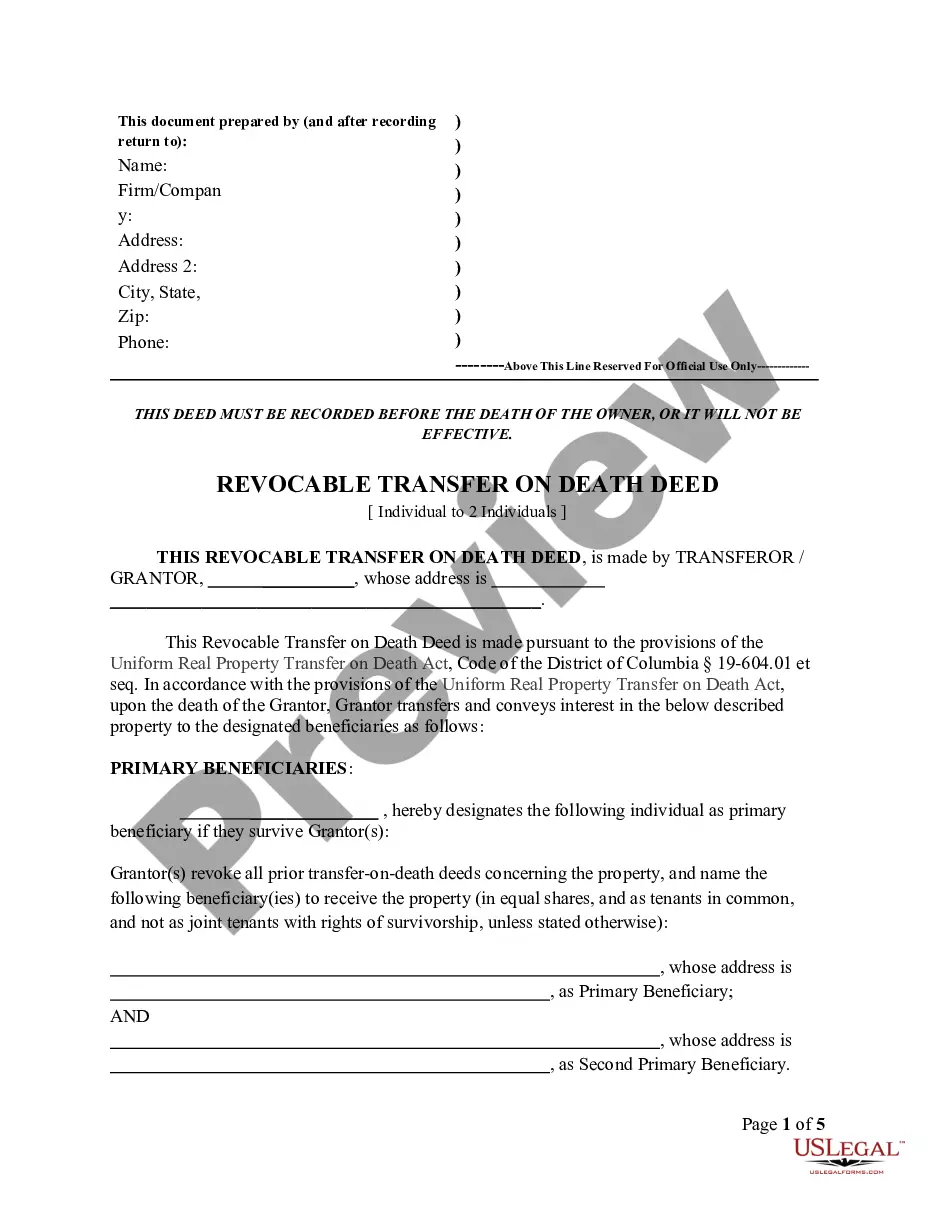
The Transfer on Death Deed (TOD) enables property owners to transfer the title of their property to beneficiaries upon their death without going through probate. Unlike a traditional deed, this form does not transfer any current ownership interest and remains revocable during the grantor's lifetime. It is specifically designed for transferring ownership to two individuals, allowing for a seamless transition of property while providing control and flexibility to the grantor.
Form components explained
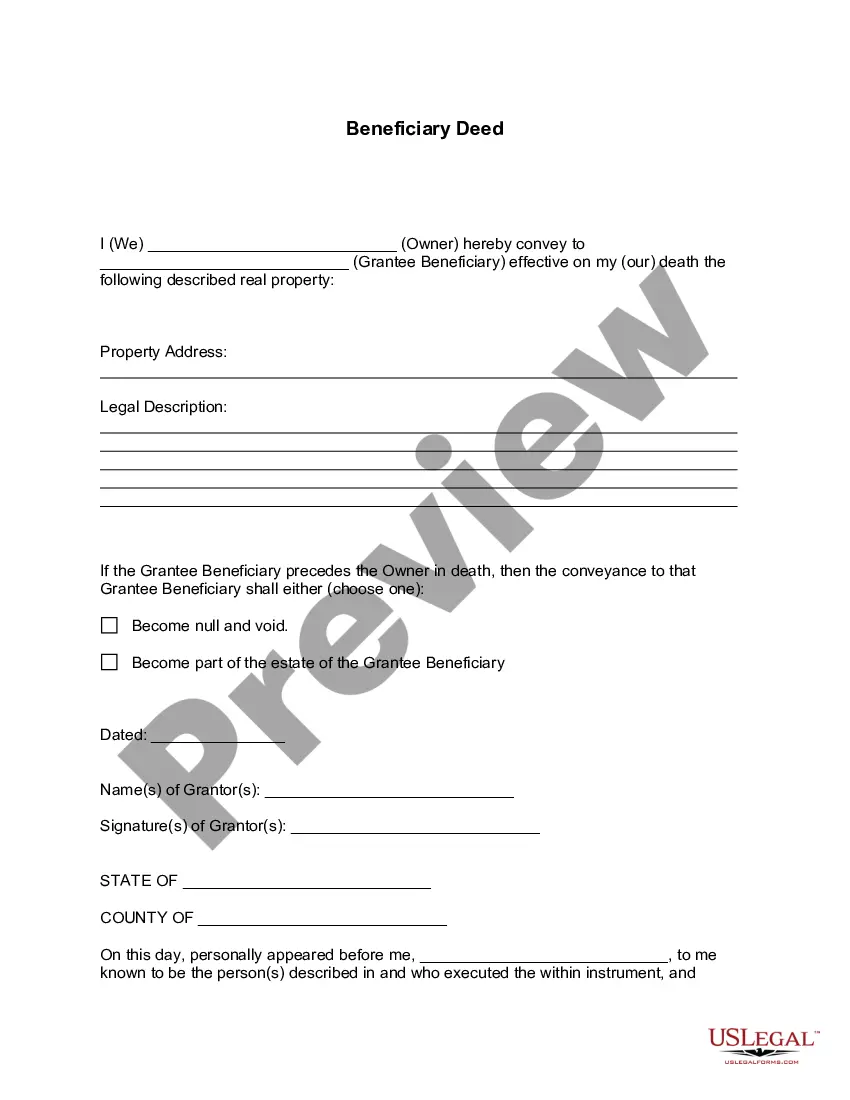
- The name and address of the grantor (property owner).
- Designated primary beneficiaries who will receive the property upon the grantor's death.
- Optional alternate beneficiaries if primary beneficiaries do not survive the grantor.
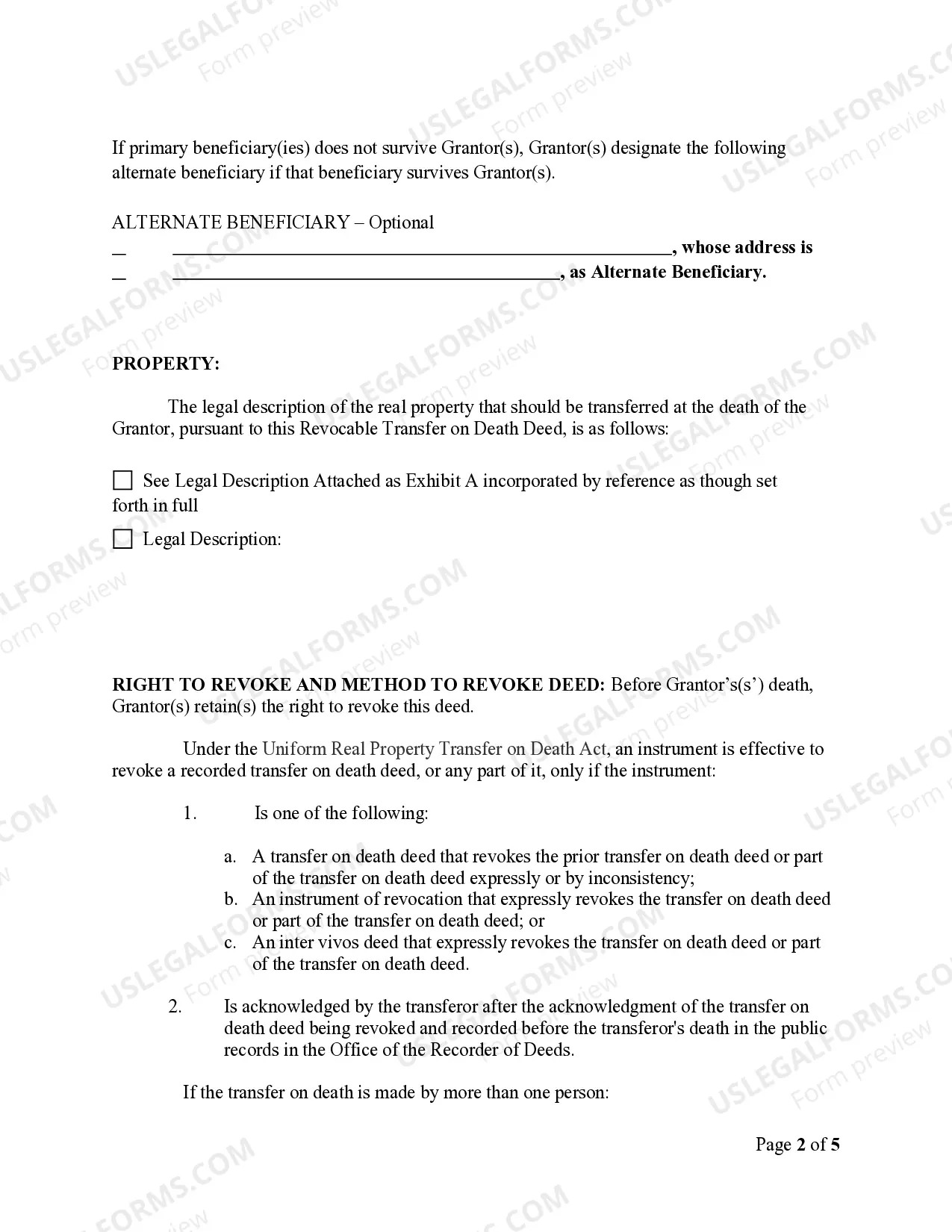
- A detailed legal description of the property being transferred.
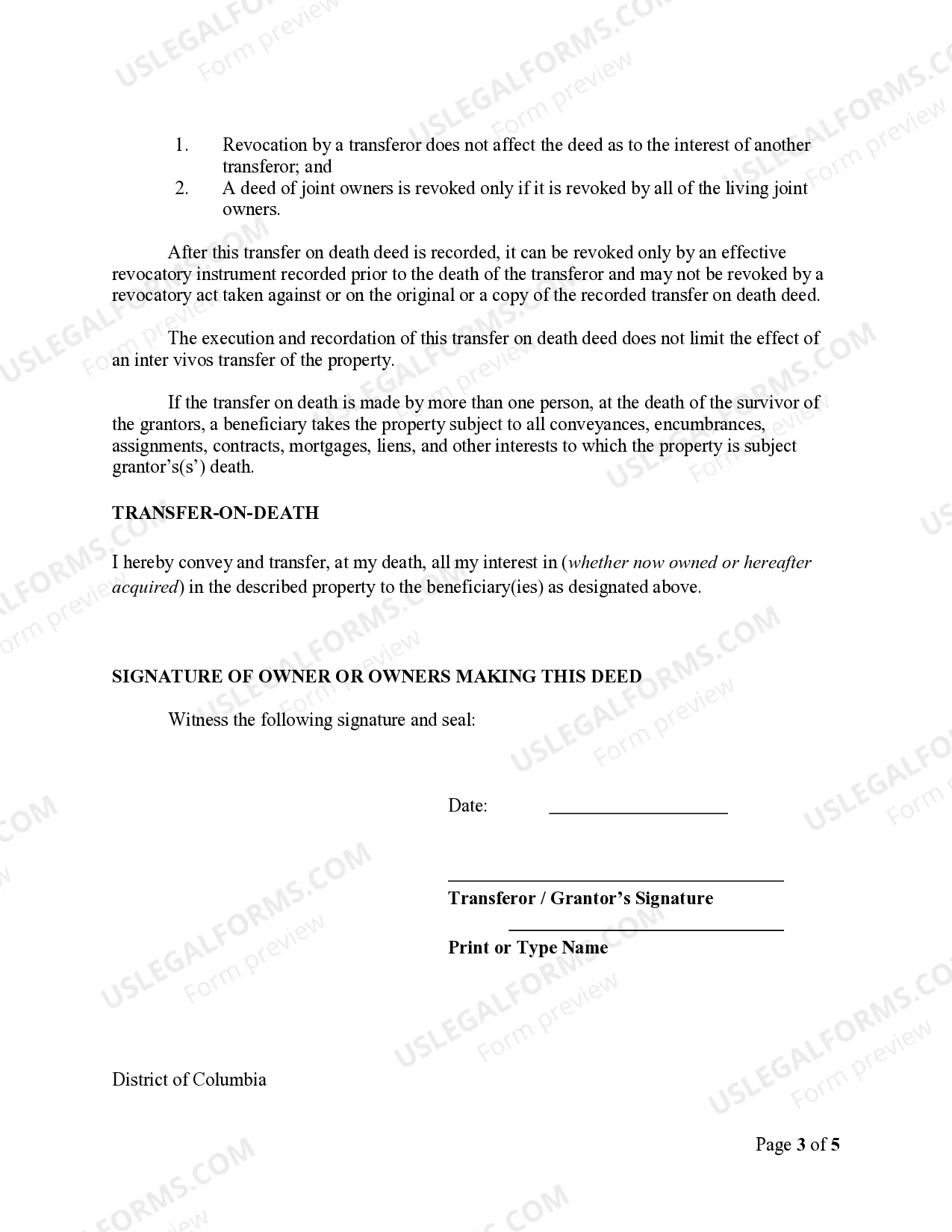
- Provisions outlining the right to revoke the deed before the grantor's death.
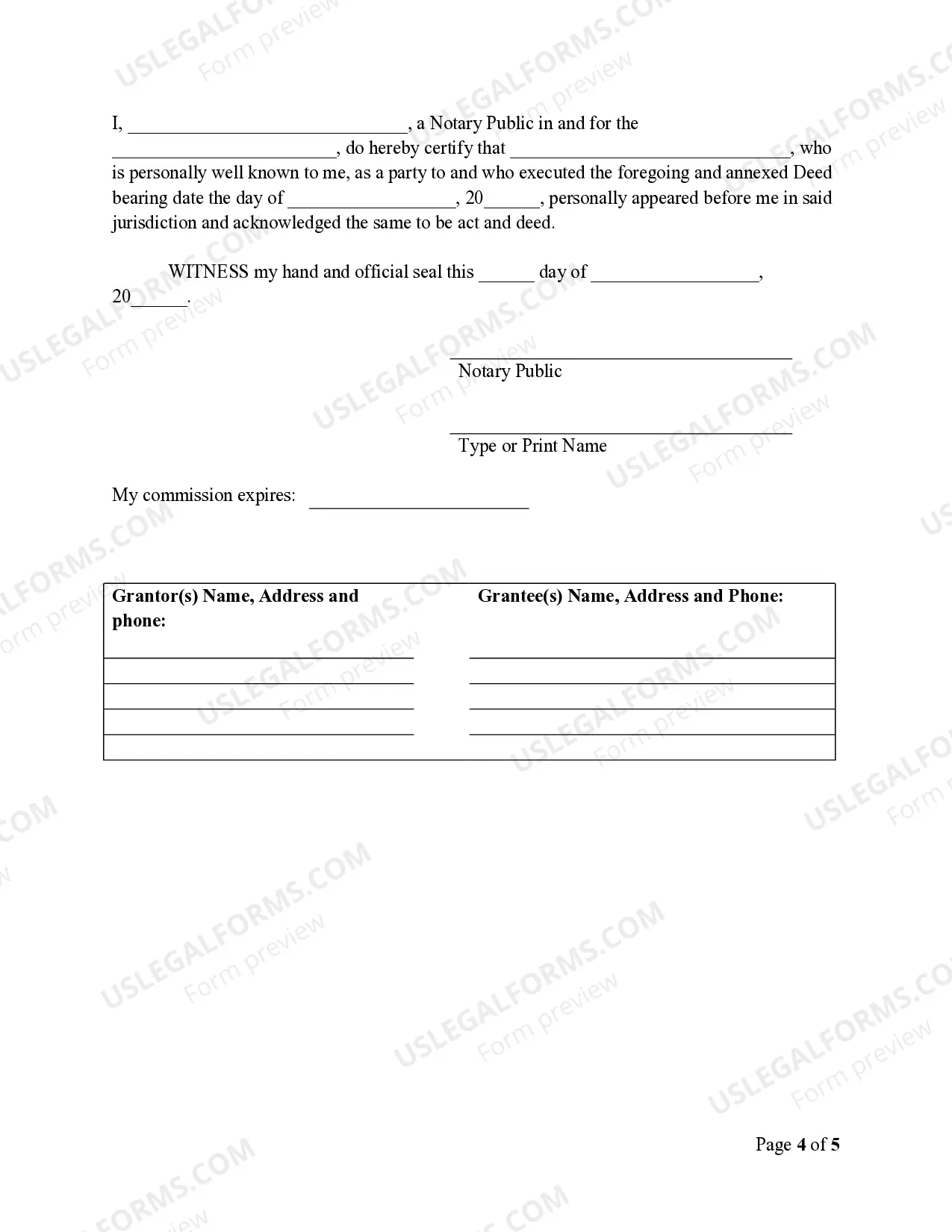
- Signature of the grantor and notary acknowledgment for legal validation.




Common use cases
This form is useful when a property owner wishes to ensure that their property automatically transfers to specific individuals after their death, without additional probate complications. It is ideal for those who want to maintain control over their property while alive and provide a clear plan for its transfer upon their passing.
Who can use this document
- Individuals who own real estate and wish to designate beneficiaries for their property after death.
- Property owners looking for a simple and effective way to transfer real estate to multiple individuals.
- Those seeking to avoid probate and ensure a smooth transfer of property to heirs.
Completing this form step by step
- Fill in the grantor's name and address, ensuring that it is accurate.
- Designate the primary beneficiaries and their addresses, noting that ownership will be in equal shares.
- Complete the section for alternate beneficiaries, if applicable.
- Provide a detailed legal description of the property to be transferred.
- Sign the deed in the presence of a notary public to validate the document.
Does this document require notarization?
Yes, this form must be notarized to be legally valid. Notarization provides assurance that the grantor's signature is authentic and that they executed the deed willingly. US Legal Forms facilitates an integrated online notarization service, available 24/7, allowing users to complete the notarization process via secure video call without the need to travel.
Get your form ready online
Our built-in tools help you complete, sign, share, and store your documents in one place.
Make edits, fill in missing information, and update formatting in US Legal Forms—just like you would in MS Word.
Download a copy, print it, send it by email, or mail it via USPS—whatever works best for your next step.
Sign and collect signatures with our SignNow integration. Send to multiple recipients, set reminders, and more. Go Premium to unlock E-Sign.
If this form requires notarization, complete it online through a secure video call—no need to meet a notary in person or wait for an appointment.
We protect your documents and personal data by following strict security and privacy standards.

Make edits, fill in missing information, and update formatting in US Legal Forms—just like you would in MS Word.

Download a copy, print it, send it by email, or mail it via USPS—whatever works best for your next step.

Sign and collect signatures with our SignNow integration. Send to multiple recipients, set reminders, and more. Go Premium to unlock E-Sign.

If this form requires notarization, complete it online through a secure video call—no need to meet a notary in person or wait for an appointment.

We protect your documents and personal data by following strict security and privacy standards.
Common mistakes
- Failing to record the deed before the grantor's death, rendering it ineffective.
- Not including a complete legal description of the property, which can lead to confusion.
- Neglecting to include an alternate beneficiary, which could complicate matters if primary beneficiaries do not survive.
Benefits of using this form online
- Convenient access to legal templates, available for download at any time.
- Editable fields allow personalized information to be entered easily.
- Prepared by licensed attorneys to ensure the form meets legal standards.
Looking for another form?
Form popularity
FAQ
New York does not currently allow the use of a Transfer on Death Deed, unlike the District of Columbia Transfer on Death Deed or TOD - Beneficiary Deed for Individual to Two Individuals. In New York, property owners must explore alternative methods to transfer property upon their death. Understanding your state's regulations is essential for effective estate planning. Using uslegalforms can help you find the right tools and information to navigate property transfer options in New York.
Yes, you can transfer a deed without an attorney in many cases, including when using a District of Columbia Transfer on Death Deed or TOD - Beneficiary Deed for Individual to Two Individuals. Many individuals successfully navigate the process on their own by utilizing online resources and templates. Nonetheless, seeking legal assistance can help prevent potential mistakes that could complicate the transfer. Resources available on uslegalforms can support you in completing the necessary documentation accurately.
You do not necessarily need a lawyer to execute a District of Columbia Transfer on Death Deed or TOD - Beneficiary Deed for Individual to Two Individuals. However, having legal guidance can help ensure that all forms are filled out correctly and comply with local laws. It can also provide peace of mind knowing that you are making informed decisions regarding your property transfer. Using platforms like uslegalforms can simplify the process and provide essential resources.
The disadvantages of a District of Columbia Transfer on Death Deed or TOD - Beneficiary Deed for Individual to Two Individuals can include potential complications with joint ownership and the risk of unintended heirs. If your beneficiary predeceases you without an alternative beneficiary named, their share may not transfer as intended. Furthermore, TOD deeds do not account for other estate considerations, meaning additional planning might be necessary. Using uslegalforms can help clarify these complexities while preparing your deed.
One potential disadvantage of a District of Columbia Transfer on Death Deed or TOD - Beneficiary Deed for Individual to Two Individuals is that it may not fully protect your assets from creditors. Despite being a simple way to transfer property, there are limitations regarding how it interacts with estate planning. Additionally, if your beneficiaries face legal issues, your assets may still be at risk. Therefore, it’s essential to consider these factors in conjunction with your overall estate plan.
While it is not mandatory to have an attorney for a District of Columbia Transfer on Death Deed or TOD - Beneficiary Deed for Individual to Two Individuals, consulting one can provide valuable guidance. An attorney can help ensure that the deed complies with state laws, thus preventing future complications. However, you can use user-friendly platforms like uslegalforms to facilitate the process, making it accessible even if you choose to go without legal representation.
Yes, you can name two beneficiaries on a District of Columbia Transfer on Death Deed or TOD - Beneficiary Deed for Individual to Two Individuals. This option allows you to divide your estate among the beneficiaries as you see fit. Having multiple beneficiaries can simplify the transfer process and ensure that your wishes are carried out. By clearly specifying this in the deed, you help prevent potential disputes later on.
Yes, the District of Columbia does permit the use of Transfer on Death Deeds. This allows property owners to designate beneficiaries who will inherit real estate directly upon their passing, avoiding the lengthy probate process. It’s an excellent option for individuals who want to manage their estate simply and efficiently.
Several states in the U.S. recognize Transfer on Death Deeds, including but not limited to California, Nevada, and Texas, among others. Each state's laws regarding a District of Columbia Transfer on Death Deed or TOD - Beneficiary Deed for Individual to Two Individuals can vary. It's beneficial to consult local laws or legal experts to understand how these deeds work in your state.
Yes, Washington, D.C. allows the execution of a District of Columbia Transfer on Death Deed or TOD - Beneficiary Deed for Individual to Two Individuals. This option provides property owners the right to transfer real estate upon their death without probate. It’s a convenient way for individuals to manage their estate and ensure their beneficiaries receive designated assets directly.