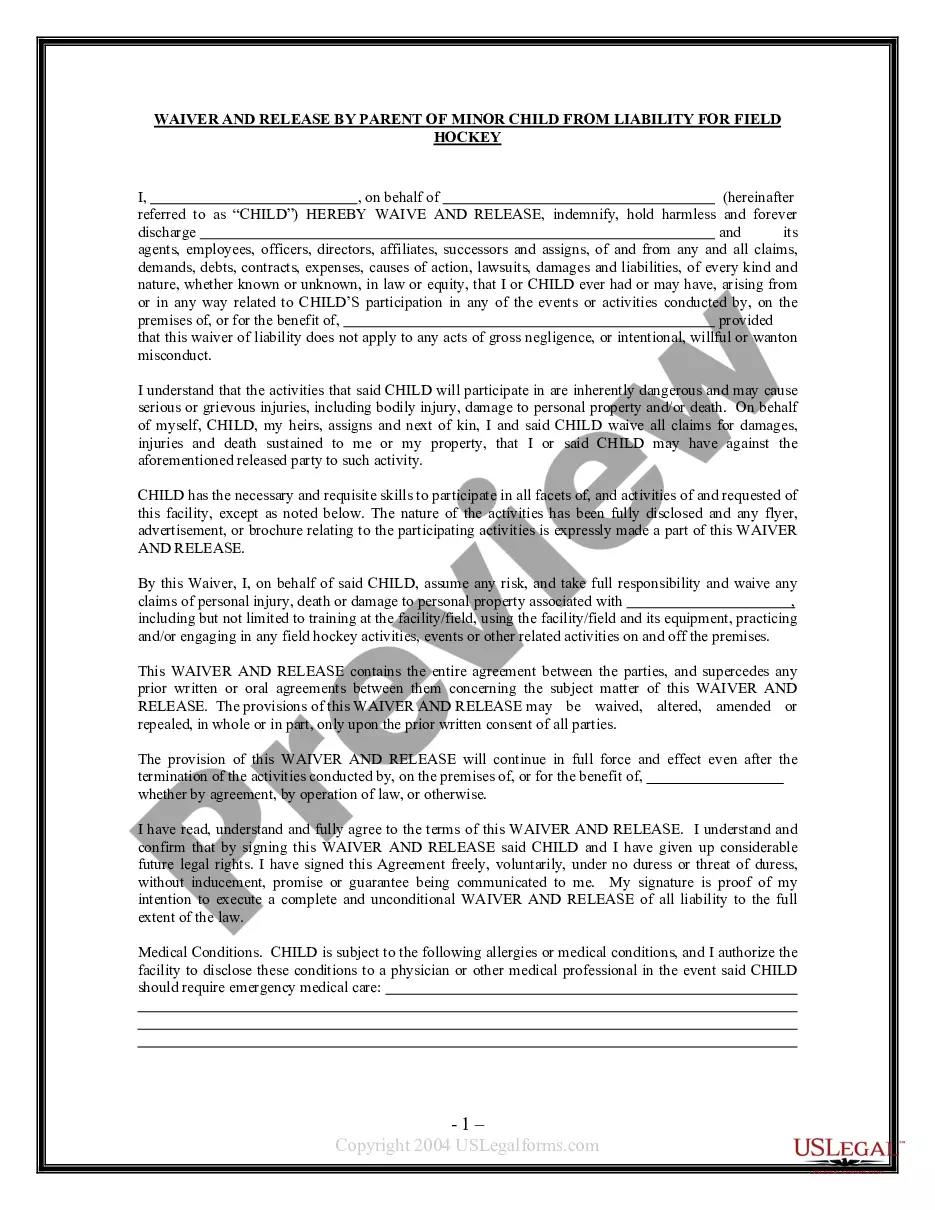
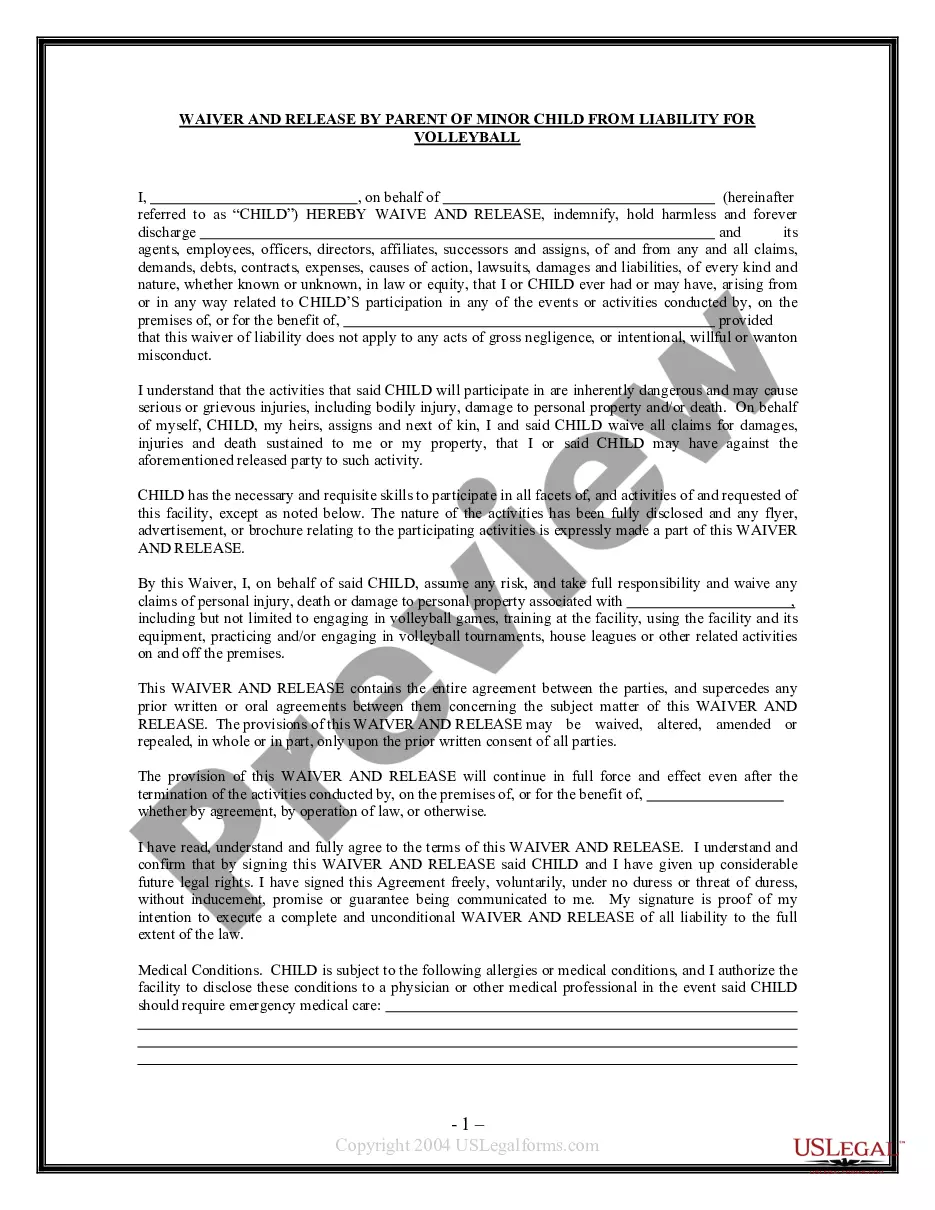
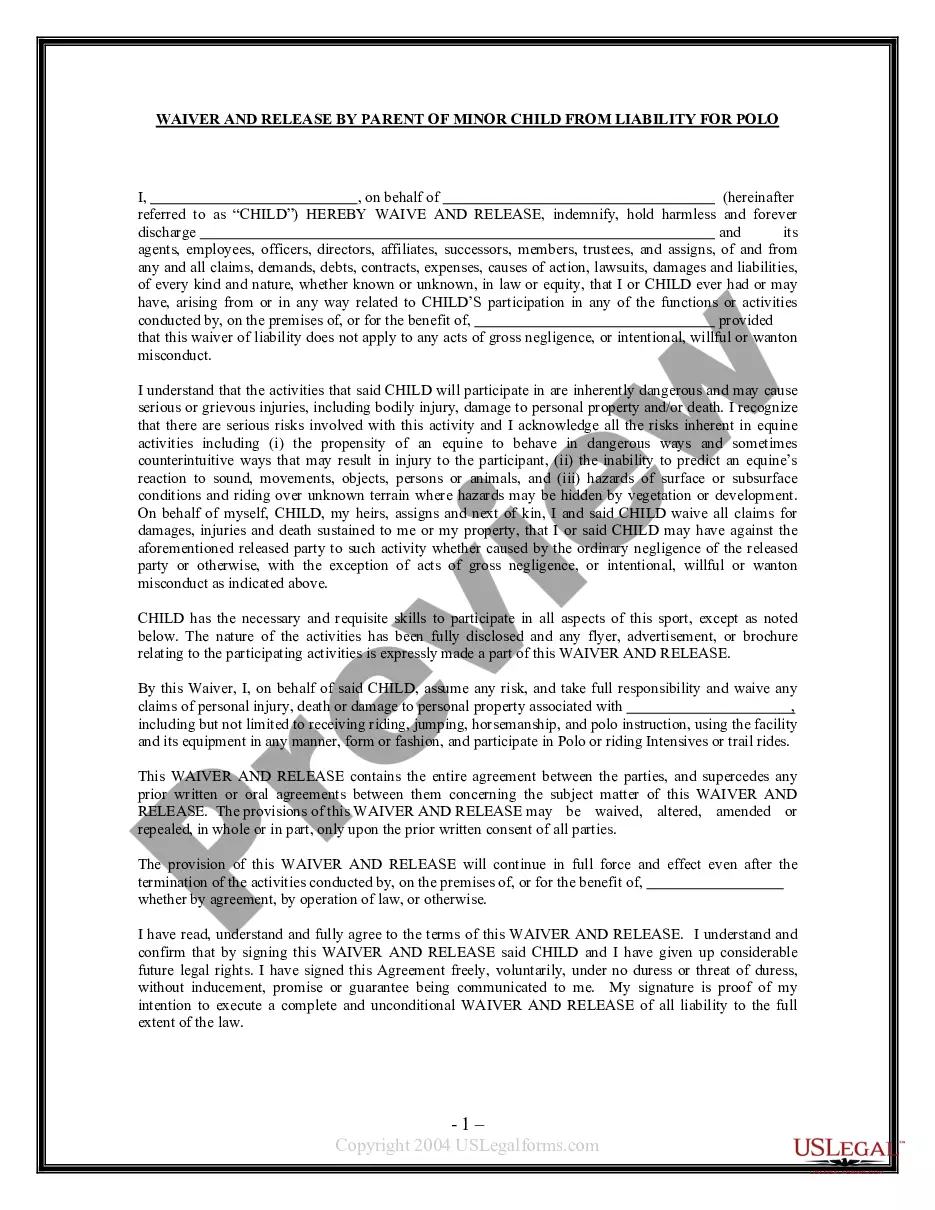
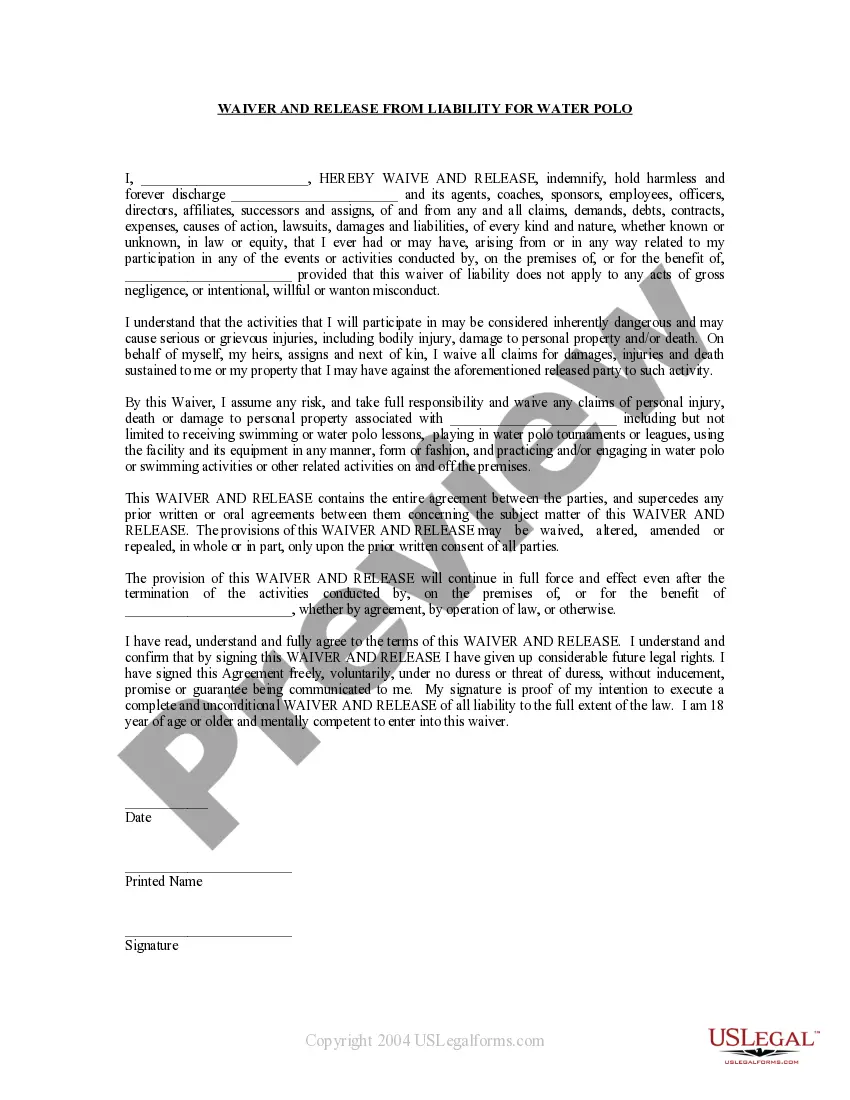
This form allows a parent or guardian to release a minor for water polo from liability for injuries which may be incurred by a minor child while on the premises, taking part in activities, etc.
District of Columbia Waiver and Release From Liability For Minor Child for Water Polo
Category:
State:
Multi-State
Control #:
US-WAV-81M
Format:
Word;
Rich Text
Instant download
Description
Free preview
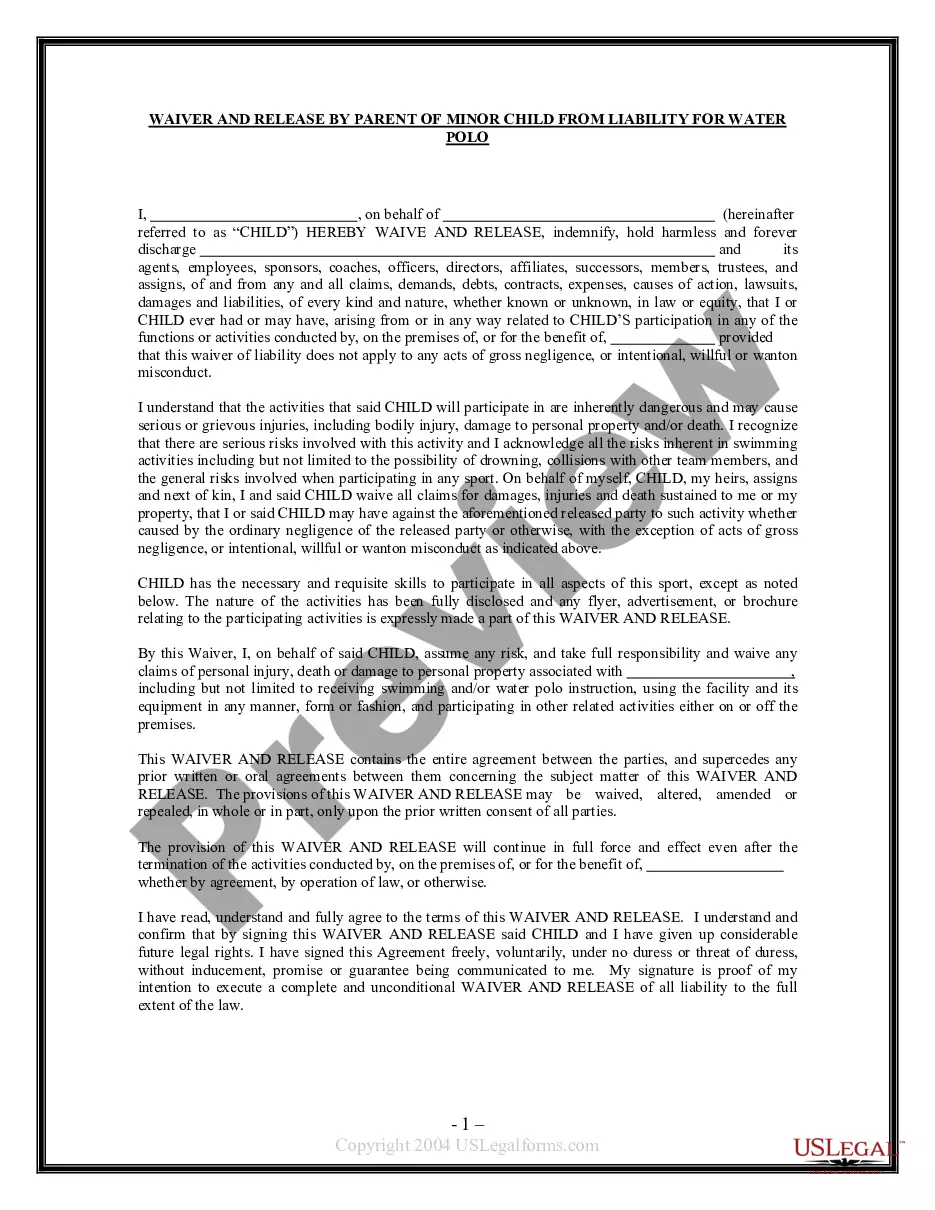
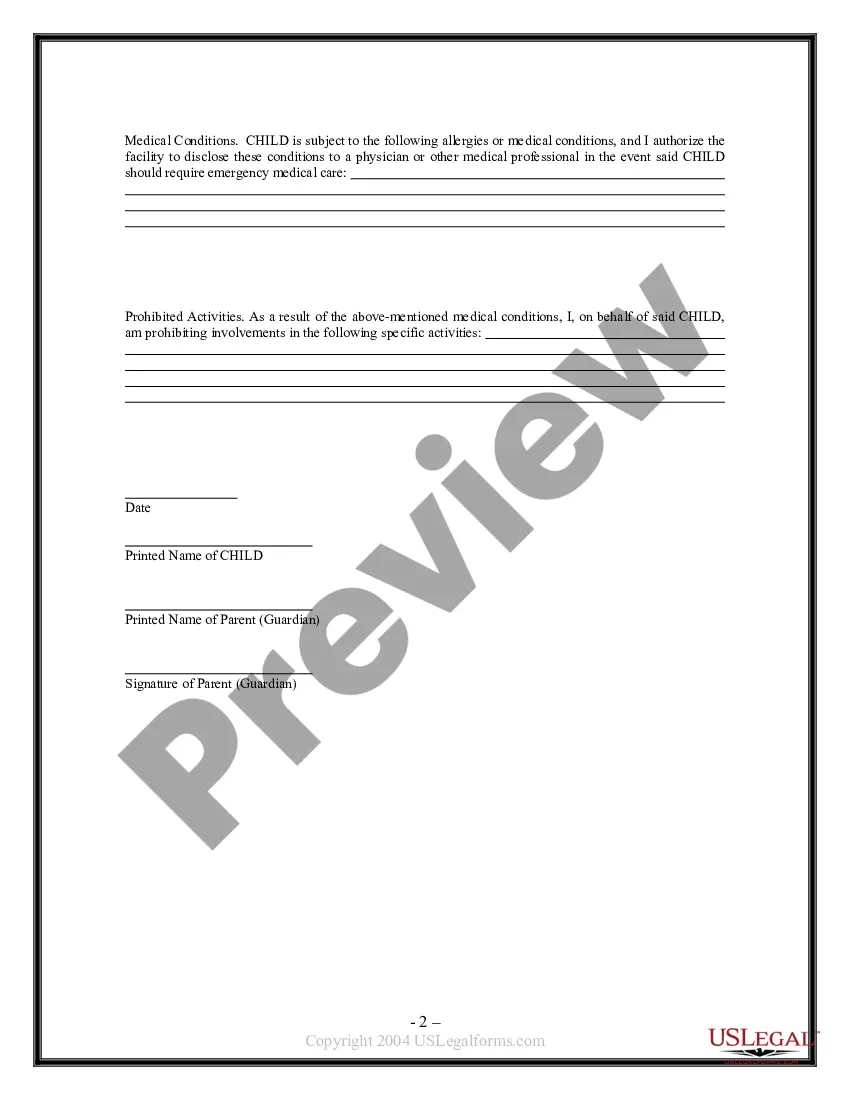
How to fill out Waiver And Release From Liability For Minor Child For Water Polo?
Locating the appropriate legal document template can be a challenge. Clearly, there are numerous templates accessible online, but how can you acquire the legal document you require? Use the US Legal Forms website. This service offers thousands of templates, such as the District of Columbia Waiver and Release From Liability For Minor Child for Water Polo, which you can utilize for business and personal purposes. All templates are verified by professionals and comply with federal and state regulations.
If you are currently registered, Log In to your account and then click the Download button to access the District of Columbia Waiver and Release From Liability For Minor Child for Water Polo. Use your account to browse through the legal documents you may have acquired previously. Navigate to the My documents section of your account and obtain another copy of the document you need.
If you are a new user of US Legal Forms, here are simple steps for you to follow: First, make sure you have selected the correct template for the city/region. You can review the document using the Review button and examine the document description to confirm it is the right one for you. If the template does not meet your needs, utilize the Search field to find the appropriate template. Once you are confident that the document is suitable, click the Purchase now button to obtain the template. Choose the pricing plan you prefer and fill in the necessary information. Create your account and pay for your order using your PayPal account or credit card. Select the file format and download the legal document template to your device. Complete, modify, print, and sign the acquired District of Columbia Waiver and Release From Liability For Minor Child for Water Polo.
Make sure to follow these guidelines to ensure you access the correct legal documents efficiently.
- US Legal Forms is the leading collection of legal templates that you can explore various document designs.
- Utilize the service to download appropriately crafted documents that adhere to state regulations.
- Accurate templates are essential for compliance and legal protection.
- The platform is designed for ease of use and accessibility.
- Professional verification ensures the quality of the documents available.
- Find the templates you need without unnecessary hassle.
Form popularity
FAQ
The purpose of waivers is to prevent teams from colluding to exchange players outside of the normal trade rules, as well as to encourage parity by giving lower-ranked teams the right of first refusal to claim players who are no longer wanted by their former club.
Signing a waiver does not mean you automatically do not have the right to file a lawsuit after suffering a serious injury in California. Liability laws are complex and often require an attorney's assistance. If you signed a waiver before an activity that gave you an injury, speak to a lawyer about your rights.
After an NFL team cuts a player, he is either waived or released. A player who has accrued less than four years worth of seasons in the NFL is waived, while a so-called vested veteran, or a player with four or more accrued seasons, is released.
So, if an accident happens and injury occurs, is a Waiver effective in protecting the institution from liability and preventing a lawsuit from the injured party? The answer is that, if properly worded and signed, the Waiver is likely valid and will preclude legal claims for injuries.
Generally, a liability waiver document is a legally binding agreement that relinquishes the right of one party to pursue legal remedy for injuries accrued on the property, regardless of fault involved.
Liability waivers are enforceable in California solely to the extent they shift to the customer the risk of ordinary negligence. Under California law, a liability waiver cannot excuse an injury caused by a defendant's gross negligence, recklessness or intentionally wrongful act.
Waiver and release refers to the waiving of rights or privileges and the release of a party from their obligations or rights.
To sum it up, customers can still sue business owners even when they've signed a waiver to use the business.
So, do liability waivers hold up in court? if you are injured as a result of ordinary negligence, the liability waiver may fully protect the defendant and leave you without legal recourse. If you are injured as a result of gross negligence, then you may have a case.
A release and waiver agreement is an enforceable promise not to pursue legal action in exchange for compensation. The releasee gives money or some other form of compensation to the releasor, who then agrees not to press charges, sue, or take any other legal action against the releasee.