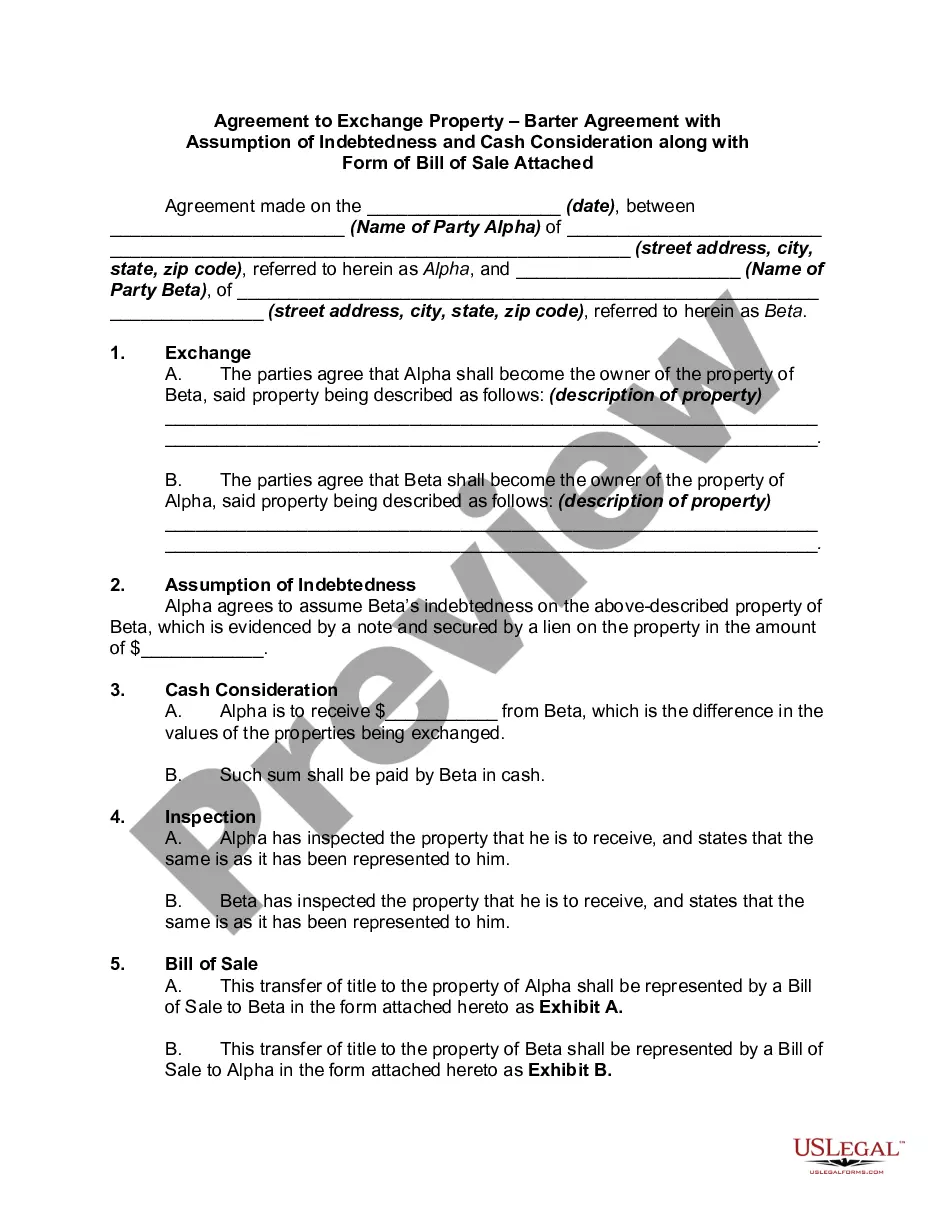
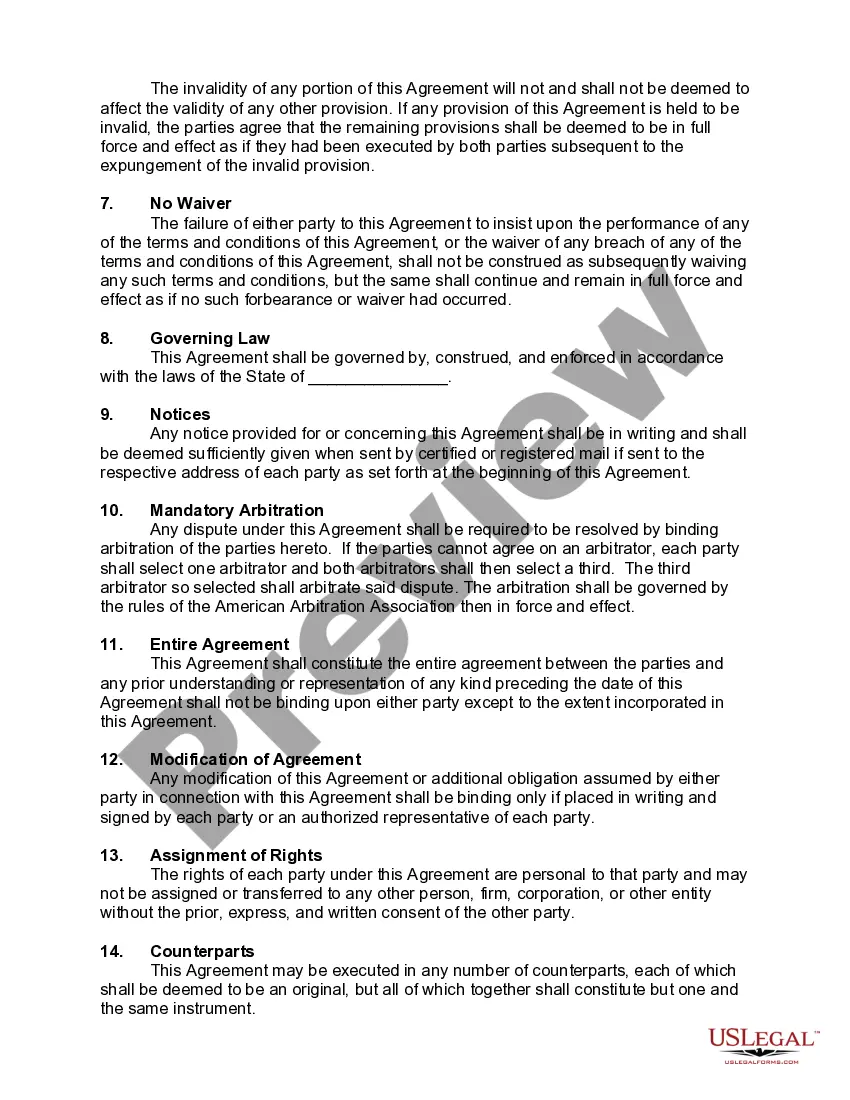
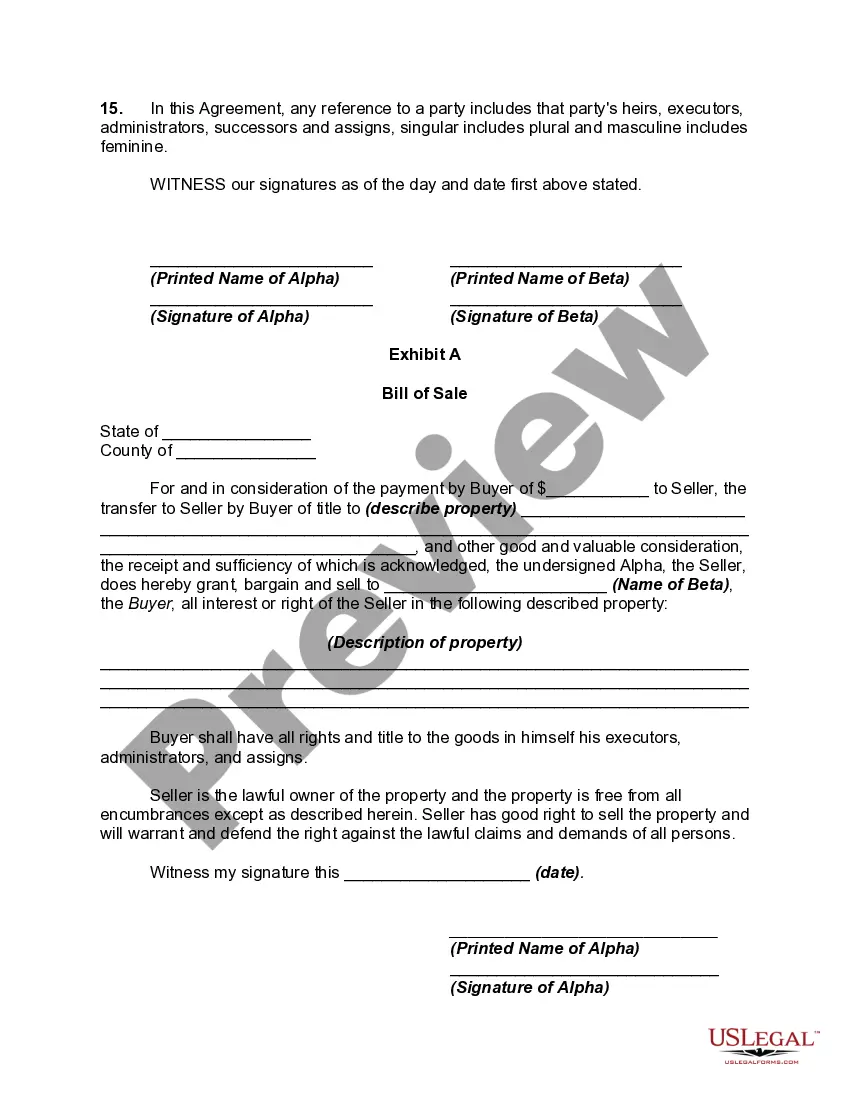
District of Columbia Agreement to Exchange Property - Barter Agreement with Assumption of
Description
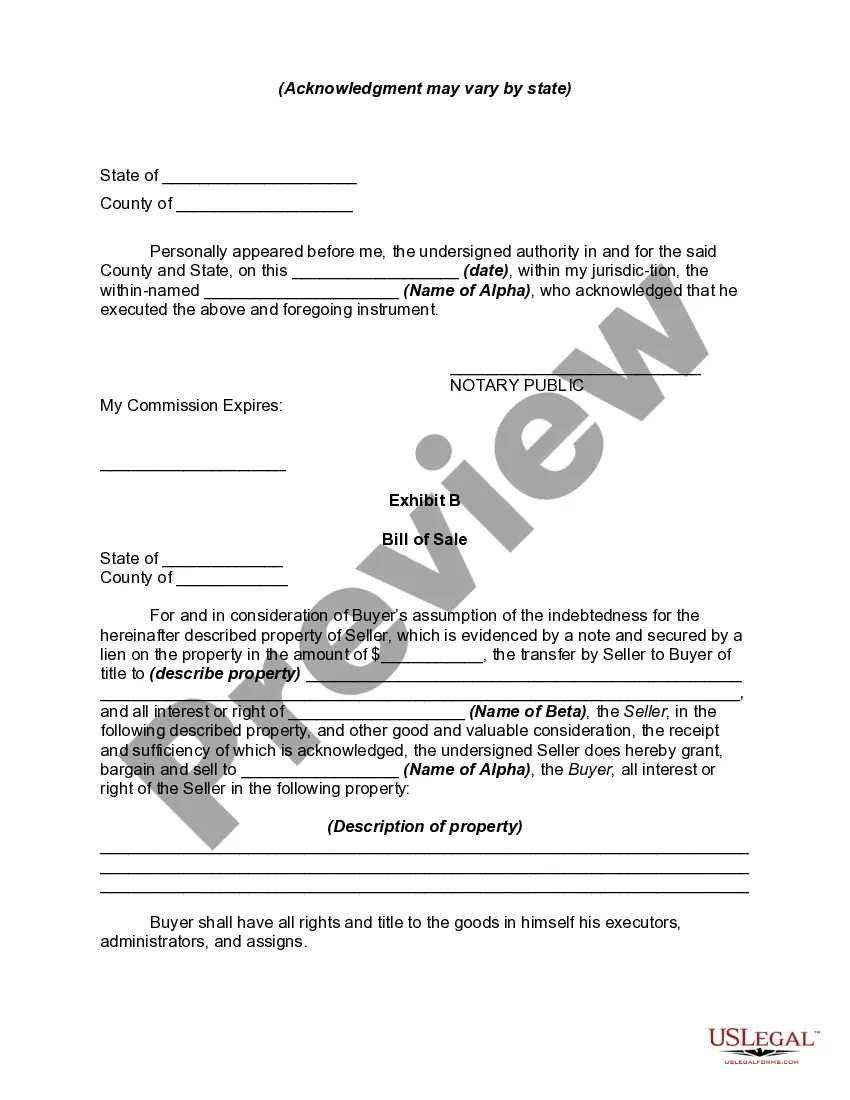
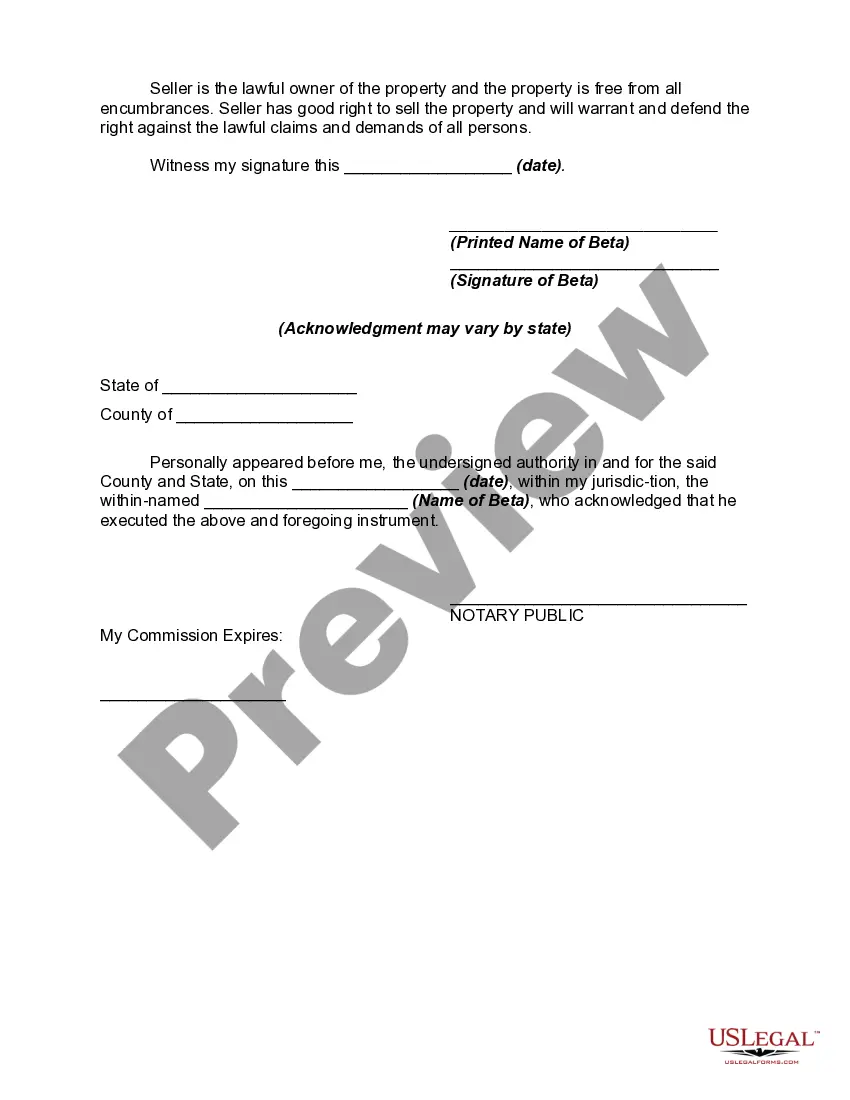
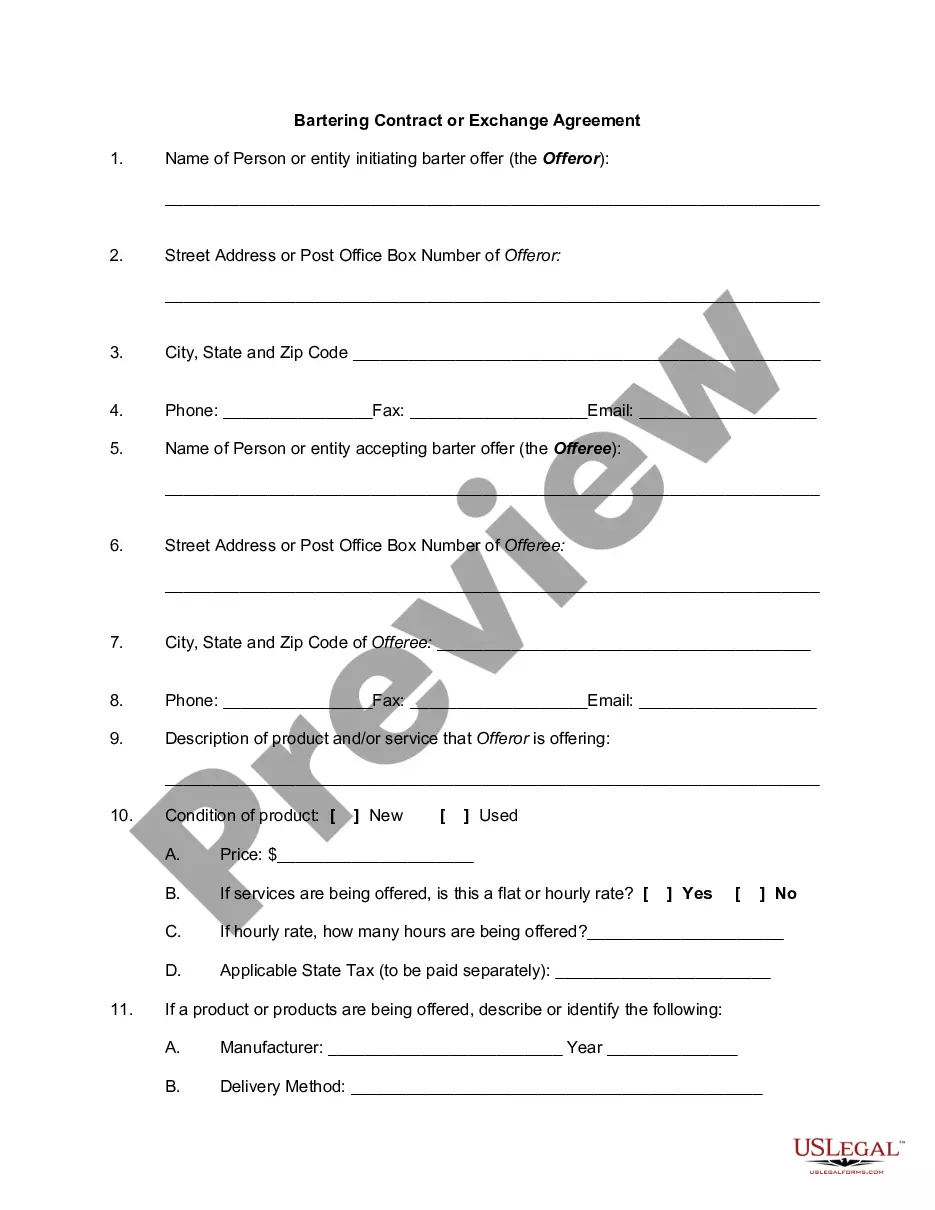
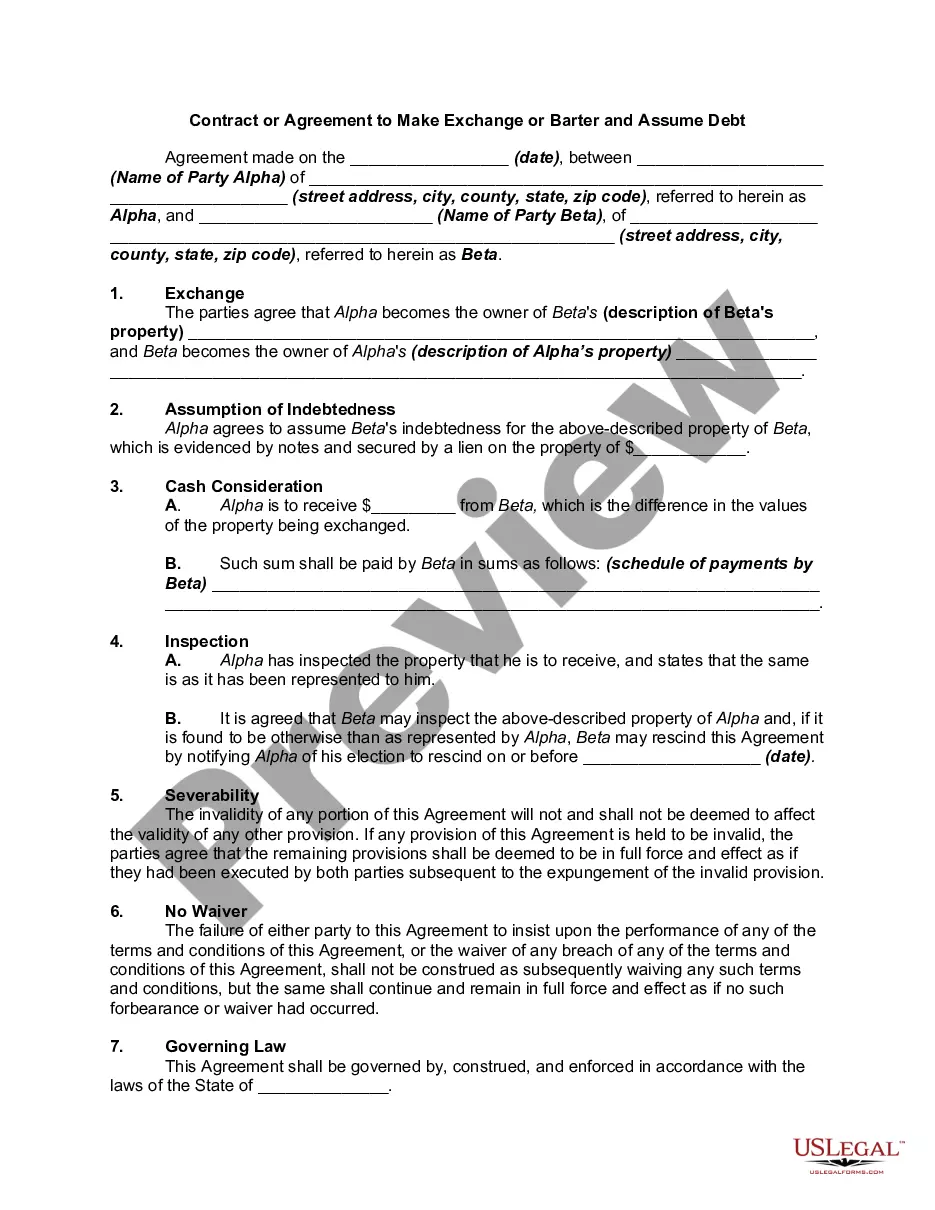
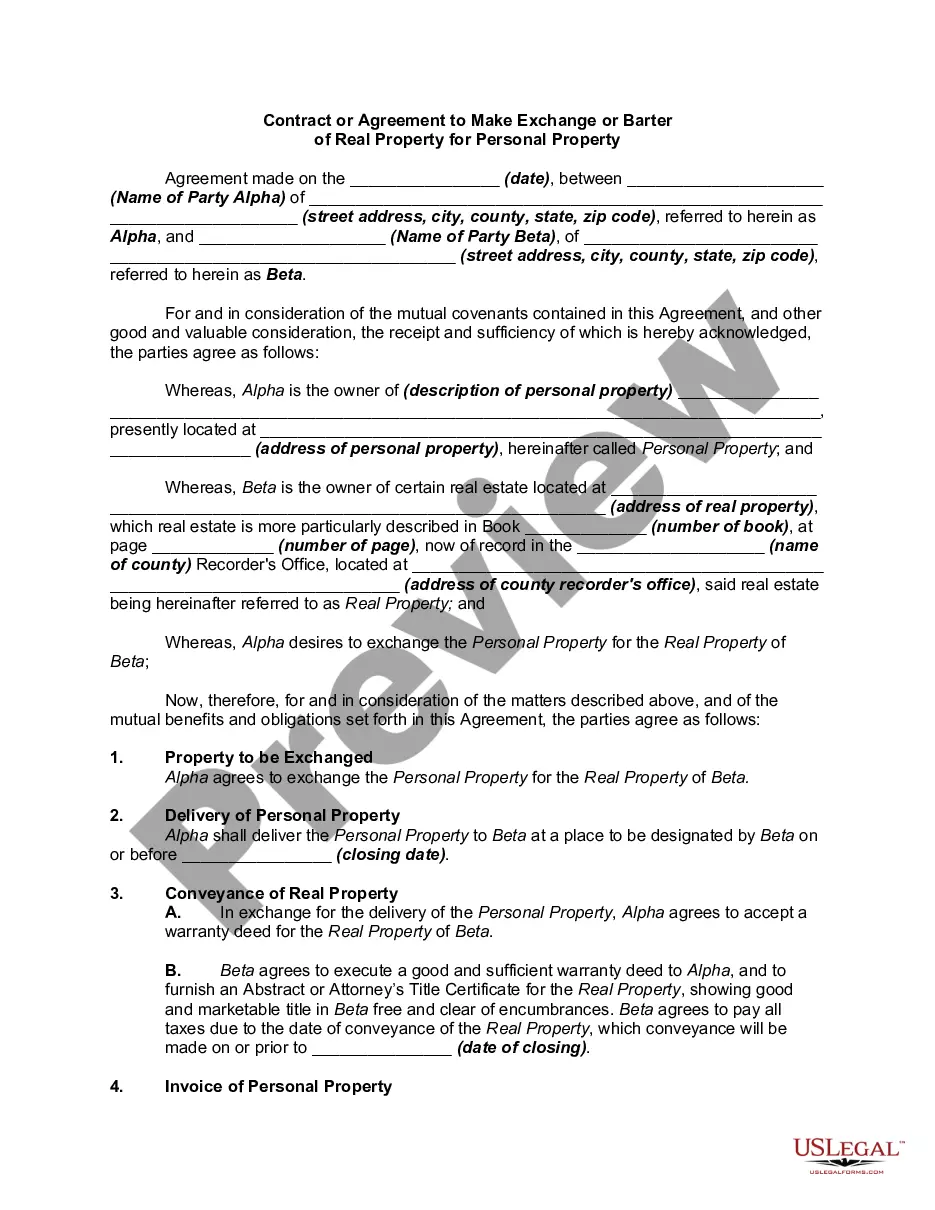

How to fill out Agreement To Exchange Property - Barter Agreement With Assumption Of?
If you wish to acquire, download, or print official document templates, utilize US Legal Forms, the premier collection of legal forms available online.
Take advantage of the website's straightforward and efficient search feature to obtain the documents you need.
Various templates for business and personal purposes are organized by types and categories, or keywords.
Step 4. Once you have found the form you need, click the Buy now button. Select your preferred pricing plan and provide your details to register for an account.
Step 5. Process the payment. You can use your credit card or PayPal account to complete the transaction.
- Use US Legal Forms to find the District of Columbia Agreement to Exchange Property - Barter Agreement with Assumption in just a few clicks.
- If you are already a US Legal Forms user, Log In to your account and click the Download button to access the District of Columbia Agreement to Exchange Property - Barter Agreement with Assumption.
- You can also access forms you have previously obtained in the My documents tab of your account.
- If you're using US Legal Forms for the first time, follow the instructions below.
- Step 1. Ensure you have selected the form for your specific region/country.
- Step 2. Use the Preview feature to review the content of the form. Remember to read the summary.
- Step 3. If you are not satisfied with the form, use the Search field at the top of the screen to find other versions in the legal form format.
Form popularity
FAQ
kind exchange property must be held for investment or business purposes, and it can involve various types of real estate, such as residential or commercial properties. Both properties in the exchange must be similar in nature, although they don't have to be identical. Timeliness and proper documentation are essential in the process. Utilizing the District of Columbia Agreement to Exchange Property Barter Agreement with Assumption of can help ensure you meet all requirements efficiently.
Certain entities, such as corporations or partnerships, may face restrictions when attempting a 1031 exchange. Additionally, properties held primarily for personal use are also ineligible. Understanding these limitations can help you evaluate whether this strategy is suitable for your situation. For tailored support, consider the District of Columbia Agreement to Exchange Property - Barter Agreement with Assumption of.
An exchange agreement in real estate outlines the terms and conditions under which two parties agree to swap properties. This document details the properties involved, the timeline for the exchange, and any additional agreements. A well-structured exchange agreement can help protect both parties involved in the transaction. You might want to explore the District of Columbia Agreement to Exchange Property - Barter Agreement with Assumption of to streamline your exchange.
A 1031 exchange qualifies when you sell an investment property and reinvest the proceeds into a similar property. This exchange allows you to defer capital gains taxes, which can be a substantial benefit. To use this strategy effectively, it's important to follow specific IRS guidelines. Consider using the District of Columbia Agreement to Exchange Property - Barter Agreement with Assumption of to facilitate this process.
In contract terms, PDA refers to a Property Disclosure Agreement. This legal document serves as a foundation for a property's sale, detailing its physical condition and any liabilities. For those involved in the District of Columbia Agreement to Exchange Property - Barter Agreement with Assumption of, a clear PDA can simplify the exchanging process and limit future disputes. Using legal platforms like uslegalforms can assist in crafting an effective PDA to ensure comprehensive disclosures.
PDA stands for Property Disclosure Agreement in real estate contexts. This agreement is vital as it informs both parties about significant aspects of a property prior to any transaction. When engaging in a District of Columbia Agreement to Exchange Property - Barter Agreement with Assumption of, having a detailed PDA helps facilitate clearer negotiations and expectations. By ensuring both sides are informed, it promotes a more positive exchange experience.
In the realm of real estate, PDA typically stands for Property Disclosure Agreement. This essential document outlines important information regarding the property's condition and legal matters. Utilizing a PDA is particularly beneficial in the District of Columbia Agreement to Exchange Property - Barter Agreement with Assumption of, as it protects both buyers and sellers by ensuring transparency. This mutual understanding can prevent disputes down the line.
In real estate, PDA refers to a Property Disclosure Agreement. This document provides detailed information about the property's condition and any known issues. It plays a key role in the District of Columbia Agreement to Exchange Property - Barter Agreement with Assumption of, as it helps both parties understand the property's status before finalizing the exchange. Clarity in disclosures fosters trust and ensures smooth transactions.
Yes, the District of Columbia recognizes 1031 exchanges, which allows property owners to defer capital gains taxes. This is beneficial for anyone looking to utilize the District of Columbia Agreement to Exchange Property - Barter Agreement with Assumption of as a strategy for investing. By properly executing a 1031 exchange, you can reinvest in new properties while delaying tax liabilities, thus enhancing your financial strategy.
The three property rule allows an investor to identify up to three properties for a tax-deferred exchange, such as the District of Columbia Agreement to Exchange Property - Barter Agreement with Assumption of. This rule provides flexibility in choosing suitable properties while ensuring compliance with exchange regulations. It permits investors to diversify their real estate portfolio without immediate tax implications, which is a significant advantage.