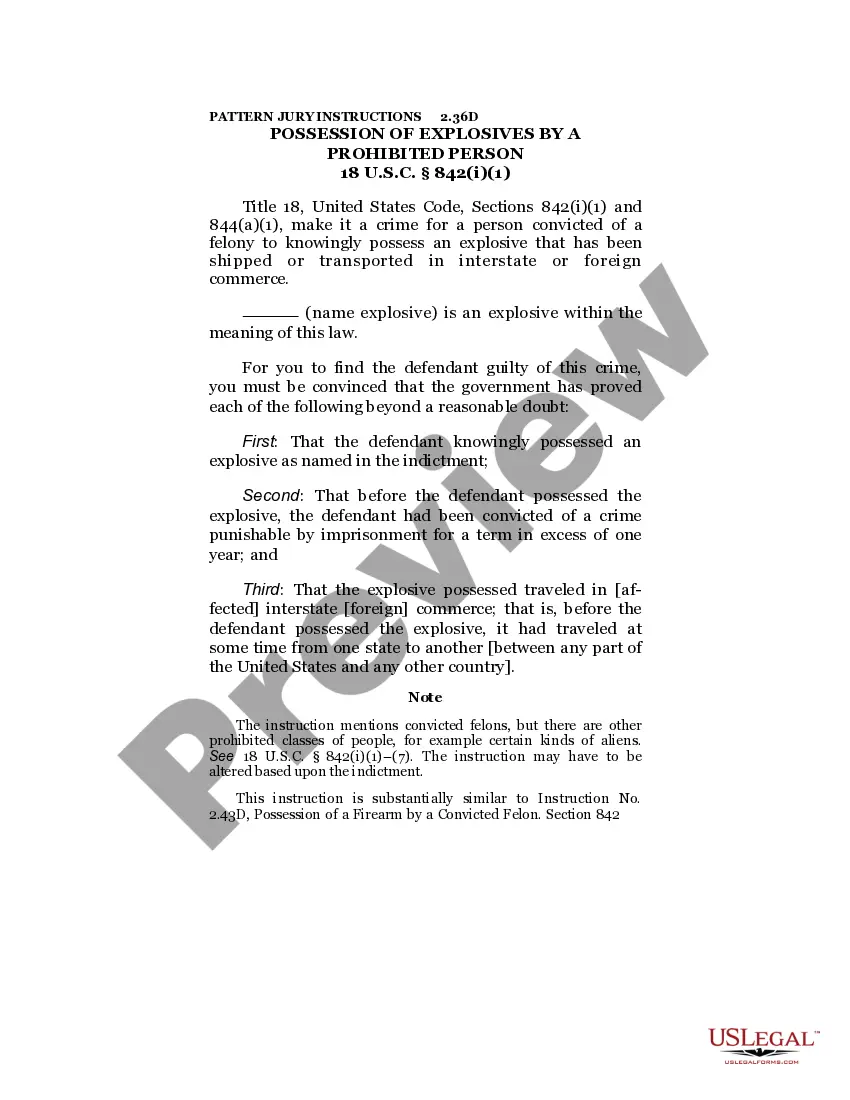
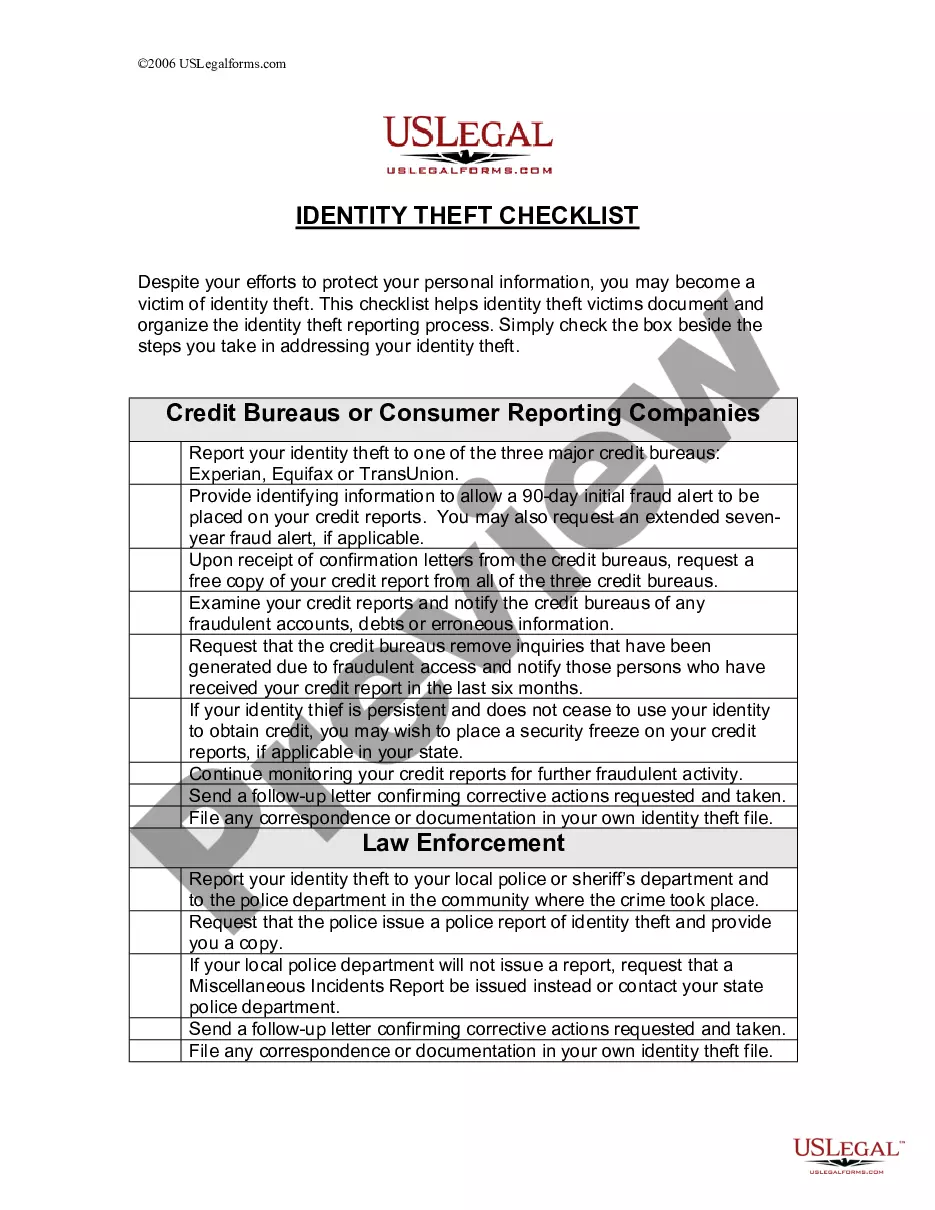
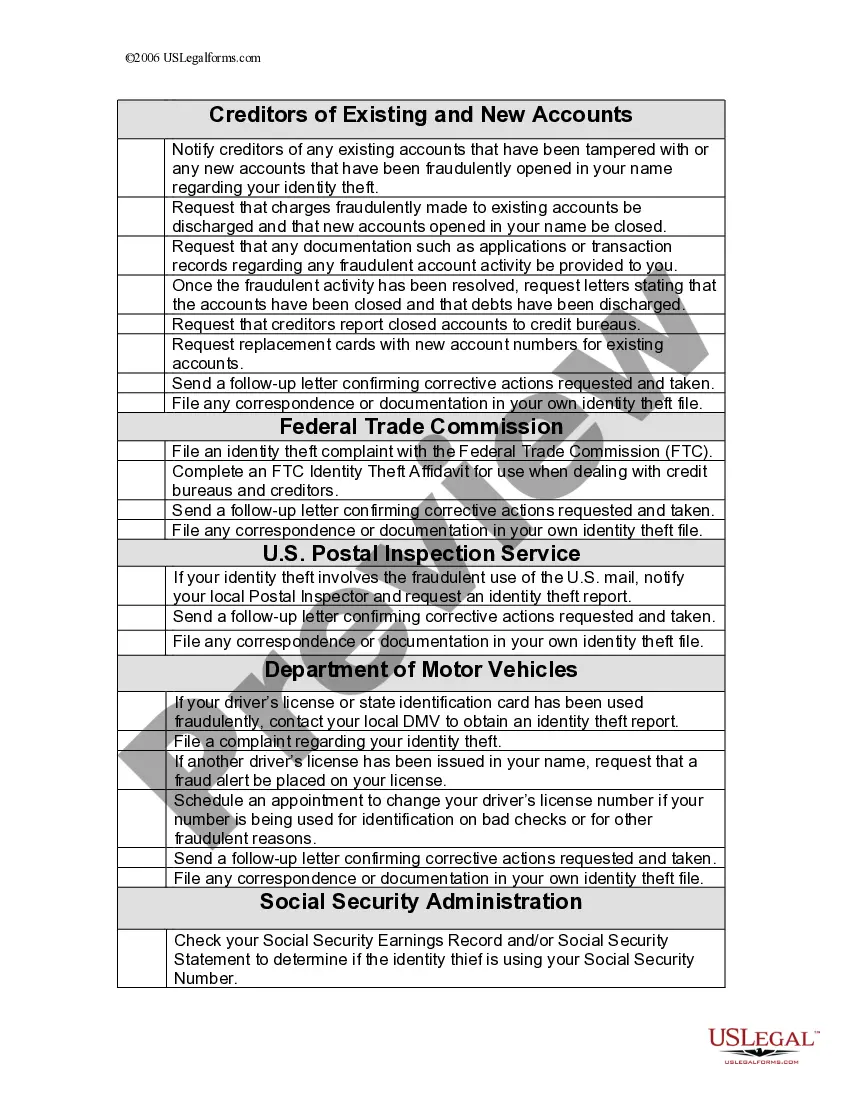
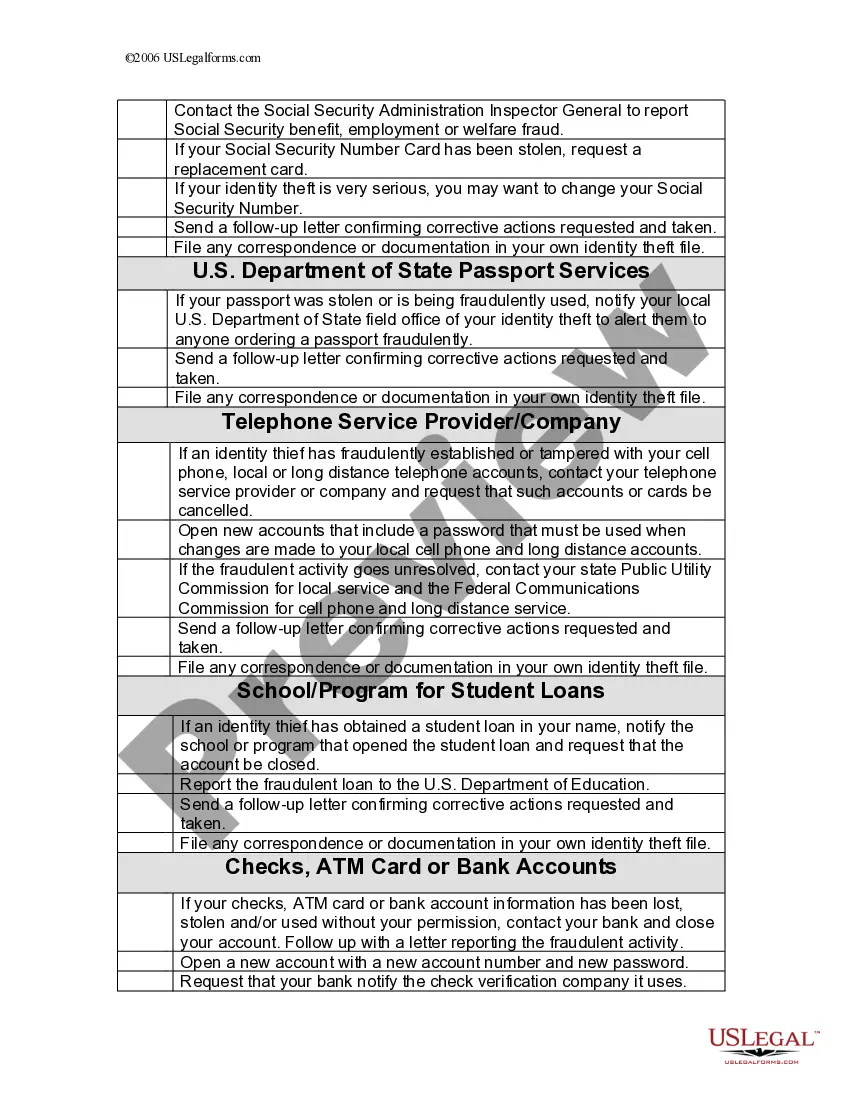
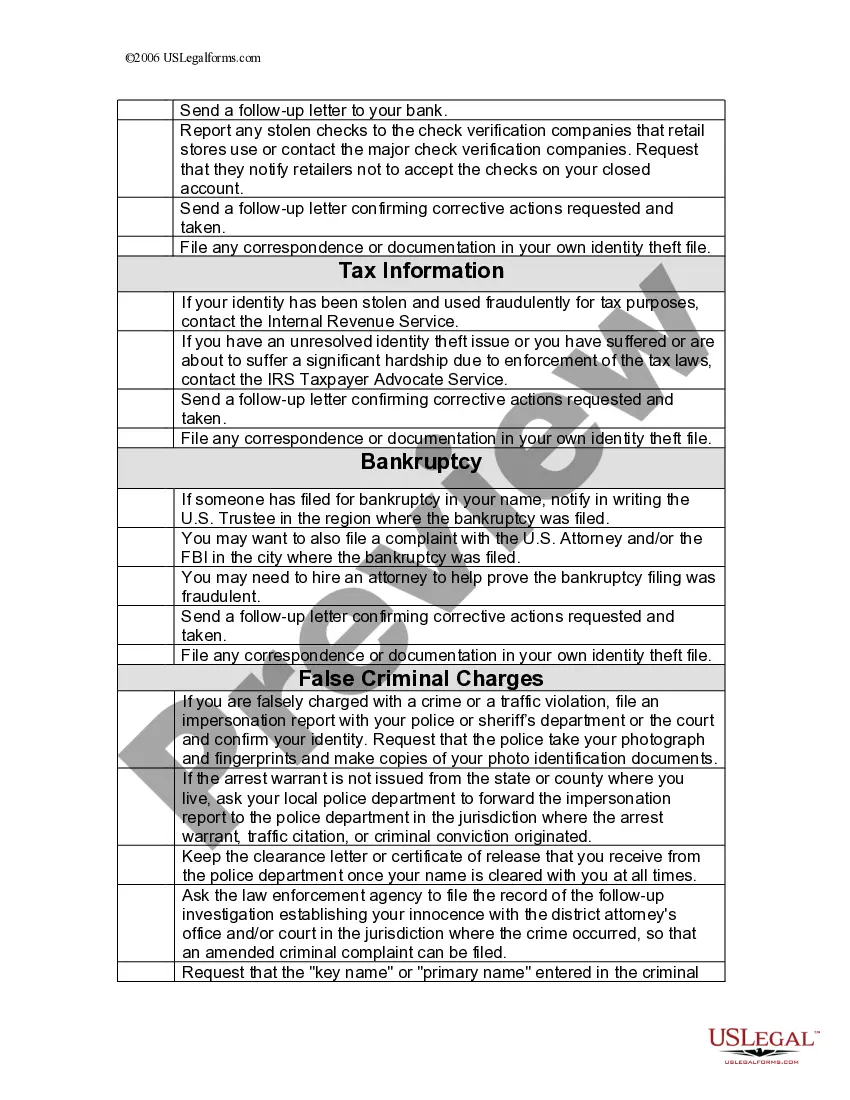
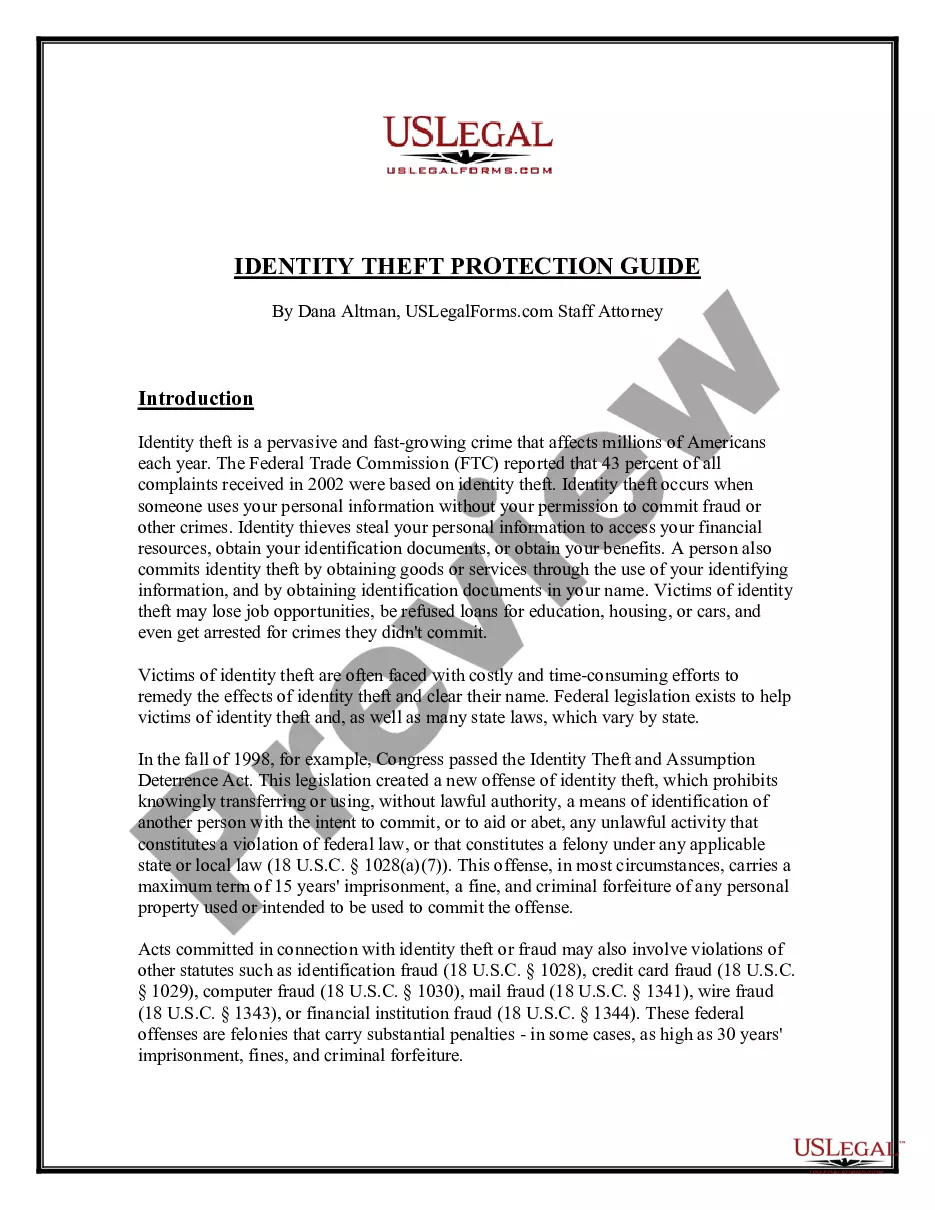
District of Columbia Identity Theft Checklist
Description
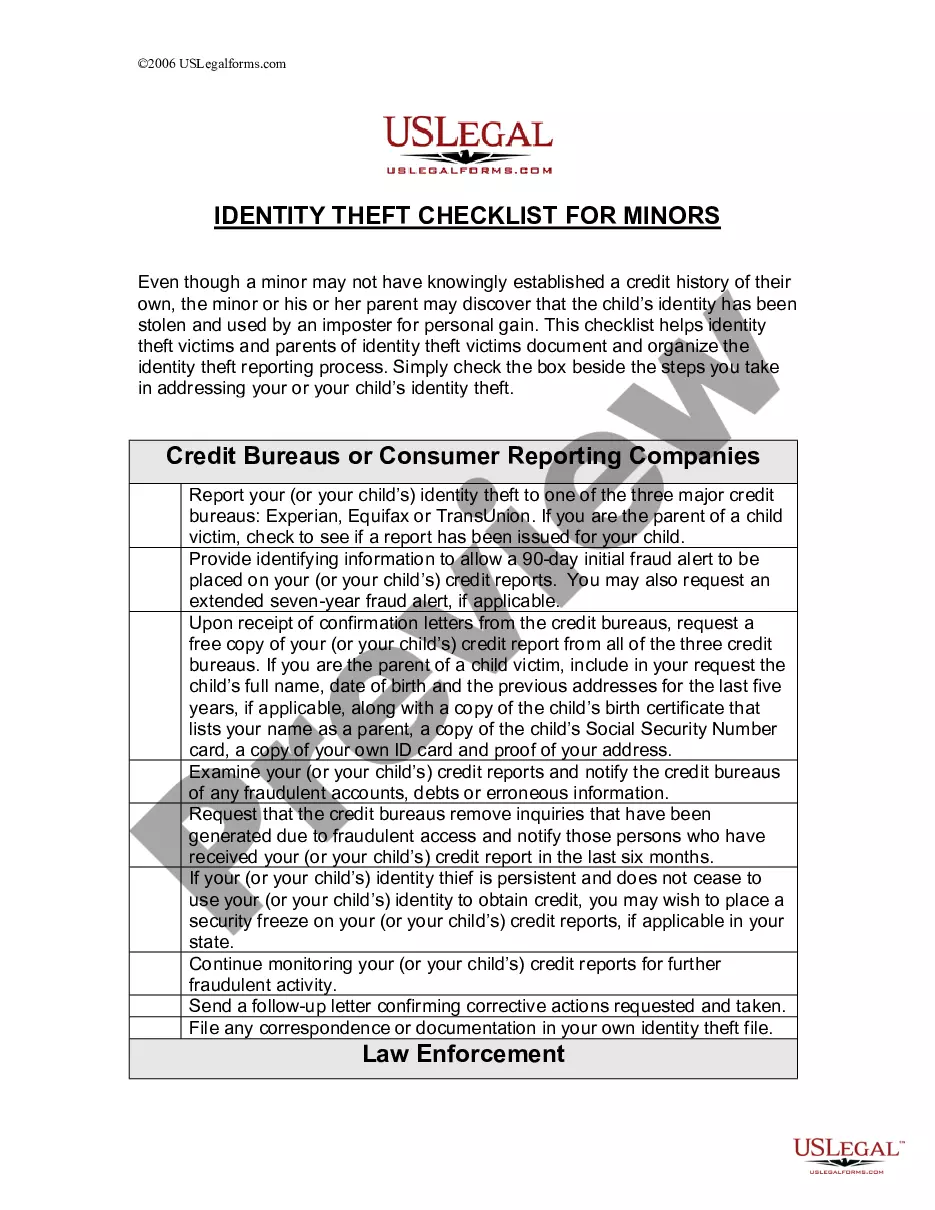
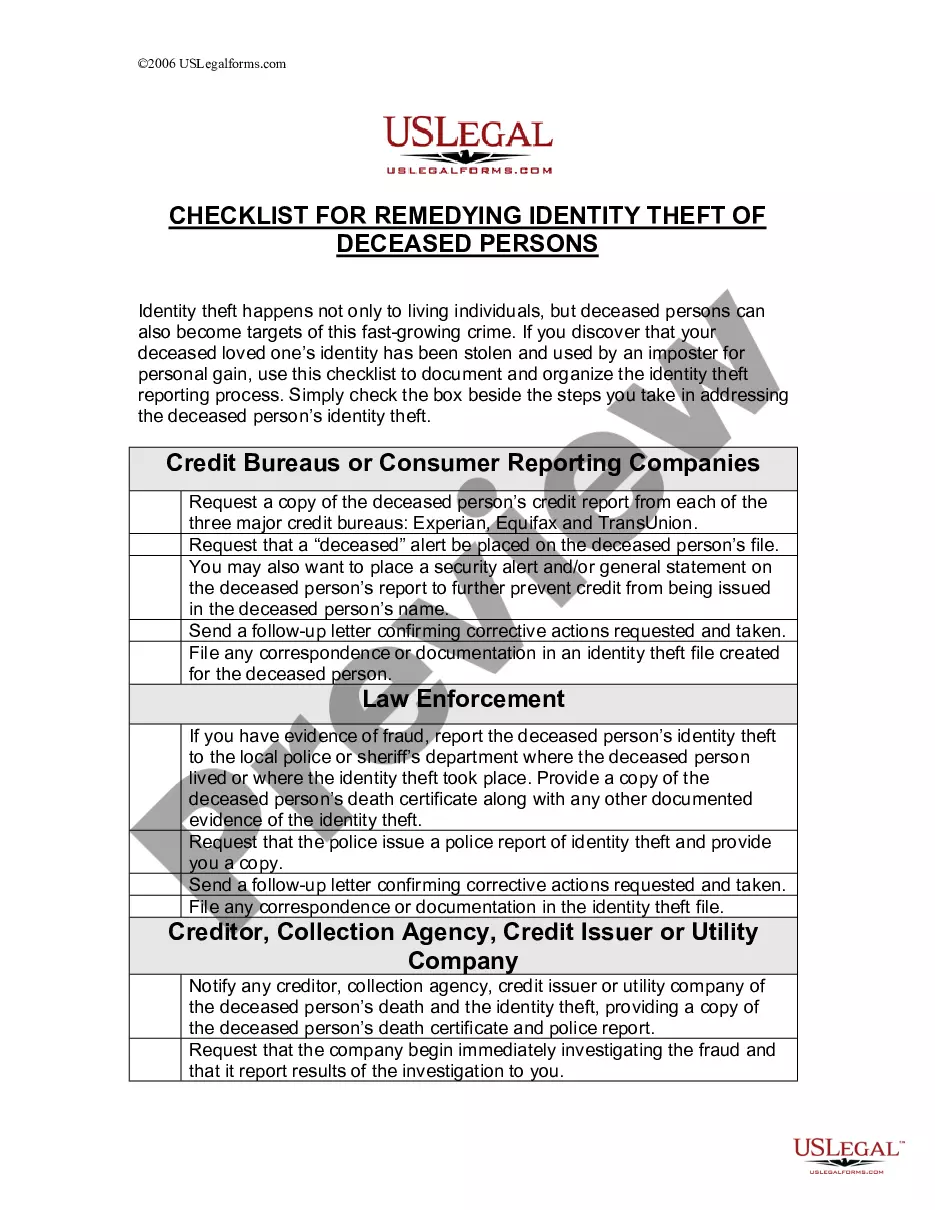
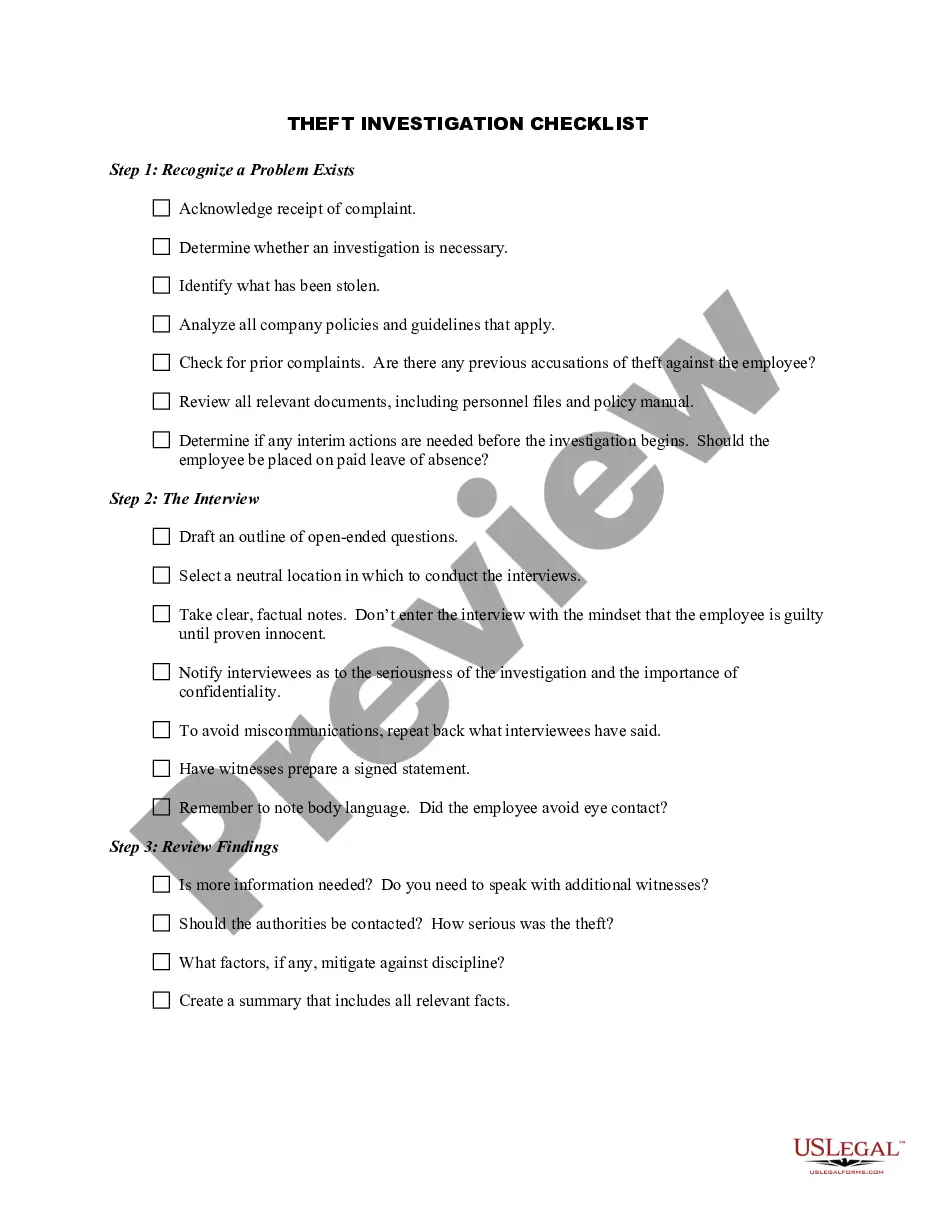
Get your form ready online
Our built-in tools help you complete, sign, share, and store your documents in one place.
Make edits, fill in missing information, and update formatting in US Legal Forms—just like you would in MS Word.
Download a copy, print it, send it by email, or mail it via USPS—whatever works best for your next step.
Sign and collect signatures with our SignNow integration. Send to multiple recipients, set reminders, and more. Go Premium to unlock E-Sign.
If this form requires notarization, complete it online through a secure video call—no need to meet a notary in person or wait for an appointment.
We protect your documents and personal data by following strict security and privacy standards.

Make edits, fill in missing information, and update formatting in US Legal Forms—just like you would in MS Word.

Download a copy, print it, send it by email, or mail it via USPS—whatever works best for your next step.

Sign and collect signatures with our SignNow integration. Send to multiple recipients, set reminders, and more. Go Premium to unlock E-Sign.

If this form requires notarization, complete it online through a secure video call—no need to meet a notary in person or wait for an appointment.

We protect your documents and personal data by following strict security and privacy standards.
Looking for another form?


How to fill out Identity Theft Checklist?
US Legal Forms - one of the largest collections of legal documents in the United States - provides a broad assortment of legal document templates that you can download or print. By using the website, you can access thousands of forms for business and personal purposes, categorized by types, states, or keywords. You can find the latest forms such as the District of Columbia Identity Theft Checklist within seconds.
If you already have a monthly membership, Log In and download the District of Columbia Identity Theft Checklist from your US Legal Forms library. The Download button will be visible on each form you view. You have access to all previously downloaded forms in the My documents section of your account.
To use US Legal Forms for the first time, here are some simple instructions to help you get started: Make sure you have selected the correct form for the city/county. Click the Preview button to review the form's content. Read the form description to confirm that you have chosen the right one. If the form does not meet your requirements, utilize the Search area at the top of the screen to find one that does. Once you are satisfied with the form, confirm your choice by clicking the Purchase Now button. Then, select the pricing plan you prefer and provide your details to register for the account. Process the transaction. Use your credit card or PayPal account to complete the transaction. Choose the format and download the form to your device. Make edits. Fill out, modify, and print and sign the downloaded District of Columbia Identity Theft Checklist. Every template you added to your account has no expiration date and is yours indefinitely. So, if you wish to download or print another copy, simply go to the My documents section and click on the form you need.
- Access the District of Columbia Identity Theft Checklist with US Legal Forms, one of the most comprehensive libraries of legal document templates.
- Utilize thousands of professional and state-specific templates that fulfill your business or personal needs and requirements.
Form popularity
FAQ
Theft I is a felony offense punishable by up to 10 years in jail and/or a $5,000 fine. Theft II is a misdemeanor offense with a maximum fine of $1,000 and imprisonment for no more than 180 days. D.C. Criminal Code § 22-3212. The maximum penalty for shoplifting is 90 days in jail and/or a $500 fine.
Identity theft laws under 18 U.S.C. § 1028 makes it a crime to misuse someone's identifying information, whether personal or financial. Personal identifying information can include social security numbers, driver's license number, credit card or bank account information, and PIN numbers obtained through the internet.
Warning signs of identity theft Bills for items you did not buy. Debt collection calls for accounts you did not open. Information on your credit report for accounts you did not open. Denials of loan applications. Mail stops coming to, or is missing from, your mailbox.
Your name, address and date of birth provide enough information to create another 'you'. An identity thief can use a number of methods to find out your personal information and will then use it to open bank accounts, take out credit cards and apply for state benefits in your name.
D.C. Criminal Code §22-3227.01. Identity Theft in the First Degree: A person who uses identity theft to obtain, or attempt to obtain, property or services valued at $1,000 or more commits identify theft in the first degree.
Felony Theft - § 22-3212 (c) ing to the DC Code, subjects arrested for Theft I or Theft II who have two (2) or more prior convictions for theft can be charged with Felony Theft regardless of the value of the property appropriated in the current case.
D.C. Criminal Code §22-3227.01. Identity Theft in the First Degree: A person who uses identity theft to obtain, or attempt to obtain, property or services valued at $1,000 or more commits identify theft in the first degree.
In the District of Columbia, the Financial and Cyber Crimes Unit of the Metropolitan Police Department (?MPD?) handles identity theft complaints. You should file a complaint with MPD and ask for a police report. MPD can be contacted as follows: Via telephone at 202-727-4159.