An easement gives one party the right to go onto another party's property. That property may be owned by a private person, a business entity, or a group of owners. Utilities often get easements that allow them to run pipes or phone lines beneath private property. Easements may be obtained for access to another property, called "access and egress", use of spring water, entry to make repairs on a fence or slide area, drive cattle across and other uses. The easement is a real property interest, but separate from the legal title of the owner of the underlying land.
District of Columbia General Right-of-Way Instrument
State:
Multi-State
Control #:
US-00497
Format:
Word;
Rich Text
Instant download
Description
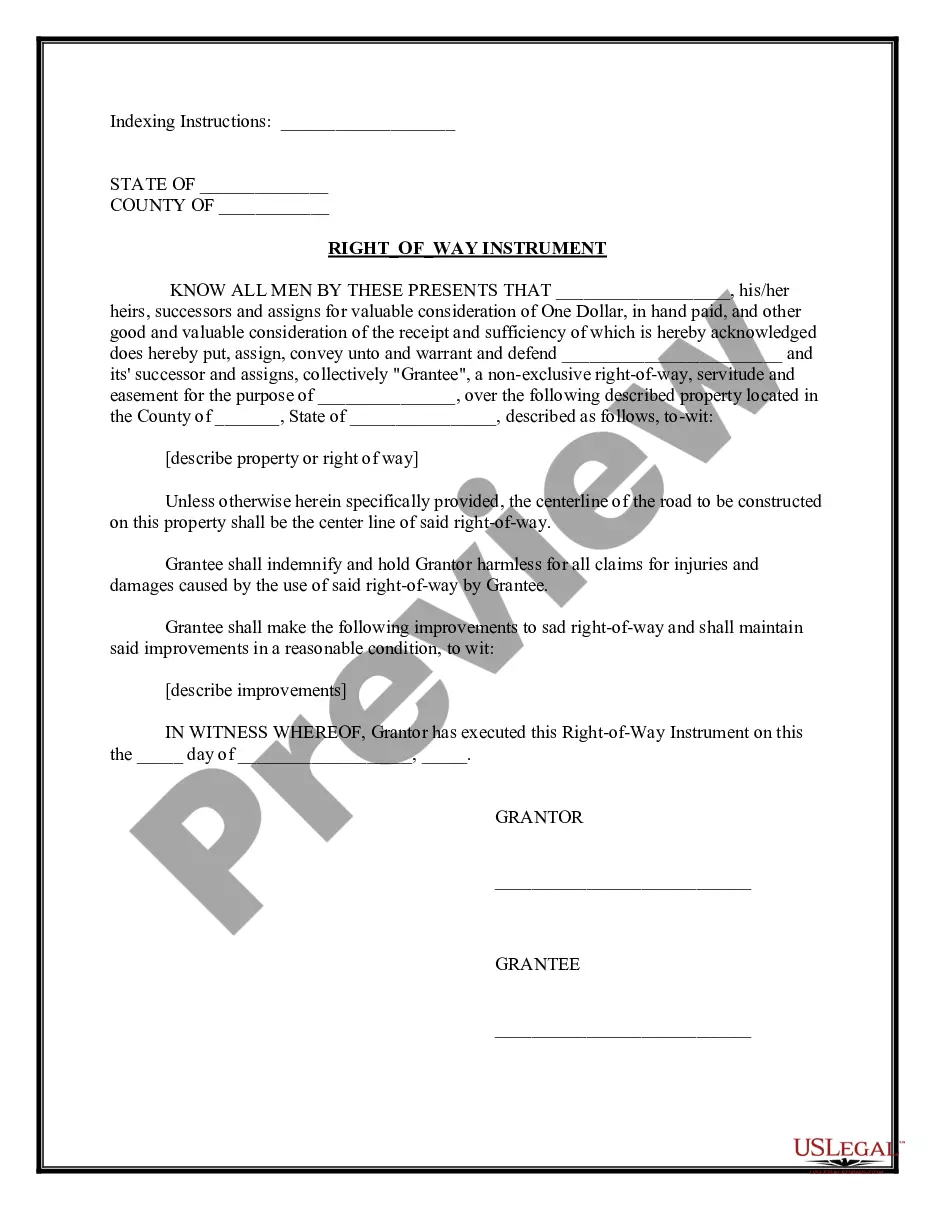
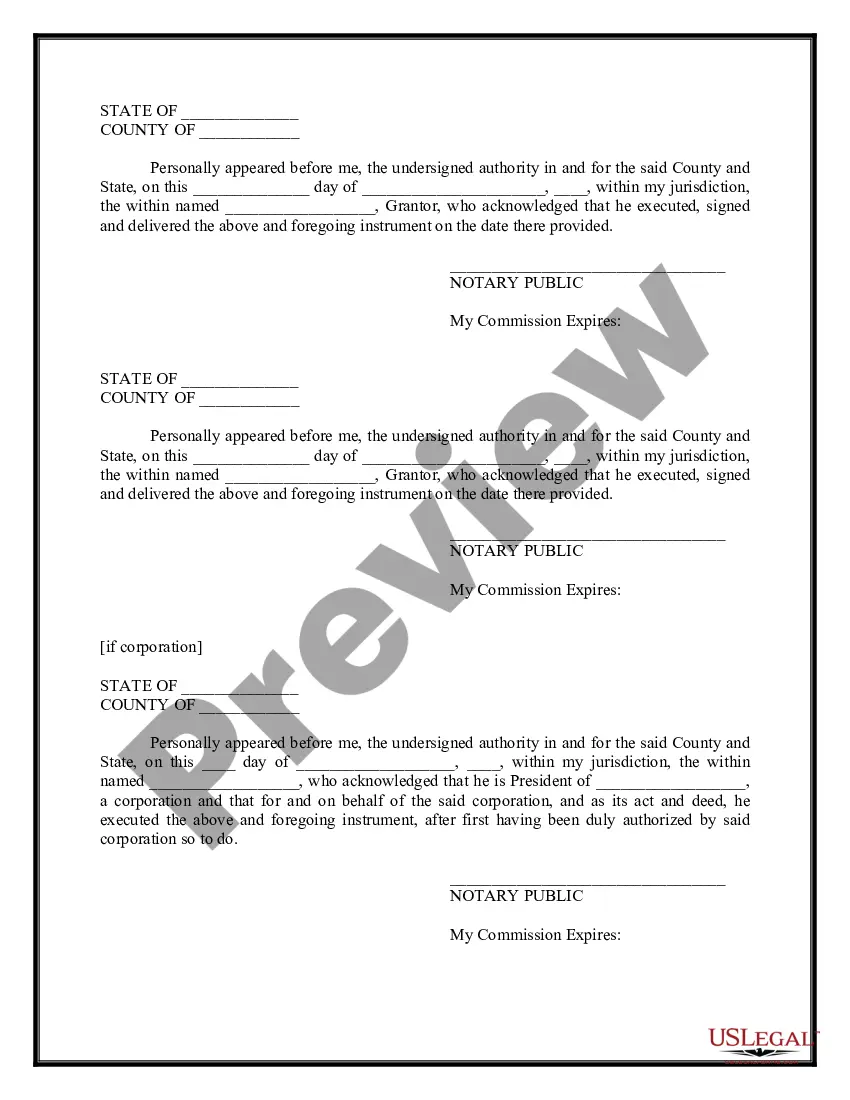
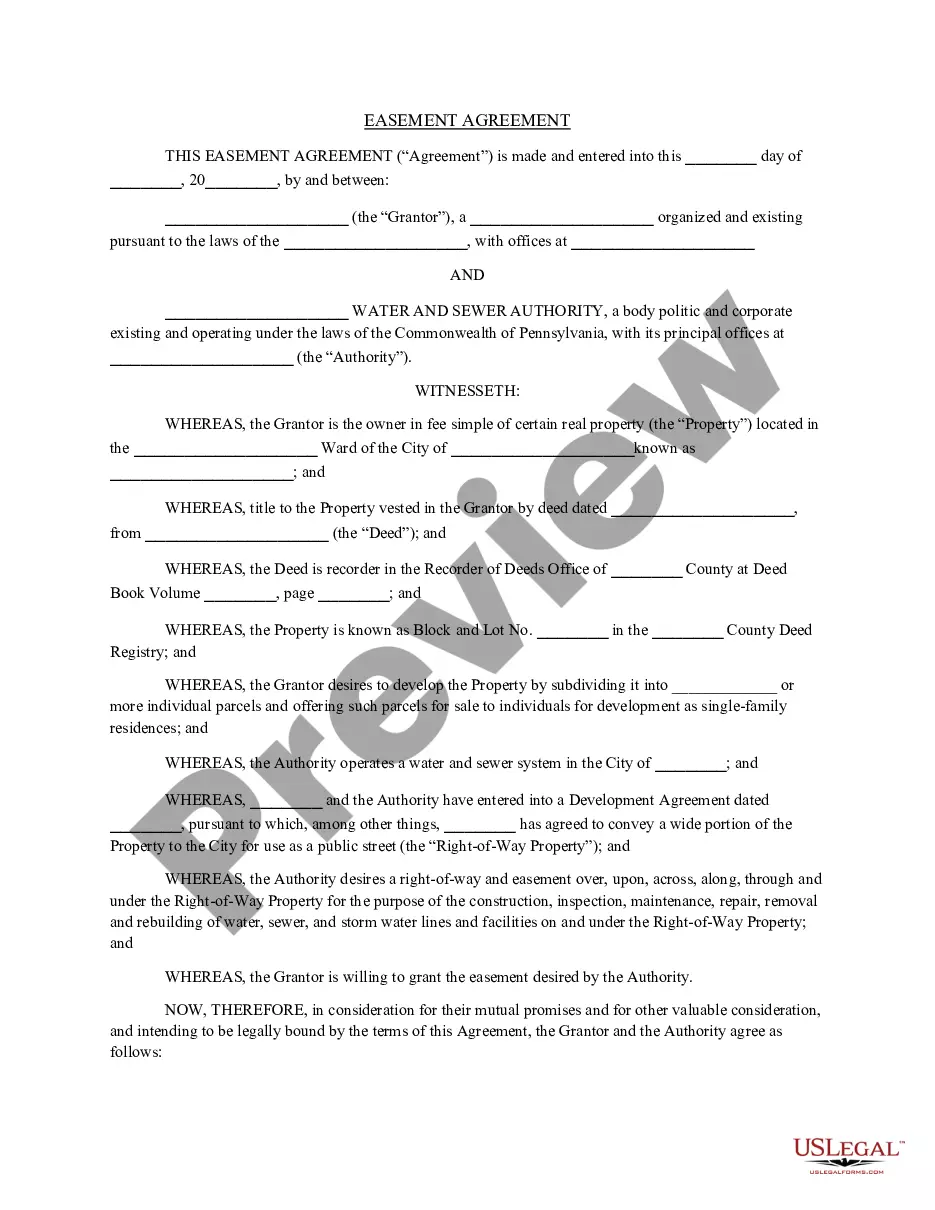
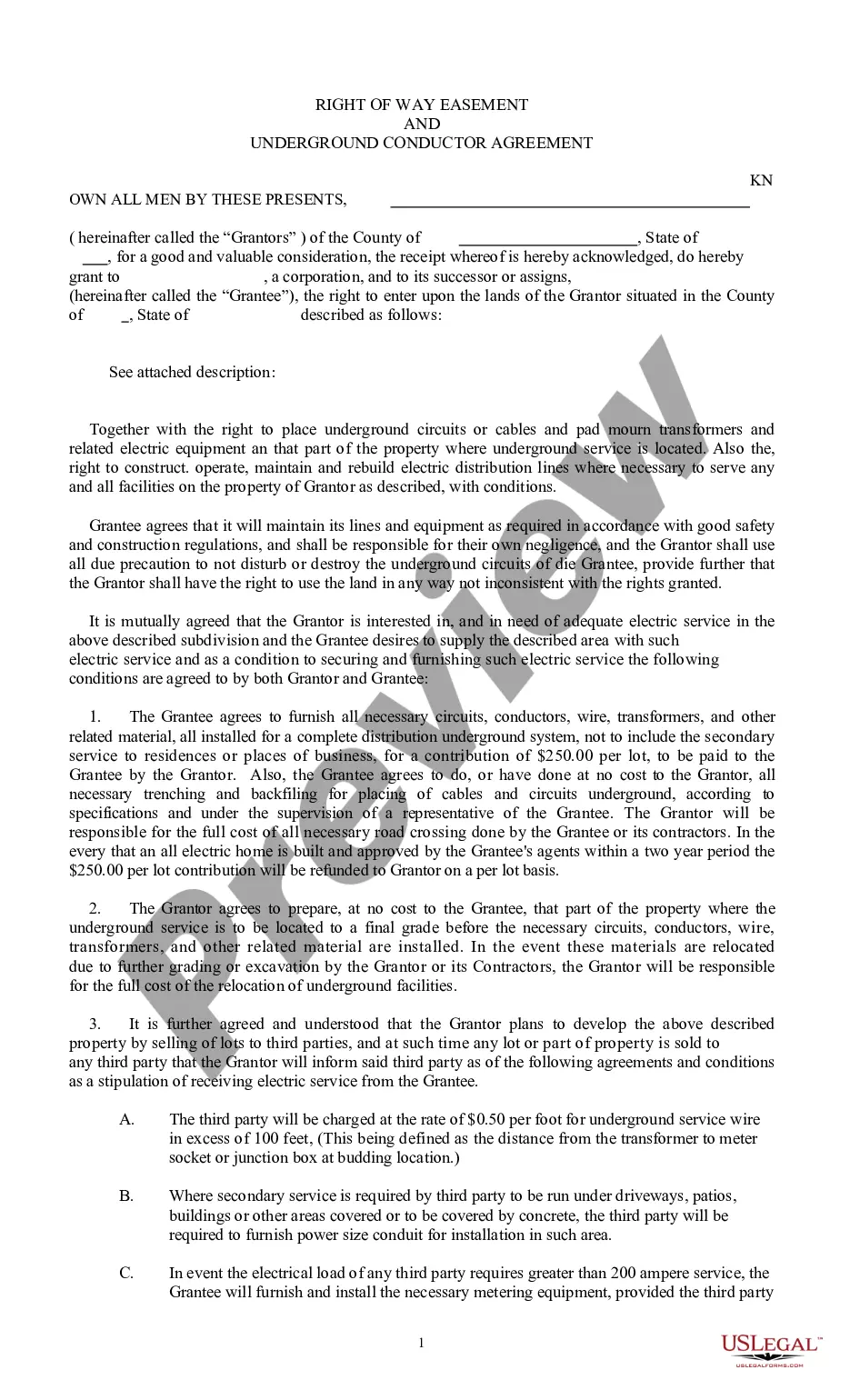
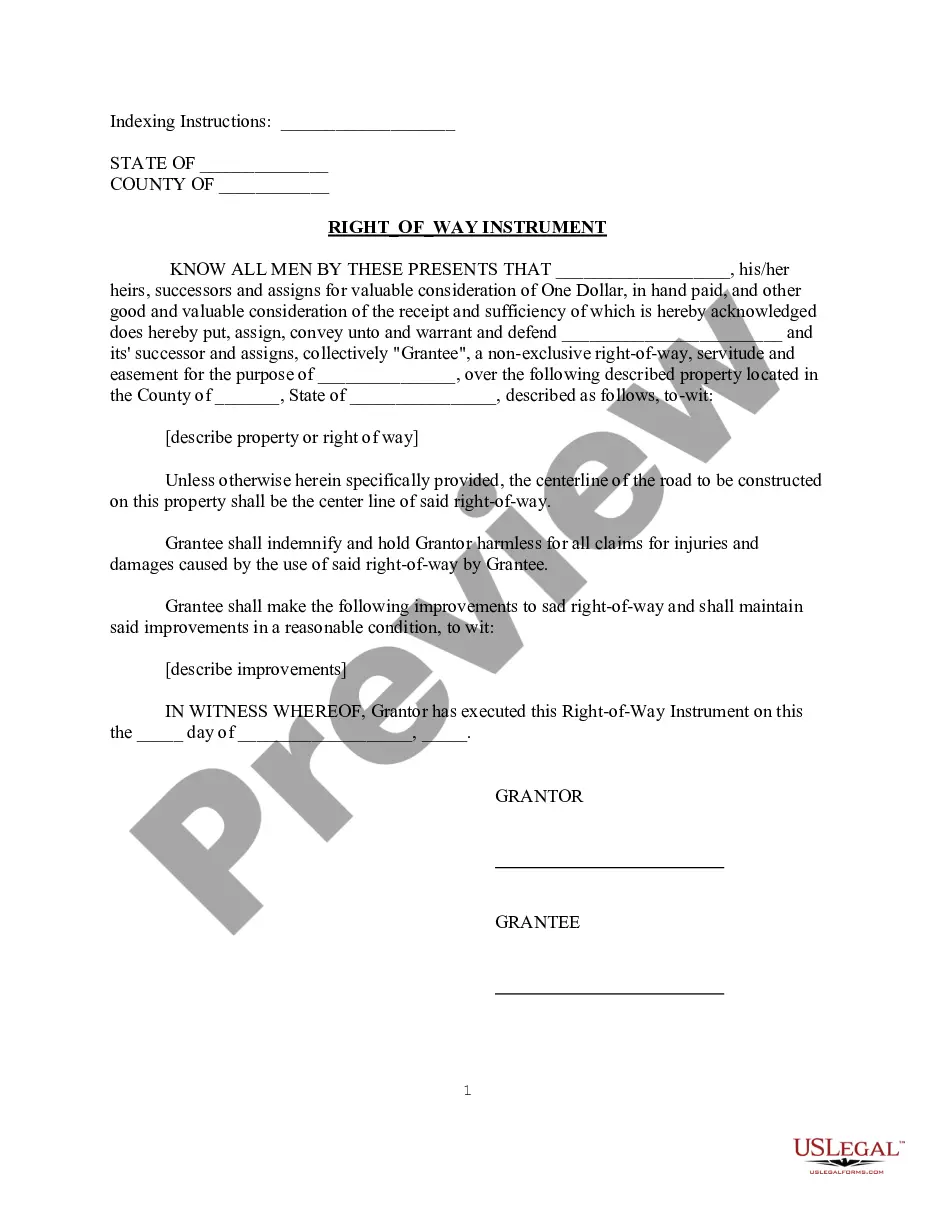
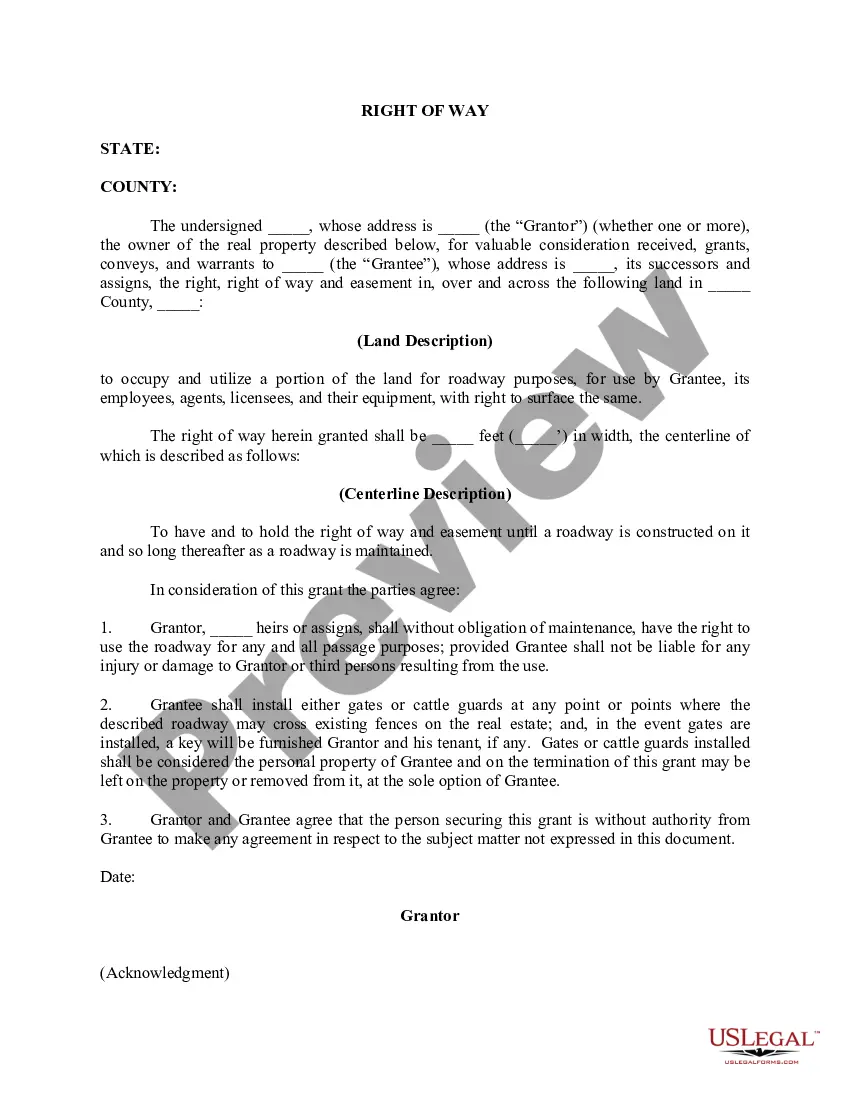
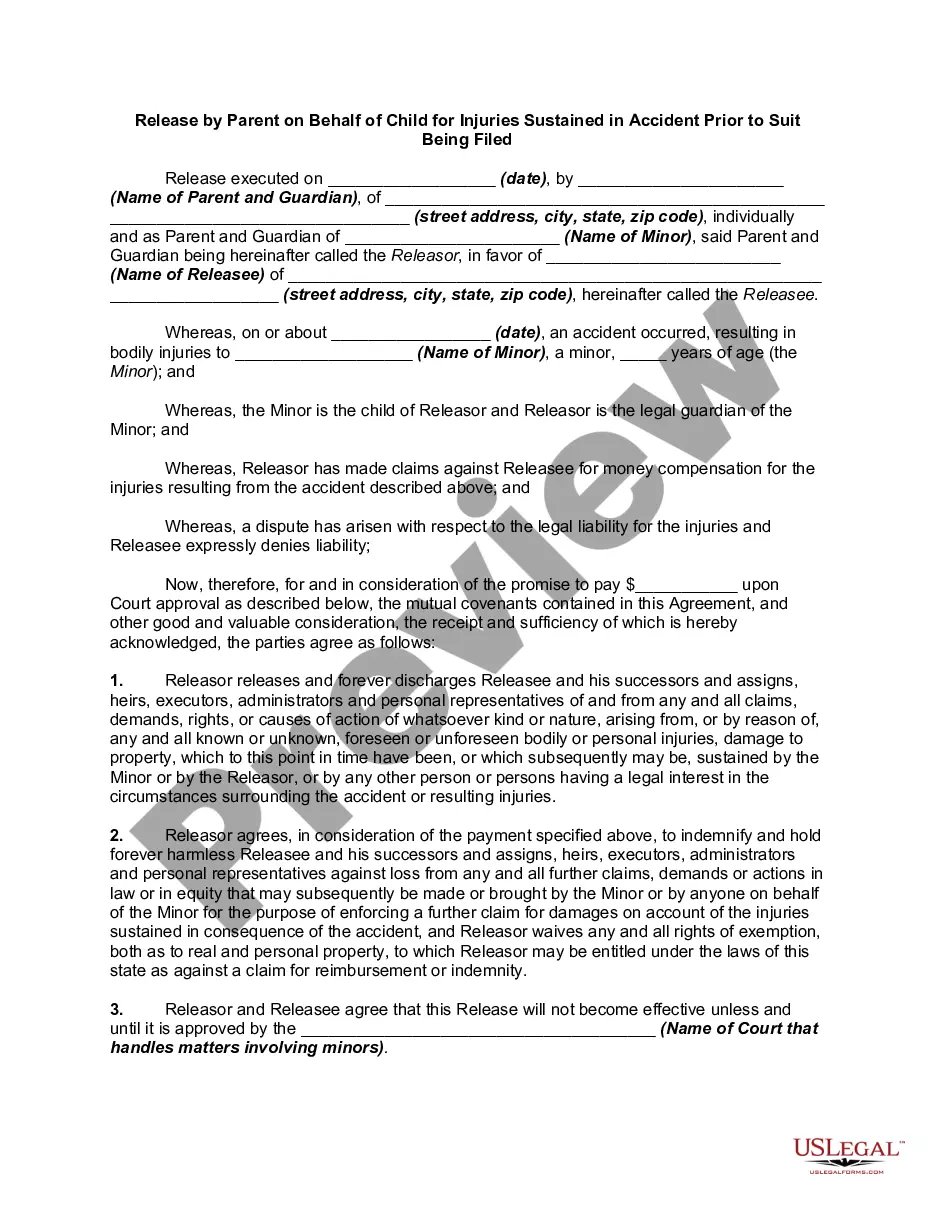
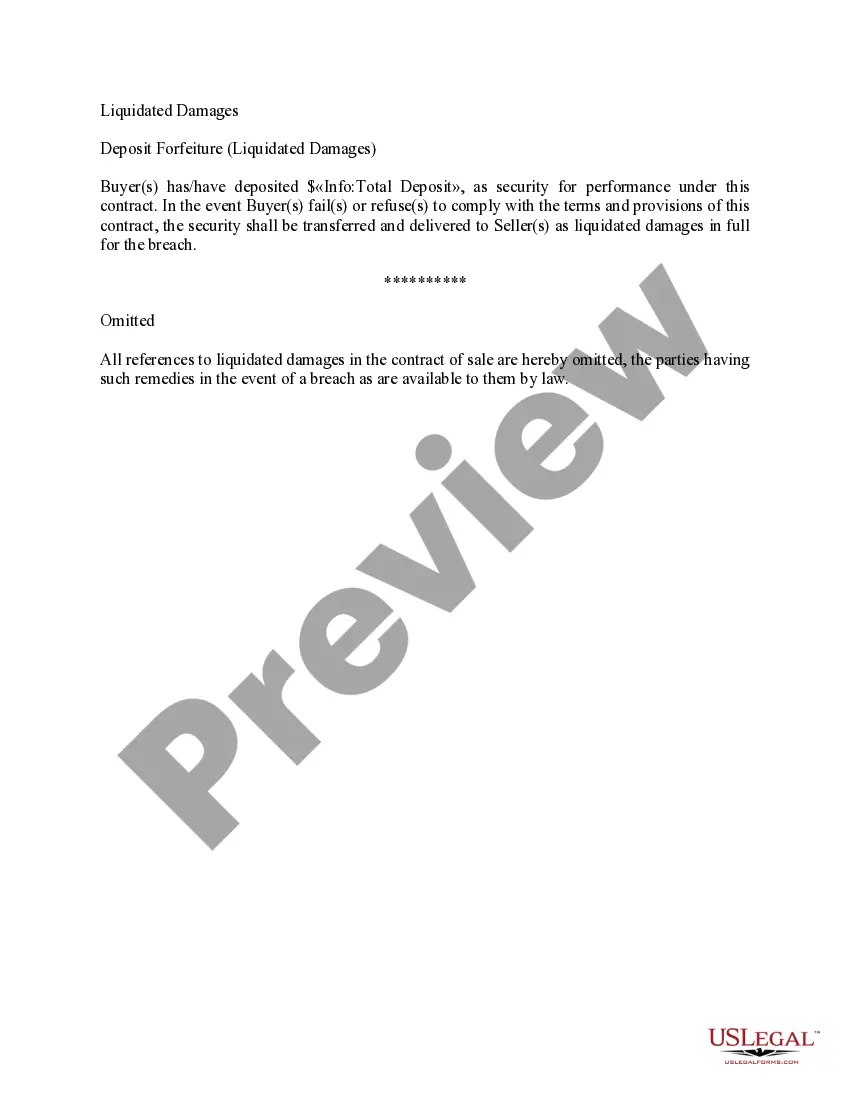
This Easement for Right-of-Way is between the Grantor and Grantee for a non-exclusive right-of-way, servitude and easement for the purpose for the purpose as is described in the agreement over the property described in the agreement. This is a contract that can be used in all states.
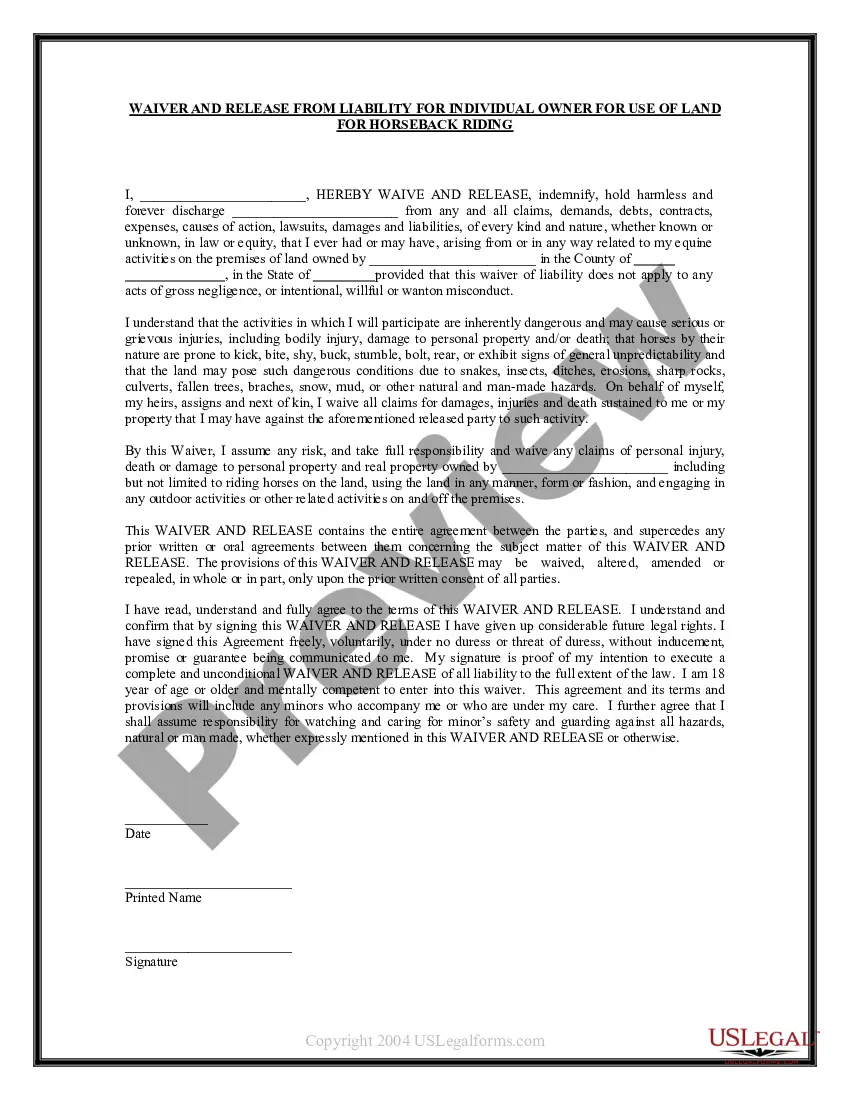
Free preview


How to fill out General Right-of-Way Instrument?
You might spend numerous hours online trying to locate the legal document template that meets both state and federal requirements you require.
US Legal Forms offers a vast array of legal forms that can be reviewed by professionals.
You can easily download or print the District of Columbia General Right-of-Way Instrument from the service.
If available, use the Review option to preview the document template as well. If you wish to find another version of the form, utilize the Lookup field to find the template that fits your needs and requirements. Once you have found the template you want, click Get now to proceed. Choose the pricing plan you prefer, enter your details, and create an account on US Legal Forms. Complete the transaction. You can use your credit card or PayPal account to pay for the legal form. Select the format of the document and download it to your system. Make edits to the document if necessary. You can complete, modify, sign, and print the District of Columbia General Right-of-Way Instrument. Download and print thousands of document templates using the US Legal Forms website, which offers the largest collection of legal forms. Utilize professional and state-specific templates to address your business or personal needs.
- If you already have a US Legal Forms account, you can Log In and click on the Download option.
- After that, you can complete, modify, print, or sign the District of Columbia General Right-of-Way Instrument.
- Every legal document template you purchase is yours permanently.
- To obtain another copy of any purchased form, visit the My documents tab and click on the corresponding option.
- If you are using the US Legal Forms website for the first time, follow the simple instructions below.
- First, make sure you have selected the correct document template for the county/town of your choice.
- Check the form description to ensure you have chosen the right form.
Form popularity
FAQ
National Level Representation DC residents elect a non-voting delegate to the US House of Representatives, two shadow Senators, and one shadow Representative whose task is to petition Congress for statehood. District residents have no voting representation in the House of Representatives.
The Washington, D.C. Admission Act would create the state of "Washington, Douglass Commonwealth" (named after Frederick Douglass). As a state, the Douglass Commonwealth would receive two senators and one representative in the House of Representatives based on population.
What is Washington, DC? Washington, DC, isn't a state; it's a district. DC stands for District of Columbia. Its creation comes directly from the US Constitution, which provides that the district, "not exceeding 10 Miles square," would "become the Seat of the Government of the United States."
The state of Maryland borders the District of Columbia to the north, east, and west, and the state of Virginia borders the District on the southern shore of the Potomac River.
On District streets classified as arterials, collectors, or local streets, typical lane widths inclusive of gutter are between 10 and 11 feet. On freeways, the predominant lane width is 12 feet.
The U.S. Constitution provides for a federal district under the exclusive jurisdiction of the U.S. Congress. As such, Washington, D.C. is not part of any state, nor is it one itself. The Residence Act, adopted on July 16, 1790, approved the creation of the capital district along the Potomac River.