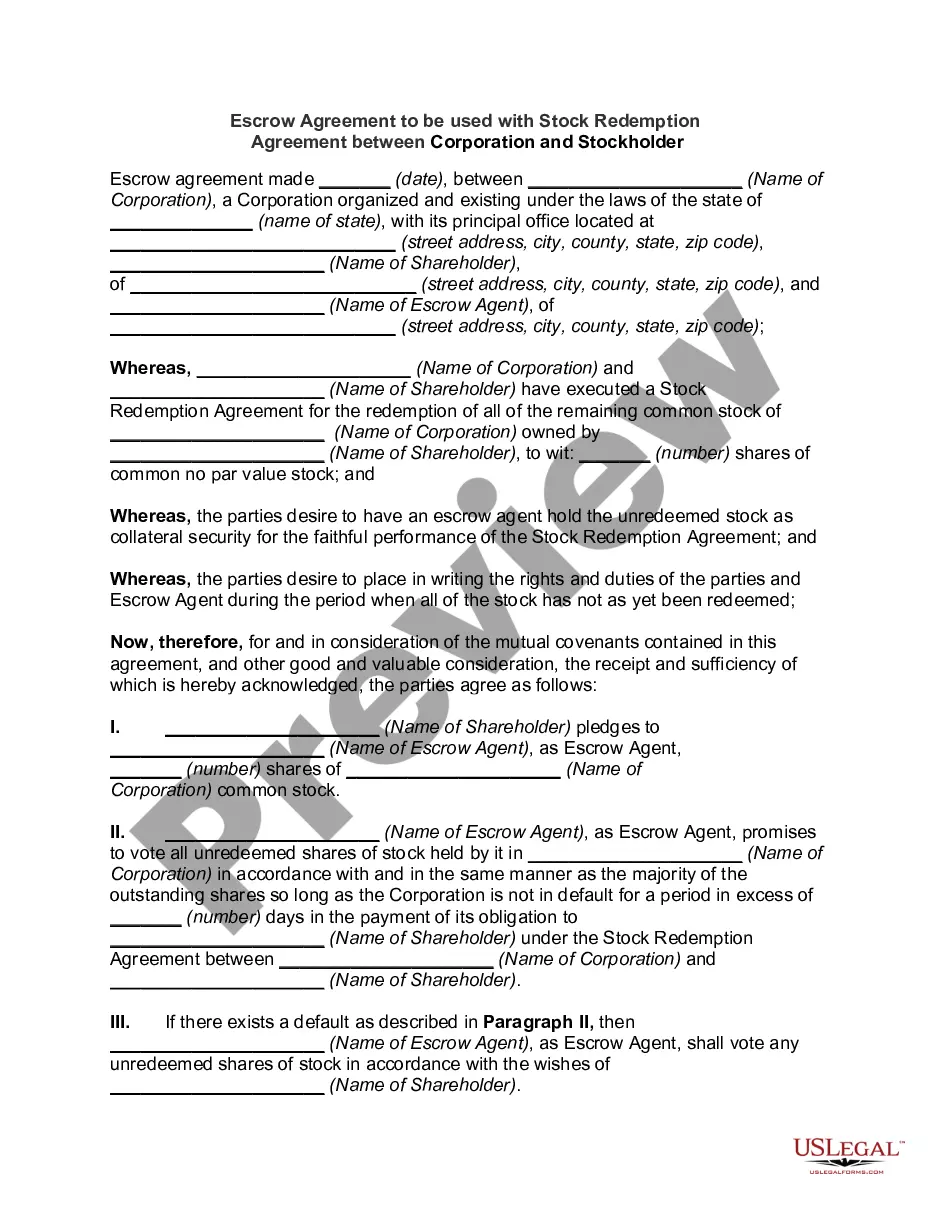
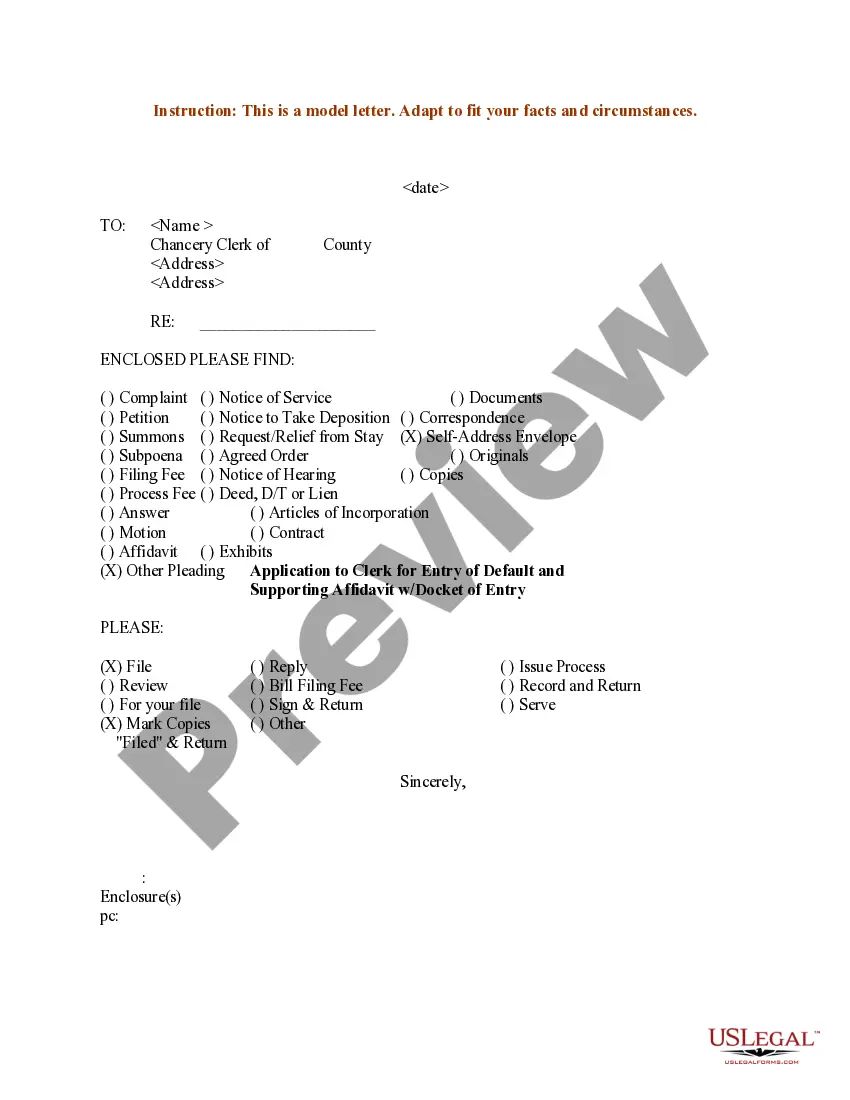
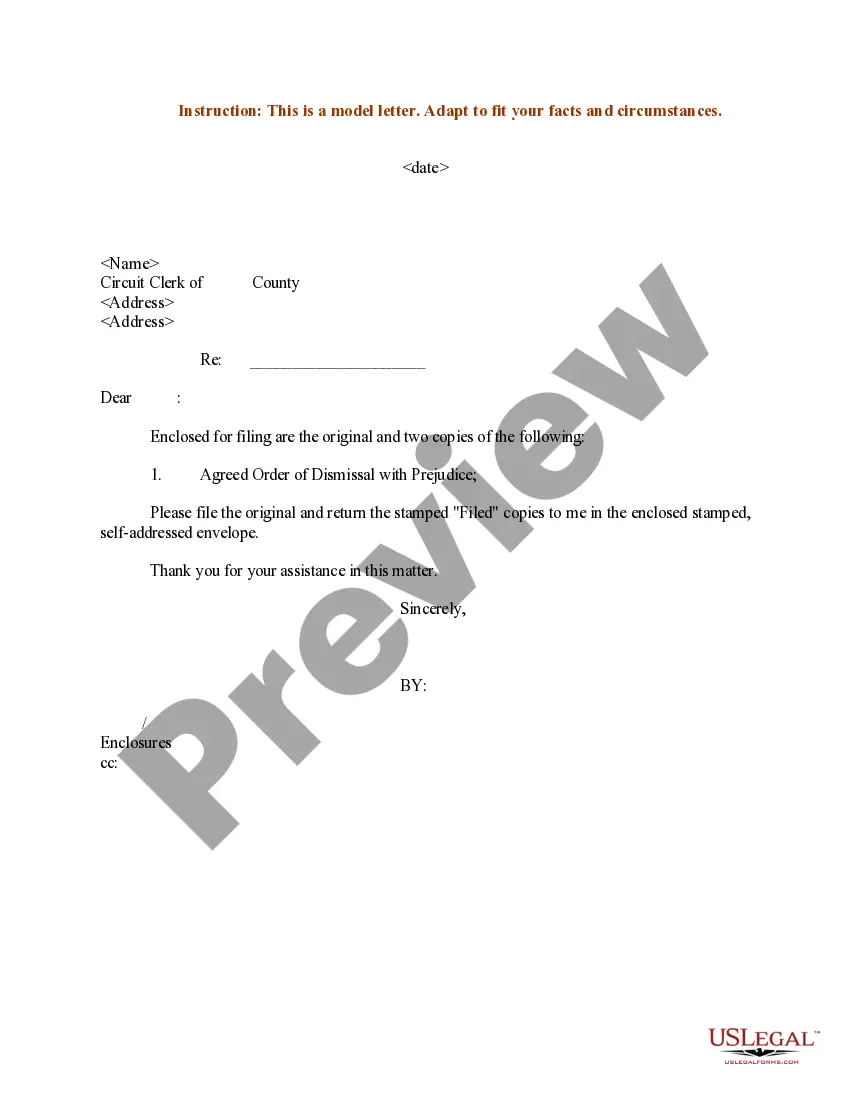
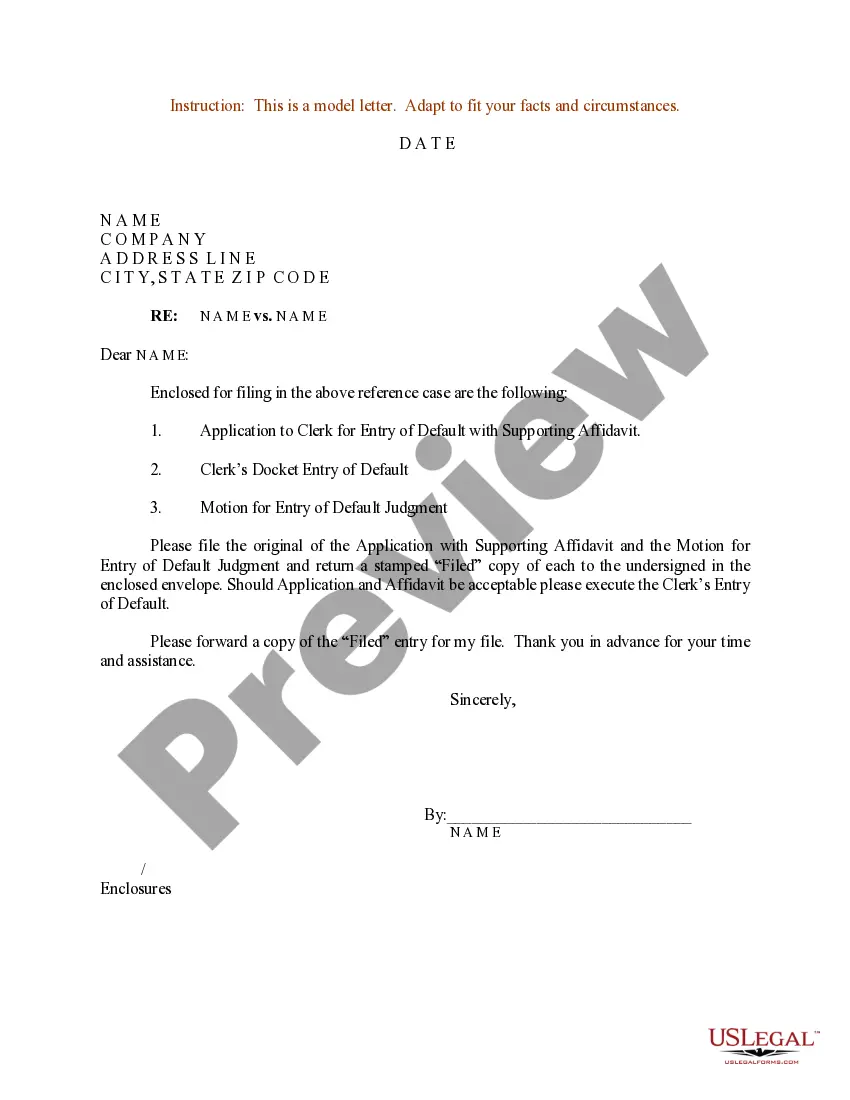
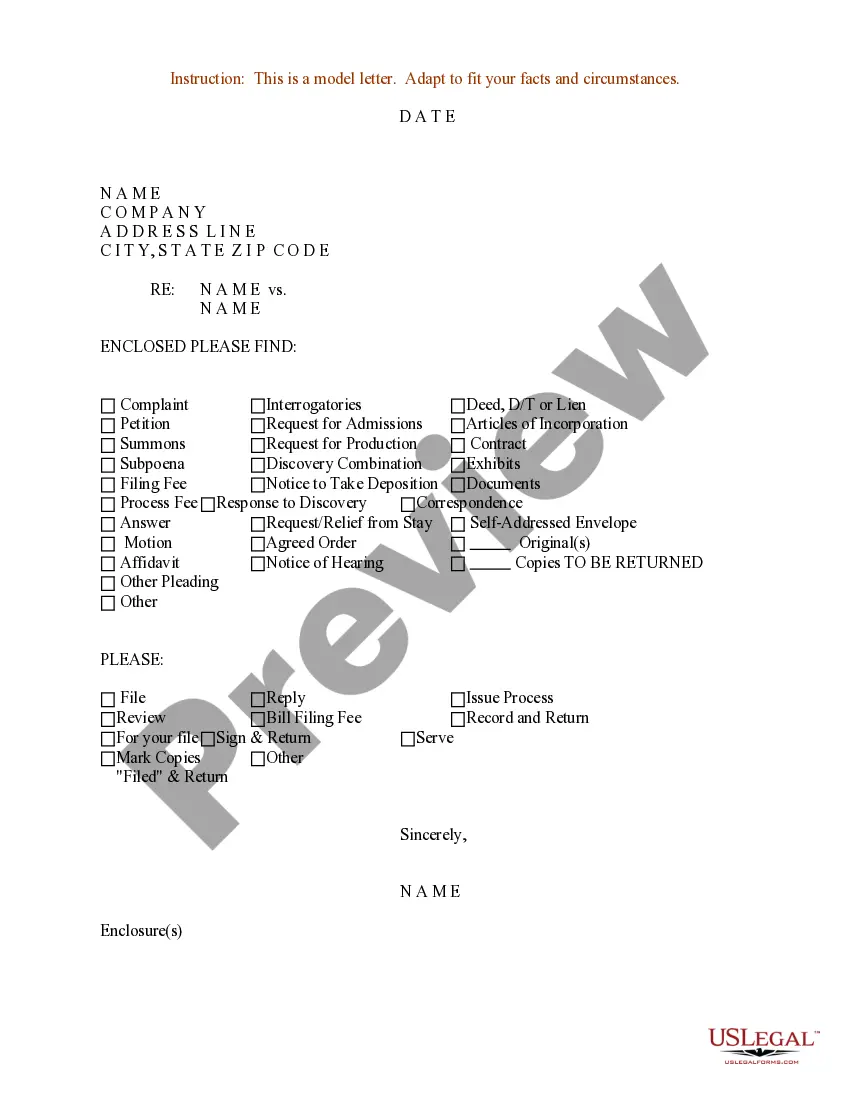
District of Columbia Sample Letter to Chancery Clerk with Checklist for Enclosed Pleadings and Filing Instructions
Description
How to fill out Sample Letter To Chancery Clerk With Checklist For Enclosed Pleadings And Filing Instructions?
US Legal Forms - one of the largest collections of legal documents in the country - provides a diverse array of legal template documents that you can download or print.
By utilizing the website, you can access thousands of forms for both business and personal use, organized by categories, states, or keywords. You can find the latest versions of forms such as the District of Columbia Sample Letter to Chancery Clerk with Checklist for Enclosed Pleadings and Filing Instructions in just a few minutes.
If you already have a subscription, Log In and download the District of Columbia Sample Letter to Chancery Clerk with Checklist for Enclosed Pleadings and Filing Instructions from the US Legal Forms library. The Download button will appear on every form you view. You can access all previously saved forms in the My documents section of your account.
Select the format and download the form onto your device.
Make modifications. Fill out, edit, print, and sign the saved District of Columbia Sample Letter to Chancery Clerk with Checklist for Enclosed Pleadings and Filing Instructions. Each template you add to your account has no expiration date and belongs to you permanently. Therefore, if you wish to download or print another copy, simply visit the My documents section and click on the form you need. Access the District of Columbia Sample Letter to Chancery Clerk with Checklist for Enclosed Pleadings and Filing Instructions with US Legal Forms, one of the most comprehensive collections of legal document templates. Utilize a vast number of professional and state-specific templates that cater to your business or personal needs and requirements.
- Ensure you have selected the correct form for your region/area. Click on the Review button to examine the form's content.
- Read the form description to confirm that you have chosen the suitable form.
- If the form does not meet your requirements, use the Search field at the top of the screen to find the one that does.
- If you are satisfied with the form, confirm your choice by clicking the Purchase now button.
- Then, select the pricing plan you prefer and provide your details to register for an account.
- Complete the transaction. Use your credit card or PayPal account to finalize the purchase.
Form popularity
FAQ
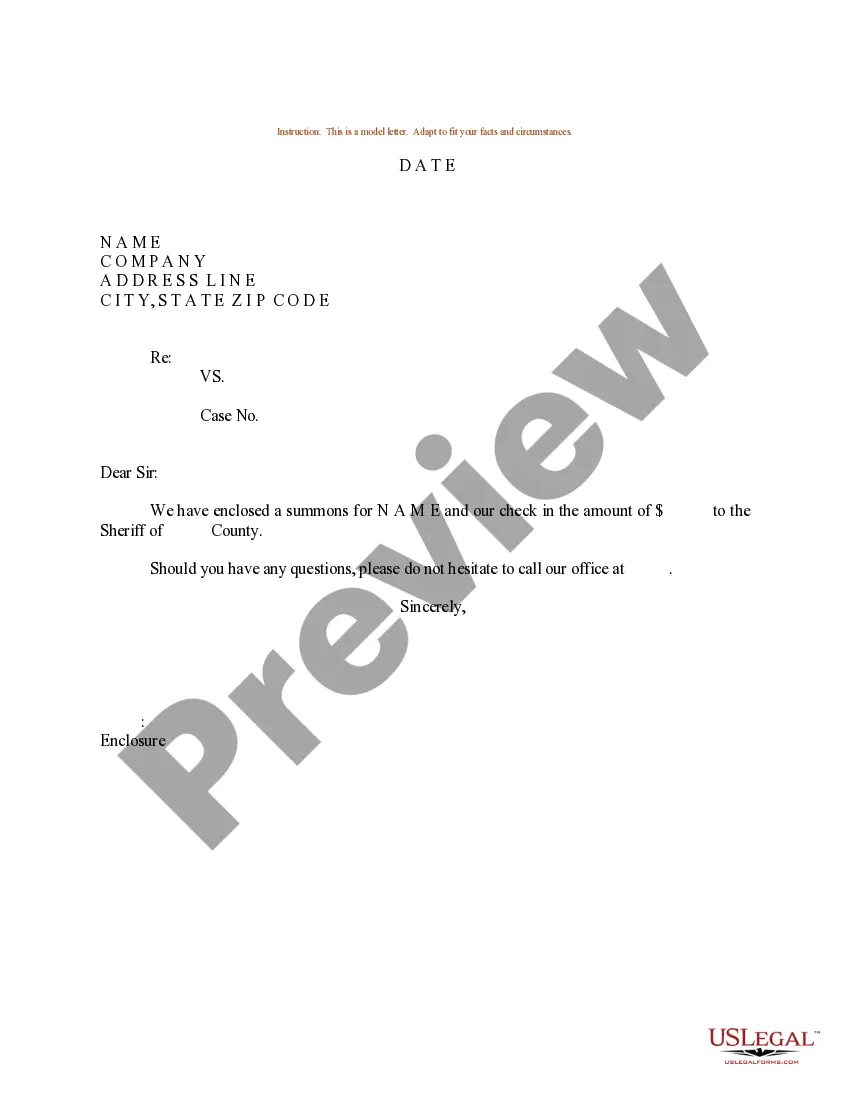
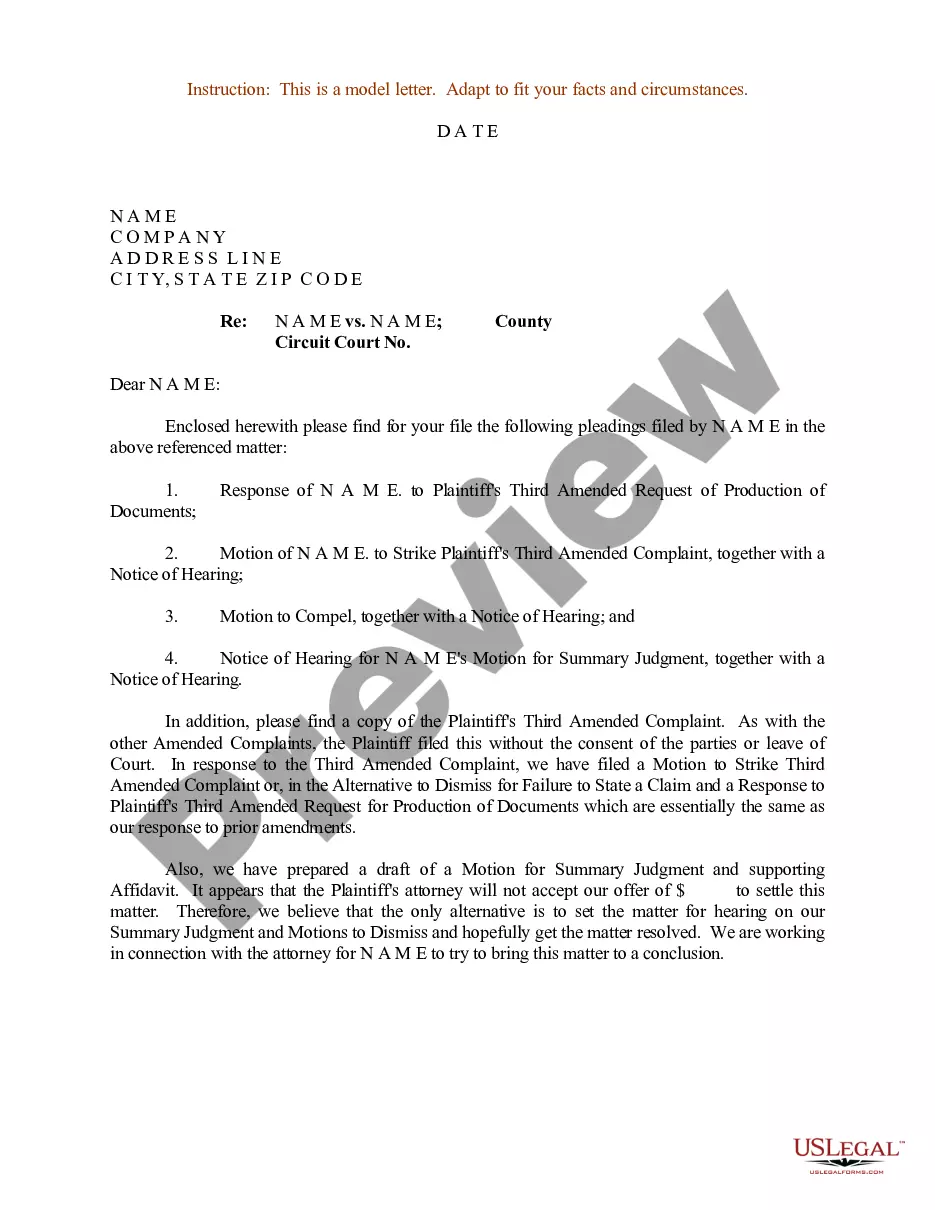
To properly write a letter to the court, begin with your personal details followed by the court's information. Use a formal greeting and clearly express your purpose in the body of the letter. For effective writing, the District of Columbia Sample Letter to Chancery Clerk with Checklist for Enclosed Pleadings and Filing Instructions serves as a helpful resource to ensure you cover all necessary points.
Addressing a letter to the local court involves using the proper court title and including the court's full name and address. Start with 'To the Clerk of Court Name' followed by the address details. For a precise format, refer to the District of Columbia Sample Letter to Chancery Clerk with Checklist for Enclosed Pleadings and Filing Instructions for guidance.
When writing a letter to the local court, ensure you include your contact information and the court's details at the top. Your letter should clearly state your request or concern in the first paragraph. For best practices, the District of Columbia Sample Letter to Chancery Clerk with Checklist for Enclosed Pleadings and Filing Instructions can help you format your letter appropriately.
A professional letter to the courts should maintain a formal tone throughout. Start with your address, followed by the court's address, and a respectful greeting. Be direct and concise in your request or information, and refer to the District of Columbia Sample Letter to Chancery Clerk with Checklist for Enclosed Pleadings and Filing Instructions for a structured format.
Writing a letter to the clerk of courts requires a clear and respectful approach. Begin with a polite salutation, then introduce your purpose succinctly. For comprehensive instructions, utilize the District of Columbia Sample Letter to Chancery Clerk with Checklist for Enclosed Pleadings and Filing Instructions to ensure all necessary elements are included.
To write a letter to the clerk of court, start with a formal greeting, addressing the clerk by their title and name if known. Clearly state your purpose in the opening paragraph, and follow with any necessary details or requests. For added clarity, consider using the District of Columbia Sample Letter to Chancery Clerk with Checklist for Enclosed Pleadings and Filing Instructions as a guide.
Chancery Clerks and English Literature. Scholars have debated the role of clerks and scribes in the literary life of London and England in recent years.
The Chancery Clerk acts as the County Auditor, Treasurer and assists the Board of Supervisors. The Chancery Clerk's duties also include Clerk of the Chancery Court and Custodian of Public Land Records.
Clerk of the Chancery Court: Maintain the court docket and file all records of the court. Keep and preserve court minute books. Issue process for service upon defendants. Receive and account for various filing fees.