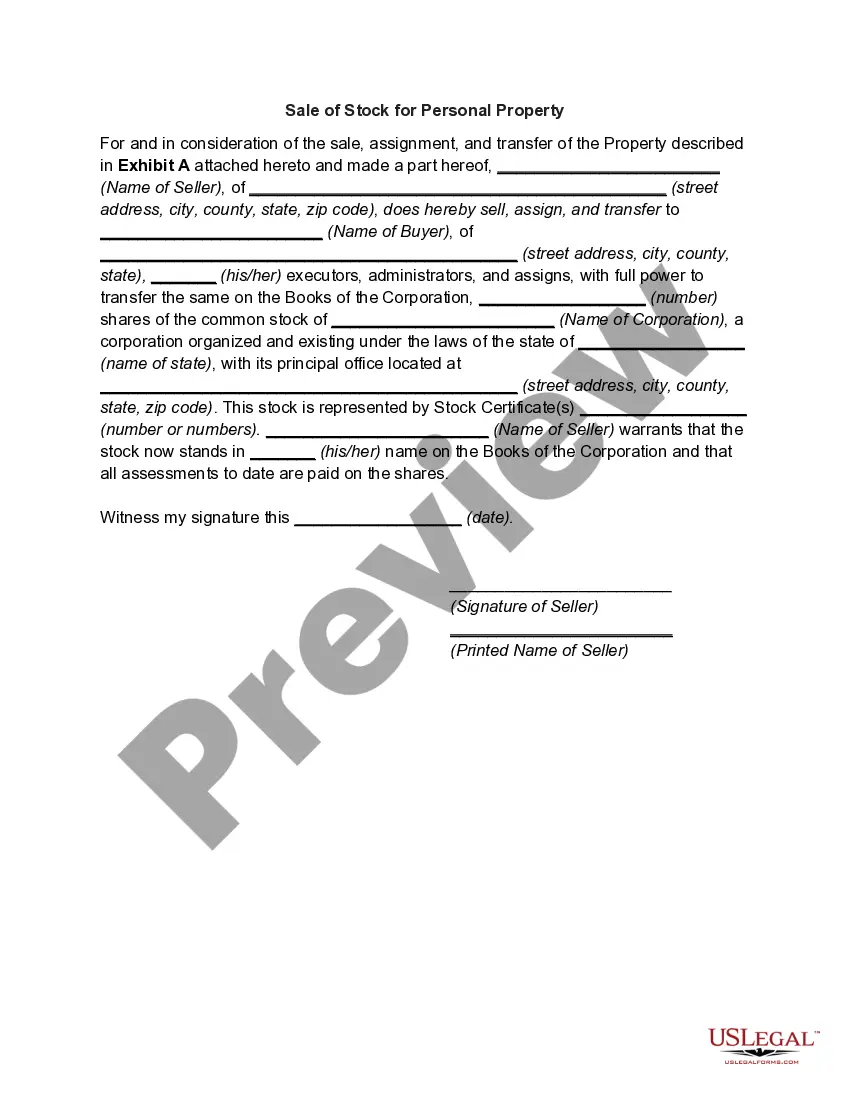
This is a multi-state form covering the subject matter of the title.
District of Columbia Petition for Writ of Habeas Corpus by a Person in State Custody
Category:
State:
Multi-State
Control #:
US-00277
Format:
Word;
Rich Text
Instant download
Description
Free preview

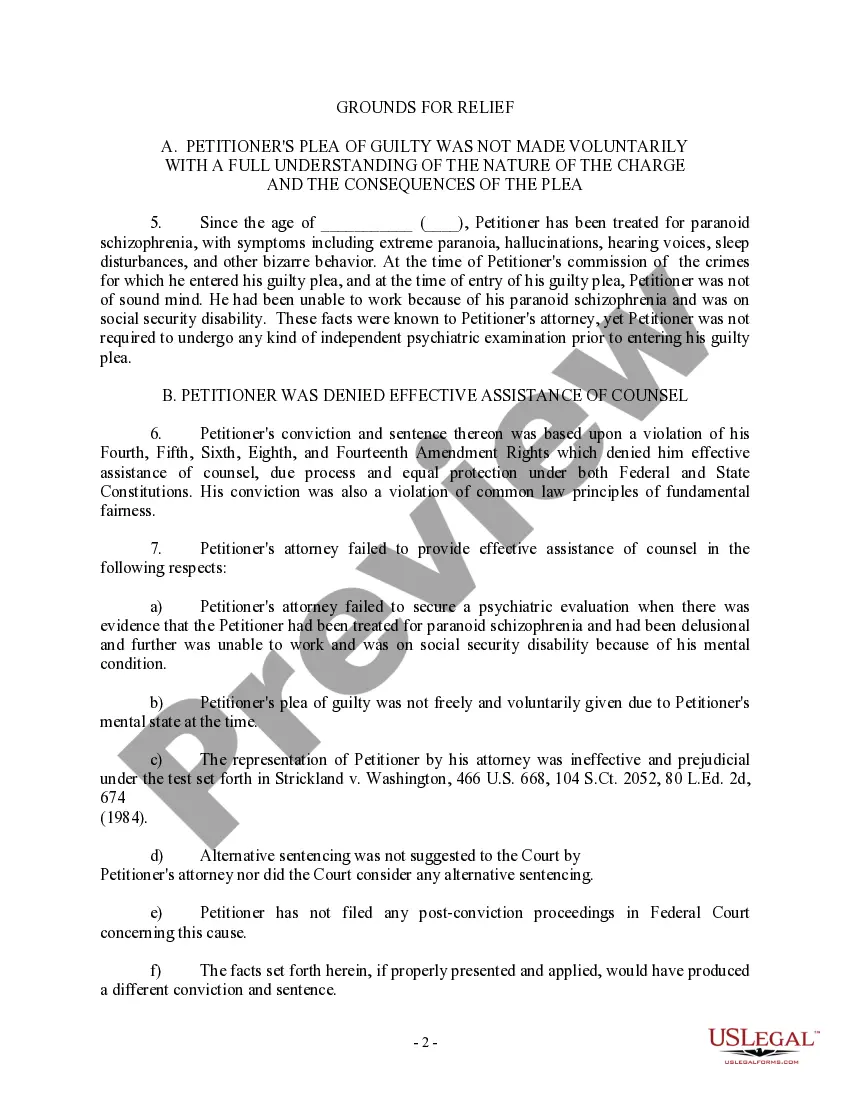
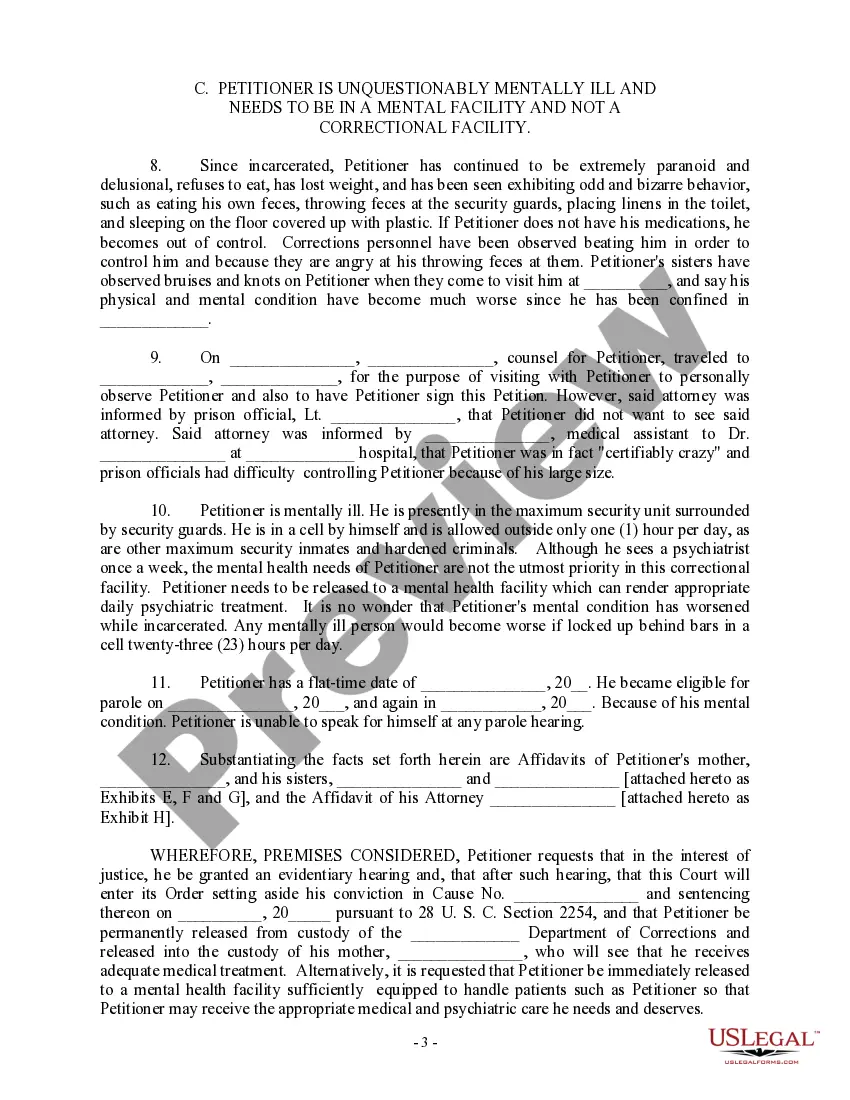
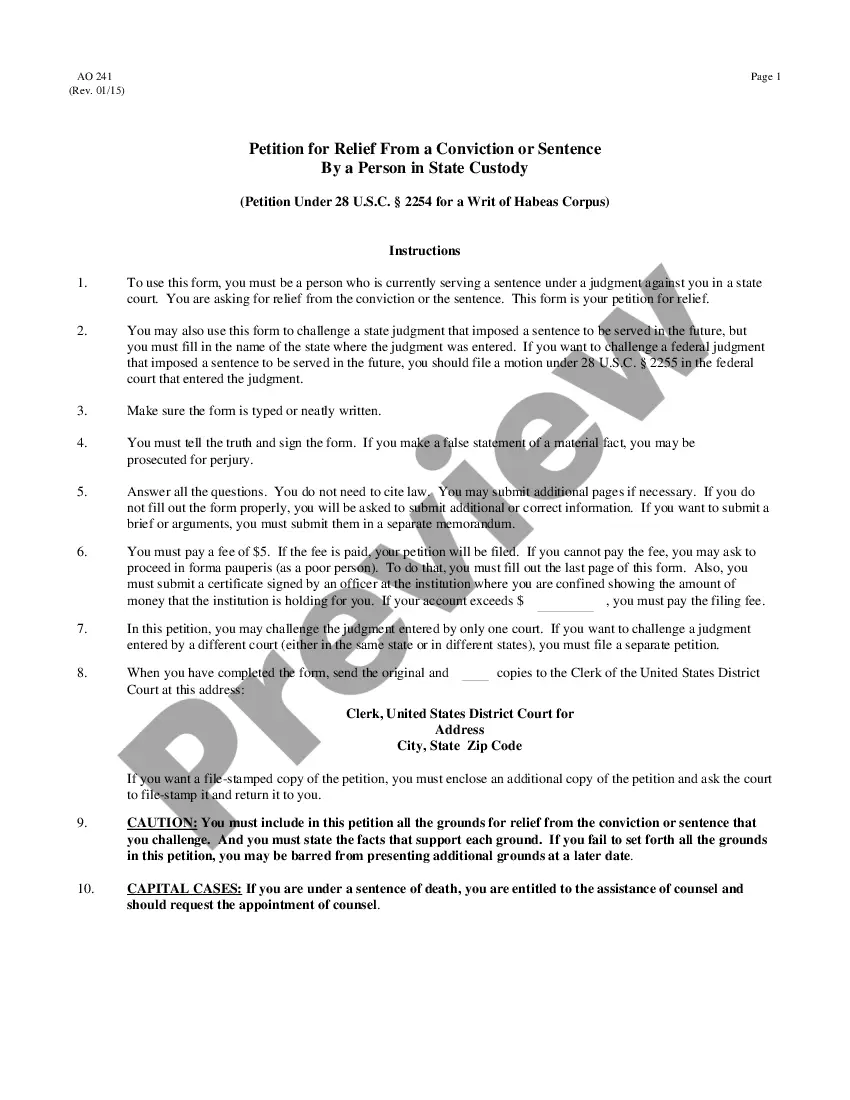
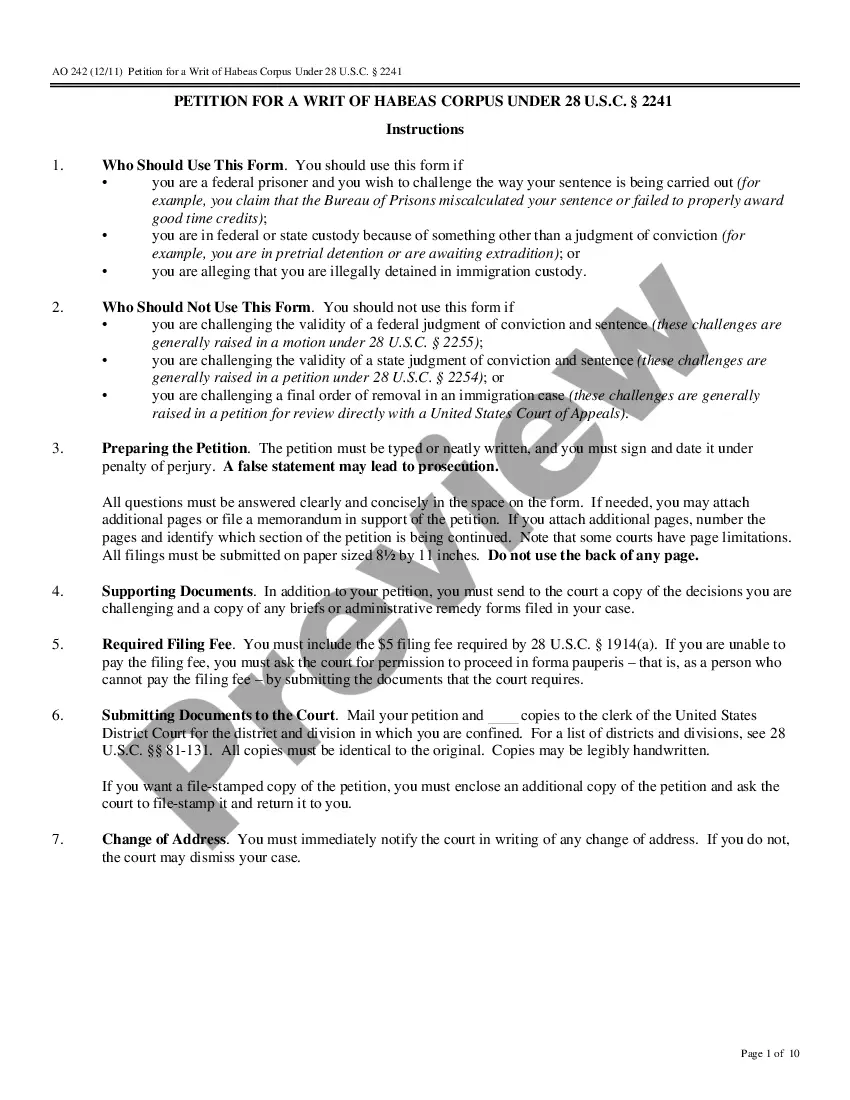
How to fill out Petition For Writ Of Habeas Corpus By A Person In State Custody?
Discovering the right legitimate file design can be quite a have a problem. Naturally, there are plenty of web templates accessible on the Internet, but how would you discover the legitimate develop you want? Take advantage of the US Legal Forms web site. The assistance offers a large number of web templates, like the District of Columbia Petition for Writ of Habeas Corpus by a Person in State Custody, that you can use for business and private needs. Every one of the varieties are checked by professionals and meet up with federal and state specifications.
Should you be previously signed up, log in to your accounts and click on the Download switch to obtain the District of Columbia Petition for Writ of Habeas Corpus by a Person in State Custody. Make use of your accounts to appear through the legitimate varieties you might have bought formerly. Check out the My Forms tab of your respective accounts and obtain another version of your file you want.
Should you be a brand new consumer of US Legal Forms, listed below are simple directions that you can adhere to:
- Initially, ensure you have selected the proper develop for your personal metropolis/state. You may look over the shape utilizing the Preview switch and study the shape information to make certain this is basically the right one for you.
- In the event the develop fails to meet up with your preferences, take advantage of the Seach area to find the right develop.
- When you are positive that the shape is proper, click on the Buy now switch to obtain the develop.
- Pick the rates program you need and type in the essential info. Design your accounts and buy your order using your PayPal accounts or bank card.
- Opt for the document formatting and down load the legitimate file design to your product.
- Full, change and print out and signal the acquired District of Columbia Petition for Writ of Habeas Corpus by a Person in State Custody.
US Legal Forms is definitely the biggest catalogue of legitimate varieties where you can find various file web templates. Take advantage of the service to down load skillfully-manufactured files that adhere to state specifications.
Form popularity
FAQ
Grounds for a habeas corpus petition can include unlawful detention, violation of constitutional rights, or lack of due process. Individuals may argue that their detention does not conform to legal standards or that they were not provided a fair trial. A properly crafted District of Columbia Petition for Writ of Habeas Corpus by a Person in State Custody can effectively present these grounds, potentially leading to a favorable resolution.
The success rate of habeas corpus petitions can vary widely based on the specifics of each case and jurisdiction. Generally, only a small percentage of these petitions succeed, often due to procedural complexities or insufficient legal grounds. However, with a well-prepared District of Columbia Petition for Writ of Habeas Corpus by a Person in State Custody, individuals can improve their chances of a favorable outcome.
Writing a petition for a writ of habeas corpus involves several important steps. First, clearly state the facts surrounding the detention, including the reasons for filing the petition. Next, outline the legal basis for the claim, emphasizing the violations of rights or unlawful detention. Utilizing resources like USLegalForms can guide you through creating a comprehensive District of Columbia Petition for Writ of Habeas Corpus by a Person in State Custody.
The writ of habeas corpus for child custody allows a person to challenge the legality of their child's detention by the state or another party. This legal remedy seeks to ensure that the child's rights are protected and that they are not unlawfully held. In the context of a District of Columbia Petition for Writ of Habeas Corpus by a Person in State Custody, it serves as a vital tool for parents seeking to regain custody or contest wrongful confinement.
The Gist of this Article: A second or successive petition for a writ of habeas corpus is permissible when it challenges a different order affecting the prisoner that the order challenged in an earlier petition for writ of habeas corpus.
Any prisoner, or another person acting on his or her behalf, may petition the court, or a judge, for a writ of habeas corpus. One reason for the writ to be sought by a person other than the prisoner is that the detainee might be held incommunicado.
In a child custody matter, a writ of habeas corpus would be entertainable where it is established that the detention of the minor child by the parent or others is illegal and without authority of law.
A writ of habeas corpus orders the custodian of an individual in custody to produce the individual before the court to make an inquiry concerning his or her detention, to appear for prosecution (ad prosequendum) or to appear to testify (ad testificandum).
It is an action that you bring against the government. Therefore, in habeas petitions, the prisoner is often referred to as the ?plaintiff,? ?petitioner,? or ?complainant.? For clarity, this Chapter often refers to the prisoner bringing the habeas petition as the ?defendant.?
The writ of Habeas Corpus can be issued against public authorities only. 2. The writ of Mandamus cannot be issued against a private individual or body.