District of Columbia Landlord Tenant Closing Statement to Reconcile Security Deposit
What is this form?
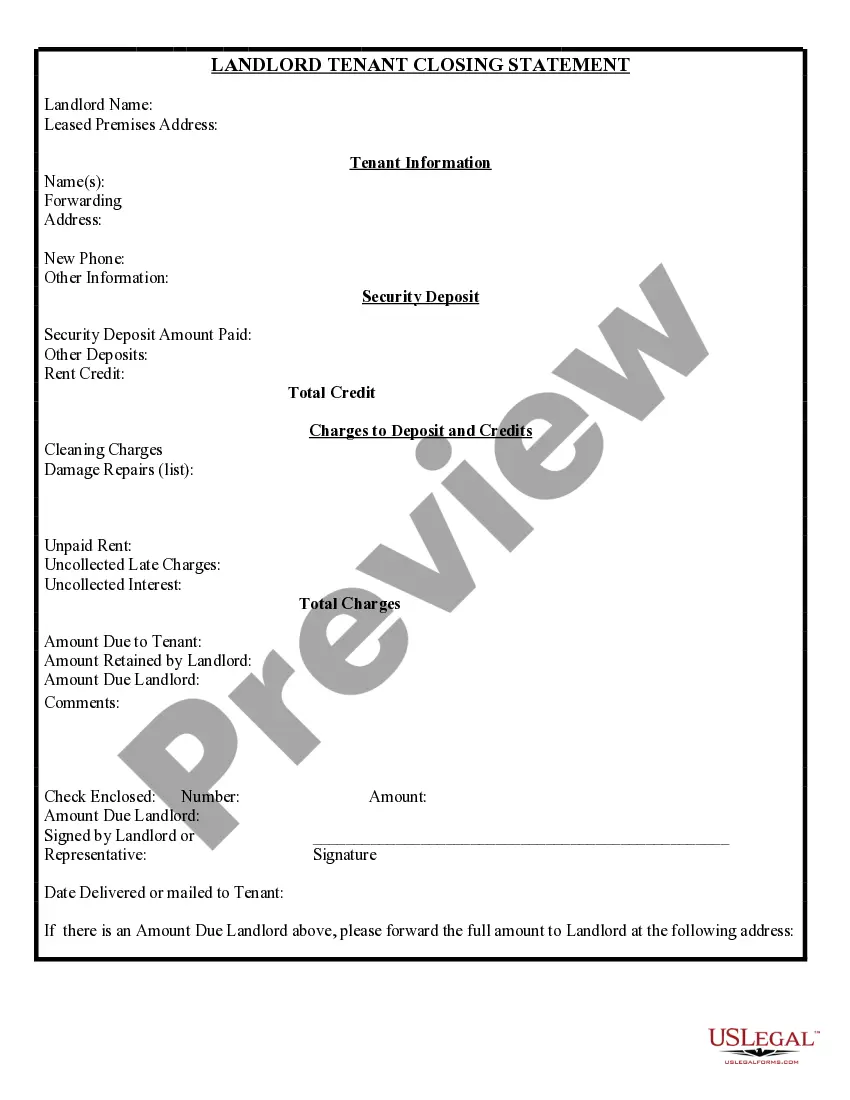
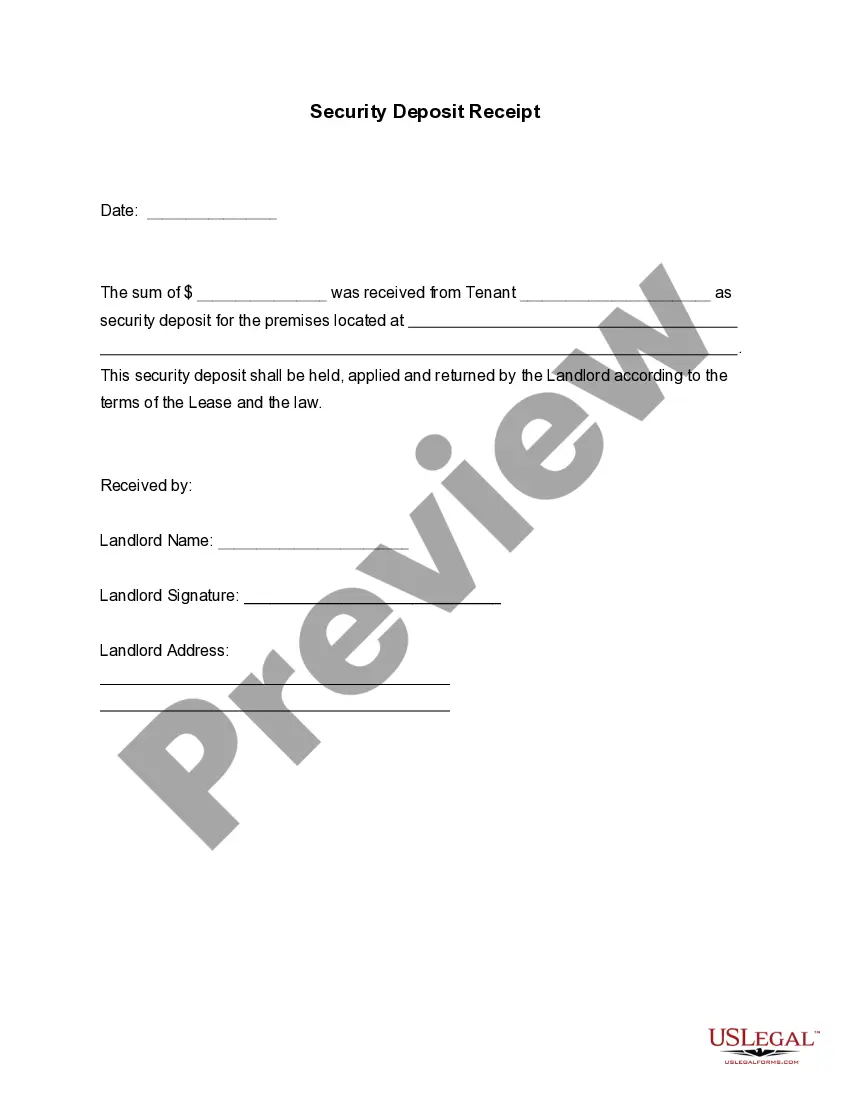
The Landlord Tenant Closing Statement to Reconcile Security Deposit is a legal document used by landlords to itemize the security deposits and credits, subtracting any deductions made due to damages beyond normal wear and tear. This form serves to clarify the financial transactions between the landlord and tenant regarding the security deposit, ensuring transparency and understanding for both parties. It is distinct from other rental agreements, as it specifically addresses the reconciliation of the security deposit at the conclusion of a lease.
Key parts of this document
- Identification of parties involved (landlord and tenant)
- Details of the security deposit amount received
- Itemized list of deductions for damages or past-due rent
- Calculation of the balance to be returned to the tenant
- Signatures of both parties to acknowledge the closing statement
When this form is needed
This form is necessary when a tenant vacates a rental property, and the landlord needs to settle accounts regarding the security deposit. Use this closing statement to provide a clear record of deductions from the security deposit for damages as assessed by the landlord. It is essential for both parties to ensure accountability and to mitigate disputes regarding the return of the deposit.
Who should use this form
- Landlords managing rental properties
- Tenants who are ending a lease and need to reconcile their security deposit
- Property managers overseeing landlord-tenant relationships
Instructions for completing this form
- Identify the landlord and tenant by entering their names and contact information.
- Specify the total amount of security deposit paid by the tenant.
- List any deductions taken from the security deposit for repairs or unpaid rent.
- Calculate the total balance to be returned to the tenant.
- Obtain signatures from both landlord and tenant to finalize the statement.
Does this form need to be notarized?
In most cases, this form does not require notarization. However, some jurisdictions or signing circumstances might. US Legal Forms offers online notarization powered by Notarize, accessible 24/7 for a quick, remote process.
Get your form ready online
Our built-in tools help you complete, sign, share, and store your documents in one place.
Make edits, fill in missing information, and update formatting in US Legal Forms—just like you would in MS Word.
Download a copy, print it, send it by email, or mail it via USPS—whatever works best for your next step.
Sign and collect signatures with our SignNow integration. Send to multiple recipients, set reminders, and more. Go Premium to unlock E-Sign.
If this form requires notarization, complete it online through a secure video call—no need to meet a notary in person or wait for an appointment.
We protect your documents and personal data by following strict security and privacy standards.

Make edits, fill in missing information, and update formatting in US Legal Forms—just like you would in MS Word.

Download a copy, print it, send it by email, or mail it via USPS—whatever works best for your next step.

Sign and collect signatures with our SignNow integration. Send to multiple recipients, set reminders, and more. Go Premium to unlock E-Sign.

If this form requires notarization, complete it online through a secure video call—no need to meet a notary in person or wait for an appointment.

We protect your documents and personal data by following strict security and privacy standards.
Mistakes to watch out for
- Failing to document all deductions clearly, leading to disputes.
- Not including both parties' signatures, which may invalidate the document.
- Overlooking state-specific laws regarding security deposits.
- Using vague language that does not specify damages clearly.
Why use this form online
- Convenient access to templates from anywhere at any time.
- Editable fields make it easy to customize the form for specific situations.
- Secure storage options help maintain records of transactions.
- Prepared by licensed attorneys, ensuring legal soundness.
Looking for another form?
Form popularity
FAQ
To sue your landlord for a security deposit in Washington, DC, gather your evidence, such as the lease agreement and any communication regarding your deposit. Document any damages and expenses incurred to strengthen your case. You may need to file a complaint in small claims court, and the District of Columbia Landlord Tenant Closing Statement to Reconcile Security Deposit can be an essential tool in supporting your claim. Consider using USLegalForms to access helpful resources for your legal journey.
If you are seeking help with your security deposit in Washington, DC, you can start by reviewing your lease agreement for specific terms. You may also consult the District of Columbia Landlord Tenant Closing Statement to Reconcile Security Deposit to understand your rights. Utilizing resources like legal aid organizations or contacting your local housing authority can provide guidance. Additionally, platforms like USLegalForms offer templates and information to help you prepare necessary documents.
To request your deposit back from your landlord, begin by sending a formal written request. Include relevant details, such as your forwarding address and a copy of the 'District of Columbia Landlord Tenant Closing Statement to Reconcile Security Deposit'. Clearly state the amount you expect and any deductions you've discussed. Following up with a phone call can reinforce your request and provide clarity on the next steps.
In Washington, DC, landlords must return security deposits within 45 days after the end of the lease. During this time, they should provide a detailed 'District of Columbia Landlord Tenant Closing Statement to Reconcile Security Deposit' outlining any deductions. If landlords fail to meet this deadline, they may face legal repercussions. It is advisable to stay informed about your rights as a tenant to ensure compliance.
Reconciling a security deposit requires both parties to assess any damages and agreed-upon deductions. Start by reviewing the terms of the lease agreement and the relevant 'District of Columbia Landlord Tenant Closing Statement to Reconcile Security Deposit'. This documentation will guide you in calculating the final amount owed. Open communication with your landlord regarding necessary repairs or maintenance issues can facilitate a smoother reconciliation process.
To dispute a security deposit in the District of Columbia, first review the closing statement related to your rental agreement. Gather any supporting documents, such as photographs or previous communication with your landlord. Next, you may want to communicate your concerns clearly and formally, using the 'District of Columbia Landlord Tenant Closing Statement to Reconcile Security Deposit' as a reference. If needed, consider filing a complaint with local housing authorities or seek legal assistance to resolve the issue.
To write a letter requesting the return of your security deposit, start by including your contact information and the landlord's details. In the letter, reference the District of Columbia Landlord Tenant Closing Statement to Reconcile Security Deposit, and explain why you believe you deserve the full return of your deposit. Be concise and polite, providing any necessary details such as your lease end date and the condition of the property. A well-crafted letter can facilitate a smoother return process.