District of Columbia Plumbing Contract for Contractor
What is this form?
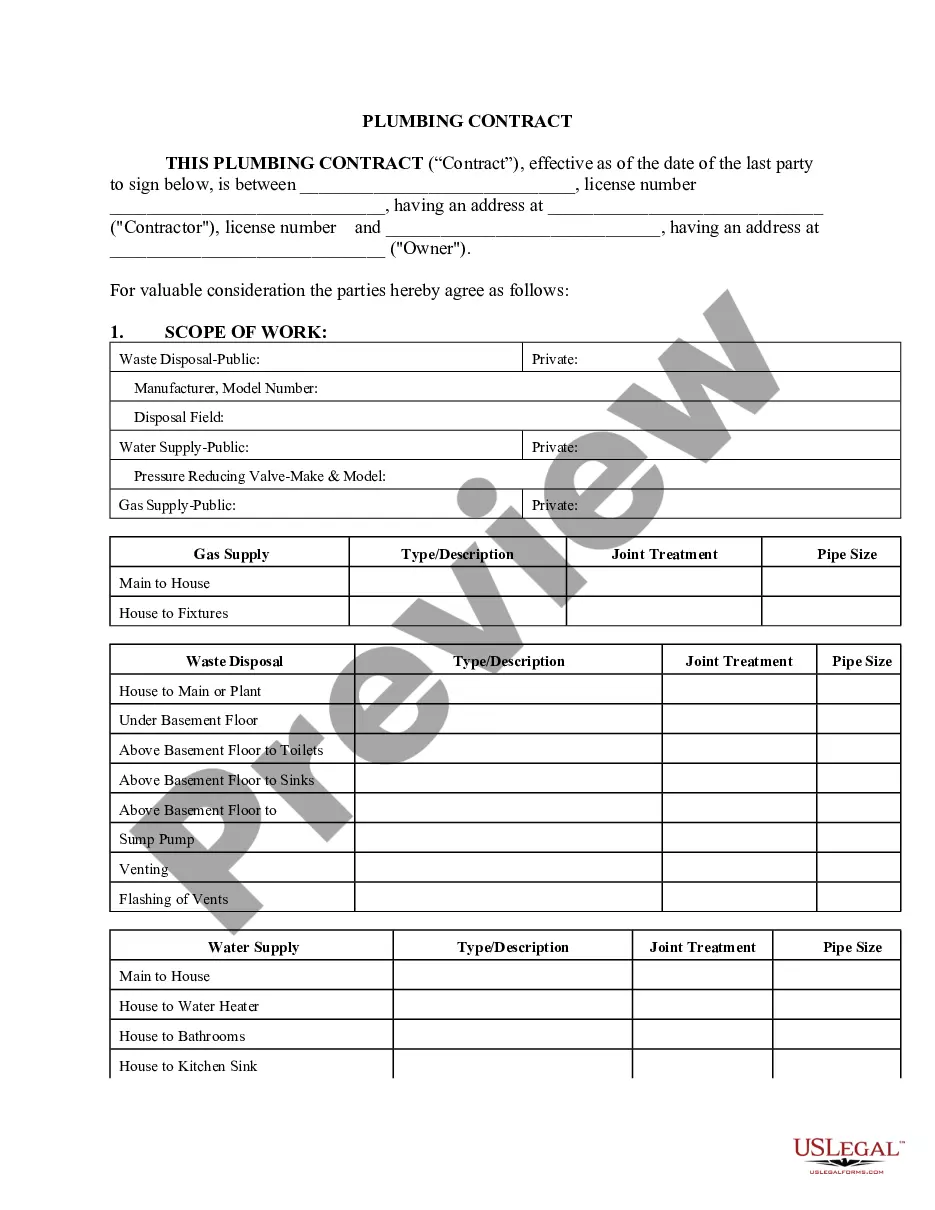
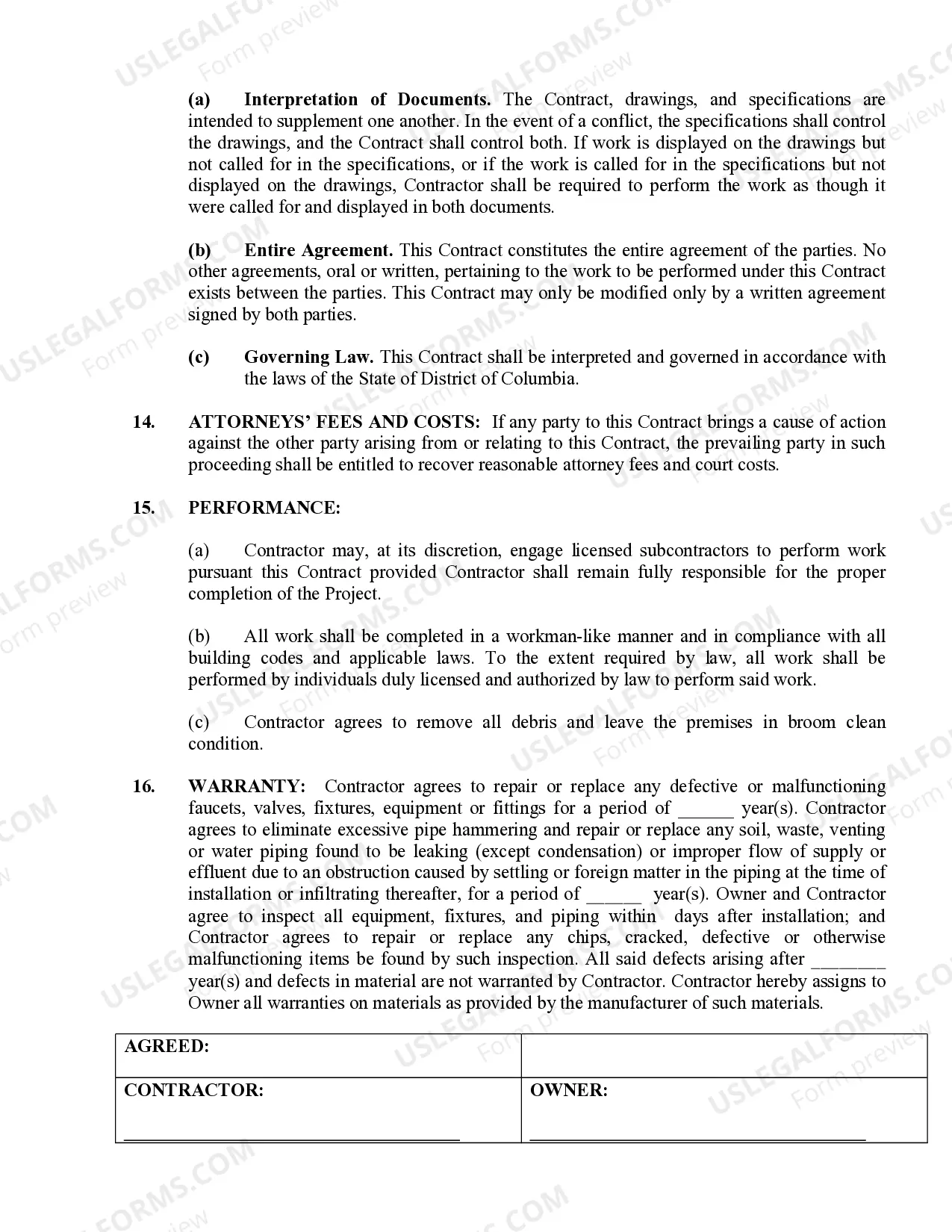
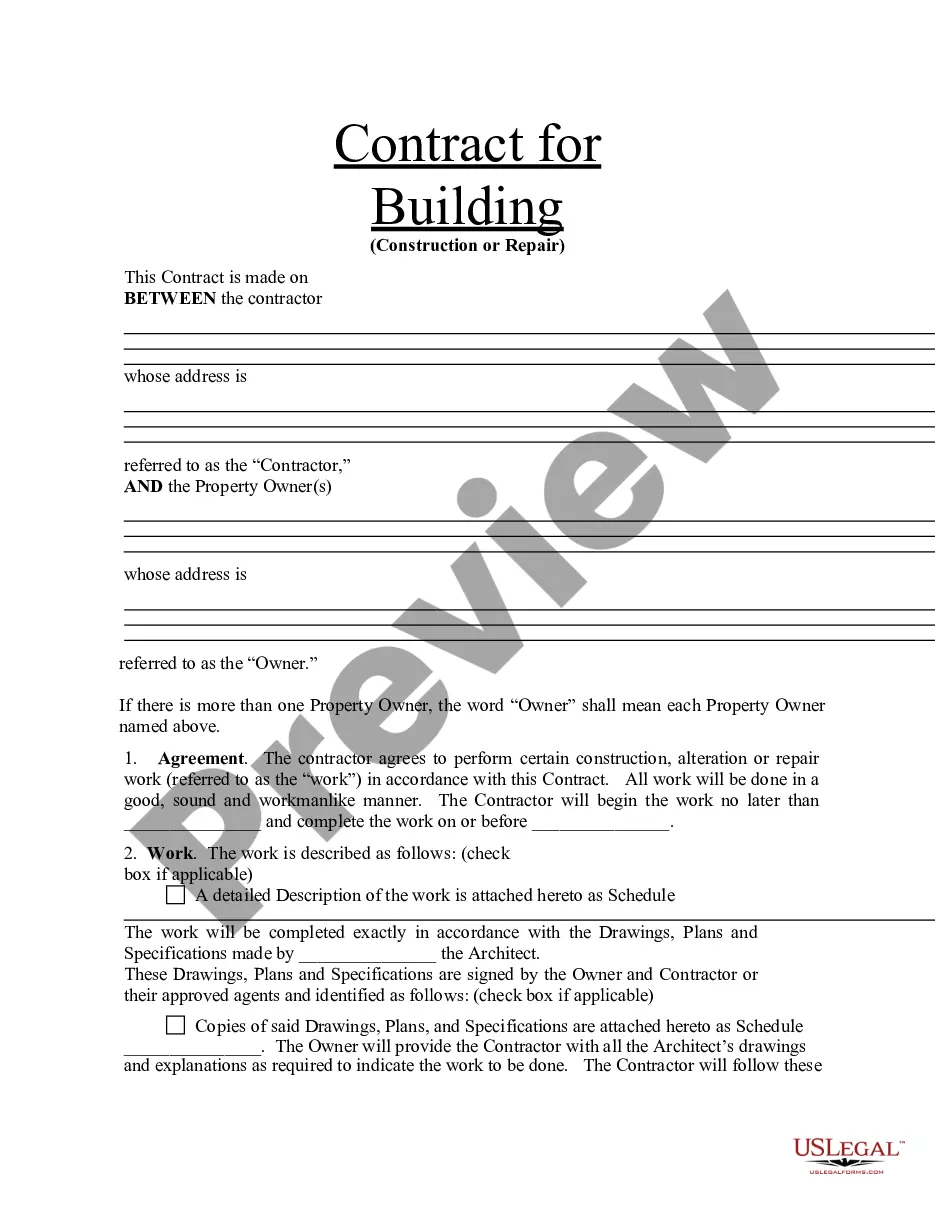
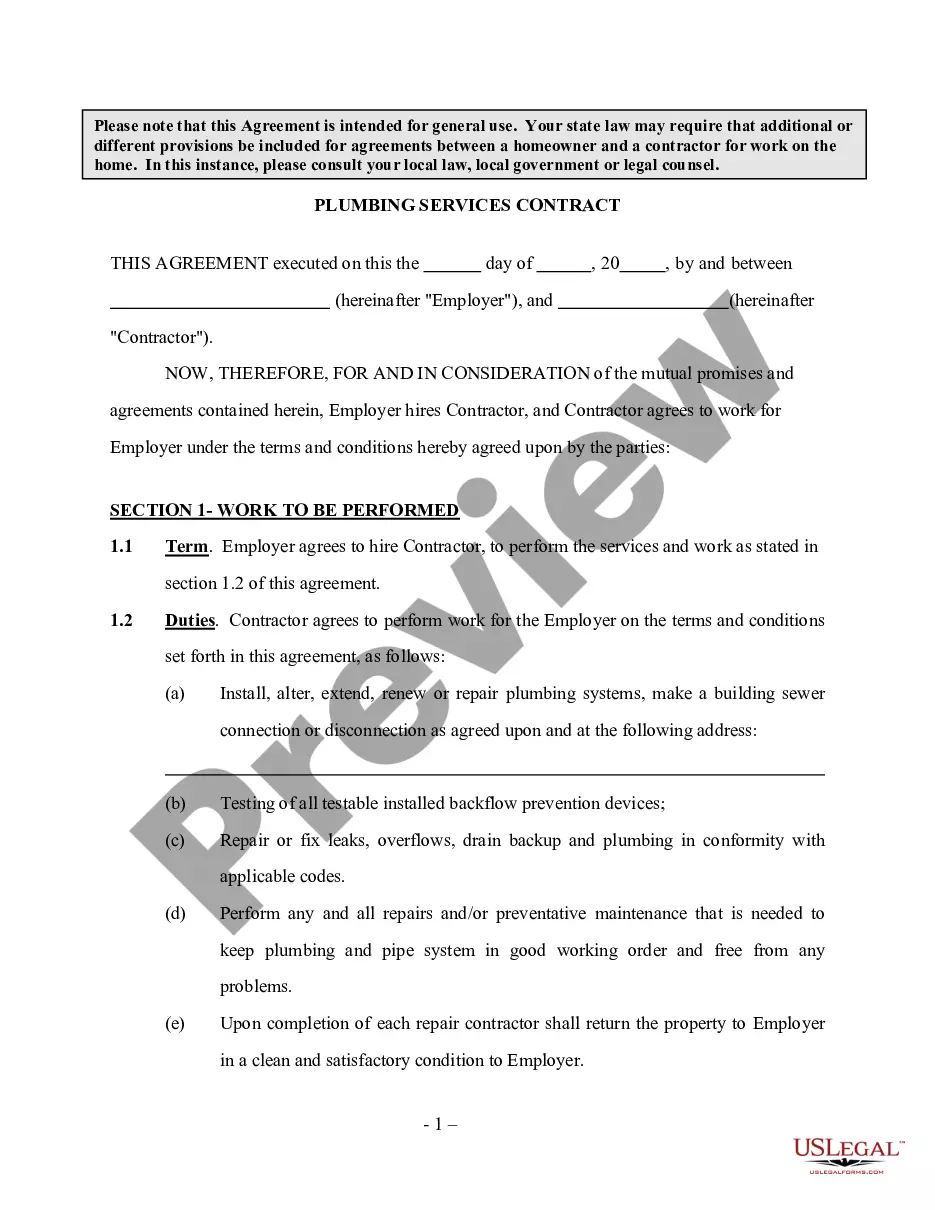
The Plumbing Contract for Contractor is a legal agreement designed for use between plumbing contractors and property owners. This contract establishes the terms under which plumbing work will be performed and outlines payment arrangements, whether cost-plus or fixed fee. It specifically complies with the laws of the District of Columbia, ensuring it meets regional legal requirements. This form is crucial for protecting the interests of both parties and clarifying their responsibilities throughout the project.
What’s included in this form
- Parties involved: Identification of the contractor and the owner, including addresses and license numbers.
- Work site details: Location where the plumbing work will take place.
- Permits: Clarification that the contractor is responsible for obtaining necessary permits for the project.
- Insurance: Requirements for the contractor to maintain appropriate insurance coverage.
- Change orders: Procedures for modifying the scope of work during the project, including how these changes affect costs.
- Contract price: Specification of payment structures, including potential cost increases due to change orders.


When to use this document
This form is necessary when a property owner hires a plumbing contractor to perform specific plumbing work. It is useful in residential and commercial contexts where clear agreements on work scope, payment, and responsibilities are needed. Whenever a plumbing project involves substantial work or investments, utilizing this contract can help mitigate disputes and ensure clarity.
Who can use this document
Intended audience for this form includes:
- Property owners seeking professional plumbing services.
- Plumbing contractors looking for a formal agreement to protect their interests and clarify obligations.
- Real estate professionals who assist clients with property renovations or constructions requiring plumbing services.
Steps to complete this form
To complete this Plumbing Contract, follow these steps:
- Identify the parties: Enter the names and addresses for both the contractor and the owner.
- Specify the work site: Clearly state the address where the plumbing work will occur.
- List required permits: Ensure the contractor will obtain all necessary permits for the project.
- Detail insurance requirements: Confirm the contractor's insurance coverage is up to date and compliant.
- Define change order procedures: Outline how changes to the original agreement will be handled, including payment adjustments.
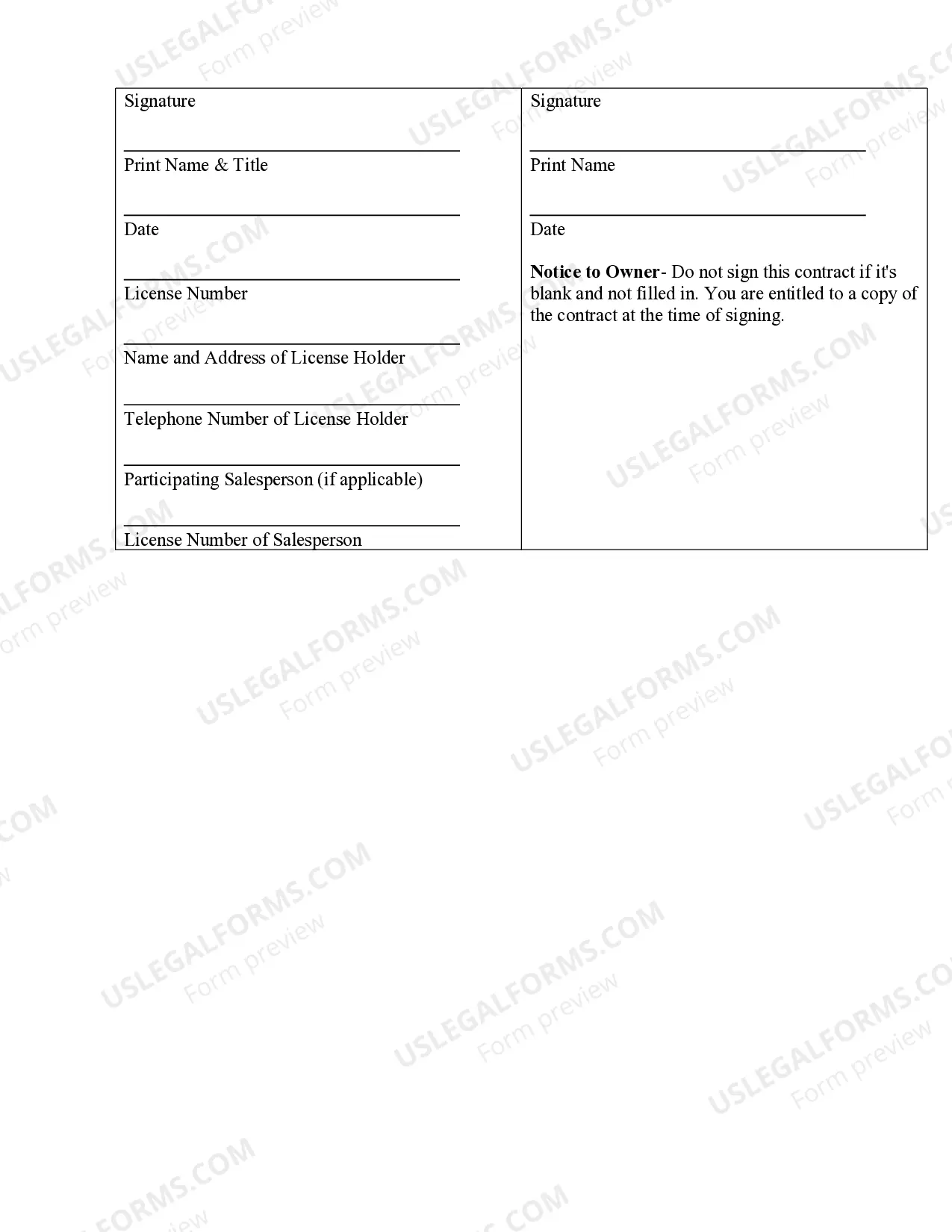
- Sign and date the contract: Ensure both parties sign the document for it to be legally binding.
Notarization requirements for this form
This form does not typically require notarization unless specified by local law. It is recommended to consult with local regulations to confirm if notarization is necessary for your specific contract situation.
Get your form ready online
Our built-in tools help you complete, sign, share, and store your documents in one place.
Make edits, fill in missing information, and update formatting in US Legal Forms—just like you would in MS Word.
Download a copy, print it, send it by email, or mail it via USPS—whatever works best for your next step.
Sign and collect signatures with our SignNow integration. Send to multiple recipients, set reminders, and more. Go Premium to unlock E-Sign.
If this form requires notarization, complete it online through a secure video call—no need to meet a notary in person or wait for an appointment.
We protect your documents and personal data by following strict security and privacy standards.

Make edits, fill in missing information, and update formatting in US Legal Forms—just like you would in MS Word.

Download a copy, print it, send it by email, or mail it via USPS—whatever works best for your next step.

Sign and collect signatures with our SignNow integration. Send to multiple recipients, set reminders, and more. Go Premium to unlock E-Sign.

If this form requires notarization, complete it online through a secure video call—no need to meet a notary in person or wait for an appointment.

We protect your documents and personal data by following strict security and privacy standards.
Common mistakes
- Failing to specify the work site clearly, which can lead to confusion.
- Not including all necessary permits in the contract, leaving responsibilities unclear.
- Overlooking the change order process, resulting in unexpected costs during the project.
- Neglecting to include insurance requirements, exposing both parties to liability.
Why complete this form online
- Convenient access to a downloadable form that can be customized to your needs.
- Editability allows you to easily update information before finalizing the contract.
- Reliability of a form reviewed and drafted by licensed attorneys ensures legal protection.
Looking for another form?

Form popularity
FAQ
Writing a contractor agreement involves outlining the terms of the project, including scope, responsibilities, payment schedules, and timelines. Begin by using a template that reflects the specifics of a District of Columbia Plumbing Contract for Contractor. This approach can help ensure that all essential elements are included, reducing the risk of misunderstandings between parties.
Yes, hiring an unlicensed contractor in Virginia can lead to legal complications and potential penalties. It is crucial to ensure that any contractor you engage holds the necessary licenses and permits for their work. This is especially important when dealing with a District of Columbia Plumbing Contract for Contractor, where compliance with local regulations is a must.
In DC, anyone who operates a business, including contractors, needs to obtain a business license. This requirement applies to both small and large businesses in various sectors, including plumbing. Ensuring you have the right license is critical before entering into a District of Columbia Plumbing Contract for Contractor.
To verify if a contractor is licensed in DC, you can check the Department of Consumer and Regulatory Affairs (DCRA) online database. Simply enter the contractor's name or license number to get detailed information. This step is vital before signing a District of Columbia Plumbing Contract for Contractor to ensure you are working with a qualified professional.
Yes, contractors must be licensed to operate legally in Washington, DC. This licensing ensures that they meet the required standards for quality and safety in construction projects. Therefore, if you plan to engage in any plumbing work, obtaining a District of Columbia Plumbing Contract for Contractor is essential to ensure compliance.
The best contract for contractors often depends on the specific project and its requirements. A well-drafted District of Columbia Plumbing Contract for Contractor can provide clarity on deliverables, timelines, and payment terms. This contract type ensures that both parties understand their responsibilities, reducing disputes and fostering better working relationships.
To find government construction contracts, start by visiting the official government websites that list available bids, such as FedBizOpps or state procurement sites. You can also check local municipality websites for specific District of Columbia projects. Consider registering on platforms like uslegalforms, where you can access valuable resources related to District of Columbia Plumbing Contract for Contractor.
Setting up an independent contractor agreement involves outlining the specifics of the project, payment terms, and the responsibilities of both parties. It’s crucial to ensure the agreement is clear and compliant with local laws, especially for agreements associated with a District of Columbia Plumbing Contract for Contractor. You can leverage platforms like uslegalforms for templates to help you create a comprehensive and professional agreement.
To enter government contracting, start by understanding the market and the specific needs of government agencies. Tailor your services to meet these needs, particularly regarding specialized areas like the District of Columbia Plumbing Contract for Contractor. Attend workshops and utilize resources available on platforms like uslegalforms to familiarize yourself with the necessary regulations and documentation.
Yes, contractors in DC are typically required to hold a valid license to operate legally. This helps ensure quality and compliance with industry standards, particularly for contracts like the District of Columbia Plumbing Contract for Contractor. Always verify licensing requirements for your specific trade to avoid any potential penalties or issues.