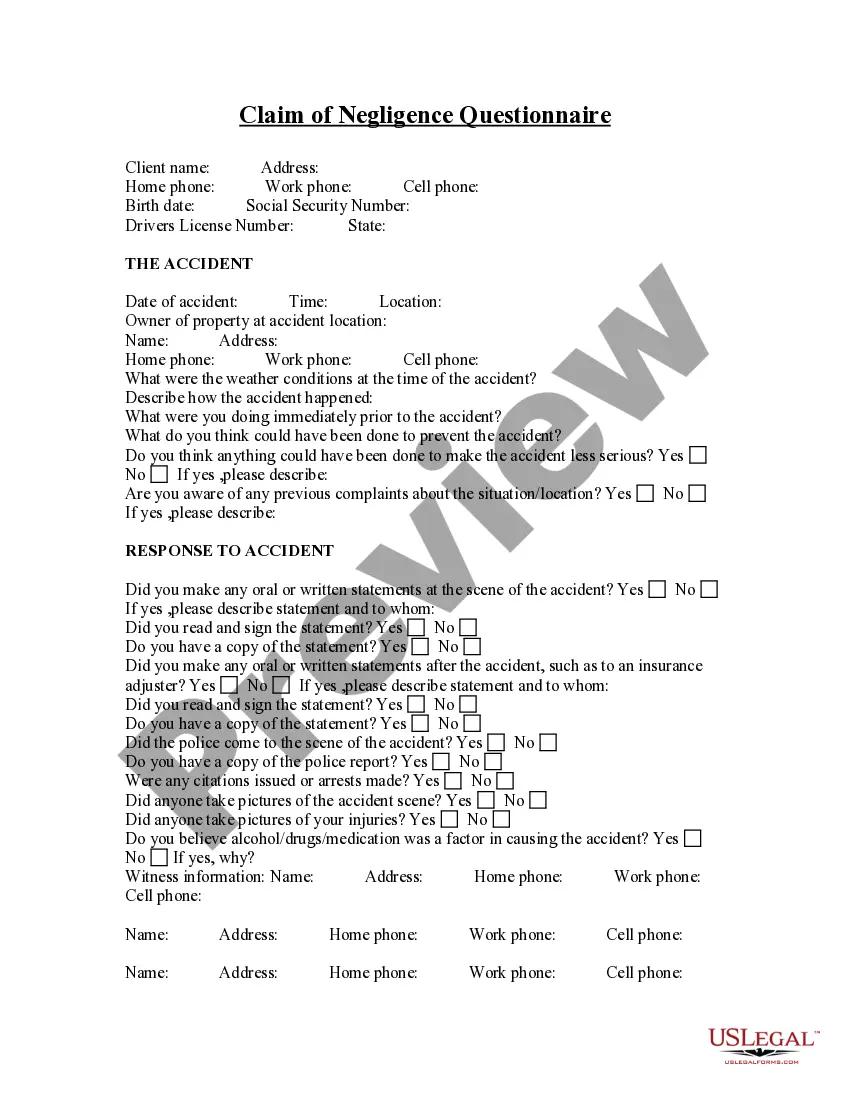
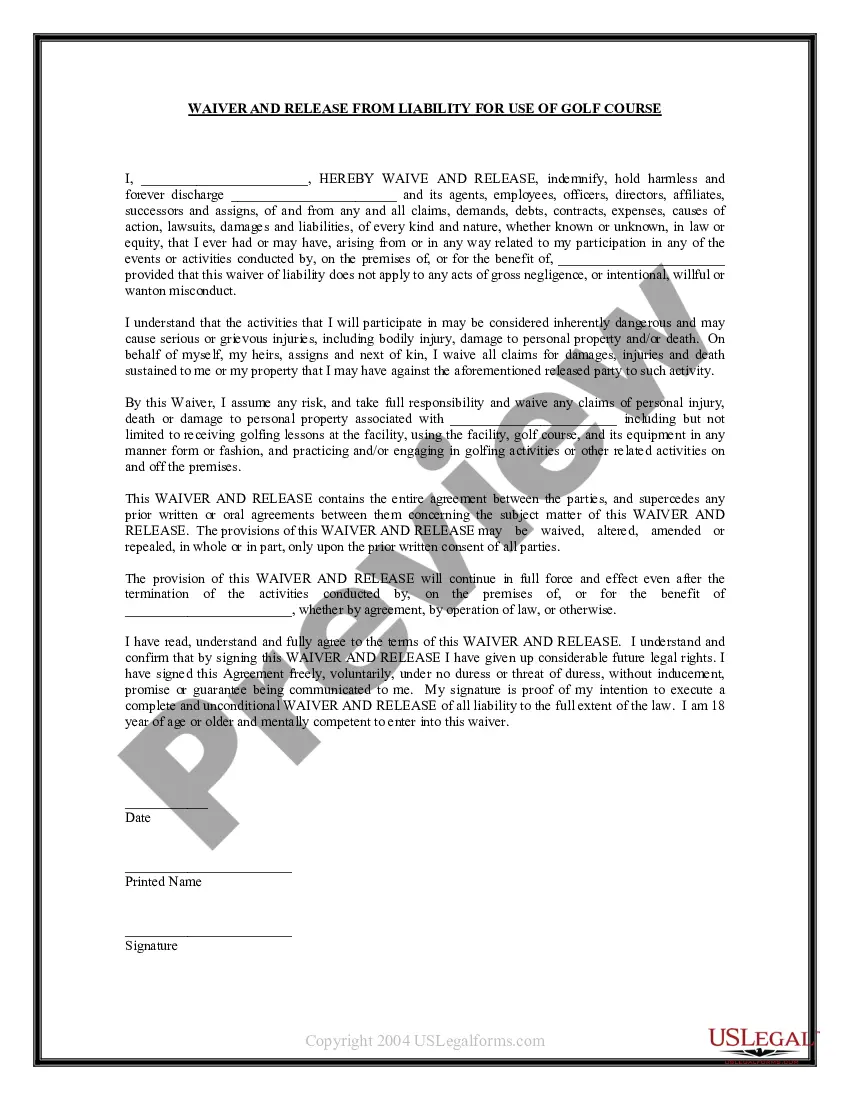
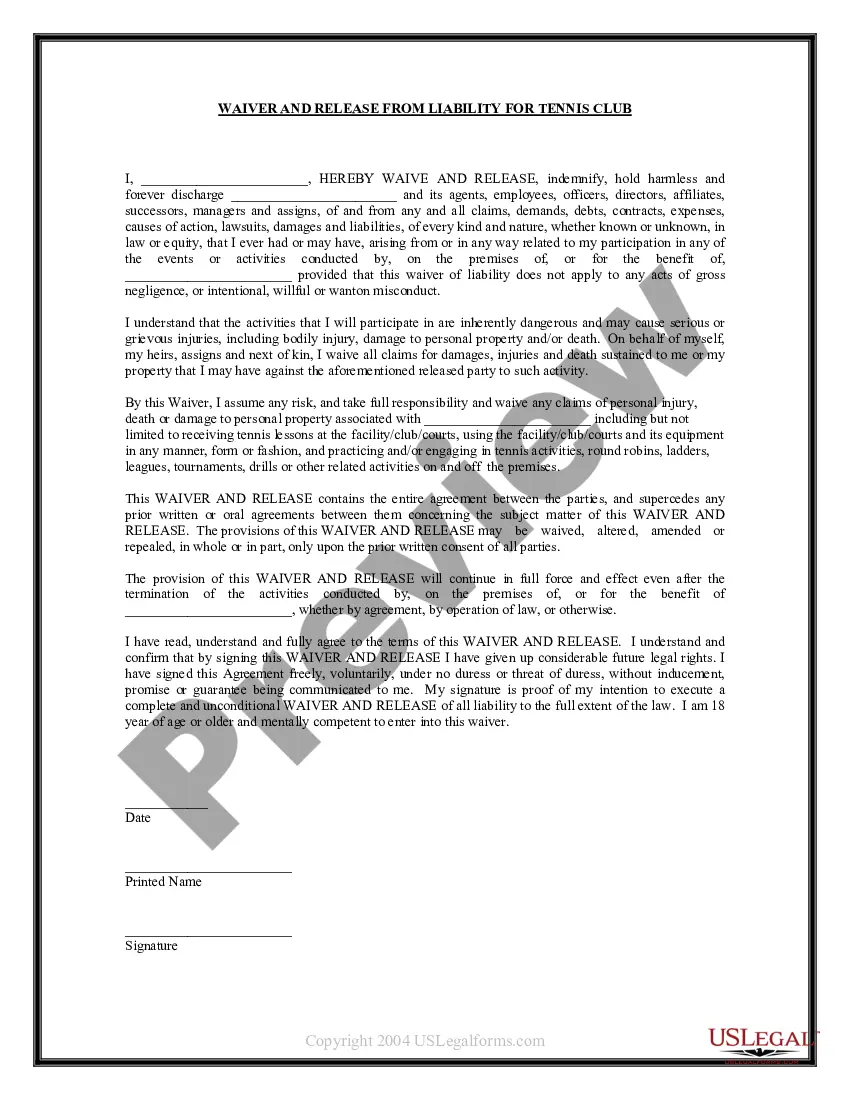
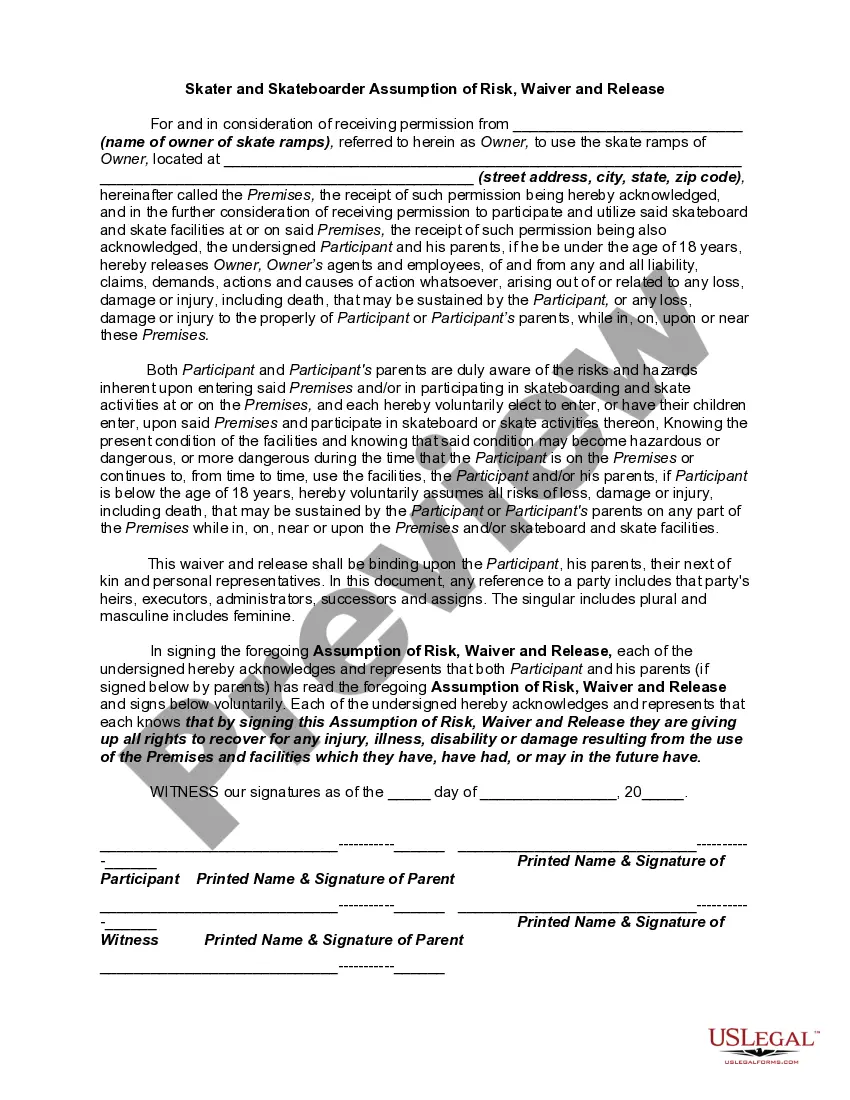
This form allows an adult to release a golf course from liability for injuries which may be incurred while on the premises, taking part in activities, etc.
Connecticut Waiver and Release From Liability For Adult for Golf Course
Category:
State:
Multi-State
Control #:
US-WAV-07A
Format:
Word;
Rich Text
Instant download
Description
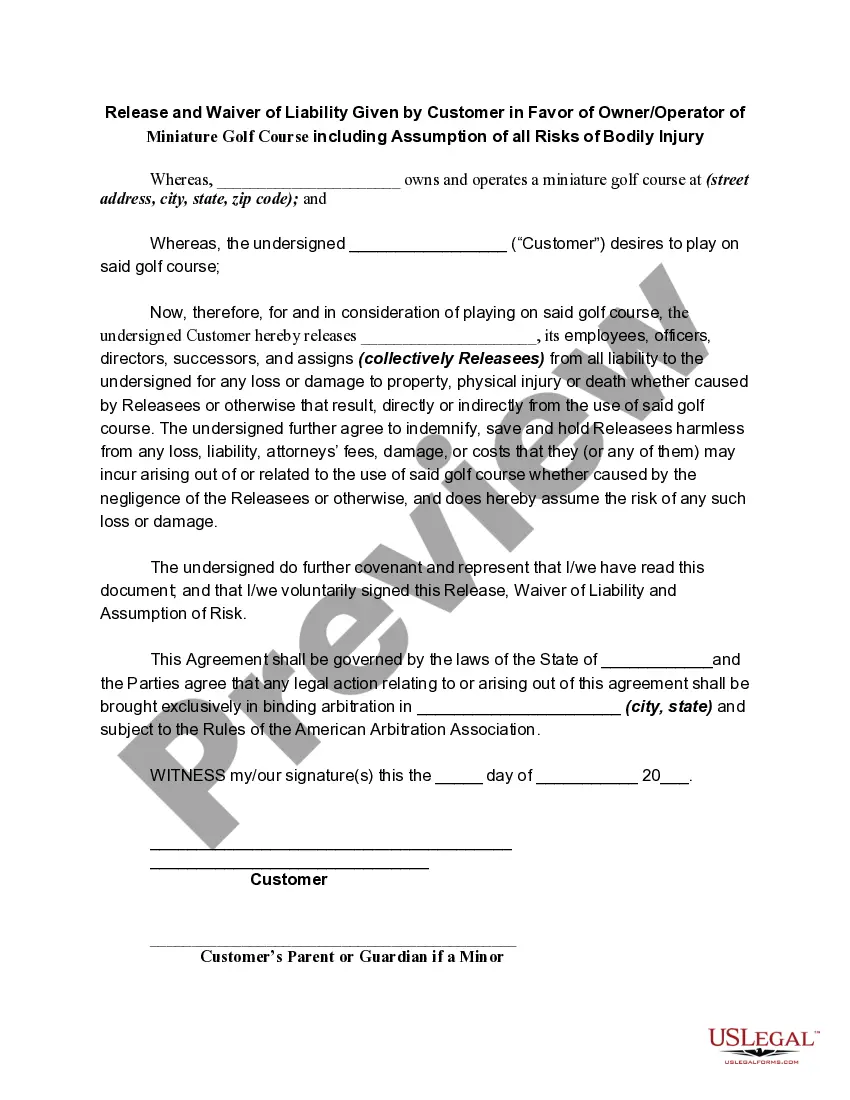
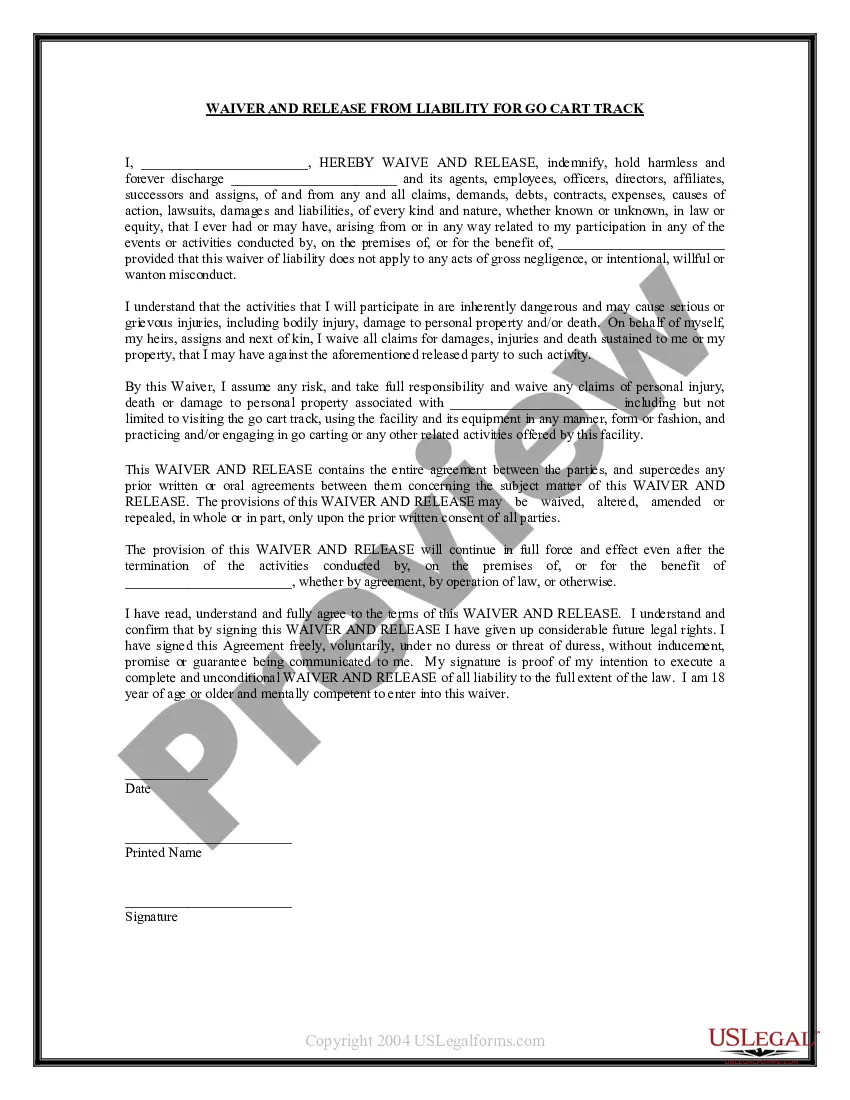


How to fill out Waiver And Release From Liability For Adult For Golf Course?
You can invest several hours online searching for the valid document template that meets the federal and state requirements you require. US Legal Forms offers thousands of valid forms that are reviewed by experts.
You can easily download or print the Connecticut Waiver and Release From Liability For Adult for Golf Course from my assistance. If you already have a US Legal Forms account, you can Log In and click the Acquire option.
After that, you can fill out, edit, print, or sign the Connecticut Waiver and Release From Liability For Adult for Golf Course. Every valid document template you purchase is yours forever. To obtain another copy of any purchased form, visit the My documents tab and select the corresponding option.
Choose the file format of the document and download it to your device. Make changes to your document if necessary. You can fill out, edit, sign, and print the Connecticut Waiver and Release From Liability For Adult for Golf Course. Obtain and print thousands of document templates using the US Legal Forms site, which offers the largest selection of valid forms. Utilize professional and state-specific templates to address your business or personal needs.
- If you are using the US Legal Forms website for the first time, follow the simple instructions below.
- First, ensure you have selected the correct document template for the state/town of your choice. Review the form outline to confirm you have chosen the right form.
- If available, use the Preview option to view the document template as well.
- If you wish to obtain another copy of the form, use the Search field to find the template that fits your needs and requirements.
- Once you have located the template you want, click Buy now to proceed.
- Select the pricing plan you desire, enter your details, and register for an account on US Legal Forms.
- Complete the transaction. You can use your credit card or PayPal account to pay for the valid form.
Form popularity
FAQ
Yes, liability waivers are generally enforceable in Connecticut, provided they meet specific legal standards. A well-crafted Connecticut Waiver and Release From Liability For Adult for Golf Course can protect against many claims. However, they must be clear, specific, and not violate public policy to be upheld in court. Consulting a legal professional can help ensure your waiver is enforceable.
A waiver can become unenforceable for several reasons, such as being overly broad or vague. Additionally, if the waiver is signed under duress or without understanding its implications, it may not hold up in court. It’s important that a Connecticut Waiver and Release From Liability For Adult for Golf Course is clear and that participants fully understand what they are signing.
Waivers can prevent you from suing, but their enforceability can vary based on circumstances. If you sign a Connecticut Waiver and Release From Liability For Adult for Golf Course, you may give up the right to sue for ordinary negligence. However, if the waiver is vague or does not comply with legal standards, you might still have grounds to take legal action.
A waiver of liability can limit liability, but it cannot waive all forms of liability. In Connecticut, courts may not enforce a waiver if it attempts to absolve a party from gross negligence or willful misconduct. Therefore, when creating a Connecticut Waiver and Release From Liability For Adult for Golf Course, it’s crucial to clearly outline the limitations of liability.
Connecticut is not considered a strict liability state in all cases. In terms of recreational activities, such as golfing, liability often depends on negligence rather than strict liability. This means that a Connecticut Waiver and Release From Liability For Adult for Golf Course can significantly limit the grounds for a lawsuit, especially if the waiver is well-crafted.
Yes, liability waivers can be legally binding if they meet certain criteria. In Connecticut, a properly drafted Connecticut Waiver and Release From Liability For Adult for Golf Course can protect the golf course from legal claims. However, it must be clear, specific, and signed voluntarily by the participant. It’s essential to consult a legal expert to ensure the waiver complies with state laws.
Liability waivers are enforceable in California solely to the extent they shift to the customer the risk of ordinary negligence. Under California law, a liability waiver cannot excuse an injury caused by a defendant's gross negligence, recklessness or intentionally wrongful act.
A release of liability is a legal agreement between two parties in which one party waives the right to hold another party responsible for potential damages or injuries.
Liability waivers are enforceable in California solely to the extent they shift to the customer the risk of ordinary negligence. Under California law, a liability waiver cannot excuse an injury caused by a defendant's gross negligence, recklessness or intentionally wrongful act.
Releases of liabilitysometimes called waiversare legal agreements designed to transfer responsibility for injuries and property damage from one party to another.