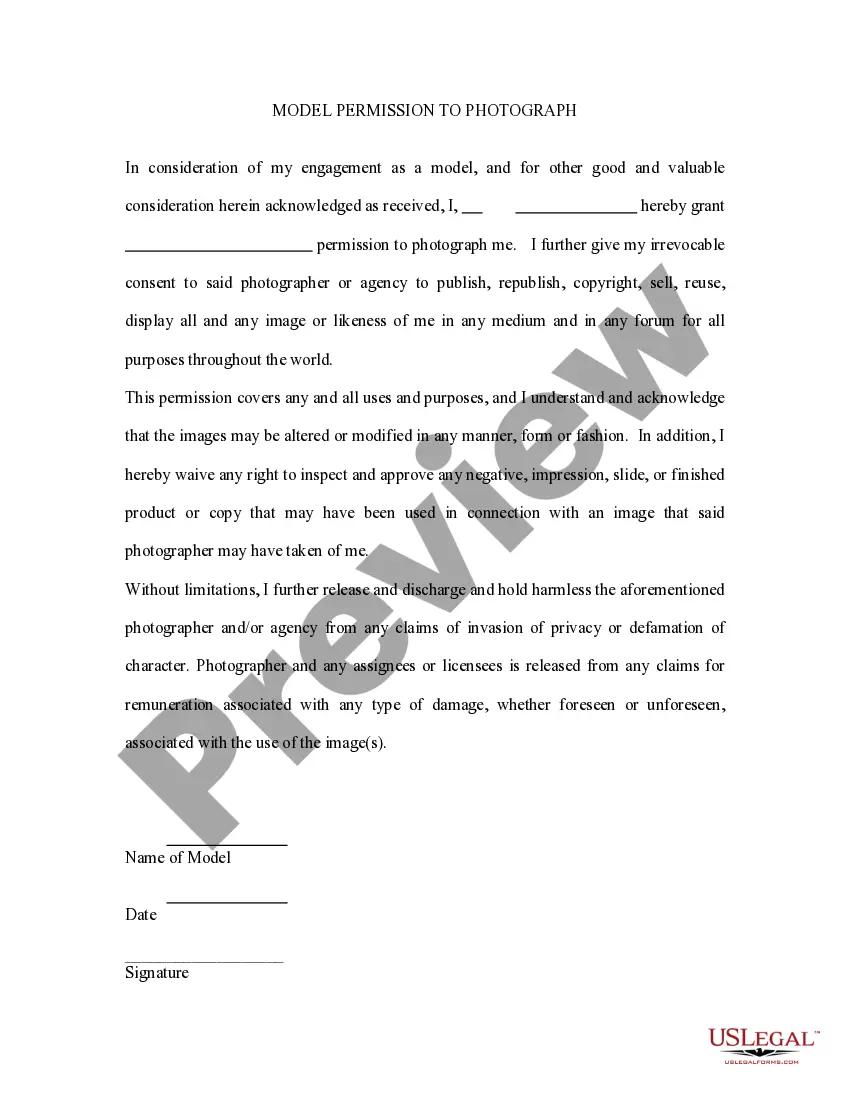
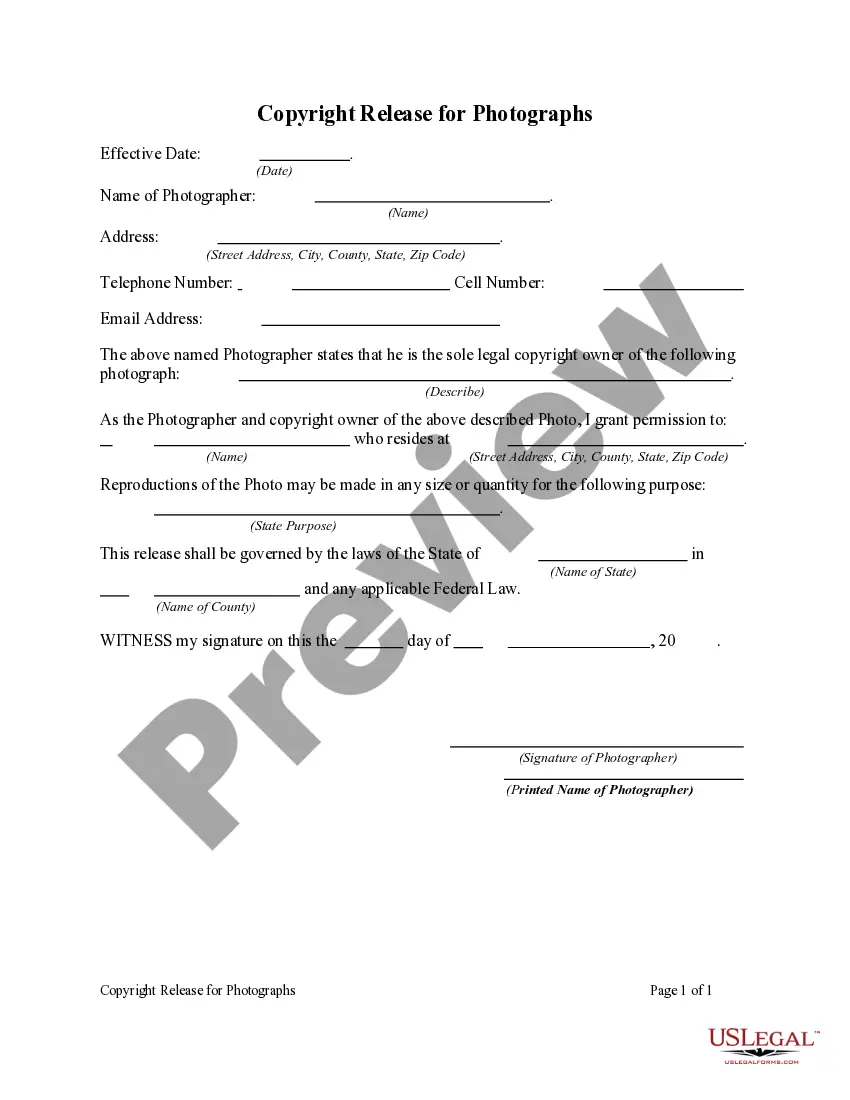
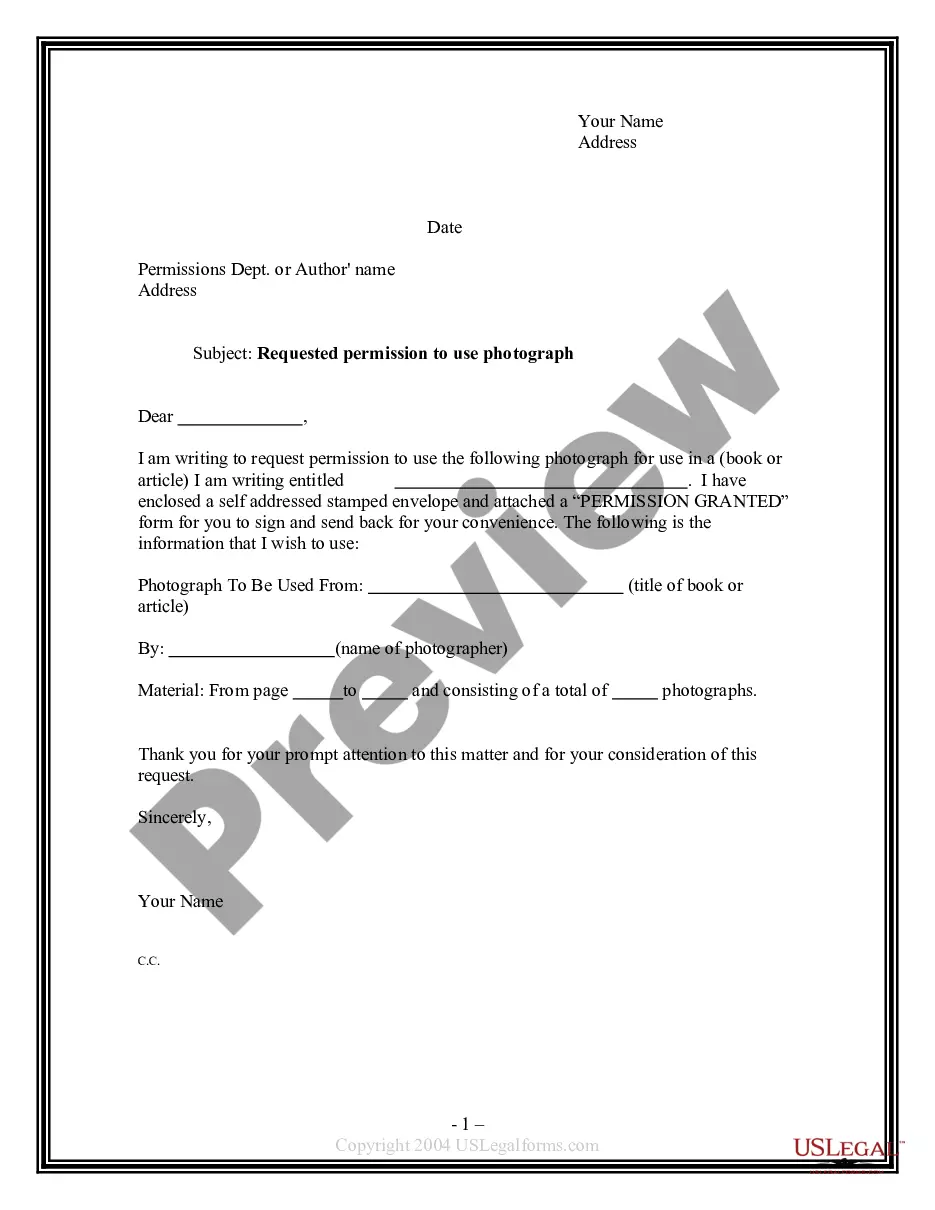
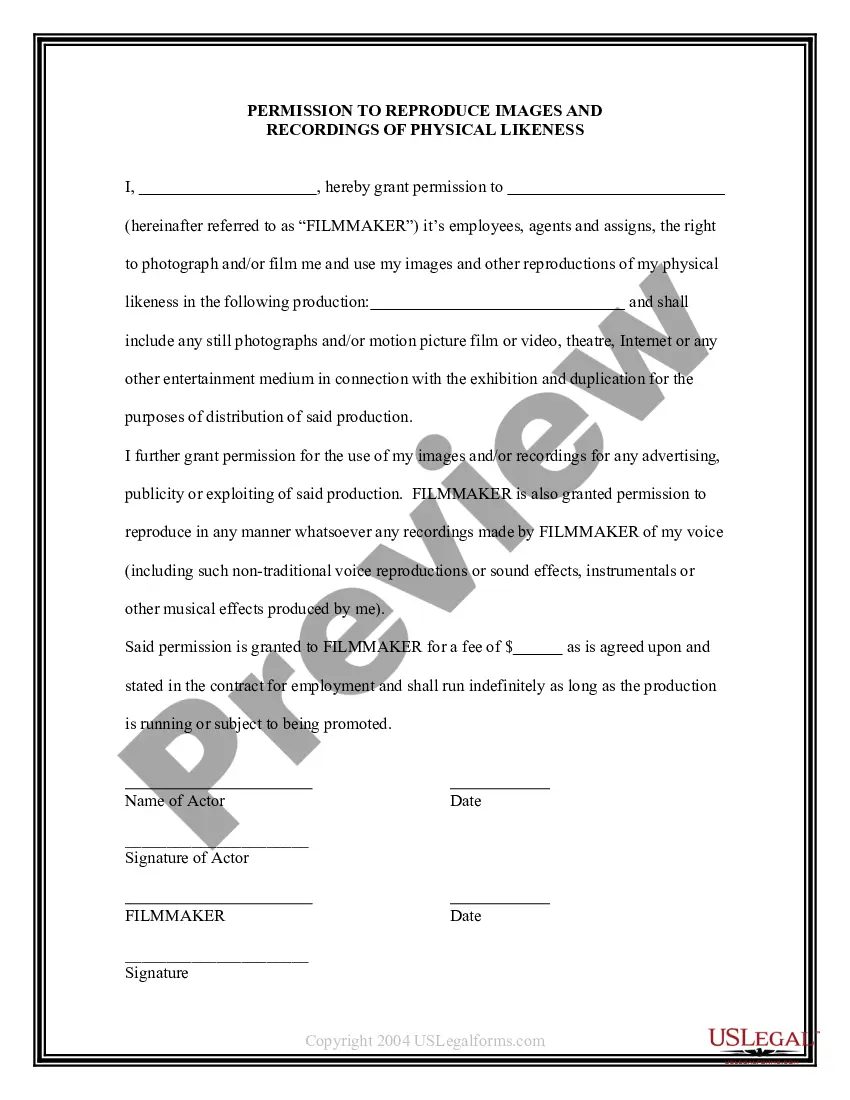
This is a form signed by a model permitting a photographer or agency rights to photograph the model and gives consent for the photographer to publish, republish, copyright, sell, or display any image of the photograph in any forum. This form also covers any purpose for which the agency may want to use the picture.
Connecticut Model Permission to Photograph
Category:
State:
Multi-State
Control #:
US-PRM-02
Format:
Word;
Rich Text
Instant download
Description
Get your form ready online
Our built-in tools help you complete, sign, share, and store your documents in one place.
Built-in online Word editor
Make edits, fill in missing information, and update formatting in US Legal Forms—just like you would in MS Word.
Export easily
Download a copy, print it, send it by email, or mail it via USPS—whatever works best for your next step.
E-sign your document
Sign and collect signatures with our SignNow integration. Send to multiple recipients, set reminders, and more. Go Premium to unlock E-Sign.
Notarize online 24/7
If this form requires notarization, complete it online through a secure video call—no need to meet a notary in person or wait for an appointment.
Store your document securely
We protect your documents and personal data by following strict security and privacy standards.

Make edits, fill in missing information, and update formatting in US Legal Forms—just like you would in MS Word.

Download a copy, print it, send it by email, or mail it via USPS—whatever works best for your next step.

Sign and collect signatures with our SignNow integration. Send to multiple recipients, set reminders, and more. Go Premium to unlock E-Sign.

If this form requires notarization, complete it online through a secure video call—no need to meet a notary in person or wait for an appointment.

We protect your documents and personal data by following strict security and privacy standards.
Looking for another form?


How to fill out Model Permission To Photograph?
You may invest time online looking for the valid document template that meets the state and federal requirements you need.
US Legal Forms provides a vast array of legal forms that are reviewed by experts.
It is easy to download or print the Connecticut Model Permission to Photograph from my service.
If available, utilize the Preview button to view the document template as well. If you wish to find another version of the form, use the Search field to locate the template that meets your needs and specifications. Once you have identified the template you want, click Purchase now to proceed. Select the pricing plan you prefer, enter your credentials, and register for an account on US Legal Forms. Complete the transaction. You can use your credit card or PayPal account to pay for the legal document. Choose the format of the document and download it to your system. Make modifications to your document if necessary. You can fill out, alter, sign, and print the Connecticut Model Permission to Photograph. Acquire and print a multitude of document templates using the US Legal Forms Website, which offers the largest collection of legal forms. Utilize professional and state-specific templates to address your business or personal needs.
- If you already have a US Legal Forms account, you can Log In and click the Acquire button.
- After that, you can fill out, modify, print, or sign the Connecticut Model Permission to Photograph.
- Each legal document template you purchase is yours indefinitely.
- To obtain another copy of the purchased form, visit the My documents tab and click the corresponding button.
- If this is your first time using the US Legal Forms website, follow the simple instructions below.
- First, ensure you have selected the correct document template for the area/city you choose.
- Review the form description to confirm you have chosen the appropriate form.
Form popularity
FAQ
Recording someone without their consent is not legal in Connecticut. The state mandates that all parties involved in a conversation must agree to the recording. To ensure that you adhere to these laws, using the Connecticut Model Permission to Photograph can be a proactive step in obtaining the necessary consent.
Recording your boss without their consent can lead to legal issues in Connecticut, as the state requires all-party consent for recordings. Therefore, you should inform your boss before recording any conversation. To handle such situations properly, the Connecticut Model Permission to Photograph can assist you in obtaining the necessary permissions.
Yes, in Connecticut, you are legally required to inform someone if you are recording them. This requirement is part of the state's wiretapping laws, which protect individuals' privacy. To stay compliant, consider using the Connecticut Model Permission to Photograph to help document consent effectively.
The wording for photograph consent should be clear and straightforward. A typical consent form may include a statement indicating that the individual agrees to be photographed and understands how the images may be used. Utilizing the Connecticut Model Permission to Photograph can help you create a robust and legally sound consent form.
In Connecticut, recording a conversation without the consent of all parties involved is considered illegal. This means you must inform and get permission from everyone present before recording. To navigate this law, the Connecticut Model Permission to Photograph can serve as a useful resource for ensuring compliance.
In Connecticut, the informed consent law requires individuals to obtain permission before photographing or recording someone. This law helps protect a person's right to privacy and ensures they are aware of how their image or voice may be used. When utilizing the Connecticut Model Permission to Photograph, you can effectively communicate your intentions and obtain the necessary consent.
Filling out consent to photograph film or videotape requires careful attention to detail. Begin by providing the name of the individual granting permission, along with the date and purpose of the filming. Make sure to include a statement that clearly outlines what the individual is consenting to. Utilizing the Connecticut Model Permission to Photograph can streamline this process and ensure all necessary components are covered.
To write a short consent form, keep it brief while ensuring it contains all essential information. Start with a clear statement of purpose, include the individual's name, and specify what they are consenting to. A concise version of the Connecticut Model Permission to Photograph can guide you in crafting a straightforward, effective form that respects the subject's rights.
Writing a consent form for a photo involves stating the purpose of the consent and identifying the parties involved. You should clearly mention what the subject is consenting to, such as the specific use of the photo. Using a model like the Connecticut Model Permission to Photograph can help structure your form effectively, ensuring all legal requirements are met.
The wording for a photography waiver should include a statement that the individual agrees to allow their image to be captured and used. You might say, 'I hereby grant permission to Photographer's Name to photograph me and use my image for promotional purposes.' Including this type of wording in the Connecticut Model Permission to Photograph ensures clarity and legal protection for both the photographer and the subject.