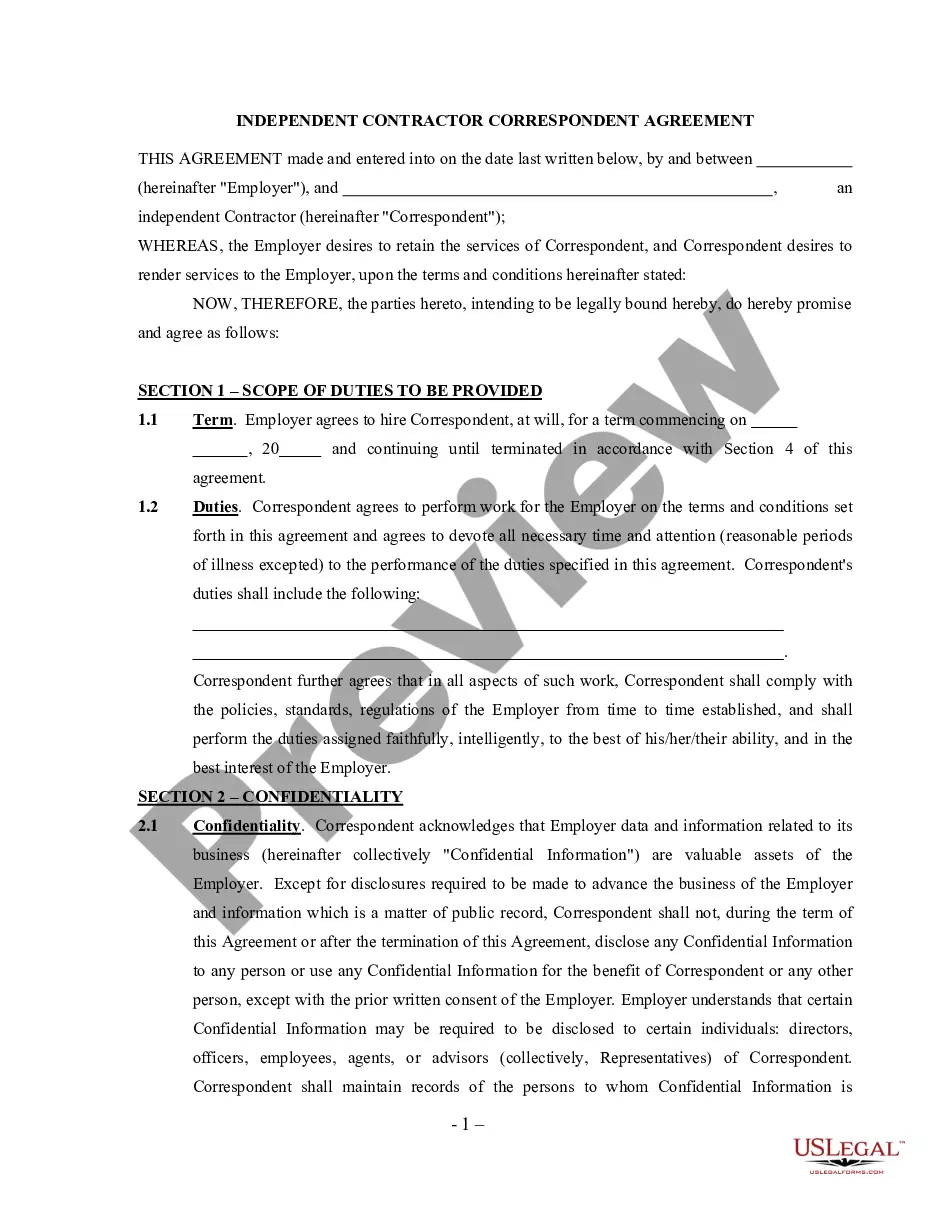
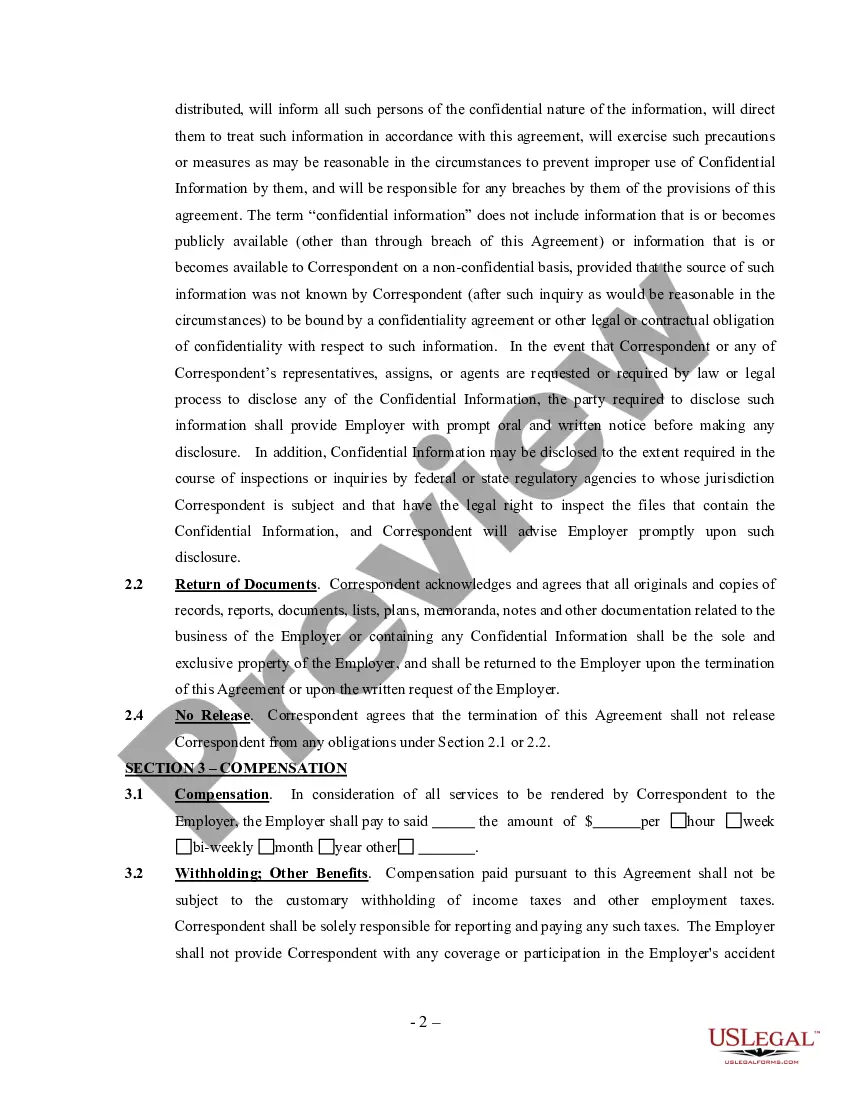
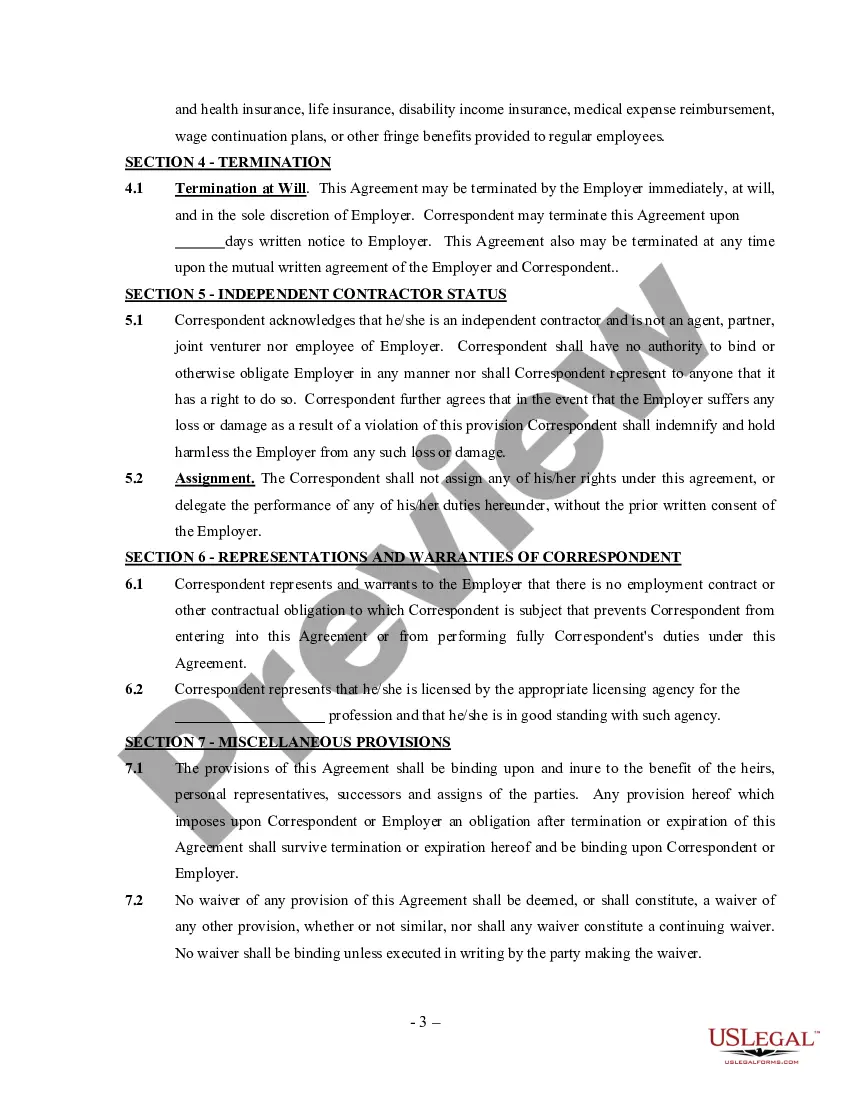
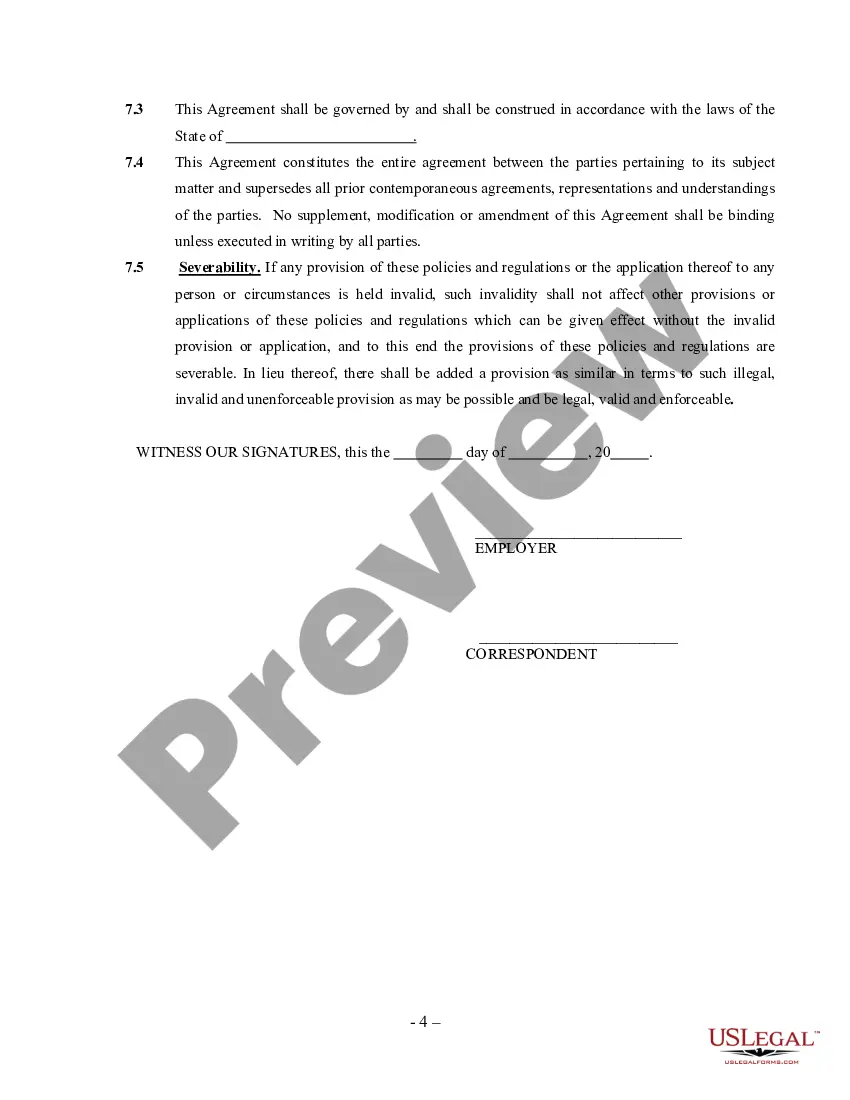
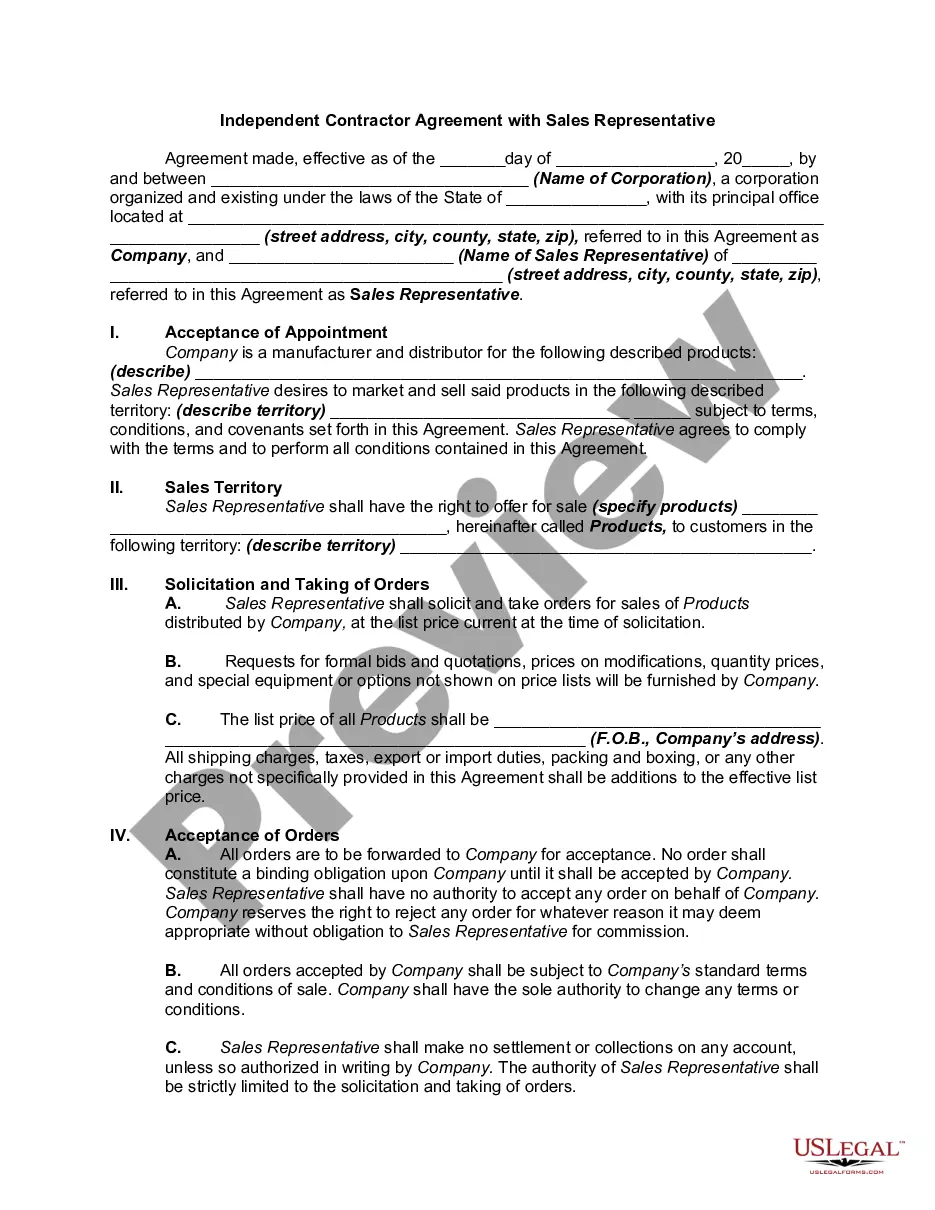
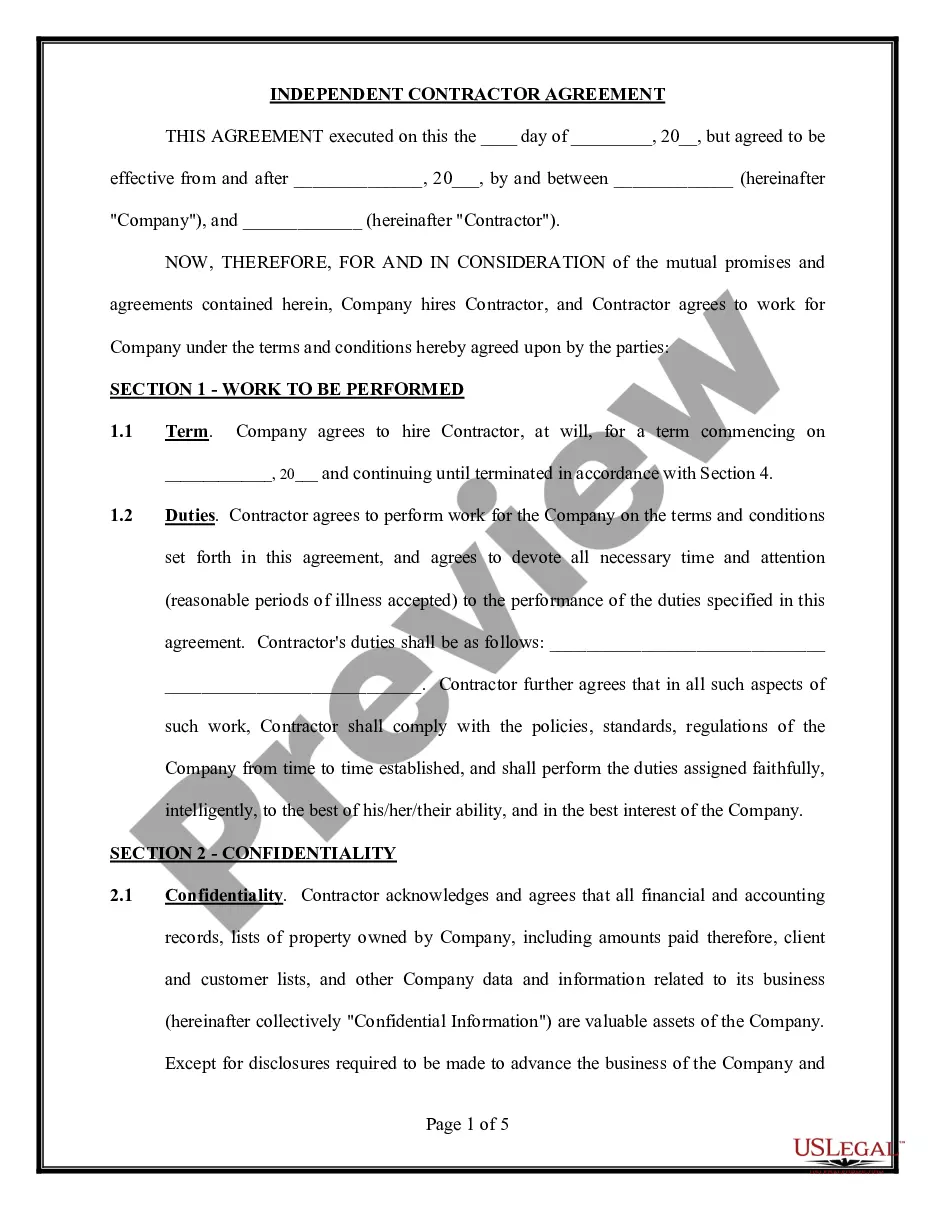
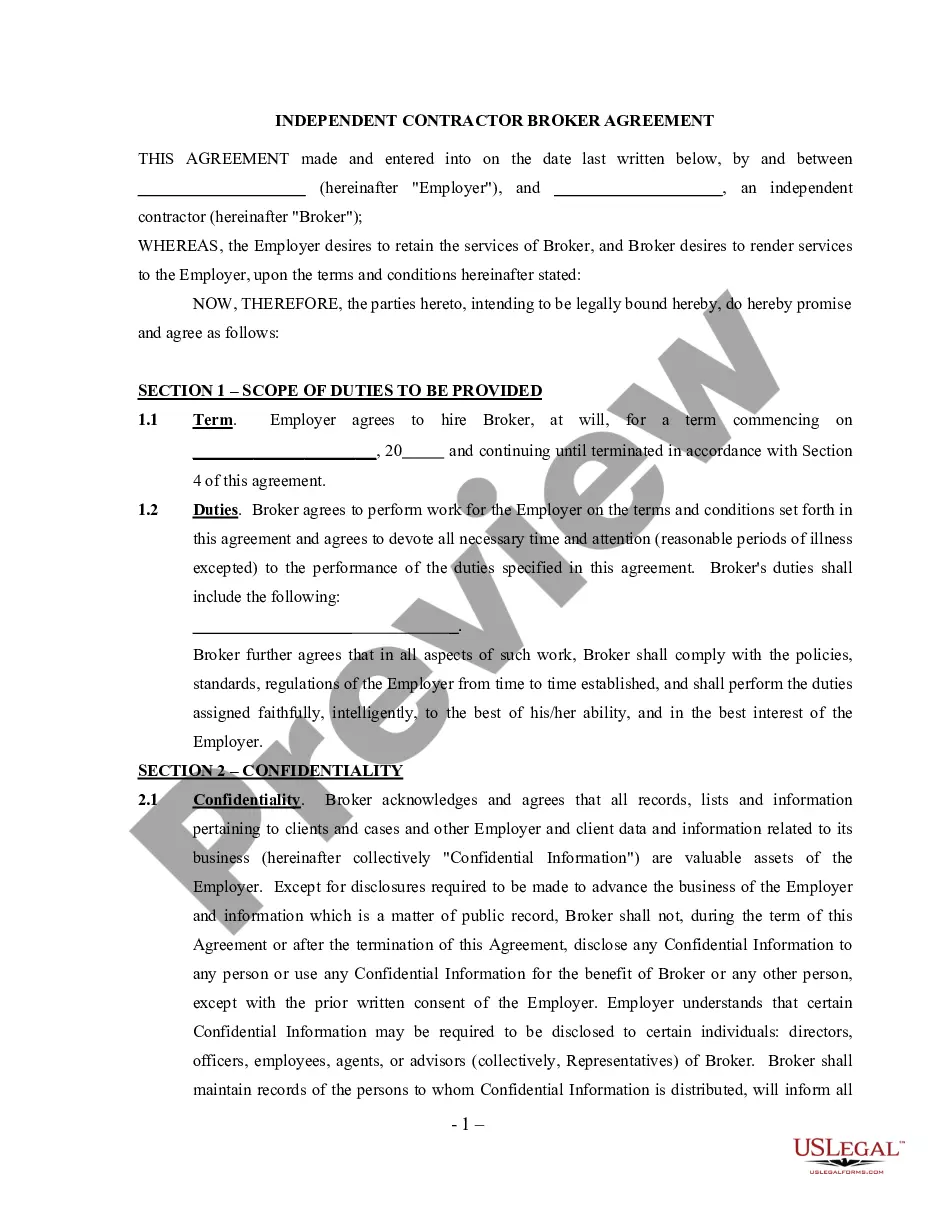
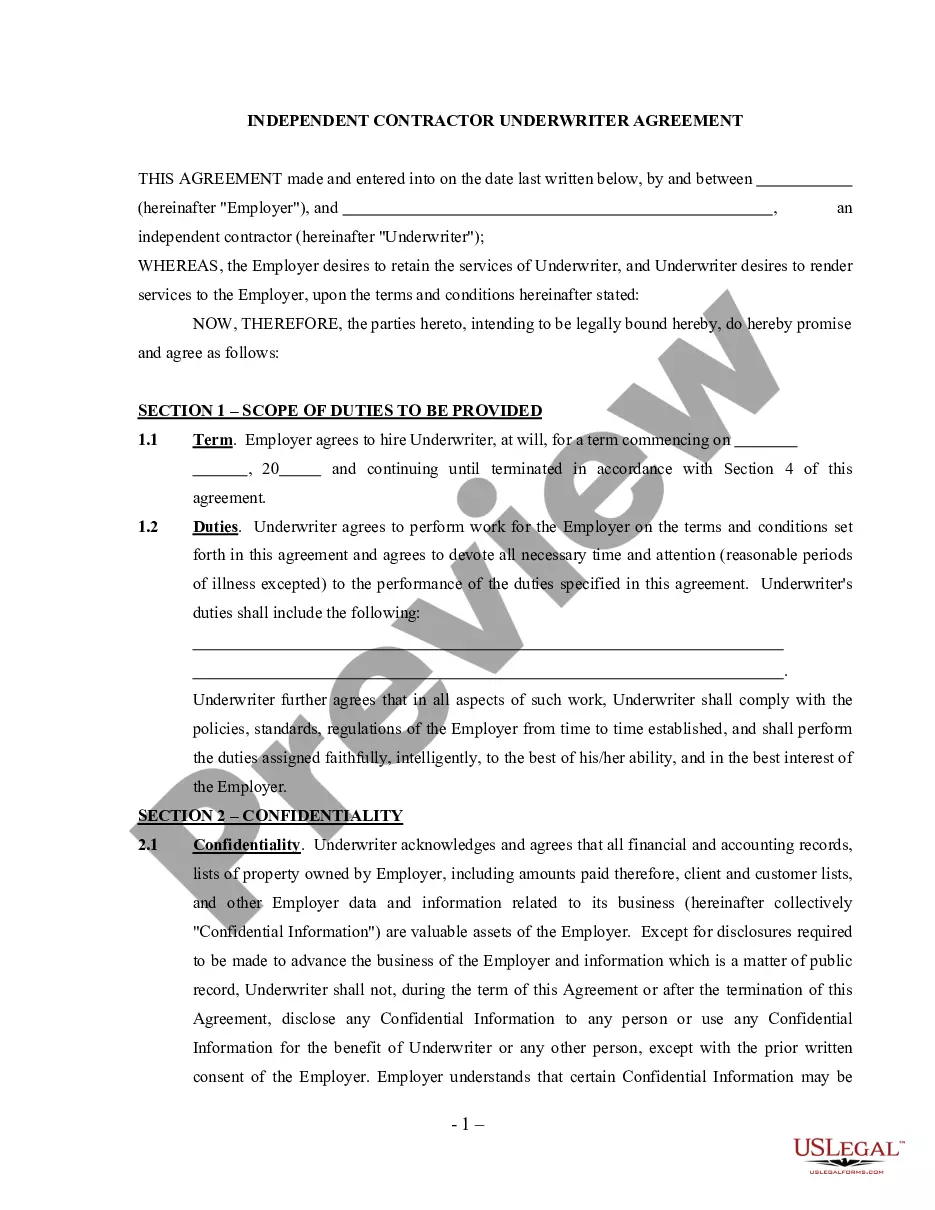
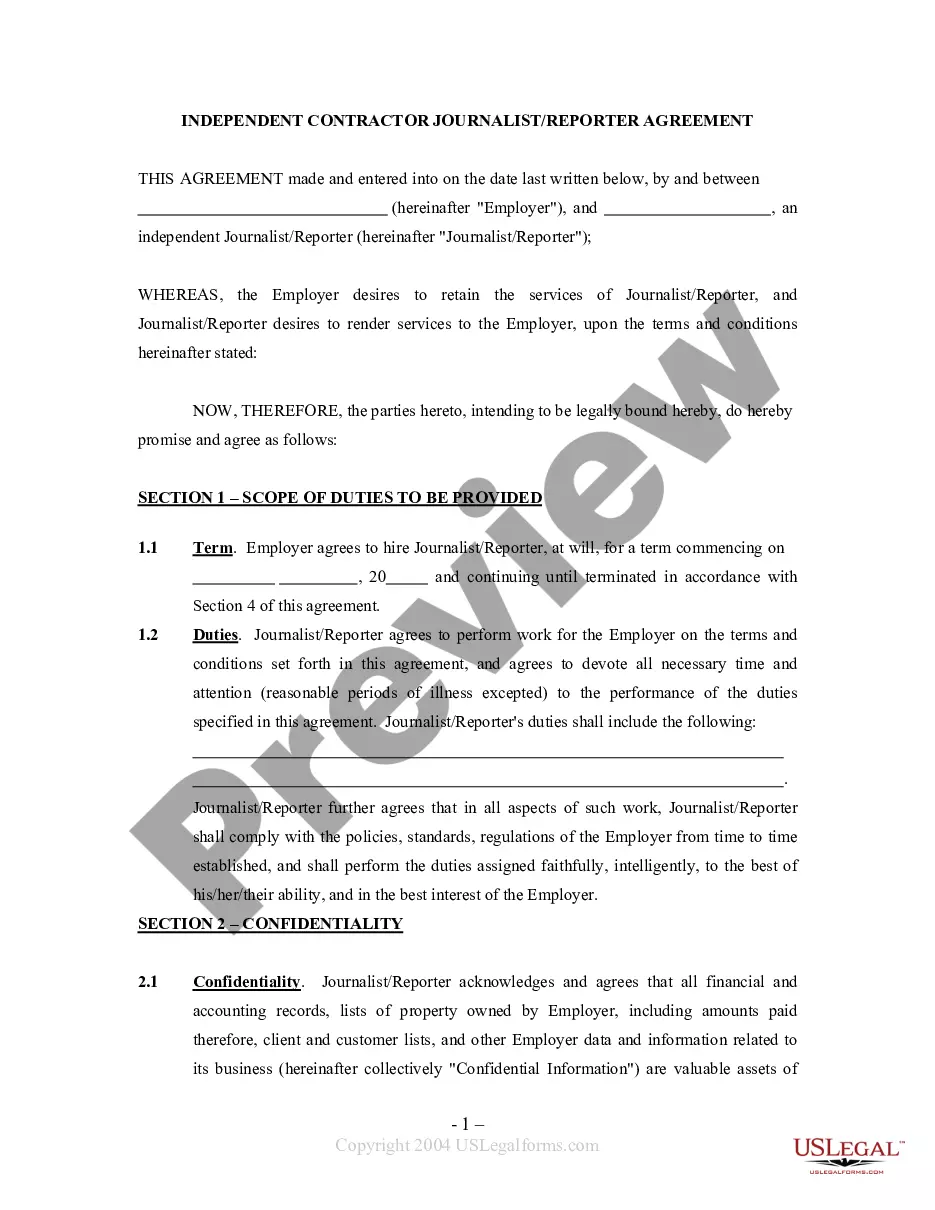
Employer hires a correspondent to provide journalist or correspondent services as specified in the Agreement. Contract includes a confidentiality clause.
Connecticut Correspondent Agreement - Self-Employed Independent Contractor
State:
Multi-State
Control #:
US-INDC-180
Format:
Word;
Rich Text
Instant download
Description
Free preview
Get your form ready online
Our built-in tools help you complete, sign, share, and store your documents in one place.
Built-in online Word editor
Make edits, fill in missing information, and update formatting in US Legal Forms—just like you would in MS Word.
Export easily
Download a copy, print it, send it by email, or mail it via USPS—whatever works best for your next step.
E-sign your document
Sign and collect signatures with our SignNow integration. Send to multiple recipients, set reminders, and more. Go Premium to unlock E-Sign.
Notarize online 24/7
If this form requires notarization, complete it online through a secure video call—no need to meet a notary in person or wait for an appointment.
Store your document securely
We protect your documents and personal data by following strict security and privacy standards.

Make edits, fill in missing information, and update formatting in US Legal Forms—just like you would in MS Word.

Download a copy, print it, send it by email, or mail it via USPS—whatever works best for your next step.

Sign and collect signatures with our SignNow integration. Send to multiple recipients, set reminders, and more. Go Premium to unlock E-Sign.

If this form requires notarization, complete it online through a secure video call—no need to meet a notary in person or wait for an appointment.

We protect your documents and personal data by following strict security and privacy standards.
Looking for another form?





How to fill out Correspondent Agreement - Self-Employed Independent Contractor?
Selecting the finest legitimate document template can be quite challenging. Obviously, there are numerous designs available online, but how do you find the legitimate template you require? Utilize the US Legal Forms website. This service offers thousands of templates, including the Connecticut Correspondent Agreement - Self-Employed Independent Contractor, which you can utilize for business and personal purposes. All of the forms are reviewed by experts and comply with federal and state regulations.
If you are already registered, Log In to your account and click on the Download button to obtain the Connecticut Correspondent Agreement - Self-Employed Independent Contractor. Use your account to browse through the legitimate forms you have previously purchased. Navigate to the My documents tab of your account and retrieve another copy of the document you need.
If you are a new user of US Legal Forms, here are simple instructions for you to follow: First, make sure you have selected the correct document for your city/state. You can preview the document using the Preview button and read the document description to verify this is the right one for you. If the document does not meet your needs, use the Search field to find the appropriate document. Once you are confident that the document is suitable, click the Purchase now button to acquire the document. Choose the pricing plan you desire and input the required information. Create your account and complete your order using your PayPal account or credit card. Select the file format and download the legitimate document template to your device. Complete, edit, print, and sign the obtained Connecticut Correspondent Agreement - Self-Employed Independent Contractor.
US Legal Forms is a vital resource for anyone needing legitimate documentation, providing a seamless experience for both business and personal use.
- US Legal Forms is the largest repository of legitimate documents where you can find various document templates.
- Utilize the service to acquire professionally-crafted papers that adhere to state regulations.
- Finding the perfect legitimate template is made easier with US Legal Forms.
- Ensure your documents are compliant with federal and state laws using this resource.
- Quick and efficient access to thousands of forms is available through the platform.
- Creation of your account is straightforward and allows for easy management of your documents.
Form popularity
FAQ
Filling out a declaration of independent contractor status form requires you to provide personal information, including your name and contact details, along with details about your work arrangement. Clearly describe the nature of your work and specify that it aligns with the Connecticut Correspondent Agreement - Self-Employed Independent Contractor. Ensure that you sign and date the form, as it serves to confirm your independent contractor status. Using platforms like uslegalforms can simplify this process by offering ready-to-use templates that comply with state laws.
To fill out Schedule C as an independent contractor, you must start by reporting your business income and expenses. Make sure to include all sources of income tied to your work under the Connecticut Correspondent Agreement - Self-Employed Independent Contractor. Itemize your allowable expenses, such as equipment, supplies, and any professional fees. This will help you accurately calculate your net profit or loss, which you then report on your personal tax return.
Independent contractors can provide proof of employment with signed contracts, payment receipts, and client communications. Additionally, a well-structured Connecticut Correspondent Agreement - Self-Employed Independent Contractor can serve as solid evidence of the work arrangement. These documents not only present their professional standing but also assure clients of their reliability and commitment.
To show proof of self-employment, individuals can provide tax documents such as tax returns and Form 1099. Invoices sent to clients and a Connecticut Correspondent Agreement - Self-Employed Independent Contractor can also substantiate a self-employed status. Keeping detailed financial records and documentation is essential for establishing a clear picture of self-employment.
Yes, an independent contractor is indeed considered self-employed. They operate their business and control their work activities without direct supervision, unlike traditional employees. Understanding this distinction is crucial for legal and tax purposes. The Connecticut Correspondent Agreement - Self-Employed Independent Contractor clearly defines the nature of this employment relationship.
To show proof of income as a 1099 contractor, one generally presents Form 1099-MISC or 1099-NEC received from their clients. These forms summarize the total earnings for the year, which can be used for tax filing purposes. Maintaining organized records of all projects and payments received can help reinforce this proof. A Connecticut Correspondent Agreement - Self-Employed Independent Contractor can also support one's claims of income when necessary.
Independent contractors typically show proof of employment through contracts and invoices issued to clients. Additionally, they may use letters of recommendation or testimonials from clients attesting to their services. A Connecticut Correspondent Agreement - Self-Employed Independent Contractor is a solid document that can further verify their status and work engagement. Navigating this process is important for establishing credibility.
Yes, independent contractors can enter into non-compete agreements. These agreements restrict them from working with competitors for a specific time period and within a defined geographical area. However, the terms must be reasonable and not overly restrictive to ensure enforceability. Understanding the implications of a Connecticut Correspondent Agreement - Self-Employed Independent Contractor is essential when considering such agreements.
Yes, an independent contractor can file a Schedule C as part of their individual tax return. This form reports income and expenses related to self-employment. When using the Connecticut Correspondent Agreement - Self-Employed Independent Contractor, you can better organize financial details, which can aid in completing your Schedule C accurately.
To fill out an independent contractor form, begin by providing personal and business information for both the contractor and the hiring party. Ensure you accurately describe the services offered and payment terms. It's advisable to review the form for completeness and clarity. For a comprehensive approach, consider using the Connecticut Correspondent Agreement - Self-Employed Independent Contractor available on uslegalforms.