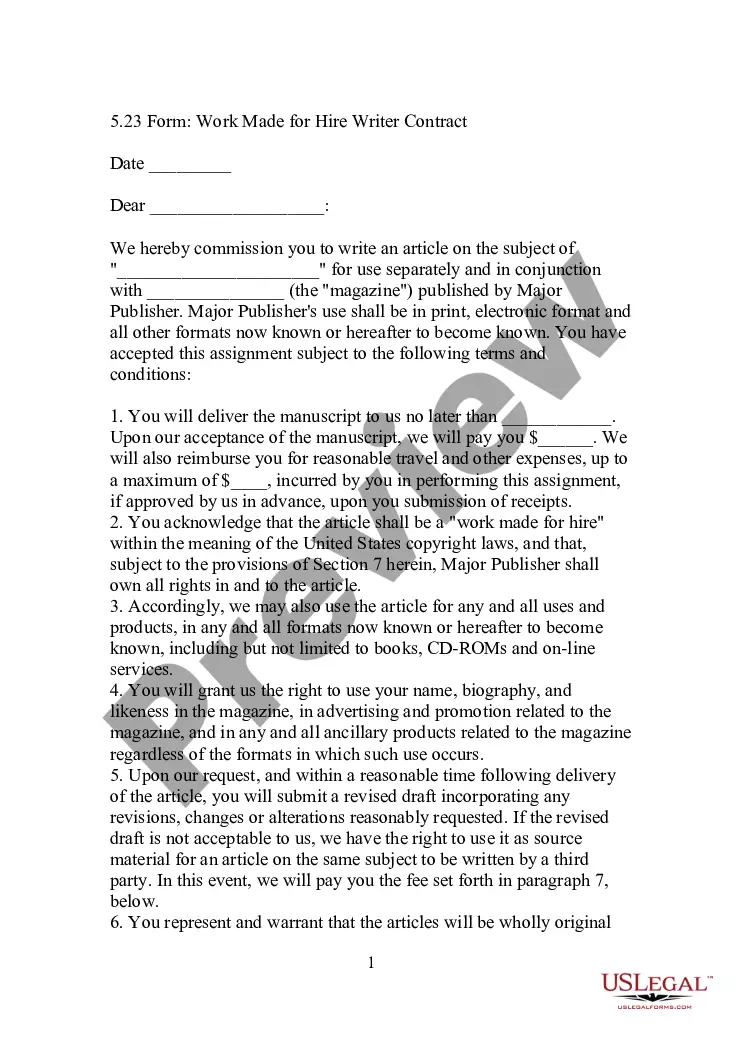
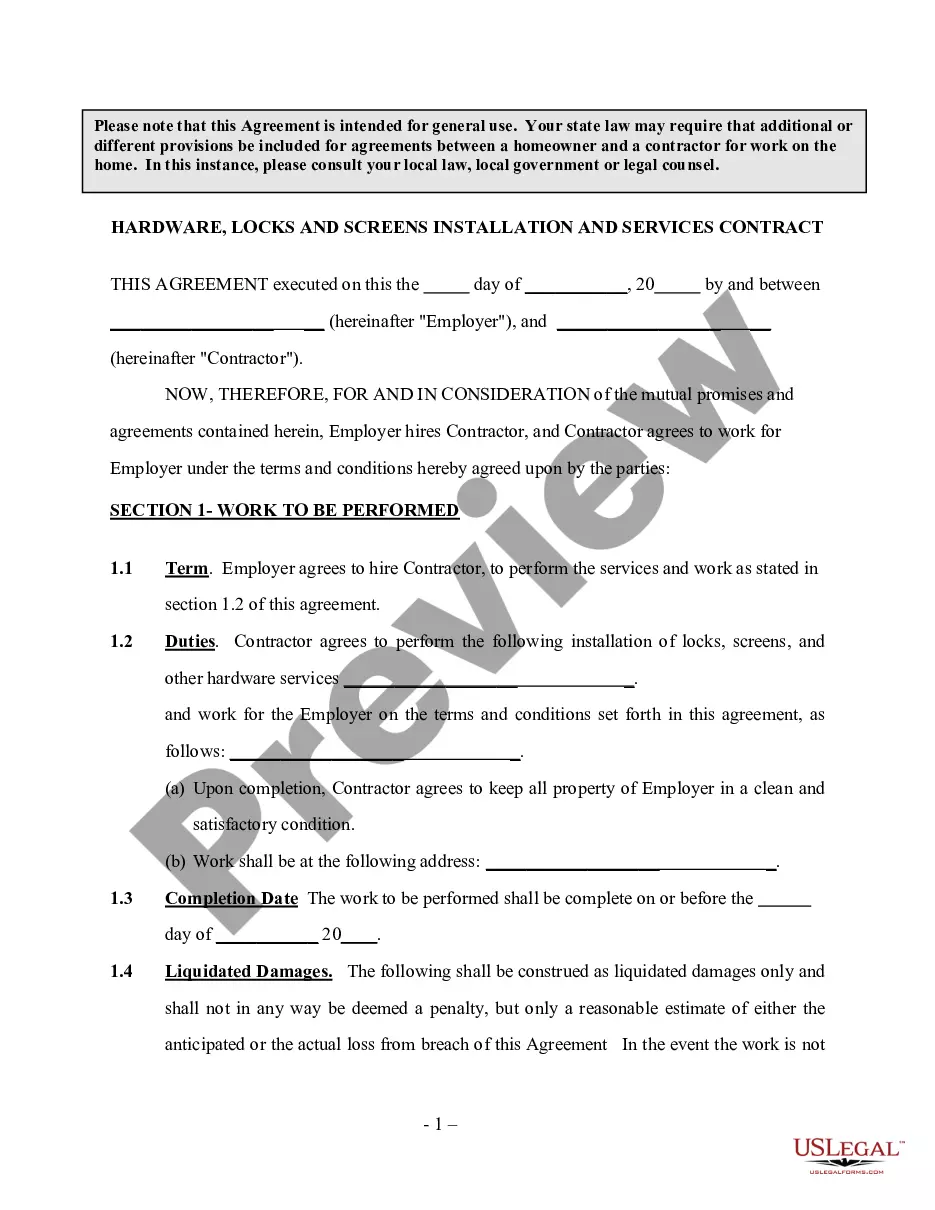
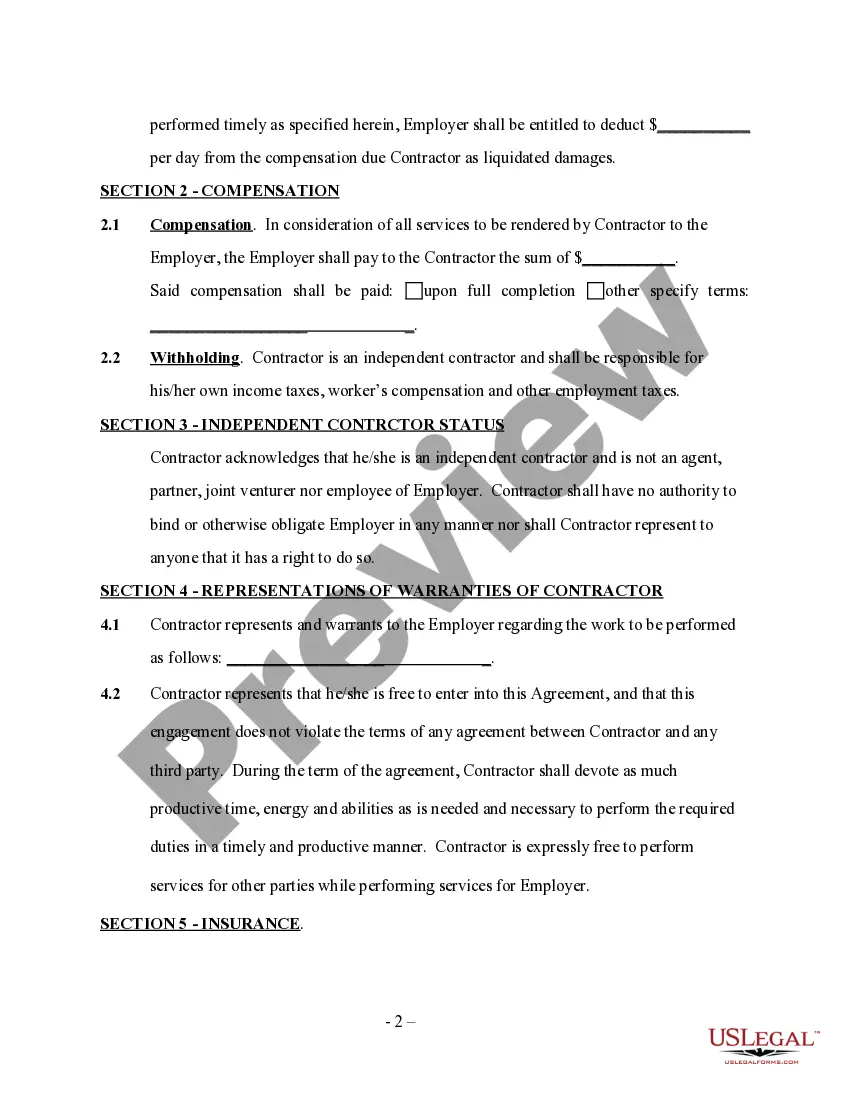
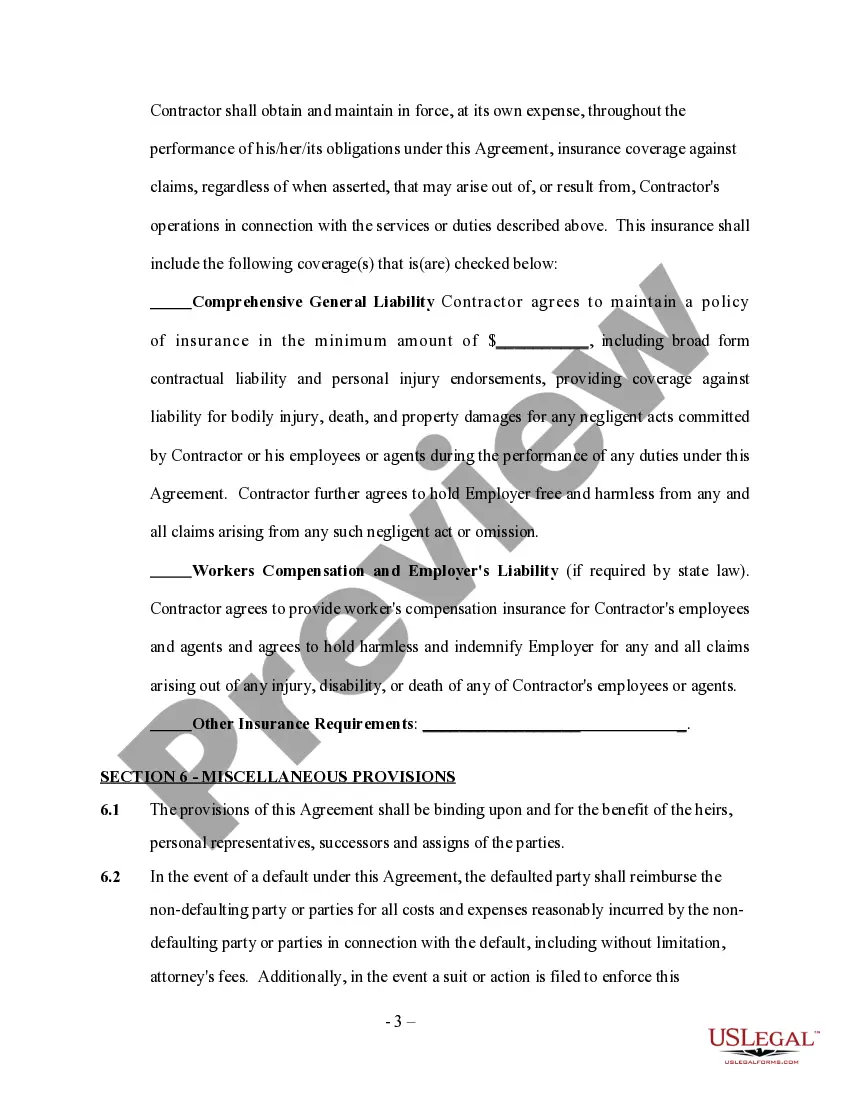
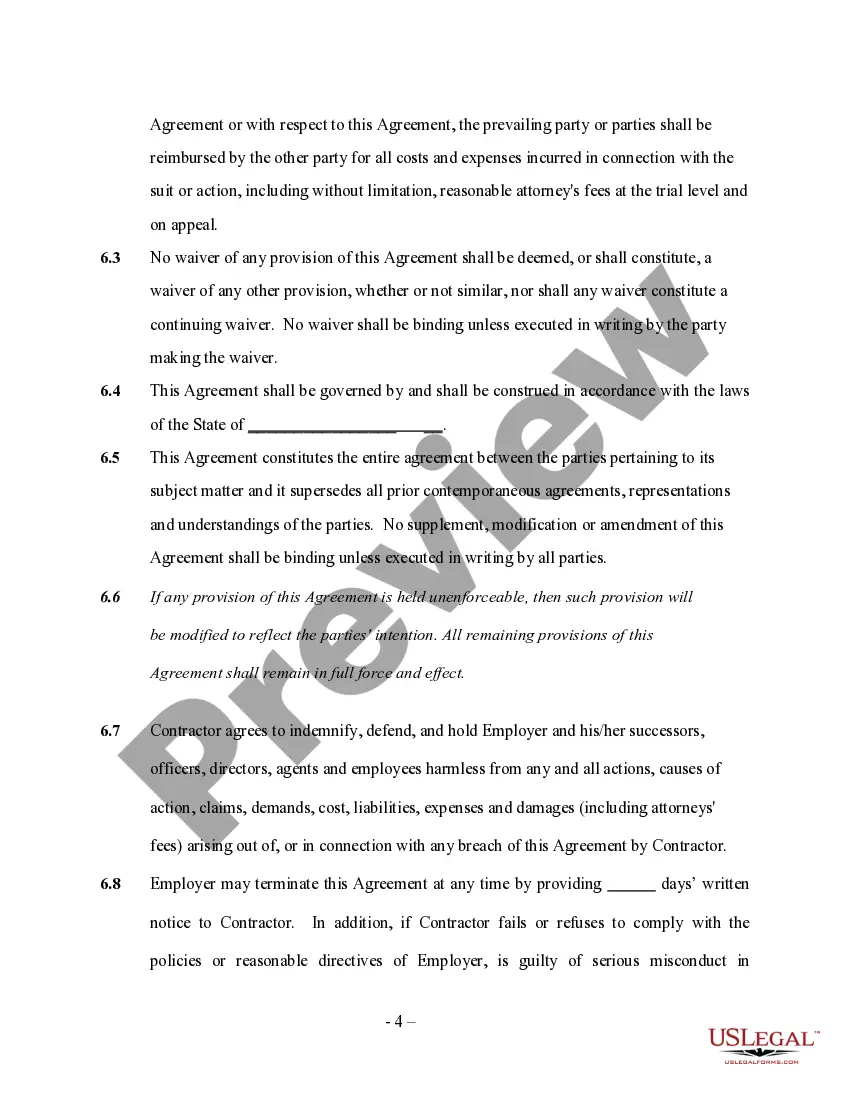
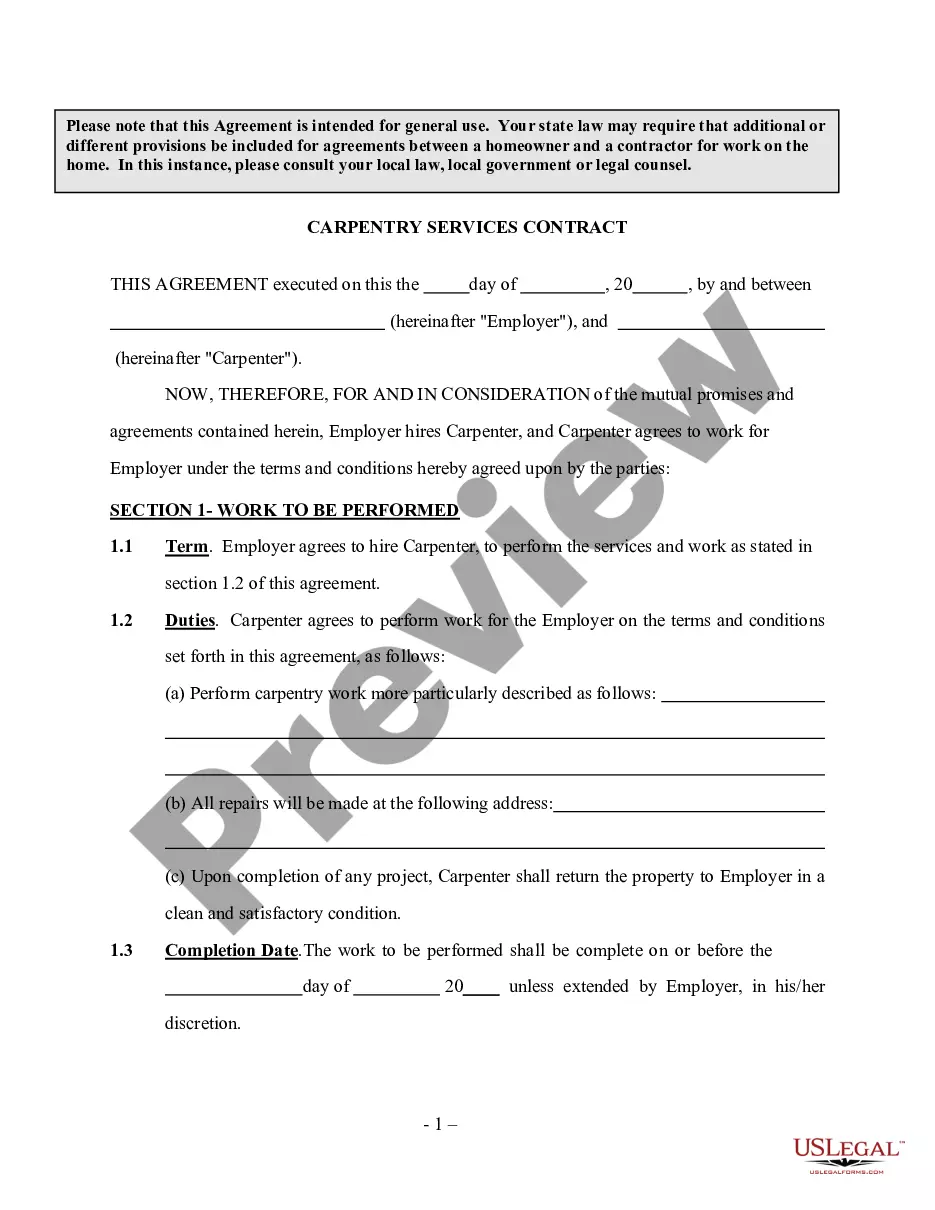
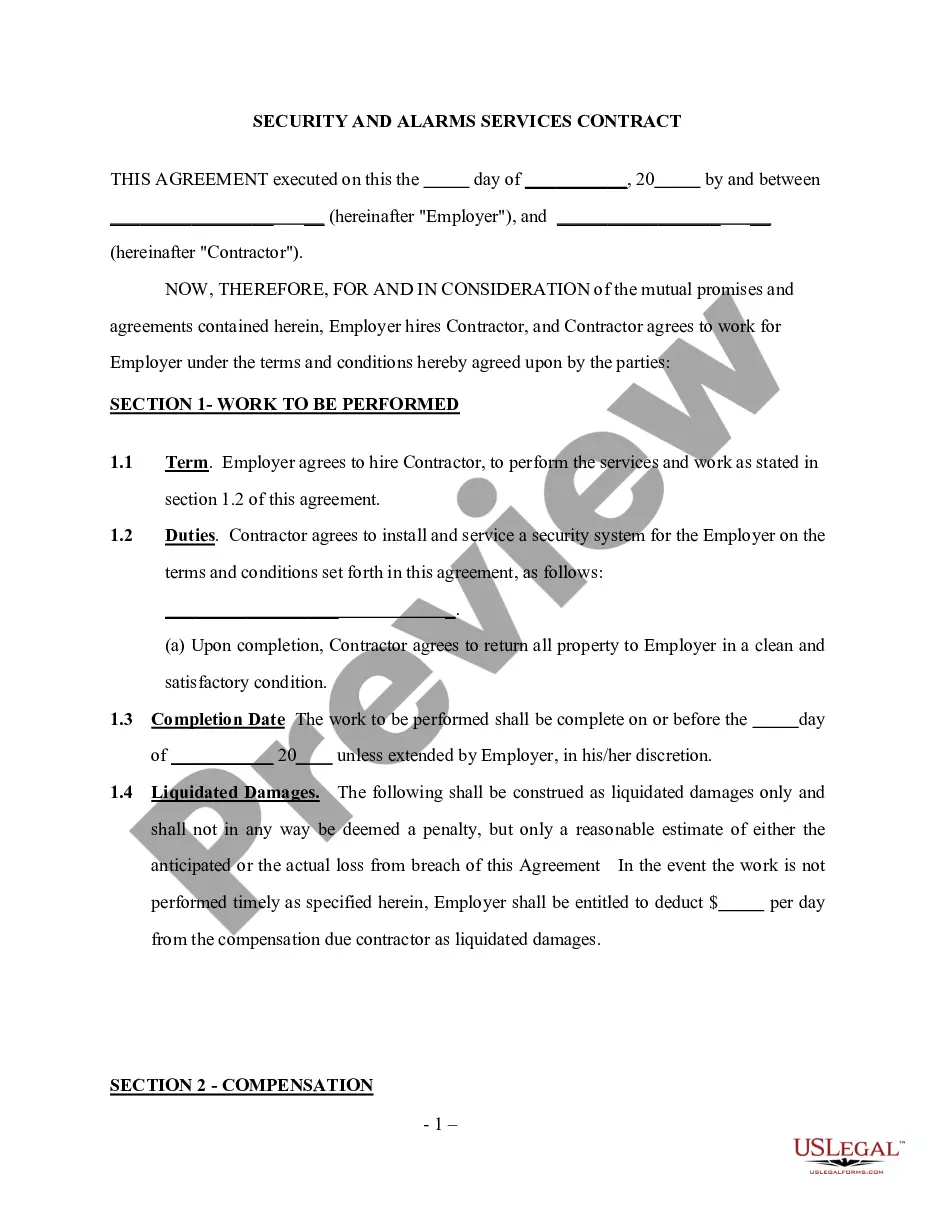
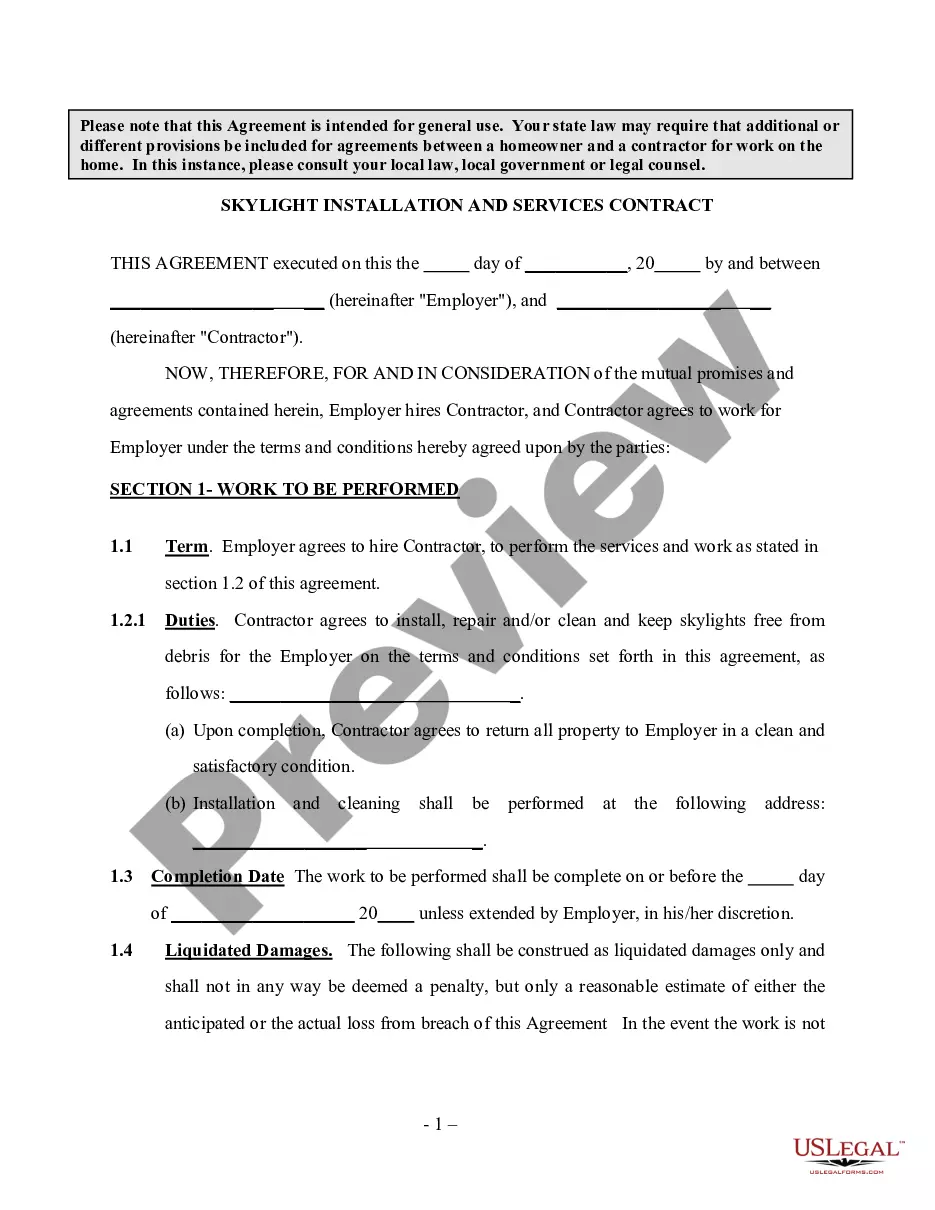
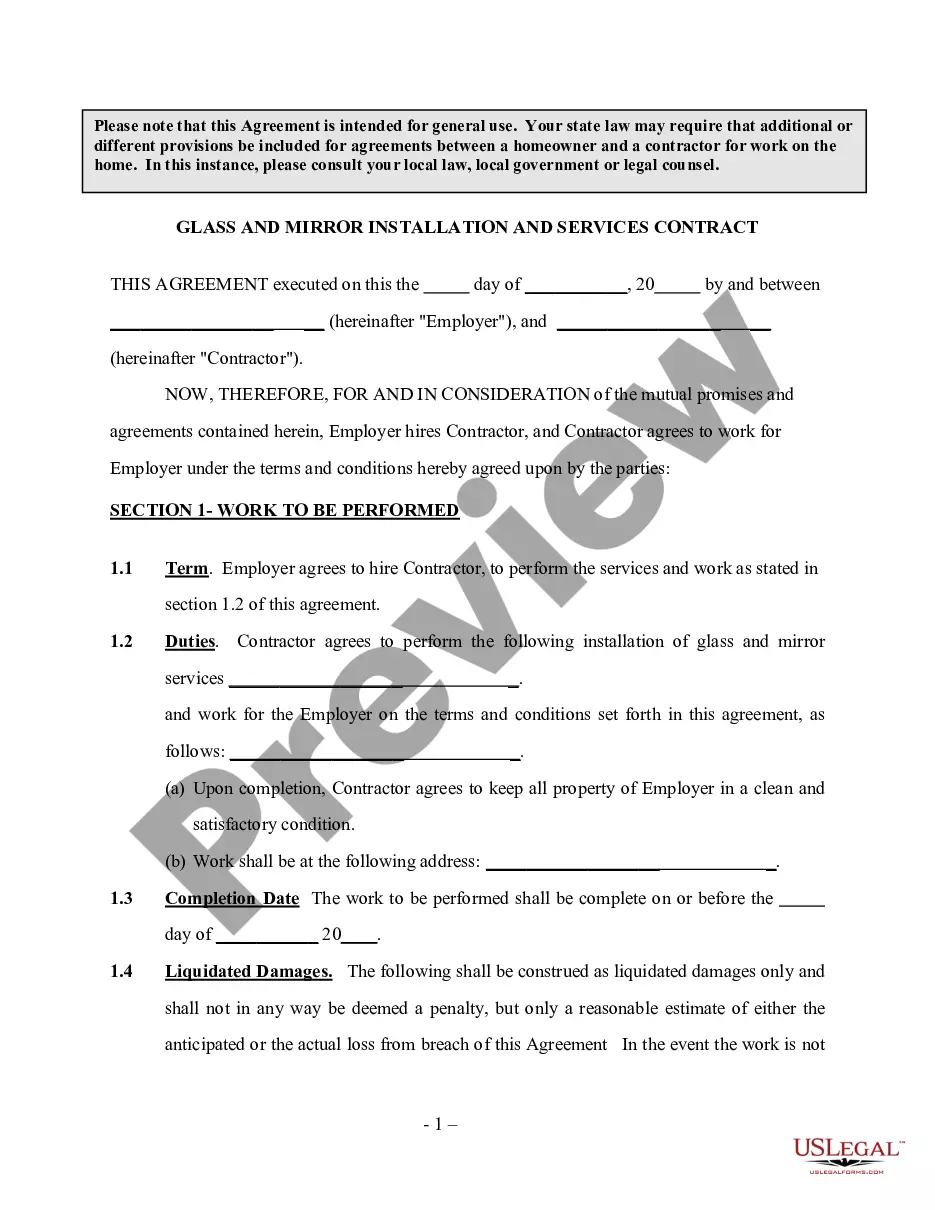
Employer contracts with an independent contractor to service, install, repair locks and screens and other hardware needs as specified and agreed to in the contract. Please note that this Agreement is intended for general use. Your state law may require that additional or different provisions be included for agreements between a homeowner and a contractor for work on the home. In this instance, please consult your local law, local government or legal counsel.
Connecticut Hardware, Locks And Screens Installation And Services Contract - Self-Employed
State:
Multi-State
Control #:
US-INDC-172
Format:
Word;
Rich Text
Instant download
Description
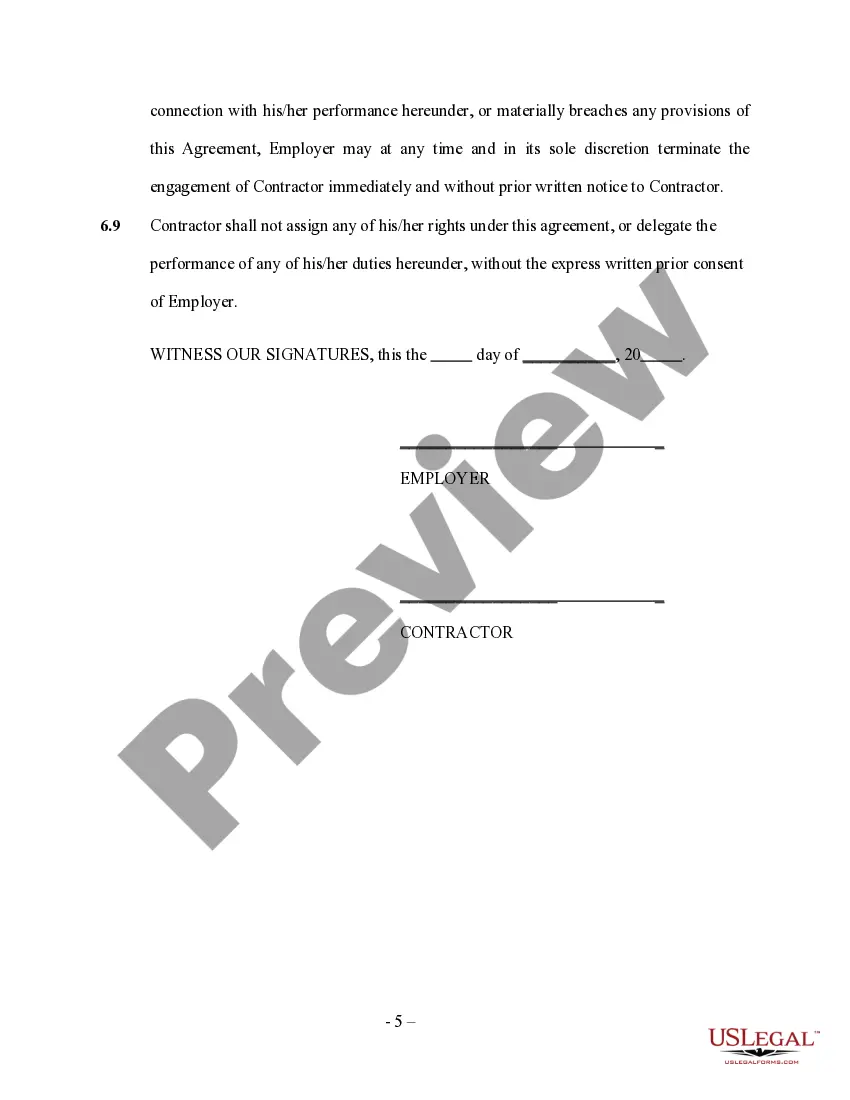
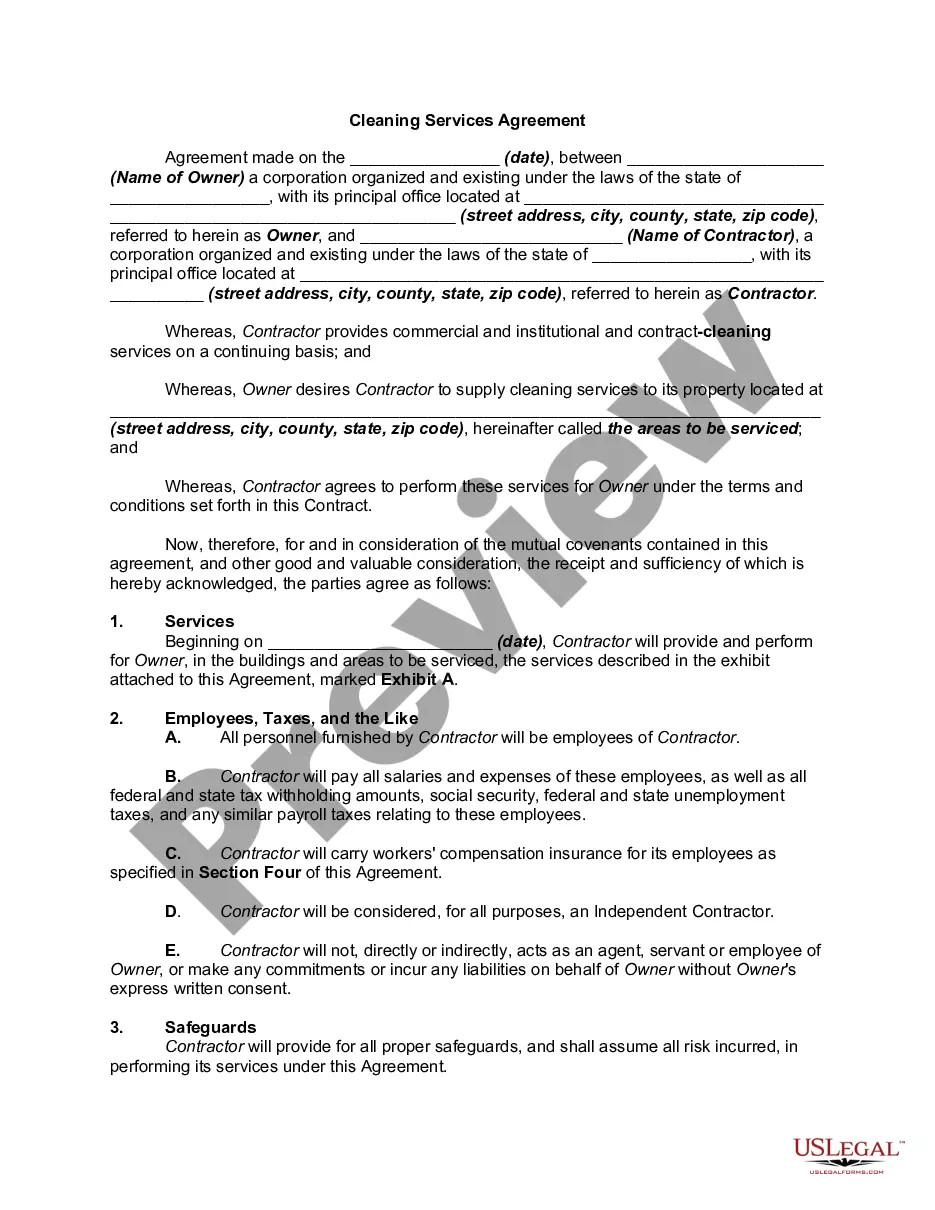
Free preview
Get your form ready online
Our built-in tools help you complete, sign, share, and store your documents in one place.
Built-in online Word editor
Make edits, fill in missing information, and update formatting in US Legal Forms—just like you would in MS Word.
Export easily
Download a copy, print it, send it by email, or mail it via USPS—whatever works best for your next step.
E-sign your document
Sign and collect signatures with our SignNow integration. Send to multiple recipients, set reminders, and more. Go Premium to unlock E-Sign.
Notarize online 24/7
If this form requires notarization, complete it online through a secure video call—no need to meet a notary in person or wait for an appointment.
Store your document securely
We protect your documents and personal data by following strict security and privacy standards.

Make edits, fill in missing information, and update formatting in US Legal Forms—just like you would in MS Word.

Download a copy, print it, send it by email, or mail it via USPS—whatever works best for your next step.

Sign and collect signatures with our SignNow integration. Send to multiple recipients, set reminders, and more. Go Premium to unlock E-Sign.

If this form requires notarization, complete it online through a secure video call—no need to meet a notary in person or wait for an appointment.

We protect your documents and personal data by following strict security and privacy standards.
Looking for another form?
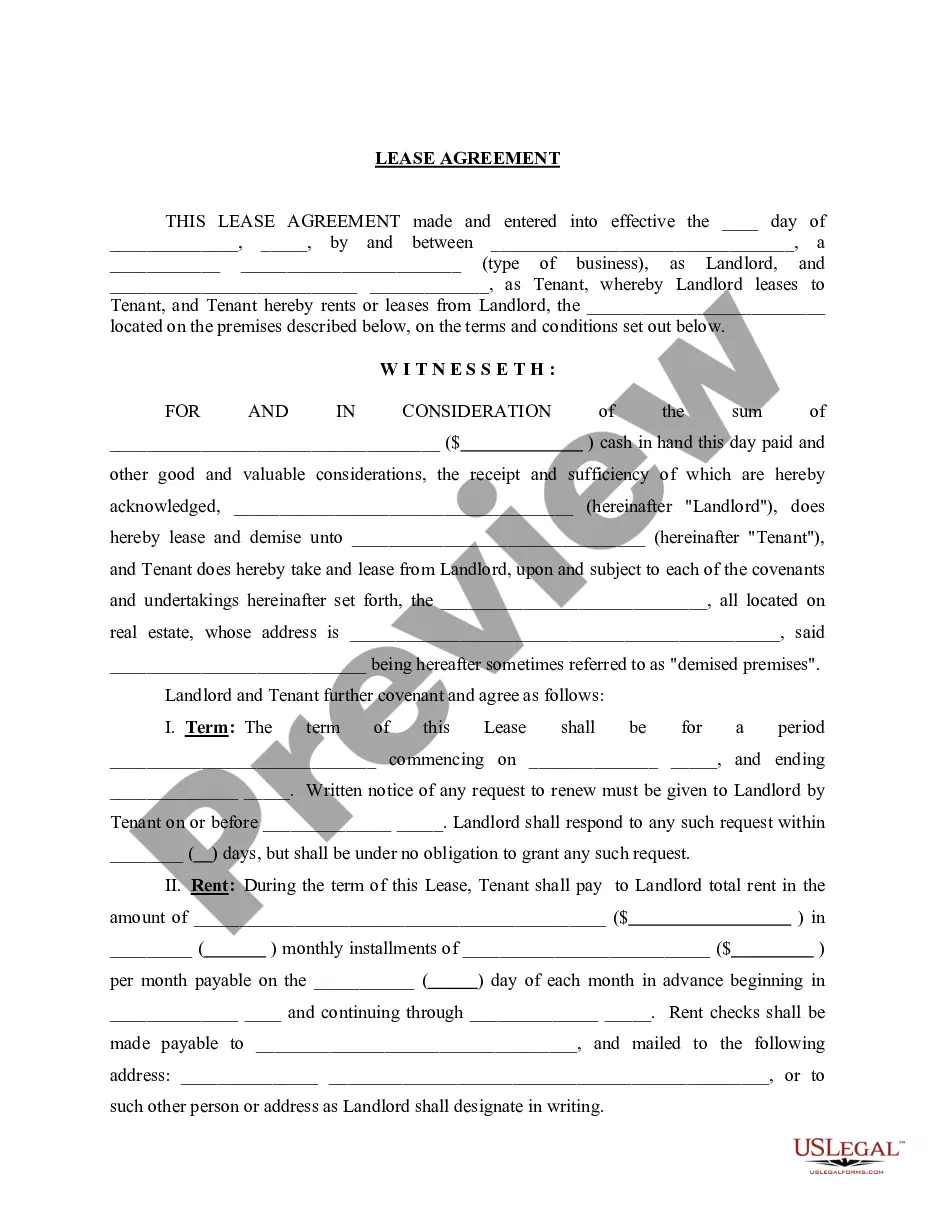
How to fill out Hardware, Locks And Screens Installation And Services Contract - Self-Employed?
If you want to complete, acquire, or print authorized document templates, utilize US Legal Forms, the premier collection of legal forms available online.
Take advantage of the site's user-friendly and efficient search to locate the documents you need. A variety of templates for business and personal purposes are organized by categories and states, or keywords.
Use US Legal Forms to obtain the Connecticut Hardware, Locks And Screens Installation And Services Contract - Self-Employed in just a few clicks.
Every legal document template you purchase is yours forever. You can access every form you downloaded in your account. Navigate to the My documents section and select a form to print or download again.
Complete and download, and print the Connecticut Hardware, Locks And Screens Installation And Services Contract - Self-Employed with US Legal Forms. There are numerous professional and state-specific forms available for your business or personal needs.
- If you are already a US Legal Forms customer, Log In to your account and click the Acquire button to find the Connecticut Hardware, Locks And Screens Installation And Services Contract - Self-Employed.
- You can also access forms you previously downloaded in the My documents tab of your account.
- If you are using US Legal Forms for the first time, follow the instructions below.
- Step 1. Ensure you have selected the form for the correct area/state.
- Step 2. Use the Review option to examine the form's content. Don't forget to check the summary.
- Step 3. If you are not satisfied with the document, use the Search field at the top of the screen to find other versions in the legal form template.
- Step 4. Once you have found the form you want, click the Purchase now button. Choose the pricing plan you prefer and enter your credentials to register for the account.
- Step 5. Complete the transaction. You can use your Visa or Mastercard or PayPal account to finalize the transaction.
- Step 6. Select the format of the legal document and download it to your device.
- Step 7. Complete, modify, and print or sign the Connecticut Hardware, Locks And Screens Installation And Services Contract - Self-Employed.
Form popularity
FAQ
Yes, most contractors, including those providing services like Connecticut Hardware, Locks And Screens Installation And Services Contract - Self-Employed, are required to hold a license. This license ensures that they meet certain standards and regulations established by the state. Always verify a contractor's licensing status to ensure you are working with qualified professionals.
To qualify as an independent contractor in Connecticut, you must demonstrate that you operate your business independently and are not under the direct supervision of another entity. You can establish this by managing your own schedule, utilizing your tools, and controlling your work processes. Knowing how to position yourself can be beneficial, especially for those engaging in Connecticut Hardware, Locks And Screens Installation And Services Contract - Self-Employed.
Yes, roofing services are generally taxable in Connecticut. When you hire a contractor for roofing work, this tax applies to both labor and materials. Therefore, when considering contractors for your Connecticut Hardware, Locks And Screens Installation And Services Contract - Self-Employed, it's vital to account for these taxes in your budget.
The 7 minute rule in Connecticut refers to a guideline concerning home improvement contracts. This rule states that if a contractor, including those involved in Connecticut Hardware, Locks And Screens Installation And Services Contract - Self-Employed, spends seven minutes or more on a specific task in your home, they may require a home improvement contract. Understanding this rule helps protect your interests during home improvement projects.
Becoming an independent contractor in Connecticut involves several important steps. First, you must register your business, and then follow the state’s regulations for licensing and insurance. Additionally, understanding the terms of the Connecticut Hardware, Locks And Screens Installation And Services Contract - Self-Employed will help you establish reliable services and build your reputation.
Certain states do not require a license for general contractors, focusing more on business registration and permits. States like Illinois and New York have fewer licensing restrictions. However, if you plan to work under the Connecticut Hardware, Locks And Screens Installation And Services Contract - Self-Employed, familiarize yourself with Connecticut's licensing requirements to ensure compliance.
To obtain a contractor's license in Connecticut, you need to meet specific requirements set by the state. Start by gathering necessary documentation, including proof of experience, business registration, and passing a qualifying exam. Remember, having the appropriate licenses is essential for those managing projects under the Connecticut Hardware, Locks And Screens Installation And Services Contract - Self-Employed.
Yes, Connecticut requires certain contractors to obtain a license based on their area of expertise and the scope of their work. If you perform services that exceed specific financial limits, a license is essential. For those engaged in Connecticut Hardware, Locks And Screens Installation And Services Contract - Self-Employed, adhering to licensing requirements is crucial for compliance. Always check local regulations to ensure you meet the necessary legal standards.
The seven essential elements of a contract include an offer, acceptance, consideration, capacity, legality, consent, and a lawful purpose. Understanding these components is vital for any Connecticut Hardware, Locks And Screens Installation And Services Contract - Self-Employed. These elements contribute to the enforceability of the contract and ensure that both parties have agreed to the same terms. Familiarizing yourself with these aspects can enhance your contracting process.
A contractor agreement should outline the scope of work, payment terms, timelines, and responsibilities. It is also important to include clauses addressing liability and insurance. For your Connecticut Hardware, Locks And Screens Installation And Services Contract - Self-Employed, ensuring these elements are clearly defined helps prevent disputes. A well-structured agreement aligns expectations between the contractor and the client, promoting a smooth working relationship.