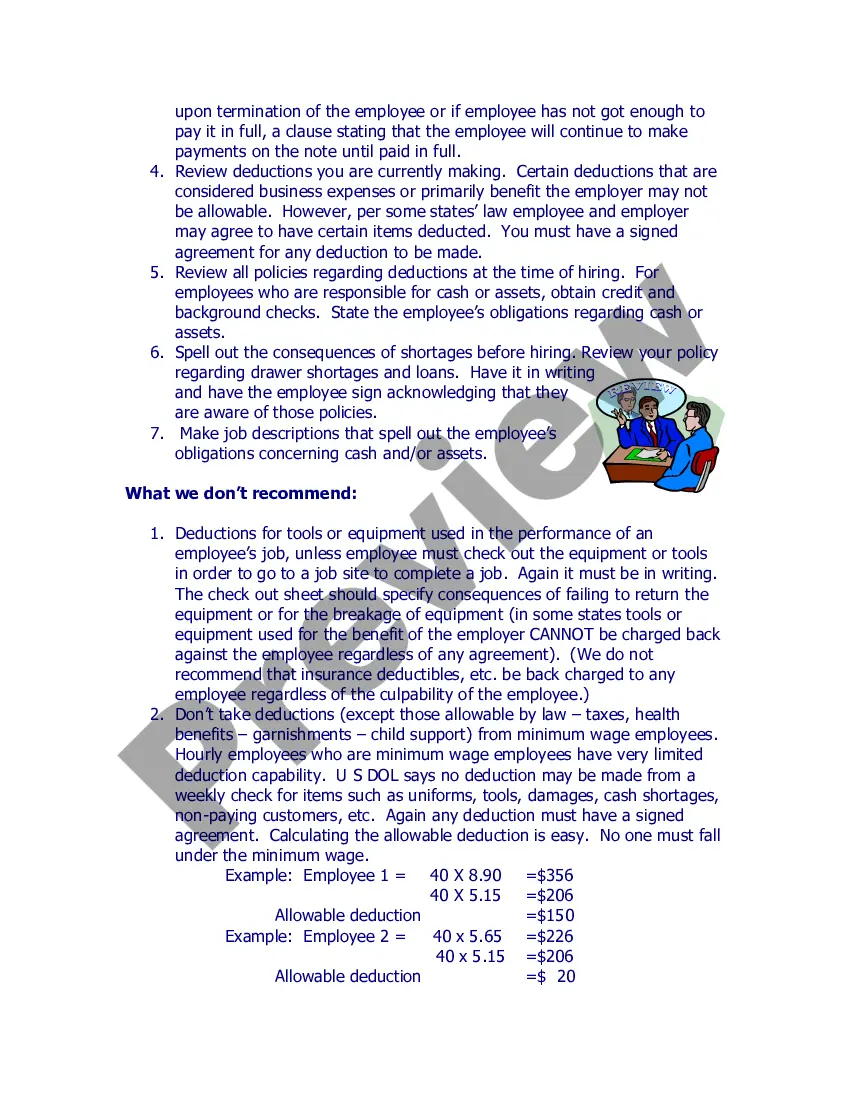
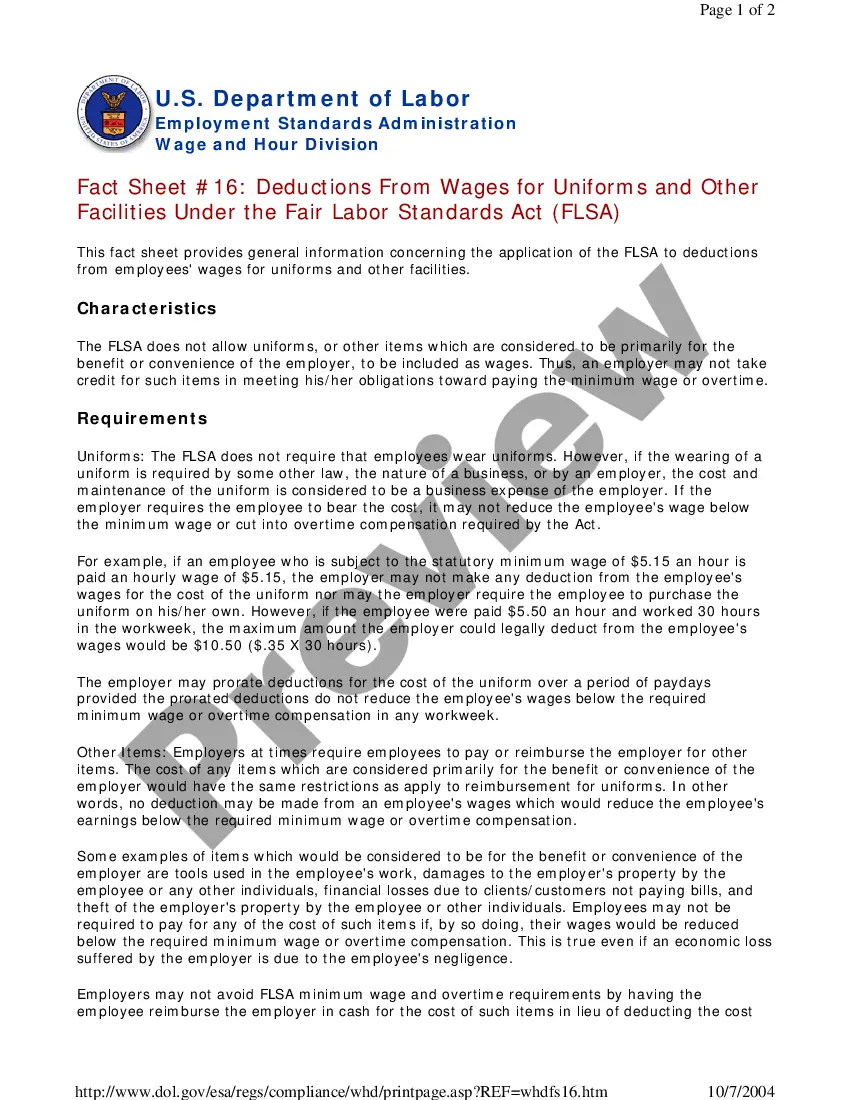
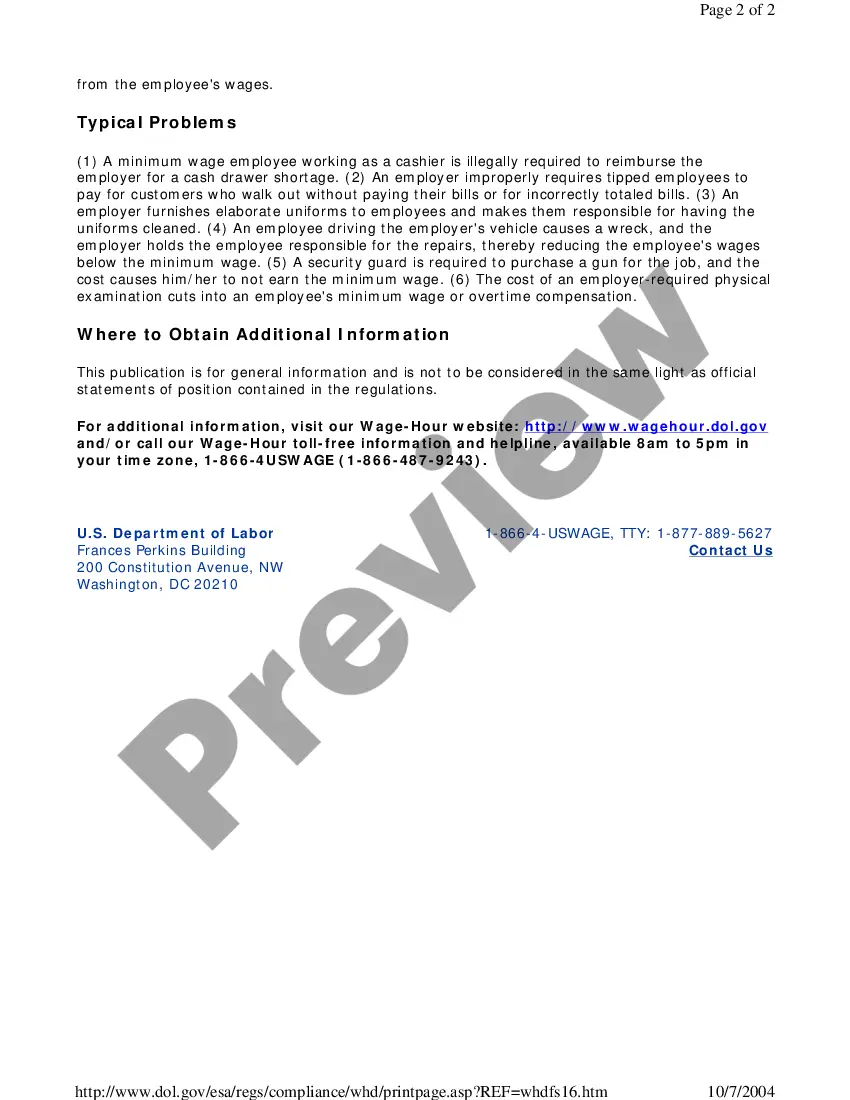
Information for Employers regarding how and when deductions can be made.
Connecticut Employer Training Memo - Payroll Deductions
Instant download
Description
Free preview
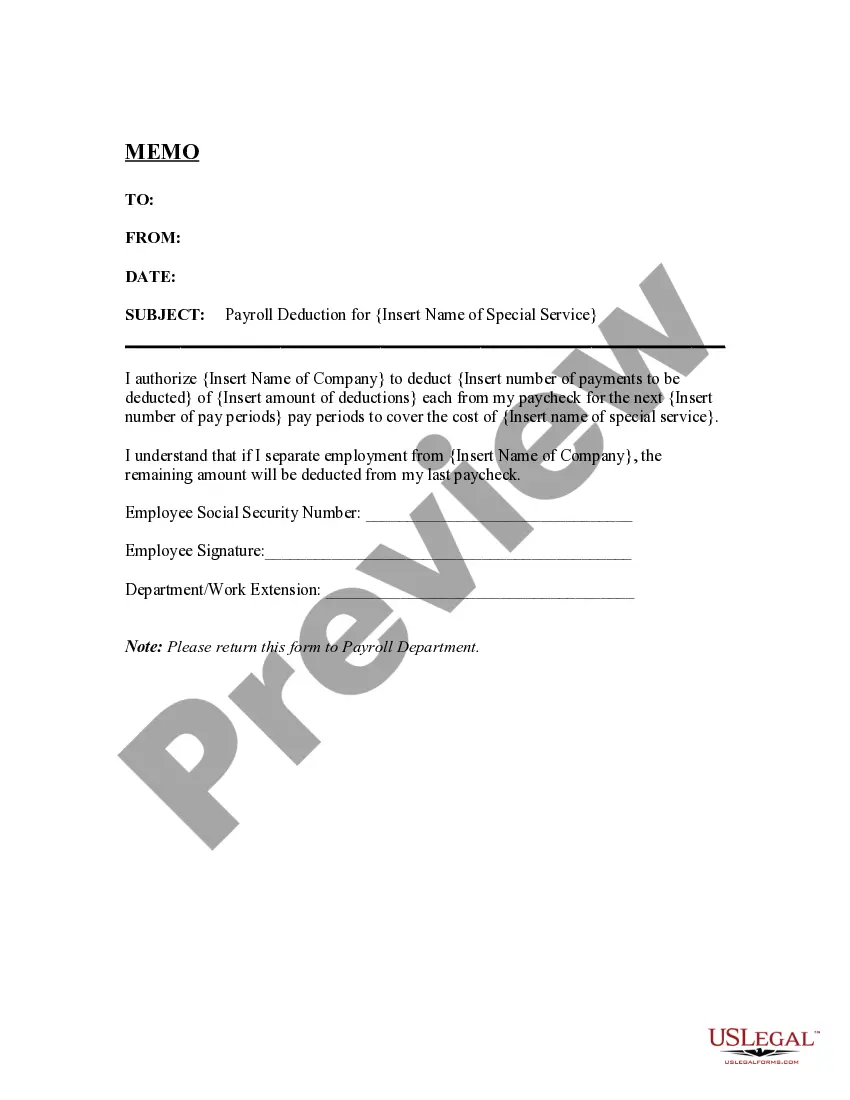
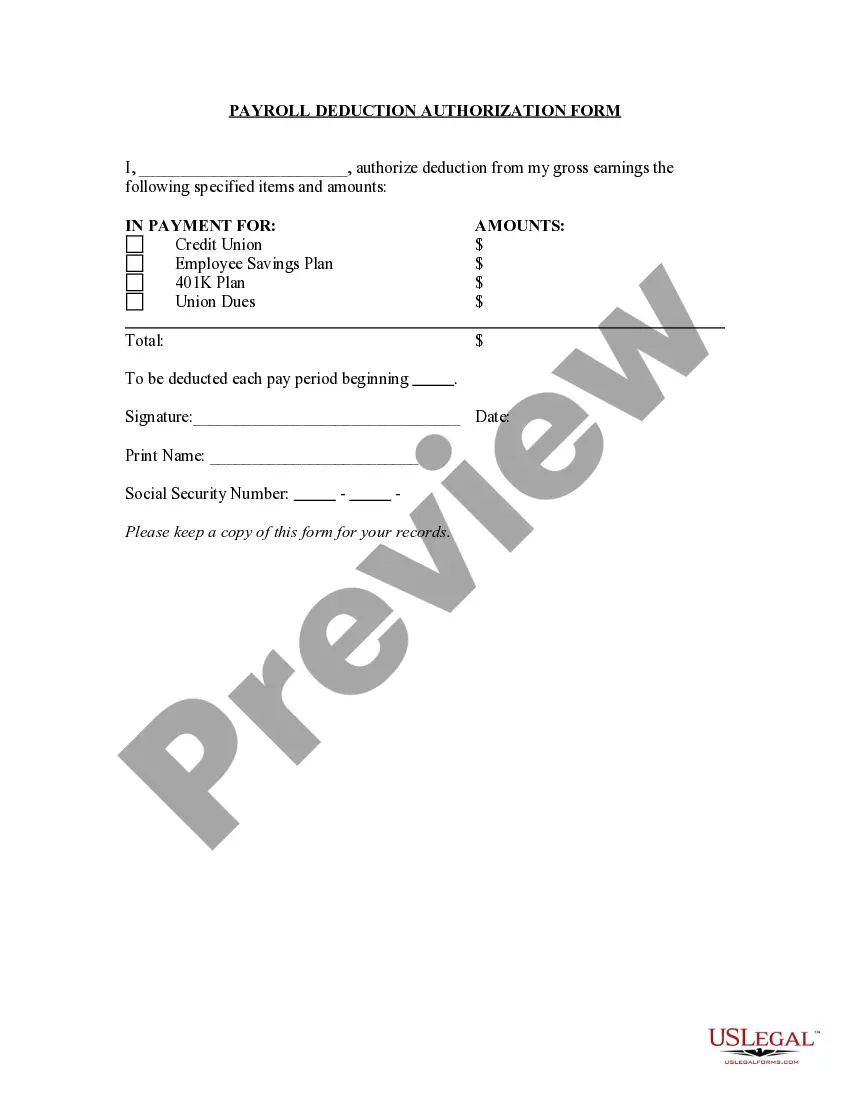
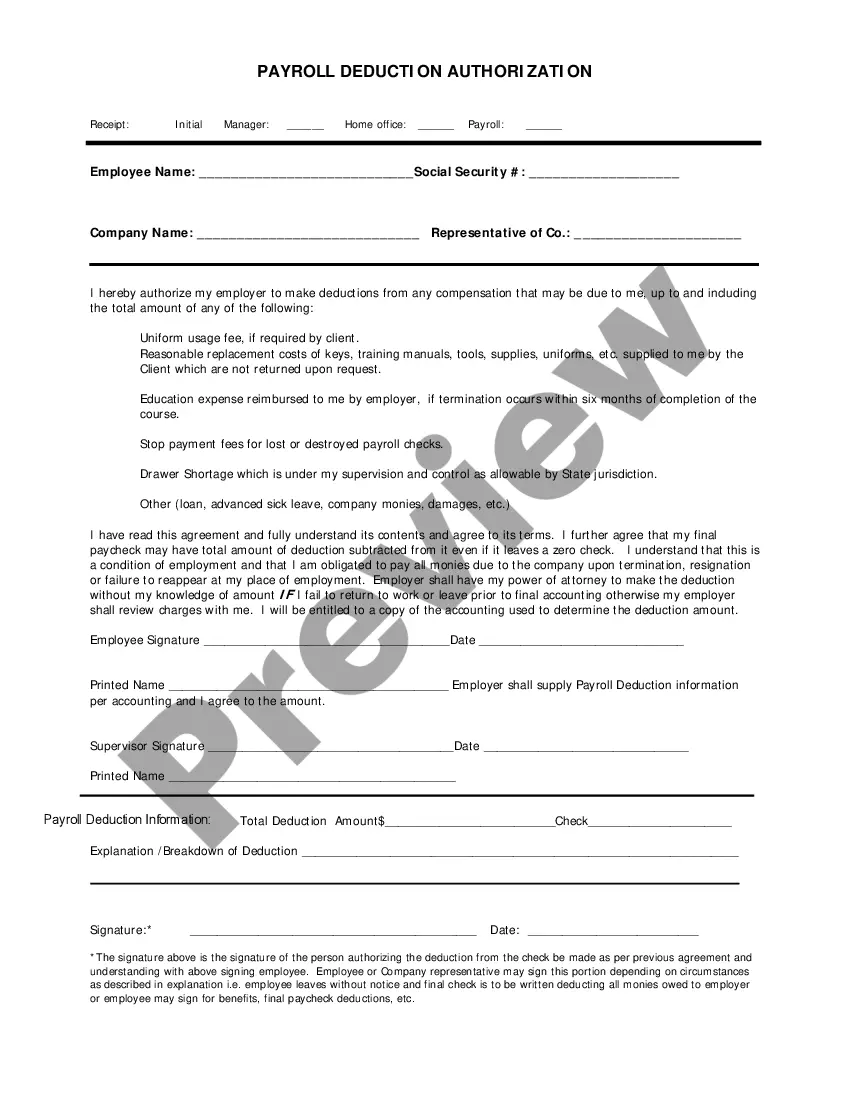

How to fill out Employer Training Memo - Payroll Deductions?
Finding the appropriate legal document template can be challenging. Indeed, there are numerous templates available online, but how do you identify the legal form you need.
Utilize the US Legal Forms website. The service provides thousands of templates, including the Connecticut Employer Training Memo - Payroll Deductions, which you can use for business and personal needs. All of the forms are verified by professionals and comply with state and federal standards.
If you are already registered, Log In to your account and click on the Download button to obtain the Connecticut Employer Training Memo - Payroll Deductions. Use your account to browse the legal forms you have previously acquired. Navigate to the My documents tab in your account and retrieve another copy of the document you need.
In summary, complete, customize, print, and sign the downloaded Connecticut Employer Training Memo - Payroll Deductions. US Legal Forms is the largest repository of legal forms where you can find a variety of document templates. Use the service to acquire properly designed documents that meet state requirements.
- If you are a new user of US Legal Forms, here are simple instructions to follow.
- First, ensure you have selected the correct form for your region/area. You can preview the form using the Review option and read the form description to confirm it is suitable for you.
- If the form does not meet your requirements, utilize the Search box to find the right form.
- Once you are confident that the form is appropriate, click on the Get now button to obtain the form.
- Select the pricing plan you want and enter the necessary information. Create your account and complete the transaction using your PayPal account or credit card.
- Choose the document format and download the legal document template to your device.
Form popularity
FAQ
If you see a deduction labeled in your paycheck, it typically represents various withheld amounts, including taxes, insurance, or other contributions. Understanding these deductions is crucial, particularly in the context of the Connecticut Employer Training Memo - Payroll Deductions. It helps you track your earnings and ensures compliance with state regulations.
In Connecticut, the 7-minute rule allows employers to round time worked to the nearest seven-minute increment for payroll purposes. This practice helps simplify timekeeping methods while ensuring employees receive fair payment. The Connecticut Employer Training Memo - Payroll Deductions offers insights into applying this rule correctly. By following these guidelines, employers can enhance the accuracy and efficiency of their payroll systems.
The 7-minute rule pertains to how employers manage time tracking for their employees. Under this rule, employers should round time entries to the nearest increment, ensuring that employees are not shortchanged for minor amounts of time worked. The Connecticut Employer Training Memo - Payroll Deductions clarifies how to implement this rule effectively. By understanding this, employers can streamline payroll processes and uphold fair compensation practices.
Yes, payroll deductions in Connecticut must be approved by the employee in writing. This requirement emphasizes transparency and protects employee rights. The Connecticut Employer Training Memo - Payroll Deductions outlines the necessary procedures for obtaining this consent. Following these guidelines helps create a respectful workplace and builds trust between employers and their employees.
In 2025, Connecticut will implement several important changes in labor law that employers must know about. One significant update concerns payroll deductions, which will require stricter compliance measures. The Connecticut Employer Training Memo - Payroll Deductions provides essential guidance on these changes, ensuring employers are well-prepared. Staying informed will help businesses avoid potential penalties and maintain a smooth payroll process.
The standard payroll deductions are those that are required by law. They include federal income tax, Social Security, Medicare, state income tax, and court-ordered garnishments.
What are payroll deductions?Income tax.Social security tax.401(k) contributions.Wage garnishments.Child support payments.
The journal entry will record the wages expense and any deductions from the employee paychecks.Debit "Wages Expense" for the full amount the company must pay for the pay period.Credit "Net Payroll Payable" and any deductions required.Add the total number of debits and then add the total number of credits.More items...
Mandatory payroll deductions are the wages that are withheld from your paycheck to meet income tax and other required obligations. Voluntary payroll deductions are the payments you make to retirement plan contributions, health and life insurance premiums, savings programs and before-tax health savings plans.
Allowable Paycheck DeductionsPersonal loans (cash advances, 401(k) or retirement loan payment, bail or bond payments, etc.)Personal purchases of a business's goods or services such as: Food purchases from the cafeteria.Employee's health, dental, vision, and other insurance payments or co-payments.