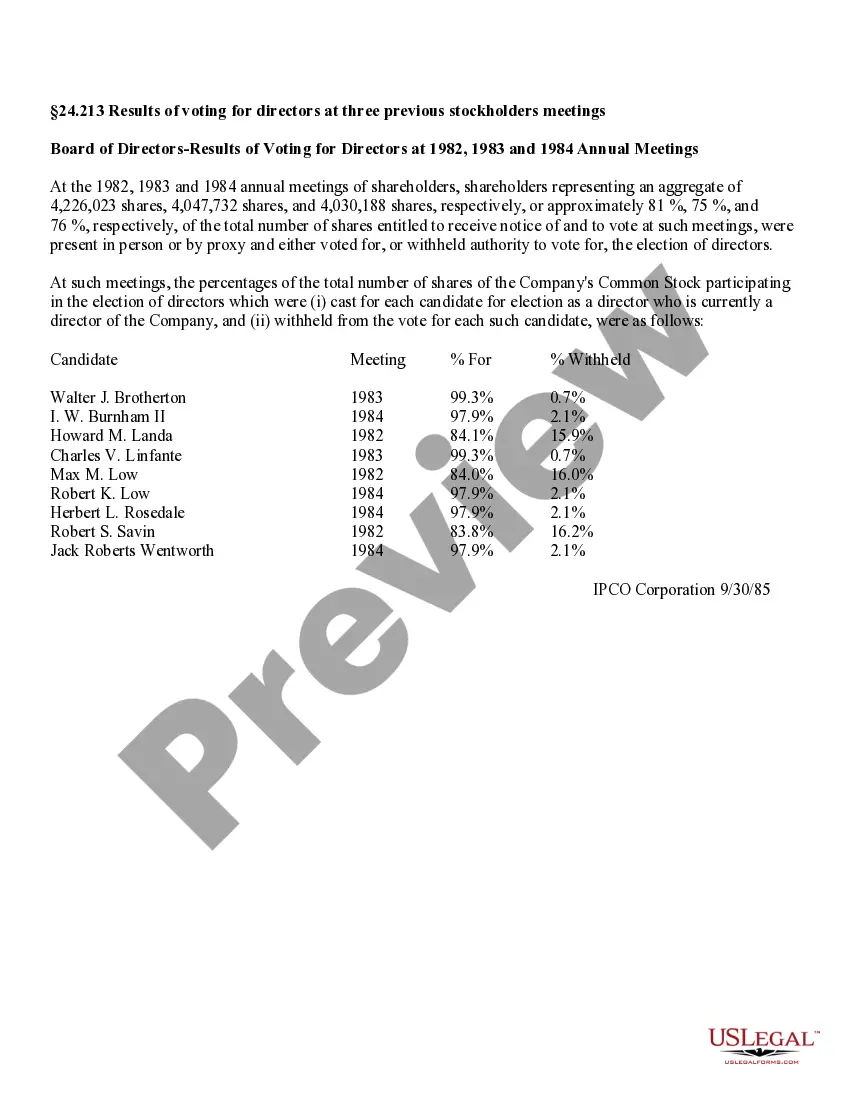
Connecticut Adoption of Incentive Stock Plan
Description
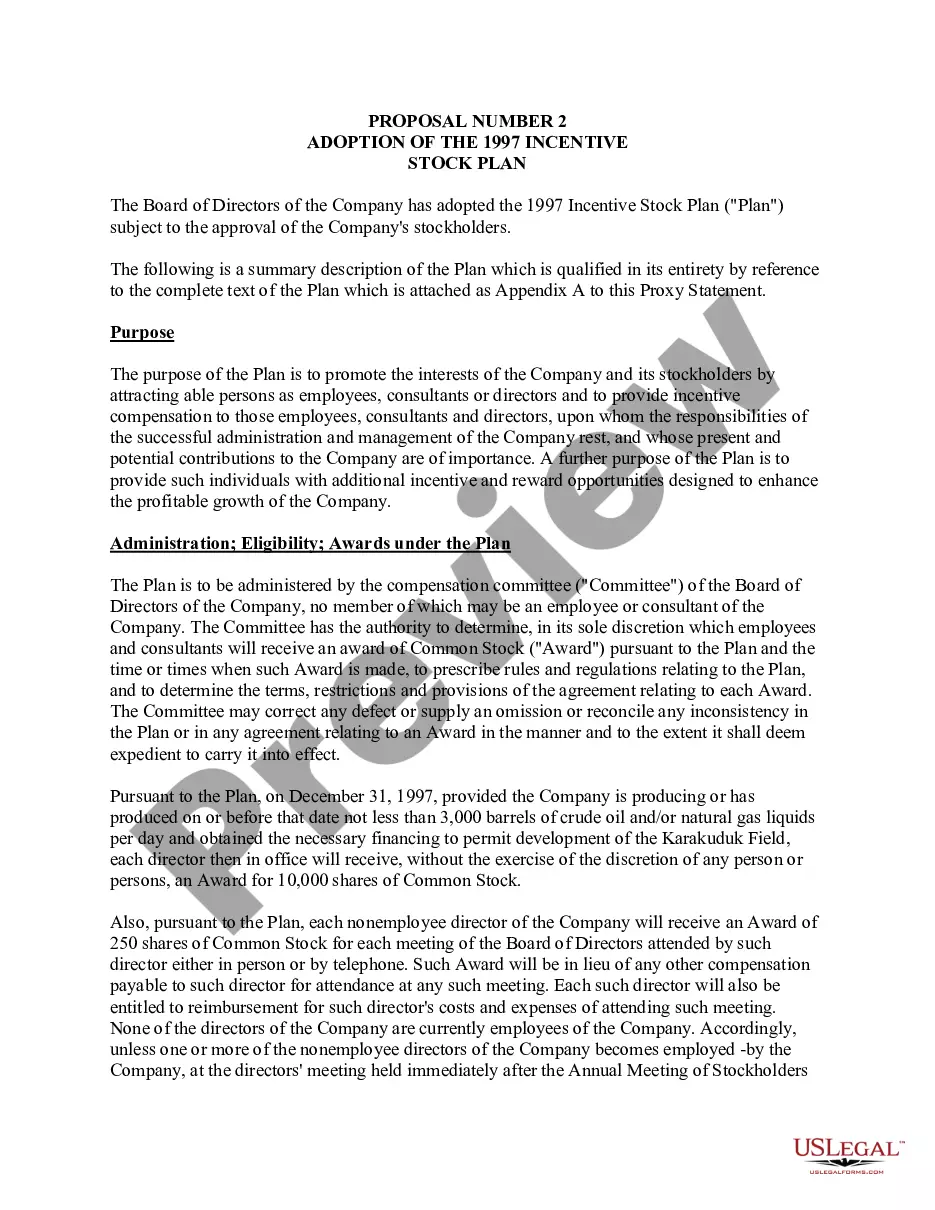

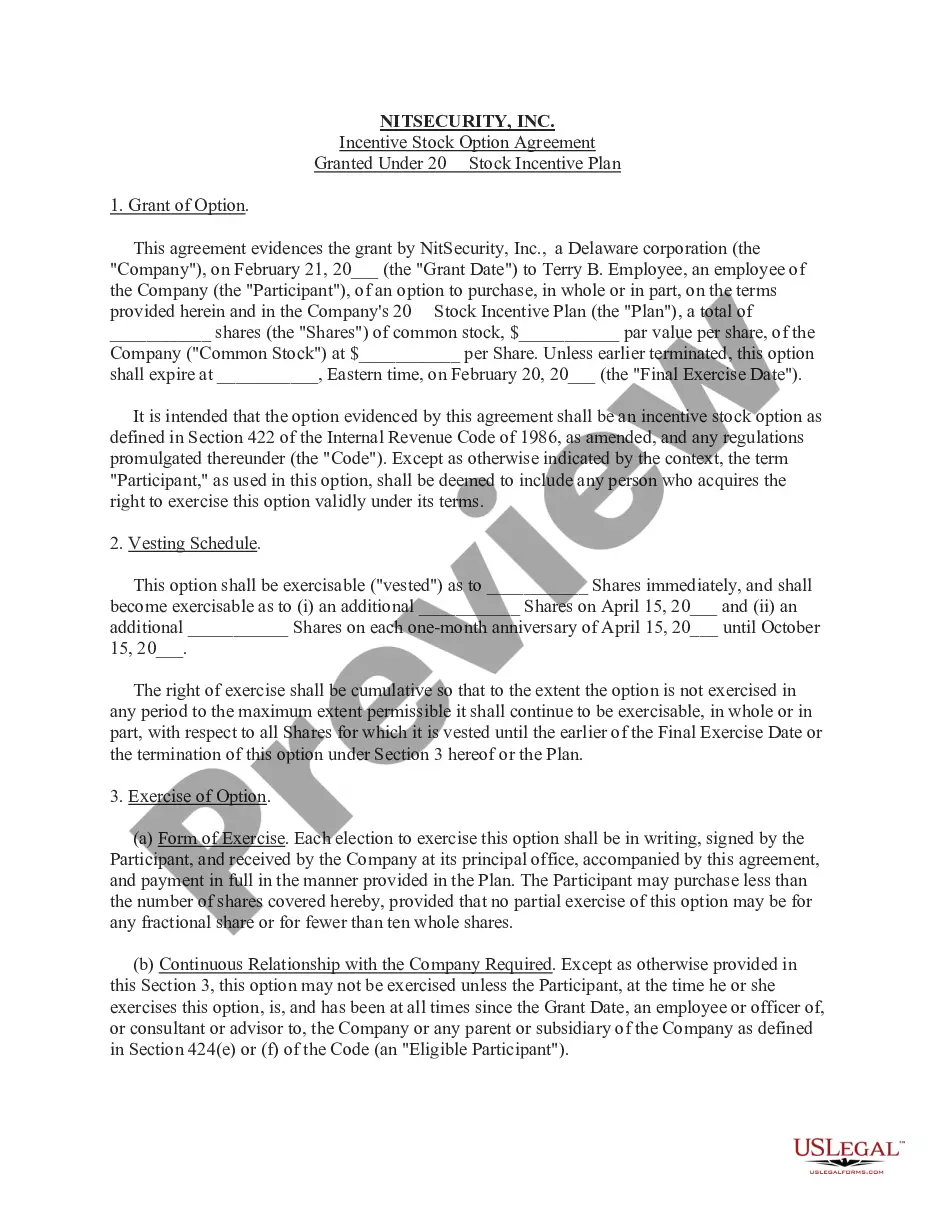
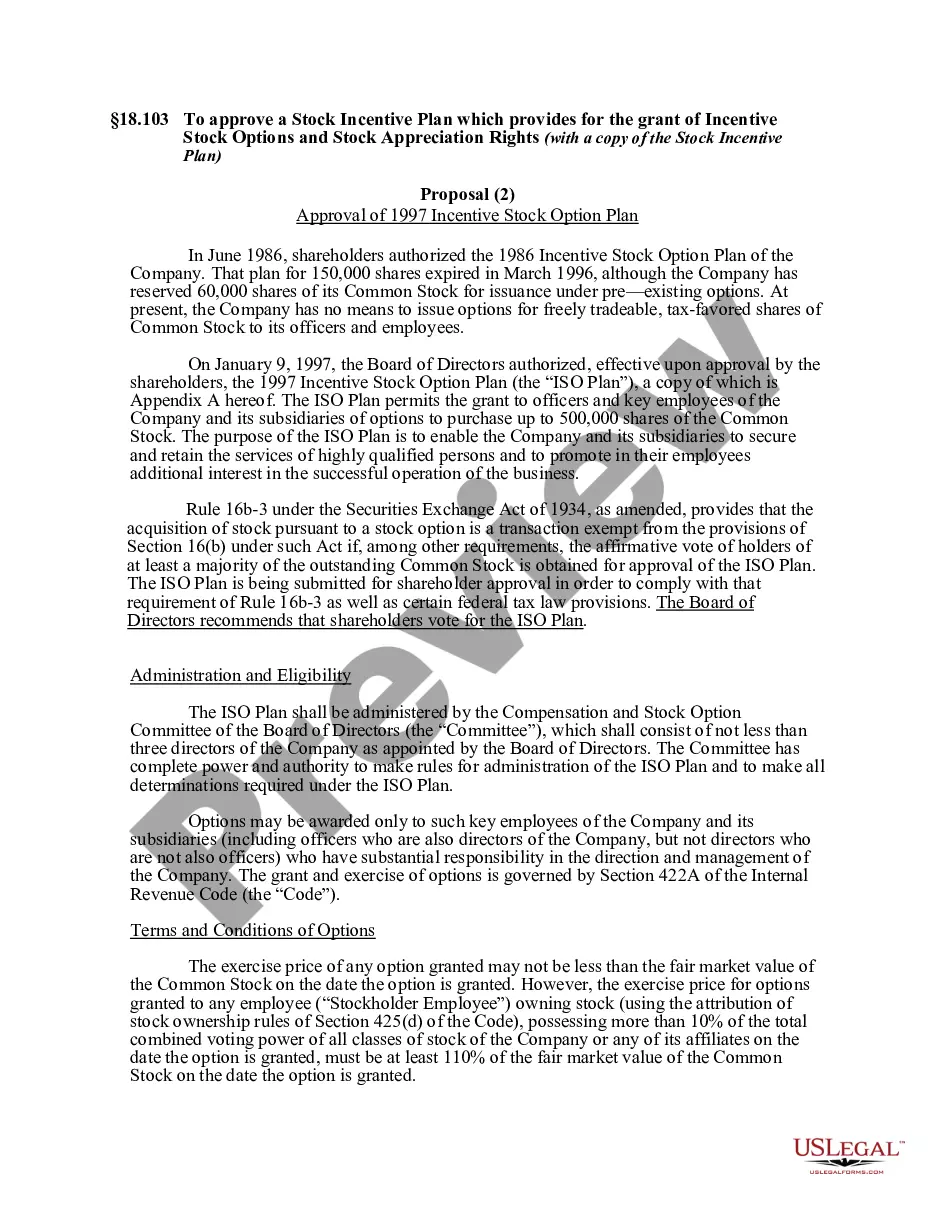
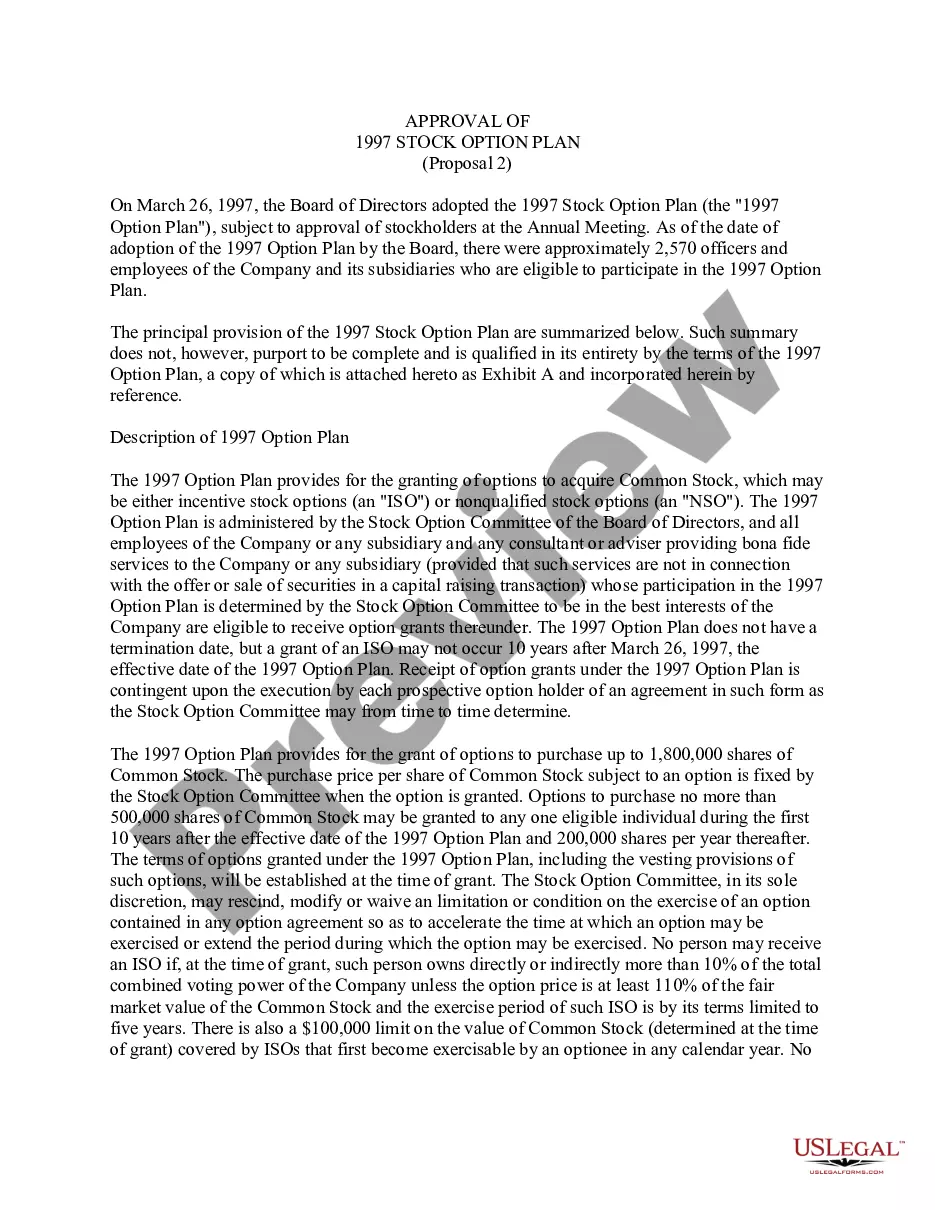
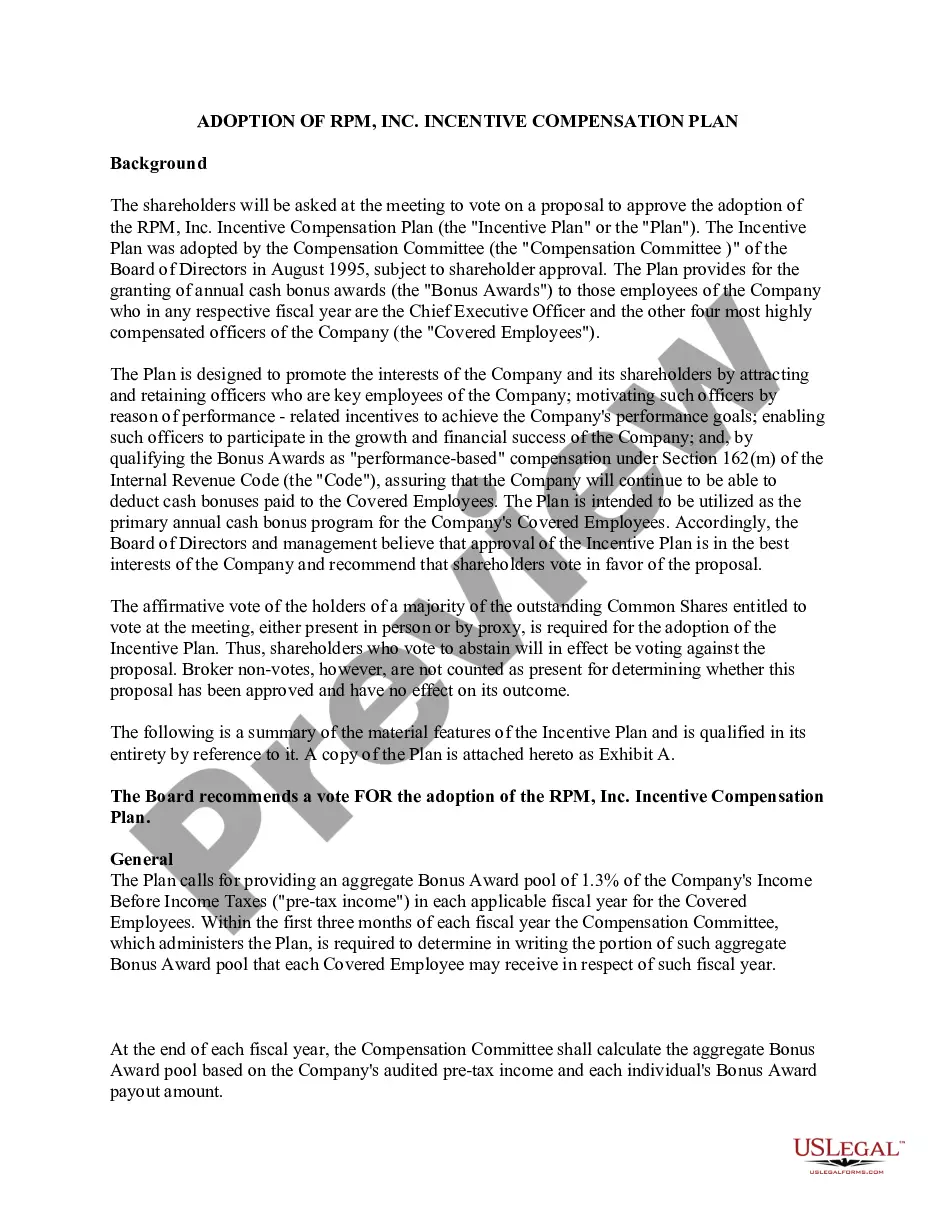



How to fill out Adoption Of Incentive Stock Plan?
US Legal Forms - one of the greatest libraries of legitimate kinds in the United States - gives an array of legitimate papers templates you may obtain or printing. While using website, you can get thousands of kinds for organization and personal reasons, sorted by classes, states, or search phrases.You will discover the latest variations of kinds much like the Connecticut Adoption of Incentive Stock Plan in seconds.
If you have a monthly subscription, log in and obtain Connecticut Adoption of Incentive Stock Plan in the US Legal Forms catalogue. The Download key will appear on each develop you see. You get access to all previously saved kinds from the My Forms tab of your profile.
In order to use US Legal Forms for the first time, listed below are straightforward recommendations to obtain started:
- Ensure you have picked out the best develop for your area/county. Go through the Review key to analyze the form`s content. Browse the develop description to actually have chosen the appropriate develop.
- In the event the develop does not match your demands, take advantage of the Lookup area on top of the screen to get the one that does.
- In case you are happy with the shape, validate your selection by clicking the Acquire now key. Then, select the pricing strategy you prefer and offer your qualifications to register to have an profile.
- Procedure the purchase. Use your Visa or Mastercard or PayPal profile to complete the purchase.
- Find the file format and obtain the shape on your own system.
- Make alterations. Fill up, modify and printing and signal the saved Connecticut Adoption of Incentive Stock Plan.
Every single web template you included with your money lacks an expiration date and is yours eternally. So, if you wish to obtain or printing an additional version, just check out the My Forms segment and click around the develop you require.
Get access to the Connecticut Adoption of Incentive Stock Plan with US Legal Forms, one of the most substantial catalogue of legitimate papers templates. Use thousands of expert and express-distinct templates that meet your business or personal requirements and demands.
Form popularity
FAQ
If this amount is not included in Box 1 of Form W-2, add it as "Other Income" on your Form 1040. Report the sale on your 2023 Schedule D, Part I as a short-term sale. The sale is short-term because not more than one year passed between the date you acquired the actual stock and the date you sold it.
When do incentive stock options expire? Theoretically, ISOs expire 10 years from the date you're granted them. However, your company might enforce a post-termination exercise (PTE) period that gives you a shorter amount of time to exercise options after you leave the company.
There are many requirements on using ISOs. First, the employee must not sell the stock until after two years from the date of receiving the options, and they must hold the stock for at least a year after exercising the option like other capital gains. Secondly, the stock option must last ten years.
Such individual, at the time the option is granted, does not own stock possessing more than 10 percent of the total combined voting power of all classes of stock of the employer corporation or of its parent or subsidiary corporation.
History. Tax treatment for the incentive stock option was created by the Revenue Act of 1950. In the following decade, stock option grants became popular as a form of compensation, primarily for executives.
An incentive stock option (ISO) is a corporate benefit that gives an employee the right to buy shares of company stock at a discounted price with the added benefit of possible tax breaks on the profit.
Modern stock options Options contracts have been known for decades. The Chicago Board Options Exchange was established in 1973, which set up a regime using standardized forms and terms and trade through a guaranteed clearing house. Trading activity and academic interest has increased since then.
There are many requirements on using ISOs. First, the employee must not sell the stock until after two years from the date of receiving the options, and they must hold the stock for at least a year after exercising the option like other capital gains. Secondly, the stock option must last ten years.